
Experts Matter. Find Yours.
Connect for media, speaking, professional opportunities & more.

Baylor Remote-Work Expert Shares Tips with The New York Times
Sara Perry, Ph.D., assistant professor of management in Baylor University's Hankamer School of Business, is a nationally recognized expert on remote work and working from home. In 2018, Perry led a team of management researchers who examined the relationship between stress and remote work, which resulted in a study published in the European Journal of Work and Organizational Psychology. Dr. Perry was recently a featured expert in The New York Times' piece by Jen A. Miller, "How To Work From Home, If You've Never Done It Before," which was written as millions of people were suddenly faced with launching home offices as a result of COVID-19. Regarding setting boundaries: But being expected to work from home full time while also home-schooling children full time is just not going to be realistic, said Sara Perry, assistant professor of management at Baylor University. “There’s a lot demanding of your time and energy and resources right now,” she said. This may mean having conversations with managers about adjusting their expectations, given the extraordinary circumstances. On the topic of "putting work away": For those who are used to working in an office, the evening commute is often a way to end the work day and begin home life. Dr. Perry said it’s important to continue to make the same transition, even if you’re just moving from one spot on the couch to the other. So put your work materials and your laptop away (or just shut work applications if you want to use your computer for something else). She added that this is crucial right now because “you’re already being challenged in terms of your personal resources,” she said. “You still have to take that recovery time from work.”



Will schools reopen before semester ends? Georgia Southern pandemic expert can give perspective
While education has moved into homes across the country because of the COVID-19 pandemic, people are wondering if the shutdowns will actually help stop the spread of the disease. Isaac Chun-Hai Fung, Ph.D., a digital health expert and infectious disease epidemiologist at Georgia Southern University, said school closures can delay the peak of the outbreak, reduce the amount of cases and decelerate the spread of the virus. Fung was a part of a study in 2015 that modeled a potential flu pandemic. The study showed that delaying the spread of a virus can give health care professionals more time to come up with vaccines and other treatments, as well as giving the system time to brace itself for the onslaught of patients. “The key message of my paper is not necessarily how quickly we shut down schools,” Fung told Rolling Stone. “It is the duration of school closure that matters. Whenever we relax social distancing measures, we will see a bounce-back of the cases, unless we are able to completely block all transmission chains and have driven the case number to zero — i.e., extinction of the virus, as in the case of SARS in 2003.” While some think opening schools and other public places would benefit the economy, Fung said doing so could leave the country vulnerable. “To save the U.S. economy, we must control this disease first,” Hung said to Rolling Stone. “That is what China is going to achieve — even if they have already suffered a great deal economically due to COVID-19. That is why (Narendra) Modi asks the whole of India to stay home for three weeks. That is also what Boris Johnson asks the British people to do now. The Americans should take heed.” Fung analyses social media data for public health surveillance and health communication and uses digital technologies for public health interventions. He investigates the transmission of communicable diseases with a focus on respiratory infections and environmentally transmitted infections. He applied a variety of methods, from classical statistical methods to machine learning and mathematical modeling, to address public health problems and to provide solutions to policymakers. He is especially interested in assisting public health agencies in their responses to public health emergencies. Fung is available to speak with media regarding this topic — simply reach out to Georgia Southern Director of Communications Jennifer Wise at jwise@georgiasouthern.edu to arrange an interview.


Are Home Prices in Peril? FAU Expert Says Coronavirus Stimulus May Hold the Key
The United States housing market faces its biggest threat in more than a decade, and whether home prices can withstand the new coronavirus pandemic largely depends on an effective stimulus package, said Ken H. Johnson, Ph.D., a real estate economist in Florida Atlantic University’s College of Business. U.S. President Donald Trump recently signed a historic $2 trillion stimulus to boost a battered U.S. economy, and getting the aid exactly right is the key to avoiding the first sustained setback to home prices since the end of the housing boom in 2006, according to Johnson. “If the stimulus package ends up being more than we need, this will almost certainly trigger a non-trivial amount of inflation in the economy, which will increase mortgage rates, which, in turn, will place downward pressure on housing prices,” Johnson said. “If the stimulus is not sufficient enough to hold down unemployment and it increases the likelihood of mortgage default, mortgage rates will rise and put downward pressure on housing prices. Only if the stimulus is just right will increasing inflation and higher unemployment be held in check.” Fixed rates for 30-year mortgages rose from 3.29 percent on March 5 to 3.65 percent on March 19, before moving down to 3.5 percent last week as the stimulus gained momentum. The higher rates are an indication that investors are factoring in inflation and the higher likelihood of default, though the recent downward trend suggests that it was the threat of rising default probabilities that was having the bigger impact on mortgage rates, according to Johnson. Since bottoming in March 2012, U.S. home prices rose 61 percent over the next seven and a half years, according to the S&P/Case-Shiller 20-City Composite Home Price Index. The nation’s housing market rebounded from a devastating downturn when investors started renovating and reselling properties after buying them at deep discounts. The market has been robust ever since, but Zillow Group recently suspended its home-buying program as a result of the pandemic and how it may affect the housing market. The move means Zillow is worried that housing prices are at risk, according to Johnson. If mortgage rates were to climb from 3.5 percent to 5 percent, it would result in a 43 percent increase in the interest portion of a housing payment, dramatically reducing the purchasing power for consumers. “Only time will tell here,” Johnson said. “We are in uncharted waters, making it difficult to tell when and if we got the stimulus package right.” If you are a journalist covering how real estate and property values are being impacted by the COVID-19 pandemic – then let our experts help. Ken Johnson is the associate dean and Investments Limited professor in the College of Business at Florida Atlantic University. Ken is available to speak to media about this topic – simply click on his icon to arrange an interview and time.


The consequences of ending early - Is a second wave of COVID-19 inevitable?
America is in lockdown. As the COVID-19 virus spreads to just about every corner of America and the planet for that matter, extreme measures are being brought in by various levels of local, state and the federal government to help contain the spread of this virus that is growing in near exponential numbers daily. Despite the White House advising all Americans to practice social distancing, the number of coronavirus cases in the US continues to rise. So, governors across the nation are taking stronger action by issuing stay-at-home orders in their states. By March 30, at least 27 states will have those orders in effect. Those states contain more than 225 million people -- more than two-thirds of the country's population. CNN - March 28 And as Americans comply with these orders, there’s a growing anticipation about when people will be able to return to work and resume a semi-normal routine. Some are saying weeks, others indicating months. But the reality is, as much as many yearn for normalcy, going back too early could come with even steeper consequences than waiting the epidemic out. If there is a second wave of COVID-19 infections – it could be disastrous. What would a second wave look like and how would it spread? Can people be re-infected? Does America have the front-line capacity to take on another fresh round of infections? Can the country’s stretched medical system handle more patients? And how much longer would it take to try and contain the spread of COVID-19 for a second time? There are a lot of questions to be answered, and that’s where our experts can help. Dr. Zach Jenkins is an infectious disease expert at Cedarville University. He is available to speak with media about this topic – simply click on his icon to arrange an interview.


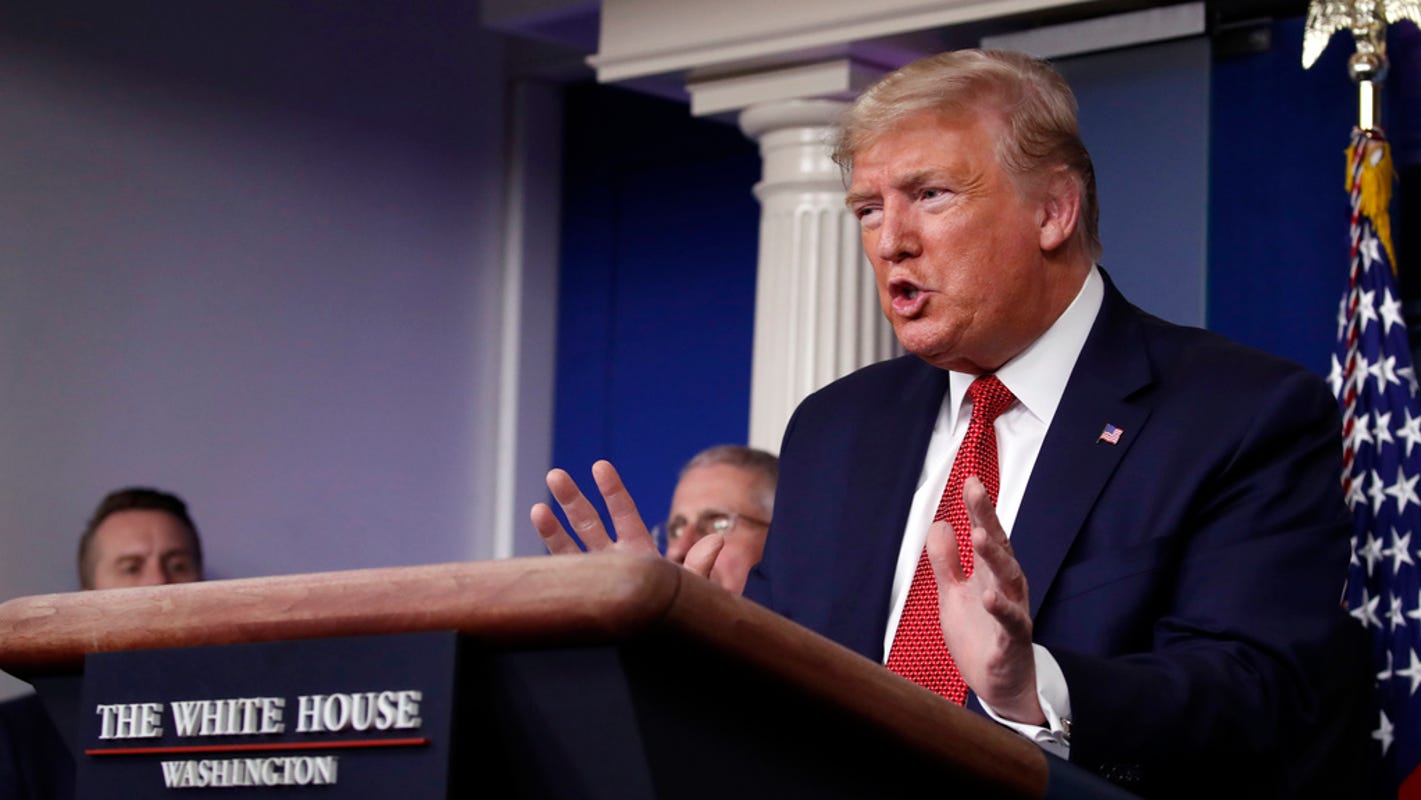
Op Ed: In coronavirus crisis, Don't prioritize economics over public health
The following is an excerpt from Op Ed that ran in the Detroit Free Press late last week. Th full piece is attached below for your reading pleasure. President Donald Trump said this week that he hopes to see economic activity ramped up and social distancing practices and other public health measures reduced by Easter, which is April 12. This is a recipe for disaster and it again vividly illustrates his dismissal of medical and scientific expertise for his own political goals. The rhetoric he uses suggests that the financial pain the nation will experience over the next year or longer is not worth the lives that will be lost as a result of dialing back public health restrictions. I am an ethicist. To me, Trump is forcing Sophie’s Choice decisions by people who have taken an oath to “first do no harm.” Trump and his advisers ignore the ethical pain that health professionals will have to endure who must decide who lives and who dies because we have too few ventilators or too few ICU beds to treat all the patients who need those beds for survival. Those harsh choices are very real right now. They would become even more tragic if public health measures now in place were loosened in order to improve economic activity. March 27 - Detroit Free Press There are many angles to explore and cover as the COVID-19 pandemic impacts just about every segment of American life. If you're a journalist covering the ethics involved and the leadership decisions taking place at each level of government, then let our experts help. Leonard M. Fleck is the Director of the Center for Ethics at Michigan State University. He is an expert in the areas of health care justice and served as a member of the Clinton Administration’s Health Care Reform Task Force in 1993 and as a state ethicist for Michigan regarding access to health care. Dr. Fleck is available to speak with media – simply click on his icon to arrange an interview.


Annie Ginty, Ph.D., assistant professor of psychology and neuroscience at Baylor University was interviewed by Waco, Texas' KXXV for a story about the benefits of exercise during times of stress -- specifically during this time of coronavirus (COVID-19). During the interview with reporter Erin Heft, Ginty said: “Some research from our lab at Baylor has shown that people who exercise more, when they are faced with some thing that makes them feel stressful or anxious, they actually perceive that is more helpful, so the feeling of anxiety makes them feel they’re able to cope with that situation" "Exercise is a good stress on our body, because what it’s doing, our systems are changing, it’s increasing heart rate, it’s adrenaline. But everything’s increasing in balance, so our body is maintaining homeostasis." To view the complete story, visit KXXV's website.


Baylor Cultural Critic and Author of “Living with the Living Dead” Talks Books and Pop Culture During COVID-19 Time at home is increasing as shelter in place orders and working from home become the norm for many people during the COVID-19 pandemic. During this season of uncertainty, many turn to books, movies and other pieces of pop culture pass the time. Greg Garrett, Ph.D., professor of English at Baylor University and expert cultural critic, supports pop culture and literature as important to meaningfully escaping current fears as well as contextualizing experience and emotions. “A great novel, movie or memoir is a gift when we need distraction, but it can also offer us the dramatic reminder that these are the things that make us truly human: love, community, compassion and faith,” Garrett said. “The world may be shifting beneath our feet, but we’re going to be fine as long as we keep the important things in view.” In a Q&A with Garrett, he gave insight on what can be learned from zombie pandemic pop culture, touched on how literature has fit culturally into pandemic history and offered advice on books to pick up during extra free time at home. Q: You’re the author of “Living with the Living Dead: The Wisdom of the Zombie Apocalypse.” What can we learn from zombie pandemic pop culture? A: Our most pervasive form of pandemic literature in recent years is the story of the Zombie Apocalypse, which has been told in novels, movies, games and comics. It’s been the inciting conflict of “The Walking Dead,” and the underlying threat in “Game of Thrones,” two of the most popular television series in history. One of the attractions of zombie literature is that zombies can serve as a metaphor for lots of things at once: for pandemic, sure, but also for economic unrest, political chaos, terrorism and other things that keep us up at night. But as Max Brooks, author of the seminal zombie novel “World War Z: An Oral History of the Zombie War” (2006), notes: however difficult our lives might be at this moment, at least the dead are not wandering the earth and trying to eat us! We can, Brooks says, close the book, turn off the TV, and at least be secure in that. A book like “World War Z” or a movie like “Sean of the Dead” (2004) or “Zombieland” (2009) can soothe some of our tension since this story of a world coming off the rails is our story, yet clearly not our story. Q: How does literature fit into cultural history events like pandemics? A: One of the most important gifts that great stories can give us is the realization that we’re not alone in our experience, and that, in fact, our experience is not unprecedented. Anyone wanting to understand that this dark time is not in fact the darkest time should read historian Barbara Tuchman’s masterful “A Distant Mirror: The Calamitous 14th Century” (1978), which explores the Black Death of 1348-50, a pandemic so awful it killed a third of the populations of Europe and the Middle East. Daniel Defoe’s “A Journal of the Plague Year” (1722) is a novel recalling the horror of the Black Death in London some 60 years prior to its writing. In that book, Defoe’s narrator says he writes about his choices in such detail because he believes that they might be “of moment to those who come after me.” That is, he hopes his story might be of use to future sufferers like ourselves, and it is. Q: Literature can also provide escape from tough times. What other books should we be reading right now? A: In the zombie spirit, you could read “Pride and Prejudice and Zombies,” a 2009 parody by Seth Grahame-Smith of the Jane Austen novel. But if you’re simply seeking meaningful escape from our current story, you couldn’t do much better than reading (or re-reading) the actual “Pride and Prejudice” (1813), one of my favorite novels. I can’t wait to fall back into the world of the Bennets and worry about something besides viral curves and travel bans. During the weeks we expect to be largely confined to the house, my family and I are making reading lists. Mine includes Ernest Hemingway’s “The Sun Also Rises” (1926) and James Baldwin’s “The Fire Next Time” (1963), both of which I plan to teach in my American lit class at Baylor this fall, and Toni Morrison’s “Beloved” (1987), which will scare me and break my heart in ways that have nothing to do with this pandemic. ABOUT GREG GARRETT, PH.D. Greg Garrett, Ph.D., professor of English at Baylor University, is a popular theologian and cultural critic as well as the author of two dozen novels, memoir and nonfiction books including “Living with the Living Dead: The Wisdom of the Zombie Apocalypse” (Oxford University Press, 2017). ABOUT BAYLOR UNIVERSITY Baylor University is a private Christian University and a nationally ranked research institution. The University provides a vibrant campus community for more than 18,000 students by blending interdisciplinary research with an international reputation for educational excellence and a faculty commitment to teaching and scholarship. Chartered in 1845 by the Republic of Texas through the efforts of Baptist pioneers, Baylor is the oldest continually operating University in Texas. Located in Waco, Baylor welcomes students from all 50 states and more than 90 countries to study a broad range of degrees among its 12 nationally recognized academic divisions. THE COLLEGE OF ARTS & SCIENCES AT BAYLOR UNIVERSITY The College of Arts & Sciences is Baylor University’s oldest and largest academic division, consisting of 25 academic departments and seven academic centers and institutes. The more than 5,000 courses taught in the College span topics from art and theatre to religion, philosophy, sociology and the natural sciences. Faculty conduct research around the world, and research on the undergraduate and graduate level is prevalent throughout all disciplines. Visit www.baylor.edu/artsandsciences.


My Friend Just Lost Her Job. How Do I Respond?
Baylor expert on grief shares ways people can speak with and minister to those who are unemployed due to COVID-19 For the week ending March 21, a record 3.28 million workers applied for unemployment benefits, a result of the sweeping economic consequences of COVID-19, according to a report from the U.S. Department of Labor. In the proverbial “blink of an eye,” many find their neighbors, friends, family – and even themselves – out of jobs that only a few weeks ago seemed safe and secure. The jobless are grieving. What’s our role? How do we help? How do we engage? Helen Harris, Ed.D., associate professor in Baylor University’s Diana R. Garland School of Social Work, is a nationally recognized expert on grief. She says one key to helping others is to imagine changing places with them – putting yourself in their position – and being the person you’d hope they’d be if the tables were turned. “The key to helping is to think about how we feel when we need help and what helps us feel comfortable,” Harris said. “This is a time to ‘do unto others as we would have them do unto us.’” In this Q&A, Harris shares tips that can help us be the neighbors, friends and family we need to be at this time. Q: With the rapid shuttering of businesses including retail stores, movie theaters and restaurants, many of our neighbors have found themselves without jobs. What are some ways we can help them during this time? Harris: This is such a hard time. People who lose their jobs feel even more anxious and vulnerable at a time when everyone is already struggling. Hopefully unemployment and the federal government allocations will make a difference, but those are not immediate. In the meantime, consider what we can do to help directly, through agencies and through our churches. It is important during this time that we reach out to our neighbors who are unemployed, not only with an encouraging word but also with concrete help like meals and supplies or rent and utilities. For families with infants, for example, we provide formula and diapers or the financial help to buy them. We can also contribute to the agencies that provide assistance to families during these hard times. Those of us who are working and earning an income have an opportunity to share with our neighbors. We can also remind them that job loss right now is about this crisis and will not last forever while being careful not to minimize what they are experiencing. This is really hard. Q: When someone is grieving – in this case due to the loss of a job – what should people say? What should they NOT say? Should we even address it at all? Harris: As is true with any loss, it is important to acknowledge it and share how sorry we are that they are going through this hard time. I would avoid minimizing or blaming for the job loss. That just is not helpful. Letting someone know that we care about their painful experience helps with isolation at a time when social distancing is already creating a sense of isolation. We need to stay socially connected even while we keep our physical distance from one another. Acknowledging how hard it is not to have a job to go to matters even as folks apply for other jobs, apply for unemployment and support one another. Q: In terms of actions, should people ask before donating money or groceries or other items? Harris: That’s a hard one. A lot depends on how well we know them and what will make them comfortable. I think when we cook a casserole or pot of beans and cornbread, cooking enough for our friend/neighbor too doesn’t require checking ahead of time. Otherwise, it makes sense to ask how we can help and then do what we can. When we are headed to get groceries or other items, we can check to see if our friend/neighbor needs something and then deliver it with the assurance of the blessing it is for us to be able to help out. There may be ways to do our helping anonymously as well when possible. Q: Is there anything else you’d like to share? Harris: When reaching out to people, it might be appropriate to use a statement like: “I like to believe that when I need help, and we all do sometimes, that someone will be there for me and my family. Right now, I am able to help. Next time, it could be me who needs help. I believe we are best when we are there for each other. So, thanks for letting me help.” It can also be a huge help to let folks know when we are aware of job possibilities and willing to put in a good word for them. Also Read: “Unintended Consequences of COVID-19,” an article by Baylor University’s Helen Harris, Ed.D., associate professor of social work, and Bill Hoy, D.M., clinical professor of medical humanities. ABOUT BAYLOR UNIVERSITY Baylor University is a private Christian University and a nationally ranked research institution. The University provides a vibrant campus community for more than 18,000 students by blending interdisciplinary research with an international reputation for educational excellence and a faculty commitment to teaching and scholarship. Chartered in 1845 by the Republic of Texas through the efforts of Baptist pioneers, Baylor is the oldest continually operating University in Texas. Located in Waco, Baylor welcomes students from all 50 states and more than 90 countries to study a broad range of degrees among its 12 nationally recognized academic divisions. ABOUT THE DIANA R. GARLAND SCHOOL OF SOCIAL WORK AT BAYLOR UNIVERSITY Baylor University’s Diana R. Garland School of Social Work is home to one of the leading graduate social work programs in the nation with a research agenda focused on the integration of faith and practice. Upholding its mission of preparing social workers in a Christian context for worldwide service and leadership, the School offers a baccalaureate degree (B.S.W.); a Master of Social Work (M.S.W.) degree available on the Waco or Houston campuses or online; three joint-degree options, M.S.W./M.B.A., M.S.W./M.Div. and M.S.W./M.T.S., through a partnership with Baylor’s Hankamer School of Business and George W. Truett Theological Seminary; and an online Ph.D. program. Visit www.baylor.edu/social_work to learn more.

Rensselaer Team Seeks Alternative Approach to Controlling Viruses
As researchers worldwide scramble to formulate a vaccine to combat COVID-19, a team at Rensselaer Polytechnic Institute is pursuing a potentially powerful solution to pandemic control: a viral trap that is easily adapted to different classes of viruses, enabling a “plug-and-play” approach to virus detection and antiviral activity. Jonathan Dordick, an endowed professor of chemical and biological engineering at Rensselaer, and Robert Linhardt, an endowed professor of chemistry and chemical biology, said the team is exploring how their work — in the areas of viral detection, therapy, and inhibition — could be used against COVID-19 and other viruses in the future. Their team views such innovative approaches as a vital hedge against the growing threat of global pandemics. The viral trap works by mimicking the latch points on a human cell that a virus must bind to before infecting a person by disgorging its genetic instructions into the cell. In research on the Dengue virus with Xing Wang, now a professor of chemistry at the University of Illinois, recently published in Nature Chemistry, the team folded a snippet of DNA into a five-pointed star, and attached decoy latch points that align perfectly with the virus’ own molecular grappling hooks. The result was the world’s most sensitive test for Dengue, and a novel means of capturing and ultimately killing the virus. In previous research, the team demonstrated the same approach for Influenza A, and it can likely be expanded to other viruses like COVID-19. In another approach, Dordick demonstrated how enzymes incorporated into paint, can form a catalytic coating capable of killing the Influenza A Virus. The research, published in Applied Microbiology and Biotechnology, suggests enzyme systems could further be incorporated into swabs, wipes, or coatings, to target and kill various viruses, including COVID-19.


Don’t Neglect Spiritual, Mental Health During this Time of Health Crisis, Baylor Expert Says
In a difficult and ever-changing time of crisis surrounding the spread of coronavirus, the basic needs of health and safety come first. But as these basic physiological needs are met, the more advanced care for spiritual and mental health can remain overlooked or ignored altogether. Baylor University’s Holly Oxhandler, Ph.D., LMSW., associate dean for research and faculty development and assistant professor the Diana R. Garland School of Social Work, is an expert on mental health, primarily anxiety and depression, as well as religion and spirituality in clinical practice. In this Q&A, she shares tips and resources to help unhook from the baser instincts of fear and anxiety, even momentarily, to monitor and care for spiritual and mental health needs. Q: During a crisis, why do spiritual and mental health needs tend to be overlooked or ignored? A: In the midst of a crisis, our natural reaction is to go into a fight-or-flight response to the situation. Our most basic needs must be met, such as finding a sense of safety, and our bodies are doing what they were designed to do: to protect us. For example, if we were to encounter a bear on a hiking trail, our sympathetic nervous system would be activated to meet the basic need of keeping us safe. Our spiritual and mental health are not primary needs in that moment of crisis. If we were to run from that bear and reach safety, our emotions would eventually become regulated, our breathing would become normal, and we could return to a generally balanced way of being that allows for attention to our spiritual and mental health. However, we are in a prolonged moment of crisis surrounded by uncertainty, constantly evolving news updates and daily threats to our and loved ones’ safety regarding our health, finances and sense of normalcy. In this state of constant stress, it can be really hard to unhook from the fight-or-flight response and remember to tend to our spiritual and mental health. Q: How can people tend to their spiritual health during this time of crisis? A: In this moment, most of us are being forced to be still and/or surrender the illusion of control in ways we have never faced before. In this stillness, our spiritual practices can help remind us of a divine Love that is with us through each moment, but we must intentionally set time aside to practice them. Plus, many research studies have shown healthy, positive spiritual practices have the potential to support our mental and physical health. One thing that’s very important, especially in the midst of this crisis, is that we do not spiritually bypass what’s happening. It may be tempting to want to jump to hope and ignore the pain, but to the best of our ability, our faith traditions teach us we must sit with and feel the grief rooted in the overwhelming change and loss we and our neighbors are facing. As Fr. Richard Rohr says, “If we do not transform the pain, we will most assuredly transmit it – usually to those closest to us.” We must be with the fear and uncertainty, grieve the loss of life as we knew it a few weeks ago, pray the psalms of lament, and feel the freedom to wrestle with and/or cry out to God in ways we read about others doing so in our sacred texts. The important thing is that each of us engages in something tied to our faith, regardless of what we believe in, and to be consistent in the practice, continually learning to surrender that sense of control we’re all finding ourselves learning to do right now. Spiritual Health Tips Prayer Reading our sacred text Meditation Centering prayer (my personal favorite, which teaches us silence, solitude and stillness) Breath prayers (here are some examples) Engaging in creativity (music, dance, art) as an act of worship Practicing gratitude Seeking beauty in the mundane Yoga Journaling Especially in this time of increased isolation, I would recommend inviting others into these practices for a sense of solidarity and community, including those within our home or via social media, video conferencing or by phone. Q: How can people tend to their mental health needs? A: The first practice I would recommend is to pause and breathe deep for 4-5 seconds, noticing your belly rise instead of your chest, and breathe out for 6-7 seconds. The second would be grounding. When our brain is flooded with information and emotion, it is hard to stay present. In grounding, we take a deep breath and ask ourselves five questions to return to the present moment: What do I smell right now? What do I taste? What do I see in front of me? What can I touch and feel the surface of? What do I hear? A third recommendation would be to get outside as often as you can and, ideally, into some sunlight. I would also recommend the practice of tuning into our bodies. For many of us, it can be difficult to pay attention to what our bodies are trying to tell us, in the same way our thoughts and emotions communicate with us. Especially now, pay attention to the tension in your neck, the overall exhaustion, the pain in your arm muscles, the tightness in your chest, or any other experiences you notice by tuning in. Your body may be trying to tell you to spend less time watching the news (maybe cut back to 1-2 times a day), to take a nap or to move it and exercise. Last, and perhaps most importantly, do not hesitate to reach out for help if you are noticing changes in your appetite, sleep, mood, thoughts or feelings. Stay in communication with loved ones but just as you would seek a medical doctor for a broken arm, seek a therapist when you notice changes in your mental health. Many therapists are quickly adapting to telehealth services in this moment to meet growing demands and social distancing expectations. Some sites for finding a therapist include Psychology Today or HelpPRO, and if you or a loved one are deeply struggling, please reach out to the National Suicide Hotline or call 800-273-TALK (8255). Reaching out for help with your mental health is a sign of courage, not weakness. Q: During this time of crisis, what populations do you feel are most vulnerable to mental or spiritual health decline? A: Honestly, I think every single one of us are vulnerable to mental and spiritual health decline during this moment for varying reasons. As mentioned before, these parts of us are easily brushed aside when we’re most focused on ensuring our basic needs of safety and security are met. Still, there are a few groups I’m especially sensitive to. The first are the helpers on the front line facing far more need than resources, time or energy to meet those needs. These include our health care providers, social workers, therapists, grocery and restaurant employees, teachers, parents, nonprofit organizations, faith leaders, volunteers, community leaders, pharmacists, lab technicians, scientists and more. These helpers are at such high risk of burnout and my hope is that, to the best of their ability, they are caring for themselves holistically in order to care for others well. I’m also sensitive to a few other groups who are vulnerable to mental and spiritual health decline. First, older adults are the most religious cohort and are already at risk for depression and isolation even without a crisis, so I worry for them in light of the necessary social distancing. Second, in light of added pressures, those with various mental illnesses must continue to care for themselves via the medication or therapy they need. Third, I’m sensitive to those who are recovering from a substance or behavioral addiction and are now surrounded by overwhelming stressors that put them at a higher risk of relapse. Thankfully, recovery groups are now moving online and I would encourage those in recovery or remain plugged into a group. Q: Many people are unable to access a doctor or professional therapist to get help. What are some resources for those that may need free or low-cost options? A: There are a number of websites that can help individuals find a professional mental health care provider, such as a licensed clinical social worker, psychologist, counselor or marriage and family therapist. I mentioned Psychology Today, HelpPRO, and the Suicide Prevention Hotline above, but there are others. Better Help and Talk Space are two growing online therapy sites and Low Cost Help elevates providers with affordable rates. I also host a weekly podcast, CXMH: Christianity and Mental Health, which has a ton of episodes on various topics related to this intersection, including a recent one specifically on COVID-19. You can also contact your insurance provider to see who is in network or, if you do have a primary care provider, see if they have any recommendations. Your local faith communities may also have a list of mental health care providers to consider. There are also many organizations committed to providing resources, including the Substance Abuse & Mental Health Services Administration, National Alliance on Mental Illness, and the National Institute on Mental Health. Q: How can neighbors help neighbors and individuals help individuals outside of the professional or therapy setting? A: I really want to emphasize that, especially in this moment, we must practice extending grace, being still and holistically caring for ourselves so that we can care for others well. We can do our part to serve those who are serving others, even if that means practicing social distancing and stillness, while tending to our spiritual and mental health. Discerning what is ours to do in this moment to offer help, healing, hope and love to our neighbors as well as ourselves, and to help protect our helpers from burning out, will be critical in the days and weeks ahead. As Chris and Phileena Heuertz shared in their prayer, A Call to Solidarity During COVID-19: “You’re not alone. We’re in this together. We’ll do everything we can to help.” ABOUT BAYLOR UNIVERSITY Baylor University is a private Christian University and a nationally ranked research institution. The University provides a vibrant campus community for more than 18,000 students by blending interdisciplinary research with an international reputation for educational excellence and a faculty commitment to teaching and scholarship. Chartered in 1845 by the Republic of Texas through the efforts of Baptist pioneers, Baylor is the oldest continually operating University in Texas. Located in Waco, Baylor welcomes students from all 50 states and more than 90 countries to study a broad range of degrees among its 12 nationally recognized academic divisions. ABOUT THE DIANA R. GARLAND SCHOOL OF SOCIAL WORK AT BAYLOR UNIVERSITY Baylor University’s Diana R. Garland School of Social Work is home to one of the leading graduate social work programs in the nation with a research agenda focused on the integration of faith and practice. Upholding its mission of preparing social workers in a Christian context for worldwide service and leadership, the School offers a baccalaureate degree (B.S.W.); a Master of Social Work (M.S.W.) degree available on the Waco or Houston campuses or online; three joint-degree options, M.S.W./M.B.A., M.S.W./M.Div. and M.S.W./M.T.S., through a partnership with Baylor’s Hankamer School of Business and George W. Truett Theological Seminary; and an online Ph.D. program. Visit www.baylor.edu/social_work to learn more.
