
Experts Matter. Find Yours.
Connect for media, speaking, professional opportunities & more.

Georgia Southern researchers find adverse childhood experiences associated with short sleep duration
Georgia Southern University professors from the Jiann-Ping Hsu College of Public Health (JPHCOPH) recently completed a study that shows adverse childhood experiences are associated with short sleep duration in adults. Recently, the study was published in SLEEP, the benchmark international journal for sleep and circadian science. The JPHCOPH team looked at nationally representative data from 22,403 adults. Participants in the study who had adverse childhood experiences were more likely to have short sleep duration (less than 6 hours per night) than those without such experiences. Each adverse experience increased the likelihood of insufficient sleep by over 20%, and the association remained throughout adulthood. The study participants were part of the 2011 Behavioral Risk Factor Surveillance System, conducted by the Centers for Disease Control, in which they completed questionnaires detailing childhood experiences of abuse, neglect and household challenges as well as how many hours they sleep nightly as adults. Short sleep duration was not accounted for by mental health challenges or poor physical health, which suggests there are different underlying causes. Over 60% of adults in the U.S. report having experienced at least one adverse childhood experience. The results emphasize the importance of childhood neurodevelopment on long-term health outcomes. Also, the data provides new information on how long adverse childhood experiences may affect sleep and calls for further investigation of the role of childhood experiences in people with sleep challenges. Do you need to know more? Are you looking at stories or to cover how adverse childhood experiences impact sleep and how the long-term effects can follow that individual into adulthood? Let our experts help. Kelly Sullivan, Ph.D., is an expert in epidemiology and neurological diseases and Haresh Rochani, DrPh, is the director of the Karl Peace Center for Biostatistics in the Jiann-Ping Hsu College of Public Health at Georgia Southern University. Both experts are available to speak to this topic – simply click on either icon to arrange an interview.


Expert perspective on a trade war with China and how it could impact a Trump presidency
Trade negotiations between the United States and China have continued to deteriorate over the last few weeks. In efforts to pressure the Chinese to make reforms to trade-related issues such as forced technology transfer and intellectual property rights, the United States has raised tariffs on nearly all Chinese exports. While there is a consensus among experts that these trade issues harm U.S. producers and must be dealt with, there is not universal agreement that a trade war is the best way to make it happen. Who will feel the effects? It is apparent that both consumers and producers in the U.S. will feel the effects of the trade war. Producers will not be able to absorb the increased costs from the raising tariffs and will need to pass them along to consumers. Consumers will begin to see the prices increase on a host of retail goods, such as clothing and apparel, toys, and home goods. Partners replaced? In addition, as the Chinese retaliate with increased tariffs on U.S. exports, such as agricultural goods, producers from other countries with lower tariffs are stepping in to take the place of the U.S. exporters. For example, Brazilian soybean producers are more than happy to sell their product to China at a lower cost. Once lost, it may be difficult for U.S. farmers to regain these important Chinese markets. A political price to pay? It appears that the effects of the trade war may hit the Trump administrations base, in agricultural and manufacturing regions, disproportionately. However, the administration may see the trade war as beneficial to Trump’s 2020 reelection campaign, as Trump is being perceived as being tough with the Chinese and holding them accountable to unfair trade practices. That appears to resonate with his base. However, it remains to be seen how long his base will continue to support this approach as both producers and consumers continue to feel the economic pinch of the growing trade war with China. There’s a lot to know about the short and long-term impacts of a trade war with China and that’s where or experts can help. Matt has taught business and marketing courses at Saint Mary’s University of Minnesota since 2008. Prior to Saint Mary’s, he worked in both the banking and the non-profit sectors, most recently with a non-governmental organization (NGO) with operations in more than a dozen countries. Matt is an expert in political and economic development and is available to speak with media. Simply click on his icon to arrange an interview.


Watch your step…snake season is in full swing! Let our experts help with your questions!
In Georgia there are sure signs of spring - flowers are in bloom…and snakes are back in the grass. Now before you shriek or shirk away at the sound or sign of a snake, it is important to know that snakes play and important and vital role in the local ecosystem. They’re essentially nature’s pest control - keeping rats, mice, moles and other rodents at bay. In fact, seeing a snake is usually a sign of good environmental health for your garden, property or local environment. And now for the less than good news. Some snakes in Georgia are dangerous. In fact, there are six different venomous snakes slithering around the state. And it’s not just in the forests and countryside, copperheads are all part of the metropolitan urban landscape too. So, what precautions do people need to take? What are the simple do’s and don’ts if you encounter a snake? Are there easy ways to identify dangerous and non-dangerous snakes? And – this season seems to be producing a much more pronounced snake population– why is that? There are a lot of questions to be asked – and that’s where our experts can help. Lance McBrayer from Georgia Southern University is an expert in organismal ecology and snakes. He’s happy to talk with media - simply click on his icon to arrange an interview.


Baylor Researchers Share Sleep and Memory Recall Tips to Help Tackle College Finals
It’s final exam season for college students across the country. And final exams often come with all-night study sessions and gallons of coffee. But do such things really help? In recent years, Baylor University researchers have identified a few practices that could help students get enough sleep and retain information for their exams. Here are some tips pulled from their research. Say No to All-Nighters Poor sleep during finals is common as students sacrifice bedtime for study time. Students are under more stress, use more caffeine to stay awake and are exposed to more bright light. Fewer than 10 percent of undergraduates maintain the recommended average of 8 hours per night of sleep or even the recommended minimum of 7 hours of sleep per night. Baylor researchers Michael Scullin, Ph.D., assistant professor of psychology and neuroscience in Baylor’s College of Arts & Sciences and director of Baylor’s Sleep Neuroscience and Cognition Laboratory, and Elise King, M.I.D., M.A., assistant professor of interior design in Baylor’s Robbins College of Health and Human Sciences teamed together to find out if more sleep equaled better success. Their December 2018 study found that students who succeeded in averaging eight hours of sleep for five nights during final exams week did better than those who did not. Sleeping for eight hours was associated with a four-point grade boost. “Better sleep helped rather than harmed final exam performance, which is contrary to most college students’ perceptions that they have to sacrifice either studying or sleeping. And you don’t have to be an ‘A’ student or have detailed education on sleep for this to work,” Scullin said. King said students know that sacrificing sleep to complete school work is not a healthy choice, but they assume they don't have a choice, often remarking that there aren't enough hours in the day for coursework, extracurriculars, jobs, etc. “This removes that excuse,” King said. Sleep Consistency is Key In a study of sleep and creativity done in 2017, King and Scullin found that interior design students with highly variable sleep habits — cycling between “all-nighters” and “catch-up” nights — had decreased cognition in attention and creativity, especially with major projects. “Whether or not they ‘pull an all-nighter,’ when students cut their sleep, the effects are obvious,” King said. “They have trouble paying attention during class, and they aren't as productive during studio time.” To be successful at the challenge, students need to manage their time better during the day. Getting more sleep at night then allows them to be more efficient the next day. “By training students in their first year of college, if not earlier, that they can sleep well during finals week without sacrificing performance, we may help to resolve the ‘global sleep epidemic’ that plagues students in America and abroad,” Scullin said. Looking for Better Recall? Tell a Friend What You Learned Students who are given information and tell someone about it immediately recall the details better and longer, according to a 2017 study led by Baylor psychologist Melanie Sekeres, Ph.D., assistant professor of psychology and neuroscience in Baylor’s College of Arts & Sciences. She said this “replaying” method takes a lot of effort but is worth it in the long run. “A week later, the memory was just as good,” Sekeres said. “Telling someone else about what you’ve learned is a really effective way for students to study instead of just re-reading the textbook or class notes.” In the study, students were shown 24-second clips from 40 films over a period of about half an hour. The study focused on their retention of both the general plot of the films as well as such details as sounds, colors, gestures, background details and other peripheral information that allow a person to re-experience an event in rich and vivid detail, said Sekeres. “We tell students to test yourself, force yourself to tell someone about the lecture,” Sekeres said. “Even by writing out some question for yourself about the information, then later answering them yourself, you are more likely to remember the information. Unfortunately, simply re-reading or passively listening to a recording of your lecture in hopes of remembering the information isn’t a great study strategy by comparison.” ABOUT BAYLOR UNIVERSITY Baylor University is a private Christian University and a nationally ranked research institution. The University provides a vibrant campus community for more than 17,000 students by blending interdisciplinary research with an international reputation for educational excellence and a faculty commitment to teaching and scholarship. Chartered in 1845 by the Republic of Texas through the efforts of Baptist pioneers, Baylor is the oldest continually operating University in Texas. Located in Waco, Baylor welcomes students from all 50 states and more than 90 countries to study a broad range of degrees among its 12 nationally recognized academic divisions.



/arc-anglerfish-arc2-prod-mco.s3.amazonaws.com/public/L6SURNCQV5FBDM3EJRPWVSETNU.jpg)
Modern times call for modern solutions. In these days of digital transformation – the new trenches of warfare are dug in cyberspace. In fact, just recently NATO ran a four-day drill where the exercise simulated a cyber attack on a country’s infrastructure and election process. Cyber-warfare is the new reality across the globe. It’s with these advancements that the Georgia Southern University Center for Applied Cyber Education (CACE) signed an Education Partnership Agreement (EPA) with the 688th Cyberspace Wing (688 CW). “As of now, we are the only academic organization in the country that has a direct EPA with the 688 CW,” said CACE Executive Director Scott Scheidt. “The collaboration supports research and development activities for Georgia Southern faculty and students across multiple disciplines, allowing them access to defense laboratory projects that would not otherwise be available in an educational environment.” Are you interested in cyber-warfare or covering this topic? Do you need to know more? Just how vulnerable is America? What are the likely targets? And who are the actual likely perpetrators? There’s still a lot to learn about this topic and that’s where an #expert from Georgia Southern University can help with your coverage. Scott Scheidt is the executive director of the Center for Applied Cyber Education at Georgia Southern University. He is an expert in cyber security and cyber workforce development. Scott is available to speak with media regarding this topic – simply click on his icon to arrange an interview.

Working together to promote veteran education
Georgia Southern University recently signed an agreement (see attached) with Nine Line Foundation that will assist veterans as they transition back into civilian life. Veterans will be enrolled in an aquaponics training program with the University’s Armstrong Campus’ Sustainable Aquaponics Research Center (SARC) at a compound at Nine Line Apparel in Savannah, Georgia. Aquaponics, or soilless farming, mixes aquaculture, the farming of fish, and hydroponics, to fuel the growth of plants in water. The SARC, a 4,100 square-foot greenhouse, has four independent recirculating systems, each containing 900-gallon tanks capable of holding more than 100 mature tilapia. Working within the College of Science and Mathematics, the SARC is focused on providing students, faculty and volunteers with the opportunity to conduct fundamental, interdisciplinary research in the area of aquaponics. The partnership with Nine Line Foundation will extend education opportunities to area homeless veterans and provide faculty and students an opportunity to engage with the veterans. Are you interested in learning more about his project and how Nine Line Foundation and Georgia Southern University are working together to provide opportunities and training to veterans? SARC’s director, Brent Feske available to speak with media – simply click on his icon to arrange an interview.

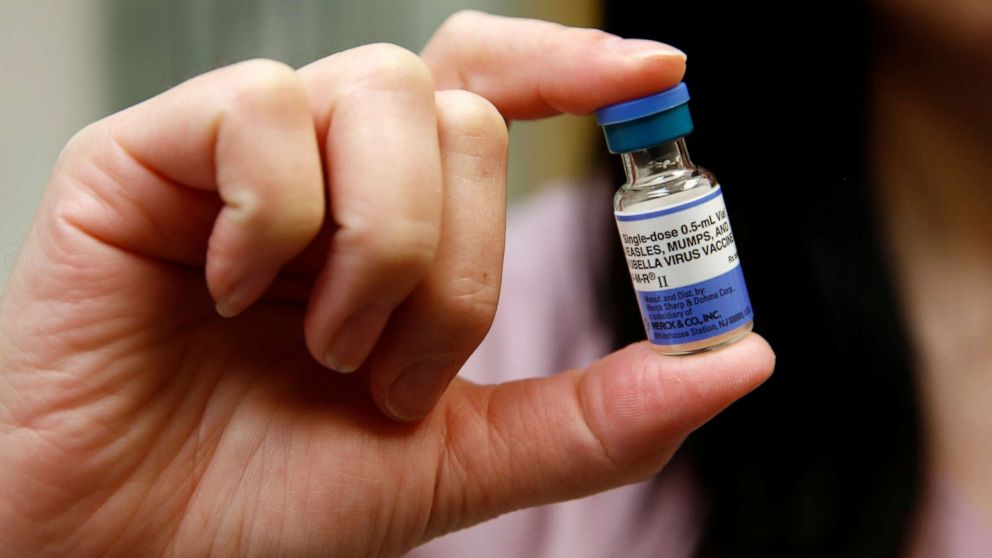
Measles is back…and our experts want people to leave the facts about vaccinations to the experts
Last week, America hit a record. Confirmed cases of measles eclipsed 700 cases. The disease that was once considered eradicated is now back and it has public health officials concerned. Dr. Todd Reinhart is the Dean of Sciences and Health Professions at Saint Mary’s University of Minnesota, and he has more than two decades of experience in infectious disease research. He’s a strong proponent of vaccinations and weighed in with his thoughts and perspective. “I’m not shocked,” says Reinhart. “I know there’s been a strong anti-vaccination movement and there’s a lot of misinformation out there.” He believes social media has been largely responsible for this movement to not vaccinate. The publication of the “Wakefield” paper, which suggested that the measles-mumps-rubella (MMR) vaccine might be linked to autism — even though retracted — got a lot of attention. However, that research that vaccinations cause autism has been debunked and even most recently there’s a study out of Denmark that covered 5,000,000 person years and there was no association with immunization and developing autism. Reinhart wants the public to look at the bigger picture and consequences. “It’s important to protect that child but also the broader society. Vaccines have been the strongest public health success story over the last few centuries. Measles is one of the most highly contagious viruses that we know. The odds of your getting it, if you’re exposed to it and you haven’t been immunized, is 90 percent. Part of the concern is for infants who aren’t immunized, the elderly because their immune systems are weaker, and those who are immunocompromised.” But there is also the matter of rights to be considered and that is playing a big part in all of this. “The problem is that individuals’ rights intersect with medicine, public health practice, and collective rights. If my infant, who couldn’t be immunized, contracts it through a carrier who could have been immunized, who has the higher ground because of rights? The problem is that even with clear data and clear information, people have been allowed the right, for the most part, to make the decisions they want,” Reinhart reiterates. If you are looking for answers and facts when it comes to vaccinations – it’s best to visit credible sources like the Centers for Disease Control and Prevention or local public health websites. If you need to speak with an expert about this topic for your news coverage – let us help. Dr. Todd Reinhart is Dean of Sciences and Health Professions, Professor, Biology and Health Professions at Saint Mary’s University of Minnesota. He has a degree in cancer biology from Harvard University’s School of Public Health and is an expert in the areas of infectious diseases. Simply click on his icon to arrange an interview.

Notre Dame Fire Marks ‘Dark Day,’ But Beauty Will Emerge, Baylor Architectural Historian Says
In the wake of a massive fire that devasted Paris’ iconic Notre Dame Cathedral on Monday and captured eyes and prompted tears across the globe, a Baylor University expert in architectural history said beauty can emerge from the ashes. Elise King, M.I.D., M.A.,, assistant professor of interior design in Baylor’s Robbins College of Health and Human Sciences, is an architectural and design historian. “Something I find comforting is that when you study architecture and design throughout history, there are numerous examples demonstrating that destruction, chaos and loss can beget inspired beauty. No matter the damage, this will not be the end of Notre Dame’s story,” King said. “Architecture isn’t static; it’s designed to adapt and change. The more significant the structure, the more likely its legacy will continue in some built form,” she said. “Whether it’s reconstruction, preservation and restoration, new construction or, more likely, some combination of strategies, Île de la Cité will not be without its cathedral.” French President Emmanuel Macron said Tuesday that he hopes the 850-year-old building could be rebuilt within five years. “We will rebuild the cathedral and make it even more beautiful,” Macron said, according to a story in The Wall Street Journal. King said that the Notre Dame the world has come to know from pictures or personal visits is not the Notre Dame of the 12th Century. “The beloved gargoyles, for example, were added in the 19th century during Viollet-le-Duc's controversial ‘restoration' of the cathedral,” she said. “There is no doubt that today will be remembered as a dark day in Notre Dame’s history. But already there is light, as groups of Parisians came together tonight to sing ‘Ave Maria’ on the sidewalk in front of the smoldering edifice. And if the damage is severe, I hope the destruction will inspire new and innovative design solutions.” ABOUT BAYLOR UNIVERSITY Baylor University is a private Christian University and a nationally ranked research institution. The University provides a vibrant campus community for more than 17,000 students by blending interdisciplinary research with an international reputation for educational excellence and a faculty commitment to teaching and scholarship. Chartered in 1845 by the Republic of Texas through the efforts of Baptist pioneers, Baylor is the oldest continually operating University in Texas. Located in Waco, Baylor welcomes students from all 50 states and more than 90 countries to study a broad range of degrees among its 12 nationally recognized academic divisions.
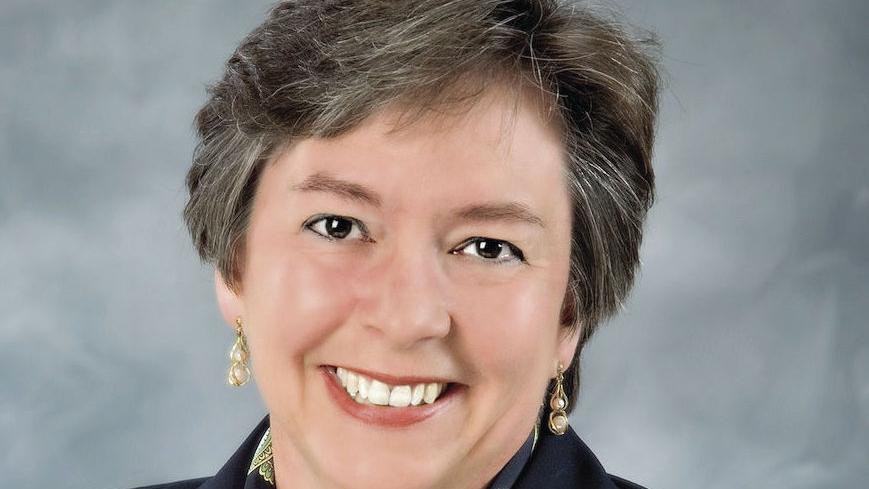
In her most recent column with The Free Lance-Star, University of Mary Washington’s Lynne Richardson extols a witty, pointed and yet optimistic piece about bad bosses, why they might be bad and how there’s even a silver lining to each bad boss’ behavior. Here’s a piece from her open letter. “Dear Bad Boss, Your staff complains about you. You’re a micro-manager. Or maybe you’re a detached manager, showing little interest in your people or the work they do. Or maybe you put such pressure on your employees that they feel stressed all the time and hate coming to work. Of course, because of this, productivity suffers. Maybe you have incredibly high expectations that are unachievable, especially because you either don’t know to hire or you don’t train your folks. There is no possible way for the folks in your organization to reach your ridiculous expectations. Whatever the reason your folks don’t respect you, I want to thank you. Say what? Yes, Bad Boss, I appreciate you being bad. And I have two reasons…” If you like this – read the rest of the article attached below. So, do you have a bad boss? Do you know someone who does? Any chance … you just might be a bad boss? Worry not – our experts can help. Dr. Lynne Richardson is a columnist, mentor and her expertise focuses on leadership management and higher education administration. She is available to speak with media about leadership … and even bad bosses. Simply click on her icon to talk with her and arrange an interview.


Ungrading – is putting down the pen an A+ idea for post-secondary professors?
It’s a growing movement among professors – ungrading. There’s a popular trend out there that says teachers are spending too much time grading and evaluating as opposed to educating. Some professors feel that students need to be engaged by what they learn and not necessarily fixated on the grades they earn. In a recent blog post (see below) UMW’s Jesse Stommel showed how strongly he backs the concept. “There are a surprising number of faculty questioning grades in productive ways, and experimenting with alternative modes of assessment,” said Jesse Stommel, executive director of the Division of Teaching and Learning Technologies at University of Mary Washington, and an early evangelist of ungrading. “If, as teachers, we just ask students why, when and how they learn, what we can get back is way more valuable than any standardized assessment mechanism can reveal.” Ungrading “creates space for that kind of honest reflection and dialogue,” he said. - TaxProfBlog The concept is novel and has support – but will it catch on? Will academia take a turn away from the traditional ways of grading? What will students think and how will they measure progress? And what about parents and potential employers who might rely on the old system when hiring or validating the costs of higher-education? Jesse Stommel is the Executive Director of Teaching and Learning Technologies at the University of Mary Washington and is an expert in faculty development, digital education and modern learning. Jesses is available to speak with media regarding ungrading – simply click on his icon to arrange an interview.