
Experts Matter. Find Yours.
Connect for media, speaking, professional opportunities & more.

Why Operation Varsity Blues has some experts seeing red
It’s a scandal that has all the right ingredients - celebrity, trusted institutions, entitlement, bribery and now stars potentially behind bars. The 50 people charged on March 12 in a college admissions conspiracy include the tennis coach for the Obama family, an investor and friend of Bono and TV celebrities Felicity Huffman from Desperate Housewives and Full House’s Lori Loughlin. They are all wealthy, connected and parents who participated in a scheme that saw cheating on admission tests and bribery of college coaches to get their kids into some of the most elite schools across America. It’s embarrassing for the kids, the parents and the schools. But nonetheless, there will be consequences. This conspiracy was brought down by the FBI after all. However, there is collateral damage that has also been done to America’s academic community. The reputation, importance and value of a degree from a post-secondary institution has been sullied. And undoing this damage will not be easy. Dr. David Rettinger is Director of Academic Integrity at the University of Mary Washington and President of the International Center for Academic Integrity, an organization founded to combat cheating, plagiarism and academic dishonesty in higher education. “With the recent revelations from the indictments in Operation Varsity Blues, the integrity of higher education is once again under attack. As a scholar of student ethics and President of the International Center for Academic Integrity, I encourage both condemnation of this behavior and understanding of the context in which it occurred. Our society is commodifying higher education, focusing on degrees and not learning. I hope that the public discourse about education can focus on authentic learning rather than degrees and qualifications, so that higher education can remain a public good.” Approved quote from Dr. David Rettinger Dr. Rettinger is available to speak with media regarding this scandal as well as the importance of education and how universities and colleges across America will need to work to rebuild trust in the institutions that have been impacted by these events. Simply click on his icon to arrange an interview.


Is there a storm coming in the South China Sea?
There’s trouble brewing in the South China Sea and there doesn’t seem to be a any way to calm the waters. Taiwan, the small island country that has been persistently seeking independence is pushing toward that goal at a fevered pace. Meanwhile China disagrees, wants Taiwan back in the fold and has stated that the country is seeking one unified China - and soon. At a recent speech, Chinese President Xi threatening to use force to bring Taiwan under its control, though said China would strive to achieve this peacefully. And with a military budget this year of 177 billion dollars (US), China will be able to dictate its definition of the term ‘peacefully’ to suit any of its likely goals. So, what’s next? Can international intervention or pressure call China off its mission to absorb Taiwan? Can China be stopped? Does Taiwan have the political capital at the UN to find actual support or protection and from who? And what would the consequences be in China took Taiwan with force? There are a lot of questions to be asked and that’s where we can help. Professor Elizabeth Larus was recently featured on CNBC Asia and updated their audience on the most recent developments and outlined what seems to be China’s next steps. Professor Larus teaches political science at the University of Mary Washington and is an #expert on China and the field of Asian studies. She is available to speak to other media pursuing this this subject – simply click on her icon to arrange an interview.

Everything old is new again – Is Joe Biden what the DNC needs or everything it’s trying to avoid?
It’s already a packed race with lots of political all-stars from the centre, left of centre and far left regions of the Democratic Party looking to be the one to face off against Donald Trump in 2020. It seems the only real heavy hitter left to jump in officially is former Vice President Joe Biden. Biden has been seen by many as the ‘one’ who can not only beat Donald Trump in the 2020 presidential election, but is likely one of only a few candidates with the political chops, thick enough skin and backbone to withstand the barrage of personal and political insults that will come with facing off against the President’s no holds barred approach to campaigning. Now Biden’s resume speaks for itself. But this isn’t his first kick at the DNC can. Previous attempts at running to lead the party have flopped. As well, the new crop of DNC politicians represents a new age of thinking. This new group is younger, feistier, more diverse and very much further to the left than the Democrats of the last 30 years – and though popular, is Joe Biden, who is 76 years old, part of the previous democratic establishment that America rejected in 2016? Another angle to consider is that this will be Biden’s third attempt to lead the DNC – do the Democrats risk, with all due respect, opting for its version of Bob Dole out of obligation as opposed to choosing a fresh face more aligned with the current party? There are a lot of questions to be asked and that’s where our experts can help. Mark Caleb Smith is the Director of the Center for Political Studies at Cedarville University. Mark is available to speak with media regarding the long journey to lead the DNC in 20220. Simply click on his icon to arrange an interview.


What Is Black Twitter and How Is it Changing the National Conversation? Baylor Expert Explains.
“Black Twitter” is a social media phenomenon that is changing the national conversation, but many people – including professional and strategic communicators – do not understand what it is or how it works, says Baylor University’s Mia Moody-Ramirez, Ph.D., professor of journalism, public relations and new media. Moody-Ramirez is a nationally recognized expert on mass media representations of minorities, women and other underrepresented groups. She coauthored the 2018 book From Blackface to Black Twitter: Reflections on Black Humor, Race, Politics, & Gender with Janette L. Dates, Ph.D., educator and critical commentator on the images of African-Americans in media. First things first, Moody-Ramirez said, Black Twitter is not a separate entity from Twitter. Black Twitter is a grassroots movement within Twitter that has provided a virtual community of mostly African-American Twitter users a collective voice on a variety of issues, including Black Lives Matter. Black Twitter users often identify themselves using the #blacktwitter hashtag or by focusing on issues related to the black experience. “We conclude [in our book] that alternative spaces, such as Twitter, offer a platform for ideas and concerns from a black perspective about social inequalities, politics and social justice, that were historically prohibited from taking root in other communication venues,” Moody-Ramirez said. In the following Q&A, Moody-Ramirez further explains Black Twitter. Q: When do you see the most Black Twitter activity? A: Much of the content on Black Twitter surfaces during a crisis that impacts black people such as race-related incidents that had less than favorable outcomes for the black community. As the saying goes, if society doesn’t handle it, then Black Twitter will step in to handle it. On a lighter note, Black Twitter users also collectively discuss media content such as TV shows, movies and award ceremonies from the black perspective. Q: How can people monitor what’s happening via Black Twitter? A: "Black Twitter" users often identify themselves using the #blacktwitter hashtag or other hashtags such as #BlackGirlJoy, #blackboyjoy, #blacklivesmatter, or any other hashtag focuses on issues related to the black experience. You can also monitor Black Twitter by following individuals who are known for sharing content about the black experience. Q: If someone outside the African-American community feels passionate about an issue or supports an issue raised by the Black Twitter community, how can they engage? Should they? A: As with any other platform, they should be considerate and proceed with caution. Anyone who is not a regular should make sure what they are sharing is appropriate. Q: Do you see Black Twitter or similar movements emerging on other social media platforms? A: Not to the same extent because Black Twitter is driven by hashtags and certain Twitter users who are trendsetters. Q: Is Black Twitter a reflection or an extension of other historical, social African-American grassroots movements? A: African Americans have used Twitter to share narratives on issues of interest to the black community, particularly in the United States. In her 2015 dissertation, Dr. Meredith Clark writes that African-American Twitter users have emerged as a subset of interest for two reasons – (1) their representation on Twitter has eclipsed that of White U.S. users; (2) because of their representation, they possess a unique ability to dramatically influence Twitter trends. Q: How do you feel Black Twitter will evolve? Will it? A: Scholars such as Feminista Jones and Dr. Meredith Clark have traced the history and content of Black Twitter, noting that the platform is used to share content on timely topics such as racial inequalities, politics, police brutality and women’s rights. In 2013, Feminista Jones described “Black Twitter” as a “collective of active, primarily African-American Twitter users who have created a virtual community that participates in continuous real-time conversations.” ABOUT BAYLOR UNIVERSITY Baylor University is a private Christian University and a nationally ranked research institution. The University provides a vibrant campus community for more than 17,000 students by blending interdisciplinary research with an international reputation for educational excellence and a faculty commitment to teaching and scholarship. Chartered in 1845 by the Republic of Texas through the efforts of Baptist pioneers, Baylor is the oldest continually operating University in Texas. Located in Waco, Baylor welcomes students from all 50 states and more than 80 countries to study a broad range of degrees among its 12 nationally recognized academic divisions. ABOUT THE COLLEGE OF ARTS & SCIENCES AT BAYLOR UNIVERSITY The College of Arts & Sciences is Baylor University’s oldest and largest academic division, consisting of 25 academic departments and seven academic centers and institutes. The more than 5,000 courses taught in the College span topics from art and theatre to religion, philosophy, sociology and the natural sciences. Faculty conduct research around the world, and research on the undergraduate and graduate level is prevalent throughout all disciplines. Visit www.baylor.edu/artsandsciences.


Baylor Expert on Race, Blackface Featured Nationally
Mia Moody-Ramirez, Ph.D., professor of journalism, public relations and new media at Baylor University, is a nationally recognized expert on mass media representations of minorities, women and other underrepresented groups. Over the past few weeks, Moody-Ramirez has been interviewed and quoted extensively by some of the nation's top media outlets for their stories about race -- specifically the history and cultural significance of blackface. She coauthored the 2018 book From Blackface to Black Twitter: Reflections on Black Humor, Race, Politics, & Gender with Janette L. Dates, Ph.D., educator and critical commentator on the images of African-Americans in media. In a Feb. 10 USA TODAY story about Viriginia's governor and blackface, Moody-Ramirez said, "I think we will see some good come out of these latest revelations. People will be more educated. They can no longer argue they didn't know that it is not appropriate to put on makeup to darken their face or change their hair texture to look like their favorite actor or celebrity . . . They will no longer have that excuse." Other stories include: The Washington Post Northam’s ugly yearbook photo and the racist origins of blackface CNN A not-so-funny story about blackface Arizona Republic He objected to a photo of coal miners who appeared to be in blackface. He never imagined the backlash. The Washington Post The lengthy history of white politicians wearing blackface — and getting a pass OZY Governor Wanted: Predators and Racists Need Not Apply PRI The World How blackface — ‘America’s first cultural export’ — reinforces oppression across the world USA TODAY Blackface in Virginia, other incidents show how deeply rooted anti-black racism is in America

Expert: Why do entrepreneurs fail? They choose the wrong idea.
The importance of having a sound business idea for a startup is essential, but identifying the ideas most likely to go from concept to venture is challenging. Statistics show that about 34 percent of startups fail within the first two years and 56% within the first four years. Most failures are due, in part, to the pursuit of ideas that are poorly selected and/or tested. “Inexperienced entrepreneurs have improved odds of succeeding over the long run if their first idea is sound,” says Dan Cohen, director of Wake Forest University’s Center for Entrepreneurship. “A key to that success is to generate 100 ideas and then evaluate and select the best one. That first win builds confidence for the next.” - Dan Cohen Cohen’s new teaching method, IDEATE, has been proven to help develop higher-quality, more innovative ideas. He is available to discuss ways fledgling entrepreneurs can refine their ideas — from product or service development to customer testing to securing investors to marketing and sales. He can also discuss why starting a business is easier today than it has ever been and what characteristics people share who are drawn to opportunities, innovation and entrepreneurship. Dan Cohen and Wake Forest’s Center for Entrepreneurship were prominently featured in the Winston-Salem Journal’s Business & Innovation section Spotting valuable ideas. IDEATE was one of four finalists for the 2018 Excellence in Entrepreneurship Teaching and Pedagogical Innovation Award from the Global Consortium of Entrepreneurship Centers — winning recognition from among more than 100 submissions. Most recently, Wake Forest University was a finalist for the Model Emerging Entrepreneurship Program Award at the United States Association for Small Business and Entrepreneurship (USASBE) Conference focused on entrepreneurship education. Broadcast Television and Radio Studio Information Wake Forest operates a fully-equipped, professional television and radio studio to connect experts with global news media. Video interviews can be coordinated through LTN Global Communications’ Smartcloud IP video transport service that provides regular high-quality video transport connections to most major broadcast networks. Audio interviews are coordinated through ipDTL, an IP codec used for remote radio broadcasts as well as voice-overs. ipDTL replaces classic ISDN audio codecs and has backward compatibility. Details available here.

Another shutdown? Let our experts explain if there's a reason to worry about the economy
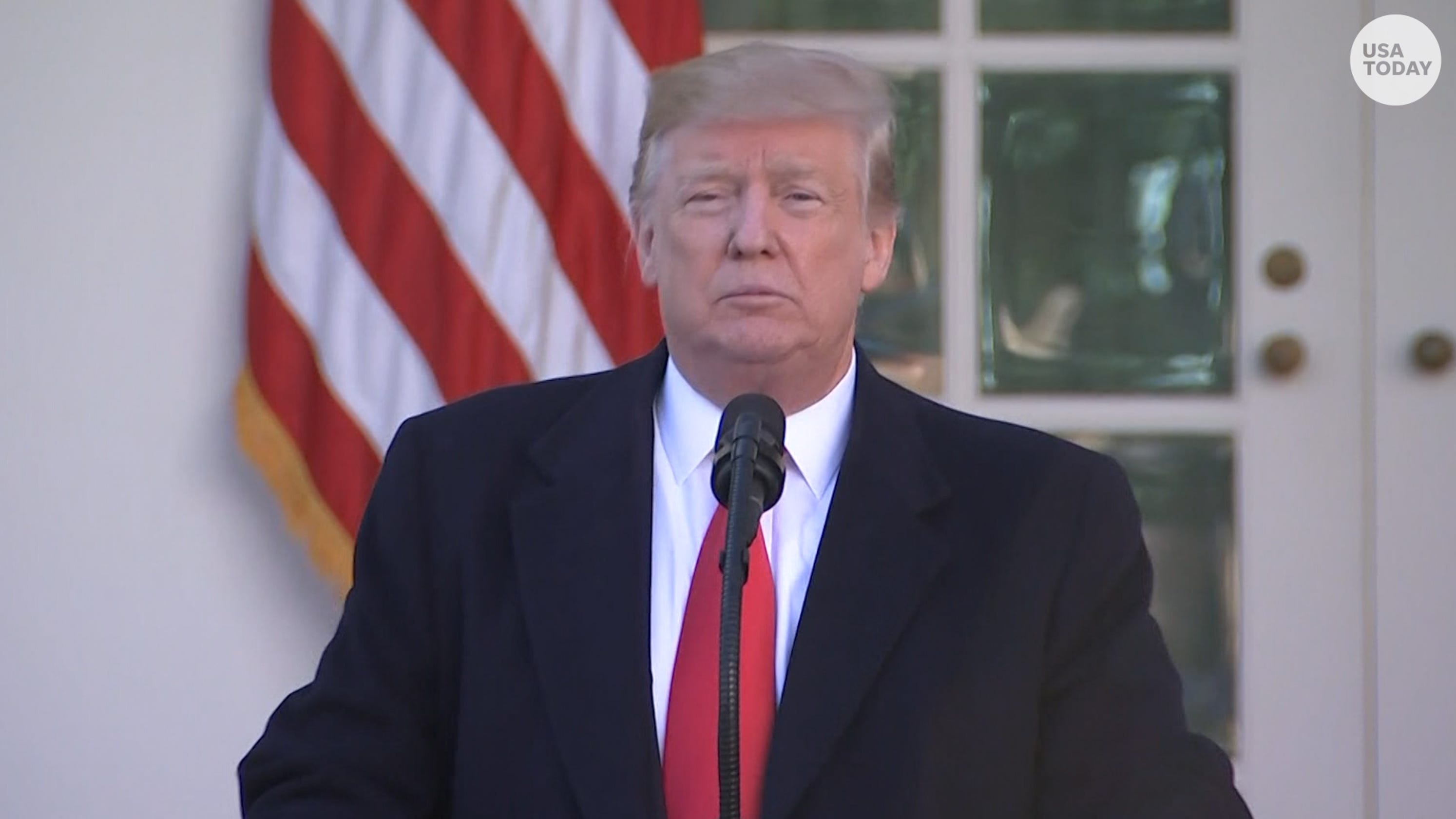
It lasted longer than a month, and for now we’re on a three-week reprieve – but the federal government shutdown that saw Democrats and Republican dueling at a safe 20 paces while 800,000 federal employees were watching unpaid from the sidelines is over. But from the financial side, the big picture for America was hardly touched. Will that still be true this time around? But with the shutdown over and employees back to work, for three weeks while politicians negotiate a final deal – there are still a lot of questions outstanding? What industries are most vulnerable to another government stoppage? Is there anything that can be done politically to stop federal government employees from being used as pawns in future negotiations? Despite the economy carrying on – are investors dissuaded by these shutdowns? David M. Primo is the Ani and Mark Gabrellian Professor and an associate professor of political science and business administration at the University of Rochester. He is the author of three books and is a go-to for media in New York and nationally for his expertise on topics like this. David is available to speak with media regarding the economic effects of the shutdown – simply click on his icon to arrange an interview.



This Valentine’s Day, give the gift of great conversation
When is the last time you and your partner made time to talk? Or, more important, made time to really listen to one another. The newness of getting to know our partner – that interest we had in the beginning of a relationship – begins to take a back seat to the everyday busyness of life. And while the days, months and years pass by, it is easy to assume that the one we love is essentially the same person with the same needs, interests, values and goals. "People think that ‘change is the only constant’ doesn’t apply to our relationships. We forget that we are always growing and learning new things about ourselves and so is our partner,” says Wake Forest University communication professor Jennifer Priem. “As we and our partners grow, we need to learn how to best make adjustments in our relationship so that our relationships grow with us. That happens when we listen.” Priem studies relationships and conducts research that explores the connection between supportive conversations and physiological signs of stress reduction. She recently launched a blog on Psychology Today, Stressing Communication, and is sharing a series of posts called, “Conversations That Will Save Your Relationship.” Priem offers these tips to help set the stage for meaningful conversation. Ask your partner if it’s a good time talk. “After work or when your partner is tired is usually not the best time to talk,” says Priem. “If your partner says ‘no’ it doesn’t mean forever. Rather than force a conversation because you’re ready, wait for a time that will be good for you both to engage.” When it is time to talk, listen first. Be a supportive listener. Don’t allow yourself to be distracted by your cell phone, other things happening around the conversation, or tangential thoughts that pop into your mind. Listen to understand, rather than to respond. Try not to interrupt your partner. Wait to respond until your partner has completed his or her thought. It may be that by waiting to respond, you will learn something new that will change how you respond. Conversations don’t require “work,” says Priem, but they do require that we recognize how we maintain our relationships, assess if it is in line with what is best for us and our partner, and adjust our strategies to create the best possible relationship over time. Priem is available for phone, email and broadcast interviews. Broadcast Television and Radio Studio Information Wake Forest operates a fully-equipped, professional television and radio studio to connect experts with global news media. Video interviews can be coordinated through LTN Global Communications’ Smartcloud IP video transport service that provides regular high-quality video transport connections to most major broadcast networks. Audio interviews are coordinated through ipDTL, an IP codec used for remote radio broadcasts as well as voice-overs. ipDTL replaces classic ISDN audio codecs and has backward compatibility. Details available here.

Expert on Virginia Constitution available to comment on gubernatorial removal, succession issues
John Dinan, a Wake Forest University politics and international affairs professor who specializes in the study of state constitutions and is the author of the book The Virginia State Constitution, can answer questions about the process in Virginia for removing a governor from office and what happens if a governor is removed or resigns. Removing a governor from office The Virginia Constitution provides two pathways for removing a governor from office. First, the Virginia Constitution allows for impeachment in cases of "malfeasance in office, corruption, neglect of duty, or other high crime or misdemeanor." Similar to the process in place at the national level, it takes a majority vote in the house to impeach an official and a two-thirds vote in the senate for conviction and removal from office. Second, in a provision that roughly tracks the 25th Amendment to the U.S. Constitution and was intended to apply to cases of physical or mental disability, a governor can be deemed "unable to discharge the powers and duties of his office,” as determined either by the attorney general, senate president pro tem, and house speaker acting together or by a majority vote of all members of the legislature. Such a determination triggers a process that ultimately requires a three-fourths vote in the house and senate to remove a governor on the ground of inability to discharge the powers and duties of the office. Succession to the office of governor When a governor leaves office before the end of the term, he is succeeded by the lieutenant governor. In case the lieutenant governor’s office is vacant, the attorney general would become governor. In case the office of attorney general is vacant, the house speaker would become governor. In any of these situations, someone assuming the office of governor mid-term would not be prohibited from running for and serving another full term in office, despite Virginia’s prohibition on a governor serving consecutive terms. Succession to the office of lieutenant governor In the event the lieutenant governor succeeds the governor and therefore the lieutenant governor’s office becomes vacant, the senate president pro tem would discharge the duties of the lieutenant governor, while continuing to serve in the senate. The governor is then permitted to appoint someone to fill the vacancy in the lieutenant governor’s office, with this appointee serving until the next scheduled general election (November 2019), when an election would be held to fill out the remainder of the original term. Succession to the office of attorney general In the event of a vacancy in the office of attorney general, the position would be filled by a person selected by a majority vote of all members of the legislature, as long as the legislature is in session, and that person would then serve the remainder of the original term. If the legislature is in recess, then the position would be filled temporarily by an appointee of the governor and that person would serve until the legislature is next in session and would select someone to fill out the term. Broadcast Television and Radio Studio Information Wake Forest operates a fully-equipped, professional television and radio studio to connect experts with global news media. Video interviews can be coordinated through LTN Global Communications’ Smartcloud IP video transport service that provides regular high-quality video transport connections to most major broadcast networks. Audio interviews are coordinated through ipDTL, an IP codec used for remote radio broadcasts as well as voice-overs. ipDTL replaces classic ISDN audio codecs and has backward compatibility. Details available here.

Preaching to choirs, playing it safe and not saying much at the State of the Union
One Tuesday evening – pretty much everything seemed to go to plan. President Trump stuck to script, Republicans stood and clapped on cue, Democrats scoffed and scowled when required and we all listened closely for a total of one hour and twenty minutes – the second longest SOTU ever given. President Trump called for unity, touted the economy, acknowledged the white-wave of females on Congress and how there are now more women employed in America. He played to his base on topics like immigration and abortion and then oddly let everyone know that the only thing holding America back were expensive wars and pointless investigations. He also thanked veterans for defeating the Nazis. Left out was any mention of climate change or Russia. Of course, afterwards the Democrats responded, politicians flocked to reporters and pundits weighed in. President Trump played it safe and kept to the prompter, and according to CBS Evening News an overwhelming 76 percent of Americans liked what they heard. But the day after … there are still a few questions to be asked: Did President Trump deliver the speech e needed to deliver? Outside of the beltway, how was this received by voters? Does this point out a pathway for either Democrats or Republicans for 2020? And by not saying much, did Trump say everything he needed to? If you are covering, let an expert from the University of Mary Washington help. Dr. Stephen Farnsworth is professor of political science and international affairs at the University of Mary Washington. A published author and a media ‘go-to’ on U.S. politics, he is available to speak with media regarding this issue. Simply click on his icon to arrange an interview.
