
Experts Matter. Find Yours.
Connect for media, speaking, professional opportunities & more.
#Expert Research: Biodegradable ultrasound implant could improve brain tumour treatments
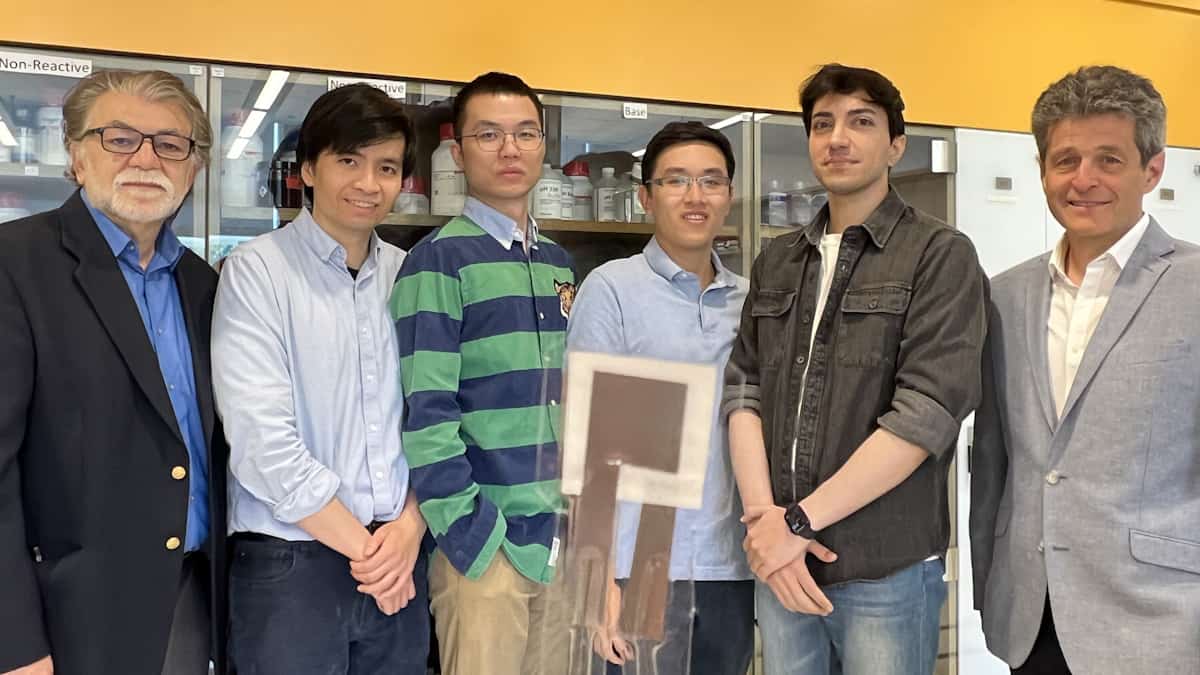
One of the challenges in treating certain types of brain cancer is the way that the blood-brain barrier prevents chemotherapy drugs from reaching the tumors they're meant to target. UConn's Thanh Nguyen, a biomedical and mechanical engineer, is developing new technology that could improve how we are able to treat brain tumors. He recently spoke with Physics World about this groundbreaking research: A new type of biodegradable ultrasound implant based on piezoelectric nanofibres could improve outcomes for patients with brain cancer. Researchers led by Thanh Nguyen from the the University of Connecticut’s department of mechanical engineering fabricated the devices from crystals of glycine, an amino acid found in the human body. Glycine is not only non-toxic and biodegradable, it is also highly piezoelectric, enabling the creation of a powerful ultrasound transducer that could help treat brain tumours. Brain tumours are particularly difficult to treat because the chemotherapy drugs that would be effective in tackling them are blocked from entering the brain by the blood–brain barrier (BBB). This barrier is a very tight junction of cells lining the blood vessel walls that prevents particles and large molecules from making their way through and damaging the brain. However, ultrasound can be safely used to temporarily alter the shape of the barrier cells such that chemotherapy drugs circulating in the bloodstream can pass through to the brain tissues. Currently, to achieve such BBB opening requires the use of multiple ultrasound transducers located outside the body, together with very high intensity ultrasound to enable penetration through the thick human skull bone. “That strong ultrasound can easily damage brain tissues and is not practical for multiple-time applications which are required to repeatedly deliver chemotherapeutics,” Nguyen tells Physics World. By contrast, the team’s new device would be implanted during the tumour removal surgery, and “can generate a powerful acoustic wave deep inside the brain tissues under a small supplied voltage to open the BBB”. The ultrasound would be triggered repeatedly as required to deliver the chemotherapy that kills off the residual cancer cells at tumour sites. After a set period of time following treatment the implant biodegrades, thereby eliminating the need for surgery to remove it. The research, reported in Science Advances, demonstrated that the team’s device used in conjunction with the chemotherapy drug paclitaxel significantly extended the lifetime of mice with glioblastomas (the most aggressive form of brain tumour) compared with mice receiving the drugs but no ultrasound treatment. This is fascinating research and if you are interesting in covering this topic, then let us help. Professor Nguyen focuses on biointegrated materials and devices at nano- and micro-scales for applications in biomedicine, and he's available to speak to media about his research. Simply click on his icon now to arrange an interview today.



Electric vehicles are hitting the streets, but there are potholes to avoid
No doubt about it, electric vehicles are coming and coming fast. Production of EVs has ramped up in the last couple of years but there are many issues that need to be addressed before they become the everyday choice for consumers. Richard Franza, PhD, professor of management at the Hull College of Business at Augusta University said the timing of EVs is contingent on a few things. “It’s not a question of if they’re coming, but how fast will they be here,” said Franza. “One is the speed at which there is infrastructure built for them. There are still not a lot of places to charge a car. We need more charging stations. Eventually, EVs will be predominant.” Franza added a second hurdle is how fast the federal government moves on emissions requirements that will cause consumers to phase out fossil fuel vehicles. Georgia has become one of the leaders in luring EV manufacturers to call the state home. Not just that, but the state is also drawing in companies that supply batteries and other components. “Any time you build a manufacturing or assembly facility, you automatically get the suppliers around them. Even before Georgia got the vehicle manufacturers, we already had a battery manufacturer, so Georgia already has a good network for the automobile industry,” said Franza. Amazon has already made a major investment in EVs and Franza expects other companies like FedEx and UPS, companies that have a fleet of vehicles, to make the switch to EVs as well, since they have more ability to set up charging networks. The biggest question remains: how long it will take before EVs become more prevalent on the streets? Franza said the answer could depend on who you listen to, but other factors come into play. “Right now, electric vehicles account for less than 1% of the vehicles on the road. So I see two leading indicators – the number of gas stations vs. the number of charging stations, and the production of combustion engines vs. electric vehicles. Look for when the ratios of those really start to change, but it’s not black and white. There are several factors that will go into that and it could take longer than people are saying,” Franza said. Covering EVs and the auto industry? Then let us help. Richard Franza, PhD, is available to speak with media about trending issues like inflation, small business and the economy – simply click on his icon now to arrange an interview today.



Georgia Southern University biology professor and researcher Christine Bedore, Ph.D., is helping National Geographic explore the mysteries of shark attacks by sharing her expertise and years of fieldwork as part of the six-part series, “When Sharks Attack 360,” this month. The series, which kicked off July 3, is part of National Geographic’s SharkFest, which will run all month on National Geographic TV, Disney+ and Nat Geo WILD, with new episodes each night through July 11. All episodes are currently available for streaming on Hulu. In episodes 3 and 6, Bedore, an assistant professor in the College of Science and Mathematics who conducts research on sensory systems in sharks, discusses how shark senses may lead to bites by sharks on humans. While filming, she marveled at the channel’s cutting-edge VFX lab and their approach to educating viewers. “Working with National Geographic and the production team on this series was exciting because of the level of experience and creativity of the production team,” said Bedore. “It’s one of the most unique experiences I’ve had filming a documentary so far since it was done in a studio with a green screen, rather than in the field like we typically do. Using the virtual graphics in this series allows us to see these animals from a completely different angle. Although it was challenging to point at a shark that I couldn’t see at the time, we wouldn’t be able to see the detail of the animal at this level filming in the field.” Sharks have long captured the attention of both scientists and the public, and are fascinating animals for many reasons, according to Bedore, who has offered her expertise for previous episodes on Nat Geo WILD, The History Channel and BBC. They’re a species of immense size and diversity, and offer unique behaviors and interactions with other creatures, she noted. Understanding the behavior and physiology of sharks is critical to their survival, as they experience population declines due to overfishing and habitat changes. “In order to combat these changes and ensure the persistence of sharks in our oceans across the world, we first need to understand why they behave the way that they do,” Bedore said. “This series helps us do exactly that. For example, in episode 3 we discuss whether or not sharks can see in color. As a scientist that studies shark color vision, I’m often approached with the question, ‘who cares if sharks can see color?’ As you’ll see, the ability to see color could help sharks identify prey, predators or other objects.” In episode 6, Bedore helps viewers understand that visual acuity, or how clear an image is, may be more important than color when we think about why sharks sometimes have negative interactions with humans. “Being able to discuss my work in these areas through National Geographic’s shark month has been a rewarding experience in helping people understand why these events sometimes happen,” she said. “It’s exciting to study such charismatic animals and have the chance to share your enthusiasm for your research and the sharks with people across the world.” For more information on National Geographic’s “When Sharks Attack 360” visit here. The series can be seen on Hulu, Disney+ and Nat Geo WILD throughout July. To connect with Georgia Southern University biology professor and researcher Christine Bedore to learn more about this fascinating topic - simply contact Georgia Southern's Director of Communications Jennifer Wise at jwise@georgiasouthern.edu to arrange an interview today.


Predicting the post-pandemic desires for the Latin music industry
Coachella, identified as a mega-festival universe, decided on a diverse 2023 roster with artists like Becky G, Kali Uchis, and Rosalía. Bad Bunny, last year’s most-streamed global artist, made history as the festival’s first Spanish-language headliner. It also marked the first year since Coachella’s founding in 1999 that none of the headliners were white. José Valentino Ruiz-Resto, an assistant professor in the School of Music at the University of Florida, co-authored a paper for the Journal of Arts Entrepreneurship Education, which focused on how the music industry would evolutionarily change after the pandemic and ultimately predicted the 2023 Coachella trend. “The rise of Latin artists/headliners at festivals like Coachella is really a reflection of what has been happening in the music industry for the past two decades,” said José Valentino Ruiz-Resto who is also the program coordinator of Music Business & Entrepreneurship at UF. Ruiz-Resto’s research showed that the post-Covid era music industry would encourage more people to stay home and listen to music digitally, but the traditional Latin music experience is an outlier to this. The world-renowned multi-instrumentalist explains, "In order for concerts and festivals to maintain success, they needed to branch out to other markets to bring in those people who were still very much passionate about experiencing music in a live context.” Although this shift was initiated by the pandemic, it has been patiently anticipated by Ruiz-Resto for over 23 years, starting with the founding of the Latin Grammys in 2000. “Because the amount of production within the Latin recording academy is almost equivocal to that of all of the other genres in the American market combined. Latin music is the No. 1 meta genre in the music industry in terms of sales and fan support,” Ruiz-Resto, now a four-time Latin Grammy Award winner, said. Ruiz-Resto's data predicted the need for a stronger focus on the Latin music enthusiasts who still actively go to concerts like Coachella, “In order for Coachella to ultimately succeed in the post-Covid era and attract people, they needed to bring in artists like Bad Bunny.” This historic Coachella moment followed an announcement from the Recording Industry Association of America, stating that Latin music revenues in the United States were at an all-time high, exceeding over $1 billion in 2022. All of this was no surprise to Ruiz-Resto, who observes, researches and directly participates in the Latin music industry. “Now bigger shows are catching up to what has been the largest-selling music market for years. It’s a testament to how positively Latin American cultures are inspiring listeners across the U.S.” By Halle Burton


Smartphones push consumers to prefer a customizable purchasing experience
In a world where purchasing is only a click away, studies have shown that smartphones complicate the most preferred items. Aner Sela, a professor in UF’s Warrington College of Business conducted a new study that discovered consumers who are captivated by their phones gravitate towards specialized, custom products. Compared to large computers or borrowing someone’s phone, an individual’s phone sparks privatized feelings that allow stronger self-expression and strengthens our unconscious preference for a customized consumer journey. Working alongside Camilla Song, an assistant professor at City University of Hong Kong, Sela published their findings in the Journal of Marketing Research in early August. “When you use your phone, your authentic self is being expressed to a greater extent. That affects the options you seek and the attitudes you express,” said Sela, one of the authors of the study. The researchers suspected that smartphones encourage people to reflect on their inner identity, calling on the psychological state of private self-focus that affects all kinds of behaviors. “People with high levels of private self-focus tend to be more independent in the attitudes that they express. They conform less,” the UF professor said. “When they make choices, they tend to choose based on privately or deeply held beliefs, preferences or tastes, and they’re less influenced by social contexts.” Sela and Song chose to test if smartphones have the capability to promote enough private self-focus that it changes behavioral patterns, so they performed five experiments with undergraduates and online respondents. The study found that smartphone users were more likely to choose unique, tailored products rather than large ones than if the user hopped on a large computer. These results vanished if the user was given another phone from the same brand, suggesting that companies should alter their consumer suggestions based on the device they are using. The professor and her former doctoral student found the self-expression mindset likely to cause behavioral changes can be activated by the use of a smartphone. “With a borrowed phone, it doesn’t feel like you’re in your own little bubble. What we find is the use of smartphones and its activation of private self-focus is really unique to a personal device,” Sela said. By Halle Burton


In this day and age, people of all ages are often on social media. While most of the platforms can be engaging for the good, there are always bad actors out there passing along misinformation. That’s the type of content younger students need to be aware of, according to an Augusta University faculty expert. Stacie Pettit, PhD, program director of the Master of Education in Instruction in the College of Education and Human Development, suggests there needs to be more media literacy and awareness of social media taught to students. With so many videos and posts claiming to be informative, how is one supposed to discern what is factual and what is not? Pettit feels people need to be more aware of how to tell when something is legit as opposed to something that is inaccurate. “Knowing what legitimate research is and what’s not, especially in this political climate, it can be tough to tell,” said Pettit. “More can be done in them understanding how deep it goes and what you search for, you’re going to get things that are skewing your mind to what you already want to believe. I feel like that component can be deeper.” Pettit realizes younger students know how to use social media, but using it in a responsible way can be just as important. People may post videos claiming one thing, but without fact checking, it may be inaccurate and can be a dangerous tool to mold a younger person’s mind. “If you already have your mind made up about something, you’re going to find things. It’s like the old phrase, ‘If you’re looking for a yellow cab, you’re going to find a yellow cab.’ This may be your context, your culture that you’re coming from, but put yourself in this place, how might they feel? Knowing there isn’t just one way to think about something, it’s not just a black and white answer to all these critical issues is important,” Pettit added. She knows it’s of the utmost importance for students to realize that every talking head they see in a video on social media isn’t always speaking the truth. Fact checking, finding another source to support a view and paying attention to the source in the first place can be key pieces of the puzzle students can use to find out the legitimacy of a post from the start. Amid all the misinformation, there are still plenty of legitimate uses for social media platforms. “There’s definitely educational and helpful things on YouTube. I encourage my kids a lot to go there because I’m trying to teach them to be more independent. She’s often like, ‘I don’t know how to do that’ but I tell her to find a video; this is what you’re going to have to do in college,” she said. If you're a journalist covering education and the impacts social media has on students, then let us help. Stacie Pettit, PhD, is a respected leader in middle level teacher education and meeting the needs of marginalized young adolescents. She's available to speak with media; simply click on her icon now to arrange an interview today.

Richard G. Cuming Appointed Chief Operating Officer of ChristianaCare
(WILMINGTON, Del. – June 26, 2023) Richard G. Cuming, Ed.D., MSN, RN, NEA-BC, FAAN, has been named ChristianaCare’s chief operating officer (COO). Cuming has been serving as interim COO since the beginning of this calendar year. He joined ChristianaCare in 2016 as the system’s first Chief Nurse Executive. In his role as COO, Cuming oversees the delivery of efficient and fiscally responsible system operations. He also works with other leaders to ensure high-quality and safe patient care. “Ric has been an invaluable asset to ChristianaCare over the past seven years, especially in navigating the many challenges of the COVID-19 pandemic” said Janice E. Nevin, M.D., MPH, ChristianaCare president and chief executive officer. “As leader of our extraordinary, Magnet®-designated nursing staff and president of ChristianaCare HomeHealth, he has improved the lives of patients and caregivers alike. I look forward to him flourishing in this new role.” Prior to coming to ChristianaCare, Cuming oversaw the operations and strategic direction of nursing services, perioperative and emergency services at Einstein Medical Center Philadelphia, Einstein Medical Center Elkins Park, MossRehab, Einstein Center One and Willowcrest, a skilled nursing center. Ric also previously worked at Jackson Health System in Miami as senior vice president and chief nursing executive, and he served as senior vice president and chief administrative officer at Jackson South Community Hospital. Cuming serves on the board of directors of the DAISY Foundation and board of trustees of the Association of Perioperative Registered Nurses Foundation. He was inducted into the American Academy of Nursing and is an alumnus of both the Robert Wood Johnson Foundation Executive Nurse Fellowship Program and the Wharton School of Business General Management Program. Cuming earned his diploma of collegial studies in nursing at John Abbott College in Montreal, his Bachelor of Science in nursing from the University of Ottawa, his Master of Science in nursing at the University of Miami and his doctorate in adult education and human resource development with a minor in advanced nursing administration from Florida International University.



Post-pandemic, can America's kids catch up on lackluster literacy rates?
When COVID-19 hit, the education system nearly came to a halt. It went from in-person education in classrooms to virtual learning. Everyone knew there would be learning losses across the board. The question was how severe would they be and could those losses be mitigated? Literacy rates took a big hit, especially in younger students. Without in-classroom instruction, children started to fall further behind. According to the New York Times, about a third of children in the youngest grades are missing reading benchmarks, which is up significantly from before the pandemic. While every demographic has been affected, Black and Hispanic children and those from low-income families have fallen the furthest behind. Can anything be done to help students catch up? Betsy VanDeusen, PhD, director of the Augusta University Literacy Center, said a lot of research is coming out now and what’s being called “high dosage tutoring” is the way kids can catch up. “That just means you have to be able to see students more and more intensive,” said VanDeusen. “So we request for the kids that are at the lowest that we see them three times a week; one time a week won’t do it.” While that works on an individual basis, VanDeusen said there’s no magic bullet. While some schools here and there, and even a few states, may have found a way to help with literacy rates, the field continues to search for ways to implement needed changes across the entire educational system to support all students. She also added the decline in literacy actually started before the pandemic. “We’ve lost a tremendous amount. We lost 20 years of growth on the one national test that’s given. The achievement gap has been documented for decades and it has just been made worse.” This is an important topic and if you're a journalist covering education or how the impacts of COVID-19 are still being felt across the country, then let us help with your coverage. Betsy VanDeusen, PhD, director of Augusta University’s Literacy Center, is available to speak with reporters, simply click on her icon now to arrange an interview today.


Georgia Southern University opens doors to Gullah Geechee Cultural Heritage Center
Georgia Southern University’s Gullah Geechee Cultural Heritage Center officially opened its doors with a grand opening and ribbon cutting on June 19. Coinciding with the Center’s Juneteenth celebration, the public was invited to attend the afternoon festivities at 13040 Abercorn Street in Savannah. The ribbon cutting saw many local dignitaries in attendence, including Savannah Mayor Van R. Johnson, Georgia Rep. Carl Gilliard, Georgia Sen. Derek Mallow and Chatham County Chairman Chester Ellis, as well as Gullah Geechee Cultural Heritage Corridor Executive Director Victoria Smalls, Gullah Geechee historian and preservationist Queen Quet and Georgia Southern Provost and Vice President for Academic Affairs Carl Reiber, Ph.D., offered opening remarks. “This is a monumental occasion,” said Maxine Bryant, Ph.D., director of the Gullah Geechee Center. “To celebrate our grand opening on the nationally recognized Juneteenth is extremely meaningful. We will simultaneously honor the freedom of enslaved Black Americans and the Gullah Geechee culture that has preserved more African traditions than any other group.” The Gullah Geechee people of Coastal Georgia are descendants of enslaved Africans from plantations along the lower Atlantic coast. Many came from the rice-growing region of West Africa and were brought to the Americas for their agricultural and architectural knowledge and skills. The enslaved Africans were isolated on the Sea Islands. This isolation enabled them to create and maintain a unique culture steeped in remnants of Africa. This culture became known as Gullah Geechee and is visible in the people’s distinctive arts, crafts, foodways, use of waterways, music, dance and language. Much of the Gullah Geechee community today, which is estimated to be a population of 1 million, can speak the African Creole language or tell the stories of their ancestors who are credited with influencing southern and American culture. Local Gullah Geechee artists and the McIntosh County Shouters showcased their talent at the event. The Gullah Geechee Cultural Heritage Center, established in 2019, honors myriad contributions made by Gullah Geechee people, provides educational resources for the public, promotes scholarship and research, and serves as a model for national reconciliation and reparations. It is part of the Gullah Geechee Corridor, which stretches across 27 counties in Georgia, South Carolina, North Carolina and Florida. If you're interested in learning more about Georgia Southern University’s Gullah Geechee Cultural Heritage Center - then let us help. Simply reach out to Georgia Southern's Director of Communications Jennifer Wise at jwise@georgiasouthern.edu to arrange an interview today.
Solving sargassum: Florida Tech researchers exploring ways to make seaweed useful
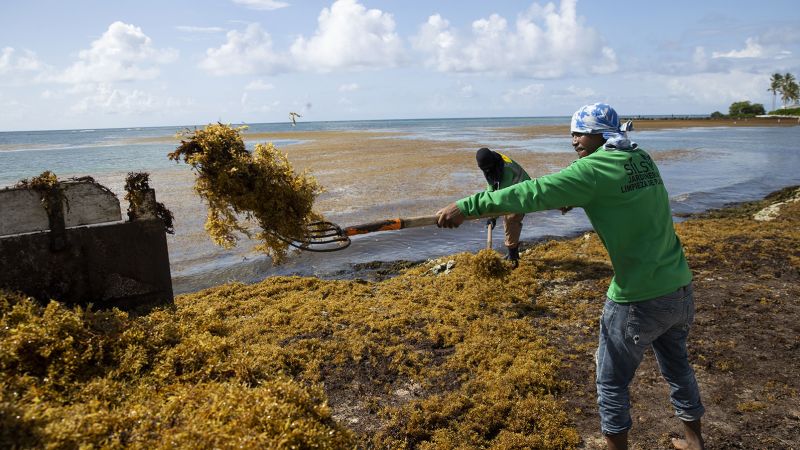
Sargassum, a type of large brown seaweed, has been in the news lately, with a massive blob that’s visible from space and threatening ocean life. University research funded by the U.S. Environmental Protection Agency could address the issue, while also helping solve another problem in our water. Toufiq Reza, an assistant professor of chemical engineering in the Department of Biomedical and Chemical Engineering and Sciences, along with research students Cadianne Chambers, Swarna Saha, Savannah Grimes and Josh Calhoun, were part of the research paper, “Physical and morphological alteration of Sargassum‐derived ultraporous superactivated hydrochar with remarkable cationic dye adsorption.” The paper was published in the May edition of Springer Nature’s Biomass Conversion and Biorefinery journal. The paper is part of a three-year, nearly $400,000 EPA grant to examine different uses of sargassum. It explains that the team can produce biochar from sargassum that can filter water. Though the team has tested model dye in this paper, they plan to extend their research for other applications including harmful algal bloom remediation and nutrient recovery in the future. While sargassum has been around for centuries (Christopher Columbus is credited with the first written account after he encountered it in 1492), and you’ve probably seen bits of brownish seaweed on the beach – it sometimes smells like rotten eggs – the quantities in the ocean and washing up on shores are a more recent phenomenon. There are multiple reasons behind the increased amount of sargassum, including global warming that intensifies sargassum production and nutrient runoff making its way to ocean water and overfertilizing the seaweed growth. More sargassum is expected to show up on Florida shores in the future, inspiring the team to explore more positive uses of the abundant seaweed. “In the next couple of years, we’ll be seeing much more sargassum coming into our way. It’s not a common practice to utilize sargassum,” Reza said. “We go to a beach and then we see a little bit of sargassum just dried out. That doesn’t bother us that much, but when it started to come as a foot-tall sargassum wave, that’s where it gets more alarming.” Sargassum in the lab is labor intensive. Because it contains salt from the ocean, it is washed with tap water first, then put in a freezer for preservation. Next, it goes through hydrothermal carbonization, a thermochemical process that uses heat and pressure to convert biomass and organic waste (such as the sargassum being used) into solid hydrochar. Lastly, the solid char goes through pyrolysis, where it is heated in a high-temperature, oxygen-free chamber into a biochar that is used to filter water. For Swarna Saha, a first-year doctoral student, her goal as a researcher is to identify an environmental problem and come up with a sustainable solution. Having grown up in Bangladesh around textile factories that generate dyes that pollute the surface water, she was inspired to work on solutions that improved water quality with biochar. “I came in the project when we were experimenting on dye adsorption and saw how a tiny amount of biochar changes the color of the water,” she said. “For me, seeing the results made me the happiest. When we saw that our biochar is effective, that is the biggest achievement for me. That made me happy.” Cadianne Chambers, a second-year doctoral researcher, was motivated by her home country of Jamaica and its massive issues with sargassum. Chambers has heard accounts of fishermen unable to go out to sea because of the sargassum buildup. A popular destination for summer vacation, Jamaica is facing serious environmental and economic problems with waves of sargassum. “A team in Jamaica saw that article and they reached out to us, and they’re trying to cultivate sargassum. They want us to teach them how to make export-quality hydrochar and biochar, which could help solve their environmental problem and generate revenues,” Chambers said. “So, everything is just connecting nicely and I’m hoping to continue our collaboration with them. If it’s something that I can go home and put my PhD research to work and help the community, that would be really satisfying.” Looking to know more about sargassum and the ground-breaking research taking place at Florida Tech? Then let us help with your coverage and questions. Toufiq Reza is an assistant professor in the biomedical and chemical engineering and sciences department at Florida Tech. He's available to speak with media about this topic - simply click on his icon now to arrange an interview today.

