
Experts Matter. Find Yours.
Connect for media, speaking, professional opportunities & more.
We've all been there. A relationship ends and the rebound begins. Now since the beginning of time it seems everyone from friends, family and advice columnists have had different opinions and perspectives on how each of us should approach 'the rebound.' And earlier this month, The Atlantic decided to connect with Georgia Southern's Amy Hackney, Ph.D., a psychology professor, to weigh in with her expert opinion. “Rebound relationships” have a terrible reputation. A romance ignited shortly after another ends seems chaotic—like an opportunistic ricochet rather than an intentional search for compatibility. After a breakup, people are commonly told to take their time grieving before they start dating again. And people dating someone who’s fresh off a breakup are told to be wary—of being used as a distraction, or being treated carelessly by someone fumbling through their own heartache. But research doesn’t seem to support the idea that rebound relationships are inherently toxic or doomed to fail. When someone fresh from a split starts dating, it’s true that they might not be totally over their ex. But new relationships can help people move on from old ones. In one study of participants recovering from breakups, those who’d found a new partner were more confident in their own desirability, more trusting of other people, and less likely to say that they still had feelings for their old partner. Another examined rebounders who’d been in their new relationships for a year and a half on average. The quicker those subjects had jumped into that rebound, the higher they rated on measures of well-being and self-esteem. Amy Hackney, a psychology professor at Georgia Southern University, found something similar when she investigated what helped college students get over breakups. “The sooner they began dating someone new, the faster that they felt that they had recovered from that prior relationship,” she told me. Although that might conflict with conventional wisdom, she thinks it fits with basic social psychology: A partner provides validation, care, and companionship, and when they go away, there’s no reason someone else can’t take their place. Perhaps that sounds unromantic, but according to Hackney, it’s healthy to be reminded—promptly—“how many people we really can have fulfilling relationships with.” As Neil Sedaka would sing 'Breaking up is hard to do' and so too is getting back into the dating game. If you're a journalist looking to know more about this topic - then let our experts help. To connect with Amy Hackney — simply reach out to Georgia Southern's Director of Communications Jennifer Wise at jwise@georgiasouthern.edu to arrange an interview today.


Michael Huggins, Ph.D., will join Georgia Southern University on August 1 as the Dean of the College of Science and Mathematics. “I am excited to welcome Dr. Huggins to our academic leadership,” said Provost and Vice President for Academic Affairs Carl Reiber, Ph.D. “Dr. Huggins has a distinguished career filled with research, service and mentorship. He will be a valuable partner as we move forward with our leadership goals. He brings with him the working knowledge of how to lead a College, along with the foundations needed to advance our research mission.” Huggins comes to Georgia Southern from Tarleton State University, where he has served as a dean since 2020. He led three academic departments with nine undergraduate degree programs and three master’s degree programs. While serving as dean at Tarleton State, Huggins established a $15 million College of Science and Mathematics (COSM) fundraising initiative. He also led efforts to improve COSM First-Time-In-College (FTIC) retention rates resulting in an improvement from 67.3% COSM FTIC retention for the Fall 2019 cohort to 71.7% retention rate for the Fall 2021 COSM FTIC cohort; a 6.5% improvement in just two years. “I am excited to join the Georgia Southern team,” Huggins said. “I look forward to working with the faculty and staff to develop initiatives that support the growth of the College of Science and Mathematics and to ensure the success for all students during their time at the University and beyond.” Huggins holds a B.S. in Chemistry from the University of West Florida, a Ph.D. in Chemistry from University of Nevada, Reno and completed his postdoctoral at University of Texas at Austin. He is also a graduate from the Harvard University Institute for Management and Leadership in Education. To connect with Michael Huggins or to learn more about Georgia Southern University — simply reach out to Georgia Southern's Director of Communications Jennifer Wise at jwise@georgiasouthern.edu to arrange an interview today.

Georgia Southern University names David Owen as new dean of the College of Arts and Humanities
David Owen, Ph.D., will join Eagle Nation on July 1 to serve as the new Dean of the College of Arts and Humanities (CAH). “I am pleased to welcome David to Georgia Southern as the next generation of leadership for the College of Arts and Humanities,” said Provost and Vice President for Academic Affairs Carl Reiber, Ph.D. “David brings with him a wealth of knowledge and understanding in analytical and philosophical foundations that will prepare our students for vital roles in their professional communities.” Owen comes to Georgia Southern from the University of Louisville, where he has served as the interim dean of the College of Arts and Sciences since 2020. Among his many achievements, he transitioned the college to a new enrollment-based budget model, led the development of a three-year retention plan, and led morale improvement efforts among the College. While interim dean, Owen oversaw a budget of $62 million, including $4.8 million in funded research grants and a fundraising campaign that raised $4.3 million in 2021-2022. Prior to becoming interim dean, he was the chairperson of the Department of Philosophy at the University of Louisville. He is a three-time alumnus of the University of Illinois at Chicago, where he received his B.A., M.A. and Ph.D. “I am truly excited to be joining Georgia Southern as dean of the College of Arts and Humanities,” said Owen. “In my meetings, I found the faculty and staff of the College to be extraordinarily talented, and deeply committed to student success. The importance of the arts and humanities to a vibrant civic culture has never been more clear, and I look forward to working with the faculty and staff in CAH, Provost Reiber, colleagues from across campus, and alumni and friends of the college to advance the impact CAH has on students’ lives, on the wider community, and on civic culture.” To connect with David Owen or to learn more about Georgia Southern University — simply reach out to Georgia Southern's Director of Communications Jennifer Wise at jwise@georgiasouthern.edu to arrange an interview today.
If you’re looking for comment on this week’s announcement about government’s proposed £50bn investment in creative industries we have a design expert available. Dr Tim Whitehead is associate dean and senior lecturer, engineering and technology, Aston University. He believes that although the Tory's promise spending for the creative industries they need to invest in education first. His full response is attached and below: “This week the government announced a plan to boost the creative industries by £50bn by 2030 and invest £77m in funding for the sector. “This news is fantastic and long overdue. The UK design economy contributes £97.4bn GVA and for every £1 invested in design we see a return of £4 to the wider economy. “The creative sector is a major British export with film, TV, music being some of the biggest exports. However, we also have physical products; If you’ve ever used an iPhone, a Dyson or ridden on a London double decker bus then you’ve used world class British design. “The funding is welcome, however we really need investment in our schools to teach creativity and align this with recent announcements in maths education. “The majority of our most successful designers / creative engineers started with Design and Technology at school. “Between academic years 2009-10 and 2021-22, the proportion of pupils taking Design and Technology GCSEs fell from around 42% to 27% in all schools in England. With only a minor increase in pupils taking Art and Design GCSE which increased from 27% to 29% over the same period. “There is a big gap here, and we really need to ensure that children have access to a creative education as school. “By embedding creativity into the next generation it will help foster new creative engineers data scientists etc. and the next Dyson.” Dr Tim Whitehead, associate dean and senior lecturer, engineering and technology, Aston University For inquiries contact Nicola Jones, Press and Communications Manager, on (+44) 7825 342091 or email: n.jones6@aston.ac.uk


• Professor Patricia Thornley has led a Department for Transport advisory paper • Advises decarbonisation will need low-carbon fuels alongside electrification • Calls for continued investment in this area. A leading energy expert at Aston University has advised government to invest in low carbon fuels - as well as electric - if it wants to reach its 2050 net zero ambition. Professor Patricia Thornley has led a Department for Transport (DfT) advisory paper on low carbon transport fuels. The paper advises that decarbonisation of the UK’s transport systems will need the government to support the use of low-carbon fuels alongside widespread battery electrification where possible. Professor Thornley and the other members who sat on the Scientific Advisory Council examined the challenges and opportunities of developing and using different fuels and their potential impact on the wider energy system. The authors highlight that low carbon fuels such as those made from agricultural waste can deliver reductions in carbon emissions, helping to meet the government’s 2050 net zero ambition. As a result, they state that continued investment in this area is crucial. The paper also states that at this point it’s not yet clear if low carbon fuels will support just the transition to full electrification of the UK’s transport systems or will be a long-term solution. Professor Thornley who is director of Aston University’s Energy and Bioproducts Research Institute (EBRI) and the Supergen Bioenergy Hub said: “Successful decarbonisation of transport systems in the UK will require flexible and adaptive government strategies that support the use of low-carbon fuels alongside widespread battery electrification, where that is possible. “The optimal mix of low carbon fuels vs battery electrification in transport will depend on many different factors, some technological, some supply related, and others linked to the capacity of the UK to generate low carbon electricity. “We urgently need to better understand and manage the airborne emissions that can still be present with low carbon fuels (including hydrogen). That might result in us prioritising different fuels or propulsion systems in different applications or even different parts of the UK. “Agreeing that prioritisation would allow us to prioritise appropriate next generation of infrastructure to support the UK’s net zero ambitions.” Back in March 2022 the Council was asked to provide guidance to the DfT which is currently developing a low carbon fuels strategy. The report, Low carbon transport fuels: DfT Science Advisory Council position paper was published on 5 June and provides an independent advice on the role of low carbon fuels in reducing transport systems’ greenhouse gas emissions.


Aston University wins £1.8m to boost West Midlands low carbon markets
• Aston University and local industry to develop technology to convert organic material into commercially valuable products • Sawdust, diseased trees and dried chicken litter among what can be transformed into sustainable bioproducts • West Midlands companies are invited to join a cluster to develop new low carbon products for growing markets. Aston University is to receive £1.8 million to transform the West Midlands into a powerhouse of low-carbon product development and commercialisation. The University will be building on its existing research facilities to lead the region’s Biochar CleanTech Accelerator as part of the West Midlands Innovation Accelerator. The project was set up with the aim to secure export contracts for low carbon products worth over £200 million, to be made by a regional industrial cluster. It is hoped that the development of a low-carbon business cluster in the West Midlands will open up new domestic and export markets to help rebuild the region’s engineering and manufacturing status. Biochar, a sustainable form of charcoal, can be used as a soil and plant growth enhancer. It stores carbon in the ground, so there are fewer greenhouse gases in the atmosphere. Other products such as oils can be used as low carbon fuels for boilers and engines and the liquid by-product can be used for low carbon weedkiller, fungicide and plant growth. Aston University’s innovative technology is installed at its urban biochar demonstrator in south Birmingham. The project is based on the strengths of the University’s Energy and Bioproducts Research Institute (EBRI) and its Centre for the Circular Economy and Advanced Sustainability (CEAS). Tim Miller, director of engagement at EBRI, said: “This new development has the potential to rebuild product development, engineering and manufacturing in our region. “The project aims to commercialise knowledge, facilities and the results of long-term university research for the benefit of the environment and our regional economy. “Using the University’s existing expertise and facilities we have the potential to launch new technology-based opportunities as they emerge and mature, The Biochar CleanTech Accelerator is part of the West Midlands Innovation Accelerator which was first announced in the government’s 2022 Levelling up White Paper and started this spring. It is funded through a share of a £100m from Innovate UK, to be divided by three regional innovation accelerators over the next two years. Launched by the West Midlands Combined Authority (WMCA) in March 2023, it will target investment on projects enabling new solutions around Medical and Clean Technologies, to further reinforce the region’s position at the frontier of the UK innovation revolution. The University will also play a key role in two other projects in the West Midlands Innovation Accelerator. Companies interested in joining the cluster can get further information at https://www.aston.ac.uk/biochar-cleantech-accelerator or emailing biochar@aston.ac.uk


Aston University to host one-day workshop around healthy workplaces
Experts will present their recent research focused on healthy work and workplaces The event is being hosted by the Healthy Work Research Unit at Aston University It will take place on Friday 30 June in Conference Aston in Birmingham. The Healthy Work Research Unit at Aston University is hosting a one-day workshop focusing on healthy work and workplaces on Friday 30 June at Conference Aston in Birmingham. The event will bring together four experts who will present their research and insights in the field of promoting wellbeing in various professional settings. Attendees will be able to gain knowledge about areas impacting wellbeing and potential strategies to support healthy work practices. The programme will include sessions on problematic substance use in healthcare, police working practices and improving NHS staff wellbeing in paediatric critical care. Dr Simon McCabe, a senior lecturer in work and organisation at Aston Business School and head of the Healthy Work Research Unit, said: “This event is a unique opportunity for professionals and enthusiasts alike to gather and delve into the realm of promoting well-being in diverse professional settings and understanding some of the problems we are currently facing. “We have assembled a panel of four distinguished experts from our university and beyond who will be presenting their groundbreaking research and invaluable insights. “Their contributions will provide attendees with a scintillating discussion of some of the issues we face in this area, and touch on practical strategies to foster healthy work practices and cultivate work environments that are conducive to personal and professional growth.” Participants attending in person will have limited availability, with only 30 seats available. However, an additional 100 places are open for online participation via MS Teams. To sign up for a place, click here.

Georgia Southern professor earns Fulbright US Scholar Award for 2023-2024
A noted Georgia Southern University public health professor has earned a Fulbright U.S. Scholar Program award in All Disciplines to Latvia for the 2023-2024 academic year from the U.S. Department of State and the Fulbright Foreign Scholarship Board. Yelena N. Tarasenko, DrPH, is a professor in the Department of Biostatistics, Epidemiology and Environmental Health Sciences at Georgia Southern’s Jiann-Ping Hsu College of Public Health. Her Fulbright project is titled “Strengthening research and teaching capacity in cancer prevention globally.” She will collaborate with personnel and students at the Faculty of Medicine and Institute of Clinical and Preventive Medicine at the University of Latvia, as well as colleagues at the International Agency for Research on Cancer to help improve cancer care coordination and screening in Latvia and 14 European countries participating in the “Towards gastric cancer screening implementation in the European Union” project. Given Tarasenko’s expertise in legal and cancer epidemiology, she will engage in (i) implementation research focused on cancer screening and patient navigation, and (ii) teaching activities focused on fostering research productivity (e.g., guest lecturing, curriculum development, advising, and mentoring). Tarasenko is among more than 800 U.S. citizens who will teach or conduct research abroad for the 2023-2024 academic year through the Fulbright U.S. Scholar Program. Fulbright scholars engage in cutting-edge research and expand their professional networks, often continuing research collaborations started abroad and laying the groundwork for forging future partnerships between institutions. Upon returning to their home countries, institutions, labs and classrooms, they share their stories and often become active supporters of international exchange, inviting foreign scholars to campus and encouraging colleagues and students to go abroad. As Fulbright Scholar alumni, their careers are enriched by joining a network of thousands of esteemed scholars, many of whom are leaders in their fields. Notable Fulbright alumni include 62 Nobel Prize laureates, 89 Pulitzer Prize recipients, 78 MacArthur Fellows and 41 who have served as a head of state or government. Since 1946, the Fulbright Program has provided more than 400,000 participants from over 160 countries – chosen for their academic merit and leadership potential – with the opportunity to exchange ideas and contribute to finding solutions to challenges facing our communities and our world. “This is a wonderful validation of Dr. Tarasenko’s scholarship and expertise, and another example of Georgia’s Southern’s expanding reputation for public-impact research,” said Carl Reiber, Ph.D., Georgia Southern University provost and vice president for academic affairs. “Fulbright scholars are among the world’s most talented academicians, and we congratulate Dr. Tarasenko for this achievement.” More than 800 U.S. scholars — faculty members, artists, and professionals from all backgrounds — teach or conduct research overseas through the Fulbright U.S. Scholar Program annually. In addition, over 2,000 U.S. students, artists, and early career professionals from all backgrounds in more than 100 different fields of study receive Fulbright U.S. Student Program awards annually to study, teach English, and conduct research overseas. “I’m excited to help expand our expertise on global health and develop a relationship with the only classical university in Latvia,” Tarasenko said. “This proposed project meets the university’s strategic pillars, as its leadership looks for ways to create and encourages opportunities for the exchange of teaching, research, scholarship, and professional development. It also meets the Jiann-Ping Hsu College of Public Health’s values and goals in terms of thinking globally and acting locally.” The Fulbright Program is the U.S. government’s flagship international educational exchange program and is supported by the people of the United States and partner countries around the world. The Fulbright Program is funded through an annual appropriation made by the U.S. Congress to the U.S. Department of State’s Bureau of Educational and Cultural Affairs. Participating governments and host institutions, corporations, and foundations around the world also provide direct and indirect support to the Program. In the United States, the Institute of International Education supports the implementation of the Fulbright U.S. Student and Scholar Programs on behalf of the U.S. Department of State, including conducting an annual competition for the scholarships. For more information about the Fulbright Program, visit https://fulbrightprogram.org. To connect with Yelena N. Tarasenko — simply reach out to Georgia Southern's Director of Communications Jennifer Wise at jwise@georgiasouthern.edu to arrange an interview today.
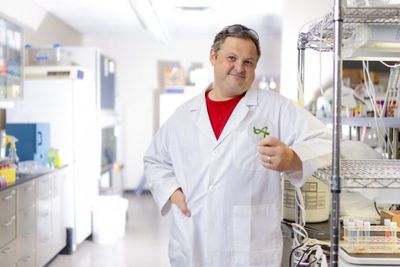
Florida Tech Scientist to Study Deep-Space Agriculture After Planetary Society Grant Award
No matter where humans travel, sustenance remains a necessity. Finding a bite to eat during a visit to New York, for example, is no problem. When the destination is a bit farther away, such as Mars, the options are not as plentiful there or on the long journey to get there. That’s where Florida Tech’s Andrew Palmer comes in. He and other scientists are exploring ways to feed our explorers, and a new competitive grant from the Planetary Society will fund work that examines the two most likely ways to produce food during travel to these far-flung spots: in soil or something like soil, or in water. Palmer and his team were awarded a $50,000 Science and Technology Empowered by the Public (STEP) grant, the Planetary Society recently announced. Their project: “Evaluation of food production systems for lunar and Martian agriculture.” For the next year, they will grow radish microgreens, lettuce and tomatoes in identical environmental conditions with one major exception: one batch will be grown hydroponically, and another will be grown in regolith – like lunar or Martian soil. The aim of the experiment is to characterize and compare the two methods, both of which have merits and shortcomings. “It may be that a combination of these approaches, tailored to the diverse needs of different crops, is the best way to provide sustainable and productive agriculture,” Palmer said. “Until now, there have been no direct comparison studies between hydroponic and regolith-based systems for any crop targeted for space applications. We are excited to address this knowledge gap.” The team, which includes experts in plant physiology and biochemistry as well as space agriculture and systems efficiency analysis, will test their hypothesis that faster growing crops like microgreens will be better suited for hydroponic systems even in the long term, while slower-growing crops like tomatoes may favor a regolith-based production system. Palmer and his co-investigator, Rafael Loureiro from Winston-Salem University, are joined by collaborators J. Travis Hunsucker and Thiara Bento from Florida Tech, Laura E. Fackrell at the Jet Propulsion Laboratory and Jéssica Carneiro Oliveira at Universidade Federal do Estado do Rio de Janeiro, Brazil. Care to delve a little deeper? Palmer and a second STEP grant recipient, Dartmouth College professor Jacob Buffo, spoke to the Planetary Society senior communications advisor Mat Kaplan about their respective projects. The segment with Palmer begins at the 23:57 mark and the piece is linked above. Looking to know more about what it will take to feed our deep-space explorers? Then let us help with your questions and coverage. Dr. Andrew Palmer is an associate professor of biological sciences at Florida Tech and a go-to expert in the field of Martian farming. He is available to speak with media regarding this and related topics. Simply click on his icon now to arrange an interview.


Georgia Southern adding two engineering doctorates this fall
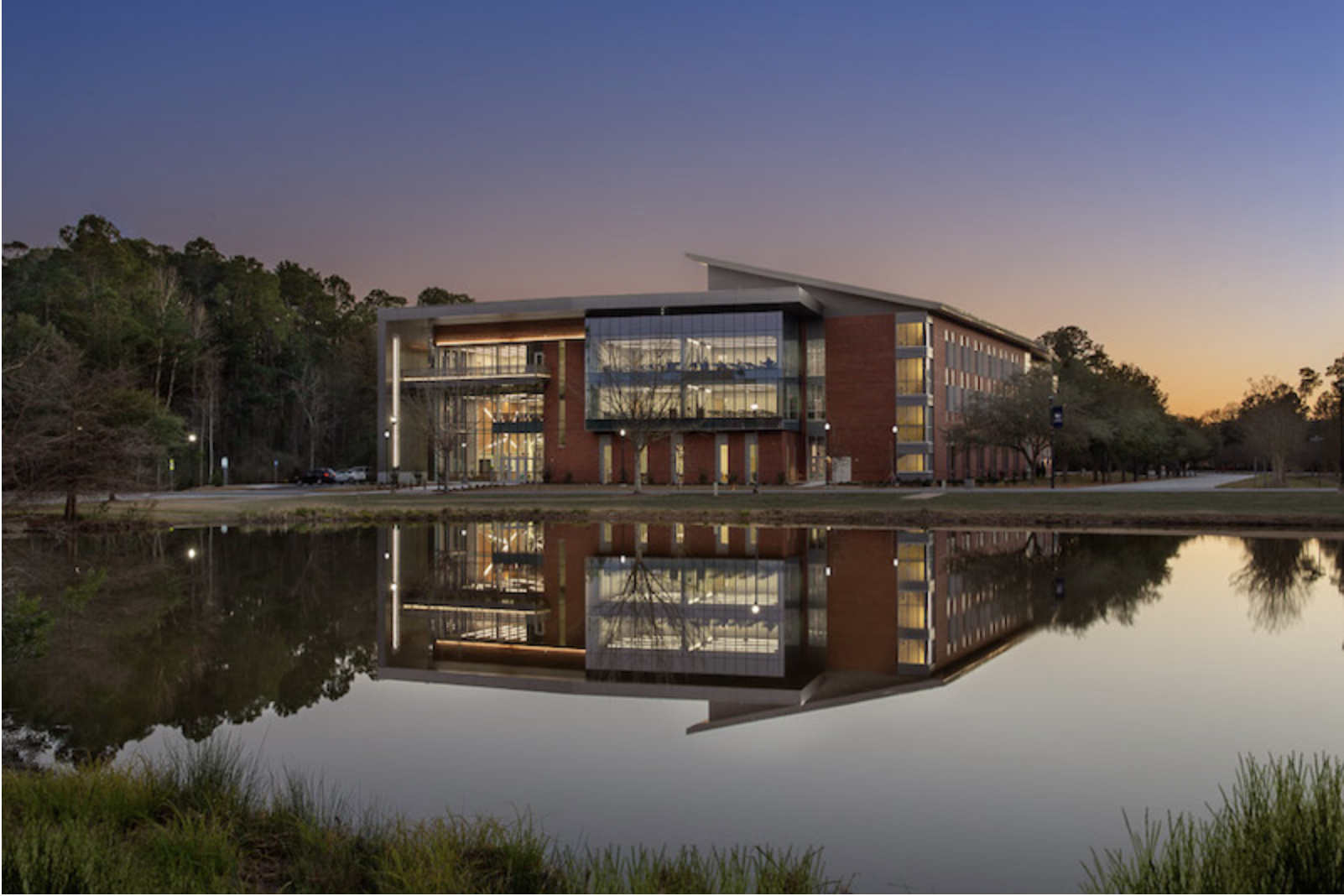
Georgia Southern University is launching two new engineering doctorates – a Ph.D. in applied computing degree and a Ph.D. in engineering – after approval of the programs this week from the University System of Georgia’s Board of Regents. With almost 4,000 students in its programs, Georgia Southern’s Allen E. Paulson College of Engineering and Computing identified the need for the new graduate degrees to sustain growth in the discipline, continue to aid workforce development in the region, add substantially to the university’s research capabilities, and provide additional teacher-scholars for Georgia. “In line with Georgia Southern’s Strategic pillars, the new Ph.D. programs will greatly enhance the University’s research capabilities and further advance key partnerships in the region,” said Carl Reiber, Ph.D., Georgia Southern’s provost and vice president for academic affairs. “A strong Ph.D. program improves faculty recruiting and is a prerequisite for applying for research grants from sources such as the National Science Foundation, the National Institutes of Health, the Department of Energy and the Department of Defense.” The proposed engineering Ph.D. program will have concentrations in civil, electrical, advanced manufacturing and mechanical engineering, and will fuel future multidisciplinary research synergies with other departments and centers within Georgia Southern in fields such as natural sciences, environmental sustainability, public health and education. Greater scholarly collaborations with sister institutions within the university system and beyond are also envisioned. The Ph.D. in engineering program will have a positive impact on the economic and technological development of Southeast Georgia, contributing significantly to the growth of the I-16 technology corridor. The Ph.D. in applied computing degree program will be offered jointly by the Department of Computer Science and the Department of Information Technology within the Allen E. Paulson College of Engineering and Computing at Georgia Southern Universit. The program will provide students with the requisite foundation to conduct basic and applied research to solve advanced technical problems in computing foundations, cybersecurity and machine learning. The program aims to promote the education of individuals who will become exceptional researchers, high-quality post-secondary educators, and innovative leaders and entrepreneurs in the field of applied computing. It will advance research and the generation of new knowledge in applied computing and support the growing knowledge-based economy in Southeast Georgia. The mission of the Ph.D. in applied computing degree program is to ensure student, graduate and faculty success by preparing graduates with the skills and depth of knowledge to advance the computing disciplines through application and scholarship. It will mentor students who will support faculty in their scholarly pursuits as they prepare to assume professional computing and computing-related positions that utilize their applied technical skills, problem-solving aptitude and scholarly abilities upon graduation. “The addition of these two new degree programs is part of Georgia Southern University’s commitment to be a world-class institution that provides a population of advanced graduates who can contribute to regional economic development and public-impact research,” Reiber said. “The programs will enhance the vitality and growth of the bachelor’s and master’s computer science and information technology degree programs by expanding the academic and research missions of the Allen E. Paulson College of Engineering and Computing." For more information about these new engineering doctorates coming to Georgia Southern this fall research or to speak with Carl Reiber, Ph.D., Georgia Southern’s provost and vice president for academic affairs — simply reach out to Georgia Southern's Director of Communications Jennifer Wise at jwise@georgiasouthern.edu to arrange an interview today.