
Experts Matter. Find Yours.
Connect for media, speaking, professional opportunities & more.

Media Training Can You Afford NOT to Be Prepared When Reporters Come Calling?
Want to see someone in a respected position of power throw away a career in all of about two minutes? Stephen Duckett was an expert in his field. Respected globally. Until this… Watch this exchange Duckett wasn’t prepared to deal with media. He paid a serious professional price and left a lesson for us all to learn from. In fact, his exchange is used by a lot of media trainers on exactly what not to do in a crisis situation. As a former news producer, I remember scrambling to find an expert opinion or perspective when news was breaking. If a story required explanation and when it was beyond the grasp of even the brightest of reporters we needed the help of supporting sources. They were critical in helping explain, validate, and ideally, break down just what was going on to our audiences at home. When an outbreak struck, we needed an epidemiologist. When a rare earthquake shook the region, the search for a seismologist was on. Finding the expert wasn’t usually the problem. We had local universities, colleges, and health care facilities within arm’s reach. However, finding an expert who could effectively speak on camera often was. Our goal was to keep people from turning the channel – so boring, highly technical speaking experts simply wouldn’t do it for us. When I worked in TV, we needed someone who could explain a complex subject, in layman’s terms, and in sound bites of about 15 seconds. It may not seem like much, but it is a lot to ask. Explaining high level content is not easy, but the reality is that your audience needs complex subjects explained in the simplest of ways. To do this right, it requires understanding the roles and goals of media and media training. Anyone who will be representing an organization, institution, or corporation needs some form of coaching. It’s a must-have requirement for most CEOs and politicians. Turn on your news at just about any hour of the day, and you can easily tell who has been properly prepared and trained and who hasn’t. It doesn’t happen organically. It takes work. It takes expert coaching. Media-friendly speakers bolster credibility and get noticed. In times of a crisis, a trained speaker may be the missing piece that can make or break a situation a reputation. Those who are not trained stick out—in a very bad way. They stammer, evade questions, ramble and are usually incoherent. If the task is mainly to describe a current situation, an untrained expert may ramble or speak hundreds of feet over the head of the average person. If there’s a crisis at hand—a tragedy, a scandal, a lawsuit or worse—an untrained speaker risks making a bad situation worse. Take a look back to July of 2013—an out-of-control train carrying crude oil exploded, destroying the downtown section of Lac Megantic, in Quebec, Canada. Thirty buildings were leveled, killing 47 people. In this small town, everybody knew somebody who was killed. Edward Burkhardt, president of Montreal, Maine & Atlantic Railway Inc. arrived shortly after the explosion. He was the near-perfect storm—an untrained, and likely uncoachable leader. He was clearly in distress, rattled, arrogant, and unprepared. He fixed blame at the worst possible time, blaming the train’s engineer and the local fire department. A journalist asked how much he was worth. A town is destroyed, the world is watching, close to four dozen people are dead, and his reply was, “I’m worth a lot less now than I was last week.” Proper media training and coaching would not have prevented the horrible tragedy, but knowing how to speak during such a high-stress situation and knowing what questions to expect might have mitigated the visceral reaction of residents, industry and government officials. As it stands, Edward Burkhardt and the company, no matter how successful either had been in the past, are now forever associated with that interview. Conway Fraser worked for the Canadian Broadcasting Corporation for almost 20 years. He’s a Gemini award-winning journalist who worked as a national reporter and investigative journalist. These days, he specializes in strategic and crisis communications as well as media coaching. Conway’s worked with some of Canada’s top corporate executives, academic leaders, and politicians. In both journalism and in PR, he has seen executives who have spent decades building a reputation only to have it destroyed in moments because they weren’t prepared to deal with the media. They’ve either never received media coaching or, Conway says, have taken mandatory training but were never further invested in. In other words, he says, they thought they didn’t need media training and were only taking it to appease the Board or ownership. “Proper media coaching isn’t just about knowing how to spew a main message, use effective body language or bridge away from challenging questions,” Conway says, “In my sessions I also teach my clients about the media, what their job is like, what a day is like for a reporter, what they need from you and how to respect their role. If anyone doubts the value of that, they’re playing with fire. Ask Stephen Duckett.” Natalie Duddridge is a reporter for NY1. I worked with Natalie years ago in Canada at the start of her career. Natalie’s talent as a journalist has taken her to Ottawa (Canada’s capital), Toronto, and most recently, New York. New York sits at the top (sorry L.A.) of media markets in the United States. It has a huge audience of about 10 million people and it is hands down the most competitive media game on the continent. Reporters in these markets never get to rest. They’re either chasing stories, or when they are covering a story they had better have an angle, source, or expert that the others do not. And when you are in a race with at least six other news outlets, standing out isn’t easy. Finding experts and having them ‘camera’ or ‘microphone’ ready is a must. As Natalie explained to me, getting an expert for a story is absolutely crucial. In a market as diverse as New York City, those experts can range from police to politicians, to health and education officials, to scientists and artists. Natalie also lent some great perspective on just how a reporter puts together a story and how your expert needs to know that news is also about storytelling and not just details. “Last week I did a story about the heroin epidemic plaguing the Borough of Staten Island,” Natalie explained. “We like to begin our stories with a human element, in this case a recovering drug addict. In addition to his personal opinions and insight about how to prevent and slow the opioid crisis in the region, we also reached out to the local Drug Rehabilitation Center and interviewed a doctor as well as a therapist. We also interviewed the Staten Island District Attorney about the work he’s doing with New York State Governor to get more dollars for a drug task force to do everything from put more money into preventative education, build rehab centers, add police, fund additional assistant district attorneys to process criminal cases.” If you were counting, you can see she spoke with three key experts on the subject of the story. Each was essential in the reporting process. “For this story we featured several different experts on varying opinions on how this current drug crisis should be dealt with. All of the facts, stats and data for this story were based on the officials and experts we contacted.” Being prepared and knowing what the reporter wants are also ideal elements in conveying the right message. For TV, short, smart, and to-the-point responses work best. “We need a 10 to 15 second sound bite that is ideally informative and clear, and in some cases entertaining,” Duddridge told me. “When I am making calls to experts, I essentially do a pre-interview over the phone to hear how clearly they can explain a topic. If they are great at breaking down studies and terms into focused ideas that are concise and fit into a two-minute story, our job as reporters is so much easier.” A win/win scenario. Your message is delivered, your institution and experts are promoted and the reporter files a great story. It all seems simple. But it’s not. It takes training and preparation. If you are going to offer up your experts for an interview, they need to be ready. Media training takes time, it costs money – but it’s an investment in your staff and your institution. As we learned from the example above, not knowing how to answer, interact, and respond to media can be devastating. Performing under pressure only succeeds with practice and training. If your experts are media trained the reward will always outweigh the risk. Here are a few tips: Get media trained – Use a professional media coach. It costs money, but the professional development, readiness, comfort, and ability to deliver will pay off ten-fold. Media-friendly experts get noticed – When your expert is on the news, people see them. They are representing your institution, so think about what this means for your credibility and recruiting potential. You never get a second chance at a first impression – An old, clichéd saying, but it’s true. A weak speaker who comes across poorly imprints a negative impression on viewers, peers and your institution as a whole. It’s amateur hour, and it doesn’t need to be. Friends for life – Once you prove yourself as a worthy and media-friendly source, the media will keep coming back. Experts who can provide journalists with the information, perspective, and sound bites they need are not only appreciated but noticed and remembered by all media. Once you have established yourself as a reliable source, expect the reporters to come calling time and time again. Dividends – Every story where your expert looks good is positive earned media. Getting on NBC, CBS, FOX or any other nightly newscast is a huge win for your Communications Department. It’s exposure, promotion, and advertising—and it’s free.



Secrets to Promoting your Experts to Chase Producers: What exactly do they need from you?
Many moons ago, when I worked in a newsroom, my Executive Producer once said to me, “We only really work five days a year, the other 360 are just filler.” He was being cheeky and clearly exaggerating – but what he meant was that outside of elections, plane crashes and visits by the Pope or President, assignment editors are constantly scrambling to feed the beast and fill a newscast or a paper. It’s even worse in what we now know as the 24-hour news cycle. The news doesn’t sleep anymore. There’s no down time and a lot of time and space to fill. The reality is, with the modern news cycle now being immediate, never ending, online and everywhere the need for content is greater than ever before. From local papers, radio affiliates and even national broadcasts, the need for expertise, opinion and perspective is one of the few common denominators in journalism. And, when it comes to the 24-hour national TV news networks, the demand is even higher with reporters, researchers, technicians, assignment editors, executive producers and chase producers all hunting and scraping for issues and experts to illustrate those issues. This is great insight to be aware of if your role is to get your experts in the news. I worked with Mark Borchiver early in my career. He’s the Associate Producer, CTV National News with Lisa Laflamme which has a viewership of millions across the country. He helps put the show together every night and can tell you that the chase desk is busy all day to feed 24-hour news. They rely on a steady stream of guests and experts. On National News, CTV has a lot of go-to people who either contact CTV or CTV will call them. “The real challenge is to bring fresh talent to the newscast,” Borchiver says. “We need to bring new experts and talking heads into the news family because there’s a certain audience fatigue and predictability factor, when the same guests keep showing up. “ And with media, presentation is just as important as being primed. If you are going to be interviewed or appear on a show that has an audience of a million critical viewers, be prepared. If you are not prepared, there’s a good chance you won’t be invited back, says Borchiver. “Experts need to be media trained and ready for air. Not everyone has the same skill level and not everyone can be taught.” Every news market is different. There are different perspectives, news approaches and quite honestly finding and accessing credible and reliable expertise isn’t as easy as one would think. Even for a news giant like Al Jazeera, in Qatar, finding that ideal person to lend perspective or context isn’t easy. “Part of my job is selecting which stories deserve analysis or reaction from what we call ‘guests’,” Morgan Waters tells me. Morgan, who I also worked with back in my early TV days is now the Executive Producer, Aljazeera English Global. A big job, with high expectations and obviously little room for error. “For us this means a segment, usually live, where anchors conduct interviews for about three to five minutes on a particular subject. This is very important for our organization so I usually deal with about a dozen guest segments every day, plus next day guest planning.” At Al – Jazeera they have a team of interview producers whose job it is to find, pre interview and book these people. They usually go for people through credible organizations that the network trusts, such as NGOs, think tanks, and academic institutions although each interview producer has their own contact list which also include activists, bloggers and civil society. But that isn’t where the credibility check ends. Waters also reminds me, “An expert may work for a credible organization and appear regularly in the media but if I suspect his information is questionable then I won’t ask to book him. “ So in a nutshell, here it is plain and simple. There’s a never-ending news cycle out there. And it needs to be constantly fed. Some organizations wait to be called, while others or pro-actively building relationships with reporters and producers to get their experts seen, heard and read. Many have signed on with ExpertFile, a procured expert database full of people who want to be interviewed and are ready for it. Offering up your in-house expertise and providing someone who is credible, reliable, objective and can shed light, a unique perspective or a fresh angle on news story helps journalists deliver the content they need to the audience that wants. You win. They win. Win-Win. So go feed the beast. Have your organization seen in the news, heard by a massive audience and promoted across multiple media platforms. All for free. Well, free with the exception of some serious effort and savvy on your part. But cost-free for your organization. So what do organizations need to know? Be Fast: When news breaks be responsive. Take advantage of the moment and offer up your expert. Delays reduce your chances that you will get scooped by another organization. Be Prepared: If you offer someone up to media – make sure they have some degree of media training. Be Pro-Active: Don’t wait for media to come to you. Go to them. Be Current: Ensure your expert information such as biographies, publications, photos, videos are easy to review and up to date. Be Discoverable: Get your content outside of your own website. Often media won’t look there first. Ensure your experts can be found in other ways such as the ExpertFile database at Expertfile.com which is home to thousands of experts who are just a click away for media.

Showcase Your Experts to Generate Media Attention and Grow Business
This blog was initially posted by our friend David Meerman Scott on his blog, read it here Some of your most important assets for securing interest in the media as well as educating your buyers are the experts who work at your organization. As a part of a virtual newsroom or other appropriate place on your site and blog, highlighting your employees is a great way to generate attention. When reporters are looking to quote someone in a story, having a name, photo, bio, and examples of content makes it much more likely they will want to conduct an interview. This is especially true when you are newsjacking. Similarly, when buyers are exposed to the smart people employed at your company, they will be more likely to trust and want to do business with you. Yet most companies feature only the senior management team on the site, not those with particular and interesting expertise. University of Ontario Institute of Technology shines spotlight on faculty researchers For example, the University of Ontario Institute of Technology (UOIT), a public research university located in Oshawa, just outside Toronto, was founded in 2002. That makes it one of Canada’s newest universities. With an enrollment of more than 10,000 students, UOIT offers a range of undergraduate programs, plus graduate programs in science, engineering, health, and information technology. But because it is such a new institution, the marketers and public affairs people at UOIT have to work extra hard to make sure that potential students, donors, partners, and other constituents know about the school. Unlike other universities, UOIT cannot rely on decades of families that send their children and grandchildren to the institution and support it with financial contributions. So one way the school reaches out to new audiences is by promoting with the media the many faculty experts who teach and do research at UOIT. “We focus on the experts within the institution,” John MacMillan, director of communications and marketing at UOIT told me. “We have very few resources, but we have a lot of really interesting people who are focused on very exciting things, like using big data and looking at issues of disability and how it relates to the insurance industry, among other things. We are able to reach the media and people who are organizing conferences or booking speaking engagements.” MacMillan uses the ExpertFile software platform as a way to easily showcase UOIT thought leaders in what they call their Expert Centre. He publishes, promotes, and measures the expert content as a tool to engage business prospects, media, and conference organizers. “We needed to have a way of getting out those important stories that we know are of interest to media, to producers, to editors, but also in many ways to partners, to institutions that might be interested in working with us,” MacMillan says. “And we needed to have a way that did a better job of telling our story to those various groups.” MacMillan started with 26 profiles for faculty in the Expert Centre, and is steadily expanding to a planned goal of 200 profiles. He says that an ideal expert is one who is already comfortable with digital technology. “We’re amplifying the presence of each of those faculty members—whether they are involved in multimedia, whether they have their own websites, or whether they have their own followings—and presenting them in a way that gets some response. Part of their success as faculty members lies in establishing their bona fides with granting authorities or with the government or with others. The Expert Centre augments their legitimacy.” Adding credibility to your newsjacking efforts Having profiles available to the media also helps your newsjacking efforts. When you comment on something that’s newsworthy and a reporter finds it via search, they often want to know biographical information on the person before they quote them. Having a link to the bio of the author of that timely blog post is a great way to add credibility and to increase the liklihood of being quoted. As an example of the action that can come from an Expert Centre profile, MacMillan cites Dr. Isabel Pedersen, an associate professor at UOIT and Canada research chair in Digital Life, Media, and Culture. “She focuses on a sociological perspective of wearable computing devices,” he says. “Her research looks into questions like: ‘When we wear gadgets on our body, how will that shift the reality for us? How will it change the way we interact with other people? How will it allow us to participate in digital culture?’ She is one of the early profiles that we created because she is one of our Canada Research chairs, a distinguished researcher who is working on an area of particular national and international importance.” Dr. Pedersen’s Expert Centre profile contains her bio, photo, links to her Twitter and Google Plus feeds, and a list of past speaking engagements, as well as video content, previews of her book Ready to Wear, and articles she has published. The profile attracted the attention of a reporter from IEEE Spectrum magazine, the publication of the world’s largest professional association dedicated to advancing technological innovation and excellence. “They were working on a story about wearable technology, and they wanted to interview her,” MacMillan says. “That’s a magazine from the U.S. that has a much broader readership than anything we’d be able to position her for, and it came along as a result of somebody seeing her profile and deciding that they wanted to speak with her. That’s an example of where we’ve been able to use our resources in a very efficient way, in a manner that gets a story out well beyond our own physical boundaries and that tells about the uniqueness of the work that’s going on at this university.” A lesson learned from the early days of the UOIT Expert Centre was the importance of having the profiles appear in a consistent voice. “When we started out, our assumption was that the individual faculty members or individual experts would develop their own profiles,” MacMillan says. “We realized that would result in a lack of consistency, so we hired a writer, and her job was specifically to interview our experts and to create a story for each of those experts so that when someone does look at this, they’re looking at a consistent story, a consistent tone, and a consistent brand for the university. I’ve learned from creating our Expert Centre that I share some one of the same challenges as faculty members: if you don’t manage your digital presence actively, someone will do it for you. I like to think that our Expert Centre has helped our faculty to curate their digital content as much as it’s helped our university to strengthen its brand.” The ExpertFile platform Your employees are a great resource for generating interest in the media as well as a way to show potential customers and partners that you are doing interesting work. Showcasing them is easier with the ExpertFile platform, a SaaS application that helps organizations make their experts more visible. In my mind, ExpertFile is to showcasing people what HubSpot is to showcasing content. What’s traditionally held many organizations back is that until now, there hasn’t been an online platform to simply organize the growing base of expert content that is being produced across organizations every day. Yet this content is what many audiences are looking for. They want to easily reference everything from biographies to speaking engagements, to social feeds and multimedia assets. “Experts are a great way to humanize an organization and make it more approachable, yet many marketers struggle with how to best showcase these people online,” notes Peter Evans, founder and CEO of ExpertFile. “Adding expert profiles to various sections of your website such as your media room is an ideal way to create more engagement on your site and drive valuable speaking, media and customer inquiries. Experts are quickly becoming the new frontier for content marketing.” Disclosure: I am on the advisory boards of both HubSpot and ExpertFile. Peter Evans, ExpertFile CEO, is a friend.

The Many Faces of Expertise: Theres more than one way to define an expert!
As the lead researcher at ExpertFile I spend a lot of my time thinking about the nature of expertise. I often get asked about the criteria that we use to identify experts, and it’s actually a very difficult concept to pin down. One of my favourite services that we provide to our clients is sitting down with them and helping them articulate what exactly “expertise” means to them. Sometimes this is an easy question, sometimes it is very, very difficult. The fact remains that there is no definition of expertise that perfectly encapsulates every organization’s requirements. How do you begin to select your experts to showcase? Well, there are many different ways of exhibiting expertise. A lot of our clients are higher education institutions who are seeking to promote their academics. The evidence demonstrating their unique experience in their respective fields are easily encapsulated in their academic credentials, awards, grants, publications and professional affiliations. Academics are often at the cutting edge of their fields, and are very experienced telling meaningful stories about them. If a reporter is writing a story about the mountains of Pluto, then an astronomer who has dedicated their lives to the study of extra-Neptunian objects is a perfect choice. By contrast, expertise in the corporate realm is more based on personal experience than academic credentials. This significantly differentiates corporate expert marketing programs from higher education. Although education and credentials remain important, it is generally more graded with a personal experience with the topic at hand. For example, a senior engineer at Google (with extensive media experience) would obviously be a tier A source for explaining the science behind contemporary web search engines, despite potentially having no university education in computer science! (Note: Some fields in computer science, such as machine learning, have a much more academic basis). Both the astronomer and computer scientist are clearly experts, but the means that we used to evaluate their expertise are very different. I’m sure that you can see that both academics and practitioners have meaningful comments to add to news reporters. At ExpertFile, we think that the most important skill an expert can have is the ability to distill their domain-specific knowledge into a compelling, relevant and meaningful story. This ability to tell stories transcends experience, or credentials. A Harvard professor may be a nobel prize winner, but unless he can effectively communicate his research to the media and the public, he will not be perceived as an expert. In contrast, a professor at a local community college may have less august credentials, but if they can tell a good story, then they will engage with the public and media much more effectively. In fact, in some cases “lowly” adjuncts bring vibrant life-experiences and direct understanding of the real world applications of academic theory, and may therefore eclipse the atrophied viewpoints of some tenured faculty isolated for decades in the academy. So at ExpertFile, we feel that a balanced representation of both academics and practitioners at every level is crucial for creating a balanced marketplace of experts that is a valuable resource for all our users. Although our platform contains thousands of academics, some from top flight institutions, we also list thousands of incredibly credible, engaging experts with real world, contemporary experience that can often eclipse that of tenured faculty. We are very proud of our network, and curate an active and vibrant community with a diversity of different voices and perspectives on topics of breaking news interest. We don’t open our network to anyone, the ability to distill meaningful and engaging content for others is crucial, so those who are only shilling a product or self-promoting are not welcome. Some people think that only academics belong on an expert network, but at ExpertFile we believe that would exclude many people with extensive expertise. Similarly, it would be the height of elitism for us to restrict our database to tenured academics from top-tier universities. This would do our users a great disservice by removing those voices with a perspectives gained from practical experience.

Want to get more media engagement? Hire a former journalist.
Last week we announced the arrival of a former award-winning journalist, Conway Fraser who is ExpertFile’s new media advisor. I owe some of our clients for my introduction to Conway. About six months ago, some of our clients were singing the praises of a former journalist with a unique approach to media coaching with a variety of corporate, healthcare and higher education clients. I had the pleasure of sitting in on a workshop session that he delivered earlier this summer, and was instantly hooked. As the session unfolded, it became obvious that Conway’s approach to storytelling is uniquely enriched by his journalistic experience. I’ve always had a profound respect for reporters who have been in the trenches, producing credible, engaging stories on tight deadlines. While journalists receive some accolades, (Conway has a Gemini-Award for his work in TV, the Canadian equivalent to the Emmys) it remains a craft that is under-appreciated. Journalists are at the whim of the 24 hour news cycle, under huge pressure to file credibly researched stories in record time. And sadly, as the market increasingly moves from broadcast dollars to digital dimes, news outlets are squeezing their journalists even further as too many of their colleagues depart the profession. While disturbing, this trend is the new reality. While technology is largely to blame for this trend, we can also see ways that technology can help journalists. It’s one of the reasons we created ExpertFile – to help journalists quickly find relevant and credible expert sources. It’s clear why Conway and I hit it off right away. He was instantly drawn to our platform and the obvious benefits it provides to journalists. We also share the belief that there are even more ways ExpertFile can help them. In his short time with us, Conway has already helped us envision some exciting new ideas for our technology and professional services platform that will benefit both journalists and our enterprise clients who promote their experts to the media. He will also be producing some important content related to best practices here on the ExpertFile Blog that will surely appeal to many of our clients. There’s nothing quite like having a seasoned journalist with over 20 years experience in national broadcast radio and TV around to keep you on your toes. I can’t wait to see what Conway and our fellow ExpertFilers end up producing together. Please join me in welcoming Conway to the ExpertFile community. Let me know if we can make an introduction!

Part 2: How Duke University doubled their media hits by showcasing faculty
Last week we shared the first five major rules of Expert Marketing that are currently being used by Duke University to double their media hits (READ PART I). We also developed some strategies and best practices for higher education institutions to better market their experts. In this blog post, we are going to share our team’s final insights into how to better leverage your experts. Rule #6: Create Once, Publish Everywhere At one time we just had to focus on creating a news site. That’s now expanded to a multi- screen environment that requires we thread content into sites that are being accessed from desktops, mobile devices and even digital signage that is often scattered throughout the campus. Sit down with your digital team and map out how to distribute media across multiple channels such as social networks, news-feeds, homepages, faculty sites, as well as faculty profiles in your expert center or speakers bureau. Many schools still don’t have the “responsive” capability to push their news content out to mobile users. Insiders Tip: Duke applies a “create once publish everywhere” model to ensure that time-crunched journalists can easily connect with their expert commentary, whether they access the website’s desktop or mobile versions, or through a wide range of social channels. Rule #7: Get Your Expert Quotes Ready for the Real-Time News Cycle Organizing a system with your faculty to publish pre-approved expert quotes on your website can pay huge dividends, as news outlets have fewer reporters covering more territory. Many of our clients tell us they are seeing less experienced reporters who have much less time to research and interact with media departments. Having pre-approved quotes ready to go makes it much simpler for media, making you much more attractive to them. This pre-planning can minimize the strain on faculty experts during class hours. An added bonus is that it also minimizes misquotes. Insiders Tip: Duke University aims to provide daily quotes on its website by midday as part of its “news tips” section. While these quotes generally take less than one hour to produce, they have proven most effective. Almost all of their news tips have been used by the media since they started producing them in June 2014. Rule #8: Promote Your Core Areas of Expertise First With so much going on throughout the campus there are a lot of opportunities to promote a diverse range of topics to the media. However, it’s really important to identify the core topics where you have expert commentary in demand. The best media relations people have established their school as go-to sources for select topics. You should also stake your claim. What groundbreaking research can you find on the campus that relates to key news events? Think about what reporters need to communicate to their audiences. Do you have faculty who are credible, approachable and engaging on these topics? Invest the time with your team to develop a master topics list and tune this list regularly based on upcoming faculty contributions and news cycle developments. Insiders Tip: Duke University identified a number of key factors that contribute to the media take-up rate such as the degree of media interest in a story; the relative supply of experts available to media and timing considerations. While it’s impossible to control all these variables, They learned, based on trial and error, that concentrating on core topics where they have an academic focus such as politics, law and the environment generated more coverage. Rule #9: Focus your Editorial Calendar on Key Event Anniversaries It is important to get the mix right when looking for media opportunities. While it will always be to your advantage to leverage breaking news if you can mobilize your faculty experts, there is also a predefined editorial flow to the news across a calendar of special and recurring events. It’s crucial that you get some of these major opportunities on the calendar and develop a campaign to enlist faculty experts. For example, Black History Month and the Super Bowl are both annual recurring events happening in February. It’s good to map these along with other special events that are periodically staged or non- recurring such as a G8 Summit or the upcoming papal visit to the US. If you can mobilize your experts to provide value for media who need to start researching these events well in advance you increase your chances of coverage. Insiders Tip: The Duke University media relations team actively monitors upcoming anniversaries and other timely events that reporters are likely to write about. Events that have the potential to generate stories that Duke can leverage with their experts are reviewed by the communications team in twice weekly scrum meetings. Rule #10: Leverage Tools such as Twitter to Grow your Media Contacts Much of the success you will have with faculty experts hinges on your ability to take your message to the market. So it’s important to focus on grooming and growing your media contacts. Besides buying access to media lists from vendors such as Cision, PR Newswire, Marketwired and Meltwater; don’t forget about Twitter. It provides a huge opportunity to build a list of influencers and key opinion leaders. Using a simple topic and hashtag searches on Twitter, you can begin to map various clusters of people who are following specific news beats that may be relevant to your institution. Remember that media outlets tend to follow other media outlets for story angles and media sources. Having a well organized list of people that have interacted with you in the past is a large part of distributing your news faster to a larger audience. It’s important to do Twitter searches to research specific reporters you want to pitch to see where their interests lie. Insiders Tip: Duke University refines its media lists continually using Twitter. It looks at the social graph of reporters who make use its online news tips to identify other journalists to add to their database.
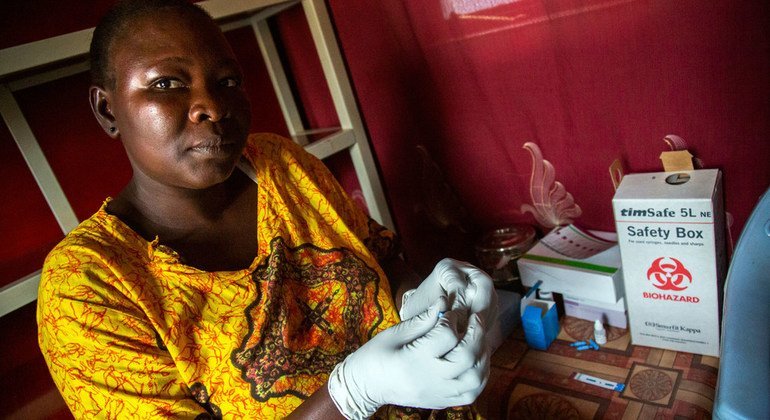
It’s all eyes on Africa as the UN looks to find ways to ensure universal health care for all
It was a historic moment earlier this month as the United Nations and African Union pledged to pursue bolds goals that will strengthen global health and provide health care to all across Africa. “The Memorandum of Understanding we have signed today is an important step towards formalizing the cooperation between WHO and the African Union and to implementing the Addis Ababa Call to Action,” said the WHO chief. “The Addis Ababa Call to Action is a powerful commitment from African Union leaders to increase domestic financing for health, and to hold themselves accountable for that commitment”, he added. Following a political declaration on universal health coverage, which was approved in September by all UN Member States, the General Assembly adopted a global resolution to translate that commitment into reality by legislators in 140 countries. November 18 - UN News It’s indeed a bold declaration and one that will require prevention, infection control and affordable delivery of care. Key UN-AU collaboration specifics Provide technical expertise to the African Medicines Agency and create an environment to foster local production of medicines. Strengthen collaboration between WHO and the Africa Centers for Disease Control and Prevention – with a particular focus on emergency preparedness, to build defenses against epidemics and other health emergencies. Support the implementation of the Addis Ababa Call to Action on universal health coverage and the AU Declaration on Domestic Financing. The prospects are positive, but delivery will be a challenge, and if you are a journalist covering this topic and need an expert source for insight and perspective – let us help. Dr. Saad Bhamla is an Assistant Professor of Chemical & Biomolecular Engineering at the Georgia Tech College of Engineering where he also runs the Bhamla Lab that develops low cost tools for science education and global health. Saad is available to speak to media regarding this topic, simply click on his icon to arrange an interview.



CRISPR is the genetic game changer – but are we ready?
CRISPR is here to stay – and the daily advances of this technology and stem cell therapy seem to be moving at a near exponential speed. “CRISPR Therapeutics of Zug, Switzerland, reported that one patient with sickle cell anemia and another with beta thalassemia appear to have benefited from the same CRISPR-based intervention for up to 9 months, STAT reports. (The company gave STAT an early look at the data but did not allow outside commenters to see the results.) Before the treatment, both patients required multiple infusions each year of red blood cells. CRISPR Therapeutics, collaborating with Vertex Pharmaceuticals, removed blood stem cells from their bodies and modified them with CRISPR to knock out a gene that shuts down production of fetal hemoglobin. When the edited cells were put back in each patient’s body through a stem cell transplant—which required a toxic chemotherapy to kill their own stem cells—both people produced high levels of fetal hemoglobin and no longer needed transfusions.” November 19 – Science Mag CRISPR and how it will shape the future of genetics, health care and society are the subject of great debate, hope and concern and if you are a journalist covering this topic and need an expert source for insight and perspective – let us help. Dr. Michael Davis researches cardiac regeneration, stem cell therapy and preservation at the Georgia Tech College of Engineering where he also is the Associate Chair for Graduate Studies in Biomedical Engineering. Michael is available to speak to media regarding this topic, simply click on his icon to arrange an interview.


Pope Francis Calls Consumerism a "Virus," Encourages Prayer and Charity
In an Advent homily on December 1, Pope Francis urged to "choose prayer and charity over consumerism" during the holiday season. "Consumerism is a virus that affects the faith at its root because it makes you believe that life depends only on what you have, and so you forget about God," Francis said. "The meaning of life is not to accumulate." Villanova's experts have weighed in on and provided their thoughts on Francis' latest remarks. Mary Hirschfeld, associate professor of theology and religious studies and author of Aquinas and the Market: Toward a Humane Economy "Francis is echoing the message the Church has consistently given on this. Pope John Paul II warned about thinking of 'progress' as having more. The essence of true progress is being more—growing as a human being, giving oneself more fully to relationships, drawing closer to God. "God created us to find our happiness in Him. We thus do have a longing for the infinite. The modern mistake is to seek that infinite in the finite goods of this life. But that can never satisfy us, which is why we always look for the next thing and the next thing. "The one thing I would ask Pope Francis is whether it is our consumerism that is driving out our desire for God, or are we throwing ourselves into consumerism because we have forgotten about God? It could well be both. But for Christians who find themselves swept up in consumerism it is worth asking whether we are seeking out the distractions of things because we are afraid of turning more fully to God. This might be a fruitful line of prayer this Advent season. "We live in a culture that thinks that happiness consists in getting more. It's built into the economic approach that informs so much public discourse. So, it's not surprising that we all struggle with this. "And plenty of secular people know this is a problem. That's why there have been episodic movements towards 'simple' living. Marie Kondo's popularity is testimony to the fact that we all recognize that 'more' doesn't lead to 'better' or 'happier.'" Eugene McCarraher, associate professor of humanities and author of The Enchantments of Mammon "While I certainly agree with Pope Francis that consumerism is a virus, I don't think it's the most harmful virus with which we have to deal. In fact, I've long thought that consumerism is way of not talking about capitalism. "Capitalism needs consumerism as a structural necessity; capitalists need people to buy a lot of things they either don't need or often don't really want. Hence, the importance of the culture industries such as advertising, marketing and public relations. I also think that criticizing consumerism can end up being a rather tiresome and ineffectual form of moralism. "Wagging a finger at people for being 'materialistic' has never really worked, and besides, material things are both necessary and good; material life should be cherished and savored. The real issue isn't the amount of material goods that people use; it's the nature of the goods and what sort of people their use helps to cultivate. So, while the pope's remarks are certainly true and pertinent, I think we might use them as a starting point for a very different kind of conversation."


Baylor Study: Fear of Missing Out (FOMO) Plus Social Media Connections Can Equal Happiness
FOMO – aka the “fear of missing out” – can have a positive impact on well-being when it leads to social media use that increases social connections, according to a new Baylor University study. James A. Roberts, Ph.D., The Ben H. Williams Professor of Marketing, and Meredith David, Ph.D., assistant professor of marketing in Baylor’s Hankamer School of Business, coauthored the study, “The Social Media Party: Fear of Missing Out (FOMO), Social Media Intensity, Connection, and Well-Being,” published in the International Journal of Human-Computer Interaction. Roberts and David collaborate often and are nationally recognized experts on the effects of technology and social media on relationships and well-being. For this collaboration, the researchers conducted two studies consisting of 565 college students from a large U.S. university to determine the effect FOMO has on social media use, social connection to others and psychological well-being. FOMO is defined in the study as apprehension that others might be having a rewarding experience from which one is absent. According to Roberts, approximately 75% of young adults struggle with FOMO. “The human need to belong is an innate drive that dictates much of our behavior. Social media capitalizes on this need to belong,” Roberts said. “Social media has a dual nature. It lets us interact with others, which is good, but it also exposes us to more social opportunities than we can take part in that fosters a sense of missing out and inadequacy.” The study found: FOMO is a significant predictor of subjective well-being, and social media intensity had a slight significant effect on well-being. Social media is an omnipresent conduit for attempting to make such connections. It is likely that FOMO encourages the use of social media to stay connected. From the first study of 107 college students, David and Roberts gathered data to measure FOMO, social media intensity and social connection. Although FOMO typically has a negative connotation on social interactions, the study showed that the fear of missing out can lead to greater feelings of social connection. “We found that FOMO might actually have a positive impact on social connection through its impact on social media intensity and attachment,” Roberts said. “FOMO drives our use of social media to connect socially with others. Being socially connected leads to happier people.” The second study of 458 college students used the same measures, but also included an assessment on subjective well-being (happiness). The study tested their complete conceptual model in which subjective well-being is an ultimate outcome of FOMO (through its impact on social media intensity and social connection). Roberts said that social media can be a positive resource to help those with FOMO create social interactions, if it is being used actively through online actions such as posting, liking and commenting. “The problem is that people often turn to social media but use it passively – such as creeping on people or viewing pages without interacting – which can then lead to lower levels of happiness because creeping does not foster social connection,” Roberts said. “FOMO can lead to happier people if it drives people to use social media to connect but not simply to ‘creep’ on others.” ABOUT THE STUDY AND AUTHORS James A. Roberts, Ph.D., The Ben H. Williams Professor of Marketing, and Meredith David, Ph.D., assistant professor of marketing in Baylor University’s Hankamer School of Business, coauthored the study, “The Social Media Party: Fear of Missing Out (FOMO), Social Media Intensity, Connection, and Well-Being,” which is published in the International Journal of Human-Computer Interaction. OTHER RESEARCH BY ROBERTS AND DAVID Cellphones Can Damage Romantic Relationships, Lead to Depression People Who Are “Phone Snubbed” By Others Often Turn To Their Own Phones, Social Media For Acceptance Bosses Who “Phone Snub” Their Employees Risk Losing Trust and Engagement When ‘Religiosity’ Competes with Materialism, Charitable Giving Takes a Hit ABOUT BAYLOR UNIVERSITY Baylor University is a private Christian University and a nationally ranked research institution. The University provides a vibrant campus community for more than 17,000 students by blending interdisciplinary research with an international reputation for educational excellence and a faculty commitment to teaching and scholarship. Chartered in 1845 by the Republic of Texas through the efforts of Baptist pioneers, Baylor is the oldest continually operating University in Texas. Located in Waco, Baylor welcomes students from all 50 states and more than 90 countries to study a broad range of degrees among its 12 nationally recognized academic divisions. ABOUT HANKAMER SCHOOL OF BUSINESS AT BAYLOR UNIVERSITY At Baylor University’s Hankamer School of Business, integrity stands shoulder-to-shoulder with analytic and strategic strengths. The School’s top-ranked programs combine rigorous classroom learning, hands-on experience in the real world, a solid foundation in Christian values and a global outlook. Making up approximately 25 percent of the University’s total enrollment, undergraduate students choose from 16 major areas of study. Graduate students choose from full-time, executive or online MBA or other specialized master’s programs, and Ph.D. programs in Information Systems, Entrepreneurship or Health Services Research. The Business School also has campuses located in Austin and Dallas, Texas. Visit www.baylor.edu/business and follow on Twitter at twitter.com/Baylor_Business.


