Experts Matter. Find Yours.
Connect for media, speaking, professional opportunities & more.

Why Are Canadian Banks Not Protecting Seniors? The $40 Billion Dollar Question
After an 89-year-old Victoria man lost $1.7 million to phone scammers despite bank red flags, retirement expert and authour, Susan Pimento, exposes a critical protection gap: while U.S. banks like Bank of America offer "Trusted Contacts" (designated people banks call to verify suspicious transactions) for all accounts, Canadian banks restrict this safeguard to investment accounts only—leaving everyday banking vulnerable where most fraud occurs. In Canada, senior fraud is vastly underreported (RCMP estimates only 5-10% surface), and banks are treating this as a cost issue rather than a moral crisis. Susan Pimento is available for interviews to discuss practical solutions, industry insights from her decades of work within financial institutions, and why Canadian banks are failing to implement a simple fix that could save seniors' life savings. Connect with her directly through ExpertFile to schedule TV, radio, podcast, or print interviews. As I was polishing this post for Canadian Financial Literacy Month, another senior fraud story flashed across my screen. This one stopped me cold. According to this CBC story, an 89-year-old man in Victoria, B.C., was tricked into handing over nearly $1.7 million of his life savings in a months-long phone scam. The caller claimed to be from the fraud department at CIBC and said he was helping with a national money-laundering case. (Spoiler: he wasn't.) Despite red flags and staff awareness, the bank still allowed large in-person withdrawals. He was told to buy gold bars — yes, actual gold bars — with drafts of up to $395,000, which couriers then collected like some twisted Uber Eats retirement fraud. Every week in Canada, we see another heartbreaking headline: a senior sends thousands, sometimes millions, to a scammer pretending to be their grandchild, the CRA, or — the ultimate irony — their bank. These scams targeting seniors don't require fancy hacking. They rely on fear, isolation, and misplaced trust. Once the money's gone, it's gone—no refund policy. And here's the kicker: what we're reading about is just the tip of the iceberg. For seniors, fraud now ranks as the top crime, and most fraud goes unreported—especially in this demographic. In a previous post, I showed how the data suggests the real figures could be 10 to 20 times higher than what's officially reported. The RCMP estimates that only 5-10% of fraud victims come forward. Many victims never speak out due to embarrassment, fear, or confusion. Translation? For every story that makes the news, countless others suffer in silence. How The Banking Industry Can Actually Fight Fraud I've worked within financial institutions for decades. Let's just say I understand how the process works. Banks have billion-dollar tech stacks, layers of compliance, and advanced fraud detection systems that can flag a suspicious $47 transaction in milliseconds. But the solution for this type of fraud isn't a multimillion-dollar algorithm or a new "AI-powered fraud prevention dashboard." Instead, it's a human-based approach called a Trusted Contact. What's a "Trusted Contact," Anyway? It's not an app, a chatbot, or some new gadget that requires a firmware update every Thursday. It's a person. Someone you trust — a family member, attorney, accountant, or another third-party who you believe would respect your privacy and know how to handle the responsibility of communicating with your bank in your best interests if something suspicious occurs. They don't access your money or view your accounts. They can't see that you spent $47 at the LCBO last Tuesday (Your secret is safe). They're simply your human safety net — a fraud wing person, if you will. The Origins of the Trusted Contact The concept began in the U.S. in 2018, when FINRA mandated investment firms to request a Trusted Contact Person. Canada followed in 2022, when the Canadian Securities Administrators introduced similar guidance for investment accounts. What things can be discussed with a trusted contact? As its name implies, a Trusted Contact is a designated person who is inherently trusted by the individual (and has no authority to transact business on a client’s account), so there is little to no danger that any reasonable disclosure would violate a client’s trust or give rise to any material issue.” What Canadian Banks Are Doing...And Not Doing Here's the good news. If you invest through Wealthsimple, RBC Direct Investing, TD Direct, or BMO InvestorLine, you can already designate a Trusted Contact. But here's where it gets ridiculous: RBC Direct might have that security feature — but your regular RBC chequing account? Not so much. That protection vanishes the moment Mom or Dad logs into their everyday banking. And that's where most fraud actually occurs. It's like installing a state-of-the-art security system on your front door but leaving the back door wide open with a welcome mat that says "Scammers Enter Here!" Fraud in Canada for Banks is Still a Budget Item: Not a Moral Crisis Here's the uncomfortable truth: For banks, fraud is considered a "cost of doing business." And since most of those losses are borne by customers, not the bank, there isn't much urgency to innovate. The Big Five earned over $40 billion in total last year. They have the means to care. They're not particularly motivated to actually do so. The Big Opportunity for Banks: Add a Little Humanity to the System Banks like to boast about their AI, blockchain, and next-gen fraud analytics. But most scams don't occur because of breached firewalls — they happen because of breached hearts. A Trusted Contact provides an additional simple, low-tech layer: human verification. Picture this: The bank spots an unusual transaction — a large new payee, an international wire transfer, or a sudden gold-bar purchase (it happens). Instead of sending another automated text alert, the system could ask: "This looks unusual. Would you like us to confirm with your Trusted Contact before proceeding?" or “Just a heads-up: scammers often use urgent or unusual requests. Prefer we run this by your Trusted Contact before we proceed?” That's it. One additional step. One extra set of eyes. One brief conversation could save someone's life savings. This isn't about limiting independence — it's about safeguarding autonomy. Ensuring your decisions are genuinely yours, not the scammer's. Banks could even call it "Senior Protection Mode." I'd sign up tomorrow. Heck, I'd pay extra for it. (Shhh, don't tell them that.) Here's the Proof Trusted Contacts Work: Bank of America Did It In 2022, Bank of America became the first major bank to extend Trusted Contacts beyond investment accounts to everyday banking clients. Customers can now add a trusted person the bank can call if something seems wrong, if they can't reach you, or if staff suspect undue influence. That person can't access your money — they're just the human speed bump before disaster: one simple form, one phone number, and much heartbreak avoided. If Bank of America can do it, why can't ours? Canadian banks already have the tech — and indeed the profits — to make it happen. What's Holding Canada's Banks Back? Cue the usual excuses: "Our legacy systems can't handle that." Sure — some of your code still thinks "Y2K" is an active threat. But if you can build an app that tracks my latte points and sends me notifications about my "spending insights," you can add one field for a Trusted Contact. "Privacy laws make it risky." Nope. FINRA and the CSA already provide safe-harbour protections. With consent, banks can legally contact a Trusted Person. Just add a checkbox. You love checkboxes. You make us check dozens of them every time we update our password. "Customers haven't asked for it." They're asking now. Loudly. With megaphones. And pointing at stories like the Victoria gentleman who lost $1.7 million in gold bars. The business case has historically been weak because most fraud losses affect customers, not the bank's balance sheet. But here's the catch: every fraud story damages trust. And in banking, trust is supposed to be the core of the business. For Canadian Banks There's a Competitive Advantage in Caring Rolling out a Trusted Contact feature isn't just good ethics; it's good business. Imagine the marketing campaign: "We don't just protect your password — we protect your peace of mind." Seniors would love this. So would their kids. That's multi-generational loyalty money can't buy. If EQ Bank or any challenger brand wanted a PR home run, this would be it. It's Time to Take Action on Fraud To the Banks: Stop waiting for regulators to force your hand. Lead. Be the first to offer Trusted Contacts for all customers — not just investors. You have the framework, the talent, and the budget. You absolutely do not need another consultant to tell you this is the right thing to do. To Policymakers: The Financial Consumer Agency of Canada should update its Code of Conduct to include a mandatory Trusted Contact option for all customers, safe-harbour rules allowing banks to pause suspicious transactions, and annual public reporting on outcomes. Because sunshine is the best disinfectant, even in banking. To Consumers: Don't wait for policy — be the policy. Ask your bank today if you can add a Trusted Contact. If they say no, ask why not — and post it. Loudly. Talk to your family. Choose your Trusted Person now. Write your MP or MPP and ask why U.S. banks protect seniors better than ours. Remember the $3 ATM Fee Rebellion? Canadians once revolted over paying $3 to access their own money at ATM's. We later got no-fee accounts, digital challengers, and a whole new generation of more innovative banking. If we can rally over an ATM fee, surely we can rally to protect our parents and grandparents from losing their life savings. Fraud isn't an inevitable part of aging — it's a solvable problem. And Trusted Contacts are one of the simplest, most human solutions we have. Don't Forget Two-Factor Authentication for the Soul Adding a Trusted Contact won't stop all fraud — let's be clear about that. But it will go a long way toward slowing it down, adding a common-sense pause, and potentially saving even one senior from losing any part of their hard-earned money. It's unfortunately too late for that gentleman and his family in BC, but it's not too late for countless others. This won't crash legacy systems or drain bank profits. It just adds a little humanity back into banking — right where it belongs. Because the best kind of security isn't just two-factor authentication. It's two people who care. And if we don't care about protecting our elders, who exactly do we care about? Sue Don’t Retire…Re-Wire! Want to become an expert on serving the senior demographic? Just message me to be notified about the next opportunity to become a "Certified Equity Advocate" — mastering solution-based advising that transforms how you work with Canada's fastest-growing client segment.


Your First Scroll of the Day Is Wrecking Your Sleep and Focus, Says ADHD Therapist
For many people, the day doesn’t start with getting out of bed - it starts with reaching for the phone. Psychotherapist Harshi Sritharan, who specializes in ADHD and anxiety, says that tiny habit is doing more damage than most of us realize. “When you check your phone before you’ve even sat up, you’re flooding your brain with microbursts of dopamine,” she explains. “Dopamine is a key part of our motivation and reward system. Those quick hits of novelty - notifications, texts, news, social feeds - tell the brain, ‘This is where the good stuff is.’” The problem? That early surge doesn’t just switch on your day. It primes your nervous system to stay on high alert. “You’ve now trained your brain to expect that level of stimulation,” Sritharan says. “For many people with ADHD, nothing else in their day compares - school, work, chores all feel flat by comparison. That’s where that constant ‘I’m bored’ feeling can come from.” That ongoing “high alert” isn’t just about boredom, though. It’s also a sign of a dysregulated nervous system: your brain scanning for the next hit of information, your body sitting in low-level fight-or-flight. Over time, that uncertainty - What’s waiting for me in my inbox? Did I miss something? - can exacerbate anxiety and executive dysfunction. Nighttime habits make things worse. Those late-night emotional spikes from doom-scrolling, stressful emails, or intense content don’t just keep your mind busy. They can trigger the sympathetic nervous system - the body’s fight, flight, or freeze response - and potentially release stress hormones like cortisol and adrenaline. “That combination,” Sritharan notes, “blocks melatonin, dysregulates the nervous system, and sends your body the opposite message of what it needs before sleep. You’re basically telling your brain, ‘We’re in danger,’ and then expecting it to rest.” Instead of shaming people for these habits, Sritharan takes a “knowledge equals power” approach. “I don’t tell clients, ‘Just stop doing that,’” she says. “I teach them what’s happening in their brain and nervous system so they can understand why it feels so hard to put the phone down. Once people see the pattern, they feel less broken - and more motivated to experiment.” “Most people don’t need a total digital detox,” Sritharan says. “They need skills, not shame. When they understand how their brain is wired - especially with ADHD - they can design habits that work with their nervous system instead of against it.” Her message to anyone who feels stuck in the cycle: don’t blame your willpower. “This is your biology, not a personal failure,” she says. “When you understand what your brain is doing, you can finally start changing the script.” ⸻ About the Expert Harshi Sritharan is a psychotherapist who focuses on ADHD, anxiety, and intentional tech use. She helps clients understand dopamine cycles, rebuild healthy routines around sleep and screens, and create realistic boundaries that work in real life - not just on paper. Harshi is part of the Offline.now ADHD Expert Community.



New findings from a recent survey conducted by CAA Manitoba (CAA MB) highlight a concerning trend: substance use, particularly cannabis, is on the rise both recreationally and behind the wheel. “Cannabis is more accessible than ever, and that means more Manitobans are not only choosing to drive after consuming it but are also getting behind the wheel soon after and expressing increased confidence in their ability to do so,” says Ewald Friesen, manager, government & community relations for CAA Manitoba. The data shows that 24 per cent of drivers admitted to consuming cannabis before driving, which is up six per cent from last year, while ten per cent of Manitobans reported driving after consuming cannabis in the past few months, a three per cent increase from 2024. Among cannabis-impaired drivers, most (63 per cent) say they drove within three hours of consumption, which is up 10 per cent from last year. Over a third of cannabis-impaired drivers acknowledged feeling high while driving. In addition to the survey conducted by CAA MB, a recent study with funding support from CAA, conducted by the University of Saskatchewan, examined 50 drivers aged 19 to 30 to assess how consuming edible cannabis influences collision risk. This age group of young drivers, identified as having the highest crash rates and a greater tendency toward risky driving behaviour, offers new insights into the impact of cannabis on driving. Drivers often have a false sense of confidence when driving high. This study examined how consuming edible cannabis affects collision risk. Findings indicate that critical driving skills, including reaction time, lane discipline, and speed control, were impaired even shortly after consumption. Contrary to popular belief that cannabis edibles take hours to take effect, this study shows that impairment is evident 90 minutes after consumption. When asked if they felt safe to drive after consuming edibles, only four per cent felt safe getting behind the wheel 90 minutes after eating an edible cannabis product. What is interesting about this is that in a controlled environment, young drivers feel unsafe driving under the influence of cannabis. However, the study conducted by CAA MB shows that drivers often have a false sense of confidence when they have driven high in the past. “This study marks an important first step in understanding how cannabis edibles impact driving performance,” adds says Friesen. “Too often, decisions about whether someone is fit to drive are made in the moment, relying on judgment rather than evidence. Cannabis impairment studies like this are essential. Each one brings new learnings that help us refine our approach and ensure that safety is never left to chance.” According to CAA Manitoba’s data, more drivers have reported feeling confident in their driving ability (77 per cent), which is up ten per cent from 2024. More drivers this year (33 per cent) also say that they are unsure about how much cannabis is needed for effects to kick in, up six per cent from 2024. Alarmingly enough, more than half of Manitobans are unaware that the penalties associated with driving under the influence of alcohol, drugs, or a combination of substances are the same. “Drivers may face enhanced roadside sanctions, including an administrative penalty of $700, vehicle impoundment, mandatory Ignition Interlock participation for one year, an impaired driver assessment and movement of 10 levels down the Driver Safety Rating scale,” says Friesen. “Depending on the severity of convictions, impaired drivers may be charged further under the Criminal Code of Canada.” This holiday season, CAA Manitoba is asking that those who do consume cannabis, alcohol or other drugs to plan ahead by making alternate arrangements, such as a designated driver or using a rideshare service, to get home safely. Methodology CAA MB The online survey was conducted by DIG Insights from June 27 to July 14, 2025, with 514 Manitoba drivers aged 19 and older. Based on the sample size of n=514 and with a confidence level of 95 per cent, the margin of error for this research is +/- 3%.) Methodology of University of Saskatchewan study The study collected extensive data from 50 young adult drivers (aged 19–30), resulting in 250 assessments across multiple realistic driving scenarios using a simulator after consuming a 10mg THC edible.



MEDIA RELEASE: New CAA Study Sheds Light on Edible Cannabis and Collision Risk Among Young Drivers
A recent study with funding support from CAA, conducted by the University of Saskatchewan, examined 50 drivers aged 19 to 30 to assess how consuming edible cannabis influences collision risk among young drivers. This demographic, which is known for having a higher tendency to engage in risky driving behaviour, currently holds the highest crash rates nationwide. “This study marks an important first step in understanding how cannabis edibles impact driving performance,” says Michael Stewart, Community Relations Consultant for CAA South Central Ontario. “Too often, decisions about whether someone is fit to drive are made in the moment, relying on judgment rather than evidence. Cannabis impairment studies like this are essential. Each one brings new learnings that help us refine our approach and ensure that safety is never left to chance.” The findings indicate that critical driving skills, including reaction time, lane discipline, and speed control, were impaired. Consumption times may vary to feel the effects of edible cannabis from driver to driver. However, the study found that impairment was most evident at 90 minutes after consumption, so its effects may not be noticeable until a motorist is already behind the wheel. When asked if they felt safe to drive after consuming edibles, only four per cent felt safe getting behind the wheel 90 minutes after eating an edible cannabis product. What is interesting about this is that in a controlled environment, young drivers feel unsafe driving under the influence of cannabis. However, a recent survey of 1,510 Ontario drivers from CAA SCO shows that drivers often have a false sense of confidence when they have driven high in the past. The perception of safety doesn’t match reality The survey found that the number of people admitting to cannabis-impaired driving in Ontario (nearly 20 per cent) has remained stable compared to last year. However, a concerning trend has emerged, with more cannabis-impaired drivers (78 per cent) saying they are confident in their driving abilities while under the influence – a 13 per cent overall increase from 2021. Why is this concerning? The perception of safety doesn’t match reality. More than a third of cannabis-impaired drivers acknowledged feeling high while driving, relying on their personal judgment for signs of impairment, such as drowsiness, slowed reaction time, or brain fog. “This misplaced confidence can lead to dangerous decisions, increasing the risk of collisions and endangering road users,” adds Stewart. “We must recognize that getting behind the wheel is not just a personal choice it’s a responsibility that affects the safety of everyone on our roads.” Growing issue of poly-use The research also points to a growing issue of poly-use, or the consumption of multiple substances and is on the rise. This trend adds another layer of complexity to road safety efforts, as the combined effects of different substances can further impair judgment and reaction times. Most respondents (57 per cent) say they consume cannabis in combination with other substances – most commonly, alcohol. However, painkillers, psilocybin, ecstasy, and MDMA are on the rise. CAA SCO continues to advocate for safer roads by encouraging motorists to make responsible choices. The message is clear: do not get behind the wheel when impaired. “While we’re all aware that alcohol-impaired driving can be dangerous, we should also take the same attitude towards cannabis-impaired driving,” says Stewart. “With the holiday season coming up, cannabis can be consumed legally and responsibly but should never be used when driving.” CAA is asking that those who do consume cannabis, alcohol or other drugs to plan ahead by making alternate arrangements, such as a designated driver or using a rideshare service, to get home safely this holiday season. Methodology The online survey was conducted by DIG Insights from June 27 to July 14, 2025, with 1,510 Ontario drivers aged 19 and older. Based on the sample size of n=1,510 and with a confidence level of 95 per cent, the margin of error for this research is +/- 2%.) Methodology of the University of Saskatchewan study The study collected extensive data from 50 young adult drivers (aged 19–30), resulting in 250 assessments across multiple realistic driving scenarios using a simulator after consuming a 10mg THC edible.


Canada's First Lifetime Fixed-Rate Reverse Mortgage: A Game-Changer or Just Another Option?
Every so often, a retirement product emerges that makes even a seasoned boomer take notice and remark, "Well, isn't that interesting?" The Globe and Mail reported that Bloom Finance has introduced Canada's first "lifetime fixed-rate reverse mortgage." What’s a Lifetime Fixed-Rate Reverse Mortgage? A Fixed Rate Reverse Mortgage is a financing option that gives you a permanently locked-in interest rate for as long as you hold the loan—not just for a typical five-year term. This could appeal to many Canadians entering retirement: It means you can unlock tax-free equity from your home without worrying that future rate hikes will eat into your cash flow or erode your long-term plans. What makes this even more appealing is the nature of a reverse mortgage itself. You’re not required to make monthly payments You retain full ownership of your home Your rate simply determines how your balance grows over time. When that rate is fixed for life, it removes one of the biggest sources of uncertainty, allowing retirees to plan confidently, protect more of their equity, and use their home as a stable financial tool rather than a source of stress. In short, a fixed-rate reverse mortgage combines the predictability retirees crave with the flexibility they need—something increasingly hard to find in today’s jittery rate environment. Bloom's New Lifetime Reverse Mortgage: Why People Are Talking Reverse mortgages allow homeowners aged 55+ to access up to roughly 55% of their home's equity without taxes, without monthly payments, and without affecting OAS or GIS. In the past, concerns have centred on the compounded interest and the uncertainty of future rates. Bloom's new Lifetime Reverse Mortgage offering aims to ease this stress by offering a fixed rate for life. Currently, that rate is 6.69%. The rates are a bit higher than other reverse mortgage products on the market. For comparison here are some current rates at the time of publication: Home Trust's (6.44% for a 5-year fixed rate) Equitable Bank (6.54%) HomeEquity Bank's (6.64%) 5-year fixed rates. Looking Beyond the Rates of Reverse Mortgages Bloom's real appeal with this new product is emotional: no more renewal surprises. For retirees on fixed incomes, the stability of a fixed rate feels different. It's like a weighted blanket for your financial nervous system. Think of it as an insurance policy against rising interest rates. And boomers love insurance. We insure our hips, luggage, vacations, eyeglasses, cell phones, and emotions (usually at the spa). So, a mortgage rate that stays stable? Yes, please. But let’s look beyond the mechanics of this product. We need to discuss a force even greater than compound interest: luck. Let's Talk About Luck (aka: The Retirement Wild Card) Here's a truth many boomers seldom admit: financial success isn't only about planning. It's about timing. It's about circumstance. And yes… pure, unfiltered luck. As humans — especially we entitled boomers — we tend to overemphasize our achievements and downplay our faults. And let's be honest: we don't like admitting when we're wrong. Society often rewards the strong and wrong more than the weak and right. (If you're unsure, just watch any political panel for 30 seconds.) Even Warren Buffett — the patron saint of rational investing — made a spectacularly poor decision when he bought Dexter Shoe for $433 million in Berkshire stock. The company later became worthless. Buffett described it as the worst deal of his life. If the Oracle of Omaha can make a mistake, the rest of us can certainly recognize how luck has influenced our real estate stories. And oh, did luck influence the boomer journey. We bought homes when they were affordable; when interest rates were character-building, and avocado appliances were peak chic. Then real estate skyrocketed. Homes doubled, tripled, quadrupled. Not because we were geniuses — but because we were standing in the right place at the right time. Let's be even more honest: A boomer's worst day in real estate is a millennial's dream day. We might not like admitting it, but it's true. And yes — boomers get to show off a little because we also carried the burden of our failures: recessions, layoffs, 19% mortgage rates, renovation disasters, and property taxes that still make us weep into our soup. But luck? She was definitely in the room. Now that we've named her, we can begin speaking honestly about how to use the equity we possess — wisely, deliberately, and with eyes wide open. Let's Discuss the Numbers (Because We Ought To) Here's where the real impact happens. Say you're 70 and you take out a $200,000 reverse mortgage at Bloom's lifetime rate of 6.69%. Over 20 years, with compounding interest and no payments, you'd owe approximately $724,000. Now, if you took out a traditional reverse mortgage at 6.54% over those same 20 years (not including rate hikes, though they're likely), you'd owe approximately $707,000. That's a $17,000 difference — not a high price to pay for lifelong comfort. But There Are Trade-Offs The early-exit penalties are steep: · 8% in year one · Decreasing until year five · Then three months' interest thereafter Penalties are waived if you downsize, move to assisted living, or pass away. But if you leave for other reasons? You're responsible for the costs. Translation: Only select this reverse mortgage product if you genuinely plan to stay put. Zooming Out: The Full Menu of Equity Options This lifetime reverse mortgage is just one tool in a broad (and expanding) equity-release toolkit. Others include: ADUs (Accessory Dwelling Units): Build a suite, rent it out, house a caregiver, or create multigenerational living. Offers independence and income potential. Downsizing: The classic move. Big house to small house to building a solid cash cushion. Emotionally complex, financially empowering. HELOCs (Home Equity Lines of Credit): Offer flexible, interest-only repayment options. Manulife One: The Swiss Army knife of HELOCs. Perfect for disciplined retirees. HESA (Home Equity Sharing Agreements): No payments or interest — you exchange future house appreciation for cash today. Traditional Reverse Mortgages: Similar to Bloom in structure but without the lifetime rate. And yes — boomers have more equity-access options than any generation in Canadian history. Not arrogance. Just facts. And increasingly relevant ones. Research shows that 91% of older adults in Canada prefer to age at home rather than move to an institution, with 92.1% of Canadian seniors currently living in private dwellings in the community. Honest Questions to Ask Yourself Before Signing for Any Type of Loan Wondering if you should take the leap? Before you even consider signing anything, pour yourself something warm (or stronger) and ask a few honest questions. · Am I emotionally ready, or just tired of worrying about money? · Am I genuinely content to remain in this home forever, or am I romanticizing the past? · Where are interest rates heading — and how will that affect my comfort level? · What exactly do I need cash flow for — income, essentials, opportunities, legacy, or "finally something for ME"? · Have I thought about how this decision might affect my children and inheritance? · What future choices could this create — or prevent? · And the biggest question of all: if Plan A fails, is Plan B truly realistic… or just wearing yoga pants and pretending? Because here's the real truth: the happiest retirees aren't the ones who got lucky — they're the ones who used their luck with purpose, timing, and emotional clarity. Bloom's lifetime reverse mortgage isn't a miracle cure, nor is it a trap. It's simply one tool — and for the right person, it provides emotional stability and financial predictability. Here's What Matters Before you sign for a reverse mortgage, HELOCs, or anything else with an acronym and a sales commission attached, here's my professional advice: Get the full picture so you can make decisions that truly work for your life — not merely to meet someone else's sales quota. The "best" financial move isn't the one that appears impressive on a spreadsheet. It's the one that allows you to sleep peacefully at night. The one that grounds you emotionally and supports you financially. Retirement isn't the end of the story. It's the chapter where you finally get to blend strategy with self-awareness, confidence with clarity, and luck with a bit of laughter. And if life insists on being unpredictable? Then outsmart it, outlaugh it, and choose the equity tools that help your future self say, "Nice move." Love, Aunt Equity" aka Sue "Don't Retire… ReWire!!!" Want to become an expert on serving the senior demographic? Just message me to be notified about the next opportunity to become a "Certified Equity Advocate" — mastering solution-based advising that transforms how you work with Canada's fastest-growing client segment.

Expanding Comprehensive Cancer Services to Middletown, Delaware
ChristianaCare’s Helen F. Graham Cancer Center & Research Institute is expanding access to high-quality, comprehensive cancer care for residents in Middletown and nearby communities. These services will be offered at the new Middletown Health Center, now under construction and expected to open in May 2027. “Our vision is to expand and grow our services throughout the region so that more patients can access high-quality cancer care close to home,” said Thomas Schwaab, M.D., Ph.D., Bank of America Endowed Medical Director of the Helen F. Graham Cancer Center & Research Institute. “By bringing our full cancer-care team and advanced technology to Middletown, we can provide highly precise, coordinated treatment while maintaining the same high standard of care our patients expect.” The cancer care services offered at the Middletown Health Center will reflect the same high-quality, comprehensive care provided at ChristianaCare’s Helen F. Graham Cancer Center & Research Institute in Newark. Patients will have access to specialists across all major cancer types, supported by the Graham Cancer Center’s participation in the National Cancer Institute Community Oncology Research Program (NCORP), which brings advanced treatments and clinical trials directly to the community. In Middletown, this means coordinated multidisciplinary treatment planning, advanced radiation therapy, infusion services, consultations with oncologists and surgeons, nurse navigation, supportive care, clinical trial participation and both in-person and virtual visit options. Advanced Technology Enhances Precision and Comfort When services open in Middletown, patients will have access to advanced radiation therapy using the Varian TrueBeam linear accelerator, one of the most sophisticated radiation therapy systems available. TrueBeam delivers highly precise, image-guided treatments for a wide range of cancers, allowing physicians to target tumors more accurately while minimizing radiation to healthy tissue. “The TrueBeam system represents a major step forward in how we deliver radiation therapy,” said Adam Raben, M.D., chair of Radiation Oncology at ChristianaCare. “Treatments that once took 30 minutes can now be completed in just a few minutes, with real-time imaging ensuring precision. This means better tumor control, fewer side effects and a more comfortable experience for patients.” A Growing Community with Expanding Health Care Needs Middletown is one of Delaware’s fastest-growing communities, with its population projected to rise 8% by 2029, nearly twice the statewide rate, according to the US Census Bureau. Since 1990, the town’s population has grown more than 550%, and the number of residents age 65 and older has increased 24% since 2020, driving demand for accessible, high-quality health care. With continued growth and an aging population, cancer service demand in Middletown is expected to increase by 11% over the next decade, according to health care forecasts from Sg2, a Vizient company, underscoring the need for expanded local care options. Expanding Access to Meet Future Cancer Care Demand By expanding services in Middletown, ChristianaCare is responding to both the region’s population growth and the increasing need for cancer care. The new site will help patients receive timely diagnosis and treatment while reducing travel time and improving coordination with the full Graham Cancer Center team. “As our community grows, so too does the need for locally accessible, state-of-the-art cancer services,” said Schwaab. “This expansion represents a pivotal investment in the health of the Middletown—Odessa—Townsend corridor and beyond.” $92 Million Investment in Middletown’s Health The $92.3 million Middletown Health Center reflects a deep investment in the health and vitality of the state. It is part of ChristianaCare’s larger plan, announced in July 2025, to invest more than $865 million in Delaware over the next three years. In addition to cancer care, the Middletown Health Center will offer a full range of services, including primary and specialty care, women’s health, behavioral health, cardiovascular care, pediatrics, neurology, imaging, diagnostics and lab testing. The center’s healing environment will also include walking trails and abundant natural light, making high-quality, convenient and coordinated care more accessible and welcoming for patients and families. The 87,000-square-foot Health Center will be located at 621 Middletown Odessa Road, next to ChristianaCare’s existing freestanding emergency department.


ChristianaCare Launches Organoid Core to Personalize Cancer Treatment
ChristianaCare’s Cawley Center for Translational Cancer Research has unveiled a first-of-its-kind organoid core in a community cancer center program. The new laboratory facility within the Helen F. Graham Cancer Center & Research Institute grows and tests living, patient-derived tumor models, giving doctors and researchers a faster, more precise way to identify the therapies most likely to work for each patient. This innovation could change how cancer is treated in Delaware and serve as a model for community centers nationwide. There are only a handful of organoid core centers, or “tumor-on-a-chip” programs, in the United States, and ChristianaCare’s is the first within a community cancer center setting. What the Organoid Core Does Tumor organoids are tiny, three-dimensional cultures grown from a patient’s tumor tissue. They preserve the genetic and molecular traits of the original tumor, making them far more accurate than traditional cell lines. “These mini-tumors enable researchers to screen drugs faster, identify new biomarkers and discover which treatments are most likely to work for each patient,” said Thomas Schwaab, M.D., Ph.D., Bank of America Endowed Medical Director of ChristianaCare’s Helen F. Graham Cancer Center and Research Institute. “This core is a bridge between the lab and the clinic. By growing living tumor models from cells of individual patients, we can test real-world drug responses and tailor treatments for them in ways that were not possible before.” How It Advances Patient Care The organoid core strengthens the Cawley Center's research capabilities by enabling drug screening and biomarker discovery. It will bank organoids representing the wide variety of tumors seen in the community, giving scientists a realistic system for testing therapies. ChristianaCare treats more than 70 percent of cancer patients in Delaware, giving researchers unique access to treatment-naïve samples. These are tumor tissues that have not yet been exposed to chemotherapy or other therapies. Studying them provides a more accurate picture of how cancer behaves naturally and how it might respond to new treatments. Bringing a new cancer drug to patients is expensive and risky. Estimates show it can cost $1.3 to $2.8 billion, with up to a third spent on preclinical development, and only about one in 10 compounds ever reach human trials. Traditional mouse models often fail to fully mimic human tumors, making early testing less reliable. By using organoid screening, the Cawley Center can test therapies more accurately, reduce costs and failure rates and move promising treatments into clinical trials faster. Combined with existing tissue collection programs, clinical trial infrastructure and community partnerships, these resources create a direct pathway to bring lab discoveries to patients faster. Turning Point in Translational Research “Our goal is to shorten the distance between discovery and treatment,” said Nicholas J. Petrelli, M.D., director of the Cawley Center. “Too many promising drugs fail because early models do not capture the complexity of real tumors. The organoid core helps solve that problem. We can now test therapies in models that reflect the patients we actually serve.” “This is a turning point for translational research in community health,” said Jennifer Sims Mourtada, Ph.D., associate director at the Cawley Center. “Organoid technology lets us study cancer in a way that feels personal. We are not just looking at data points. We are studying living models of a patient’s tumor, which can reveal how that person’s cancer might behave or respond to treatment. This approach brings science closer to the people it is meant to help.” Looking Ahead In the coming months, the organoid core will focus on building a diverse biobank of tumors common in Delaware. Plans include collaborations with academic institutions, shared access for external researchers, and development of immune-tumor co-culture models. By combining advanced technology, strong community partnerships and direct patient access, ChristianaCare and the Cawley Center are showing how translational cancer research can thrive in a community setting, making breakthroughs not only in the lab but also in patients’ lives.

12 Days of Holiday Experts - Goizueta Business School Sources for the Season
It's that time of the year again! And as Americans get ready for another journey into the festive season, there are always opportunities for stories to be told about shopping, travelling, buying, returning, and making sure you don't get ripped off or scammed during all the hustle and bustle, Here's a stocking full of topics and expert sources who are here to help with your coverage this holiday! Gifts, Giving, and all the Costs That Come With It Economics of the Holiday Season A successful Q4 makes the difference between annual profitability and loss for many businesses. Professor Tom Smith is available to discuss seasonal hiring, retail expectations, the impact of tariffs, and the importance of the holiday season to retailers. View his profile here Black Friday & Using AI to find the Perfect Gift Professor Doug Bowman expects to see more Shoppers (esp. Gen Z) experimenting with GenAI for personalization, inspiration, product discovery, summarizing reviews, generating lists, and finding deals. Results may be mixed, depending on the data the AI was trained on. He also expects more purposeful and complex shopping, with fewer impulse purchases and more searching (both online and in brick-and-mortar stores), due to lower inventory levels/assortments at some retailers. View his profile here Food and Travel Pricing Professor Saloni Firasta Vastani can discuss the cost of this year’s holiday dinners. What’s gone up and what’s gone down? She can also discuss the cost of travel this holiday season and offer tips on how consumers can secure a better deal. View her profile here Avoiding Holiday Overspend Professor Usha Rackliffe can discuss how holiday shopping can expose consumers to credit products, such as store credit cards, that offer various incentives and often result in overspending. She can discuss the pros and cons of the buy now, pay later offers and how interest rates will play into this year’s holiday shopping and spending. View her profile here Gift Giving Professor Ira Bedzow says there are three ways gift-giving can promote both personal growth and professional development. View his profile here Gifts Express Relationship, Not Reciprocity. Contracts and transactions are about keeping score—I give, you give back. Gifts are about connection. A thoughtful gift doesn’t close a deal; it opens a door. Personally, it reframes love and friendship as ongoing commitments rather than conditional exchanges. Professionally, treating interactions as opportunities to build trust creates loyalty, sparks creativity, and builds a culture no contract can guarantee. The Art of Perspective-Taking in Choosing Gifts: The best gifts come from stepping outside yourself and asking: What would this person really want? This act of empathy is a skill worth practicing. Personally, it pulls us beyond ego; professionally, it sharpens our ability to anticipate needs, see through others’ eyes, and make decisions aligned with their values—a foundation for real leadership. Gifts as Lessons in Friendship and Human Connection: True friendship isn’t built on ideology, convenience, or self-interest. It’s rooted in caring for someone simply for who they are. Gift-giving is a rehearsal for that kind of connection. Personally, it reminds us that what we truly want typically comes through relationships, not rivalry. Professionally, it shows that lasting success rests less on shared advantage and more on genuine respect and human connection. Shopping for Sustainability Consumers are increasingly seeking eco-friendly products, and brands that emphasize sustainability are likely to see higher sales. Nearly 69% of shoppers prefer to buy from companies committed to ethical practices, such as those that use carbon-neutral shipping and offer recyclable packaging. Professor Dionne Nickerson focuses on how companies can integrate sustainability in their products and why it matters to consumers. View her profile here Pressure Purchasing As the days inch closer to the holidays, shoppers feel the pressure to find a gift. Professor Max Gaerth can discuss how stress, scarcity, and time pressure shape purchasing decisions. View his profile here Online Shopping and Influencing AI Changing How We Shop Professor David Schweidel examines how new AI tools are transforming the shopping experience and the ways brands utilize AI to engage with prospective customers and personalize product recommendations. He can also discuss OpenAI’s Atlas and how it puts ChatGPT directly into your browser. View his profile here Influencers Influencing Our Purchases How are creators impacting the economy, and are influencers impacting our purchasing decisions? Professor Marina Cooley looks at the creator economy and how TikTok and Instagram are impacting our holiday wish lists, and what it takes for a product to go from unknown to trending. She can also discuss TikTok Shop (something Instagram has struggled to execute). View her profile here How to Attract Customers to the Store this Holiday: Shopping looks different, and it is up to retailers to stand out not just in the brick-and-mortar world but also online. The success of a business can balance on the customer experience. Professor Reshma Shah can discuss the policies that brick-and-mortar retailers need to have in place to successfully merge online shopping and the in-person shopping experience. View her profile here Holiday Scams Tis The Season for Scams Bad actors are using AI to scam consumers. From phone calls to emails, Professor Tucker Balch can tell us how to spot a scam and what we can do to protect ourselves. View his profile here Holiday Returns Product Returns Professor Doug Bowman can discuss the retail strategy and the impact of holiday gift returns, comparing online returns to those in brick-and-mortar stores. View his profile here He can also weigh in on: Why are returns so expensive for retailers? Online returns vs. brick and mortar returns Predicting online returns - helping retailers understand how likely it is that a product will be returned. As well: Are retailers still offering free returns? What’s this costing them? Is this likely to continue? What will they do differently? If you’re a journalist covering the holiday season, our experts can help shape your story. Use the “Connect” button on any expert’s profile to send an inquiry — all inquiries are monitored by our media team to ensure a quick, timely response.

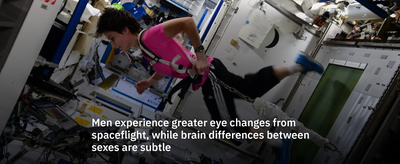
A new study into how spaceflight impacts the human brain and eyes revealed notable sex differences in brain fluid shifts, with female astronauts showing a greater reduction in fluid around the uppermost part of the brain than their male counterparts. Led by Rachael D. Seidler, Ph.D., director of the University of Florida’s Astraeus Space Institute and professor of applied physiology and kinesiology, the study analyzed data from astronauts to determine how factors such as sex, age and body metrics relate to structural brain and eye changes after space travel. The findings, published in August in npj Microgravity, provide key information for protecting astronaut health on long-duration missions to the moon and Mars. This is one of the first studies to look at sex differences in the physiological response to spaceflight. “The data on sex differences in response to spaceflight are scant, given the historically low number of female astronauts.” — Rachael D. Seidler, Ph.D., director of the University of Florida’s Astraeus Space Institute In addition to changes in fluid around the brain, the team also found that a form of eye compression, a hallmark of Spaceflight Associated Neuro-ocular Syndrome known as globe flattening, was the most consistent eye change among crew members. “By far the most prevalent sign of eye changes that we observed was globe flattening, suggesting that this should be the primary monitoring target for ocular health,” Seidler said. “Interestingly, eye changes were more prevalent in males than females.” Globe flattening, when the back of the eyeball becomes slightly indented or pushed inward, might sound minor, but it can have significant effects on vision and raise concerns for long-duration space missions. Surprisingly, there was no strong link between brain structural changes and eye changes, suggesting that the effects on the eyes and brain may arise from distinct mechanisms rather than shared physiological causes. The research underscores UF’s growing leadership in space health science. Through the Astraeus Space Institute, Seidler leads multidisciplinary collaborations that connect neuroscience, physiology and space research to advance human performance and safety in spaceflight. “We used UF's HiPerGator computing cluster for our analyses in this study, enabling us to analyze our data at high speeds,” Seidler said. Read the full study in npj Microgravity.



Do the math: We’re awake roughly 16 hours a day. We spend 10 of those hours staring at screens – phones, tablets, computers, TV, gaming devices. That’s 63% of our waking life. The first platform dedicated entirely to digital balance launching today reveals something even more startling: It's not that we lack willpower to change our behavior. It's that we lack confidence. New proprietary research from Offline.now shows that 8 in 10 people are ready to change their relationship with technology, but more than half are so overwhelmed with their digital habits, they don’t know where to start. “If you don’t learn how to manage the screens in your life, they will manage you,” says Eli Singer, Founder of Offline.now and author of Offline.now: A Practical Guide to Healthy Digital Balance. “When people tell us they feel overwhelmed, it’s not laziness. It’s a crisis of confidence. And confidence is something that can be built.” Digital Wellness Experts Address the Struggles No One Else Will These insights come from digital wellness experts in the Offline.now Digital Wellness Directory – a growing community of licensed professionals across North America specializing in ADHD, relationships, family dynamics, high-achievers, and sustainable behavior change. They’re not offering generic advice. They’re addressing specific digital struggles that define contemporary life. Psychotherapist Harshi Sritharan, who specializes in modern anxiety and ADHD, explains: “The biggest mistake people make is reaching for their phone or turning on their computer first thing in the morning. It injects your dopamine full of uncertainty. You’ve essentially told your brain the most important thing you have to do today is put out fires. I tell clients to delay that first scroll as long as possible and never hit ‘snooze’. You’re fragmenting your REM sleep and making yourself more exhausted. These aren’t willpower issues; they’re about understanding how blue light disrupts your circadian rhythm, especially for those with ADHD who already struggle with sleep regulation.” According to Sritharan, the breakthrough happens when people understand the dopamine cycles driving their dependence and “reframe how they connect with all their screens, whether it’s their phone, gaming console, or streaming TV.” High Achievers Can’t Unplug. The ‘Always-On’ Trap is Killing Productivity, Not Boosting It “A lot of high performers think they need better time management,” says Executive Function Coach, Craig Selinger. “But what they actually need are boundaries. They’ve built empires by being available 24/7, and their phones have become permission slips to say yes to everything.” The difference between old and new technology matters,” he explains. “Back in the day with TV, there was a clear demarcation of beginning and end, right? The episode ends and you move on. Now it’s like Minecraft or TikTok – there’s no ending. And mobility makes it sticky, because you’re physically carrying the drug with you, versus a TV that stayed in one room.” The breakthrough happens when they realize being unavailable on purpose isn’t a weakness. “Things like turning off notifications during deep work, or setting ‘do not disturb’ windows? Those aren’t luxuries. They’re the competitive advantages they’ve been missing.” Digital Dependency as a Third Party in a Relationship Licensed Marriage and Family Therapist Gaea Woods says digital devices are killing interpersonal relationships, not because tech is evil, but because “we use it unconsciously at the moments when connection matters most. When you’re scrolling at dinner, you’re telling your partner ‘my phone is more interesting and important than you’.” The breakthrough happens when couples set explicit agreements: response times, when devices go off-limits – and even what’s it’s OK with AI companions. “We’ve exited the era of meaningful communication without realizing it, and now we must deliberately rebuild it. Nature isn’t ‘Nice to Have’. It’s the Antidote to Screen Fatigue No One is Talking About After running a tech-free camp for 25 years, Personal Development Coach Mark Diamond says he’s seen what happens when kids get genuine face-to-face time interaction outdoors. “Their brains reset. The beauty and physical activity provide perspective that screens can never replicate. Digital dependency has eroded our ability to develop real human connections across all ages, not just teenagers. Screens should not replace the moments that define our wellbeing.” Why This Matters Now The stakes extend beyond personal frustration. Unchecked screen dependency is linked to rising rates of anxiety, deteriorating sleep quality, relationship breakdown, and what mental health experts call “continuous partial attention”, a state where we’re always connected, but never fully present. The Data Reveals When Change is Possible Beyond the confidence divide, Offline.now’s research uncovers the precise moments when users are most open to shifting their digital habits: Evenings from 6 pm-11:59 pm emerge as the “Go Time” window. 40% of self-assessment responders peak readiness to act. Sunday is “Reset Day, when 43% want to set boundaries for the week ahead. Saturdays offer natural opportunities for self-compassion and rest. Afternoons become the “Overwhelm Window”, with 57% feeling consumed by their screens. Critically, Fridays – despite having the highest overwhelm factor – are the worst time for interventions. Users are depleted and change rarely sticks. The Framework That Powers the Platform At the platform’s core is the Offline.now Matrix, a behavioral framework that maps the confidence and motivation levels of users to reveal their starting point: Overwhelmed, Ready, Stuck, or Unconcerned. Based on Singer’s book, Offline.now: A Practical Guide to Healthy Digital Balance, the approach replaces willpower-based advice with microlearning strategies – each taking 20 minutes or less – that track emotional triggers rather than just screen time totals. It offers 100 real-world alternatives to scrolling, from reorganizing a drawer to visiting a thrift shop, and reframes slip-ups as data, not disasters. “The books shows that lasting change doesn’t require deleting Instagram or TikTok tomorrow,” says Singer. “You need to win one personal victory today, and then another tomorrow. That’s how confidence rebuilds.” Propelled by University of Toronto’s Innovation Ecosystem Offline.now is a University of Toronto-affiliated startup, leveraging one of the world’s most powerful innovation networks. U of T is ranked among the top five university-managed business incubators globally and has helped create more than 1,500 venture-backed companies and secured more than CAD$14 billion in investment over the past decade. How Offline.now Works For individuals and families: Take the free self-assessment quiz using the Offline.now Matrix to map your motivation and confidence levels in under three minutes. Receive instant access to practical strategies, curated resources, and a searchable directory of digital wellness experts organized by specialty, location, and insurance coverage. For digital wellness professionals: Join a growing community of licensed mental health practitioners, certified behaviorial coaches, and registered social workers by creating your profile at Offline.now. The platform provides new client leads, professional development opportunities, and visibility in a rapidly expanding market. About Offline.now Offline.now is the first global platform dedicated entirely to achieving digital balance. Founder and author Eli Singer built one of North America’s first social media agencies before seeing technology shift from community-building to attention-harvesting. As a parent, he experienced firsthand the struggle to maintain digital balance. The platform combines proprietary behavioral research, expert guidance and counselling from licensed professionals, and science-backed strategies to help individuals and families build healthier relationships with their screens. Visit Offline.now at https://offline.now Expert Interview Availability Offline.now can arrange interviews with: Eli Singer, Founder – Vision for digital wellness; behavioral data insights Harshi Sritharan, Psychotherapist – Dopamine cycles, ADHD, anxiety and intentional tech use Craig Selinger, Executive Function Coach – Digital distraction in high achievers, family dynamics, ADHD Mark Diamond, Personal Development Coach – Outdoor wellness, sustainable behavior change, happiness, connection Gaea Woods, Licensed Marriage and Family Therapist – Communication, digital third-party relationships, phubbing Additional Resources Free self-assessment quiz - The Offline.now Matrix: https://offline.now/quiz Expert directory and booking: https://offline.now/experts/ Join the directory: https://offline.now/join/ Order Offline.now: A Practical Guide to Healthy Digital Balance: https://offline.now/book/