
Experts Matter. Find Yours.
Connect for media, speaking, professional opportunities & more.

A New Kind of "Zoom" Science Lesson
With the end of the school year just around the corner and numerous COVID-19 restrictions still in place for the foreseeable future, many parents are worried. Summer camps in Pennsylvania are beginning to open—but with limited capacity. So, what are working caretakers to do with their kids all day? Villanova University professor of chemistry Marta Guron, PhD, and six of her students have created informative science lessons that bring learning and fun together in a virtual environment. In a typical year, Dr. Guron gathers a group together who volunteer their time by visiting local elementary schools to perform hands-on science experiments with fourth-graders, fifth-graders and sixth-graders. When in-person lessons were no longer an option due to the pandemic, the Villanovans adapted their strategy. Though finals are over and Villanova's campus remains empty, six dedicated undergraduate and graduate students are still finding time to go virtual with their lessons. In the following video, Dr. Guron and the Villanova students use PowerPoint, plastic containers, water and their choice of "solids" to talk about density. The supplies for this outreach program are typically provided by Villanova, but in light of everyone being "stuck at home," Dr. Guron encouraged the grade school students to experiment. "If there is something that you don't have at home, it's OK to try to replace different things. For example, some students, when they added different solids, they might have added a penny or a piece of wood. But others might have a bead or something else. It doesn't... much matter." She adds, "Please make sure you talk to your mom and dad before you take anything out!" Some other experiments the team has done include assessing symmetry in crystals, making the gooey, Double Dare-inspired "gak," building a fruit battery, investigating sound and studying capillary action in flowers. Dr. Guron is grateful that her students were still interested in the project, even after the end of a particularly unusual semester. "I thought it was awesome that these students all volunteered time and effort after their final exams were over because of their dedication to the program and to the kids. We are truly a community of helpers."

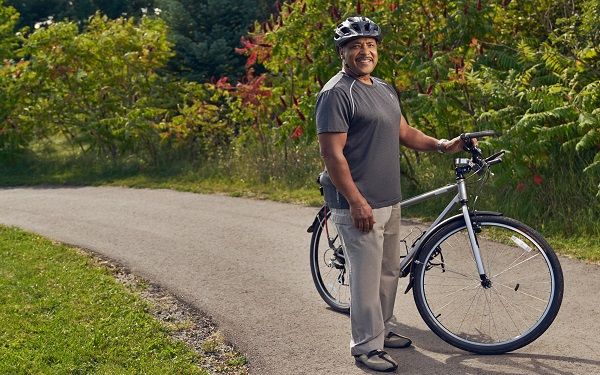
MEDIA RELEASE: Watch for Bikes: Top nine tips for cycling safety success
The summer months are fast approaching and with more cyclists and drivers expected to re-emerge on the roads, CAA South Central Ontario (SCO) is encouraging motorists to keep the safety of cyclists in mind when sharing the road. “Cycling is an excellent way to stay active during the pandemic and many more are picking up the activity, but as the province works towards reopening, we need to stay vigilant for everyone’s safety,” says Teresa Di Felice, AVP of government and community relations at CAA SCO. All drivers and cyclists are advised to follow public health guidelines, be predictable, be patient, communicate their intentions with signals, regularly check blind spots, and turn on their lights during dawn, dark and dusk. “In Ontario, there are tough penalties for those who do not follow the rules of the road, yet many remain unaware of what these rules are. Whether you’re on two wheels or four, get to know the following rules and best practices,”adds Di Felice. CAA is also reminding all motorists of these important rules of the road: Be aware. Do not use headphones or mobile devices while driving and pay attention. Yield to cyclists. Motorists should not be driving in a bike lane unless making a right turn. Watch for the approaching cyclists and never speed up and cut off a cyclist when making a right turn Keep a safe distance. Drivers must keep at least a one metre distance from other cyclists. If it is not possible, safely change lanes to pass. The penalty for not doing so is a $110 fine. Practice the Dutch Reach. Avoid “dooring” cyclists by doing the Dutch Reach. CAA launched a new Dutch Reach video for users to practice as more people out on their bikes. Some cycling-specific safety tips: Ride with traffic. Riding against traffic flow is dangerous, illegal and a leading cause of car-bike collisions. Protect yourself. Drivers, use your seat belts. Cyclists, wear your helmets. Be visible. Use reflectors and lights in dark and overcast conditions. It’s the law. Be predictable. Obey traffic signs and be clear with your intentions with other drivers. Under Ontario’s Highway Traffice Act (HTA), a bicycle is considered a vehicle, just like car or truck and must follow the same rules of the road. Ride close to home. As cyclists start to use their bikes for the first time in awhile, remember to stay close to home as you are starting out. Put your cycling safety knowledge to the test with CAA’s new cycling safety quiz. For all other cycling information, visit caasco.com/cycling. If you run into a problem that cannot be fixed on the spot, CAA Bike Assist will transport you and your bicycle to wherever you need to go. It's available as part of your membership 24 hours a day, 7 days a week, 365 days a year.



TORONTO, ON., May 29, 2020 — International Data Corporation (IDC) Canada announced today the release of 20 new research reports to help vendors understand the impact of COVID-19 on the Canadian ICT market, including five new forecast documents. In addition, most analysts have created an additional report analyzing the impact of COVID-19 on their specific technology patch, providing our clients with additional details on the impact and guidance for vendors in that market. IDC Market Forecasts help technology suppliers identify market drivers and size, measure current performance, analyze leading market indicators, as well as plan for future opportunities and growth. The five forecast reports are listed below: Canadian Communications Services Forecast, 2020–2024: COVID-19 Turns Telecom Inside Out (IDC# CA45063520 ). This IDC study presents IDC Canada's five-year forecasts for communications services spending by market and customer segments, company size, industry sector, and region for 2020–2024 based on the annual update of IDC Canada's Communications Market Model and replaces our previous comprehensive spring and fall 2019 forecasts. "Communications providers are largely recession proof and fortunately investments in next-gen network technologies and architectures are allowing communications service providers to cope with unrivalled demand," says study coauthor Lawrence Surtees, vice president of Communications Research and principal analyst at IDC Canada. "But the duration of the COVID-19 pandemic is still a great unknown and its associated economic shocks could dramatically impact the current forecast." Canadian IT Professional Services Forecast, 2020–2024 (IDC# CA45064220 ). This IDC study provides the spring 2020 market size and forecasts for the Canadian IT professional services market. The professional services market is made up of four submarkets: Custom application development, IS consulting, Network consulting & integration, and Systems integration. "The Canadian IT professional services market relies on discretionary capital spending budgets, which are typically suspended or curtailed in times of economic uncertainty. 2020 will be a challenging year for professional services firms due to the COVID-19 pandemic, but the market is expected to recover as the Canadian and global economies recover and businesses reinstate capital spending for IT projects," says Jim Westcott, research manager, Professional Services, IDC Canada. Canadian Infrastructure Outsourcing Services Forecast, 2020–2024 (IDC#CA45058420). This IDC study provides IDC's forecast for the Canadian infrastructure outsourcing services market for 2020–2024. It is an update of the previous forecast published in Canadian Infrastructure Outsourcing Services Forecast, 2019–2023 (IDC #CA43804019, May 2019). "The infrastructure outsourcing market continues to change, and COVID-19 will likely accelerate change. The decline in 1st and 2nd Platform technologies is leading to slow outsourcing spending on these areas, while the growth in 3rd Platform technologies to support digital transformation are increasingly incorporated into outsourcing and managed service engagements," says Jason Bremner, research vice president, Industry and Business Solutions. Canadian Consumer Wireless, Internet, and Wireline Voice Services Forecast, 2020–2024 (IDC# CA45059520). "In an already-competitive consumer market in the middle of great technological change, the global Coronavirus pandemic and the precautionary restrictions it has placed on Canadians has not only caused drastic socioeconomic changes but has forced consumers to weigh out the value proposition of each consumer service," says coauthor Manish Nargas, senior analyst for Consumer Services and Mobility. "Survival of the fittest is the call of the hour, and it seems that some consumer services will fare better than others after the dust has settled. While easier said than done, service providers need to think beyond the today's losses in order to plan for tomorrow's win." Canadian Consumer TV Services Forecast, 2020-2024 (IDC#CA45059620). This IDC study examines the forecast for Canadian consumer TV services subscribers and revenue. It also addresses the factors shaping the market as well as the key drivers and inhibitors underlying the forecast. "TV service providers will have to bring out their A game as they look to harness their next-gen TV service capabilities and create symbiotic, seemingly 'complementary' partnerships with OTT video providers to keep consumer eyeballs on their TV service platforms all the while combating economic ill effects of COVID-19 restrictions in the short term," says coauthor Manish Nargas, senior analyst, Consumer Services and Mobility at IDC Canada. "Based on our forecasts from May 1, 2020, we’re looking at an unprecedented 5.4 per cent decline for the year for the combination of telecom and IT spending in Canada. The cumulative impact of trade restrictions, supply chain impairments, commodity price declines, significant lay-offs and freefalling consumer and business confidence has led to a more dramatic impact on the overall ICT market than we had predicted in early April," says Nigel Wallis, vice president, IoT & Industries at IDC Canada. IDC develops detailed forecasting reports and analysis for major technology markets in Canada, which are published annually during the month of May. IDC's Forecast Scenario Assumptions for the Canadian ICT Market, 2020 and Beyond (IDC# CA46217620 , May 20 20 ) supports the underlying macroeconomic assumptions for each of the ICT market forecast reports. We also recently released a new interactive Canadian COVID-19 IT Impact Dashboard tool to help our clients visualize the impacts, in partnership with Rel8ed.to, which is available for everyone to use. For our clients that need to know the impact of the pandemic on ICT Spending beyond Canada’s borders, IDC created our global COVID-19 Resources microsite which contains more research reports, webinars, press releases and blog posts from around the world. We’ve also done a series of free webcasts for our clients with the first one on April 2 and the second one on May 6. Our third webcast in this series will occur on June 4th. Register today for COVID-19 Impact: Preparing for Recovery in the Canadian Tech Market. Here’s the list of our recently published Canadian-based COVID-19 research reports to help our clients meet the challenges from the pandemic, anticipate market changes and keep business moving: COVID-19 Impact on the Canadian ICT Market (IDC#CA46134820) Canadian Datacenter Infrastructure Action Item, Q2 2020: The Impact of COVID-19 (IDC#CA45057420) Impact of COVID-19: Canadian IT Services Market (IDC#CA46166120) All Priorities Aside: The Canadian Government's Singular Response to COVID-19 (IDC#CA46166920) The Impact of COVID-19: Canadian Security Solutions Market (IDC#CA46166520) Canadian Communications Service Provider Capex Spending, 2019–2020 (IDC#CA45063820) Canadian Government Wireless Price Policy - Ill-conceived and Horribly Timed (IDC# CA45663920) COVID-19 Business Impact: Hierarchy of Needs; Moving from Pandemic Risk Management to Organizational Agility (IDC# CA46228420) How is the Pandemic Crisis Impacting Digital Transformation in Canada? (IDC# CA46235620) Impact of COVID-19: Canadian Software as a Service Market (IDC# CA46166620) COVID-19 Impact: What’s Next for the Canadian Tech Market (IDC# CA46281820) COVID-19 Impact: Canadian Retail & Wholesale Market (IDC# CA45674020) COVID-19 Leadership: Canadian CIOs Strategize on Responses to COVID-19 (forthcoming) Critical Networks Provide Critical Care: Role of Communication Networks to Treat and Prevent COVID-19 (forthcoming) COVID-19 Impact: Canadian Vertical Markets Overview (forthcoming) For more information about the market forecast reports, the COVID-19 related reports, or to arrange a one on one interview with any of the report authors, please contact Cristina Santander at AskIDC@IDCcanada.com.

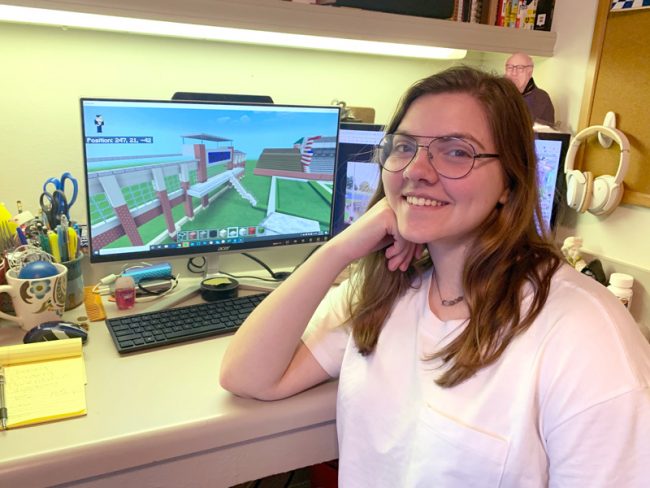
No graduation – no problem. See how one Georgia Southern senior took care of her ceremony online
For many, this spring was to be a milestone commemorating many years of hard work and dedication. Graduating from university is the official step into adulthood and the achievement of academic excellence. But this year is different. COVID-19 is either restricting celebrations or cancelling them outright. For some students, it is a disappointing moment. Others, like Rebecca Hooper, a senior marketing major at Georgia Southern University, saw an opportunity to innovate. On Tuesday, March 17, during spring break, Georgia Southern announced the cancellation of its in-person Spring 2020 Commencement ceremonies for Statesboro and Savannah. Since that time, the University has announced an online ceremony for graduates on May 8 and 9 and hopes to be able to hold a rescheduled in-person ceremony on or before commencement in December. As the news broke, Hooper and her friend were playing Minecraft, a sandbox video game which allows users to create digital worlds where they can build as many landscapes and structures as they like. As they played the game and chatted online, Hooper had what seemed like a crazy idea. “I was like, ‘Wouldn’t it be cool if we built the stadium?’ I just said it as a joke at first, but then the next day rolled around and I started on it. And then it kept on going and going and I couldn’t stop,” she said. Two days later (and more than eight hours of digital construction), Hooper had created Glenn Bryant Field and the home side of the stadium. She also built a commencement stage complete with a jumbotron that said, “Hail Southern! One More Time!” Knowing that no ceremony would be complete without Freedom’s Flight, Hooper added “Freedom” on the stage. However, the closest thing she could find to the University’s bald eagle mascot was a green parrot, who let out a little squawk and bobbed up and down. Hooper posted a flythrough of the stadium on Twitter, with a comment that said, “GSU said no graduation in Paulson. I said Minecraft graduation in Paulson #HailSouthern.” The response was immediate and overwhelming. Hooper has big plans for her virtual stadium. She’s planning on doing some online tours through Twitch, a video game playthrough app. She’s also invited her friends to help her finish building the stadium, complete with Bishop Fieldhouse, press boxes, sky boxes, and the large parking lot where she hopes to invite people to build their own virtual tailgating structures. If you are journalist and would like to know more about this story - simply reach out to Georgia Southern Director of Communications Jennifer Wise at jwise@georgiasouthern.edu to arrange an interview.

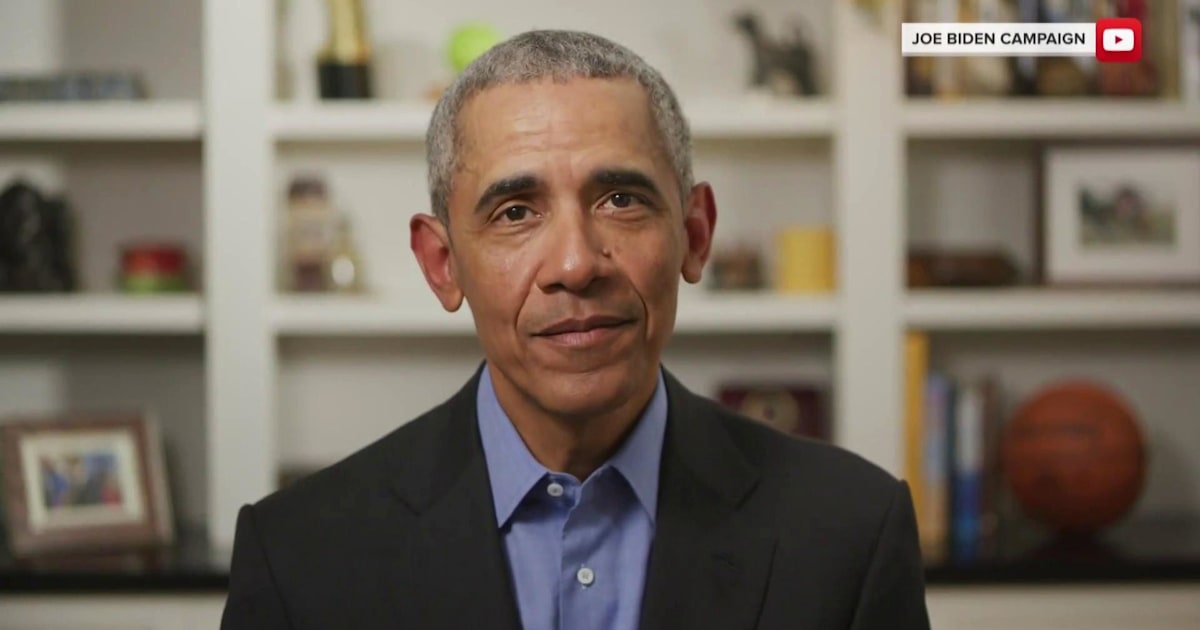
Endorsements are in – but what will it mean for Joe Biden?
And suddenly, they’re all lining up behind Joe Biden. With the nomination in the bag, the former Vice President and now candidate for the presidency has been receiving ringing endorsements from former challengers like Elizabeth Warren and Bernie Sanders and even his former partner-in-chief, President Barack Obama. It’s been said that endorsements aren’t worth the paper they are printed on if no one reads them, so why are these suddenly so significant? Has the DNC finally learned that a divided party can’t beat Donald Trump? Are these done to curry favor for future Cabinet spots and potentially a VP nod? And what took Barack Obama so long to get on side with his former Vice President? There are a lot of questions to be asked – and if you are covering American politics – let our expert help. Dr. Stephen Farnsworth is a sought-after political commentator on subjects ranging from presidential politics to the local Virginia congressional races. He has been widely featured in national media, including The Washington Post, Reuters, The Chicago Tribune and MSNBC. He is author or co-author of six books on presidential communication. His latest work, "Late Night with Trump: Political Humor and the American Presidency" examines the role late night television has played in shaping the perception of presidential politics. Dr. Farnsworth is available to speak with media and help with your coverage – simply click on his icon to arrange an interview today.



Dance From Home: Performance-Based Classes in a Distance-Learning World
The sudden switch to online-only courses has left many educators aching to provide their students with just as full a learning experience as they would have in the classroom. Uncertainties about technology and internet access are now ubiquitous in the education sphere, but those teaching classes with a performance element have something else to consider. "I think the performance classes have a particular challenge in all this," says Bess Rowen, PhD, who made changes to her "Creativity" course. "The syllabus called for them to bring in poems that inspired them. The original assignment was supposed to be to break up into small groups and make your poems into a brief performance piece with movement and sound." Obviously, with all of Dr. Rowen's students practicing social distancing, they were unable to meet up. Instead, they created virtual performance pieces that they acted out for their classmates over Zoom. Dr. Rowen reported, "The results were awesome! Some had repeated themes; others used images, musical cues or gestures. Some included found images, others made images themselves and still others used live action. I was really pleased with the results!" Barby Hobyak-Roche is a professor of dance, and her concerns also involved the lack of ability to be in a physical space together. She's "missing [her students'] energy and movement and personalities and expression. Virtual connection is a gift- yet dance and theater are experiential. A living, present art form and language. I miss them and I can see in their eyes (on the screen and their video submissions) that they are working to adjust. All of us are." According to Hobyak-Roche the key to that adjustment is, ironically for a dancer, "flexibility." She's had to adjust both her syllabus and the dance moves themselves. "I have completely shifted choreography. I am not overloading them with too much at once. I began with just having them establish new patterns... setting up the YouTube account, re-learning and submitting already learned movement. [It's hard] for them without the rest of us there to feel each other's energy—or for me to respond to their physical needs in real time, in the same room." Additionally for Professor Hobyak-Roche, "This transition for my courses goes beyond just becoming online at the moment—many of my students are in bedrooms, in kitchens, in garages, basements, outside... some of them in very tight quarters. They are dealing with both a computer screen instead of human contact in a class environment and tight physical space. I teach at a dance studio as well and am taking cues as to what works (or doesn't work) online from my experienced dancers there (and from watching my fellow dancers and educators in classes because we are all figuring this out together). My students who have not trained before need things pulled way back—both because they are still, essentially, mostly beginners, but also have no space to move in. I need to be aware of the floor they are on, that they may not be able to extend fully… lots of shifts!" The most important takeaway? "If they need things simplified or adjusted right now or me to be more lenient about expectations... that is a given in my eyes."

Leading Game Designer Lists Top Ten Board Game Suggestions While Stuck at Home
Maurice Suckling is more qualified than just about anyone to recommend the best board games for families, couples, and others stuck at home during the COVID-19 pandemic. A professor of practice in the Games and Simulation Arts and Sciences program at Rensselaer Polytechnic Institute, he teaches about game writing, board games as storytelling, and games as historical simulations. He has credits on over 50 published video games and is also a published board game designer. His most recent board game, Chancellorsville: 1863, is in production with Worthington Publishing and will be released later in 2020. Instead of relying on old standbys like Monopoly and Risk, the choices on Suckling’s list range from cooperative games such as the aptly-named Pandemic Legacy: Season 1, where you rip up cards and put stickers on the board that continue to affect subsequent rounds, to role-playing games you can play together or solo like Legacy of Dragonholt, to games for families with children of all ages. Suckling’s picks reflect the transformation of the board game industry into a dynamic sector valued at over $12 billion. Suckling’s bio: https://news.rpi.edu/expert?expert=maurice.suckling Suckling can speak about the game industry as a whole and about how board games bring people together.


Don’t Neglect Spiritual, Mental Health During this Time of Health Crisis, Baylor Expert Says
In a difficult and ever-changing time of crisis surrounding the spread of coronavirus, the basic needs of health and safety come first. But as these basic physiological needs are met, the more advanced care for spiritual and mental health can remain overlooked or ignored altogether. Baylor University’s Holly Oxhandler, Ph.D., LMSW., associate dean for research and faculty development and assistant professor the Diana R. Garland School of Social Work, is an expert on mental health, primarily anxiety and depression, as well as religion and spirituality in clinical practice. In this Q&A, she shares tips and resources to help unhook from the baser instincts of fear and anxiety, even momentarily, to monitor and care for spiritual and mental health needs. Q: During a crisis, why do spiritual and mental health needs tend to be overlooked or ignored? A: In the midst of a crisis, our natural reaction is to go into a fight-or-flight response to the situation. Our most basic needs must be met, such as finding a sense of safety, and our bodies are doing what they were designed to do: to protect us. For example, if we were to encounter a bear on a hiking trail, our sympathetic nervous system would be activated to meet the basic need of keeping us safe. Our spiritual and mental health are not primary needs in that moment of crisis. If we were to run from that bear and reach safety, our emotions would eventually become regulated, our breathing would become normal, and we could return to a generally balanced way of being that allows for attention to our spiritual and mental health. However, we are in a prolonged moment of crisis surrounded by uncertainty, constantly evolving news updates and daily threats to our and loved ones’ safety regarding our health, finances and sense of normalcy. In this state of constant stress, it can be really hard to unhook from the fight-or-flight response and remember to tend to our spiritual and mental health. Q: How can people tend to their spiritual health during this time of crisis? A: In this moment, most of us are being forced to be still and/or surrender the illusion of control in ways we have never faced before. In this stillness, our spiritual practices can help remind us of a divine Love that is with us through each moment, but we must intentionally set time aside to practice them. Plus, many research studies have shown healthy, positive spiritual practices have the potential to support our mental and physical health. One thing that’s very important, especially in the midst of this crisis, is that we do not spiritually bypass what’s happening. It may be tempting to want to jump to hope and ignore the pain, but to the best of our ability, our faith traditions teach us we must sit with and feel the grief rooted in the overwhelming change and loss we and our neighbors are facing. As Fr. Richard Rohr says, “If we do not transform the pain, we will most assuredly transmit it – usually to those closest to us.” We must be with the fear and uncertainty, grieve the loss of life as we knew it a few weeks ago, pray the psalms of lament, and feel the freedom to wrestle with and/or cry out to God in ways we read about others doing so in our sacred texts. The important thing is that each of us engages in something tied to our faith, regardless of what we believe in, and to be consistent in the practice, continually learning to surrender that sense of control we’re all finding ourselves learning to do right now. Spiritual Health Tips Prayer Reading our sacred text Meditation Centering prayer (my personal favorite, which teaches us silence, solitude and stillness) Breath prayers (here are some examples) Engaging in creativity (music, dance, art) as an act of worship Practicing gratitude Seeking beauty in the mundane Yoga Journaling Especially in this time of increased isolation, I would recommend inviting others into these practices for a sense of solidarity and community, including those within our home or via social media, video conferencing or by phone. Q: How can people tend to their mental health needs? A: The first practice I would recommend is to pause and breathe deep for 4-5 seconds, noticing your belly rise instead of your chest, and breathe out for 6-7 seconds. The second would be grounding. When our brain is flooded with information and emotion, it is hard to stay present. In grounding, we take a deep breath and ask ourselves five questions to return to the present moment: What do I smell right now? What do I taste? What do I see in front of me? What can I touch and feel the surface of? What do I hear? A third recommendation would be to get outside as often as you can and, ideally, into some sunlight. I would also recommend the practice of tuning into our bodies. For many of us, it can be difficult to pay attention to what our bodies are trying to tell us, in the same way our thoughts and emotions communicate with us. Especially now, pay attention to the tension in your neck, the overall exhaustion, the pain in your arm muscles, the tightness in your chest, or any other experiences you notice by tuning in. Your body may be trying to tell you to spend less time watching the news (maybe cut back to 1-2 times a day), to take a nap or to move it and exercise. Last, and perhaps most importantly, do not hesitate to reach out for help if you are noticing changes in your appetite, sleep, mood, thoughts or feelings. Stay in communication with loved ones but just as you would seek a medical doctor for a broken arm, seek a therapist when you notice changes in your mental health. Many therapists are quickly adapting to telehealth services in this moment to meet growing demands and social distancing expectations. Some sites for finding a therapist include Psychology Today or HelpPRO, and if you or a loved one are deeply struggling, please reach out to the National Suicide Hotline or call 800-273-TALK (8255). Reaching out for help with your mental health is a sign of courage, not weakness. Q: During this time of crisis, what populations do you feel are most vulnerable to mental or spiritual health decline? A: Honestly, I think every single one of us are vulnerable to mental and spiritual health decline during this moment for varying reasons. As mentioned before, these parts of us are easily brushed aside when we’re most focused on ensuring our basic needs of safety and security are met. Still, there are a few groups I’m especially sensitive to. The first are the helpers on the front line facing far more need than resources, time or energy to meet those needs. These include our health care providers, social workers, therapists, grocery and restaurant employees, teachers, parents, nonprofit organizations, faith leaders, volunteers, community leaders, pharmacists, lab technicians, scientists and more. These helpers are at such high risk of burnout and my hope is that, to the best of their ability, they are caring for themselves holistically in order to care for others well. I’m also sensitive to a few other groups who are vulnerable to mental and spiritual health decline. First, older adults are the most religious cohort and are already at risk for depression and isolation even without a crisis, so I worry for them in light of the necessary social distancing. Second, in light of added pressures, those with various mental illnesses must continue to care for themselves via the medication or therapy they need. Third, I’m sensitive to those who are recovering from a substance or behavioral addiction and are now surrounded by overwhelming stressors that put them at a higher risk of relapse. Thankfully, recovery groups are now moving online and I would encourage those in recovery or remain plugged into a group. Q: Many people are unable to access a doctor or professional therapist to get help. What are some resources for those that may need free or low-cost options? A: There are a number of websites that can help individuals find a professional mental health care provider, such as a licensed clinical social worker, psychologist, counselor or marriage and family therapist. I mentioned Psychology Today, HelpPRO, and the Suicide Prevention Hotline above, but there are others. Better Help and Talk Space are two growing online therapy sites and Low Cost Help elevates providers with affordable rates. I also host a weekly podcast, CXMH: Christianity and Mental Health, which has a ton of episodes on various topics related to this intersection, including a recent one specifically on COVID-19. You can also contact your insurance provider to see who is in network or, if you do have a primary care provider, see if they have any recommendations. Your local faith communities may also have a list of mental health care providers to consider. There are also many organizations committed to providing resources, including the Substance Abuse & Mental Health Services Administration, National Alliance on Mental Illness, and the National Institute on Mental Health. Q: How can neighbors help neighbors and individuals help individuals outside of the professional or therapy setting? A: I really want to emphasize that, especially in this moment, we must practice extending grace, being still and holistically caring for ourselves so that we can care for others well. We can do our part to serve those who are serving others, even if that means practicing social distancing and stillness, while tending to our spiritual and mental health. Discerning what is ours to do in this moment to offer help, healing, hope and love to our neighbors as well as ourselves, and to help protect our helpers from burning out, will be critical in the days and weeks ahead. As Chris and Phileena Heuertz shared in their prayer, A Call to Solidarity During COVID-19: “You’re not alone. We’re in this together. We’ll do everything we can to help.” ABOUT BAYLOR UNIVERSITY Baylor University is a private Christian University and a nationally ranked research institution. The University provides a vibrant campus community for more than 18,000 students by blending interdisciplinary research with an international reputation for educational excellence and a faculty commitment to teaching and scholarship. Chartered in 1845 by the Republic of Texas through the efforts of Baptist pioneers, Baylor is the oldest continually operating University in Texas. Located in Waco, Baylor welcomes students from all 50 states and more than 90 countries to study a broad range of degrees among its 12 nationally recognized academic divisions. ABOUT THE DIANA R. GARLAND SCHOOL OF SOCIAL WORK AT BAYLOR UNIVERSITY Baylor University’s Diana R. Garland School of Social Work is home to one of the leading graduate social work programs in the nation with a research agenda focused on the integration of faith and practice. Upholding its mission of preparing social workers in a Christian context for worldwide service and leadership, the School offers a baccalaureate degree (B.S.W.); a Master of Social Work (M.S.W.) degree available on the Waco or Houston campuses or online; three joint-degree options, M.S.W./M.B.A., M.S.W./M.Div. and M.S.W./M.T.S., through a partnership with Baylor’s Hankamer School of Business and George W. Truett Theological Seminary; and an online Ph.D. program. Visit www.baylor.edu/social_work to learn more.


Baylor Expert on Remote Work Shares 5 Key Tips to Make the Most of Working from Home
The international response to the COVID-19 public health crisis has led millions of workers to make home their new office as communities and organizations promote social distancing to slow the spread of the virus. For many individuals, this spring marks the first time they will have worked from home for a substantial amount of time. Sara Perry, Ph.D., assistant professor of management in Baylor University’s Hankamer School of Business, an internationally-recognized remote work researcher and author of a 2018 study published in the European Journal of Work and Organizational Psychology, offers tips in five key areas for employees to consider as they make the most of working from home. “Research has given us some good empirical evidence of key areas that will help remote work be more successful,” Perry said. Create a physical work space. Perry: If it’s possible, we have to have a separate working space, especially if you can close the door to focus. This would be ideal, but if you can't do that, try setting up different workspaces around your home that are well-defined and that you can “close” at the end of the day to help maintain a balance in terms of your family and your work. Now, if you have kids in the mix as well, then I think we need to set up a workstation for them as well. It can be the kitchen table or the bar. Younger kids can have stations of their own, too – like the stations they would have in preschool. Some people even talk about making a standing desk with books, to be able to move your position throughout the day. Everyone in the family might even like to rotate around throughout the day, sharing the different work spaces. Think about how you can work outside, too, weather permitting. Adhere to a work schedule – and take breaks. Perry: We aren't going to have clear boundaries of time. We're going to have to make them. The best thing to do is to start with a schedule similar to what you would already be doing if you went to work. If you can try to stick close to the same schedule, you're going to find the transition easier. Don't start sleeping in and doing things completely differently — that will make the adjustment a lot harder. Take breaks. Research by my colleagues Emily Hunter and Cindy Wu found that optimal breaks come mid-morning, and it can set you up for the rest of the day. It’s important to get up and move away from the screen periodically. A short break can help preserve your focus and attention resources for the rest of the day. For your further well-being, you will need to turn work off at the end of the day, because no one is going to shut it off for you. Pick a way that you're going to do that, whether it's to put your stuff away, or by planning some sort of transition time that would replace what your commute would have done. Some people will call someone or listen to a podcast. For others, or a walk around the neighborhood provides something to transition and decompress. Think about what you would normally do (or want to do) and see if you can work that in for your own transition from work to family time. Connect with others. Perry: The change in physical environment is going to be a big change even for people who are used to working remotely. At work, you may feel a sense of connection to people even if you don’t even talk to them. You at least have their presence, and we’re going to miss that in the coming weeks. One of the biggest concerns in the remote work literature is isolation, and while individuals who have families at home might not feel isolated from people in general, we might feel isolated from our professional lives and identity. We’ll have to be more proactive about using technology in a way to stay connected while still remaining productive. We don’t want to have virtual meetings for the sake of meetings, but we might want to have some for the sake of connection. For leaders, check in and make sure people have resources and that they are doing okay as we all adapt to a virtual workspace. Try to be proactive about it. Maybe we have a video call simply to check in for 30 minutes at the end of the day or whenever, just try to stay connected. Help children and family adjust. Perry: With my children, I’m thinking about how to create some type of structure, taking lessons from our homeschool friends about how they set up their day. I’ve found that my children and my friends’ children get excited about reconstructing their own schedule from school at home. So, let them have some input about what their day should look like, and try to work your schedule in tandem or in parallel with that. Scheduling loose blocks of time for tasks throughout the day can help with this, too. Blocking off time can help you communicate, “for the next 30 minutes or the next hour, we’re all going to work on this activity at our separate stations, then meet and redirect. We know it's possible because a lot of schools have a model where students are self-directed. You give them direction and then they go do it. However, we also don’t want to over-schedule, or over-do anything. We need to enjoy the time that we have with them, and be grateful for that, and practice gratitude daily as we try to manage all of this.” Manage expectations. Perry: In light of everything that we're facing, it’s important to stay flexible. That’s true for leaders—really try to have flexibility and allow your employees to figure out how remote work best works for them. We can't micromanage from afar. We can check in, make sure everyone has resources, make sure people are doing OK. Some people need a little more of that than others, but we really need to just adapt and be flexible. It’s important that everyone should try to be realistic, be clear with expectations, but also try to be realistic about what's actually going to happen over the next several weeks. All of us are under a lot of stress, more stress than normal. So, we just have to have realistic expectations and recognize that all of us, and our leaders, are experiencing a learning curve. We need to think about the big picture as we roll this out, and really keep employee wellbeing as the number one consideration. Note: This interview is adapted from Dr. Perry’s interview on the Baylor Connections podcast. Visit the Baylor Connections website to listen to the full interview. ABOUT BAYLOR UNIVERSITY Baylor University is a private Christian University and a nationally ranked research institution. The University provides a vibrant campus community for more than 18,000 students by blending interdisciplinary research with an international reputation for educational excellence and a faculty commitment to teaching and scholarship. Chartered in 1845 by the Republic of Texas through the efforts of Baptist pioneers, Baylor is the oldest continually operating University in Texas. Located in Waco, Baylor welcomes students from all 50 states and more than 90 countries to study a broad range of degrees among its 12 nationally recognized academic divisions. ABOUT HANKAMER SCHOOL OF BUSINESS AT BAYLOR UNIVERSITY At Baylor University’s Hankamer School of Business, integrity stands shoulder-to-shoulder with analytic and strategic strengths. The School’s top-ranked programs combine rigorous classroom learning, hands-on experience in the real world, a solid foundation in Christian values and a global outlook. Making up approximately 25 percent of the University’s total enrollment, undergraduate students choose from 16 major areas of study. Graduate students choose from full-time, executive or online MBA or other specialized master’s programs, and Ph.D. programs in Information Systems, Entrepreneurship or Health Services Research. The Business School also has campuses located in Austin and Dallas, Texas. Visit www.baylor.edu/business and follow on Twitter at twitter.com/Baylor_Business.


While a huge focus is on health and mortality during the coronavirus outbreak, not to be forgotten are those who are grappling with death from natural causes, diseases, accidents and crime. Funerals and visitations are the customary means of support friends and loved ones — but restricted travel and social distancing poses challenges. Here are suggestions about grieving from Candi Cann, Ph.D., associate professor in the Baylor Interdisciplinary Core of the Honors College and author of “Virtual Afterlives: Grieving the Dead in the Twenty-first Century”; and Bill Hoy, clinical professor of medical humanities and author of “Do Funerals Matter: The Purposes and Practices of Death Rituals in Global Perspective.” Q: Funerals and visitations are such a time of hugs, hand-holding, prayers, closeness — simply being there. How might travel restrictions, social distancing and concerns for personal health interfere — and how can family and friends be supportive? CANN: I think live-streaming of funerals is a great option and allows people to be present from a distance. Most companies also offer virtual guestbooks where one can leave a teddy bear or flowers, light candles, etc., online in honor of the person. Many cemeteries are also moving online so that each gravestone will have a corresponding virtual memorial, filled with the deceased person's playlist, videos, pictures and memories. Of course, as with all technology, the capability of funeral homes varies from business to business, but my guess is that from an industry perspective, we are going to see a jump in virtual and online offerings as the funeral industry tries to stay relevant and contemporaneous. Also, if presence is important, one can choose disposal options that allow for the return of the deceased into the home, such as being cremated into cremains, or made into a diamond that one wears, or a record that one plays. You can insert cremains into the vinyl and make a record, or a glass sculpture with the cremains mixed into the glass. So, you don't have to be separated from the dead. HOY: I agree that live-streaming may have to suffice, but our experience shows it is a poor second choice. From time immemorial, we have seen that physical presence is vital, and I think that is what is so alarming to me about some of the current discussion in our culture. I was taking care of AIDS patients in Los Angeles in the 1980s when we saw some of the same disenfranchisement of grief, requiring direct cremation of the body and in some cases, forbidding the gathering of people in funeral rituals. It did not turn out to be a psychosocially sound practice and is creating a high level of concern on the part of my clinical colleagues. Q: Have there been times in history when this has been an issue as well when it comes to contagious disease? Have people taken safeguards before? HOY: Two notable examples were the 1918-19 Influenza Epidemic — unfortunately misnamed Spanish Flu — and the 2014-15 Ebola crisis in West Africa. In both cases, high numbers of dead coupled with high levels of contagion caused health authorities to create quarantines and eliminate gatherings such as funerals. Recent research out of the Ebola epidemic indicates that at least in some cases, these measures were counterproductive in that “secret” burials took place and those who had money were able to bribe officials to look the other way. I think we want to be especially vigilant to make sure we are being economically and socially just in the policies we put in place. Fortunately, we do have media to help bridge those gaps now that were not available in those other events, so that will almost certainly help. I am going to stop far short, however, of suggesting that media even approaches a point of providing the same psycho-social-spiritual benefit that sharing a space, rubbing shoulders and sharing tears do. CANN: The most recent epidemic in the United States was the AIDS epidemic in the 1980s and 1990s. By October of 1995, there were over half a million cases of people with AIDS, and many people did not know how to treat or interact with those who were infected. And just this month, a second person was cured of HIV with a stem cell transplant. I have lots of faith in our scientists and that they will be able to create an effective vaccination or cure for COVID-19. Q: Besides finding new or different ways to express support and love to others, what about oneself? We hear about self-isolation – what about self-comfort and self-care in other ways? HOY: This is a great time for self-reflection. What I am doing for myself are the things I recommend to others. Besides being vigilant about what I eat and getting out in the fresh air, I am taking care of myself by limiting my exposure to media. I have not been a big user of social media anyway, but I recommend to folks to be very careful about that because the COVID-19 misinformation is rampant. Instead, I check the National Institutes of Health website once each day for scientific updates, and I have taken all the news update alerts off my phone. Instead, I am trying to give more time to talking with family and friends by phone and video conferencing, journaling and reading. Of course, like other professors, I am spending time talking with students and getting ready to take my classes online next week. In my personal Bible study time, I decided I would spend some time looking at Scripture passages that address fear and have particularly enjoyed hearing God’s perspective on this. CANN: I think one of the hardest things about death is that life goes on without the dead. The birds keep chirping, the flowers keep blooming, people keep being worried about the most mundane matters — and that's difficult when a part of our world has stopped. But this is also what is beautiful about death. It forces us to see life all around us — its fragility, its constancy and its beauty. So, for me, self-care in grief is talking about death, talking with others about the one we lost and living again — in honor of the person who died who doesn't get to be here living anymore. As we embrace life, I strongly recommend that people reach out to friends and family. Social distancing does not need to mean social isolation. I'm also going on regular walks and spending time outside. We need to stay healthy and in shape during this time. Some people are finding it fun to do group-gaming and discovering new ways to spend time with family and friends either virtually in games or via video. Catholic churches are offering drive-through Eucharist and confession, Protestant churches are live-streaming their services and youth groups, Islamic mosques are live-streaming prayers and Buddhist temples are live-streaming meditation sessions. ABOUT BAYLOR UNIVERSITY Baylor University is a private Christian University and a nationally ranked research institution. The University provides a vibrant campus community for more than 17,000 students by blending interdisciplinary research with an international reputation for educational excellence and a faculty commitment to teaching and scholarship. Chartered in 1845 by the Republic of Texas through efforts of Baptist pioneers, Baylor is the oldest continually operating University in Texas. Located in Waco, Baylor welcomes students from all 50 states and more than 90 countries to study a broad range of degrees among its 12 nationally recognized academic divisions.
