
Experts Matter. Find Yours.
Connect for media, speaking, professional opportunities & more.

Showcase Your Experts to Generate Media Attention and Grow Business
This blog was initially posted by our friend David Meerman Scott on his blog, read it here Some of your most important assets for securing interest in the media as well as educating your buyers are the experts who work at your organization. As a part of a virtual newsroom or other appropriate place on your site and blog, highlighting your employees is a great way to generate attention. When reporters are looking to quote someone in a story, having a name, photo, bio, and examples of content makes it much more likely they will want to conduct an interview. This is especially true when you are newsjacking. Similarly, when buyers are exposed to the smart people employed at your company, they will be more likely to trust and want to do business with you. Yet most companies feature only the senior management team on the site, not those with particular and interesting expertise. University of Ontario Institute of Technology shines spotlight on faculty researchers For example, the University of Ontario Institute of Technology (UOIT), a public research university located in Oshawa, just outside Toronto, was founded in 2002. That makes it one of Canada’s newest universities. With an enrollment of more than 10,000 students, UOIT offers a range of undergraduate programs, plus graduate programs in science, engineering, health, and information technology. But because it is such a new institution, the marketers and public affairs people at UOIT have to work extra hard to make sure that potential students, donors, partners, and other constituents know about the school. Unlike other universities, UOIT cannot rely on decades of families that send their children and grandchildren to the institution and support it with financial contributions. So one way the school reaches out to new audiences is by promoting with the media the many faculty experts who teach and do research at UOIT. “We focus on the experts within the institution,” John MacMillan, director of communications and marketing at UOIT told me. “We have very few resources, but we have a lot of really interesting people who are focused on very exciting things, like using big data and looking at issues of disability and how it relates to the insurance industry, among other things. We are able to reach the media and people who are organizing conferences or booking speaking engagements.” MacMillan uses the ExpertFile software platform as a way to easily showcase UOIT thought leaders in what they call their Expert Centre. He publishes, promotes, and measures the expert content as a tool to engage business prospects, media, and conference organizers. “We needed to have a way of getting out those important stories that we know are of interest to media, to producers, to editors, but also in many ways to partners, to institutions that might be interested in working with us,” MacMillan says. “And we needed to have a way that did a better job of telling our story to those various groups.” MacMillan started with 26 profiles for faculty in the Expert Centre, and is steadily expanding to a planned goal of 200 profiles. He says that an ideal expert is one who is already comfortable with digital technology. “We’re amplifying the presence of each of those faculty members—whether they are involved in multimedia, whether they have their own websites, or whether they have their own followings—and presenting them in a way that gets some response. Part of their success as faculty members lies in establishing their bona fides with granting authorities or with the government or with others. The Expert Centre augments their legitimacy.” Adding credibility to your newsjacking efforts Having profiles available to the media also helps your newsjacking efforts. When you comment on something that’s newsworthy and a reporter finds it via search, they often want to know biographical information on the person before they quote them. Having a link to the bio of the author of that timely blog post is a great way to add credibility and to increase the liklihood of being quoted. As an example of the action that can come from an Expert Centre profile, MacMillan cites Dr. Isabel Pedersen, an associate professor at UOIT and Canada research chair in Digital Life, Media, and Culture. “She focuses on a sociological perspective of wearable computing devices,” he says. “Her research looks into questions like: ‘When we wear gadgets on our body, how will that shift the reality for us? How will it change the way we interact with other people? How will it allow us to participate in digital culture?’ She is one of the early profiles that we created because she is one of our Canada Research chairs, a distinguished researcher who is working on an area of particular national and international importance.” Dr. Pedersen’s Expert Centre profile contains her bio, photo, links to her Twitter and Google Plus feeds, and a list of past speaking engagements, as well as video content, previews of her book Ready to Wear, and articles she has published. The profile attracted the attention of a reporter from IEEE Spectrum magazine, the publication of the world’s largest professional association dedicated to advancing technological innovation and excellence. “They were working on a story about wearable technology, and they wanted to interview her,” MacMillan says. “That’s a magazine from the U.S. that has a much broader readership than anything we’d be able to position her for, and it came along as a result of somebody seeing her profile and deciding that they wanted to speak with her. That’s an example of where we’ve been able to use our resources in a very efficient way, in a manner that gets a story out well beyond our own physical boundaries and that tells about the uniqueness of the work that’s going on at this university.” A lesson learned from the early days of the UOIT Expert Centre was the importance of having the profiles appear in a consistent voice. “When we started out, our assumption was that the individual faculty members or individual experts would develop their own profiles,” MacMillan says. “We realized that would result in a lack of consistency, so we hired a writer, and her job was specifically to interview our experts and to create a story for each of those experts so that when someone does look at this, they’re looking at a consistent story, a consistent tone, and a consistent brand for the university. I’ve learned from creating our Expert Centre that I share some one of the same challenges as faculty members: if you don’t manage your digital presence actively, someone will do it for you. I like to think that our Expert Centre has helped our faculty to curate their digital content as much as it’s helped our university to strengthen its brand.” The ExpertFile platform Your employees are a great resource for generating interest in the media as well as a way to show potential customers and partners that you are doing interesting work. Showcasing them is easier with the ExpertFile platform, a SaaS application that helps organizations make their experts more visible. In my mind, ExpertFile is to showcasing people what HubSpot is to showcasing content. What’s traditionally held many organizations back is that until now, there hasn’t been an online platform to simply organize the growing base of expert content that is being produced across organizations every day. Yet this content is what many audiences are looking for. They want to easily reference everything from biographies to speaking engagements, to social feeds and multimedia assets. “Experts are a great way to humanize an organization and make it more approachable, yet many marketers struggle with how to best showcase these people online,” notes Peter Evans, founder and CEO of ExpertFile. “Adding expert profiles to various sections of your website such as your media room is an ideal way to create more engagement on your site and drive valuable speaking, media and customer inquiries. Experts are quickly becoming the new frontier for content marketing.” Disclosure: I am on the advisory boards of both HubSpot and ExpertFile. Peter Evans, ExpertFile CEO, is a friend.



Part 1: How Duke University doubled their media hits by showcasing faculty
In the February 2015 issue of CASE Currents, Steve Hartsoe, a Senior Editor at Duke University and former Editor for the Associated Press, shares some powerful strategies for working with experts on campus. This article is a must read for any organization looking to build reputation through more focused media relations. Now you might be thinking that Duke is an already renowned university with an extensive network of media contacts so this stuff is easy for them. Not true. Doubling your media hits isn’t easy for any organization. Duke made some major improvements that set them up as a go-to destination for journalists to find credible, relevant sources. However, even implementing just a few of their ideas could drive some big results for your organization – without having to blow out the size of your marketing team or budget. Spoiler alert. The Duke strategy centers on being more strategic and collaborating better with faculty experts. The best practices that the Duke media relations team employed should inspire any organization that wants to generate more coverage. Whether you are looking for media visibility to help drive student enrolment, alumni giving, or corporate partnerships, there are valuable lessons to be found in this article. For the full article check out the January/February issue of CASE Currents at www.case.org. Please note you will need a subscription to view. So what’s going on at Duke that’s driving all this media coverage? To examine this further, our ExpertFile team weighs in below with the first five major rules of Expert Marketing for Schools and summarizes some insider tips they shared from their experience. Tune in next week for the finale! Rule #1: Organize a Team to Help Focus on Expert Marketing As with most initiatives, it’s vitally important to get the support of senior people in the organization when developing an increased focus on faculty experts. Gaining the support of a group of progressive deans within the school as well as notable faculty can be critical. Appoint a specialized team that can help you establish media visibility as a priority for your school. Build your case for an expert marketing program and ask for their support in developing your plan, then set up some regular meetings and make this team visible on the campus. It will help you develop a sense of collaboration and continuity. Insiders Tip: Duke built a “rapid response team” within their media relations department that had a clearly defined meeting schedule. They met twice a week and kept meetings to just 30 minutes in length. These regular check-ins helped identify breaking news opportunities and inspired a sense of priority and established momentum. Rule #2: Strategize with your Experts It’s amazing how many colleges and universities’ media relations departments we talk with that are disconnected from the interesting research conducted by their faculty. Ironically, it’s this research, as well the academic interests and passions of your faculty that feed the most engaging stories you can tell to the media. Make sure you have a good understanding of current and upcoming research that you can pitch. You should also identify what publications and books are being planned by faculty and see how you can collaborate with them. Insiders Tip: Duke invested the time to meet personally with faculty members to get a deeper understanding of their research and identify relevant topics that could be pitched to the media. They also invited some faculty to media meetings to brainstorm on potential news stories. It’s this kind of contact that helped make faculty more responsive to media opportunities and respond to deadlines. Rule #3: “Opt-In” your Experts for Different Types of Contributions It’s becoming more understood by faculty that media coverage can be a very good thing for their career and their organization. However, be careful of one size fits all approaches in recruiting faculty to contribute their expertise. Contribution from faculty comes in different forms. Faculty can be engaged in a broad spectrum of activities that run from broadcast TV interviews, blogging, and even helping speak at recruiting or alumni events. It’s good practice to create a master checklist of possible engagement types and to take an inventory of what your faculty experts may want to opt-in for. Having this inventory allows you to better plan for content development projects and also ensures that faculty clearly understand the duties that are expected of them in a media relations capacity. Insiders Tip: Duke’s media team recruited their experts for a range of contributions based on the level of interest and comfort level of faculty. And they made it clear that agreeing to be a media source meant responding promptly to incoming media inquiries. Rule #4: Provide Media Training and Support While every campus has it’s faculty “rockstars”, who can rise to the challenge of any breaking news opportunity, many experts on the campus can benefit from some form of media training. It’s critical to your media strategy’s success that you provide the experts with support and opportunities to practice their speaking skills in front of a camera. If you expect more experts to step up to the podium, it’s important to make the investment. However, make sure you design these programs to be engaging and don’t overwhelm your faculty by making them too exhaustive. Often they can be coordinated over lunch or in the early morning before classes start and can be focused on key areas such as: public speaking, blogging tips, video training, and social networking guidelines. Get a sense of where your key gaps are among faculty before you dive in. Also remember these sessions can provide valuable opportunities to shoot video interviews, B-Roll clips and even headshots that can be used to provide media assets for your website, alumni magazine and other properties. Insiders Tip: Duke invests in media training for its faculty experts and administrators offering a two and a half hour media training workshop each year to participating faculty, covering interview techniques via phone, video and social media. Rule #5: Meet Journalists on Their Terms Reporters appreciate media relations contacts that help them get their job done. Operating under tighter breaking news cycles they have less time to discover and research experts. In todays competitive media market what sells papers or builds ratings is often what gets covered. You have to focus your experts on helping journalists tell stories that matter to all those “eyeballs”. The best media relations professionals understand the value in building relationships with journalists. These connections are often essential in establishing your organization as a relevant, trusted source of expert commentary. Given the importance of these relationships, we’re also seeing the renewed popularity of industry conferences hosted by organizations such as the MAKI Network (www.thembasite.com) and Wynne Events – BAM Conference (www.wynneevents.com). These events give schools a unique opportunity to listen to and meet journalists from major news networks. ExpertFile sponsored both MAKI and Wynne events this past year, and we were impressed by the roster of global media attending. Insiders Tip: While Duke still distributes the requisite daily news on campus events and other university happenings, they don’t get mired in all of this content. They also focus a great deal of their activities on expert content that positions their university as a go-to source that is both credible and relevant to a variety of media audiences. READ PART II of How Duke University doubled its media hits by showcasing faculty experts.

What Are IDC's Top 10 Canadian ICT Predictions for 2020? Attend our Webinar to Find Out
Watch a sneak preview video for our upcoming Canadian ICT Predictions 2020 Complimentary Webinar Wednesday Dec 4, 2019 12PM - 1PM EST The countdown leading up to our Canadian ICT Predictions 2020 is on. We're less than a week away from unveiling top 10 predictions that will impact the ability of Canadian organizations to compete and grow in 2020. We're excited to present what's next for Canadian technology to help you strategize for next three years and beyond. We'll cover fact-based predictions for AI, edge solutions and what technologies will be considered the norm for digital businesses. We'll also explore how automation will reshape the Canadian workforce, what's likely to happen with 5G, and much more. We'd love for you to join us live. Don't Miss Out! Register Today If Wednesday, December 4, 2019 doesn't work with your calendar, register now and we'll send you a link to watch the webinar replay.


Multicultural Millennials Respond Positively to Health ‘Edutainment,’ Baylor Marketing Research Says
One-on-one interviews reveal which health issues concern millennials and their longing for optimal health Storytelling that educates and entertains – aka “edutainment” – is a powerful communications tool that can lead to positive health-related changes among multicultural millennials, according to a new marketing study from Baylor University. Tyrha Lindsey-Warren, Ph.D., clinical assistant professor of marketing in Baylor University’s Hankamer School of Business, led the study, “Making multicultural millennials healthy: The influence of health ‘edutainment’ and other drivers on health-oriented diet change,” which is published in the Journal of Cultural Marketing Strategy. Charlene A. Dadzie, Ph.D., assistant professor of marketing at the University of South Alabama, coauthored the research. The research sought to determine which health issues most concerned multicultural millennials and to gauge how effective media can be as a tool to address those issues and drive change. “This study finds that by bolstering self-identity and employing health ‘edutainment,’ it is possible to have a positive impact on the health intentions and behaviors of the millennial generation,” the researchers wrote. There are more than 92 million millennials (ages 20-34) in the United States today, the researchers observed. More than 9 million of those are identified as being overweight, and much of that can be attributed to a sedentary lifestyle and media consumption. White Americans watch an average of 140 hours of television per month (35 hours per week); African Americans watch 213 hours of television per month; and Latino Americans watch 33 hours of television per week and stream more than six hours of video per month. “Millennials are tech-savvy, they love social media, they’re actually more health conscious than previous generations, and they have significant economic power,” Lindsey-Warren said. “With so many millennials – in the scope of this study, multicultural millennials – watching so many screens, there is great opportunity to generate information and increase products and services geared towards health-oriented behavior.” But to take advantage of this opportunity, public and private organizations need to understand what drives millennials’ health choices and communicate accordingly, the researchers wrote. A total of 265 people participated in two components of the study – a health survey of 245 undergraduate students and one-on-one, in-depth interviews of 20 multicultural millennials. ‘I’m old-young and it’s getting real.’ For the second part of the study, the researchers interviewed 20 people – 10 women and 10 men – from two organizations, a large northeastern U.S. university and a mid-sized nonprofit organization in Harlem, New York. The subjects represented cultural, socioeconomic and educational diversity. The interviews were used to better understand the health status of these millennials as well as their relation to storytelling in the media, the researchers said. Participants answered health and wellness questions regarding their own health and personal network (example: “What is your ideal health?”) and questions about their personal media usage (example: “What are the top five health and wellness issues you see regularly portrayed in the media?”). One of the strongest themes to emerge from those interviews was that multicultural millennials “long to be healthy in mind, body and spirit” and are open to “seeing authentic and relevant storytelling regarding health issues in the media that is meaningful.” “They would definitely respond to health messages when they truly see themselves in storytelling that meets them where they are in life,” the researchers wrote. Some of the health-related topics addressed by those being interviewed included healthy eating, asthma, sexual health, mental health and fitness. One interviewee, a 21-year-old woman said she gets “out of breath” when she runs up the stairs and her knees “crack and hurt.” “I would love to have ideal health again. I really would. I would love it. I’m old-young, and it’s getting real,” she said. ‘More involved in the narrative’ In addition to the one-on-one interviews, each of the 20 interviewees watched media clips from two television programs – ABC’s “Private Practice” and the nationally syndicated health show, “The Doctors.” Each show highlighted the accurate health information concerning attention deficit hyperactivity disorder (ADHD). “Private Practice” told its story via fictional characters in an episodic dramatic storytelling format. In this format, health issues were not directly promoted and there was no direct-to-camera discussion of those issues. “The Doctors,” on the other hand, utilized the format of real doctors conveying accurate health information in real-life situations, directly to the camera and in front of a studio audience. “From the interviews, it was apparent that the storytelling in the health edutainment stimuli worked because the participants enjoyed and were more involved in the narrative conveyed in ‘Private Practice’ versus ‘The Doctors,’” the researchers wrote. “For example, the ‘Private Practice’ segment told the story of a young boy and his parents who desperately asked their doctor to give them a prescription for ADHD medicine for their son, even though the son did not want the medicine and the doctor felt that the prescription might not have been needed.” The “Private Practice” story resonated better with those watching and scored high across genders, according to the study. One 21-year-old male university student said he was diagnosed with ADHD as a child and saw himself and his parents in the “Private Practice” clip. He said he took ADHD medicine for a while. “I didn’t like it and I stopped taking it, and that was it. My parents were, ‘OK – if you don’t like it, that’s the way it is – you’re going to study harder, though. And, that was it,” he told the interviewers. A 28-year-old female from the nonprofit program said she saw the “Private Practice” clip and could relate to the situation as a parent. “I felt I could relate because I felt that my son had ADHD, and I really, I kind of diagnosed him myself, and said that, so I was really interested in this topic,” she told the researchers. Marketing and advertising implications Given the constant barrage of media in the lives of millennials, it is only reasonable to question the effect of this environment on their health and well-being, Lindsey-Warren said. The findings of the study are useful for practitioners in marketing, advertising, public relations, digital and branded entertainment. “Ultimately, the key to making a difference in the lives of multicultural millennials and their health, both now and into the future, may be achieving the right balance of educating and entertaining them,” the researchers wrote. “For millennials, Gen Z and alpha – the newest generation – ‘edutainment’ is and will continue to be a primary way to educate them,” Lindsey-Warren said. “It’s through the stories we tell on digital, on streaming, on gaming – that’s the way those generations are learning.” ABOUT BAYLOR UNIVERSITY Baylor University is a private Christian University and a nationally ranked research institution. The University provides a vibrant campus community for more than 17,000 students by blending interdisciplinary research with an international reputation for educational excellence and a faculty commitment to teaching and scholarship. Chartered in 1845 by the Republic of Texas through the efforts of Baptist pioneers, Baylor is the oldest continually operating University in Texas. Located in Waco, Baylor welcomes students from all 50 states and more than 90 countries to study a broad range of degrees among its 12 nationally recognized academic divisions. ABOUT HANKAMER SCHOOL OF BUSINESS AT BAYLOR UNIVERSITY At Baylor University’s Hankamer School of Business, integrity stands shoulder-to-shoulder with analytic and strategic strengths. The School’s top-ranked programs combine rigorous classroom learning, hands-on experience in the real world, a solid foundation in Christian values and a global outlook. Making up approximately 25 percent of the University’s total enrollment, undergraduate students choose from 16 major areas of study. Graduate students choose from full-time, executive or online MBA or other specialized master’s programs, and Ph.D. programs in Information Systems, Entrepreneurship or Health Services Research. The Business School also has campuses located in Austin and Dallas, Texas. Visit www.baylor.edu/business and follow on Twitter at twitter.com/Baylor_Business.


Preacher Archives Add New Element to Baylor University’s Black Gospel Music Restoration Project
The Black Gospel Music Restoration Project at Baylor University is preserving more than just gospel music. In the past few years, Baylor journalism professor and former Billboard gospel music editor Robert Dardenand a team from the Baylor Libraries have undertaken the project of restoring and preserving recorded sermons from black preachers in addition to the gospel music. While both are equally important to preserve, finding sermons to preserve comes with a unique set of challenges. Darden said the idea for preserving sermons started about four years ago, when the BGMRP team was in contact with the daughter of the Rev. Dr. Marvin Griffin, former pastor of New Hope Baptist Church in Waco. Griffin was a renowned Civil Rights leader in Central Texas and boasts a list of significant firsts, including first black man to earn a degree from Southwestern Baptist Theological Seminary and first African-American president of the Austin Independent School District board of directors. Darden said somebody mentioned in passing that they kept Griffin’s sermons and said he ought to hear them because they are full of music. “All black preachers sing, and all black singers preach,” Darden said. “That got me thinking – nobody has been collecting the black preaching from the Civil Rights movement, other than Dr. King. All these incredible heroes who were preaching around the rest of the country, there’s not a collection of their work. So, I met with the other folks in the Black Gospel project, and we agreed that in addition to the music, we ought to be trying to collect preaching.” Many of these sermons had been recorded on vinyl, and Darden said some have even speculated that it was black preaching that started black gospel music in the 1930s. He said some records that were just a black preacher preaching for two and a half minutes on each side sold half a million copies – even during the Great Depression. Digitizing sermons from different formats When the BGMRP was founded in the Baylor Libraries in 2005, the bulk of incoming materials focused on recorded gospel music. Over the ensuing decade, the BGMRP team realized they already had hundreds of vinyl LPs from famous preachers in their collection. Shortly after, they started receiving sermons in many different formats. Darryl Stuhr, associate director of the Libraries’ digital preservation services, consulted with Darden and together they decided they needed a collection to show to preachers and their families who were not familiar with the projects, in hopes of convincing them to trust the project with their sermons long enough to digitize them. Darden worked with two in particular – the Rev. E.E. Jones in Shreveport, Louisiana, and the Rev. Clay Evans in Chicago, who is still preaching at 93-years-old. “Evans) was one of only two preachers who helped Dr. King in Chicago during those really rough times, and they had collected video cassettes of him back into the ‘70s,” Darden said. “That’s the good news. The bad news is they kept them in unairconditioned or unheated warehouses.” Darden said the BGMRP spent lots of money getting these cassettes stabilized enough to play them even just one time so they could be digitized. Using technology at the Libraries’ Riley Digitization Center, audiovisual digitization staffers Stephen Bolech, Travis Taylor and Hannah Engstrom are able to rescue the recorded sermons from other formats as well, including videocassette, film and digital audio tape. The wide range of formats the BGMRP team can work with means a greater number of sermons can be saved, Stuhr said. “They’re not all in the best condition, but they’re just thrilling because (Evans’ church) is one of the largest historic African-American churches in just full 1970s regalia. We got (Jones and Evans) and we’ve been using those to approach other preachers and their families now. This is already the largest collection in the country, and we just started,” Darden said. Recently, Darden got a call from PBS. Dr. Henry Louis Gates of the TV series “Finding Your Roots,” whom Darden quotes in his books, will have a new six-part series on the history of African-American churches in America debuting in 2020. Darden said they contacted him about providing materials for the show and contacts of people. The BGMRP already has made hundreds of copies for PBS and is communicating about how they can help. “I’m hoping they’re going to come down and do some filming here as well, because a lot of the stuff we have is old bulletins and the sheet music – we just have everything. Sure, we can digitize it, but if they came down, they could array it in such a way from an artistic standpoint,” Darden said. Search continues Darden got together with some of the “preaching folks” at Baylor and put together a top 10 wish list of influential black preachers of the past 50 years whose sermons they would like to digitize. “I just think God put me in a place where I could facilitate, rather than me initiate, and it was God’s idea apparently, because it wouldn’t have worked this well otherwise,” Darden said. Darden said new vinyls continue to come in every few days, and it is like Christmas for him to go see what is new. “I don’t mind not knowing every artist or every preacher – there’s hundreds and thousands of them,” he said. “But what scares me is when I pull a piece of vinyl out and it’s a label that I don’t know, which means there’s another whole line of that label that we’ve never heard of. So here we’re sitting 15 or so years into this project, and I don’t know if we have 1 percent of what’s out there – 10 percent? There’s no database. Nobody knows.” “It’s unlike every other kind of music. Nobody ever made a discography of gospel music,” Darden said. “So, whether we mean to or not, we’re actually putting that together as well. Trying to figure out how many Andraé Crouch albums, how many James Cleveland, how many Rosetta Tharpe, and now with preaching, it could go on forever. It’ll be going, hopefully, long after I’m gone.” For more information or to learn how to donate materials, visit the Black Gospel Music Restoration Project at www.baylor.edu/library/gospel or email digitalcollectionsinfo@baylor.edu.

Whether making the transition to college, starting a new job, ending a relationship or retiring, change can cause psychological stress, which in turn can make for wear and tear on the body. The good news is, we can develop coping mechanisms to reduce stress and live happier, healthier lives, say Baylor University psychologist Annie Ginty, Ph.D., and her University of California-Irvine collaborator, Sarah Pressman, Ph.D. Using a grant from AXA Research Fund — which supports projects in health, environment, new technology and socioeconomics — Ginty and Pressman produced three short videos to help students and the general public understand what stress is, what it does to our bodies and how to handle it. The videos stem from a two-year AXA postdoctoral research fellowship by Ginty, assistant professor of psychology and neuroscience in Baylor’s College of Arts & Sciences. She investigated the relationship between biological responses to stress and adaptation during a stressful transition, particularly students’ adjustment to college. The videos, 1 to 3 minutes each, are housed on AXA’s YouTube channel and bear Baylor's new logo. “Psychological stress is bad for health; exercise stress is good,” said Ginty, who works with nonprofits to serve at-risk adolescents by providing high-intensity interval training workouts to reduce stress and improve health. “When we think about exercise, your heart rate and metabolic system increase, meaning you’re breathing harder. The rest of your muscle physiology is changing. Your body is working together to maintain homeostasis for balance. This is good stress,” she said. “But with psychological stress, the heart works much harder than the rest of the body. That metabolic imbalance can be hard on the heart and make the body more vulnerable to disease.” In the videos, Baylor students discuss the causes of psychological stress in their lives, how their bodies react and ways they handle stress. For them, a college education poses looming deadlines, fear of living up to expectations, anxiety about tests and adjusting to a new atmosphere. In the first video — "Stress and Your Health" — they describe such reactions as higher heart rate, restlessness, loss of sleep, skin breakouts, headaches and tense muscles. “If I fail at a test, I then in my mind see myself not getting into medical school, which is a pretty big domino effect,” said Devin Mangold of Wolfforth, Texas, a senior neuroscience major in the Honors College at Baylor. Such stressors can take a toll on moods and emotions, putting the physiological stress system into overdrive and possibly becoming a threat to long-term physical health — which in turn creates more stress. The second video — "Effects of Stress on Your Body" — explores how stress can affect emotions and the body. Stressed people may become anxious, sad, worried and angry. The stressors can interfere with sleep and can leave less time to exercise. People also tend to eat foods with higher fat and higher carbohydrates, said Pressman, associate professor of psychological science at UC-Irvine. That can lead to muscle tension, which can translate into injury. The third video — "Coping with Stress" — is about the importance of coping mechanisms so that minor stressors don’t turn into serious health issues. Social networking has been shown by research to reduce the effects of stress in such ways as lowering blood pressure. The best ways to cope are physical activity, a healthy diet and cognitive reappraisal. “Cognitive reappraisal” is “a fancy way of saying we’re changing how we interpret our situation,” said Danielle Young, Psy.D., clinical research coordinator of the Baylor Behavioral Medicine Laboratory in the department of psychology and neuroscience department. “It’s the difference between saying, ‘This is going to be the hardest test ever, and I’m going to fail’ and ‘This is going to be a hard test, but I’m going to do the best I can.’ Even that slight shift in thought can make you less stressed.” A recent study by Ginty of 230-plus Baylor students examined the effect of reappraising stress. “We found that if we gave brief instructions about how increases in heart rate during stress mean they were ‘ready’ and were not a ‘bad thing,’ people rated their levels of anxiety as more helpful to their performance,” Ginty said. The video encourages individuals to experiment with coping techniques that work for them. Students who appear in the video suggest methods from working out to cooking to reading to walking their dogs. “My natural demeanor is laid back, but internally, I stress myself,” said senior neuroscience major Simba Masando of Harare, Zimbabwe. Early in college, he “just went headfirst into the material” of a capstone course. “Now as a senior, I’m doing some preliminary courses I’m not necessarily interested in, but they’re required. I’ve alleviated some pressure in the major, but some of the requirements are a little more worrisome.” As a member of Baylor Behavioral Medicine Lab, what he’s learned about stress oping has been “greatly helpful” as he looks ahead to post-graduate school and his eventual goal of opening a school in Zimbabwe. “I’m an avid learner,” he said. “School is my job, as I see it, but my hobbies are learning, too. In basketball, there’s always a new move I want to learn; in piano, there’s a new technique. If you take the piano away from me, I’ll try guitar. And if you take basketball away from me, I’ll try tennis.” ABOUT ANNIE GINTY Research articles by Annie Ginty, Ph.D., include: “The behavioural, cognitive, and neural corollaries of blunted cardiovascular and cortisol reactions to acute psychological stress,” published in ; “Challenge and threat imagery manipulates heart rate and anxiety responses to stress,” published in ; and “Depression and anxiety are associated with a diagnosis of hypertension 5 years later in a cohort of late middle-aged men and women” published in ABOUT BAYLOR UNIVERSITY Baylor University is a private Christian University and a nationally ranked research institution. It provides a vibrant campus community for more than 17,000 students by blending interdisciplinary research with an international reputation for educational excellence and a faculty commitment to teaching and scholarship. Chartered in 1845 by the Republic of Texas through the efforts of Baptist pioneers, Baylor is the oldest continually operating University in Texas. Located in Waco, Baylor welcomes students from all 50 states and more than 90 countries to study a broad range of degrees among 12 nationally recognized academic divisions. ABOUT THE COLLEGE OF ARTS & SCIENCES AT BAYLOR UNIVERSITY The College of Arts & Sciences is Baylor University’s oldest and largest academic division, consisting of 25 academic departments and seven academic centers and institutes. The more than 5,000 courses taught in the College span topics from art and theatre to religion, philosophy, sociology and the natural sciences. Faculty conduct research around the world, and research on the undergraduate and graduate level is prevalent throughout all disciplines. Visit www.baylor.edu/artsandsciences.


How to talk to your family about fake news
A recent segment hosted by ABC’s “The Debrief” examined fake news and how older generations are influenced by its use, with Professor of Cinema and Television Arts Naeemah Clark offering her insights. During the Aug. 2 show, Clark joined host Kimberly Brooks by video to discuss how to talk to your family about understanding what is and is not fake news. Specifically, the segment addressed why old generations more frequently share inaccurate news than other demographics. According to Clark, this trend is the result of the exponential growth in news media since the mid- to late-20th century. “In previous generations, the news … was trusted and it was believed because that is what they had,” Clark said during the interview. “There were three channels … and the 6 o’clock news was what you trusted, what you were dependent on. Now that there are so many more sources, it is more difficult" … to identify what is truthful. Watch the entire segment here. If Dr. Clark can assist with your reporting about these complex immigration issues, please reach out to Owen Covington, director of the Elon University News Bureau, at ocovington@elon.edu or (336) 278-7413. Dr. Clark is available for phone, email and broadcast interviews.


Online extremism and hate groups
A recent episode of the Reveal podcast from The Center for Investigative Reporting and PRX titled "Hate in the homeland" features insights from Megan Squire, professor of computing sciences. Squire, who has conducted research into online networks of hate groups, participated in the discussion about how those groups are managing to remain online despite efforts to silence extreme sites. Squire recounts hearing the news about a gunman killing dozens of Muslim worshipers in Christchurch, New Zealand, and the discovery that he had posted a manifesto online. "I had already been collecting these hate manifestos from different killers, trying to do some text mining on them to see what themes they were taking from on another, to see if they were radicalizing one another," Squire told the podcast host. Squire collected what ended up being multiple versions of the shooter's manifesto posted online, but that there were only slight variations. "They were treating the manifesto as an artifact, almost a holy artifact," Squire said. She found something different with the livestreamed video of the attack, which others were changing significantly — creating memes, adding soundtracks, adding clips and artwork. That made it significantly harder to remove from the internet, she said. Source: If Dr. Squire can assist with your reporting about online extremism, please reach out to News Bureau Director Owen Covington at ocovington@elon.edu or (336) 278-7413. Dr. Squire is available for phone, email and broadcast interviews.
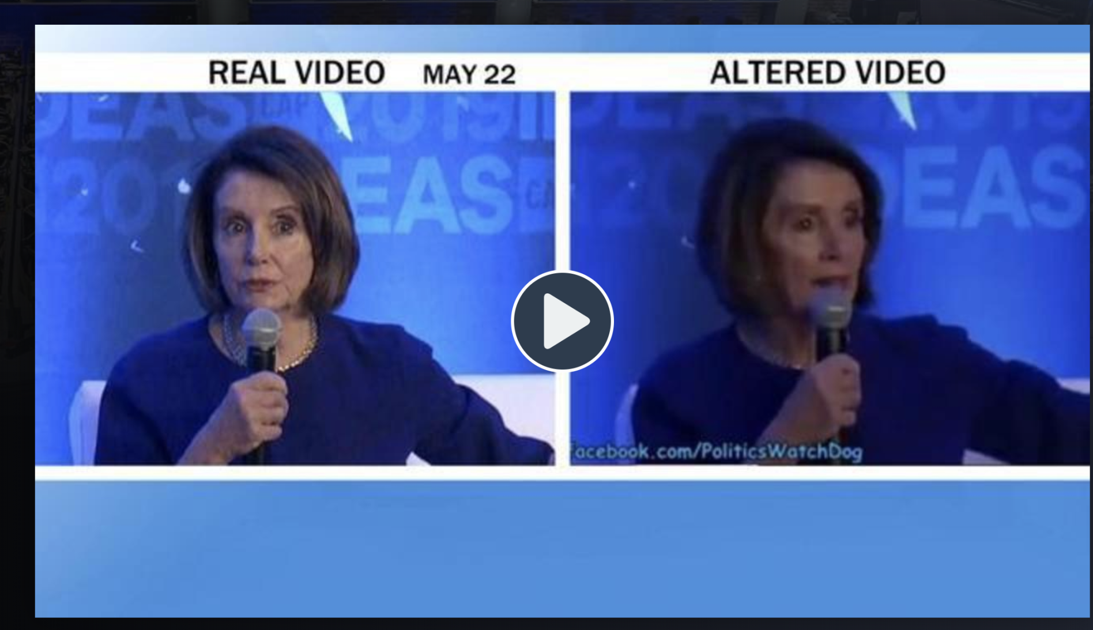
A closer look at deepfakes. Let our experts explain if there’s a reason to worry.
Deepfakes…they’re eerie, entertaining and getting a lot of attention. Deepfake videos are made using artificial intelligence technology which can manipulate someone's face in a video to make it look like they are saying something that they didn't. It's one level up from dubbing, or lip syncing, and can appear very convincing. One example is a video that was made using footage of Mark Zuckerburg in 2017; it was doctored and falsely portrays the Facebook CEO discussing how he had stolen data. – The Sun, June 26 The new concept is all the rage and has seen people spoofed, mocked and tricked. But as once again technology outpaces legislation and with an election approaching, deepfakes have some people going off the deep end. Every day, thousands of videos are posted online, which means that any potential filtering program would need to be able to quickly and efficiently detect fake content. Even then, such media would likely be removed only after being published, meaning that the video would likely have already had an impact. For these reasons, deepfakes are expected to contribute to the upcoming 2020 election in the United States, likely acting as an agent of spreading fake news. However, Edward Delp, a Purdue University professor who developed a computer program to help detect these videos, believes deepfakes pose a bigger threat. “Deepfakes pose a threat to more than just political videos,” he said. “It can be used in making fake child pornography, revenge porn and financial bribes. Just general criminal behavior.” – The Exponent (Purdue University), June 21 As deepfakes become more common on social media and the internet, odds are they will make their way – accidentally or not – into the actual media. And as America still battles with the fake news phenomenon, will Deepfakes further erode our trust in media and our leaders? As deepfakes become more common on social media and the internet, odds are they will make their way into the actual media. So, what can be done? How will these deepfakes affect the perception of news media? What simple advice can we apply to verify if something is real or fake? And do these videos represent a threat to democracy, as some experts are saying? Dr. Gregg R. Murray, professor of political science at Augusta University, is available to talk about the implications of this new threat. Murray’s research focuses on political behavior and psychology with specific interests in voter mobilization and turnout. He is also executive director of the Association for Politics and the Life Sciences.


Will Apple shine or is a little too late to be dipping its toe into the streaming game?
It was the big unveil a lot of tech insiders, analysts and Apple followers had been anticipating. With Oprah, Steven Spielberg and other members of the entertainment elite on-hand to lend a hand – Apple TV Plus was finally revealed. The service, coming this fall, will be subscription based and will bring exclusive original shows, movies, and documentaries to rival the likes of Amazon, Netflix and Crave. While it is unlikely Canada will see the inclusion of "Apple TV Channels" in all its US-like glory, it is certain that Apple's arrival to the streaming space would further put the squeeze on traditional TV service providers. With yet another premium content streaming service to choose and a finite budget, consumers will have to start making tougher choices between letting go of something or shaving off cost somewhere – unfortunately, the traditional TV cord may be the first in consideration. Here are the questions some insiders are pondering: Will a loyal customer base and strong partner relationships prove advantageous in luring content creators and viewership alike as Apple TV Plus breaks through the boundaries of Apple hardware? Where does the real opportunity lie for companies like Apple? How will they fare as consumers are challenged to make tougher decisions on who gets a share of their wallet? Will it be traditional TV or OTT Video service that gets the boot? According to Manish Nargas "Currently, consumer intent to continue to subscribe to TV services remains relatively stable year over year in Canada and consumers are happy to complement TV with other OTT video services". IDC's latest survey, Canadian Consumer Survey Indicators, 2019: Wireless, Internet, TV, and OTT Video Services shows that "those who do plan to reduce or stop their TV service, do so in order to save money, not on account of dissatisfaction in quality of service." There are a lot of questions to be answered between now and when Apple TV Plus launches and that’s where our experts can help. Manish Nargas is a research analyst specializing in consumer and mobile research. He is an expert in emerging consumer technologies with a focus on usage trends and adoption. Simply click on Manish’s icon to learn more about this survey or to arrange an interview.