
Experts Matter. Find Yours.
Connect for media, speaking, professional opportunities & more.

Allen Friedland, M.D., MACP, FAAP, has been recognized with the Dema C. Daley Founders Award for his national impact as an educator, innovator and leader in internal medicine. Given by the Alliance for Academic Internal Medicine, the award honors internal medicine doctors who have greatly influenced undergraduate and graduate medical education and the development of training programs in internal medicine. Watch the video of Friedland’s acceptance speech here. “Dr. Friedland has been a tireless advocate and innovator for internal medicine, medicine-pediatrics, and residency education over two decades,” said Vinay Maheshwari, M.D., MHCDS, Hugh R. Sharp Jr., Chair of Medicine and physician executive of the Medical Group at ChristianaCare. “He is a mentor to countless physicians across the country and beloved by those who have had the privilege of working alongside him. What is most evident about Dr. Friedland is how much he cares about those he has taught locally and nationally – all of them will forever be a part of his family. This award is a testament to a lifetime career dedicated to graduate medical education.” Friedland is ChristianaCare’s section chief of Medicine-Pediatrics (Med-Peds) and has served as the director of ChristianaCare’s combined Internal Medicine-Pediatrics residency program for 25 years. He also teaches medical students at ChristianaCare, which is a branch campus of Sidney Kimmel Medical College at Thomas Jefferson University and Philadelphia College of Osteopathic Medicine. His accomplishments include: Spearheading the development of what is now known as ChristianaCare’s Center for Special Health Care Needs, dedicated to providing primary care and specialty care for adults ages 18 and older with complex medical and social conditions that originated in childhood. Creating the elective Leadership Excellence Education for Residents/Fellows (LEED-R), which partners emerging resident leaders with ChristianaCare senior leaders for mentorship, real-world experience in applying leadership education and the ability to share those learnings with other residents. Known affectionately by his colleagues as “Mr. Med-Peds,” Friedland has held leadership positions with all of the major national med-peds organizations. He co-founded the Med-Peds Academic Channel and received the Leadership Award from the Medicine-Pediatrics Program Directors Association. He recently launched a professional association named the Association of Med-Peds Physicians. Kimberly Bates, M.D., FACP, FAAP, director of the Internal Medicine Residency Program at Dignity Health – St. Rose Dominican, nominated Dr. Friedland for the award. Bates is a ChristianaCare Med-Peds alumna (Class of 2003). “Dr. Friedland is an exceptional human being and a natural leader and mentor who leaves a powerful imprint on every person he meets, whether they are students, residents, physician colleagues or patients,” Bates said. “He has dedicated his career to medical education, and he takes an innovative and problem-solving approach to all that he does.”



/cloudfront-us-east-1.images.arcpublishing.com/tgam/D42Y2GTGHREBRIZEWNRMJB5Y3U.jpg)
Going green: Solar and wind power remain the best alternatives to fossil fuels
Find video for use here. In the U.S., more and more individuals, and even corporations, are making it a priority to go green in an effort to reduce the nation's dependence on fossil fuels. Studies have proven carbon dioxide is a main contributor to human-caused climate change, so we're tapping into natural elements more often to reduce the use of fossil fuels. From solar farms to solar panels on houses and wind turbines, it’s tough not to find efforts to go green, and that’s a move in the right direction, according to Jessica Reichmuth, PhD, professor in the Department of Biological Sciences in the College of Science and Mathematics at Augusta University. She said we’re heading in the right direction, but more can be done. “We are taking the right steps, but I’m not sure if we will be entirely able to be green energy, but we definitely need to be more green than we are today,” said Reichmuth. “Fossil fuels will eventually run out and are a non-renewable resource.” Homeowners and municipalities are tapping into solar panels most often as a green resource. Some concerns include the costs involved and the fact that in most cases, the panels are permanently attached to a house. Reichmuth points to California as an example of a state trying to ease that burden. Some people who are moving into rental houses and know they aren’t going to be there for a long period of time can have a company attach removable panels. There are other companies jumping into the business of leasing solar panels as well. Even small panels the size of a binder located in a backyard can make a big difference in producing a noticeable amount of electricity. These are great steps, said Reichmuth, but more progress can still be made. “We are at a point within society with green technology that we know and understand how to make solar panels, the infrastructure is there to support them, we just need a movement to get them so they’re used everywhere,” Reichmuth said. Wind turbines remain a big source of discussion. Yes, they provide an alternative electric source, but at what cost? A big negative is the possibility of bird strikes. “Birds will learn to navigate around wind turbines. They are not built in a way that they are impervious to long-distance migration.” Hydroelectricity and geothermal energy are two other green sources of energy. There are not a lot of areas in the U.S. that offer geothermal resources, and as far as hydroelectricity goes, there’s still concern in Reichmuth’s eyes. “I think it would be great to see if dams are going to be used for hydroelectricity, but not as a water containment system. There are portions of the U.S., especially in the southwest, that are dealing with water issues because we have dammed them. Hydroelectricity is good if the dam is used specifically for that purpose and not water containment.” Renewable energy, cost savings and ESG are top of mind for corporations, governments and populations as we look to the future, and if you're a journalist covering this topic, then let us help. Jessica Reichmuth is available to speak with media. Simply click on her icon now to arrange an interview today.


Innovative virtual practice offers continuous, coordinated and connected care ChristianaCare has launched Virtual Primary Care, a new health solution that offers the benefits of a long-term relationship with your primary care team, with the convenience of virtual care that can be accessed at home, at work or on the go, using a smartphone, tablet or other digital device. The practice is an offering of ChristianaCare’s Center for Virtual Health. “Virtual primary care in most markets does not establish an ongoing relationship between the patient and the provider — it’s on-demand care with the next available provider,” said Sarah Schenck, M.D., medical director of Virtualist Medicine at ChristianaCare. “ChristianaCare Virtual Primary Care is different. We offer a personalized approach in which patients have the attention of their care team who are all focused on their specific needs and health goals. Each care team knows their patients and is actively working to help them reach their personal health goals. And when patients need specialized care or services, our providers have access to ChristianaCare’s network and the ability to refer to the trusted services and specialists a patient might need outside of primary care.” The practice is accessible to residents of Delaware, Pennsylvania, Maryland and New Jersey, New York and Florida and available by monthly, quarterly or yearly subscription. Plans are available for people ages 5 and older and start as low as $35 per month. The subscription provides full access to virtual primary care services — with no additional fees or copays — including same-day appointments, extended hours on nights and weekends, secure text-messaging and the convenience of always-on care. Services that are not a part of primary care, such as emergency room visits, lab tests, diagnostic imaging and specialist referrals, are not included in the subscription and would be subject to the patient’s existing health insurance coverage. “At ChristianaCare we are reimagining health care by making it radically convenient and accessible, and by creating a unique and personal experience,” said Sharon Anderson, MS, RN, FACHE, ChristianaCare’s chief virtual health officer and president of ChristianaCare’s Center for Virtual Health. “The Virtual Primary Care practice goes beyond simply offering video visits to patients. We’ve transformed care so it no longer revolves around waiting for an appointment — it’s immediate, coordinated, continuous. Patients can now access virtual primary care 24/7 as well as a host of other health services — all through their computer, tablet or smartphone.” When individuals sign up, they’ll choose their care team of experts including a primary care provider, nurse and a patient digital ambassador (PDA). The patient digital ambassador serves as a personal health guide to assist individuals with registration and technology set-up for their virtual visits. As a care team member, the PDA is available as a personal health guide, while the primary care provider supports patients with their clinical care needs. Once enrolled, individuals will receive a welcome kit tailored to their needs with tools to assist in their care, such as monitoring blood pressure, weight and temperature. Benefits of ChristianaCare Virtual Primary Care: Schedule a virtual checkup, communicate using video, send photos through secure text messaging and discuss health concerns and treatment options. Schedule same-day appointments and enjoy extended hours on weekends. Get quick referrals to specialists. Create a personalized Working on Wellness Plan (also known as WOW plan) to help achieve healthy goals around stress management, exercise, nutrition, sleep and more. For more information, visit the ChristianaCare Center for Virtual Health or call 302-428-2400.
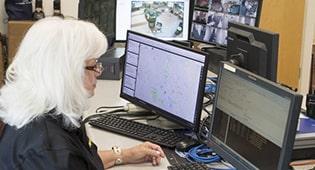
Experts in the Media: Georgia Southern investing $1.2 million to upgrade campus security cameras
Georgia Southern University is planning a major upgrade to its campus security cameras and video technology. With approximately $1.2 million budgeted, the University will upgrade the cameras in the resident halls and other buildings in Statesboro, Savannah and Hinesville to bring the current cameras from analog to a digital platform. Additionally, new cameras will be placed at entrances to theirr campuses that can tie into those from other law enforcement agencies. The end result will be an interconnected network of cameras across the region. The new technology package includes state-of-the-art Flock cameras, which are motion-activated and record license plate numbers of any vehicle that comes into the hall parking lots. Flock Safety’s “Vehicle Fingerprint” technology lets police search the video by vehicle make, color, type, license plate, state of the license plate, missing plate, covered plate, paper plate, and unique vehicle details such as roof racks, bumper stickers, and more. The cameras can be used to look for a specific suspect or a vehicle that has been entered into law enforcement databases. Additionally, the University can use Flock for investigative purposes as well by going back and looking for any cars that fit a certain profile if it was associated with a crime or if there was a gunshot detected nearby. “This upgrade allows us to add more cameras, extend our reach, add storage and searching capabilities and better integrate our cameras into other video surveillance networks in use by local law enforcement,” said Georgia Southern University Police Chief Laura McCullough. “This is a major step forward in our ongoing work to keep our campus safe.” The new equipment will add to, and augment, Georgia Southern’s network of more than 1,800 video cameras on its three campuses. The project will begin in the coming weeks and is expected to be completed by the start of the fall 2023 semester. The announcement has garnered a lot of attention, especially with local media and publications covering security. If you're a journalist looking to know more about this announcement or speak to an expert about campus security and safety - then let us help with your coverage. Georgia Southern University Police Chief Laura McCullough is available - simply reach out to Georgia Southern Director of Communications Jennifer Wise at jwise@georgiasouthern.edu to arrange an interview today.


MEDIA RELEASE: Manitoba’s Worst Road for 2022 is…
Winnipeg, MB, May 24, 2022 – A provincial road that connects Seven Sisters Falls through Manitoba’s Whiteshell Provincial Park is the province’s Worst Road. Provincial Road 307 is the dubious “winner” of CAA Manitoba’s Worst Roads contest for 2022, says Heather Mack, Manager, Government and Community Services. “This is the first time a rural road has made the top of our list,” says Mack. “But it’s not a surprise – more rural roads have been making our Top 10 list as the annual contest goes on.” A resident who lives near Otter Falls, which is in the Whiteshell off of PR 307, tells CAA Manitoba that the road is even worse in the winter – thanks to how much the road heaves in the cold. “It just comes up and if you aren’t careful, you go flying,” he says, noting the province has erected warning signs, but has not fixed the heaving. Last week, the road was closed due to overland flooding, which should be a wake-up call to governments, says Mack. “Climate change affects our infrastructure as much as anything else,” she says. “We need to be pro-active in preparing our roads so these vital community links, especially in rural Manitoba, are not cut off.” Winnipeg’s Saskatchewan Avenue came in second due to its numerous patches and potholes – including one pothole that was so deep, a local man took a photo of himself standing waist-deep inside it. It’s not just potholes that CAA Manitoba asked Manitobans to think about when voting for their worst road. Lack of active transportation paths, lack of safe and accessible access, poor or no signage, bad design or poor maintenance all went into this year’s voting. This year’s Top 10 list for Manitoba: 1. Provincial Road 307 2. Saskatchewan Avenue, Winnipeg 3. Waller Avenue, Winnipeg 4. Provincial Trunk Hwy 34, Pilot Mound/Crystal City 5. 18th Street, Brandon 6. Provincial Trunk Hwy 44, Lockport to Whiteshell 7. Leila Avenue, Winnipeg 8. Kenaston Boulevard, Winnipeg 9. Dawson Road North, Winnipeg 10. Goulet Street, Winnipeg Last year’s winner, Taylor Avenue, dropped off the provincial Top 10 list thanks to recent reconstruction efforts by the City of Winnipeg, but is still in the Top 10 list for Winnipeg. “This contest provides a snapshot of what Manitobans are experiencing out on our roads. We are pleased to see some of the usual roads on our list get moved down or fall off as local governments take action,” says Mack. “We are here to advocate for the safest roads possible for Manitobans – no matter whether they drive, bike, use transit or walk.” Photos and video of Manitoba’s Worst Road: https://bit.ly/3yP1wNl Other Regional “Winners” Winnipeg’s worst: 1. Saskatchewan Avenue 2. Waller Avenue 3. Leila Avenue 4. Kenaston Boulevard 5. Dawson Road North 6. Goulet Street 7. Taylor Avenue 8. Portage Avenue 9. Narin Avenue 10. Empress Street Southern Manitoba’s worst: 1. Provincial Road 307 2. Provincial Trunk Hwy 34 3. 18th Street, Brandon 4. Provincial Trunk Hwy 44 5. Provincial Road 250 6. Main Street, Selkirk 7. Trans-Canada Highway, Brandon 8. Provincial Trunk Hwy 23, Morris 9. Provincial Trunk Hwy 12 10. Provincial Road 450 Portage La Prairie’s Worst: 1. Lorne Avenue West. 2. Saskatchewan Avenue Brandon’s Worst: 1. 18th Street. 2. Trans-Canada Highway Thompson’s Worst: 1. Provincial Trunk Hwy 6. 2. Hayes Road Morden’s Worst: 1. Provincial Road 432. 2. 1st Street Selkirk’s Worst: 1. Main Street 2. Manitoba Avenue Steinbach’s Worst: 1. Loewen Boulevard 2. Park Road West


Building Your Own Expert Network - How Expert Personas Help you Organize & Develop Your Talent Pool
As business continues to evolve at an unprecedented rate, companies need new ideas and strategies that help them rapidly transform to keep pace and grow. This explains the massive popularity that expert networks are having as companies look to connect with subject-matter experts with specialized sector and functional expertise who can accelerate their transformation efforts. Expert networks now represent a multi-billion dollar industry, helping companies in a variety of ways. From helping build primary research to assessing new market or acquisition opportunities to conducting due diligence for new technology purchases or competitive benchmarking, expert networks provide a valuable service. While many companies are increasing their use of traditional expert networks, there is also a trend toward organizing and developing internal talent by implementing a "knowledge management platform" or "employee skills marketplace." These can also be extended to engage broader audiences when experts are listed publicly as part of an Expert Center, Media Room, or Speakers Bureau. Depending on the scope and market visibility organizations wish to commit to in sharing their expertise, such programs can yield the following benefits: Improved access to shared knowledge throughout the organization Faster innovation through an improved discovery of key experts available for project opportunities Higher amount of cross-functional engagement between departments A more collaborative relationship with employees through better knowledge engagement and skills development Less reliance on outside consultants and traditional expert networks Improved brand reputation by engaging experts in thought leadership activities Increased media coverage and speaking engagements Improved business development opportunities by engaging experts earlier in the sales process Improved connection with the local community Additional ways to foster Diversity, Equity, and Inclusion throughout the organization What is an expert network? An expert network is a service that matches clients with experts who are willing to share their knowledge and advice via short conversations. These are usually in the form one hour long expert interviews conducted with the client. Expert networks such as GLG, AlphaSights, Guidepoint Global, Third Bridge, and Coleman Research help match the client's interest to specific experts in their private database of experts on call. They also look after logistics such as scheduling the expert interviews and have detailed processes for qualifying experts to ensure compliance with the exchange of information. And they handle time tracking and billing of interviews which are typically charged based on an hourly rate. They also handle the payment of fees to the experts following the interview. Building your own knowledge platform There is a growing trend towards organizing their expertise given the profound challenges organizations are facing. And these challenges didn’t just start when the pandemic hit. In a recent Deloitte survey, 63% of executives reported that work in their organizations is currently being performed in teams or projects outside of people’s core job descriptions, 81% say work is increasingly performed across functional boundaries, and 36% say work is increasingly being performed by workers outside of the organization who don’t have defined jobs in the organization at all. Yet fewer than half (42%) of respondents say their organization’s job descriptions do an “excellent job” of specifying the work that needs to be done in their positions. As work becomes far more fluid, packaging skills into rigid job descriptions leads to a lot of untapped human capital in organizations. It’s an issue that hasn’t gone unnoticed by leadership. Research shows that only 18% of executives strongly agree that their workforce is using their skills and capabilities to their fullest potential. 85% of HR and business executives say organizations should create more agile ways of organizing work to improve speed and swiftly adapt to market changes. These issues underscore the need to better organize and develop internal talent by implementing a "knowledge management platform" or "employee skills marketplace." This is for a variety of reasons. With vast amounts of acquired knowledge pooled across various departments and teams, it can be difficult for other employees to access this knowledge when it is outside their area of expertise - as the old saying goes, “people don't know what they don't know.” Organizing your expertise for external audiences also can provide huge benefits for building reputation, relationships, and revenues. How to position your experts as industry thought leaders More and more organizations are looking at employees who can advance their innovation efforts internally, often as part of a cross-functional team or special project. And there are also important revenue-generating activities, such as sharing research and perspectives through content generation (blogging, webinars, podcasting) or speaking (at internal events, industry conferences, or as an expert source for media interviews). Determining how to best identify and put experts to work isn't a simple process. That's because to do this right requires a more disciplined approach to assessing and developing the talent across your organization. One that goes beyond linear career paths and traditional job titles we assign to employees. It also requires a more progressive approach to diversity and experience. One that is not simply correlated to seniority or authority in an organization. Given the current state of the talent market, most organizations are also recognizing the importance of managing their talent, listening more to employees, and helping them achieve their goals - both professional and personal. And that extends to how best to tap into their skills that can benefit the organization both internally and externally. That's why we developed a talent framework that helps identify opportunities where subject-matter experts can best contribute as well as potential options for professional development. To make this process more intuitive, we have developed a model that outlines 4 "expert personas" that detail the various characteristics related to experts in an organization along with a potential development path. Level 1: Experts in the "Practitioner" persona group can offer their organizations a wide range of skills. Our research and in-field experience with companies focused on innovation reveals that organizations can realize significant gains by tapping into this broad pool of talent. To better engage practitioners, we have helped universities better engage their Ph.D. candidates who are approaching graduation to conduct research and writing content that promotes their work and institutional brand to prospective students or donors. This also extends to corporate innovation. A recent example of this was our collaboration with a Fortune 500 company in the CPG sector, where we completed the build of an internal expert network. One of the key challenges this organization faced was the inability to quickly engage with “practitioners” - subject-matter experts across the organization who could help with specific R&D and innovation projects. While this organization had legacy HR and intranet communication platforms, they had experienced a number of challenges engaging their researchers. To make things worse the pandemic forced many to work from home, creating the need for more opportunities to engage online. They needed the ability to conduct simple searches to find other researchers relevant to their work who could help them with projects. Our research/writing team started the process by taking an inventory of experts and then developed profiles for each researcher in collaboration with the company’s research/innovation team using the ExperFile SaaS software platform. With the unique data structure used to categorize this broader set of biographical information, we then enabled advanced search capabilities to build a private, SOC2 (security) compliant expert network which was easily integrated into their existing talent platforms. With thousands of researchers across the globe, they now have the ability to quickly search for experts on areas such as skills, topics, work experience, research publications, company/industry experience and IP/patents. It’s important to note that activating all this hidden expertise not only lays the groundwork for faster innovation. It also can reduce the fees associated with outside expert networks and consultants, maintains tighter internal control of proprietary research information and forges stronger collaborations between experts across the globe. Level 2: The "Ambassador" category represents experts with a more developed set of skills and a reputation both inside their organization and within their community of practice. Working with them to generate more exposure through internal speaking engagements and within their local community is a great way to create market visibility. For example, we have worked with a number of professional services firms to make experts at this level more visible in their local markets. Building reputation and generating new client opportunities with thought leadership activities such as blogging, webinars and speaking at local business events or on podcasts is a proven way to tap into this talent. These activities have allowed organizations we have worked with to bring in new clients and increase revenues across various practice areas. Ambassadors are also perfect for involvement in on-campus recruitment events where competition for talent is high. Particularly in fields such as engineering, law and accounting. One way to make these experts more approachable to a wider audience is by creating a speaker’s bureau. Remember that not all your experts will be comfortable speaking to the media, however, they can still meaningfully contribute as a keynote speaker or panelist at an event. Organizing your experts on key topics enables local event and conference organizers to find you more easily in Google search results and on your website. In addition to getting your experts on the podium, it’s a proven way to get your expert's guest appearances on webinars and podcasts. Given the growing importance of these channels, we recently formed partnerships with the leading marketplaces for webinars and podcasts - BrightTalk and Podchaser to help our clients promote their experts for speaking opportunities. Level 3: Experts in the "Authority" category have developed a strong reputation as an expert in their field, often speaking at academic or industry conferences. At this level, they have also developed a degree of proficiency in speaking as an expert source with the local or national media. They can be found speaking as a guest on podcasts to share their knowledge and are often active on social media. In higher education, these people are critical to helping media relations and other departments generate media coverage that is essential to building a reputation. We have worked with many organizations that effectively engage their Authorities by staying connected to their research and publications and collaboratively creating regular content with them to reach a broader audience. You will find regular opportunities to boost coverage with local and national media by utilizing this group of experts. We work with media teams to conduct Google Search (SEO) analysis to identify what topics their target audiences are searching for. This allows them to more strategically focus on key experts to promote. They are also focused on delivering more engaging content formats such as video interviews and Q&A to boost Google PageRank and audience engagement across their website. And they are working collaboratively with their faculty to post media advisories and a regular stream of content that contributes to higher rates of discovery by journalists looking for expert sources. Level 4: Experts in the "Evangelist" category are those go-to experts that you often see in the media as key spokespeople representing a certain topic. They are seen as notable authorities with deep domain expertise within their community of practice which has often been earned through heavy research and publications. Chances are they have also authored books that provide a path to speaking engagements at conferences and media interviews. These are also the people who have developed a regular audience through blogging or by hosting a podcast and have a well-established social media following. Ultimately, what separates this group from the others is the significantly broader market profile they have earned as a thought leader. These individuals have an intuitive sense of how to communicate complex topics in a relatable way that both educates and engages. That makes them particularly valuable to the organizations whose brands they represent. Given the degree of qualifications required to operate at this level, it’s to be expected that you will find far fewer “evangelist” category experts in any organization. Many are naturally found within the ranks of the executive team. These are the people who are comfortable in interviews, and most have extensive public speaking experience appearing on a large stage and on radio and television. At this level, organizations need to be far more strategic about how they utilize this talent pool to build a reputation and reach a wider audience. We have seen first-hand how strategic thought leadership programs can build a platform for these experts that can pay huge dividends. One healthcare system we have worked with recently forged a relationship with ABC News to feature one of their medical experts (a medical doctor) on a weekly segment related to important Covid-related health topics. Given the frequent appearances this expert has made on television, this was an earned media home run and a great way for this healthcare system to build visibility and trust within the community by providing accurate medical information. Their commitment to making their medical experts more discoverable and approachable online has also helped them promote their strengths in areas such as cardiology, neonatal, cancer, and genetic research. And the results are impressive. Over the past year, they have doubled their national media coverage and are currently outperforming much larger healthcare systems in their area. How to organize your experts Personas by their very nature are designed to provide a more standardized approach for planning using "clusters" of talent that are grouped against common characteristics. However, we're very aware that they cannot possibly capture all the nuances you will find within your organization when it comes to talent. But our experience helping leading organizations in knowledge-based industries to better manage thousands of experts shows that having a more methodical approach pays off. It optimizes the internal/external contributions and the development paths of experts to create win-win opportunities. but it also helps forge a stronger connection with employees who feel their organization is taking the development of their professional skills more seriously and more actively creating avenues for them to engage and contribute. With an understanding of these personas, we can then focus on another important consideration - where can we best engage our experts to more effectively tap into their skills inside and outside the organization? To help answer that question, we developed a "Talent Assessment Grid" (TAG) that helps you identify key areas where each of these personas can contribute. As a planning tool, it's meant to provide a more organized approach that helps you assess your bench strength and create a more tangible system for measuring progress over time in areas such as skills development or contributions to cross-functional innovation projects or outside industry consulting. Playing to the individual strengths these experts have while moving them out of their comfort zone to develop additional skills also yields additional marketing benefits. Contributing content; speaking at conferences or community events or to the media are proven ways to build market visibility, establish trust and generate revenues - and experts play a vital role in this process. A thriving network where knowledge is easily discoverable inside an organization and strategically shared outside in the community and beyond can make a huge difference in boosting innovation and culture. When properly promoted, these experts will also help you grow your reputation, relationships, and revenues. Although this process requires commitment, it positions you to be more agile and outperform your competition by ensuring you are optimizing every employee’s true potential and making them more discoverable both inside and outside the organization. How are you putting your expert talent to work? Do you have a process you use today for identifying and engaging your experts? We would like to hear from you. For more insights on how you can organize your experts online to support your internal knowledge management or promote them to a wider audience, visit us at https://expertfile.com/resources to learn more.



ChristianaCare Launches Gender Wellness Program for Transgender and Gender Diverse Individuals
Pride Month announcement highlights need for quality health care for LGBTQ+ community ChristianaCare has opened a Gender Wellness Program to provide psychotherapy and support services for individuals age 13 and older who are exploring their gender identity or experiencing gender dysphoria—a sense of incongruence and distress that a person may have because of a mismatch between their gender identity and their sex affirmed at birth. Downloadable: PHOTOS VIDEO The program also provides treatment for any behavioral health condition the individual may be struggling with, such as anxiety and depression. People who identify as transgender have higher rates of suicide attempts than individuals who do not identify as transgender, according to the National Institutes of Health. “ChristianaCare aims to provide the safest, highest quality health care and the best experience possible for our entire community, guided by our values of love and excellence,” said Mustafa A. Mufti, M.D., interim chair of the ChristianaCare Department of Psychiatry. “Caring for our entire community means providing sensitive, compassionate, and state-of-the-art behavioral health and medical care to transgender and gender-diverse individuals. Our Gender Wellness Program will help improve health equity and outcomes for individuals and families who need these services. We know that transgender and gender-diverse individuals face health disparities, and our program will help address that.” The program follows the guidelines of the World Professional Association for Transgender Health (WPATH). WPATH promotes the highest standards of health care for the health of transsexual, transgender and gender-nonconforming people based on the best available science and expert professional consensus. “Our Gender Wellness Program is ready to support anyone age 13 or older who is exploring their gender identity, experiencing gender dysphoria or who needs education and support around social and medical transition,” said Brett E. Herb, DSW, LCSW, program manager of the Gender Wellness Program. Dr. Herb has been in clinical practice for more than 25 years as a psychotherapist and a clinical and administrative manager for numerous behavioral health programs, and has been working with the transgender and gender-diverse populations for the past 17 years. “We provide referrals to compassionate, gender-affirming health care experts,” Dr. Herb said. “Often, families find themselves having to educate their primary care providers, schools, neighbors and family members about how to appropriately care for gender-diverse individuals. Our program provides individuals and families with access to specially trained gender therapists they can trust who can get them the answers they need to help navigate the complexities they may encounter.” The Gender Wellness Program provides referrals to trans-competent primary care providers who prescribe gender-affirming hormone treatment, along with specialists for gynecological and obstetrics care. The program offers individual, couples, family and group therapy sessions. It also provides existing patients with assistance with personal documentation changes and letters of surgical support. “This program has provided me with tremendous support throughout my transition,” said Julie Brown of Wilmington, Delaware. “My therapist empathizes with what I am experiencing in my life, and has guided me through my evolution. The group therapy sessions help me understand that I am not alone. “We form a community, share information and support each other in a safe environment. My child is also a patient of the Gender Wellness Program. Their support has helped him deal with my changes and understand his gender dysphoria.” “Brett Herb and the Gender Wellness Program have helped me grow the confidence I needed,” said Kristopher Snedeker of Newark, Delaware. “Working with the professionals at the program has provided resources to help further my gender transition to become who I truly am.” Gender therapists at the Gender Wellness Program are: Brett E. Herb, DSW, LCSW, Program Manager. Amanda Pope Evans, MSW, LCSW. Katherine Goemaat-Suarez, MSW, LCSW. ChristianaCare is a national leader in LGBTQ+ health care. For the past 11 consecutive years, Christiana and Wilmington hospitals have been recognized by the Healthcare Equality Index as an LGBTQ+ Healthcare Equality Leader. Individuals who would like to learn more can contact the Gender Wellness Program at genderwellnessprogram@christianacare.org or call 302-623-6773. For more on ChristianaCare’s LGBTQ+ health initiatives, visit LGBTQ Health Initiatives.

There's a lot more to bats than their spooky reputation
By Emma Richards More than 50,000 students call the University of Florida home, and while that is a lot of Gators, the campus is home to even more bats. Hundreds of thousands of the misunderstood mammals live across from Lake Alice, where they dwell in the world’s largest occupied bat houses. The colony of bats was initially discovered at the UF track and tennis stadiums in 1991. In the spots where fans were cheering, bats were roosting – causing a mess and a notable stench. That same year, the UF Athletics Association built a house to rehome the bats from the stadiums. But the night after they were transported to their new home, all the bats left, and did not return for three years. Now, the houses are primarily occupied by around 400,000 to 500,000 Brazilian free-tailed bats that remain at UF year-round and do not hibernate or migrate. “They do all these great things for us and then we turn around and we're scared of them,” Mathis said. Verity Mathis, the mammal collections manager at the Florida Museum of Natural History says bats are the only mammals that can fly, and the Brazilian free-tailed species found at UF are tremendous at it. “They’ve actually been documented to go as fast as 100 miles an hour in like short bursts, which is just amazing to think about,” she said in an episode of the From Florida podcast. “This one species is just capable of so much.” Along with their fast flight, Brazilian free-tailed bats can go as high as 9,000 to 10,000 feet in the air and venture over 30 miles a night forging for insects like mosquitos, moths, beetles and flies. Despite being associated with blood-sucking vampires in popular culture, only three out of 1,400 bat species drink blood and they aren’t located in North America. Bats do not want to attack humans; in fact, they avoid people using their vision and echolocation skills. Bats can live for many decades and are more closely related to humans than they are to rodents. They also provide critical environmental services such as pest control, fertilization and pollination. Mathis says bats are misunderstood. “They do all these great things for us and then we turn around and we're scared of them,” she said. “We want to be respectful of them and of their lifestyle and we don't want to encroach upon them and bother them.” Mathis says if people do encounter an injured bat, they should not touch it with their bare hands because bats can carry rabies. It is best to put on thick gloves, place the bat into a container and call a local wildlife rehabilitation center. There are 13 bat species in Florida, and two of them are endangered. The Florida Wildlife Commission is actively monitoring those populations. In Alachua County, people and businesses, including Swamp House Brewery and Lubee Bat Conservancy, have bat houses on their properties. Mathis advises those interested in putting a bat house in their yard to do research to ensure that the right kind of house is purchased and that it is placed in the proper location to align with Florida’s specific requirements, which can be found here on the UF/IFAS website. For Mathis, these are all steps toward accepting a widely misunderstood mammal. “I think as long as we continue these conversations about telling people how cool bats are then maybe eventually pop culture will catch up to that,” she said. To hear more about bats, listen to the episode on From Florida at this link. Listen to other episodes in the From Florida podcast here. Watch a recent video featuring Verity Mathis here: https://youtu.be/vbFZfVwGwYE


Meet the astrobiologist and her students who are searching for life on Mars
By Emma Richards, University of Florida From a young age, Amy Williams wondered if life existed beyond Earth amidst the dark abyss of space, stars and planets — a curiosity that years later landed her a career researching and exploring Mars. Williams, an assistant professor of geology and an astrobiologist at the University of Florida, works as a participating scientist on the Perseverance and Curiosity Rover Science Teams and previously served as a postdoctoral research associate at NASA’s Goddard Space Flight Center. As an astrobiologist and geobiologist, she uses techniques from geology, microbiology and chemistry to search for life beyond Earth. “Even as a little kid watching meteor showers with my family, I wondered if there was someone out there in the stars looking back at Earth.” “Even as a little kid watching meteor showers with my family, I wondered if there was someone out there in the stars looking back at Earth,” she said in an episode of the From Florida podcast. “It’s been a passion of mine my whole career and now it’s the most amazing opportunity to serve on both of the active Mars rover missions.” Williams’ journey to Mars began as a graduate student when a research professor gave her the opportunity to work on the NASA Curiosity mission. From there, Williams built her way up and is now a participating scientist working on day-to-day rover operations. Williams also is opening doors for graduate students at UF to work on Mars research, helping upcoming generation of scientists follow her path. She is specifically interested in involving women and underrepresented groups in her work. Based on her research, Williams said life on Mars, if found, will likely look less like Marvin the Martian and more like microbial life similar to bacteria on Earth. Curiosity landed on Mars in 2012 and Perseverance landed in 2021. The rovers are searching for potential life on Mars by going to habitable environments and searching for evidence of water and essential elements that could supported such life forms. Curiosity has spent nearly its entire mission exploring a large five-kilometer-tall mountain in Gale Crater known as Mount Sharp. The scientists can see Mars’ history and climate based on changes in the chemistry and sediments of the mountain. As for Perseverance, the rover is exploring Jezero Crater, with emphasis on its delta, a geologic deposit that is formed when water from a river flows into a lake. Perseverance will help collect rock and sediment samples from Mars that will be the first brought back to Earth. NASA is also working on a program to eventually send humans to Mars, which will likely take many decades; the first stage in the project will be returning humans to the Moon. “But in the meanwhile, these robots, these rovers that we send to the red planet, they are our proxy,” Williams said. “And looking through the robot rover’s eyes, the images that are returned to us, I recognize this is the closest I will ever be to standing on Mars and looking up at these beautiful geological units, looking up at an alien world that’s so familiar because the tenets of geology apply on Mars, the same as they do on Earth.” To hear more about the Amy Williams' Mars research, listen to the episode on From Florida at this link. Listen to other episodes in the "From Florida" series at this link. To learn more about her work, watch this video featuring Professor Williams:


How to network virtually: What newcomers in Canada need to know
Newcomers to Canada already faced an uphill task of adjusting to their new life and starting a career in Canada, but COVID-related restrictions made things even harder. However, after an initial period of adjustment, virtual networking and remote job interviews have become the norm. Now, even with COVID-19 restrictions easing and people getting vaccinated, some aspects of the “new normal” are expected to continue for the foreseeable future. Due to its relative convenience, virtual networking will likely remain a popular means of building professional connections. This article covers key aspects of how to network virtually and the things you need to know about virtual networking for professional success as a newcomer in Canada. Advantages of virtual networking Start building your Canadian network before you land Before the COVID-19 pandemic, networking was mostly done in-person, which meant that newcomers to Canada could only start building their network after arriving in the country. However, with virtual networking, newcomers have the opportunity to start building their network well in advance of their arrival in Canada. You can start attending virtual networking events or meeting people for online coffee chats while preparing for your move. It can take months to cultivate meaningful professional relationships, so the sooner you start, the better prepared you’ll be to enter the Canadian job market when you land. Opportunity to look beyond your city One major disadvantage of in-person networking is that it geographically limits the people you can meet. With virtual networking, you can connect with experts or professionals, regardless of where they live. If you’re still preparing for your arrival, this gives you a chance to speak to people in different cities and figure out where the best job opportunities are for your industry in Canada. You can also learn about different job markets within Canada and plan your career path based on insights from a more geographically diverse set of people. The convenience of networking from home Attending events and networking meetings is time-consuming. By networking virtually, you can save the time it would take you to travel to the event venue or meeting place. This means that you can accommodate more coffee chats in a day and build your network faster. Many newcomers find it much easier to network from the comfort of their homes, compared to the unfamiliar and chaotic environment of a coffee shop. Since you are the person requesting the meeting, it is expected that you’ll be paying the bill for coffee during in-person meetings. These amounts can quickly add up and might impact your budget, especially if you’re meeting several people each week. In most cases, virtual meetings are also more convenient for the professionals you’re meeting, so your acceptance rate for virtual coffee chats may be higher than for in-person meetings. Easier to follow up and stay in touch Once you’ve made a connection and had an introductory meeting, it is important that you stay in touch with your new contact. However, as your network grows larger, it can become challenging to follow up with everyone on a regular basis—especially if you’re doing these meetings in-person. It’s much easier to stay connected and engage virtually over follow up coffee chats, emails, or social media. This will allow you to follow up more often and build stronger, more meaningful connections. How to build your network virtually as a newcomer in Canada Whether you’re looking to network or find a job, it is important that you keep your LinkedIn profile up-to-date. Your Linked In profile will likely be the first thing people see when they connect with you. Unlike a resume, which is customized for each job, your LinkedIn profile should be generic and should highlight all your skills, experiences, and certifications. Be sure to use a professional headshot and grab people’s attention with a compelling headline. Use LinkedIn’s advanced search filters to find new connections based on their organization, job title, and other criteria. Always personalize your LinkedIn connection request messages. You can also increase your visibility and promote your personal brand by being active on LinkedIn. Post, share, and engage with relevant content to get noticed by other professionals. Interact over social media As a newcomer, LinkedIn is not the only social network you can use to build a network. You can also find professionals you’d like to connect with on Twitter and initiate a conversation. Depending on your industry, Instagram and Facebook groups might be useful platforms for networking—but make sure your profile is professional! Clubhouse is another app where you can virtually meet and share ideas with like-minded people, listen to expert speakers, and ask questions. If your initial interactions go well, ask for a follow up coffee chat to take the conversation forward. Online networking platforms and virtual events Due to the ongoing COVID-19 pandemic, most networking events have moved to a virtual setting. Virtual networking platforms bring together people from similar industries and give you an opportunity to start making connections. Events hosted by industry associations are a great place to meet other professionals in your field. You can also find virtual networking events for different industries and interests on websites like Eventbrite and Meetup. Arrive webinars and workshops are also a great place to learn from and connect with experts. Leave a positive impression on others attending the networking session by behaving professionally and asking intelligent questions. Virtual coffee chats Online coffee chats (also called informational interviews) using tools like Zoom, Google Meet, and Webex, are a great way to build your network virtually. Once you’ve connected with someone on LinkedIn or at a virtual networking event, ask if they’d be open to a one-on-one meeting. Virtual coffee chats give you an opportunity to introduce yourself to established professionals in your industry, showcase your skills, and position yourself as an ideal candidate for future job openings. You can also seek recommendations on other people you should add to your network. If you’re looking for information about a specific organization, role, or industry, informational interviews can be particularly helpful. Be sure to do your research beforehand and have a list of questions ready. Reactivate your existing network As a newcomer, you’ll have to start building your network from scratch in Canada. However, there might be others in your network who are already in Canada. Speak with your friends and family to find out who you might already know here. You can also use LinkedIn to find alumni from your school or colleagues from your previous organizations who’ve since moved to Canada. Leverage your existing network to get introductions to other people in your industry or for job referrals. How do you effectively network virtually? Do your research. Learn what you can about the person you’re meeting beforehand and customize your questions accordingly. Going in prepared will make it more likely for you to get the information you’re looking for, and to make a good impression. Do check your technology. Make sure your internet connection, microphone and camera are in perfect working order before your virtual meeting. Take some time to familiarize yourself with the video call platform prior to your meeting. Always keep your camera on during meetings and if there’s noise in your background, put yourself on mute when the other person is talking. Do be professional. Go in with a list of topics you’d like to discuss and don’t ask personal questions. Be punctual and dress the way you would for in-person networking meetings. Create an appropriate work setting and keep your desk and background distraction-free. If you don’t have a dedicated workspace, apply a professional virtual background in your video call tool. Do be authentic and offer value. Express genuine interest in what people have to say and learn from their experience. Find ways to help the people you’re meeting—it’s a great way to demonstrate your skills in practice! Don’t skip the small talk. In Canada, small talk is a cultural practice, so make sure you allocate some time for it while creating your meeting agenda. It’s also a great way of breaking the ice and getting to know people you’re meeting and relate to them outside of their professional life. Don’t mistake your elevator pitch for a sales pitch. Your elevator pitch is a brief 30 second introduction meant to capture the other person’s interest. Highlight your skills, strengths, and achievements, but don’t oversell yourself. Don’t interrupt or multitask. Appreciate the fact that someone has taken the time to talk to you and pay attention to what they have to say. It’s rude to interrupt or check your phone when someone else is speaking. It can be very distracting, and more importantly, it gives people the impression that you aren’t interested in what they have to say. Be sure to put your phone on silent during networking meetings. There might be other distractions around you at home, such as children or pets, so find a quiet place for meetings. Don’t forget to follow up. If you’re meeting several new people every week, it can be hard to keep the conversation going with all of them. However, regular follow up is the best way to maintain professional relationships. Keep track of all your virtual meetings and create a realistic follow up schedule. Virtual networking has made it easier and more convenient for newcomers to expand their professional networks. As a newcomer to Canada, there are many online platforms and events you can leverage to start building your personal brand and growing your network virtually一even before you come to Canada. Original article located here, published by Arrive. About Arrive Arrive is powered by RBC Ventures Inc, a subsidiary of Royal Bank of Canada. In collaboration with RBC, Arrive is dedicated to helping newcomers achieve their life, career, and financial goals in Canada. An important part of establishing your financial life in Canada is finding the right partner to invest in your financial success. RBC is the largest bank in Canada* and here to be your partner in all of your financial needs.
