Experts Matter. Find Yours.
Connect for media, speaking, professional opportunities & more.
As April marks Autism Acceptance Month, journalists looking to move beyond awareness and into meaningful storytelling have access to a diverse group of experts from the University of Delaware. From innovative health technologies to classroom strategies, mental health support and adulthood transitions, these scholars offer fresh, research-backed perspectives on what it means to support autistic individuals across the lifespan — and why the conversation is evolving. Reimagining Health Through Technology and Inclusion Daehyoung “DH” Lee Assistant Professor Dr. Lee is exploring how technology can close health gaps for individuals with intellectual and developmental disabilities. His work focuses on mobile health apps and wearable devices — including a gamified intervention designed to improve physical, mental and cognitive health outcomes. Story angles: How gamification and wearable tech are transforming health outcomes for autistic individuals The future of inclusive digital health tools Addressing disparities in physical activity and wellness Why Motor Skills Matter in Autism Anjana Bhat Professor A leading researcher on motor development in autistic children, Dr. Bhat has spent years advancing understanding of how motor challenges impact daily life. She was recently named a Catherine Worthingham Fellow for her contributions to the field and for elevating the role of physical therapy in autism care. Story angles: The overlooked link between motor skills and autism Why physical therapy should be part of early intervention New research reshaping how clinicians and families approach care Centering Lived Experience in Education and Development Sarah Curtiss Assistant Professor Dr. Curtiss examines how to build programs that truly support autistic youth by grounding them in lived experience. Her work spans social development, sexuality education, family dynamics and the transition to adulthood — always with a focus on resilience and real-world context. Story angles: Rethinking how schools support autistic students beyond academics Conversations around sexuality education and autism What successful transitions to adulthood really require Preparing Educators for Complex Needs Sarah Mallory Assistant Professor With expertise spanning the School of Education and the Center for Disabilities Studies, Dr. Mallory focuses on preparing educators to work with students who have significant behavioral and academic needs. Her work also includes empowering individuals with developmental disabilities to make self-protective decisions and navigate complex social situations. Story angles: Supporting students with intensive needs in today’s classrooms Teaching self-advocacy and safety skills Training the next generation of special education professionals Mental Health and Systems-Level Support Alisha Fletcher Director, Delaware Network for Excellence in Autism A licensed clinical social worker with more than 20 years of experience, Fletcher leads efforts to support professionals and families across Delaware. Through training and technical assistance, she addresses the mental health and service needs of autistic individuals across settings. Story angles: The growing demand for autism-informed mental health care Supporting families navigating complex service systems Building statewide networks that improve outcomes Why This Matters Now As acceptance grows, so does the need for deeper, more nuanced coverage. Autism is not a single story — it intersects with health care, education, technology, family life and public policy. These experts can help audiences better understand those intersections and highlight solutions that are already making a difference. To contact any of these experts, please email MediaRelations@UDel.Edu.


What the Meta/YouTube Verdict Still Misses About Youth Social Media Harm
The verdict against Meta and YouTube has reignited debate over addictive design and youth social media harm. But according to Harshi Sritharan, clinician and digital dependency expert with Offline.now, one key issue is still being overlooked: digital emotional regulation. Sritharan works with young people and families dealing with the real-life fallout of harmful platform design, including compulsive scrolling, sleep disruption, body-image distress, emotional dysregulation, and conflict at home. “The goal isn’t to remove technology from their lives entirely,” says Sritharan. “It’s to help young people and their families build healthier relationships with it.” She can speak to why regulating platform design matters, why digital resilience and online emotional regulation should be treated as core life skills, and why simply restricting access without healthier alternatives can push vulnerable youth into harder-to-monitor spaces. As news coverage focuses on liability and platform accountability, Sritharan offers a frontline clinical perspective on what these harms actually look like inside homes - and what young people, parents, schools, and policymakers may still be missing. ABOUT THE EXPERT Harshi Sritharan is a clinician and digital dependency expert with Offline.now, a digital wellness platform connecting individuals and families with therapists, coaches, and social workers who specialize in healthier relationships with technology.




My MBA at 69: Q1 Results Are In. And Nobody Is More Surprised Than Me
When I wrote my first post about starting an MBA at 69, I was running on caffeine, stubbornness, and a mild identity crisis. I was drowning in software platforms, APA formatting, and the humbling reality that open-book quizzes could still make me sweat. Fast forward to today. I am now 25% complete. Even typing that makes me sit up straighter. More surprising? I am maintaining an A average. Yes. An A. Let that land for a moment. Before anyone faints, let me be clear. I am not retiring my original mantra. "Even C's Get Degrees" still lives on a sticky note in my brain. I repeat it whenever the ego starts strutting around like it owns the place. The goal was never perfection. The goal was sustainable progress and full nights of sleep. The A average is delightful. The mantra is protective. My dog Dottie approves of both. She now perches on the back of the couch while I work, casting supervisory glances in my direction like a very small, very opinionated board member. We are in a much better place emotionally. The household has stabilized. What I did not anticipate was how much this experience would reveal about me. Lesson #1: Experience Is the Assignment Nobody Grades The content is strong. The business frameworks and systems I am learning are elegant. But the real gift has been realizing that my decades of experience give depth to everything I read. When the textbook discusses competitive positioning or industry cycles, I do not see abstract diagrams. I see real businesses. I hear boardroom conversations. I remember decisions that worked beautifully — and others that required creative explanations and, occasionally, some very careful walking back. The theories have texture because I have lived them. This MBA is not separate from my work. It is sharpening it. Every case study filters through the same question: How does this apply to retirees? I cannot turn that lens off. Frankly, I would not want to. At the same time, not every concept survives intact outside the classroom. We are taught that firms must choose clearly between cost leadership and differentiation. Tidy in theory. Messier in practice, where most organizations stumble through imperfect hybrids while real-world pressures refuse to behave according to the textbook. I learn the models thoroughly. I cite them properly. I demonstrate mastery. And yes, after nearly losing my mind over whether a journal article published in 2019 requires a DOI or a retrieved-from URL, I can now format an APA 7th edition reference in my sleep. Whether I want to is another conversation entirely. But maturity lets me see where the models bend. Lesson #2: Selective Excellence Is Not Laziness. It's Wisdom. One of the biggest lessons this term has been prioritization. At 29, I wanted to prove myself. At 69, I want to improve myself. Earlier in life I would have tried to ace everything equally. Today, I allocate energy strategically. Marketing excites me. Strategy energizes me. Organizational behaviour feels like coming home. Those subjects get my full intellectual investment. Accounting gets solid, disciplined, B-minus effort. I say that proudly. Retirement is also selective excellence. You do not need to be good at everything anymore. You get to double down on what lights you up. Coursework. Careers. Life. All of it. But growth is not without discomfort. Lesson #3: The Classroom Has No Hallways Anymore My program is entirely virtual. No hallway conversations. No accidental coffee chats that turn into the best part of your week. Everything happens on screens, and group projects test my patience more than any midterm ever could. I even considered removing my photo from my profile to avoid immediate age assumptions. Then I took a breath and remembered who I am. If someone sees my age and quietly categorizes me as someone's grandmother, so be it. They have never met Aunt Equity when she puts her purse down. For the record: I do not own a purse. In one recent group assignment, a teammate gently pointed out that I had used an em dash in a formal case report. A rookie mistake, apparently. Instead of bristling, I thanked them for the compliment. If I am still making rookie mistakes, I am still capable of growth. That exchange meant more to me than the grade. Lesson #4: The Advantage of Having Nothing Left to Prove Age has given me something powerful: detachment. I am not chasing internships. I am not competing for promotions. I am here because I want to be here, and that freedom changes everything. I can question thoughtfully. I can log off at a reasonable hour. I can engage with students young enough to be my grandchildren without an ounce of ego about it. Mostly. And still, whenever I feel the ego creeping back in about that A average, I whisper: "Even C's Get Degrees." It works every time. Lesson #5: Curiosity Does Not Come With an Expiry Date The deeper curriculum of this MBA has little to do with GPA. It has taught me that humility sharpens thinking. That curiosity does not expire. That stretching intellectually at 69 feels remarkably similar to climbing toward Everest Base Camp at 60. You question your sanity. You adapt. You keep moving. When I look at my latest grades, I do not feel relief. I feel possibility. If I can adapt to new technology, academic writing standards, and Zoom calls at 7 AM, then reinvention is not reserved for youth. It is available to anyone willing to risk being a beginner again. Are You Putting Your Experience To Work? If you are over 60 and thinking about taking a course, writing a book, starting a business, or learning something that scares you a little — here is the truth: Your experience is not a liability. It is leverage. Your decades are not dead weight. They are the whole point. And if you are willing to risk being a beginner again, reinvention will meet you exactly where you are. I am 25% done. Seventy is approaching. The mantra still stands. Remember, even C's Get Degrees. But when you bring seven decades of lived experience into the classroom, the curve has a way of bending in your favour. Now, if you will excuse me, Dottie has just planted herself directly on my laptop and is staring at me with the quiet authority of someone who has already read the syllabus on Google Scholar. Eighteen courses to go. Multiple pots of extra-strong coffee. A carefully curated cocktail of patience, tolerance, and self-care. The honeymoon is officially over. What lies ahead is a full marathon: War and Peace-length reading lists, spreadsheets that test the limits of human endurance, and enough group projects to make a grown woman question everything she knows about herself. Dottie remains unbothered. She has seen me do hard things. She knows I finish what I start. She also knows the whining, complaining, and pleading will eventually stop. (insert slow, world-weary head shake from a very wise ten-pound dog who has heard it all before). Don’t Retire… ReWire! Sue Want to become an expert on serving the senior demographic? Just message me to be notified about the next opportunity to become a "Certified Equity Advocate" — mastering solution-based advising that transforms how you work with Canada's fastest-growing client segment. Here's the link to sign up.



What "Super Agers" Are Teaching Us About Growing Older
When I think about aging well, I don't see a number on a birthday cake. I see capacity. The ability to think clearly. To move with confidence. To stay curious. To laugh easily. To remember where I put my keys. (Okay, that last one is still aspirational.) That's why I teach 4 fitness classes a week and pay close attention to how I fuel my body. Not because I'm chasing youth, but because I've learned, both personally and professionally, that the way we move, eat, sleep, and cope influences how we feel... and how we show up for the people we care about. I don't want to live forever. I just want to live well while I'm here. Like many Boomers, I've been interested in the growing research on longevity. And let's be honest: Boomers have never been good at accepting "no" for an answer. Why would we start now, just because it's mortality asking? We're the generation that refused to compromise. Retirement? Optional. Slowing down? Negotiable. Death? We'd like to speak to the manager. This leads us to a fascinating group of scientists known as "Super Agers." Who Are Super Agers, Really? In research terms, Super Agers are adults over 80 whose cognitive abilities, especially memory, perform at levels expected of people in their 50s or 60s (Rogalski et al., 2013). But here's what I love most: they aren't superhuman. They're not top athletes. They're not biohackers living on kale foam and cold plunges at dawn. (Though if that's your thing, carry on.). They're everyday people who never disconnected from life. A striking Canadian example is Morry Kernerman, a Toronto violinist who kept on learning, hiking, and performing well into the ripe age of 101. His story embodies the spirit of Super Aging: it's not about dodging age, it's about refusing to stop living. In a CBC interview, Maury Kernerman doesn't sound like someone "trying to live longer." He talks like someone who's still interested in living, fascinated by the world, hungry for learning, and unwilling to stand still just because he might do something imperfectly. He also admits something that matters to a lot of readers: he wasn't always an exercise person. He started taking it seriously later in life and describes it as a "rear guard action" that hasn't stopped aging, but has helped him keep his capacity. One of the most poignant lessons: when we're afraid of doing the wrong thing, afraid of failing or being embarrassed, we stop. And standing still is what really costs us. Haven't you heard? Sitting is the new Smoking!! What the Science Is Showing Us Canadian and U.S. researchers, at Western University and Northwestern University, are discovering something significant. Not a pill. Not a quick fix. A system. Angela Roberts (Western University) explained that the Canadian arm of the research isn't relying only on lab snapshots. Participants are sent home with wearable devices so researchers can monitor real-world activity patterns continuously (24 hours a day) over multi-week periods (CBC News, 2024 - https://www.cbc.ca/news/health/superager-centenarians-brain-second-opinion-9.7049411). That design matters because it turns "healthy aging" from a vague concept into measurable behaviours: how much movement you get, how intense it is, how consistent it is, and how it fits into the rhythm of normal life. Super Agers typically stay active, remain mentally sharp, maintain close relationships, handle stress effectively, sleep well, and keep a generally positive attitude (Rogalski et al., 2013 - https://doi.org/10.1162/jocn_a_00300; Sun et al., 2016 - https://doi.org/10.1523/JNEUROSCI.1492-16.2016) Their brains display thicker cortical areas linked to attention and memory, experience slower atrophy rates, have fewer Alzheimer's markers, and show stronger neuronal connections (Gefen et al., 2015 - https://doi.org/10.1523/JNEUROSCI.2998-14.2015; Harrison et al., 2012 - https://doi.org/10.1017/S1355617712000847) A Data Point Worth Remembering When It Comes to Longevity From the wearables, the research study observed that many 80-year-olds in the study, both "super agers" and the control group, were averaging about 25 to 30 minutes of exercise a day (roughly aligned with Canadian movement guidelines). The difference wasn't that super agers moved a little more. The study showed that they got about 30% more of the kind of movement that raises heart rate, what researchers call moderate-to-vigorous physical activity In plain language: it's not just steps. It's getting your engine up into that slightly breathy zone on purpose, most days. There's no single longevity switch. It's a belt-and-suspenders approach: multiple protective habits working together over decades. Let's Talk About Weight (Without Losing Our Minds) People often ask: Should Super Agers be skinny? Or a little plump? The research answer is surprisingly dull (and comforting): Neither. Super Agers come in all sizes. There is no evidence that they share a specific body weight or BMI. What matters much more than the scale is stability, strength, and body composition (Stenholm et al., 2008). Obesity Shows Up Consistently in the Research Midlife obesity is associated with an increased risk of dementia later in life. Several large studies indicate that obesity (BMI ≥30) during midlife raises dementia risk by 33 to 91% compared to individuals of normal weight (Kivipelto et al., 2005; Qizilbash et al., 2015) However, in older age, unintentional weight loss often signals frailty or illness. Weight loss in later life is linked to faster cognitive decline and higher risk of death (Diehr et al., 2008) Being underweight increases the risk of death. Studies consistently indicate that underweight older adults (BMI <20) have 2 to 3 times the all-cause mortality risk compared to those with a normal weight, with one study reporting a 34% higher risk of dementia (Diehr et al., 2008). A slightly higher BMI in later life may actually be protective, especially if muscle mass is maintained. The "obesity paradox" demonstrates that overweight and mild obesity in older adults (ages 65+) are often linked to a lower risk of mortality, particularly from non-cardiovascular diseases (Natale et al., 2023). So, the prescription is clear: avoid extremes. Not so skinny you could use a Cheerio as a hula hoop, and not so plump that tying your shoes feels like a full-contact sport. Here's What Truly Matters: Muscle Mass Strength defends the brain, maintains balance, boosts metabolism, and offers resilience during illness or stress (Peterson & Gordon, 2011) "Skinny-fat", low muscle, higher fat, is actually worse for aging than carrying a bit more weight with muscle beneath (Prado et al., 2012). Super Aging isn't about shrinking yourself. It's about supporting the structure you live in. Sleep: The Quiet Superpower If movement is the main act, sleep is the stage crew ensuring the entire show runs smoothly. Sleep isn't just one thing. It's a cycle (Walker, 2017). The Stages of Sleep (a quick, non-boring tour) Light sleep: The warm-up. Easy to wake from. Necessary, but not enough by itself. Deep sleep: The body's main repair mode. This is where physical repair occurs: muscle recovery, immune support, hormone regulation (Scullin & Bliwise, 2015) (Walker, 2017). REM sleep: The brain's spa. Memory consolidation, emotional regulation, creativity, and learning all occur here (Scullin & Bliwise, 2015) (Walker, 2017). Missing deep sleep leaves your body feeling exhausted. Missing REM causes your brain to become fragile and foggy (Mander et al., 2017). Super Agers tend to guard their sleep, though not perfectly, deliberately (Mander et al., 2016). Consistent bedtimes, morning sunlight, daily activity, and relaxing evenings appear repeatedly. For some people, slow-release melatonin or magnesium can help improve sleep maintenance (Ferracioli-Oda et al., 2013). However, the greatest benefits often come from simple routines: consistency, darkness, cooler rooms, and avoiding phone use at 10 p.m. Sleep isn't a luxury. It's essential brain maintenance (Mander et al., 2017). Stress: The Real Villain Chronic stress is like kryptonite for cognitive health (McEwen & Sapolsky, 1995). The main source of stress is not accepting what is. We argue with reality, and we lose every time. We revisit conversations. We resist change. We attempt to control others. Super Agers appear more accepting, not resignation, but realism (Sun et al., 2016) Here are some practical strategies to consider: Let them. (Thank you, Mel Robbins.) People will be people. You don't need to manage them. Save your energy for what truly matters. And remember: what people think of you... is none of your business. Calm isn't passive. Calm is protective. Gratitude also plays a role. Many Super Agers exhibit a distinct emotional tone: more grateful, less gripeful (Hill & Allemand, 2011) Life wasn't simpler; they simply didn't let bitterness steer the way. Relationships and Quality of Life: The Real Gold Standard Super Agers don't have more friends; they have deeper ones. Strong relationships are linked to better emotional regulation and preserved brain regions. (Cacioppo & Cacioppo, 2014) (Holt-Lunstad et al., 2010) And this isn't about extending life. It's about quality of life: cognitive, physical, and emotional well-being. Because no one wants a farewell-to-life party where nobody shows up because you've been miserable, bitter, or exhausting to be around (thank you, BR). Strong body. Clear mind. Warm relationships. A sense of humour that endures gravity. That's the win. 3 Practical Takeaways to Steal this Week If you want the super-ager approach without turning your life into a science experiment, here are three low-drama moves: Add intensity, not just activity. Keep your regular walk, but pick one segment to walk faster, take a hill, or add short brisk bursts. Your heart rate is the clue. Keep a learning thread running. Music, audiobooks, a class, a museum habit, a book club, anything that keeps your mind taxed in a good way and makes you feel curious again. Make "don't stand still" a rule. If you're avoiding something because you might look silly (a dance class, a new hobby, a new friend group), that's exactly the place to lean in, gently, but on purpose. Super Agers aren't chasing youth. (No one needs to see me in low-rise jeans again.) They're cultivating engagement. (Do you want to dance?) They move. They learn. They sleep well. They stay positive. They accept what is. They remain connected. They rely on the belt and suspenders. And most importantly, they don't wait for permission to live life to the fullest at any age. Yes, biology will win eventually. None of us gets out of this alive. But the real victory isn't in defeating what we can't control. It's in mastering what we can, for as long as we can, and living fully right up until biology takes its final bow. Don't Retire...ReWire! Sue Want more of this? Subscribe for weekly doses of retirement reality—no golf-cart clichés, no sunset stock photos, just straight talk about staying Hip, Fit & Financially Free.

Holiday Phones, Real Kids: “Don’t Give a 10-Year-Old a 24/7 Device Without a Plan”
Smartphones and tablets are among the hottest holiday gifts for tweens and teens. They’re also one of the biggest sources of parental anxiety. “We’re giving 9, 10, 11-year-olds a pocket device with the power to nuke their sleep, social life and self-esteem — and we’re doing it with almost no training,” says Eli Singer, founder and CEO of Offline.now. “The question isn’t ‘Should kids have phones?’ It’s ‘What’s the plan for this incredibly powerful tool?’” Singer, a coach and parent who lives with ADHD himself, takes a non-judgmental, shame-free approach with families. He’s blunt about the risks — social comparison, late-night scrolling, drama at school that now comes home in their pocket — but equally blunt that guilt doesn’t help. “Parents are overwhelmed and scared. They’ve seen the headlines linking social media to anxiety and depression, and they feel like they’re already behind,” he says. “My job isn’t to scare them; it’s to help them write the first draft of a family agreement they can actually live with.” Singer recommends three simple starting points over the holidays: Bedrooms are sacred. Phones charge overnight outside kids’ rooms and ideally outside parents’ rooms, too. Meals are for humans, not phones. A bowl or basket at the table becomes the visual reminder: we’re here together. Model what you ask. If parents scroll through dinner or answer work emails at fireworks, kids get the message long before any rule is written. Offline.now’s Digital Wellness Directory includes professionals who specialize in families, ADHD, and youth mental health; Singer positions Offline.now as the bridge between overwhelmed parents and the right expert help. Why now Late December is “first phone” season. January brings the real-world consequences: blown bedtimes, drama in group chats, school exhaustion. Singer can give reporters a nuanced, practical angle on holiday devices — beyond “phones are bad” vs. “phones are fine” — and concrete questions families can ask before they unwrap the box. Available for interviews Eli Singer - CEO of Offline.now; author of Offline.now: A Practical Guide to Healthy Digital Balance. I speak about practical behavior change, non-judgmental family agreements, and confidence-based starting points - and I can direct people to licensed professionals via the Offline.now Directory when needs go beyond coaching.

Kwanzaa Explained: A Modern Celebration Rooted in Culture, Community, and Purpose
Observed from December 26 to January 1, Kwanzaa is a cultural celebration that centres on African heritage, shared values, and community renewal. While often grouped with year-end holidays, Kwanzaa is distinct in both origin and intent — designed not as a religious observance, but as a time for reflection, education, and collective responsibility. At its core, Kwanzaa asks a simple but powerful question: How do communities honour their past while shaping a stronger future? The Origins of Kwanzaa Kwanzaa was established in 1966 by scholar and activist Maulana Karenga during a period of social change in the United States. It was created to provide African Americans with a way to reconnect with African cultural traditions while reinforcing shared values that support family, community, and social progress. The name “Kwanzaa” is derived from a Swahili phrase meaning “first fruits”, reflecting harvest celebrations common across many African cultures. The Seven Principles: Nguzo Saba Each day of Kwanzaa focuses on one of the Seven Principles, known collectively as the Nguzo Saba. These principles guide the celebration and serve as a framework for reflection and action: Umoja (Unity) – Strengthening family and community bonds Kujichagulia (Self-Determination) – Defining and speaking for oneself Ujima (Collective Work and Responsibility) – Building together and solving problems collectively Ujamaa (Cooperative Economics) – Supporting and sustaining community businesses Nia (Purpose) – Contributing to the restoration and development of community Kuumba (Creativity) – Leaving communities more beautiful and beneficial than before Imani (Faith) – Belief in people, parents, teachers, leaders, and collective struggle Each evening, families light a candle on the kinara, symbolizing progress through these values. Symbols and Traditions Kwanzaa celebrations include meaningful symbols that reinforce its themes: Kinara – The candle holder representing roots and foundation Mishumaa Saba – Seven candles representing the Nguzo Saba Mkeka – A woven mat symbolizing tradition and history Mazao – Crops representing collective labour and productivity Kikombe cha Umoja – The unity cup used for communal reflection Zawadi – Gifts that emphasize creativity, learning, and cultural meaning Celebrations often include storytelling, music, poetry, shared meals, and discussions about cultural identity and social responsibility. Kwanzaa in Practice Today Kwanzaa is observed in the United States and internationally by people of African descent and others interested in African culture and values. It may be celebrated alongside religious holidays such as Christmas or Hanukkah, or on its own. Over time, Kwanzaa has become a platform for conversations about: Cultural identity Community empowerment Education and youth development Economic equity Social responsibility Story Angles for Journalists Why Kwanzaa was created — and why it still resonates today The role of culture in community resilience How Kwanzaa is celebrated across generations Education, identity, and the Nguzo Saba Kwanzaa’s place in modern multicultural societies How families blend Kwanzaa with other year-end traditions Why Kwanzaa Matters Kwanzaa offers a framework for reflection that extends beyond a single week. Its principles emphasize unity, purpose, and shared responsibility — themes that remain relevant in discussions about culture, equity, and community building. In a season often dominated by consumption and spectacle, Kwanzaa provides a values-driven pause — one rooted in heritage, intention, and collective progress. Let's get you connected to an expert! Find more experts here: www.expertfile.com

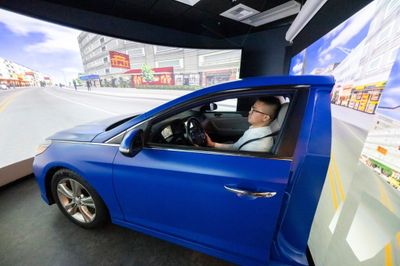
Motor vehicle crashes remain one of the leading causes of death among teenagers. For the youngest drivers, getting behind the wheel marks freedom but also comes with measurable risk. At the University of California, Irvine, Dr. Federico Vaca, professor and executive vice chair of emergency medicine, is determined to change that trajectory. “Driving licensure among our youngest drivers remains a major life milestone, and it allows for newfound freedom and opportunity for not only youth but their parents as well. At the same time, learning to drive and licensure come at a time when youth are rapidly moving through life with new transitions in school, with friends, and likely exposure to alcohol and drugs,” he says. “Our priority … is to examine the complexities of young driver behavior and to thoroughly understand crash injury risk and crash prevention among this special group of drivers.” Vaca’s work is at the intersection of health, transportation science and policy. A fellow of the Association for the Advancement of Automotive Medicine and a researcher at UC Irvine’s Institute of Transportation Studies, he previously served as a medical fellow at the U.S. Department of Transportation’s National Highway Traffic Safety Administration in Washington, D.C. His long-standing goal is to prevent the injuries he has seen and treated in emergency departments and trauma centers through rigorous research, using the findings to inform and advance evidence-based programs and policies that save lives on the road. Innovating safety science UC Irvine is home to a new hub for understanding and preventing crash injuries among young drivers, the Brain, Body & Behavior Driving Simulation Lab, founded by Vaca and his interdisciplinary team. At the heart of the B3DrivSim Lab is a high-fidelity, half-cab driving simulator capable of replicating real-world conditions with precision. It uses advanced software to design customized driving scenarios – from complex roadway environments to the inclusion of such human elements as distraction and fatigue – all while capturing real-time video and driving behavior as well as vehicle control metrics. This integration of medicine, behavioral science and engineering enables researchers to measure how developmental and socioecological factors shape driver decisions in unique and consequential ways. The B3DrivSim Lab also represents a growing mentorship ecosystem at UC Irvine. In mid-June, the facility welcomed Siwei Hu, a postdoctoral scholar who earned a Ph.D. in civil and environmental engineering, with a focus on transportation studies, at UC Irvine. Hu works closely with Vaca to combine engineering and modeling analytics with behavioral and crash risk insights. The half-cab driving simulator uses advanced software to replicate real-world conditions and design customized driving scenarios – from complex roadway environments to the inclusion of such human elements as distraction and fatigue – all while capturing real-time video and driving behavior as well as vehicle control metrics. Steve Zylius / UC Irvine From the lab to policy Beyond simulation, Vaca’s latest National Institutes of Health-funded study, separate from his lab’s work, takes this philosophy to the national level. His project, “Modeling a National Graduated-BAC Policy for 21- to 24-Year-Old Drivers,” explores whether lowering the legal blood alcohol limit for young adults could reduce alcohol-related crashes and deaths. “When you turn 21, at that very moment, the application of several alcohol-related prevention laws changes in the blink of an eye,” Vaca says. “Before that, the minimum legal drinking age and zero-tolerance laws are in place to protect young drivers from alcohol-impaired driving. Effectively, the second you turn 21, those prevention policies don’t apply, and you’re suddenly allowed to have a much higher blood alcohol concentration in your body that’s intimately tied to serious and fatal crash risk. It’s a very dangerous disconnect.” The study will use national crash data, behavioral surveys and system dynamics modeling to examine how a “graduated BAC policy” might bridge that gap, giving young adult drivers a safer transition into full legal responsibility and saving many more lives. Bridging science, education and prevention Earlier this year, Vaca and his B3DrivSim team joined prevention program educators, policymakers, engineers and law enforcement professionals in Anaheim at a Ford Driving Skills for Life event, part of a Ford Philanthropy-sponsored national effort teaching teens hands-on safe driving techniques – from hazard recognition to impaired-driving awareness. Speaking to more than 130 high school students and their parents from local and distant communities, Vaca emphasized the connection among driving, independence, opportunity and responsibility. That message aligns with his broader initiative, Youth Thriving in Life Transitions with Transportation, which introduces high school students to traffic safety and transportation science and their role in promoting health, education and employment in early adulthood. By linking research and real-world experience, the project empowers youth to see mobility as a foundation for opportunity with safety as its cornerstone. With overall young driver crash fatalities rising 25 percent nationally over the last decade and a 46 percent increase in fatal crashes where a young driver had a BAC of ≥ .01/dL, Vaca’s work represents a crucial step toward reversing that trend. Through a combination of clinical insight and prevention, transportation and data science underscored by community collaboration, he and his team are redefining how researchers and policymakers think about youth driver safety.


From classrooms to communities: Rethinking civic engagement in K–12 education
When national headlines focus on school board battles and political polarization, James Bridgeforth, assistant professor of educational leadership at the University of Delaware, is focused on what’s possible instead: building a more inclusive, participatory model of democracy through public education. His research in UD's College of Education and Human Development explores how community voice, equity and local leadership intersect to shape education policy – and how school boards can serve as vital engines for rebuilding public trust in government. "Despite the often sensationalized stories of chaotic school board meetings and the influence of more national "culture war" issues, I still believe that it's possible for people from different backgrounds, experiences, and points of view to come together to figure out how to best serve the needs of all of our children." – Bridgeforth Bridgeforth’s work centers on education governance, policy and leadership, with particular attention to how racism and anti-Blackness manifest in schools and policymaking spaces. His scholarship highlights the importance of inclusive decision-making, arguing that effective education policy must be representative of the diverse communities it serves. He recently published the report "Navigating Democracy in Divided Times" with co-authors on this topic. As part of his work with the Getting Down to Facts III project at Stanford University, Bridgeforth collaborates with researchers studying how to improve California’s TK–12 system and inform the next governor’s education policy agenda. His work documents the complex realities faced by local school board members – often minimally paid community leaders navigating contentious public discourse, social media pressure and limited resources. He notes that this research can be applied to school boards around the country. The next frontier: Youth civic engagement Over the next several years, Bridgeforth aims to deepen understanding of how schools can nurture young people’s civic skills and leadership capacity through participation in governance. One proposed project – "Strengthening Opportunities for Youth Civic Engagement and Student Voice in Educational Governance" – uses participatory action research to explore how student board member policies and engagement practices foster civic agency and democratic mindsets. This collaborative work brings together youth-led community organizations and education researchers to study how these experiences shape long-term civic behavior – from voting to public service. Why it matters Bridgeforth’s research arrives at a pivotal time for American democracy. As trust in public institutions erodes, local school boards remain one of the spaces where citizens can directly shape policy. His work points to a hopeful truth: democracy’s renewal may begin in classrooms, communities and the local school board meetings shaping them. For journalists covering education, race or civic engagement, Bridgeforth offers data-driven insight, lived experience and policy expertise – helping make sense of one of the most pressing questions of our time: How can we build systems that truly serve all students and communities? This work collectively demonstrates a number of promising opportunities to foster more inclusive, community-connected forms of governance, particularly in a time of eroding trust in government institutions." – Bridgeforth ABOUT JAMES BRIDGEFORTH Assistant Professor, College of Education and Human Development James Bridgeforth is an educator, researcher and policy advocate whose work focuses on community voice in education policy and the politics of educational leadership. His scholarship has appeared in top journals including Journal of School Leadership, Education Policy Analysis Archives, Educational Evaluation and Policy Analysis and Educational Administration Quarterly, and he has contributed to Education Week and The Washington Post. A recipient of the National Academy of Education/Spencer Foundation Dissertation Fellowship, Bridgeforth holds a Ph.D. in Urban Education Policy from the University of Southern California, an M.Ed. in Educational Administration and Policy from the University of Georgia, and a B.A. in Political Science and Sociology from Georgia College & State University. Expert available for: Interviews on K–12 school governance, education policy and democracy Commentary on community voice and equity in education decision-making Analysis of youth civic engagement and participatory leadership To contact Bridgeforth, email mediarelations@udel.edu.
UF builds community resilience in Jacksonville’s Historic Eastside neighborhood
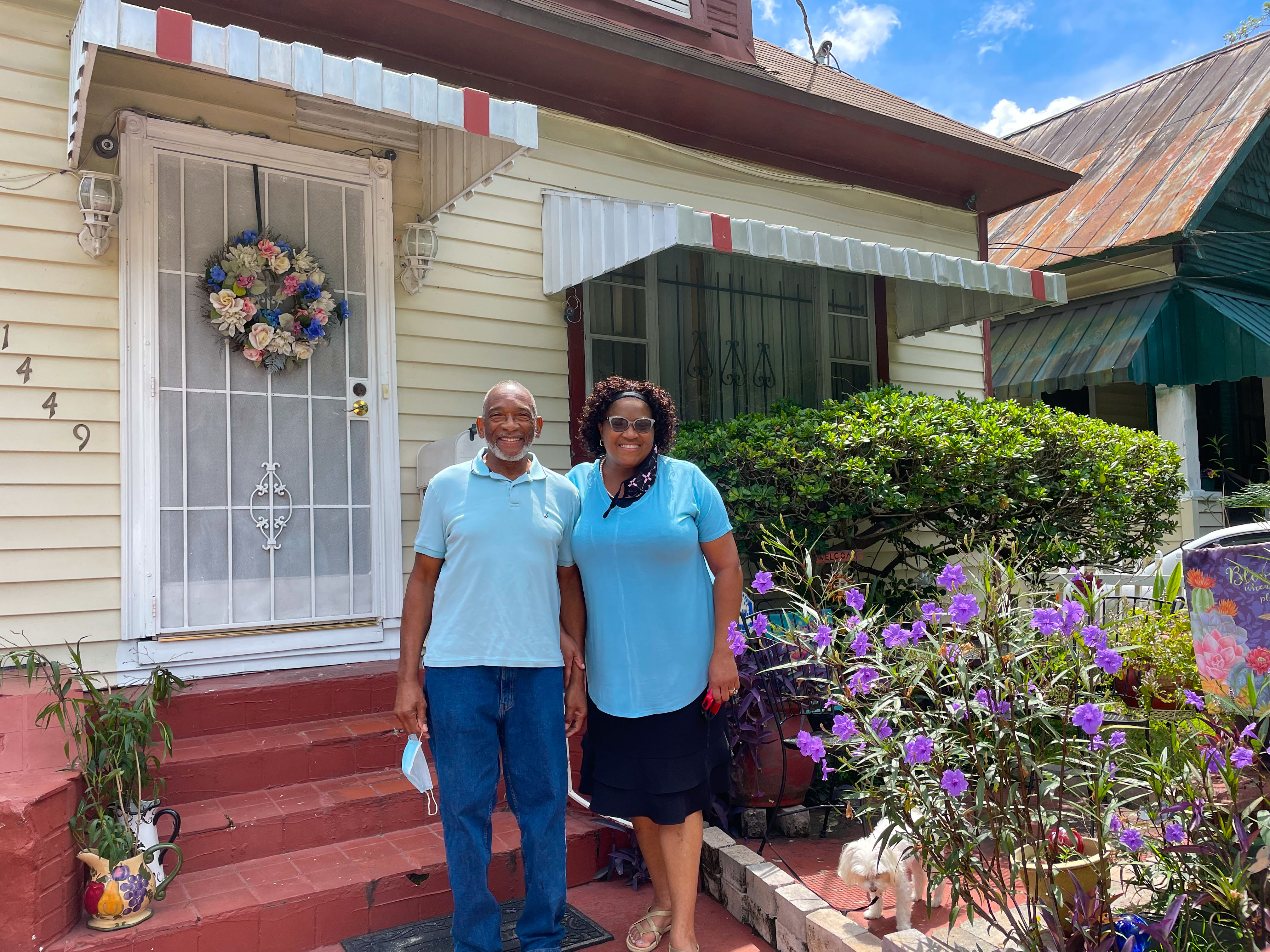
As the University of Florida continues to expand its presence in Jacksonville, Gators are undertaking sustainability projects to improve the city’s neighborhoods. Faculty and students in the College of Design, Construction and Planning’s Florida Institute for Built Environment Resilience (FIBER) have spent the past four years focusing on the role of housing design in community health resilience in Jacksonville’s Historic Eastside neighborhood, interviewing resident stakeholders and collaborating with citywide organizations that are helping to restore older homes. Findings from the UF research will be instrumental in informing future community planning and housing design decisions, potentially leading to more health-centered, sustainable neighborhoods. “Our research in Jacksonville focuses on how we can inform the development of community infrastructure that holistically supports human well-being across mental, emotional, and physical dimensions,” said Lisa Sundahl Platt, Ph.D., a FIBER research faculty member and an assistant professor of interior design at UF, who added that this holistic, health-centered approach is known as salutogenic design. “We are also actively collaborating with community organizations in Jacksonville and researchers from UF to explore improved strategies for designing and constructing community infrastructure that effectively responds to potential hazards.” A community-wide collaboration UF has conducted a pilot study over the past year on the Jacksonville-based Restore, Repair, and Resilience (R3) initiative that is underway in Historic Eastside – surveying residents about how the design quality of their housing and surrounding environments affects their overall well-being. This interdisciplinary project has brought together FIBER and members of the R3 Group – a coalition of organizations that includes the JEA utility company, LIFT JAX (committed to eradicating generational poverty), the Historic Eastside Community Development Corporation, the United Way of Northeast Florida, and Local Initiatives Support Corporation Jacksonville. FIBER-led research has received ongoing support from the Florida Resilient Cities grant, which is funded by the Jessie Ball duPont Fund. The scope of the R3 project is being scaled up through a U.S. Department of Energy grant awarded through JEA, which will allow for an expansion of home revitalization efforts in Eastside Jacksonville. FIBER’s ongoing housing and health community action research on these efforts will be supported through a grant from the LS3P Foundation. “Many residences we evaluated need help with improvements to housing energy efficiency, building ventilation, building shell structural integrity, and materiality,” Platt said. “For example, underperforming flooring material can create potential trip hazards for older adults. Deterioration in interior materials, caused by degrading components of the building envelope, can also lead to mold and mildew growth in interior environments, which can contribute to poor interior environmental quality issues and acute and chronic health conditions.” Respiratory health issues are often caused by material and ventilation design failures, which can affect people of all ages, especially vulnerable populations such as children and older adults. Oftentimes, interior designers see that the environmental risks that compromise human well-being are coming from both the outside and inside of the buildings. “As we continue to address priorities, our focus extends beyond energy and building efficiency to encompass comprehensive factors of built environment resilience that impact overall community health and well-being,” Platt said. “There's still significant progress to be made in the design of sustainable housing that supports community salutogenic health." Keeping residents safe and healthy UF research has continued to prove that interior resilience for living environments plays a vital role in people’s mental and physical health. “People spend roughly 90% of their time indoors, so it is important to understand the types of design conditions and materials that we’re putting into spaces and how they can affect the occupants of those living in said spaces,” said UF student Milena Rodriguez Mendez, who is one of Platt’s graduate research assistants. Students like Mendez are using qualitative and quantitative research methods to engage in collaborative community-led research that includes academics, for-profit organizations, nonprofits, citizen scientists, and neighborhood stakeholders. “I aim to center my work on social justice and equity, and I believe this initiative represents a meaningful step in that direction,” Mendez said. “Our focus is on the residents of this vibrant yet at-risk community.” FIBER researcher Jason von Meding added, “We want to know how future housing policies can address some future health concerns. We have a lot of youth in the community that are participating, which I think is important.” The FIBER housing and health team is actively pursuing additional funding to expand this research, in collaboration with UF Health Jacksonville’s Department of Community Engagement. “Our goal is to develop an open-source online platform that disseminates lessons learned and proof-of-concept findings on the impact of regenerative housing design on human and ecological health,” Platt said. “This resource will be valuable for other cities and neighborhoods facing similar challenges in housing quality, affordability, and accessibility.” Looking to know more about this project or connect with Lisa Platt? Simply click on her icon now to arrange an interview today.



Expert Spotlight: Advancing Child & Youth Behavioral Health with MBC
Children and youth today face increasingly complex mental health challenges, requiring care that is personalized, evidence-based, and responsive to evolving needs. Measurement-Based Care (MBC), also referred to as Measurement-Informed Care (MIC), is a proven framework that leverages client-reported data to guide treatment decisions, enhance engagement, and improve clinical outcomes. With CARF’s updated accreditation standards now requiring MBC in youth services, organizations globally are prioritizing its adoption. On September 30, Greenspace Health brought together a panel of experts including Theresa Lindberg, MSC, LPC, Managing Director for Child and Youth Services, CARF International, who shared real-world examples, lessons learned from successful implementations, and actionable strategies for embedding MBC in youth-serving organizations. The webinar was recorded and is available below for viewing. This is an important topic, and if you are interested in learning more - then let us help. Theresa Lindberg is Managing Director of Child and Youth Services at CARF International. If you are looking to connect with Theresa , view her profile below to arrange an interview today.