Experts Matter. Find Yours.
Connect for media, speaking, professional opportunities & more.

Civics Education Expert Comments on Sandra Day O'Connor's Legacy, Inspiration
O’Connor’s creation of iCivics ‘was the catalyst for much of my work in civics education,’ says Brooke Blevins This week, the nation heard from former U.S. Supreme Court Justice Sandra Day O’Connor, the first woman to serve on the nation’s highest court, that she is officially stepping away from public life due to health reasons. In her letter to the nation, O’Connor shared about her commitment to civics education and, specifically, the creation of iCivics – free online interactive games and curriculum designed to teach the core principles of civics to middle and high school students. Brooke Blevins, Ph.D., serves as associate professor of social studies education and associate chair of the department of curriculum and instruction in Baylor’s School of Education. She and Karon LeCompte, Ph.D., associate professor of curriculum and instruction, conducted the first independent research study of iCivics effectiveness. Blevins and LeCompte also launched iEngage Summer Civics Institute. The researchers were honored by O’Connor for their research and commitment to iCivics and civics education. Dr. Blevins wrote the following when she learned of Justice O’Connor’s announcement: We are saddened to learn about the news that Justice Sandra Day O’Connor is stepping away from public life due to her health. Justice O’Connor is undoubtedly one of the most profound figures in our country—a boundary-breaking woman who fought tirelessly to encourage collaboration, democratic discourse, and working toward the common good. Her legacy is one that has had a deep impact on my own life, my academic pursuits and the Baylor community as a whole. Justice O’Connor’s efforts to start iCivics, an online civics education platform that provides interactive games and curriculum designed to help students learn about the core principles of democracy in an engaging and relevant manner, was the catalyst for much of (the Baylor School of Education’s and) my own work in civics education. In 2012, my colleague, Dr. Karon LeCompte, and I had the privilege of conducting the first independent research study examining the effectiveness of iCivics on students’ civic knowledge, skills and dispositions. Working with more than 300 students in Waco ISD and Midway ISD, we implemented a six-week unit using iCivics games and curriculum. In April of that year, we had the honor of presenting our encouraging findings to Justice O’Connor in a community symposium in which she also honored Waco area students, teachers and district administrators. It was from the inspiring work of Justice O’Connor and iCivics that our work in civics education at Baylor University has continued, including the creation of the Baylor University iEngage Summer Civics Institute—a program designed to take the principles learned in iCivics and put them into action in the community. As Justice O’Connor has said time and time again, “It’s not enough to understand; you’ve got to do something.” Justice O’Connor’s efforts to reinvigorate civics education, re-engage young people in civic life and ensure the future of our democracy are enduring and inspiring for all of us. These efforts to reform and reinvigorate civics education are ongoing and in need of our support and resources. As she noted in her final letter, “It is my great hope that our nation will commit to educating our youth about civics, and to helping young people understand their crucial role as informed, active citizens in our nation.” This is why the Baylor University School of Education is committed to pioneering innovative approaches and research in civics education. We are grateful for the work of Justice Sandra Day O’Connor and her light that shines bright throughout our world.


Sainthood and the legacy of Oscar Romero in El Salvador
If you’re covering the Canonization of Archbishop Oscar Romero, consider Rick Jones, who’s spent his entire career working on poverty and social justice issues in El Salvador. Rick knows first-hand that Romero’s messages are as relevant and necessary as ever. As he puts it: Changing repressive policies, calling on gangs and organized criminal groups to stop the killing, denouncing human rights abuses and caring for the victims is as urgent today as when Romero was archbishop. Based in El Salvador for more than 20 years, Rick works closely with the Church in Latin America on justice issues, including migration, internal displacement and youth violence. He understands well the poverty, violence and political divisions that compelled Romero to defend human rights in the face of death threats and even opposition from his colleagues in the Church. Oscar Romero was Archbishop of San Salvador until he was brutally assassinated on March 24, 1980 while celebrating Mass in the chapel of the Divine Providence cancer hospital where he lived. More than three decades later he was declared a martyr of the Church, killed out of hatred of the faith, and was beatified on May 23, 2015. Rick is available to speak with media regarding Romero’s legacy and what his sainthood represents for El Salvador and Latin America. To arrange an interview, simply click on his icon and we will be in touch immediately.

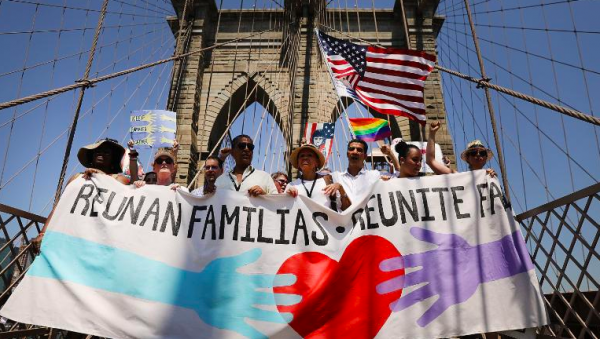
6 Facts We Learned Working with Migrants and Refugees Around the World: Facts 1 and 2 Working with migrants and refugees is our business at Catholic Relief Services. CRS was founded in 1943 to assist refugees during World War II. Seventy-five years later, we are still coming to the aid of people escaping conflict, violence and natural disasters. While CRS doesn’t resettle refugees in the United States (these programs are run by the Catholic Church’s Migration and Refugee Service and Catholic Charities), our rich history has taught us valuable lessons on how to best help families fleeing crisis. 1. People Do Not Want to Leave Their Homes. An astonishing 1 in 110 people have been forced to flee their home (UNHCR). They only do that when they feel they have no other choice. Most people the world over give the same reason for starting their perilous journey across borders -- violence. That’s true for millions fleeing conflict in South Sudan and for tens of thousands fleeing gang violence in Central America. Most often, people flee to other parts within their country first. Only when they see no other option do people leave their country. Rick Jones is the agency's Youth and Migration Advisor in Latin America and the Caribbean. He also specializes in issues affecting Central American migration, including gang violence, poverty, and internal displacement. See his contact information at the bottom. 2. Don’t Separate Families. Based on extensive experience with refugees and migrants, CRS agrees with the criticism of the former U.S. policy of separating children from their parents. Decades of research shows that this is so traumatic for children it can lead to long-term psychological, and even physical damage. Shannon Senefeld is a global development expert at CRS. She has published and presented extensively on international children’s issues and the importance of strengthened family care for children’s development. See her contact information at the bottom. The experts at Catholic Relief Services are available to help with any media coverage or insight that is required regarding this ongoing news story and issue that is continuing in America. Simply click on any of their icons to arrange a time for an interview. Source:

Dear President Trump, In response to the numerous school shootings, Please re-consider your agenda and work to make the educational system safe for our children. Consider allocating funding to allow for the following: *The placement of police sub-stations in middle and high schools that are in at-risk neighborhoods and studying the effect of police presence on the culture of safety. *The creation of school-based mental health clinics run by nurse practitioners and social workers. This will allow at risk and troubled youth to have immediate access to interventions and services. *The ability for community-based researchers to work pro-actively with schools to creatively solve the issue at the local level. Pass federal legislation addressing the minor consent to treat laws for mental health issues. In Washington State, where I live and practice, minors over the age of 13 can consent to mental health treatment without parental consent. The goal isn’t to take the healthcare decision making authority away from parents, the goal is to get youth the help they need before something tragic happens. Appoint a special task force or committee consisting of educators, healthcare providers, lawyers, social workers, and anyone else who directly works with at risk youth. I believe that the solutions will come from these committees. Submitted to POTUS May 19, 2018 Source:


Second Annual SUU Child Behavioral Health Conference
The second annual Southern Utah University Child Behavioral Health Conference is happening this week, May 17-18, 2018. Representing expertise across the field of child and pediatric behavioral health, the invited presenters include Gregory Snyder, Lindsey Ricciardi, Julia Thompson, and Kelsie Hendrickson. Dr. Michelle Grimes, Assistant Professor of Child Clinical Psychology at Southern Utah University and founder of the Child Behavioral Health Conference, wanted to create an opportunity for the professional community by bringing a continuing education event focused on evidence-based behavioral healthcare to southern Utah. “So often, behavioral health providers in rural areas have to invest a significant amount of time and financial resources travelling to conferences to receive continuing education. This ongoing training is necessary to stay current in the field, and also to maintain professional licensure. My goal for the SUU Child Behavioral Health Conference is to match the high quality you would find at a national event, while increasing the accessibility to healthcare providers in our community and surrounding areas.” Last year’s conference focused on common behavioral health disorders of childhood and adolescence. This year the conference will include a variety of topics relevant to adolescents, children, and parenting; broadly focusing on addressing complex cases in an outpatient setting. “We are focusing on complex clinical cases and added a seminar on ethical issues that arise when working with youth. The seminar will emphasize ethics related to adolescents and risk behavior, eating disorders, and trauma.” The conference welcomes all healthcare professionals from psychologists and pediatricians to social workers and treatment center staff. “We have attendees from Idaho, Utah, and Nevada and various behavioral health and medical disciplines are represented. This also serves as a professional development opportunity for students; we are pleased that students from SUU and other universities throughout Utah have registered. We hope to continue to build a regional interdisciplinary focus. We look forward to holding this event annually.” Dr. Grimes is a licensed psychologist with specialized training in clinical child psychology. Her clinical and research interests focus on behavior disorders of childhood, sibling conflict, and pediatric sleep disorders. She is familiar with the media and available for an interview. Simply visit her profile. Source:


The Struggle for DREAMers in Utah - Explore DACA
On Tuesday, April 24, 2018, a third federal judge ruled against the Trump administration’s push to end Deferred Action for Childhood Arrivals (DACA). U.S. District Judge John Bates called the administration’s attempts to end DACA “arbitrary,” “virtually unexplained,” and “unlawful.” He put a hold on the decision, allowing the Department of Homeland Security 90 days to give better reasoning to cancel the program or it would be fully reinstated. Dr. Stephen Allen, associate provost of International Affairs at Southern Utah University and expert on American immigration policy, sees the struggle for “DREAMers” in Utah and across the nation. “In March, the Supreme Court refused to hear a challenge to DACA,” said Dr. Allen. “That decision, along with the April 24 federal court ruling, has taken pressure off of Congress to act on the issue. The result is a great deal of uncertainty for DREAMers, families, and employers.” Originally enacted by President Obama, DACA is an immigration policy that shields undocumented immigrants that were brought to the United States as children. The youth apply to obtain a renewable two-year deferred action from deportation and to be eligible for a work permit. DACA has helped hundreds of thousands obtain driver’s licenses, social security numbers and attend school. Steps to eliminate DACA were initiated by the Trump administration in late 2017, but previous federal rulings have stalled the efforts. “Rescinding DACA would have a tremendous impact on Utah,” said Dr. Allen. “The program has allowed nearly 10,000 young people in Utah to come forward and pass background checks and live legally in the United States. There is strong evidence that the majority of these young people are productive citizens who are gainfully employed and/or enrolled in school. According to the non-profit and non-partisan organization Interfaith Worker Justice (IWJ), ending DACA would cost Utah alone nearly $476.5 million in annual GDP losses.” Dr. Allen believes that in general, Utahan’s have a strong commitment to keeping families together. “The United States is the only country most DREAMers have known. Deporting nearly 700,000 individuals would result in separation from families and losing the ability to legally work in the United States.” Dr. Allen specializes in international enrollment and admissions, developing global partnerships, and international education. He is familiar with the media and available for an interview. Source:


Are You Sure More Than Half of LGBTQ Youth Have an Eating Disorder? Because Science Says Otherwise
Each day, thousands of lesbian, gay, bisexual, transgender and queer (LGBTQ) youth wake up to a world filled with homonegativity, violence, gender shaming, bathroom bills that attempt to legislate the most private daily experiences, and family and peer rejection. Research has consistently found violent experiences to be prevalent for this group of young people. For example, gay and lesbian teenagers are respectively eight and 10 times more likely to be victimized at school than their heterosexual peers (D’Augelli), and national meta-studies find similar results (Friedman et al). It’s true that these victimization experiences have resulted in some pretty negative outcomes for LGBTQ young people over time. Studies have estimated that LGBTQ youth are three to four times more likely to report an internalizing disorder (e.g., anxiety, depression), and two to five times more likely to report externalizing disorders (e.g., substance use) than their heterosexual and cisgender peers. Nationally representative studies, like Monitoring the Future and the Youth Risk Behavior Survey, also find similar disparities, with higher rates of substance use, depression and suicidality among nearly all sexual and gender minority groups tracked. With this knowledge in mind, I was shocked to wake up and read headlines purporting “more than half of LGBTQ youth have an eating disorder” on articles published by Teen Vogue and the Huffington Post. At first, I was saddened to think this statement could be true -- that is, until the reality of how ostentatious this claim was set in. More at https://dworakpeck.usc.edu/news/are-you-sure-more-half-of-lgbtq-youth-have-eating-disorder-because-science-says-otherwise Source:

“After insurmountable evidence against the use of this approach to converting one of people’s most core identities, we cannot forget that some in the world would still call this painful and potentially life-threatening experience ‘therapy.’” — Assistant Professor Jeremy Goldbach, director of the USC LGBT Health Equity Initiative Source:

Eastern University Experts Available to Discuss Pope's Proposed Reforms to Catholic Youth Ministries
Eastern University's Duffy Robbins is available to comment on Pope Francis' recent calls to reform Salesian youth ministries. Source: