Experts Matter. Find Yours.
Connect for media, speaking, professional opportunities & more.

Seventy There it is. Just sitting there. A number that tends to land somewhere between “good for you” and “are you feeling alright?” And before you answer that, let me tell you I am more than alright. I am thriving. Loudly. Definitely with dancing. And with just enough attitude to make a few people slightly uncomfortable, which I have decided is a sign of a life extremely well lived. But first, let me tell you about the plan. ⁂ The Plan Was Magnificent. It Lasted Eleven Minutes The plan was to retire gracefully. Ease into a slower pace. Read more. Maybe garden. Drink better wine. Finally, work through all those documentaries piling up in my queue with the quiet confidence of someone who had absolutely earned the right to nothing. Here is what actually happened. The documentaries stayed in the queue, and the garden did not get planted. I did, however, read one book. Just one. But it turned out to be exactly the right one. David Brooks wrote The Second Mountain: The Quest for a Moral Life, and I picked it up the way you pick up something that does not look urgent, only to find you cannot put it down. Brooks argues that we spend the first part of our lives climbing what he calls the first mountain: the career, the credentials, the identity, the whole elaborate structure of proving ourselves. And then something happens. You reach the top, or you fall off, or the mountain turns out to be considerably smaller than it looked from the bottom. Either way, you end up in a valley, slightly winded, wondering what comes next. And that, Brooks says, is where real life begins. The second mountain. The one you climb not for yourself but for something greater. The one where the question shifts from “what do I want?” to “what does the world need from me?” I read that while sitting in my living room and thought: that is the whole story, right there. There is a phrase I use throughout this blog: try to keep up. I say it because seventy feels faster and fuller than I ever expected, and because it is an invitation, not a taunt. You still have tread on your tires. I mean that warmly. Try to keep up. ⁂ The Valley Was Not Optional My valley arrived without warning or invitation: I lost my job unexpectedly. No graceful wind-down. No farewell luncheon with a tasteful card, no parade! Just the particular silence that follows the end of something you had not quite finished. Nobody glides gracefully from mountain one to mountain two, no matter how it looks on social media. What nobody tells you about retirement, voluntary or otherwise, is that stopping is quite difficult. Not the logistics. The identity. You spend thirty years answering the question “What do you do?” and then one day no one asks anymore. We carefully plan the money. We almost never plan for the morning when your calendar is empty, your inbox is quiet, and no one expects you anywhere. That morning is its own kind of reckoning. Brooks calls this the valley experience, and he is right that it is unavoidable. It is where you shed the old self so a new one can emerge. There are no shortcuts. I tried several. But then I hired a coach. Not just any coach. A thought leadership coach, which sounds very impressive but turns out to involve a great deal of uncomfortable self-reflection and at least one conversation in which the coach tells you to write a blog. “Do your research,” he said. “Find your niche. Share what you know. And honestly, you should probably write a book.” (Thank you, Peter!) I nodded. I smiled. I thanked him warmly. Then I went home, sat down, and had a completely private, entirely dignified meltdown that I will describe only as spirited. Action absorbs anxiety, so once the spirited moment passed, I got to work. Try to keep up. ⁂ The Second Mountain Has a Name. It Is Retire with Equity I started writing. Article after article, something unexpected happened: I found my voice. It turns out my voice is part educator, part agitator, and part hilarious, where kitchen-table logic meets a spreadsheet. I began calling her Aunt Equity, and she has been absolutely delightful company ever since. A word on naming your alter ego after a financial product: no one recommends it. No self-help book has a chapter that says ‘step three, create a persona rooted in home equity solutions and give her a sassy name.’ And yet Aunt Equity arrived fully formed, with opinions, a logo, and an inexplicable amount of charisma. She is part brand, part character, and entirely my fault. I am keeping her. For Brooks, the second mountain is a calling, not a career move. For me, it is a community. The Canadian retirement community. The people who built this country, paid into it, raised children in it, and are now quietly panicking about whether they have enough to keep going. That community. They are my people, and this is my mountain and I have built my company, Retire with Equity to support it. And I will be honest: this mountain is considerably steeper and way more fun. Try to keep up. ⁂ What Is Your Second Mountain? Here is where this stops being about me and starts being about you. The second mountain is not one thing. It is not a prescription. It is not reserved for people who write blogs, build platforms, or have particularly spirited meltdowns. It is waiting for you, wherever you are, whatever you are carrying, whether you are fifty or seventy or somewhere in between and still not entirely sure you are allowed to want something new. The second mountain looks different for everyone, and that is entirely the point. Also, a feature, not a bug. For some people, it is family. Really showing up for grandchildren in ways that a demanding career never allowed. Being present, not just present-ish. Taking the grandkids to school on Tuesdays because Tuesday is your day now and the best day of the week. Becoming the person in the family who holds things together, not because you have to, but because you finally have the time and the wisdom to do it right. For others, it is community. A neighbourhood organization, a cause that has been pulling at you for years, or a faith community that needs exactly the skills you spent a career building. Brooks tells the story of a woman who was moving out of a rough Chicago neighbourhood, looked out the window, saw little girls playing with broken bottles in an empty lot, turned to her husband, and said: we are not leaving. She ended up running a major community organization. She did not set out to build a movement. She just decided not to look away. And then there are the callings that have been patiently waiting in the back of a drawer since approximately 1987. This is my personal favourite category because it is full of people who surprise themselves completely. Andrea, whom I see every week at the gym, spent her late fifties doing something most people her age were emphatically not doing: she went to law school. In London, England. A yearning carried for decades, quietly set aside while she built a career and raised a family. Then one day she stopped being polite about it and went. She is one of the most alive people I know. David discovered painting. Not dabbling. Painting. He picked up a brush at a class a friend dragged him to, and something clicked open that had apparently been waiting for that exact moment. He paints almost every day now, and the look on his face when he talks about it is that of someone who found something he did not know he had lost. If you are sitting there thinking you have left it too long, or that your moment has passed, that is a you problem, and I say that with complete affection. The door is still open. Walk through it. Brooks calls it the place where your deep gladness meets a deep hunger in the world. I think of it as the morning when you wake up and you are not just filling time. You are fulfilling a purpose. Try to keep up. ⁂ What Actually Works (And What Dottie Has to Do With It) I have a ten-pound dog named Dottie. She is the canine embodiment of purposeful living and, frankly, an unsolicited life coach. Full speed, tail up, no apologies. I take notes. The retirements that work, the ones people describe as genuinely meaningful rather than merely solvent, share a few things in common. They move. Consistently, enjoyably, sustainably. The body is not a liability to be managed in retirement. It is an asset, and it responds remarkably well to being treated like one. For me, part of that meant I needed a break from drinking, and the origin story is not glamorous: I woke up one morning and could not remember how the movie I watched the night before ended. That was the moment. What began as a one-month experiment quietly became almost two years. I sleep better, think more clearly, and no longer find myself wide awake at 2 am doing mental arithmetic about nothing. I feel sharper and more energized at seventy than I did a decade ago. The fifties, it turns out, were not the peak. They were the warm-up act. And for the record, I still cannot remember how that movie ended some mornings. Some things are beyond even sobriety. Physical vitality expands your options. Financial clarity reduces your dread. Purpose gives both of those things a reason to matter. Tend to all three. Not perfectly. Just intentionally. Dottie, for what it is worth, nails all three before anyone else in the house has had coffee. If she is the bar, she is not wrong to set it there. Try to keep up. ⁂ A Confession. Then a Celebration Almost five years into this accidental, exhilarating, occasionally terrifying reinvention, I still do not have it entirely figured out. The documentaries remain unwatched. I still cannot tell you how they end. What I do have is this: evidence, personal and otherwise, that the second mountain is real and better. Not easier. Better. Because when you are climbing toward something that matters beyond your own resume, the climb itself changes. The effort feels different. The setbacks feel survivable. And the view, when you get there, means something. You do not need to have it figured out before you start. You just need to take a step. Then another. Then hire a coach, have your spirited moment, and remember: action absorbs anxiety. Say the number out loud, whatever it is. Forty, fifty, sixty, seventy. Say it. Then decide what it means, because that part is entirely up to you. The first mountain shows you what you are capable of. The second one shows you who you actually are. If you have not read David Brooks’ The Second Mountain, put it at the top of the list. The documentaries can wait. I have confirmed this from personal experience. The Friday night of my birthday week, there was an epic dance party at a local brewery, organized by my wife Bonnie, the woman I met on a dance floor thirty-three years ago and have been dancing with ever since. Bonnie deserves more than a shout-out here. She deserves a medal, a monument, and honestly, serious consideration for sainthood. For over three decades, she has lived with my schemes, my pivots, and my absolute certainty that each new thing is the thing. She has never once wavered. Bonnie is the reason any of this works, and the reason that dance floor was full of people who love me. I am, by any objective measure, an extremely lucky person. I am also aware that she will read this, so I want to be clear: yes, I mean every word, and no, this does not get me out of whatever I am currently scheming. The glow of that party remains, and I know I have truly arrived because there was even a party crasher. I named her Mona. Mona could not resist the pull of that much joy and some absolutely kickin’ eighties music. The story of Mona, the early thirties party crasher, is being reserved for another time, but know this: if your birthday celebration attracts a stranger named Mona, you are doing seventy exactly right. The second mountain, it turns out, has a very good playlist. And if you are worried you are not quite ready for it, or that the moment may have passed, I want to leave you with this: you still have tread on your tires. So does everyone in this community. And if you cannot keep up, at least come dance. You might surprise yourself. Just ask Mona. I am seventy. I am on my second mountain. Come find yours. Try to keep up. ⁂ Sue Don't Retire...Re-Wire! My Book is Now Available for Pre-Order I hope you will consider pre-ordering a copy of Your Retirement Reset for you, a friend or loved one. It's available September 8, 2026 - You can now order on the ECW Press site here. And if you love supporting Canadian booksellers, please also check with your local independent bookstore. Most can easily order it for you.


Approximately 4,400 degrees conferred during Georgia Southern’s 2026 Spring Commencement ceremonies
Last week, approximately 4,400 graduates from Georgia Southern University’s Statesboro, Armstrong, Liberty and Swainsboro campuses received associate, baccalaureate, masters, specialist and doctoral degrees in five Spring 2026 Commencement ceremonies. Georgia Southern President Kyle Marrero welcomed the graduates and their guests to the ceremonies, held at the Allen E. Paulson Stadium and Jack and Ruth Ann Hill Convocation Center in Statesboro, Enmarket Arena in Savannah and East Georgia Campus in Swainsboro on May 11, 13 and 14. “To our graduates, congratulations,” Marrero welcomed the crowds. “Today we recognize and honor your hard work, perseverance and personal growth throughout your academic journey. The road to this moment has not been without its challenges, and your presence here is a reflection of your dedication, resilience and strength. You have every reason to be proud. This commencement is a meaningful milestone not only for each of you personally, but for the entire Georgia Southern community.” The Commencement speakers included: Bob Somers (’83) Nick Westbrook (’20) Berry Aldridge (’15) Kim Hartsock (’20, ’21) Rep. Butch Parrish Somers opened the ceremonies at Paulson Stadium with words of encouragement for the new graduates. “While this day marks your formal education coming to a close, the truth is your education and life is just now beginning,” he said. “When I look out at you, I don’t look at graduates. I see future leaders. And our future is bright because of what you’re going to bring to this world. “Georgia Southern gave me structure, opportunity and people who believed in me. One of my proudest moments was graduating from this incredible institution. Find your north star. What kind of person are you? What are your values? Be genuine with yourself and others. If you’re authentic, people will trust you and they will follow you. Be comfortable being uncomfortable. Real leadership requires vulnerability.” Westbrook relayed the importance of service and character alongside leadership. “You will have the opportunity to influence people, organizations, companies and industries,” he said. “Use that influence for good. Your opportunity will not only be for a better job, more income or a higher position. The highest calling of your opportunity will be what you can do for the people who are affected by your influence. In a world that is becoming increasingly transactional, be the leader that goes the extra mile to make your world a little more relational, more kind, more human.” Aldridge enthusiastically challenged graduates to consistently recalibrate the way they think, and to consciously surround themselves with support. “Class of 2026, you’ve accomplished something incredible, but you’ve done it during a very strange and chaotic time in history,” he said. “I’m not breaking any news when I say that we are standing on the edge of a massive change to our jobs, our technology, our society. “I don’t know how AI is going to change the way we work or influence the job market. I challenge you to be skeptical even in your own most passionately held beliefs. That’s the only way to keep ourselves in check, and it’s the only way to keep ourselves growing. Nurture three types of relationships — one who lifts you up, another who tells you the truth, and one who will always show up — in order to succeed, he continued. And then be that person for others. Hartsock reflected on the generational impact of earning a degree. “For some of you, this is not just a personal achievement, it’s a historic one,” she shared. “You may be the first in your family to earn a college degree, and that accomplishment carries special significance. You are changing the trajectory of your family and setting an example for generations to come.” She asked them to be intentional about who they learn from. “Seek out people who can teach you things that books never will,” she said. “It’s important to look for leaders whose lives are marked not only by achievement, but also by joy and purpose. “Invest in this university. Join the alumni association. Help recruit future Eagles. Create a scholarship. Create opportunities for students to learn from you and work with you. Stay involved,” she said. “You never know, 25 years from now, you might be standing right here where I am. Congratulations, class of 2026 and Hail Southern!” In the closing ceremony in Swainsboro, Parrish encouraged graduates to continue learning. “Today is by no means an end,” he said. “It’s just the beginning. Your education has prepared you for what lies ahead. Your education allows you to create your own path forward. You have a unique opportunity to define your own path. You don’t have to follow anymore. Education is like insurance for whatever you’ll be facing in the future. “Education comes in many forms. There’s formal and informal, traditional, nontraditional and learned education, just to name a few. So, I encourage you to pursue a career in something that you really have a passion for and something that you really want to do. Whatever you decide to do is up to you, and your future is bright and it’s unlimited.” Video and Photo Links Spring 2026 Commencement ceremony 9 a.m. video on May 11 in Statesboro Spring 2026 Commencement ceremony 6 p.m. video on May 11 in Statesboro Spring 2026 Commencement ceremony video on May 13 in Savannah Spring 2026 Commencement ceremony video on May 14 in Statesboro Spring 2026 Commencement photos here Credit: Courtesy of Georgia Southern University Georgia Southern University, a public Carnegie Doctoral/R2 with a Carnegie Community Engagement classification, offers approximately 149 different degree programs serving nearly 31,600 students through 11 colleges on four campuses in Savannah, Hinesville, Statesboro, Swainsboro and online instruction. Founded in 1906, Georgia Southern is a leader in higher education in southeast Georgia with expert faculty and a focus on public impact research and engaging learning opportunities through knowledge and know-how that prepare our students to soar beyond and take ownership of their lives, careers and communities. Visit GeorgiaSouthern.edu.


Canada’s Retirement Problem Is Not “Boomer Luxury Communism”
A recent Washington Post column by Pulitzer Prize-winner George F. Will caught my attention. A prominent American conservative warns about a demographic apocalypse. Normal Monday. His argument: an aging population and a politically powerful senior cohort are driving unsustainable government spending, leaving younger generations to foot the bill. He even has a name for it: “Boomer Luxury Communism.” (Does George Will need a Snickers bar?) It made me wonder: are the same forces reshaping retirement here in Canada? I’ve heard the generational accusations. Boomers took the good pensions. Boomers drove up housing. Boomers left the mess. Boomers won’t move and sell me their house. But here’s the thing. Boomers don’t have a case of “Pierre don’t care.” Most of them are quietly terrified. After 25 years in financial services and a decade sitting across kitchen tables from Canadians over 55, I think the story is a lot more complicated than that. According to Statistics Canada data, nearly one in five Canadians (19.5%) is now aged 65 or older, representing more than eight million people nationwide, signalling significant growth in the demographic. Retirement itself has also changed dramatically. Fewer Canadians have access to defined benefit pensions. Costs are rising, from groceries to housing to healthcare. And most people want to remain in their homes as they age. The result is straightforward: retirement is lasting longer, costing more, and relying more heavily on individuals than ever before. That much we share with the United States. But the Canadian reality is more complicated. Canada’s Seniors Are Not Living the Way Many People Assume Where the comparison begins to break down is in how we interpret what’s happening. The idea that Canadian seniors are broadly living comfortably at the expense of younger generations simply doesn’t match what I see in practice. In fact, many older Canadians are experiencing something quite different: Financial uncertainty. Despite having significant assets. On paper, many retirees look secure. They may own their home outright. They may have some savings and receive income from programs like CPP and OAS. But much of that wealth is tied up in housing. Families led by someone aged 65 or older now have a median net worth exceeding $1.1 million, the highest of any age group. (Source: Statistics Canada, Survey of Financial Security) Yet the same data also reveals something important: The value of the principal residence for many seniors far exceeds their retirement savings. Many Canadians are increasingly finding themselves asset-rich on paper but cash-flow constrained in practice. The Rise of FORO: Fear of Running Out When you look more closely at the financial picture for many retirees, income streams are often modest and heavily exposed to inflationary pressures. Longevity adds another layer of uncertainty: A Canadian reaching age 65 today can expect to live another 20 years on average. Longevity is, of course, a triumph of modern society, although financially speaking, it has a way of extending the spreadsheet. Which leads to a question I hear repeatedly around the kitchen table: “Will I have enough money to retire?” This concern is so common that I’ve written extensively about it as FORO: "Fear of Running Out." It shows up in everyday decisions. Let’s call balls and strikes: FORO is real, and left unchecked, FORO thinking gets calcified into a permanent crouch. It’s cautious, it’s understandable — and it can quietly cost you your retirement. Worse than an ill-timed "reply all" to a company-wide email. • People delay travel • They hesitate to help their family. • They postpone home repairs • They underspend, even when they may not need to. I’ve met people who won’t replace a 20-year-old furnace because they’re saving money for an emergency. The furnace failing IS the emergency. This is not reckless consumption. It’s cautious financial restraint. A recent Healthcare of Ontario Pension Plan Retirement survey found that nearly half of Canadians approaching retirement worry about outliving their savings. Other research from Fidelity Canada shows that many retirees spend less than they comfortably could because they fear future financial shocks or healthcare costs. This anxiety matters because retirement is not just a math problem. It is also a confidence problem. This Isn’t Boomer Excess. It’s a System That Shifted What’s happening in Canada is not primarily a story of overconsumption by retirees. It is the result of a long-term structural shift. Canadians are living longer than ever. In fact, the number of Canadians over age 85 - already one of the country’s fastest-growing demographic groups, is projected to nearly triple over the next 25 years. (Source: National Institute on Aging) Over the past several decades, pensions have disappeared. Employers steadily moved away from guaranteed pensions while individuals assumed far greater responsibility for funding their own retirement years. Defined benefit pension coverage has declined significantly in the private sector, particularly among younger workers, leaving more Canadians to manage retirement risk on their own. The CD Howe Institute has written extensively on this topic, calling for pension reform. At the same time, housing became the country’s dominant store of wealth. For many Canadians, rising home values created the impression of growing financial security. But the current housing environment is far more complicated. Now, real estate markets have become less liquid. Some regions are now seeing much softer housing prices after years of extraordinary growth. Cue the song, "Those were the days, my friend, we thought they'd never end." The result is a retirement system increasingly dependent on housing wealth, whether policymakers openly acknowledge it or not. Government is beginning to feel the financial pinch as well. A recent report from the C.D. Howe Institute estimated that demographic aging alone could create more than $2 trillion in long-term fiscal pressure for provincial governments, driven largely by healthcare and age-related spending. In the mid-1970s, there were nearly seven working-age Canadians for every retiree (Source: Statistics Canada). Today, that ratio has fallen to closer to three-to-one. It's a profound demographic shift that is placing growing pressure on labour markets, healthcare systems, and public finances. As retirements accelerate, fewer younger workers are available to replace them, reshaping the country’s economic and fiscal balance. Even high levels of immigration are unlikely to fully offset Canada’s aging challenge over the long term. These pressures are real. But the Canadian story is still more complicated than the increasingly combative generational narratives emerging in the United States. Retirement Became a DIY Project Over time, we slowly moved away from a system that delivered predictable retirement income. Now we ask individuals to assemble their own retirement strategy from scratch. Choose your own adventure: except the stakes are your retirement, and there’s no going back to page one. That shift created flexibility but also risk. And today, that risk is showing up as uncertainty. And while it's tempting to frame this as a generational issue, the more meaningful divide in Canada increasingly looks like this: • homeowners versus non-homeowners • those with pensions versus those without • those with access to advice versus those navigating alone Looking at the issue through this lens helps us better understand how we arrived at this point, and why it should serve as a wake-up call for consumers, policymakers, and the financial industry. Still not convinced? Look at this data from the Statistics Canada Net Worth Report: Near-retirement households with both a workplace pension and homeownership had a median net worth exceeding $1.4 million. Remove those two structural advantages, however, and the financial picture changes dramatically: renters without pensions had a median wealth of less than $12,000. Let me stop and let this one land. Pause, breathe, and read on. The wealth gap, when you look at homeownership and pensions, is staggering. It reveals how profoundly retirement security in Canada is shaped not only by age but also by structural access to housing and pension systems. Two Canadians of the same age can now face entirely different retirement realities depending on just a few foundational variables. That’s not a generational conflict. It’s a serious design problem — a bug, not a feature. The Accumulation Paradox Here is another gap that rarely gets discussed. Canada has done a reasonably good job of helping people accumulate assets. BUT We have done a much poorer job helping them convert those assets into sustainable income. This is especially true when it comes to housing. Research from the National Institute on Ageing and CMHC consistently shows that the overwhelming majority of older Canadians want to age in place rather than downsize or move into institutional care. But Canada’s retirement system increasingly depends on housing wealth, even as many retirees remain reluctant to use it strategically. For many Canadians, home equity is their single largest financial resource. Yet, culturally and psychologically, it is often treated as something to preserve rather than deploy. The result is what I call the Asset Accumulation Paradox: People can be asset-rich and cash-flow constrained at the same time, a perfect example of 2 things being true at the same time. That disconnect sits at the heart of much of the retirement anxiety we see today. Where Canada Stands Compared to the United States In some important ways, Canada is better positioned than the United States. The Canada Pension Plan is actuarially reviewed and designed to remain sustainable over the long term. (Source: Office of the Chief Actuary). And according to International Monetary Fund data, Canada’s public debt burden also remains materially lower than that of the United States as a share of GDP. But that does not mean we can afford complacency. Because beneath the surface, there is a growing gap between what Canadians have and what they feel confident using. If we want to improve retirement outcomes, we need to focus less on assigning blame and more on improving design. That means better tools, better guidance, and more open conversations, especially about how to turn assets into income. The warnings coming out of the United States are worth paying attention to. But Canada’s challenge is different. The risk is not that seniors are taking too much.It’s that too many Canadians are living with uncertainty despite having more options than they realize. The challenge now is not simply helping Canadians accumulate wealth. It is helping them use that wealth with greater confidence, flexibility, and security. So, let’s call this what it is. George Will is not entirely wrong. The numbers are real, the fiscal pressure is real, and yes, someone is going to have to deal with it. But the story he’s telling is a blunt instrument in a situation that requires a scalpel. Canada’s retirement challenge isn’t Boomer Luxury Communism. It’s more like Boomer Luxury Paralysis: sitting on a million-dollar asset, terrified to touch it, underspending in the present to guard against a future that may never arrive. FORO doesn’t discriminate by generation. It just quietly rearranges your life until you’re postponing the trip, skipping the furnace repair, and waiting for permission to enjoy the retirement you actually saved for. The good news? The options are better than most people think. The conversation isn’t about giving anything up. It’s about using what you already have. Sue Don't Retire...ReWire! My Book is Now Available for Pre-Order I hope you will consider pre-ordering a copy of Your Retirement Reset for you, a friend or loved one. It's available September 8, 2026 - You can now order on the ECW Press site here. And if you love supporting Canadian booksellers, please also check with your local independent bookstore. Most can easily order it for you.
New clues about how earthquakes work
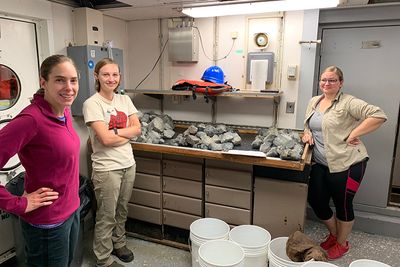
University of Delaware researcher Jessica Warren helped uncover evidence that sections of fast-moving underwater faults may act like “brakes,” controlling the occurrence of big earthquake events on transform faults. Warren can discuss what the findings, released today in the journal Science, mean for earthquake science and future modeling. Situated along a stretch of the equator in the Pacific Ocean, between Indonesia and Central America, the Gofar transform fault is one of the fastest moving faults on Earth — cruising along the seafloor at about 140 millimeters per year. This is over four times faster than the San Andreas fault is moving in California. “Geologically speaking, it's like looking at a moving Acela train next to a SEPTA train on the tracks,” said Warren, a professor of earth sciences at UD. Researchers know that the Gofar transform fault line has experienced a magnitude 6 earthquake about every five to six years over the last three decades. It’s been studied extensively, as these earthquakes occur at the same places along the fault and at the same intensity, time after time. What’s been unknown, until now, is why parts of this fault experience many small microshocks leading up to a main earthquake rupture, then shut down, while other parts of the fault are quiet before the big event and then experience many aftershocks. Now, a multi-institutional team of researchers, including UD’s Warren, reports that sections of the fault without large magnitude earthquakes actually act like brakes in a fast-moving car, controlling the occurrence of big earthquake events on transform faults. This finding is in contrast with currently accepted models of earthquake behavior. The team includes researchers from UD, Indiana University, Woods Hole Oceanographic Institution, Scripps Institution of Oceanography at UC San Diego, the U.S. Geological Survey, Boston College, Western Washington University, the University of New Hampshire and McGill University. In the study, the researchers analyzed two zones along the Gofar transform fault they say have stopped about 15 magnitude 6 earthquakes over the past 30 years. The study findings will inform globally what’s known about how faults and earthquakes behave, at sea and on land. Warren's contributions include leading the initial field research at sea in 2019 on the R/V Atlantis and interpreting results throughout the project, with a focus on connecting the earthquake observations to how rocks in the fault fracture and distort during an earthquake. Why were you studying the Gofar transform fault, in particular? Warren: Geoscientists want to understand faults and earthquakes because they are obviously a big hazard on land. The rocks that make up the seafloor are simpler than those found on land, providing a more controlled space to study earthquakes, despite the challenges of doing research underwater. If you want to understand how faults build up stress and then release it (and where), the Gofar transform fault is amazing, because it experiences earthquakes at reliable intervals of five to six years. This is a lot more regular than any other fault. In 2019, I led a research cruise on the R/V Atlantis that deployed 51 seismometers two miles down on the seafloor to detect these small events. We were able to compare the results of our measurements from 2019 to 2020 to an experiment conducted by my colleague Jeff McGuire on the same fault in 2008. The similarities in the two datasets brought us to the realization that fault sections without large magnitude earthquakes control the overall occurrence of big events on transform faults. When we had that observation in 2008, that might have been a one-off, but getting back this new data and seeing such similar behavior was a new insight into what's happening in the fault. How does that tell you about how earthquakes occur on land? Warren: On land, people spend a lot of time looking at how rainwater and groundwater move in a fault system, and how that influences the behavior of the fault. In the oceans, we have an unlimited amount of water. Once the rock cracks, the water is going to get in there. Being able to look at how a fault changes through the earthquake cycle — which we've now measured most of on this one fault — can help us understand what is universal about how faults work, and how rock friction works. And one of the big players is water. That's why the rock samples that my lab works on matter. Fault structure is another thing that we've been trying to understand. We know from on land that some parts of a fault are linear, while other parts have lots of strands and maybe contain more fractures and that, if you start putting water in the picture, this can limit or change how water moves into the system. Now, we have these very high-resolution maps of the seafloor, where we can see, for the first time, where the fault itself is. One of the next things we want to understand is how fluid gets into the fault, and then how friction in a fault changes when water is there. Why is this important? Warren: The next step is to translate the understanding that we've gained from this specific fault to understanding how faults behave in general. This is the longer path to really understanding earthquake hazards. It's not going to change our hazard models tomorrow, but hopefully it will in the decades to come. To reach Warren directly and arrange an interview, visit her profile and click on the "contact" button. Interested reporters can also email MediaRelations@udel.edu.



Expert Insight: The Hidden Costs of Staying Neutral
Considering the number of hot-button issues and divisiveness in American culture, choosing a middle-of-the-road attitude might be seen as the best way to navigate an often volatile environment. But what about those individuals who choose neutrality as a means of staying below the radar and, thereby, avoiding the need to take any action? This is the question that Laura Wallace, assistant professor of organization and management at Emory’s Goizueta Business School, and coauthors ask in their new paper, The Preference for Attitude Neutrality. Published in the Journal of Experimental Psychology: General, the researchers explore individuals with a preference for neutrality and how their uncompromising commitment to neutral opinions, not only discourages rigorous debate but could have a deleterious impact on society. Emory Business recently caught up with Wallace to discuss her research. Emory Business: What sparked your interest in the preference for neutrality? Wallace: When we think about the problems in the world, often people point to too many extreme opinions as the source of much social ill, and, of course, they can be. But, when I thought about a lot of the issues that I cared about, like addressing climate change or gun violence, I felt that sometimes the issue was too much neutrality in the face of issues that were themselves pretty extreme. When I talk about this work, people can often picture someone who seems like a “Pref Neutral,” as we have affectionately nick-named them, that is someone who in the face of information suggesting that there is an extreme problem is not moved to address the issue. I could think of people in my life who had these reactions, and I was interested in understanding more about them. Emory Business: How did you identify these individuals? Wallace: We developed a scale to assess the extent to which people view neutrality as truer, more socially desirable, and more moral. For example, we ask people how much they agree with items like, “If you have all the facts about a topic, your opinion will generally end up somewhere neutral” and “There is something noble about remaining in the middle about controversial topics.” The more someone agrees with these items, the more we would say they have a preference for neutrality. Emory Business: How does this study fit in with your larger body of work? Wallace: I generally think of my program of research as studying the “psychology of social change.” Within that broad category, I study 1) how to change minds and build trust and 2) how to address societal disadvantage. I view this work as fitting in the first bucket about how we change people’s minds. What interests me about people who are high in the preference for neutrality is the fact that they seem to NOT change their minds in the face of extreme information suggesting that they should. These individuals represent a significant barrier to our ability to address pressing issues, so I view this work as very much tied into the overarching goal of my research program to understand social change (or the lack thereof). Laura Wallace is an assistant professor of organization and management at Emory University’s Goizueta Business School. Wallace studies how to build trust with implications for addressing societal disadvantage, changing minds, and fostering growth. View her profile Emory Business: Would you describe a preference for neutrality to be a mindset, strategy, or attitude/value? Wallace: I think of the preference for neutrality like an ideology or value system that guides people’s reactions across many issues and situations. Emory Business: Talk about the study design. It’s quite detailed and multilayered, with eight hypotheses and six different measures to account for potential bias that were then randomized to create different questionnaires given to a large pool of individuals. How did the coauthors agree on the structure? Wallace: First, I should take the opportunity to shout out Thomas Vaughan-Johnston, who led this work. He is a faculty member at Cardiff University and is just a very thoughtful, interesting researcher, and he’s great to work with. Second, there are a number of studies in the paper. For each, our research team worked together to design and interpret the studies. The paper paints a relatively negative view of Pref Neutrals. We did take measures to resist bias in our design. For instance, we didn’t just ask people how much they dislike extremists (which would have been biased towards making those with a preference for neutrality look bad), but also asked about attitudes towards neutrals (where those with a preference for neutrality may seem like “the nice people”). We are now starting research on contexts where a preference for neutrality can offer some advantages, hopefully without artificially striking a false balance. For instance, we are considering whether they can help reduce group polarization effects, especially where groups drift towards radicalism in conversation. Also, we have some preliminary data where they seem to be a bit more accurate when detecting neutral emotions and attitudes in others, which is a remarkable plus side. Basically, we think the preference for neutrality is a social concern, but we are trying to be fair-minded when considering why they think this about neutrality and when this trait is useful for the world. Emory Business: In the study, you note that preference for neutrality can be a sign of arrogance and that Pref Neutrals are uninterested in learning more or changing their stance. How is this arrogance exhibited? Wallace: I would say that they are more close-minded than arrogant and that they don’t seem to be particularly thoughtful. One way we have assessed this is by measuring their “intellectual humility,” which essentially captures how much people recognize the limits of their own perspectives and are open to changing their minds. Pref Neutrals tend to score low on intellectual humility. They also score a little low on the “need for cognition,” which captures how much people like to think. Emory Business: In one section it reads: “preference for neutrality (preference for extremity) should relate to seeing other people as moral, competent, and likeable, when those individuals have generally neutral (extreme) opinions.” Does this mean that they align with people who have their same opinion structure? Wallace: We find that people who score high on the preference for neutrality scale tend to have more favorable impressions of others who are more neutral and tend to be more persuaded by others who are labeled as holding neutral attitude positions. Emory Business: How would one identify this trait in a person, particularly, when the research shows they tend to self-censor? Wallace: In general, they are really hesitant to take stances on issues or they tend to avoid taking sides or expressing strong positions. And yes, they tend to self-censor, meaning they often avoid sharing their opinion at all. Emory Business: How does this preference for neutrality play out in a political sense? Specifically, if they are averse to extremes would they vote based on their values? Wallace: We have a lot of evidence that Pref Neutrals tend to be political centrists. We don’t have evidence for this, but I suspect that they sit out a lot of elections, and to the extent that they do vote, they favor more moderate candidates. They probably would not vote for a position or individual with an extreme view unless it was framed as neutral. This may sound like a silly, cerebral point, but I actually think it’s critical to the point we are making, as what is viewed as “extreme” in a given time is often socially determined. For example, now it would be viewed as an extreme stance to support slavery. However, in the early 1800s in the U.S., it would have been viewed as an extreme stance to oppose slavery. I imagine at the time, many Pref Neutrals were supportive of slavery as a means of being politically moderate. Emory Business: What was the most interesting result in this study for you? Wallace: We find that if you give Pref Neutrals the exact same information but label it as extreme or neutral, they are more persuaded by the exact same information when it is labeled as neutral. This results in a kind of ironic effect where they actually end up with a more extreme opinion when information has been labeled as neutral. Emory Business: Research wise, what’s next for you? Wallace: There are a few ways that we are following up on our work that I am excited about: First, we’re trying to understand more about how Pref Neutrals maintain neutral opinions in the face of extreme information. So, we are giving Pref Neutrals true, extreme facts, and then examining their thoughts to determine how they resist taking the extreme positions information would suggest that they should. Second, we thought that Pref Neutrals would be particularly likely to trivialize social issues, to say they are unimportant. We are actually finding that they rate all social issues as extremely important, which we are trying to understand more about. We suspect they might do this as a strategy to avoid taking action on social issues. If stubbed toes and human trafficking are both “extremely” important, then there are just too many issues to take action on, and so they are able to justify a lack of action. Third, we are interested in understanding what it is like to make decisions in a group with a Pref Neutral. There is a lot of evidence that groups tend to make bad decisions because people want to agree with each other. This might actually be an area where Pref Neutrals would shine – the fact that they don’t want to take a stance may force groups they are a part of to really think things through and make better decisions. This is all super preliminary, but it reflects the exciting work ahead and that there is much more to understand about these folks!



Survey says: Senior leaders are using AI, but they could use more direction
Over the years, study upon study has shown that senior leaders are slower to adapt to new technology – email, the Internet and social media – than younger employees. That’s not necessarily so with AI, according to the University of Delaware’s Saleem Mistry. Mistry, associate professor of management at UD's Alfred Lerner College of Business & Economics, recently conducted a survey of more than 200 university alumni, 75% of which had more than 16 years of professional experience. He found that senior leaders are actively adopting AI to solve their biggest challenges. However, they are doing so largely without structured support or guidance. Here are four findings from Mistry's survey that shows how AI is actually being used at the top. Senior Leaders Are Overwhelmingly Self-Taught Mistry said his most glaring finding is the gap between high AI adoption among senior leaders and the near-total absence of formal corporate support. Although a majority use these tools, they are almost entirely self-taught, which highlights visible opportunity that organizations aren’t really steering the AI conversation for leaders: • High usage. 62% of all senior leaders surveyed use AI tools "regularly" or "occasionally" in their work. • Training gap. Of those users, an overwhelming 80% report their organization provides "Never" or only "Sometimes" (mostly never) adequate training. Mistry said this shows that leaders from VP level down are using tools like ChatGPT and Copilot informally to keep up with heavy workloads, without any real organizational guidance. The stakes are high. In the survey, a vice president of legal was using AI for compliance tasks and a manager of three was using it for performance reviews, both with no formal training. “These are senior leaders handling sensitive work while essentially figuring it out on their own,” Mistry said. There is a clear ladder of AI use Leaders are not using AI randomly. There is a clear progression in how they use it, moving through three levels. • Tier 1 (The Drafters) This is the most common starting point. Leaders use AI to improve writing and communication. They draft emails, shape documents, and refine tone. As one Director of Product put it, it helps him "polish phrasing" and adjust tone and voice. • Tier 2 (The Synthesizers) At this stage, leaders use AI to manage information overload. They summarize meetings, condense documents, and pull together research so they can keep up with large volumes of input. As one leader managing a team of 200 said, "Being a leader requires attention in a variety of areas. AI helps me manage the vast amounts of information I need to consume." • Tier 3 (The Architects) Here, leaders move beyond writing and summarizing. They use AI to automate parts of their work. This includes building agents, creating custom GPTs, or designing tools that track work and performance. One leader managing 300 people said, "It will eliminate half or more of my overhead." Managers and individual contributors use AI for different reasons People managers and individual contributors (IC) are using AI for very different reasons based on their roles. • For people managers, their main challenge is scale. They are overloaded with communication and administration, so they use AI to reduce noise and keep up. They lean heavily on summarization and tone adjustment tools. • For project leads and ICs, their focus is output. They use AI to produce work faster, including drafting content, building decks, writing code, or generating ideas. This difference reflects their jobs. One group is trying to keep up, the other is trying to produce more. It also shows that AI is not a single-use tool. Its value depends on the problem it is being used to solve. This difference reflects their jobs. One group is trying to keep up, the other is trying to produce more. It also shows that AI is not a single-use tool. Its value depends on the problem it is being used to solve. Resistance to AI is mostly intentional Among the 38 percent of leaders who do not use AI, resistance is usually not based on lack of awareness. It falls into three groups: • The Ethical Objectors. Some avoid AI due to concerns about its broader impact. • The Quality Skeptics. Some do not trust the output and feel it is not reliable enough for important work. • The Blocked. Some are not allowed to use AI due to company policy. Mistry concludes that there is a clear overall pattern: Leaders are using AI in practical ways, but mostly without structured support or guidance. “If it feels like you are figuring this out as you go without much help from your organization, that is consistent with what most leaders are experiencing,” Mistry said. To connect directly with Mistry and arrange an interview, visit his profile page and click on the "connect" button. Interested reporters can also email MediaRelations@udel.edu.


Downsizing: The Biggest Retirement Myth We Keep Repeating
I have a friend who announced she was downsizing the way some people announce a move to Tuscany. Lightness. Optimism. A touch of smugness. Six months later, she called me from her condo and whispered, “Sue… I think I bought a very expensive closet with a concierge.” Welcome to downsizing, the most celebrated, most recommended, and most wildly misunderstood retirement strategy in Canada. Like most things that sound simple, it works beautifully until you look a little closer. I spent a decade in the reverse mortgage industry watching this play out. Clients would come in — smart, capable, financially savvy people — who had spent years being told their retirement plan was simple: sell the big house, buy something smaller, pocket the difference, and ride off into the sunset. Many of them were sitting across from me because that plan had not worked the way anyone promised. The advice was decades old. Their lives were not. Two Retirees. Same Strategy. Completely Different Outcomes. Let me introduce you to Carol and Robert, whose stories say everything. Carol did everything right. She sold her long-time home, bought a sleek condo, freed up some equity, and checked every box on the “responsible retirement” list. On paper, it was a perfect move. In practice, she lost her community, her routines, her doctor, and a piece of her identity. She found herself sitting in a condo surrounded by unpacked boxes, wondering how a smart financial decision could feel so much like a personal loss. Robert also did everything right, but his story unfolded differently. He sold his home, moved closer to family, bought something smaller, and banked a meaningful sum. What he gained had very little to do with the numbers. He gained connection, belonging, and a life that felt fuller, not smaller. The strategy was identical. The outcomes were not. That is the uncomfortable myth about downsizing. It is not a formula. It is a life decision disguised as a financial one. The Downsizing Math People Love to Quote For decades, downsizing earned its reputation honestly. Retirement was shorter, often fifteen to twenty years. Pensions were stable. Housing was affordable. Families lived closer together. Selling your home and buying something smaller freed up real capital and meaningfully cut expenses. It was practical, logical, and often the right call. Fast forward to today, and almost none of those conditions still apply. Retirement now runs twenty-five to thirty-five years — a span longer than most people’s careers were when this advice was invented. Defined benefit pensions have largely become a public sector privilege. In the 1970s, 90% of private-sector workers with a workplace pension had a defined-benefit plan. Today, that figure has dropped to roughly 40%, and that’s only among the shrinking share who have any pension plan at all (Canadian Centre for Policy Alternatives, 2025). Housing prices have surged far beyond income growth. Real estate now accounts for over half of household wealth in Canada. Meanwhile, according to Statistics Canada, the average Canadian at sixty-five has approximately $272,000 in retirement savings, while estimates for a comfortable retirement often exceed $1 million. That is not a gap. That is a canyon. This gap turned the family home into something it was never designed to be. Not just a place to live, but a retirement plan. And once that shift happened, we collectively made a convenient assumption: the only way to access that wealth is to sell the house. That assumption is where things begin to unravel. The four assumptions that made downsizing work are no longer as reliable as they once were. 1. Smaller homes are cheaper. In many markets, the opposite is true. Smaller properties often command higher prices per square foot, and retirees now compete with first-time buyers and investors for the same limited inventory. That charming condo may cost nearly as much as the house you just sold. 2. Selling releases meaningful capital. Transaction costs alone can consume eight to twelve percent of the home’s value. Commissions, legal fees, land transfer taxes, moving costs, repairs. What looks like a windfall on paper can shrink dramatically before you ever see the money. 3. New home costs will be lower and more predictable. Condo fees, special assessments, and rising insurance costs tend to quietly escalate. What was supposed to simplify your financial life can quietly complicate it. 4. The process is straightforward. Market timing plays a much larger role than most people realize. Selling in a soft market while buying in a strong one can erode value on both sides. Downsizing is not just a financial decision. It is a transaction with real timing risk. When all four of these assumptions weaken at once, the outcome can be very different from what was promised. And yet, despite the evidence, the advice has not changed. We still tell people to “just downsize,” as though the calendar hasn’t moved since 1987. Nostalgia is not a strategy. The Part Nobody Puts in the Spreadsheet Here is what the financial projections consistently leave out: the emotional weight of this decision is enormous, and most people dramatically underestimate it. We are not talking about a slight reluctance to pack boxes. We are talking about the deep, visceral human attachment to home. The place where you raised your kids, hosted Thanksgiving, walked the dog, and knew every creak in every floorboard. The urge to age in place is powerful, primal, and not remotely irrational. And when we dismiss it with a spreadsheet, we are not being helpful. We are being reckless. And here is the harder truth: to make the numbers actually work, people often need to move two or three hours away into smaller communities where housing is genuinely cheaper. That means leaving your neighbourhood, your friends, your church, your yoga class, your doctor of twenty years, and your very carefully curated hairdresser. (Finding a new hairdresser in a rural town? That is not a life transition. That is a medical emergency.) Re-establishing a full support network in an unfamiliar community is daunting and exhausting work for anyone at any age. It often requires the senior to resume regular driving, something many are quietly hoping to scale back. And then there is healthcare. Access to specialists, familiar family physicians, and hospital services is non-negotiable for most people over sixty-five. It does not figure neatly into a spreadsheet, but it absolutely figures into the decision. I have never once met a senior who said, “You know what, I’m really glad I had to find a new GP at 72.” The urge to stay put almost always wins. Here is something worth sitting with: every older person knows what it is like to be young, but no young person knows what it is like to be old. That asymmetry matters enormously in this conversation. A well-meaning adult child running scenarios on a laptop has never felt the specific, irreplaceable comfort of a neighbourhood they have lived in for thirty years. Really listening — not just problem-solving — can bridge that gap. Because retirement is a family affair. And the families who navigate it best are the ones where everyone feels heard before anyone pulls out a spreadsheet. The Conversation That Actually Needs to Happen Financing retirement is not a binary choice. Downsize or don’t. That framing does everyone a disservice, and spoiler alert: the senior will almost always choose not to downsize. The real question is what happens next, because “stay put and hope for the best” is not a retirement plan. It’s a wish. The more useful conversation is about how to create cash flow while staying put. And that conversation is a minefield if you are not prepared. Here is the first obstacle: suggesting any kind of loan to finance retirement is a spectacular lead balloon. These are people who spent forty years lecturing their kids to pay off their mortgages and eliminate debt. Debt is the villain in their financial story. It is a bug, not a feature. So when you walk in and suggest that borrowing against their home might be the solution, their internal switchboard immediately puts that call on permanent hold. And if you mention a reverse mortgage? The Cybertruck of mortgages. The product everyone has an opinion about and almost no one fully understands. You will get one of two responses: the “talk to the hand” or the look usually reserved for the person who reheats leftover fish in the office microwave. Is some of that resistance rational? Absolutely. But is some of it just fear in a hat — old anxiety dressed up as financial principle? Also yes. This is why the key is to ask, not tell. The moment you lead with a product, you’ve lost the room. Lead with questions instead: • What are your actual cash flow needs? • How are you planning to meet them? • Are you carrying debt that is quietly strangling your monthly budget? • Do you need a lump sum, or do you need more reliable monthly income? The answers look very different, and they lead to very different solutions. If the goal is to free up monthly cash flow, paying off high-interest debt using home equity may deliver an immediate and meaningful result. A home equity line of credit can do that cleanly. If the goal is ongoing income, a reverse mortgage can provide tax-free monthly payments or a lump sum without requiring a move or a monthly repayment. If there is room on the property, a secondary suite or an addition can generate rental income and potentially add long-term value. For those comfortable thinking a few steps ahead, using a reverse mortgage or HELOC to purchase an annuity or a small rental property creates a stream of sustainable income that has nothing to do with square footage. None of these options shows up in the standard “should I downsize?” conversation. They should. The biggest financial mistake most retirees make is not the decision they choose. It’s the options they were never shown. Back to Carol and Robert Their outcomes were not the result of luck or timing. They were the result of alignment. Robert moved toward what he wanted. Carol moved away from what she felt she should. One decision created a sense of expansion. The other created a sense of loss. No spreadsheet captures that distinction. But it is the distinction that matters most. Downsizing is neither inherently good nor bad. It is simply a tool. When it is driven by clear goals, realistic assumptions, and an honest accounting of both the financial and emotional realities, it can be genuinely transformative. When it is driven by habit, pressure, or advice that stopped aging well some time ago, it tends to lead somewhere Carol knows well. So before you follow the script, pause long enough to ask a different question. Not “Should I downsize?” but “What do I actually need, and what are all the ways I can get there?” Retirement is not about having less space. It is about having more life. The right strategy is the one that gets you there without sacrificing everything that makes life worth living in the first place. Your community. Your doctor. Your Sunday routine. Your hairdresser who finally knows exactly what you mean by “just a trim.” Downsizing is a tool. Like a hammer. Enormously useful when you actually need a hammer. Spectacularly unhelpful when what you really need is a different plan. The goal was never to end up with less. It was to end up with enough. Ask better questions. You’ll get better answers. And maybe keep your hairdresser’s number. Sue Don’t Retire…Re-Wire!!! My Book is Now Available for Pre-Order I hope you will consider pre-ordering a copy of Your Retirement Reset for you, a friend, or a loved one. It will be on store shelves on September 8, 2026. You can now order on the ECW Press site here. And if you love supporting Canadian booksellers, please also check with your local independent bookstore.

U.S. National Debt: How to Stop the Bleeding
The U.S. national debt exceeding the size of the American economy is a dubious milestone that has sparked alarm and confusion among policymakers who are asking how worried they should be and what can be done to stop the bleeding. David Primo, a political scientist and professor of business administration at the University of Rochester and a fiscal policy expert who has testified before Congress on the national debt, says Americans should be very concerned about the debt and, at the same time, know there is a solution. “The federal budget outlook is grim and threatens the economic future of the United States,” says Primo, the author of Rules and Restraint: Government Spending and the Design of Institution (University of Chicago Press). “If Congress waits to act, Americans will need to give up a bigger piece of the nation’s economic pie to stabilize the country’s finances.” Primo says a solution lies in a constitutional amendment restraining the federal budget. Specifically, such an amendment would clearly define spending and revenue, set spending limits based on a multiyear period, and allow for waiving the limit only with a large supermajority in Congress. “As it stands, Congress is constitutionally incapable of tying its own hands, making it difficult for legislators to implement durable changes to the federal budget,” Primo says. Recent data show the national debt has crossed 100% of the GDP threshold — roughly $31.27 trillion versus $31.22 trillion in economic output — marking the highest peacetime level in U.S. history. The Congressional Budget Office has projected that debt levels, if left unchecked, could reach 181% of GDP in the next 30 years. Primo says delaying implementing a solution raises the risk of increased interest rates, which would, in turn, reduce investment and, ultimately, economic growth. For journalists covering deficits, tax policy, and the long-term economic outlook, Primo offers key expertise and a clear lens on: • The implications of national debt exceeding GDP • Constitutional and institutional approaches to fiscal reform • Fiscal policy and political incentives “The United States is in precarious fiscal health,” Primo told Congress in 2023. “In the absence of a constitutional amendment, I fear it will take a fiscal crisis before Congress acts. Nobody wants that.” Connect with Primo by clicking on his profile.



Get Over It: Pluto Isn't A Planet!
Put down the protest signs already. Retire the “Save Pluto” pins. Step away from the planetary outrage. Seriously. So says University of Rochester astrophysicist Adam Frank in his latest column in Forbes. Frank explains that the real story behind Pluto being stripped of its planetary status in 2006 isn’t about what Pluto lost, but what scientists found. Pluto made news recently when NASA Administrator Jared Isaacman replied to a Florida girl’s handwritten plea to restore Pluto’s designation as a planet, saying he supported such a move. Frank has one word for Isaacman: Stop! “Now Isaacman seems like a good guy and I sure don’t want to make little kids cry,” Frank writes. “Still, there’s an amazing science reason why Pluto got kicked out of the planet club.” For decades, Frank explains, we thought the solar system ended with the nine familiar planets, with Pluto being the most distant. But beyond Neptune lies the Kuiper Belt, a vast expanse filled with icy remnants from the birth of the solar system. These objects are essentially the leftover building blocks of planets. Pluto, it turns out, is one of them. That matters because this cosmic debris holds crucial clues about how planets form. Studying Pluto and its neighbors helps scientists understand the origins of Earth and the potential for life elsewhere in the universe. So, Pluto isn’t an outcast; it’s a key witness to our cosmic history. It belongs to a newly understood class of worlds that are central to modern astronomy. Rather than mourn Pluto’s status and push for restoring its former title, Frank suggests we celebrate its reclassification as the moment astronomers realized the solar system is far richer than they had ever imagined. If you’re a journalist looking for an expert to talk about Pluto — or planets and worlds formerly known as planets — Frank is your scholar. He is a frequent contributor to the likes of CNN, The New York Times, The Atlantic, and MSNBC, and can help your audience make sense of our vast universe.


TCU Chemistry Researcher Named a Big 12 Faculty of the Year
Kayla Green has built an internationally recognized research program while mentoring the next generation of scientists at Texas Christian University, and her efforts are getting noticed. The chemistry professor and assistant dean of undergraduate affairs at the Louise Dilworth Davis College of Science & Engineering represents TCU among this year’s Big 12 Faculty of the Year honorees. The Big 12 Faculty of the Year Award honors outstanding faculty who excel in innovation and research at each of the athletic conference’s 16 universities. Honorees represent and reflect the best attributes that make a Big 12 college campus a bastion for learning and growth. “In my view, Professor Green exemplifies the fact that student success cannot happen without research, and world-leading research cannot happen without authentic, student-centered experiences,” wrote a nominator when Green was named the 2025 winner of the Chancellor’s Award for Distinguished Achievement as a Creative Teacher and Scholar. “Professor Green has maintained a vibrant, externally funded research program throughout the past 15 years, a distinction shared by very few TCU faculty.” Green was chosen in part for her international reputation in the field of inorganic chemistry as applied to neurodegenerative diseases and catalysis, as well as her leadership in a growing research program that has brought in more than $2.5 million in external support. This includes work with Ben Janesko, professor and chair of chemistry and biochemistry, and biology professors Giri Akkaraju and Michael Chumley on a grant from the National Institutes of Health. Green’s collaborative work with students highlights her ability to weave together research and mentorship. “Dr. Green’s vision and drive have strengthened the foundation of our college,” said T. Dwayne McCay, interim dean of Davis College. “Her ability to inspire students and colleagues alike reflects the kind of leadership that propels our mission forward.” One of her most impactful initiatives is Chemistry Boot Camp, a program she developed with colleagues Janesko and Heidi Conrad to help incoming students build confidence before their first chemistry class. The Big 12 Faculty of the Year Award is intended to showcase the diversity of research breakthroughs and educational opportunities afforded to students attending Big 12 institutions and helps attract future students. This year’s award recipients stretch across a vast array of departments. “We are constantly looking for ways to highlight how Big 12 faculty continue to educate and inspire the next generation of leaders,” Jenn Hunter, Big 12 chief impact officer said. “From the arts and filmmaking to business and engineering, this year’s cohort showcases the vast opportunities available to students pursuing an education on Big 12 campuses.” Faculty members were nominated by their institutions in conjunction with conference faculty athletic representatives, provosts and other university leaders. “I’m very honored to represent TCU as a Big 12 Faculty of the Year,” Green said. “I hope that I am not expected to exhibit any athletic skill sets but am happy to cheer on the Frogs in all they do in our classrooms and competitions! Congratulations to the honorees from across our great conference. TCU has the best faculty, and I am happy to represent them in this capacity.”