
Experts Matter. Find Yours.
Connect for media, speaking, professional opportunities & more.

“Give Me My Phone Back!”: Why Parent–Teen Phone Fights Miss the Real Problem
If it feels like every other night ends with “Give me my phone back!” you’re not alone. A recent Pew Research Center report found that about 4 in 10 teens and parents (38%) say they argue about phone time, and nearly half of parents admit they spend too much time on their own phones. Executive Function Coach Craig Selinger, M.S., CCC-SLP says those blow-ups often miss the real issue. “If you want behavior change in kids, start with the parent model,” he says. “It starts at the top: kids are watching how you use tech.” He notes that conflict usually shows up in the “in-between” moments — after school, in the car, at breakfast — when a phone becomes an invisible wall between parents and kids. “Those little moments are actually big moments,” Selinger explains. “If you can pull out tech during those kind of banal, whatever moments, that’s when kids start talking to you.” Research shows the stakes go beyond eye-rolling. A 2025 CDC analysis of U.S. teenagers found that higher non-school screen time is linked with irregular sleep, less physical activity, more depression and anxiety symptoms, and weaker social support.(CDC) And yet, many families don’t have clear, consistent rules: Springtide Research Institute’s 2024 survey of 13-year-olds found that only about half say their parents limit screen time, but when limits exist, teens are less likely to be heavy users and report slightly better mental health.(Springtide Research Institute) For Selinger, the takeaway is simple: filters and confiscation can’t replace family systems. What works better: Parents go first. Phones out of bedrooms at night, off the table at meals, and away during key “micro-moments” sends a stronger signal than any lecture. Agree on the rules together. Teens are far more likely to respect boundaries they helped design, for example, “no phones at dinner and after 11 p.m. on school nights” than rules dropped on them mid-argument. Link boundaries to what teens care about. Sleep, sports, grades, mood and friendships are all directly affected by late-night and all-day screen time; making that connection reduces the sense that rules are “random.” Instead of asking “How do I make my teen stop?” Offline.now’s experts encourage parents to ask, “What are we modelling and what shared routines would actually make life better for everyone in the house?” Featured Experts Craig Selinger, M.S., CCC-SLP – Executive Function Coach, CEO of Themba Tutors and child development specialist. He focuses on how phones reshape learning, sleep and family dynamics, and helps families build “digital sunset” routines and mealtime/bedroom rules that stick.


As Disney’s “Zootopia 2” barrels toward becoming the highest-grossing animated Disney movie of all-time, the box office isn’t the only place fans of the franchise are apparently flocking. Recently, CNN reported that “Zootopia 2” fans in China—where the wildly popular movie has already been crowned it’s highest-grossing foreign animated film ever—have expressed increased interest in owning Indonesian pit vipers, a striking blue and highly venomous snake portrayed as an anthropomorphic protagonist named Gary De’Snake in the film. The outlet spoke to individuals who purchased the animal after seeing “Zootopia 2” and noted surges in searches and prices among exotic pet retailers. The reported phenomenon prompts the question: can blockbuster movies really be drivers of the exotic pet trade? “I think they can,” said Ryan Almeida, PhD, an assistant teaching professor of Geography and the Environment at Villanova University who studies the exotic pet trade. “There have been a lot of anecdotal reports of movies and TV shows influencing the pet trade, but the peer-reviewed evidence isn’t there.” Causation or Correlation? Reasons for Pet Demand are Tricky to Single Out While the increased interest in the pit viper may be the latest pet trend influenced by the entertainment industry, it is certainly not the first, says Dr. Almeida, who has recently been conducting research at wildlife expos in an effort to understand more of the intricacies of various pet-related trends. In the 1980-90s, red-eared slider turtles became massively popular pets, and it just so happened to coincide with a popular new show based off the animal. “The Teenage Mutant Ninja Turtles craze, especially in the United Kingdom, probably helped drive demand for these turtles as pets,” Dr. Almeida said. “Turtle exports from the United States exploded in popularity during this time, there just is a not a peer-reviewed study demonstrating it was definitely caused by the show.” In the 2000’s, Pixar’s “Finding Nemo” and its sequel, “Finding Dory,” reportedly bolstered purchases of clownfish and blue tangs—the fish for whom those characters were modeled. Interest in owning owls as pets was also said to have spiked among Harry Potter fans in certain parts of the world amid the height of the joint movie/book popularity. Though much of the evidence of these trends is anecdotal, anecdotal doesn’t necessarily mean it didn’t happen. For instance, it’s difficult to completely discredit an exotic pet retailer who reported a 500% sales increase of an animal featured in a recent, very popular movie. But it’s also difficult to prove the causation, not to mention the scale. Dr. Almeida, who is interested in the qualities that make exotic pets desirous to consumers, says that even if sales of an animal from a movie did increase, the reasons are likely far more nuanced than just their appearance on screen. “Rarity is one important factor. We have good evidence that that certain [consumers] care a lot about rarity, that prices rise as animals become rarer and that retailers sell more animals if they are rare.” Another is morphology, or the physical structure of the animal. “Animals with unique morphology or distinctive colorations and patterns are more susceptible for these spikes in demand,” he said. “If Gary De’Snake was a brown, common garter snake and not a striking blue colored viper, I doubt we would see this attention. “I suspect that that's partially why this snake species, Trimeresurus insularis, was chosen for this movie, and why the fish representing Nemo and Dory are the ones they are, and not one of the millions of more boring looking fish species out there.” Even the on-screen portrayal, he suspects, makes a difference. “If the characters are protagonists, that could potentially either consciously or subconsciously, lead to more positive associations with the pet, especially for something like a pit viper, which probably has sort of a negative connotation to go with it in the first place. Also, the way these animals are anthropomorphized likely matters to some degree to people who report buying these animals because of the movie.” Case in point, one purchaser of the highly venomous viper told CNN that the movie helped give “reptile pets a better image,” saying of Gary De’Snake “I love his enthusiastic attitude and his sense of responsibility,” which would not be qualities associated with or displayed by the actual living species. “Attention to all of this falls in line with the same sort of things we are already know are drivers of demand in the pet trade,” Dr. Almeida said. Blockbuster Movies Probably Don’t Make Blockbuster Pet Trends Yet, while Dr. Almeida cedes that there is likely some degree of real demand for exotic pets based on movies (as evidenced by the self-reporting of people doing so for that reason), he cautions that there is very little to suggest these types of trends typically occur on large scales, especially those large enough to make any ecological impacts. He referenced a 2019 paper published by researchers at the University of Oxford, which looked at the purported increase of clownfish and blue tang sales after “Finding Nemo” and “Finding Dory.” “They found that there was an increase in the amount of people searching for the animal online, but not any evidence that retailers were importing more blue tangs, consumers were buying more blue tangs, or even that people were going to an aquarium to see them.” The findings, per the University of Oxford, suggested “that the impact of movies is limited when it comes to large scale buying of animals.” The authors also noted the role of viral media articles in suggesting this plausible causation was a hard-and-true phenomenon. Similarly, a 2017 study concluded that, contrary to popular belief, the Harry Potter series was unlikely to have increased demand for pet owls in the United Kingdom. Even if the demand was there at those larger scales, Dr. Almeida says meeting that demand could be a challenge, depending on the species. “You’d potentially have to poach them in large numbers from the wild, and that's challenging in and of itself. Or they would have to be captive bred, which for some animals is relatively easy but others not so much.” Not to mention the other roadblocks to mass exotic pet ownership. “Some of them may be tough to obtain or even illegal to own in the first place. Also, many of the consumers of films like ‘Zootopia 2’ who might feel a strong emotional pull to an animal are children, and children aren’t the ones going out and buying pets. And, even if something like this did become a large-scale trend, trends are fleeting. The long-term impact, ecologically, would be hard to predict.” But make no mistake. Pet trends certainly do happen on large scales, and whether they are caused by movies in part or not at all, they can have dire ecological consequences. Look at the case of the red eared slider. “Regardless of any possible influence from the show, these turtles are relatively easy to captive breed, so therefore relatively easy to acquire,” Dr. Almeida said. “But they are tough pets. They live a really long time and are kind of hard to care for, and that leads to people releasing them into the wild. They are now among the most invasive reptile species on the planet.” So much so, that the UK banned their sale in 1996. “It ties back to the complications of assessing certain aspects of the wildlife trade. There are so many factors, how do we get the entire picture? It’s a wicked problem.” Whether that problem includes movies with venomous, anthropomorphic snake protagonists appears unlikely, outside of a few highlighted cases. “It certainly wouldn’t be supported by much hard evidence… yet,” Dr. Almeida said. “But this is very much an under-researched phenomenon. I know I’ll keep my eye out for blue insularis next time I attend a pet expo.”



The Ads are Coming ! OpenAI is testing ads inside ChatGPT starting this month.
But there's a catch: You can’t just buy your way in ChatGPT will soon include “clearly labeled sponsored listings” at the bottom of AI-generated responses. And while the mock-ups don't appear all that sophisticated, it's important to focus on the bigger picture. We're about to see a new wave of 'high-intent advertising' that combines the targeting sophistication of social media with the purchase-intent clarity of search advertising. More on that in a moment. How Do ChatGPT Ads Work? Starting later this month, free users of the ChatGPT platform and those under 18 will begin receiving Ads at the bottom of their screens. First, they will see ChatGPT's answer to their question, which provides a comprehensive, relevant response that builds trust. Then they will see an ad for a sponsored product/service below. An ad that suddenly doesn't feel like a blunt interruption. It feels like a natural next step. This is premium placement. The user has already received value. They've been educated. And now there's a clear call to action (CTA) that's in context. Open AI has stated that their new Ads “support a broader effort to make powerful AI accessible to more people.” Translation: As they approach 1 billion weekly users across 171 countries using ChatGPT for free, OpenAI needs to offset its astronomical burn rate with ads. Makes sense. This New Era of Conversational Ads Will be Complicated But there's a structural difference with these new ads. OpenAI has stated that ads will only appear when they're relevant to that exact conversation. This means you can't just buy your way into ChatGPT Ads. In fact, with ChatGPT you are being selected because you're the right answer the user needs at that time. Put another way: When ChatGPT evaluates which sponsored products to show, it will favor brands with demonstrated authority on the topic. So unlike traditional paid search, where a higher bid gets you ranked in sponsored results, ChatGPT Ads will reward the brands whose content has already been recognized as authoritative by the AI model. Brands with strong organic visibility, topical expertise, and content that aligns with user intent will have a distinct competitive advantage from day one. Brands without that foundation will be paying premium rates to compete with established authorities. How ChatGPT's Ad Strategy is Set to Change Digital Marketing For years, CMOs have treated organic search and paid search as separate budget lines, often managed by different teams. I saw this firsthand, as I helped my client DoubleClick launch it’s first Ad Exchange network in the US market. Programmatic exchanges brought a new efficiency to digital ad buying. It was a very groovy time. This feels very different. Why? Because, the conventional wisdom has always been that paid search and ads drive immediate results while organic search plays the long game. In 2026, that strategy isn’t completely obsolete. But that type of thinking is about to get a lot more expensive for clients if they don't start to appreciate quality "organic" content and its ability to improve their paid advertising ROI. Now organic and paid need to get along, to get ahead. ChatGPT Ads Are Looking for Topical Authority that Experts Can Demonstrate When ChatGPT evaluates which sponsored products to show, it will favor brands with demonstrated authority on the topic. Brands won't simply be able to "buy" visibility. OpenAI in its announcements, has been explicit: ads must be relevant to the conversation. Relevance is determined by topical alignment, not budget. A brand spending millions on generic bidding will lose to a smaller competitor whose product is more precisely aligned with what the user actually asked. The ads aren't live yet. But the infrastructure supporting them is. Open AI, Google and many of the other generative search platforms are building very sophisticated systems that track topical authority and content quality signals. They're already reshaping how organic search, AI recommendations, and paid advertising work together. Topical Relevance + Expert Authority is the Path to Visibility in Search Investing in well-developed thought leadership programs generates compound returns. You get the organic search results plus an improvement in your paid search metrics in Generative AI search platforms. When done right, you build authority for AI citations, which then positions you better for ChatGPT ads. Remember, your organic traffic gains are built on authoritative content. They're built on being the answer that search engines and AI systems select. And once you've built that authority, it works everywhere—traditional search, AI Overviews, ChatGPT, and soon… ChatGPT ads. What To Do Before AI Ad Networks Start to Scale The early advantage will go to brands that invest in quality content right now. Organizations that invest in expert-authored, intent-aligned content over the next six months will have more AI citation visibility from Google Overviews and similar LLM's like ChatGPT. That means more trust signals, making paid ads more effective when they run. Content that is aligned with user intent: Answers a specific question. Not tangentially, not after 2,000 words of context. The answer appears in the opening paragraph, structured for AI extraction. Includes expert perspective. Generic information that could come from anywhere doesn't differentiate you. Expert insight, original research, or proprietary frameworks do. Demonstrates topical authority. A single authoritative article matters less than a cluster of related content that shows comprehensive expertise on a topic. Is structured for scanning. Clear headings (H2, H3), bullet points, tables, Q&A blocks. This structure helps both human readers and AI systems parse meaning. Remember, the brands that get the most value out of ChatGPT Ads will be the ones that built intent-aligned content years before the ads launched. They'll have topical clusters, expert perspectives, and the authority signals that make them the natural choice for sponsorship. Questions CMO’s Should Be Asking their Teams Now to Prepare for ChatGPT Ads Q. Can I pre-purchase Chat GPT Ads? As of today, there are currently no ads in ChatGPT. Open AI has announced that they will begin internal testing ads in ChatGPT later this month for Free users in the US market. Q. Do Ads influence the answers ChatGPT gives you? What about privacy? Open AI in their release states that answers are optimized based on what's most helpful to you. Ads are always separated and clearly labeled from Answers. They also state that they keep your conversations private from advertisers and will never sell your data to advertisers. Q. How do we audit our site content to ensure we're aligned with user intent? For your top 20-30 decision-stage queries (the ones that drive revenue), here's a quick test. Does the content directly answer the question in the opening paragraph? Are you including question-and-answer formats in your content? If you're burying the answer in a 3,000-word article full of tangents, you're losing visibility in organic search, and you're already failing in ChatGPT's environment. Restructure. Q. How do we prepare for ChatGPT Advertising Opportunities? Build topical authority through content clusters. Don't publish isolated blog posts. Organize your content around core topics your audience cares about. Create a long-form hub article that comprehensively covers the topic, then develop additional linked articles that dive into sub-topics and questions. Link them together. This structure helps AI systems over time, recognize your brand as authoritative on that topic, which improves both organic rankings and AI citation rates. Q. Can we still get traction with content that is not authored by experts? Generic AI-written content won't differentiate you. Get expert voices into your content. Feature your subject-matter experts, partner with practitioners, and customers to contribute original insights, case studies, or frameworks. AI systems can detect authenticity, and original expert perspectives is now a ranking signal. This is especially critical as you prepare for ChatGPT ads. OpenAI has prioritized conversations that cite authoritative sources. Q. How does content need to be structured for citations? Implement proper schema markup and structured data. AI systems extract information by parsing content structure. If your pages include proper schema markup (FAQPage, HowTo, Review, Product schema), you're making it easier for AI to pull your content into answers. This increases citation rates, which builds authority before ChatGPT ads scale. Q. How do we allocate our organic and paid programs? Own the organic + paid intersection. For your highest-intent topics, if you have a budget, invest in both organic visibility and paid campaigns. Run ads targeting the same keywords where you rank organically. This takes up more real estate on the results page and signals authority. It also gives you direct feedback on keyword performance, messaging, and landing page effectiveness—data that informs your organic content strategy and drives more citations - a virtuous cycle. Q. What types of creative will work best in these new Ad products? Until they roll out, it's unwise to make too many predictions. The safe bet here is to prepare your team for conversational advertising. ChatGPT ads won't reward traditional ad copy. They'll reward clarity, specificity, and direct value messaging. If you're used to brand-heavy, aspirational creative, this will feel foreign. Start testing conversationally-appropriate messaging now. Short, clear, problem-focused. Test on existing paid channels and refine before ChatGPT ads launch. Our Prediction When ChatGPT ads fully launch and scale, many brands that have invested in organic visibility and content quality will start to pull away from the pack. Remember…The brands that win won't be the ones with the biggest ad budgets. They'll be the ones whose content has already proven they're the right answer. They'll be the ones users already trust, already cite, and already know. The ads are coming. Are you ready?



CPP, OAS, and the Retirement Timing Tango — The Most Important Dance of Your Life
You’ve been contributing to it your whole life—now let’s get it right. Every retiree dreams of mastering one crucial dance: the Retirement Timing Tango. And here’s the truth—next to good health, guaranteed, predictable income (GPI) sits at the top of every retiree’s wish list, mind list, and need list. Enough income opens the door to independence, autonomy, dignity, and the most sought-after prize of all: aging in place. Not enough income? That will rob you of sleep and enjoyment, creating a non-stop loop of 3 a.m. worry sessions that no melatonin can fix. A badge of a successful retirement starts with enough income to meet all your obligations. This matters far more than leaving an inheritance or making sure your ungrateful nephew gets the cottage. But here’s the thing about this particular tango: you need proper footwear. Orthopedic dance shoes, folks. Not slippers. Not boots. And definitely not Crocs (no shade here). Think support, stability, and a sole that won’t let you down over a long retirement. Here’s the sobering reality: 61% of Canadians fear running out of money in retirement. Women experience this anxiety even more—66% compared to 56% of men (CPP Investments, 2024). Meanwhile, 57% of working Canadians feel unprepared for retirement, and 13% don’t believe they’ll ever retire at all (HOOPP, 2024). Many overlook this, but two powerful government programs—the Canada Pension Plan (CPP) and Old Age Security (OAS)—can form the foundation of retirement income. The CPP fund holds over $675 billion in assets and is expected to remain sustainable for at least 75 years. Nearly three in four Canadians depend on it. The key is timing. Get it wrong, and you could leave serious money on the dance floor. Get it right, and your decisions could result in over $100,000 more in lifetime income. That’s not small change—that’s peace of mind. Think of CPP and OAS as your retirement dance partners—two leads working together to keep you steady and confident. But timing is crucial. When you decide to claim these benefits can mean the difference between a smooth glide across the dance floor and a financial stumble. How Much Money Do OAS and CPP Pay Out? Canadian Pension Plan (CPP): The maximum CPP retirement pension at 65 is $1,433 per month, though most Canadians receive between $830 and $899 based on their contribution history. Old Age Security (OAS): Payments for OAS are up to $740 monthly for ages 65–74 and $999 monthly for those 75 and older—these benefits can support your retirement if used strategically. You cannot start OAS before age 65. How to Calculate Your OAS Monthly Benefit The maximum monthly OAS payment for someone aged 65 to 74 is around $740–$742 per month in 2026, assuming you qualify for the full amount and do not have a clawback due to high income. If you defer OAS till Age 70, the monthly payments increase. Here's the formula. For each month you defer past age 65, your monthly OAS pension increases by 0.6%. That’s 7.2% per year. Over 5 years (age 65 → 70), this adds up to a maximum increase of 36%. Note: There’s no additional benefit to waiting past age 70; the 36% maximum applies at age 70. The Monthly OAS amount you receive depends on a Number of Factors: The age you start receiving benefits (see above) Your residency history in Canada (minimum of 10 years after age 18 to qualify; to reach the full payment amount generally requires 40 years). Income can reduce or eliminate your OAS benefit, even if you defer, due to an income-related “clawback”. Please note these amounts are subject to change. For updates, check the Government of Canada website here. Let’s be crystal clear: CPP and OAS are not handouts CPP is your deferred earnings—your money, matched by your employer. OAS is your citizens’ dividend, earned through residency in Canada. As Grant Roberts, CFP, a financial planner with the accounting firm Welch LLP, says, “OAS is a security blanket. Society is better when people aren’t impoverished at the end of life.” Lose the stigma. You earned this. This is where the choreography becomes tricky. You must make lifetime decisions without knowing how long you'll live (fun, right?). According to Statistics Canada, a 65-year-old Canadian can expect to live another 20 years on average, and if you’re already 65 in good health, your personal runway might be even longer. Taking CPP at 60 lowers benefits by 36%. Waiting until 70 increases benefits by 42%. Using average benefits, deferring can result in more than $100,000 extra in lifetime income. If you live long enough. Fred Vettese, a former chief actuary of Morneau Shepell (now Telus Health) and a national thought leader on retirement issues who has published the bestseller, Retirement Income for Life (ECW Press) has some important insights to share on how age impacts these OAS and CPP payouts. Vettese explains, “Approximately 75% of people win by deferring CPP to age 70 because they live past the break-even point.” His research indicates that about 75% of retirees benefit from delaying CPP until 70, while around 25% do not. Most people underestimate their longevity, but the odds are actually in favour of living long enough for the deferral to pay off. This is where inaction becomes dangerous. As Grant Roberts warns, “Inaction isn’t neutral—it’s a decision by default. While CPP does not start automatically at 65, OAS generally does for most people. The government won’t call to ask if you want to delay OAS for a higher payment—or remind you to apply for CPP at all. You have to ask, and you have to act.” And this isn’t theoretical. Roberts has seen seniors in their 70s who had never started CPP, simply because no one told them they had to apply. We’ve spent our entire adult lives being trained to save, so it’s unreasonable to think we can just flick a switch and suddenly become confident spenders the day we retire. As Grant Roberts puts it, “We teach saving for 50 years—no one teaches spending.” So here’s the real question: what’s your money brand? Saver? Spender? A hybrid in sensible shoes? Retirement requires a rebrand. Lifelong savers often need permission to spend—on experiences, joy, and yes, even dance lessons. Lifelong spenders may need to learn how to waltz with a budget (spoiler alert: let the budget lead). Either way, retirement isn’t about changing who you are—it’s about adjusting your rhythm so your money finally works for the life you’re living now. What About OAS Clawbacks? If your income exceeds about $90,000, the OAS clawback is 15 cents for every dollar. OAS clawbacks often discourage people unnecessarily. As I always say, "don’t let a dime stand in the way of a dollar." Strategic RRSP withdrawals between ages 65 and 70 can greatly reduce future clawbacks and enhance long-term results. This is choreography, not chaos. CPP and OAS planning should begin in your 50s, not at 64½. Ask yourself whether you intend to work past 65, whether you’re healthy enough to delay, and what income sources will fill the gap. Waiting for someone else to lead this dance is a sure way to step on your own toes. Proactively Managing Your OAS and CPP Benefits While most Canadians are automatically enrolled for Old Age Security (OAS) and will receive an enrollment letter around their 64th birthday, you may need to take action if you want to delay your start date to receive higher monthly payments. If you wish to delay, change your start date, or correct any information in your enrollment letter, you'll need to contact Service Canada directly. You can manage these choices in one of three ways: Go Online: Visit "My Service Canada Account" By Telephone: Call 1-800-277-9914 In-Person: Visiting a Service Canada Centre near you Don't assume automatic enrolment means the timing is right for you—review your options carefully, as the decision to delay could significantly increase your retirement income. The Last Dance (Remember the Poorly Lit High-School Gym?) Because the Retirement Timing Tango isn’t a sprint—it’s a 30-year dance marathon, and you are both the dancer and the charity you’re raising money for. CPP and OAS, timed well, aren’t about financial flash; they’re about stamina, balance, and staying upright long after the music changes. Get the timing right and your later years won’t feel like a frantic scramble under flickering gym lights—they’ll feel like a slow, confident final song where you know the steps, trust your footing, and aren’t worried about collapsing halfway through. That’s the point. Not just surviving retirement, but staying on the floor until the very last dance—with dignity, confidence, and enough income to enjoy the moment instead of counting the minutes until it’s over. Sue Don’t Retire… ReWire! Know someone who’s about to leave serious money on the dance floor? Forward this blog before the music stops. Consider it a public service announcement disguised as friendship. And if you want regular doses of retirement clarity, confidence, and choreography (no leotards required), subscribe here.


Kamran Kardel, Ph.D., associate professor of manufacturing engineering in the Allen E. Paulson College of Engineering and Computing, is leading a multidisciplinary research team to help regional logistics companies increase efficiency. Funded through the college’s Remotely Operated Warehouse Services (ROWS) Laboratory, with seed money from Crider Foods Inc., the team is composed of Kardel, Ryan Florin, Ph.D, assistant professor of computer science and students. Kardel and his team are using the software to build simulations, known as “digital twins,” that replicate warehouse operations like picking, packing and shipping. The ROWS Laboratory will serve as a development site, allowing the simulations to be thoroughly tested and validated before being presented to third parties. The ultimate goal is to provide industry partners with simulation capabilities using AnyLogic Software and Internet of Things (IoT) integration. The IoT refers to a network of physical devices located within and around the warehouse, such as mobile robots, sensors and cameras, that collect and share real-time data over the internet. That ensures optimal accuracy and responsiveness. The ultimate goal is to provide industry partners with simulation capabilities using AnyLogic Software and Internet of Things (IoT) integration. This industry collaboration also provides important professional development for the students working on the project. “I have a few students, both undergraduate and graduate, who are going to be involved in this project from beginning to end,” said Kardel. “Several of them have mentioned to me that this is their first time with direct access to the industry and potential employers.” Continuing the theme of collaboration, the project could result in shared postdoctoral positions with Ireland’s South East Technological University in its Lean Industry 4.0 Lab. While still in its early stages, Kardel hopes this partnership will give this research an even larger scope. “The Lean Industry 4.0 Lab has a lot of experience in IoT,” Kardel explained. “By joining Ph.D. programs, hopefully we can work together and improve logistics here in our region and in Ireland.” Ultimately, Kardel says this research can give companies a leg up in an increasingly digitized world. “As far as automation, for companies in southeast Georgia and South Carolina, I would say it’s becoming more common,” he said. “It’s still a mixed bag, though some warehouses are fully automated, some are not. The work we are doing can help companies remain competitive.” Looking to know more about Georgia Southern University or connect with Kamran Kardel? Simply contact Georgia Southern's Director of Communications Jennifer Wise at jwise@georgiasouthern.edu to arrange an interview today.


The H³ Plan: How to Retire Without Losing Your Mind & How You Can Support Older Relatives
MEDIA ADVISORY Retirement planning expert Sue Pimento introduces her H³ Plan — a research-backed framework for maintaining mental and emotional health in retirement that goes beyond financial planning. The framework identifies three essential pillars — Hope, Help, and Horizon — that help combat the emotional flatness many retirees experience after leaving structured work. Drawing on neuroscience research and clinical insights, Pimento offers a practical "emotional pension plan" for the growing population of Canadians navigating this life transition. Sue Pimento is available for interviews on retirement wellness, healthy aging, and the psychology of life transitions. Retirement doesn't arrive with a crash. It arrives quietly. One day, you stop setting alarms, stop racing against the clock, stop feeling urgently needed—and no one gives you the mental and emotional playbook for what comes next. There should be a chapter titled: How to Keep Your Brain Engaged, Regulated, and Not Mildly Irritated by Everyone. Instead? 404 page not found. (Translation: the system is actively seeking guidance… and coming up empty.) And if you're nodding along thinking "yes… exactly" — IYKYK. (If You Know, You Know. And if you don't yet, give it time.) Understanding Your Emotional Pension Plan After years of writing, researching, listening, and living through this stage myself, three factors consistently emerge as essential to maintaining mental and emotional health as we age. I call it H³: Hope, Help, and Horizon. Here's why each one matters—and why neglecting any of them leaves you emotionally drained. Think of them as your emotional pension plan — not optional, not fluffy, but essential. 1. Hope: Not Just Wishful Thinking — Agency, Clarified In her reflective New York Times article, "Your Hopes," journalist and believing host Lauren Jackson examines increasing cynicism, waning trust, and—most importantly—what research indicates truly can turn the tide. One line sums up the difference perfectly: Optimism is believing the future will improve. Hope is believing you can make it so. Here's why that matters. Optimism versus Hope (Plain-English Edition) Optimism is passive: "Things will probably work out." Hope is active: "I can influence what happens next." Optimism awaits. Hope takes part. From a psychological perspective, hope is based on: • Agency (I am able to act) • Pathways thinking (I can find a way) Research from the University of Oklahoma's Hope Research Center indicates that hope is one of the strongest predictors of well-being, often surpassing income, education, and even past success. For retirees, this distinction is important because aging narratives often aim to gently remove us from the driver's seat. Hope replies with something more like: Back off, sister. I refuse to buy into outdated stereotypes. I've upgraded to a more modern version of aging—like a new iPod model. (Stereos are out of style. Keep up.) Hope maintains the nervous system in an engaged state rather than resignation. In fact, some see hope as far more nuanced. Frank O’Dea, best known for his personal comeback story — from being homeless to later becoming a very successful coffee entrepreneur as the co-founder of the Second Cup shares his thoughts in his book, “Hope is Not a Strategy.” His personal narrative reinforces a deep belief in hope as a powerful emotional engine, but never as a substitute for action. O’Dea, who later went on to be a co-founder of the Second Cup Coffee Company and is a recipient of the Order of Canada for his philanthropy and humanitarian work, speaks to the human tendency to confuse optimism with preparation — people often wish their way into opportunity, rather than work their way into readiness. I love this line from his book: “Hope is important — it gives us purpose. But without a strategy, it leaves us vulnerable. We win not by wishing, but by working.” — Frank O’Dea 2. Giving Back: Your Brain's Favourite (Unpaid) Job Giving back isn't about virtue. Or virtue signalling on social, for that matter. (It's not a branding exercise. No hashtag required.) It's about nervous system regulation. Over the holidays, I was listening to an interview on CBC Radio and found myself doing that thing where you stop playing Vita Mahjong mid-game because someone said something so logical but also completely fascinating. Gloria Macarenko’s episode with Vancouver-based psychologist and therapist Lawrence Sheppard explored in detail how giving back influences us and what he has personally observed in his practice. The message? Giving back is a key factor for mental health. Certainly, we've all heard the well-known phrase "tis better to give than receive"—or a version of it. But Sheppard wasn't referring to virtue or being kind. He was discussing what truly happens in the brain when we give. Here's the short version: Helping others shifts the brain out of threat mode and into meaning mode. So what's Happening Neurologically? Building on Sheppard's clinical work and broader neuroscience: • Chronic stress forces the nervous system to stay hyper-vigilant. • Rumination shifts inward and intensifies the sense of threat. • Contribution shifts focus outward • Helping activates reward pathways and emotional regulation. Giving back restores balance. • purpose • structure • connection • competence Giving back reminds your brain it's still engaged—just not earning money. (My definition of volunteering. Not Webster's.) And many retirees miss that feeling more than the salary. They also miss the tangibles: vinyl records, 99-cent bread, and the quiet satisfaction of being needed somewhere at 9 a.m. Importantly, giving back—like hope—helps regulate the nervous system by decreasing feelings of isolation and restoring a sense of predictability. Your brain prefers knowing where it belongs. 3. Something to Look Forward To: Anticipation Is Medicine This one is sneaky powerful—and well documented. Having something to anticipate generates excitement. And excitement is not merely a feeling. It's a nervous system event. Here's the connective tissue: All three pillars—hope, giving back, and anticipation—work because they shift the nervous system away from threat and stagnation, and toward engagement, reward, and regulation. The Science (Why Anticipation Works) Research by neuroscientist Wolfram Schultz showed that dopamine spikes most strongly before a reward—not during it. Later studies in affective neuroscience confirmed: • Anticipation boosts motivation and positive emotions. • Future-oriented thinking diminishes depressive rumination. • Predictable positive events enhance mood regulation. In plain English: Your brain lights up when it knows something good is coming. In many instances, anticipation offers more emotional uplift than the event itself. Think: • first date • first kiss • first solo trip • first "I can't believe I'm actually doing this" moment You cannot buy that feeling in a bottle. (Not even the little blue pill will do it.) Why This Matters in Retirement Work used to provide: • deadlines • milestones • future orientation • purpose • feedback • connection • a sense of accomplishment And yes—before anyone writes me a letter—stay-at-home moms, caregivers, and volunteers: that is work. Don't get me started. When structured work concludes, those inputs aren't automatically replaced. Without things to look forward to: • time flattens • mood dulls • life becomes emotionally beige Something—anything—on the calendar restores forward motion. What Giving Back Looks Like in Real Life My friend Janet retired at 63 with a solid financial plan and no emotional plan. Six months in, she was climbing the walls—bored, restless, wondering why she felt so flat when she "should" be enjoying herself. Then she started tutoring at the library (Help), signed up for a pottery course (Horizon), and realized she could actually shape this chapter however she wanted (Hope). Different person. Same retirement account. Completely different nervous system. Big Things Are Overrated Waiting for something big to look forward to is often just perfectionism wearing a sensible cardigan. We tell ourselves the next big milestone will fix everything, when in reality, progress usually happens in a game of inches. Small choices, taken consistently, create big shifts. Direction beats intensity every time. As I wrote in my last blog about my Everest Base Camp and MBA journey: Even Cs get degrees. And I'll add: Consistent B- work wins most races. Small counts: • weekly plans • standing dates • tickets bought months ahead • regular commitments Anticipation is hope with a calendar invite. The H³ Framework for a Happy Retirement (Hope. Help. Horizon.) All three regulate the nervous system and keep us engaged. Hope — I can still shape things Help — I'm useful and connected Horizon — My life has forward motion If life feels flat, add one from each column. That's the prescription. Retirement isn't just about slowing down. It's about re-wiring. In plain English: You are not done yet! Remember, hope keeps you engaged. Giving back keeps you grounded. Looking forward keeps you light. Or, translated: A happy retirement isn't passive. It's practiced. A Note for Those Supporting Older Relatives If you have aging parents, relatives, or friends in your life, be on the lookout for signs of depression, resignation, or apathy. The signs are obvious if you're paying attention: flat affect, repetitive complaints, withdrawal, that vague sense they're just going through the motions, or their smile doesn't reach their eyes. Here's what not to do: point it out directly or suggest they "find a hobby" or "volunteer somewhere." Here's what does work: create Hope and Horizon by scheduling regular outings—lunch, a walk, a movie, anything with a date attached. Sometimes we underestimate how much seniors look forward to our visits and connections. It's better than any tonic or medication to lift spirits, young and old. In this scenario, action speaks louder than words. Talking about depression often brings up shame and further withdrawal. Instead, think of love as a verb, not a noun. You don't need to fix anything. Just show up. Regularly. Predictably. No grand gestures. No reinvention required. Just presence with a pulse - and notifications on mute! Be that person! Don't retire. Re-wire. — Sue Want more of this? Subscribe for weekly doses of retirement reality—no golf-cart clichés, no sunset stock photos, just straight talk about staying Hip, Fit & Financially Free. Subscribe Here

Mental health providers may have trouble detecting bulimia in patients, study finds
When presented with a vignette describing the behaviors and characteristics of a patient with disordered eating, only a quarter of mental health providers who participated in a new study were able to correctly diagnose bulimia nervosa. The findings from researchers at the University of Florida College of Public Health and Health Professions, part of UF Health, appear in the journal Eating Disorders. Two common, yet less-recognized, patient factors may have led to the misdiagnoses, said Dakota Leget, a doctoral student in the college’s Ph.D. program in clinical and health psychology, who conducted the study with her mentor, Rebecca Pearl, Ph.D., an associate professor in the Department of Clinical and Health Psychology. The providers who participated in the study reviewed vignettes about a fictitious patient who was described as either having healthy weight or obesity and who used excessive exercise to compensate for overeating. Many patients with bulimia have average or higher body weight, yet misconceptions persist about the “typical” patient with bulimia, Leget said. “Unfortunately, we have stereotypes that someone with an eating disorder will look ‘very lean’ or ‘sickly,’ but we know that’s not the case for a lot of eating disorders,” she said. The study findings also suggest that providers may not associate excessive exercise with bulimia, despite the fact that it is listed in the Diagnostic and Statistical Manual of Mental Disorders as one of multiple compensatory strategies used by people with bulimia. “I think my biggest takeaway is that excessive exercise may not be on mental health providers’ radar and may be overlooked when patients are presenting for care,” Leget said. For the study, the researchers recruited a nationwide sample of more than 200 mental health providers to read two patient vignettes and then select a diagnosis and recommended number of treatment sessions from a dropdown list of options. The vignettes described fictitious patients who met full diagnostic criteria for their respective disorders, according to the Diagnostic and Statistical Manual of Mental Disorders. Three-quarters of participants correctly diagnosed major depressive disorder in the first patient vignette, which served as a control. Participants were randomly assigned to receive one of two versions of the second vignette. In one version, the patient was described as having a healthy weight; in the second, the patient was described as having obesity. The other patient details were the same for both versions. The patient in the vignette reported she followed a strict diet a few days a week and engaged in a cycle of binge eating accompanied by excessive exercise. The vignette also described the patient’s thoughts and feelings about her appearance and how they affected her activities and relationships. Only 27% of providers correctly diagnosed the patient as having bulimia nervosa, and 38% of providers incorrectly diagnosed the patient with binge eating disorder. Correctly distinguishing between bulimia, binge eating or any other eating disorder is critical, the authors say, not only to ensure patients receive the right treatment, but also to appropriately monitor for other health effects, such as dangerously low sodium levels caused by excessive exercise. “If you are treating the wrong eating disorder, you might not be using the best evidence-based strategy,” Leget said. The findings also point to the need for more continuing education on eating disorders for mental health providers who may not have specialized training, Leget said. “Many people with eating disorders will probably be seen in outpatient settings and they may not be seen by someone with expertise in this area,” Leget said. “Early detection and treatment are crucial. If the community provider is able to detect an eating disorder they can treat that person or guide them to someone with the appropriate expertise so the patient gets the treatment they need sooner rather than later.”



The Doomscrolling Couple: Spending Time Together on Different Screens
In 2025, a lot of couples end their day the same way: lying in bed, each silently scrolling through an endless stream of bad news. They’re physically together, but emotionally somewhere else. Licensed Marriage & Family Therapist Gaea Woods sees this pattern constantly in her practice — and says doomscrolling has become a quiet third party in many relationships. “Phones are killing interpersonal relationships — not because tech is evil, but because we use it unconsciously at the moments connection matters most,” she says. “Even something as simple as being on your phone at dinner is a way to express, ‘I’m more interested in my phone than I am in you.’” Instead of talking about their day, fears, or plans, partners lie next to each other consuming the same distressing content, letting shared anxiety take the place of actual conversation. Research on doomscrolling backs up what Woods sees in the therapy room. Studies and reviews have found that compulsively consuming negative news online is linked with higher anxiety, depression, stress, sadness, and feelings of overwhelm, and even existential anxiety and pessimism about life. “Doomscrolling feels like you’re staying informed together,” Woods says, “but what’s really happening is that both nervous systems are getting more activated while neither partner is actually talking about what they’re feeling.” Relationship science adds another important piece: phubbing — phone snubbing during interactions. Multiple studies (including a recent meta-analysis published by Frontiers in Psychology) show that partner phubbing is associated with lower relationship and marital satisfaction, less intimacy and emotional closeness, and more conflict and jealousy. Woods describes what that looks like in real life: “You pick up your phone instead of saying, ‘That hurt my feelings.’ Your partner wonders, ‘Is she okay? Is he mad at me?’ and then they grab their phone too. Suddenly you’re two people on your phones instead of two people connecting.” Her core message for couples and for journalists covering modern relationships is that: scrolling together isn’t the same as being together. When screens become a third party at the table or in bed, intimacy quietly leaves the room. Featured Expert Gaea Woods, MA, LMFT – Licensed Marriage & Family Therapist specializing in digital dependency, intimacy and communication. She speaks to how doomscrolling and phone use act as a “third party” in relationships, why scrolling side-by-side increases emotional loneliness, and the practical phone rules that help couples rebuild genuine connection. Expert interviews can be arranged through the Offline.now media team.

Tracking rain patterns will improve hurricane forecasting, UF researcher finds
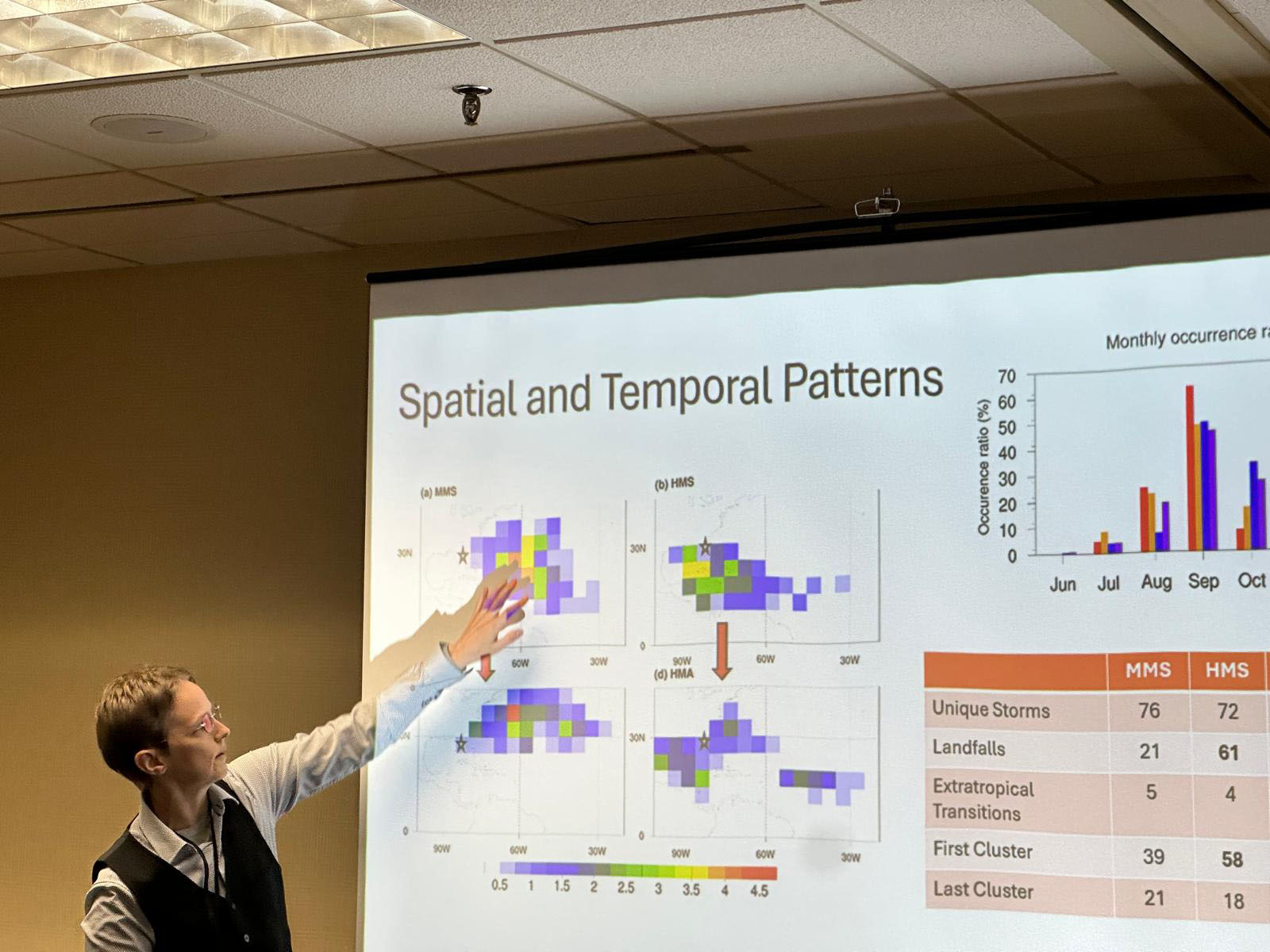
Studying the precipitation patterns in hurricanes may be key to predicting future storm patterns and their potential strength, a University of Florida researcher has found. Supported by a four-year, $212,000 grant from the National Science Foundation, Professor of Geography Corene Matyas, Ph.D. has identified the patterns of rain rates within storms and studied the moisture surrounding these storms. “We are hoping that, if we have a better prediction of moisture availability, that might help us forecast rain events with greater accuracy,” Matyas said. “The more we know about how storms develop, the more we can predict their path and magnitude.” The ideal stage for the perfect storm The potential for devastating high winds, storm surge and flooding poses an annual threat to Florida and its residents. With 1,350 miles of coastline and relatively flat geography that juts out to separate the warm waters of the southeast Atlantic and the Gulf, Florida creates the ideal stage for the perfect storm. Last year broke records with 18 named storms, including 11 hurricanes in the Atlantic basin and three major hurricanes making landfall along Florida’s coast. Early predictions are crucial to hurricane preparedness, allowing for increased response time and resource allocation, and hurricane modeling is essential for understanding these somewhat unpredictable storms. Advances in technology, data collection and the use of artificial intelligence in hurricane modeling have significantly impacted the ability to predict a storm’s path and strength more accurately. Artificial intelligence helps researchers understand hurricanes Matyas has completed two studies on this topic. The first study processed 12,000 images of rain rates from tropical storms and hurricanes in the Atlantic, using a machine learning algorithm called a convolutional autoencoder. Similar in use to image recognition software, the encoder broke the rain rate images down and simplified the patterns. Six main types, or clusters, of rainfall patterns for tropical cyclones were identified. At a presentation of the work to forecasters at the National Weather Service office in Jacksonville, the forecasters confirmed that one of the patterns matches what they typically see when late-season storms make landfall over Florida’s Gulf Coast. The second study used the autoencoder to process 4,600 images that represent the amount of moisture in the atmosphere extending 1,000 kilometers away from each hurricane. “We looked for commonalities in the patterns and found four dominant patterns of moisture that accompany Atlantic basin hurricanes,” Matyas said. “We found the biggest storms with the most moisture make the most landfalls, typically in the Caribbean and even in southern Florida. They also have a large moisture pool, giving them a bigger chance of heavy rainfall.” According to Matyas, three of the moisture patterns found in the second study were strikingly like those found in the earlier study that used fewer observations in a statistical analysis. With this use of AI, researchers can now recognize and understand these moisture patterns better, which can improve predictions about a storm’s intensity, its size and the amount of rainfall that will result from it. Early, accurate storm predictions allow Floridians time to prepare Rapid intensification – when, in a 24-hour period, a storm experiences a sudden drop in pressure and a dramatic increase in wind speed – creates much more of a challenge for forecasters. “We tend to boil down a hurricane to a set of coordinates which track the middle of a storm,” Matyas said. “And the fastest winds do focus there, but the moisture gets pulled from thousands of kilometers away and the system forces the moisture up. That moisture must go somewhere. So, the outer edges of the storm need to be understood more as well.” Matyas hopes these studies will help scientists classify rain patterns more accurately and consistently. Continued funding for research at public universities from federal agencies, such as the National Science Foundation and the National Oceanic and Atmospheric Administration, is essential for helping researchers develop tools to detect and predict severe weather events. Matyas is one of two UF faculty members among 18 national researchers named to the 2025 class of fellows by the American Association of Geographers. Matyas and UF Geography Department Chair Jane Southworth, Ph.D. were honored by the organization for their contributions in biogeography, geospatial analytics, soil science, community geography, climatology and other areas related to geography. “I look forward to this opportunity to contribute to the mission of the AAG in a more formal capacity, continuing to research how weather shapes our spaces and share knowledge of earth systems beyond the classroom and the written word to promote an inclusive society,” Matyas said.


“Designing Her Own Future: A Georgia Southern MBA Story”
After earning her Master of Business Administration from Georgia Southern University, one graduate is charting a path that blends creativity with business discipline. With a background in dressmaking, she entered the MBA program already skilled in her craft, but looking to strengthen the operational side of her work. “So much goes into dressmaking,” she explained. “From developing the pattern to the fabric you use, getting the right measurements, and so on. You have to make sure your stitches are clean, that the zipper is sitting properly.” While her technical skills were well developed, she quickly recognized that sustaining and growing her work required more than creative talent alone. “I didn’t have that business background,” she explained. “So I wanted to find a university program that could teach me how to structure and operate my business efficiently. So I started doing my research.” That search led her to Georgia Southern’s MBA program, where she immersed herself in coursework focused on strategy, leadership, and practical decision-making. Through the program, she gained the tools to think more systematically about her business—learning how to plan, organize, and scale her operations with confidence. Her experience reflects how graduate business education can empower entrepreneurs and creatives alike, transforming passion into sustainable practice and helping graduates design futures that work both artistically and professionally. Want to learn more about Georgia Southern's Master of Business Administration program? Simply contact Georgia Southern's Director of Communications Jennifer Wise at jwise@georgiasouthern.edu to arrange an interview today.