
Experts Matter. Find Yours.
Connect for media, speaking, professional opportunities & more.

Survey says: Senior leaders are using AI, but they could use more direction
Over the years, study upon study has shown that senior leaders are slower to adapt to new technology – email, the Internet and social media – than younger employees. That’s not necessarily so with AI, according to the University of Delaware’s Saleem Mistry. Mistry, associate professor of management at UD's Alfred Lerner College of Business & Economics, recently conducted a survey of more than 200 university alumni, 75% of which had more than 16 years of professional experience. He found that senior leaders are actively adopting AI to solve their biggest challenges. However, they are doing so largely without structured support or guidance. Here are four findings from Mistry's survey that shows how AI is actually being used at the top. Senior Leaders Are Overwhelmingly Self-Taught Mistry said his most glaring finding is the gap between high AI adoption among senior leaders and the near-total absence of formal corporate support. Although a majority use these tools, they are almost entirely self-taught, which highlights visible opportunity that organizations aren’t really steering the AI conversation for leaders: • High usage. 62% of all senior leaders surveyed use AI tools "regularly" or "occasionally" in their work. • Training gap. Of those users, an overwhelming 80% report their organization provides "Never" or only "Sometimes" (mostly never) adequate training. Mistry said this shows that leaders from VP level down are using tools like ChatGPT and Copilot informally to keep up with heavy workloads, without any real organizational guidance. The stakes are high. In the survey, a vice president of legal was using AI for compliance tasks and a manager of three was using it for performance reviews, both with no formal training. “These are senior leaders handling sensitive work while essentially figuring it out on their own,” Mistry said. There is a clear ladder of AI use Leaders are not using AI randomly. There is a clear progression in how they use it, moving through three levels. • Tier 1 (The Drafters) This is the most common starting point. Leaders use AI to improve writing and communication. They draft emails, shape documents, and refine tone. As one Director of Product put it, it helps him "polish phrasing" and adjust tone and voice. • Tier 2 (The Synthesizers) At this stage, leaders use AI to manage information overload. They summarize meetings, condense documents, and pull together research so they can keep up with large volumes of input. As one leader managing a team of 200 said, "Being a leader requires attention in a variety of areas. AI helps me manage the vast amounts of information I need to consume." • Tier 3 (The Architects) Here, leaders move beyond writing and summarizing. They use AI to automate parts of their work. This includes building agents, creating custom GPTs, or designing tools that track work and performance. One leader managing 300 people said, "It will eliminate half or more of my overhead." Managers and individual contributors use AI for different reasons People managers and individual contributors (IC) are using AI for very different reasons based on their roles. • For people managers, their main challenge is scale. They are overloaded with communication and administration, so they use AI to reduce noise and keep up. They lean heavily on summarization and tone adjustment tools. • For project leads and ICs, their focus is output. They use AI to produce work faster, including drafting content, building decks, writing code, or generating ideas. This difference reflects their jobs. One group is trying to keep up, the other is trying to produce more. It also shows that AI is not a single-use tool. Its value depends on the problem it is being used to solve. This difference reflects their jobs. One group is trying to keep up, the other is trying to produce more. It also shows that AI is not a single-use tool. Its value depends on the problem it is being used to solve. Resistance to AI is mostly intentional Among the 38 percent of leaders who do not use AI, resistance is usually not based on lack of awareness. It falls into three groups: • The Ethical Objectors. Some avoid AI due to concerns about its broader impact. • The Quality Skeptics. Some do not trust the output and feel it is not reliable enough for important work. • The Blocked. Some are not allowed to use AI due to company policy. Mistry concludes that there is a clear overall pattern: Leaders are using AI in practical ways, but mostly without structured support or guidance. “If it feels like you are figuring this out as you go without much help from your organization, that is consistent with what most leaders are experiencing,” Mistry said. To connect directly with Mistry and arrange an interview, visit his profile page and click on the "connect" button. Interested reporters can also email MediaRelations@udel.edu.



Downsizing: The Biggest Retirement Myth We Keep Repeating
I have a friend who announced she was downsizing the way some people announce a move to Tuscany. Lightness. Optimism. A touch of smugness. Six months later, she called me from her condo and whispered, “Sue… I think I bought a very expensive closet with a concierge.” Welcome to downsizing, the most celebrated, most recommended, and most wildly misunderstood retirement strategy in Canada. Like most things that sound simple, it works beautifully until you look a little closer. I spent a decade in the reverse mortgage industry watching this play out. Clients would come in — smart, capable, financially savvy people — who had spent years being told their retirement plan was simple: sell the big house, buy something smaller, pocket the difference, and ride off into the sunset. Many of them were sitting across from me because that plan had not worked the way anyone promised. The advice was decades old. Their lives were not. Two Retirees. Same Strategy. Completely Different Outcomes. Let me introduce you to Carol and Robert, whose stories say everything. Carol did everything right. She sold her long-time home, bought a sleek condo, freed up some equity, and checked every box on the “responsible retirement” list. On paper, it was a perfect move. In practice, she lost her community, her routines, her doctor, and a piece of her identity. She found herself sitting in a condo surrounded by unpacked boxes, wondering how a smart financial decision could feel so much like a personal loss. Robert also did everything right, but his story unfolded differently. He sold his home, moved closer to family, bought something smaller, and banked a meaningful sum. What he gained had very little to do with the numbers. He gained connection, belonging, and a life that felt fuller, not smaller. The strategy was identical. The outcomes were not. That is the uncomfortable myth about downsizing. It is not a formula. It is a life decision disguised as a financial one. The Downsizing Math People Love to Quote For decades, downsizing earned its reputation honestly. Retirement was shorter, often fifteen to twenty years. Pensions were stable. Housing was affordable. Families lived closer together. Selling your home and buying something smaller freed up real capital and meaningfully cut expenses. It was practical, logical, and often the right call. Fast forward to today, and almost none of those conditions still apply. Retirement now runs twenty-five to thirty-five years — a span longer than most people’s careers were when this advice was invented. Defined benefit pensions have largely become a public sector privilege. In the 1970s, 90% of private-sector workers with a workplace pension had a defined-benefit plan. Today, that figure has dropped to roughly 40%, and that’s only among the shrinking share who have any pension plan at all (Canadian Centre for Policy Alternatives, 2025). Housing prices have surged far beyond income growth. Real estate now accounts for over half of household wealth in Canada. Meanwhile, according to Statistics Canada, the average Canadian at sixty-five has approximately $272,000 in retirement savings, while estimates for a comfortable retirement often exceed $1 million. That is not a gap. That is a canyon. This gap turned the family home into something it was never designed to be. Not just a place to live, but a retirement plan. And once that shift happened, we collectively made a convenient assumption: the only way to access that wealth is to sell the house. That assumption is where things begin to unravel. The four assumptions that made downsizing work are no longer as reliable as they once were. 1. Smaller homes are cheaper. In many markets, the opposite is true. Smaller properties often command higher prices per square foot, and retirees now compete with first-time buyers and investors for the same limited inventory. That charming condo may cost nearly as much as the house you just sold. 2. Selling releases meaningful capital. Transaction costs alone can consume eight to twelve percent of the home’s value. Commissions, legal fees, land transfer taxes, moving costs, repairs. What looks like a windfall on paper can shrink dramatically before you ever see the money. 3. New home costs will be lower and more predictable. Condo fees, special assessments, and rising insurance costs tend to quietly escalate. What was supposed to simplify your financial life can quietly complicate it. 4. The process is straightforward. Market timing plays a much larger role than most people realize. Selling in a soft market while buying in a strong one can erode value on both sides. Downsizing is not just a financial decision. It is a transaction with real timing risk. When all four of these assumptions weaken at once, the outcome can be very different from what was promised. And yet, despite the evidence, the advice has not changed. We still tell people to “just downsize,” as though the calendar hasn’t moved since 1987. Nostalgia is not a strategy. The Part Nobody Puts in the Spreadsheet Here is what the financial projections consistently leave out: the emotional weight of this decision is enormous, and most people dramatically underestimate it. We are not talking about a slight reluctance to pack boxes. We are talking about the deep, visceral human attachment to home. The place where you raised your kids, hosted Thanksgiving, walked the dog, and knew every creak in every floorboard. The urge to age in place is powerful, primal, and not remotely irrational. And when we dismiss it with a spreadsheet, we are not being helpful. We are being reckless. And here is the harder truth: to make the numbers actually work, people often need to move two or three hours away into smaller communities where housing is genuinely cheaper. That means leaving your neighbourhood, your friends, your church, your yoga class, your doctor of twenty years, and your very carefully curated hairdresser. (Finding a new hairdresser in a rural town? That is not a life transition. That is a medical emergency.) Re-establishing a full support network in an unfamiliar community is daunting and exhausting work for anyone at any age. It often requires the senior to resume regular driving, something many are quietly hoping to scale back. And then there is healthcare. Access to specialists, familiar family physicians, and hospital services is non-negotiable for most people over sixty-five. It does not figure neatly into a spreadsheet, but it absolutely figures into the decision. I have never once met a senior who said, “You know what, I’m really glad I had to find a new GP at 72.” The urge to stay put almost always wins. Here is something worth sitting with: every older person knows what it is like to be young, but no young person knows what it is like to be old. That asymmetry matters enormously in this conversation. A well-meaning adult child running scenarios on a laptop has never felt the specific, irreplaceable comfort of a neighbourhood they have lived in for thirty years. Really listening — not just problem-solving — can bridge that gap. Because retirement is a family affair. And the families who navigate it best are the ones where everyone feels heard before anyone pulls out a spreadsheet. The Conversation That Actually Needs to Happen Financing retirement is not a binary choice. Downsize or don’t. That framing does everyone a disservice, and spoiler alert: the senior will almost always choose not to downsize. The real question is what happens next, because “stay put and hope for the best” is not a retirement plan. It’s a wish. The more useful conversation is about how to create cash flow while staying put. And that conversation is a minefield if you are not prepared. Here is the first obstacle: suggesting any kind of loan to finance retirement is a spectacular lead balloon. These are people who spent forty years lecturing their kids to pay off their mortgages and eliminate debt. Debt is the villain in their financial story. It is a bug, not a feature. So when you walk in and suggest that borrowing against their home might be the solution, their internal switchboard immediately puts that call on permanent hold. And if you mention a reverse mortgage? The Cybertruck of mortgages. The product everyone has an opinion about and almost no one fully understands. You will get one of two responses: the “talk to the hand” or the look usually reserved for the person who reheats leftover fish in the office microwave. Is some of that resistance rational? Absolutely. But is some of it just fear in a hat — old anxiety dressed up as financial principle? Also yes. This is why the key is to ask, not tell. The moment you lead with a product, you’ve lost the room. Lead with questions instead: • What are your actual cash flow needs? • How are you planning to meet them? • Are you carrying debt that is quietly strangling your monthly budget? • Do you need a lump sum, or do you need more reliable monthly income? The answers look very different, and they lead to very different solutions. If the goal is to free up monthly cash flow, paying off high-interest debt using home equity may deliver an immediate and meaningful result. A home equity line of credit can do that cleanly. If the goal is ongoing income, a reverse mortgage can provide tax-free monthly payments or a lump sum without requiring a move or a monthly repayment. If there is room on the property, a secondary suite or an addition can generate rental income and potentially add long-term value. For those comfortable thinking a few steps ahead, using a reverse mortgage or HELOC to purchase an annuity or a small rental property creates a stream of sustainable income that has nothing to do with square footage. None of these options shows up in the standard “should I downsize?” conversation. They should. The biggest financial mistake most retirees make is not the decision they choose. It’s the options they were never shown. Back to Carol and Robert Their outcomes were not the result of luck or timing. They were the result of alignment. Robert moved toward what he wanted. Carol moved away from what she felt she should. One decision created a sense of expansion. The other created a sense of loss. No spreadsheet captures that distinction. But it is the distinction that matters most. Downsizing is neither inherently good nor bad. It is simply a tool. When it is driven by clear goals, realistic assumptions, and an honest accounting of both the financial and emotional realities, it can be genuinely transformative. When it is driven by habit, pressure, or advice that stopped aging well some time ago, it tends to lead somewhere Carol knows well. So before you follow the script, pause long enough to ask a different question. Not “Should I downsize?” but “What do I actually need, and what are all the ways I can get there?” Retirement is not about having less space. It is about having more life. The right strategy is the one that gets you there without sacrificing everything that makes life worth living in the first place. Your community. Your doctor. Your Sunday routine. Your hairdresser who finally knows exactly what you mean by “just a trim.” Downsizing is a tool. Like a hammer. Enormously useful when you actually need a hammer. Spectacularly unhelpful when what you really need is a different plan. The goal was never to end up with less. It was to end up with enough. Ask better questions. You’ll get better answers. And maybe keep your hairdresser’s number. Sue Don’t Retire…Re-Wire!!! My Book is Now Available for Pre-Order I hope you will consider pre-ordering a copy of Your Retirement Reset for you, a friend, or a loved one. It will be on store shelves on September 8, 2026. You can now order on the ECW Press site here. And if you love supporting Canadian booksellers, please also check with your local independent bookstore.


U.S. National Debt: How to Stop the Bleeding
The U.S. national debt exceeding the size of the American economy is a dubious milestone that has sparked alarm and confusion among policymakers who are asking how worried they should be and what can be done to stop the bleeding. David Primo, a political scientist and professor of business administration at the University of Rochester and a fiscal policy expert who has testified before Congress on the national debt, says Americans should be very concerned about the debt and, at the same time, know there is a solution. “The federal budget outlook is grim and threatens the economic future of the United States,” says Primo, the author of Rules and Restraint: Government Spending and the Design of Institution (University of Chicago Press). “If Congress waits to act, Americans will need to give up a bigger piece of the nation’s economic pie to stabilize the country’s finances.” Primo says a solution lies in a constitutional amendment restraining the federal budget. Specifically, such an amendment would clearly define spending and revenue, set spending limits based on a multiyear period, and allow for waiving the limit only with a large supermajority in Congress. “As it stands, Congress is constitutionally incapable of tying its own hands, making it difficult for legislators to implement durable changes to the federal budget,” Primo says. Recent data show the national debt has crossed 100% of the GDP threshold — roughly $31.27 trillion versus $31.22 trillion in economic output — marking the highest peacetime level in U.S. history. The Congressional Budget Office has projected that debt levels, if left unchecked, could reach 181% of GDP in the next 30 years. Primo says delaying implementing a solution raises the risk of increased interest rates, which would, in turn, reduce investment and, ultimately, economic growth. For journalists covering deficits, tax policy, and the long-term economic outlook, Primo offers key expertise and a clear lens on: • The implications of national debt exceeding GDP • Constitutional and institutional approaches to fiscal reform • Fiscal policy and political incentives “The United States is in precarious fiscal health,” Primo told Congress in 2023. “In the absence of a constitutional amendment, I fear it will take a fiscal crisis before Congress acts. Nobody wants that.” Connect with Primo by clicking on his profile.



Get Over It: Pluto Isn't A Planet!
Put down the protest signs already. Retire the “Save Pluto” pins. Step away from the planetary outrage. Seriously. So says University of Rochester astrophysicist Adam Frank in his latest column in Forbes. Frank explains that the real story behind Pluto being stripped of its planetary status in 2006 isn’t about what Pluto lost, but what scientists found. Pluto made news recently when NASA Administrator Jared Isaacman replied to a Florida girl’s handwritten plea to restore Pluto’s designation as a planet, saying he supported such a move. Frank has one word for Isaacman: Stop! “Now Isaacman seems like a good guy and I sure don’t want to make little kids cry,” Frank writes. “Still, there’s an amazing science reason why Pluto got kicked out of the planet club.” For decades, Frank explains, we thought the solar system ended with the nine familiar planets, with Pluto being the most distant. But beyond Neptune lies the Kuiper Belt, a vast expanse filled with icy remnants from the birth of the solar system. These objects are essentially the leftover building blocks of planets. Pluto, it turns out, is one of them. That matters because this cosmic debris holds crucial clues about how planets form. Studying Pluto and its neighbors helps scientists understand the origins of Earth and the potential for life elsewhere in the universe. So, Pluto isn’t an outcast; it’s a key witness to our cosmic history. It belongs to a newly understood class of worlds that are central to modern astronomy. Rather than mourn Pluto’s status and push for restoring its former title, Frank suggests we celebrate its reclassification as the moment astronomers realized the solar system is far richer than they had ever imagined. If you’re a journalist looking for an expert to talk about Pluto — or planets and worlds formerly known as planets — Frank is your scholar. He is a frequent contributor to the likes of CNN, The New York Times, The Atlantic, and MSNBC, and can help your audience make sense of our vast universe.


TCU Chemistry Researcher Named a Big 12 Faculty of the Year
Kayla Green has built an internationally recognized research program while mentoring the next generation of scientists at Texas Christian University, and her efforts are getting noticed. The chemistry professor and assistant dean of undergraduate affairs at the Louise Dilworth Davis College of Science & Engineering represents TCU among this year’s Big 12 Faculty of the Year honorees. The Big 12 Faculty of the Year Award honors outstanding faculty who excel in innovation and research at each of the athletic conference’s 16 universities. Honorees represent and reflect the best attributes that make a Big 12 college campus a bastion for learning and growth. “In my view, Professor Green exemplifies the fact that student success cannot happen without research, and world-leading research cannot happen without authentic, student-centered experiences,” wrote a nominator when Green was named the 2025 winner of the Chancellor’s Award for Distinguished Achievement as a Creative Teacher and Scholar. “Professor Green has maintained a vibrant, externally funded research program throughout the past 15 years, a distinction shared by very few TCU faculty.” Green was chosen in part for her international reputation in the field of inorganic chemistry as applied to neurodegenerative diseases and catalysis, as well as her leadership in a growing research program that has brought in more than $2.5 million in external support. This includes work with Ben Janesko, professor and chair of chemistry and biochemistry, and biology professors Giri Akkaraju and Michael Chumley on a grant from the National Institutes of Health. Green’s collaborative work with students highlights her ability to weave together research and mentorship. “Dr. Green’s vision and drive have strengthened the foundation of our college,” said T. Dwayne McCay, interim dean of Davis College. “Her ability to inspire students and colleagues alike reflects the kind of leadership that propels our mission forward.” One of her most impactful initiatives is Chemistry Boot Camp, a program she developed with colleagues Janesko and Heidi Conrad to help incoming students build confidence before their first chemistry class. The Big 12 Faculty of the Year Award is intended to showcase the diversity of research breakthroughs and educational opportunities afforded to students attending Big 12 institutions and helps attract future students. This year’s award recipients stretch across a vast array of departments. “We are constantly looking for ways to highlight how Big 12 faculty continue to educate and inspire the next generation of leaders,” Jenn Hunter, Big 12 chief impact officer said. “From the arts and filmmaking to business and engineering, this year’s cohort showcases the vast opportunities available to students pursuing an education on Big 12 campuses.” Faculty members were nominated by their institutions in conjunction with conference faculty athletic representatives, provosts and other university leaders. “I’m very honored to represent TCU as a Big 12 Faculty of the Year,” Green said. “I hope that I am not expected to exhibit any athletic skill sets but am happy to cheer on the Frogs in all they do in our classrooms and competitions! Congratulations to the honorees from across our great conference. TCU has the best faculty, and I am happy to represent them in this capacity.”



Seeing Green: Chemistry Professor Transforming Undergraduate Research at TCU
When it comes to advancing both student success and world-class research, Kayla Green embodies how the two can go hand in hand. The chemistry professor and assistant dean of undergraduate affairs at the Louise Dilworth Davis College of Science & Engineering has built an internationally recognized research program while mentoring the next generation of scientists and reshaping how chemistry is taught at Texas Christian University. Her leadership weaves together research and mentorship in ways that have elevated the department’s impact. With more than $2.5 million in external funding and a track record of collaboration around the globe, Green’s work has not only advanced the field of inorganic chemistry, particularly as applied to neurodegenerative diseases and catalysis, but also strengthened TCU’s standing as a hub for undergraduate research excellence. “In the summer heading into my junior year, I began working on what would be my research project in Dr. Green’s lab … that would use iron as a catalyst in molecules. I would end up presenting that research in my senior year,” said Jack Bonnell ’24, a John V. Roach Honors College laureate. Iron is more affordable, more available and less societally problematic than preexisting palladium- or platinum-based molecules. “By the end of my senior year, I was able to achieve comparable results with my iron catalyst as you could achieve with palladium or platinum,” said Bonnell, now a second-year medical student at the Anne Burnett Marion School of Medicine at TCU. “That was a pretty cool moment in my research, to be able to put it up there in comparison to those.” Since joining TCU in 2010, Green has mentored more than 50 undergraduate students in her lab, many of whom have gone on to publish their work, present at national conferences and pursue medical or doctoral degrees. She has also been instrumental in creating programs that prepare students to succeed in challenging classes and stay the course in scientific disciplines. “Dr. Green’s vision and drive have strengthened the foundation of our college,” said T. Dwayne McCay, interim dean of the Davis College of Science & Engineering. “Her ability to inspire students and colleagues alike reflects the kind of leadership that propels our mission forward.” Lifting Them Up One of Green’s most impactful initiatives is Chemistry Boot Camp, a program she developed with colleagues Ben Janesko and Heidi Conrad to help incoming students build confidence before their first chemistry class. “The boot camp helps lift them up, and it’s really helped with retention of students in pre-health and science fields,” said Timothy Barth, psychology professor and associate dean of graduate affairs in Davis College. “She didn’t have to do this; she created it because of her commitment and dedication to the students.” Green’s innovative use of grant funding has expanded laboratory resources, supported student travel to conferences and strengthened research collaborations. The result is a department that rivals larger institutions in both output and opportunity. “Davis College does a fantastic job on undergraduate research training,” Green said. “We are a powerhouse.” For Green, teaching and research are inseparable. Her classroom and laboratory experiences are deliberately interconnected, allowing students to see how chemistry concepts play out in the real world. “Going into a lot of these complicated diagnoses and being able to break them down into digestible pieces of information for patients is a skill that I definitely can see as useful in my future as a physician,” Bonnell said. As much as the material itself, he credits Green’s mentorship and the opportunities she provided for his preparation for medical school. “I had only taken Dr. Green’s general chemistry course in my first semester as a freshman at TCU. I joined her lab in the spring semester of my freshman year, and I knew only the bare minimum about chemistry. I was in meetings with graduate students who had been working on projects for years,” Bonnell said. “At the beginning, she bounced me around, and I worked with different graduate students to learn all the different things they were doing to find my best fit.” That blend of rigor and encouragement has become a hallmark of her approach and a model for other departments seeking to integrate research more deeply into the undergraduate experience. Building on Success Green’s excellence has earned her wide recognition, including honors from the American Chemical Society (Emerging Investigator and Women Chemists Rising Star awards), TCU’s Deans’ Award for Research and Creative Activity and, most recently, the Chancellor’s Award for Distinguished Achievement as a Creative Teacher and Scholar. She now brings that same analytical insight and collaborative spirit to her position as the college’s assistant dean of undergraduate affairs, a role she began this academic year. “We’ve already begun to experience her decision-making and analysis as part of the dean’s team,” Barth said. “In a short period of time, she’s proving to be an amazing and remarkable administrator.” Looking ahead, Green continues to build on her success through a National Institutes of Health R15 AREA grant, which supports undergraduate research and provides students with opportunities to contribute to federally funded science. “TCU Chemistry has an incredible record of placing students in medical school, Ph.D. programs and research labs across the country,” Green said. “It’s rewarding to see our students thrive in environments that started with their hands-on experiences here.”

Pope Leo XIV Faces Both Historic and Novel Challenges as He Enters the Second Year of His Papacy
In his first appearance on the balcony of St. Peter’s Basilica, Pope Leo XIV shared with the world a message of hope, communion and reconciliation, emphasizing the need to “build bridges with dialogue and encounter so we can all be one people always in peace.” Throughout the last 12 months, the Pontiff has placed these values at the forefront of his work and ministry, pairing active collaboration with prayerful contemplation in his leadership of the world’s 1.4 billion Catholics. In the coming years, that emphasis is likely to continue, as the Pope addresses longstanding rifts and evolving challenges within the Church and beyond. Asked to consider the most striking aspects of his early papacy, and to reflect on the most pressing issues he currently faces, Villanova faculty members studying the pontificate had a wide variety of responses. Jaisy A. Joseph, PhD Assistant Professor of Theology and Religious Studies For Dr. Joseph, Pope Leo’s first year has been defined by a spiritual vision centered on unity, listening and shared responsibility. “From the beginning of his papacy, Leo emphasized that we are a synodal Church working towards peace and moving forward together. Leo’s Augustinian formation will absolutely leave its imprint on what Pope Francis started. While the two have distinct personalities and styles, there is a fundamental continuity with Francis that Leo has signaled. Leo stresses that at the core of the Church is a deeper desire for a spirituality of ‘we’—a Church rooted in deep listening and bold speaking. This is where the Augustinian charism makes itself known. “This unity does not erase differences. Instead, it asks, ‘How do we create friendships that are strong enough to bear the tensions of our differences?’ In a world shaped by ‘us versus them,’ Leo insists on recognizing Christ in the completely different ‘other.’ “Finally, his leadership style is marked by discernment. Listening is so critical to him, and any caution he displays is not out of fear but wanting to listen before speaking. In a noisy world, he insists that we just need silence—trusting that through shared listening, the Church can move forward together.” Luca Cottini, PhD Professor of Italian Studies For Dr. Cottini, Pope Leo’s first year has been marked by a clear effort to position the Church in active dialogue with the modern world—especially in response to emerging global challenges, migration and an increasingly interconnected faith community. He draws parallels to the priorities of Leo XIV’s namesake, Pope Leo XIII. “Catholic social doctrine is a doctrine that the Church established to address subjects that are not directly written about in the Gospel. This doctrine was important for Pope Leo XIII and is increasingly important for Leo XIV as well. ‘Leo’ is a name that relates back to Catholic social doctrine and the need to read the changing signs of the times. By choosing the name ‘Leo,’ the Pope signaled his desire to respond to contemporary issues. “Leo XIV has also harkened back to Leo XIII in his first year by viewing migration and immigration not as a plight, but rather as an opportunity to enter into contact with new worlds. This approach connects to Leo XIV’s own background and perspective, which includes both proximity to and distance from the United States, giving him both an outsider and insider perspective as well as a critical thinking lens on these issues. “Lastly, Leo XIV has used his first year to elevate this idea of a universal Church that is much needed, shaped by his global exposure and an ability to see the world through the lens of others. He sees that we can dialogue with the world, approaching modernity not as an enemy but as something to engage with.” Patrick McKinley Brennan, JD John F. Scarpa Chair in Catholic Legal Studies According to Professor Brennan, “One of the issues that is on the Pope’s radar and has been from before the conclave is the question of the traditional Latin Mass,” a cause championed by various cardinals, bishops, priests and lay faithful around the globe. As he shares, it is a matter of great interest to a small but growing number of Catholics who recall Pope Benedict XVI’s statement that the traditional Mass—the Mass as it was celebrated by most Catholics since 1570—was “never juridically abrogated” following the Second Vatican Council. “Pope John Paul II in the 1980s, and then Pope Benedict XVI in 2007, liberalized access around the world to the traditional Mass. But Pope Francis revoked most of those permissions, citing ‘facts’ that have subsequently been called into question by investigative journalists and others. Pope Francis issued a document called Traditionis custodes, which [went against] the permissions that Benedict XVI gave in a document called Summorum pontificum in July 2007. “Now, the leadership of the Society of St. Pius X [an anti-modernist priestly fraternity] have announced that they’re going to ordain new bishops, the exact thing that got some of their predecessors excommunicated in 1988, so that the traditional Mass can continue to be celebrated and other sacraments can continue to be provided to Catholics according to the traditional rites. Reading between the lines, I think the Society of St. Pius X is trying to force Pope Leo’s hand on the Latin Mass. He’s been biding his time, working out how to respond to this hard question, and I think they’ve just decided that it’s an all-or-nothing situation. “It’s an example of how Pope Leo inherited some big problems, and I think most of the cardinals who elected him thought that they had chosen someone who, because he can listen and is committed to unity, will try his very best to find a solution that remains faithful to Catholic doctrine while bringing in as many voices as possible. Ironically, Pope Francis reduced legitimate diversity in Catholic liturgy, and while Pope Leo has a chance to restore that diversity, he has to do so in a way that addresses the irregular situation of the Society of St. Pius X.” Ilia Delio, OSF, PhD Josephine C. Connelly Endowed Chair in Christian Theology Looking ahead, Sister Delio says one of the most significant social developments Pope Leo must face is the rise of advanced technologies—in particular, increasingly sophisticated artificial intelligence models. “Our theological anthropology needs a bit of updating, as it does not currently meet the needs of our very complex world today. There are a lot of discussions on artificial intelligence and advanced technology, but the problem is that these technologies are already here and rapidly advancing. “So, we have to face this reality, not by asking ‘What is happening to us?’ but ‘What are we becoming with our technologies?’ and ‘How best can we remain human in an AI world?’ I think Pope Leo is asking similar questions, considering what makes the human person the image of God, what makes us distinct and whether there are human values that cannot be downloaded or reproduced in a digital medium. “At the same time, we must ask: Can technology deepen the human spirit by enabling a new level of collective life? Can AI technology empower the Body of Christ?” To speak with any of these faculty experts, please contact mediaexperts@villanova.edu.





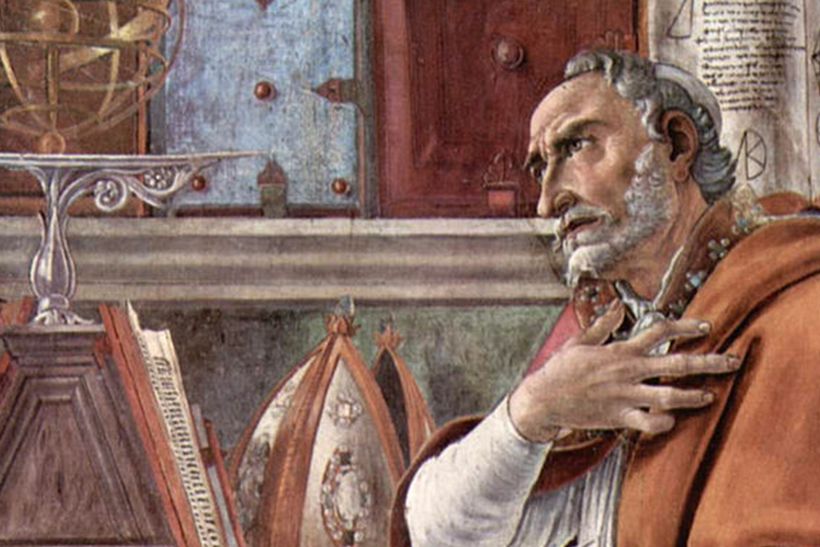
During his historic trip to Africa in April 2026, Pope Leo XIV toured the archaeological ruins of Annaba, Algeria, capping what he referred to as a “special” journey to the country. Annaba, where the ancient city of Hippo Regius once stood, is not far from where St. Augustine—patron of the Augustinian order to which the Pope belongs—was ordained, made bishop and crafted his most influential theological works. Walking in his footsteps, Pope Leo—who referred to himself as a “Son of Augustine” upon his election to the papacy—toured the ruins with other members of the Order and his traveling party. It was a personal and symbolic moment, but for those paying close attention to his early pontificate, it represented only the most recent of many tributes he has paid to Augustine and his teachings. “In reading through Pope Leo’s addresses and his homilies, his messages and his video recordings, there is barely one that goes by without him referencing Augustine in some way,” said Paul A. Camacho, PhD, associate director of The Augustinian Institute at Villanova University, and scholar of Augustine’s teachings. When the Pontiff accepted the St. Augustine Medal from the Augustinian Province of St. Thomas of Villanova in August 2025, he made it clear why. “As Augustinians, we strive every day to live up to the spiritual example of our spiritual father, St. Augustine,” he said to the Province. “To be recognized as an Augustinian, it’s an honor held dearly. So much of who I am, I owe to the spirit and teachings of St. Augustine and I am grateful to all of you for all the many ways your lives exhibit a deep commitment to the values of Veritas, Unitas and Caritas.” Veritas Examples abound related to all three values and how Pope Leo has invoked Augustine in speaking about them. Dr. Camacho cites a handful he found particularly noteworthy. For example, Veritas first appeared in an especially prominent way during an early address for the June Solemnity of the Holy Trinity and Jubilee of Sport. Then, Pope Leo said, “This combination of Trinity and Sport is somewhat unusual, yet the juxtaposition is not inappropriate. Every good worthwhile human activity is in some way a reflection of God’s infinite beauty, and sport is certainly one of these.” “For St. Augustine, the Trinity and wisdom are intimately connected,” Dr. Camacho said, also mentioning that Augustine authored an entire book on the subject titled “On the Trinity.” “Divine wisdom is revealed in the Most Holy Trinity and wisdom always leads us to Veritas—the truth,” he said. “What Pope Leo goes on to do is say that the life of God, the Trinity, is a life of play…It’s a dance, and dance is a sport, and our own way of participating in that kind of activity is a participation in life of God.” When Pope Leo later spoke to the International Foundation of Catholic Universities—an occasion for which the motto was “Choreographers of Knowledge”—he referenced that dance again. “Pope Leo invites us to think of our relationship to Veritas not as something to master,” Dr. Camacho said. “But rather as a light that draws us out of ourselves towards it, in a dance of relationship with it and one another.” Unitas During a September Mass for the General Chapter of the Order of St. Augustine, Pope Leo prayed that those in attendance be given “the gift to listen, the gift to be humble and the gift to promote unity within the Augustinian Order, and throughout the Order, throughout the Church and the world.” Earlier in the summer, he touched on unity during the Jubilee of Families, Children, Grandparents and the Elderly, commenting on the Gospel of John, in which “Christ prays that we may all be one.” “This being one is the greatest good we can desire, for this universal union brings about among his creatures the eternal communion of love that is God himself: the Father who gives life, the Son who received it and the Spirit who shares it… the Lord does not want us in this unity to be a nameless and faceless crowd,” Pope Leo said. “What Pope Leo expresses here is that unity is not conformity, but rather community—the kind of community in which each one of us becomes more of who it is that we are the more we love and work for what is good in common,” explained Dr. Camacho. “This is a deeply Augustinian insight.” In one general audience with members of various religious groups, Pope Leo relayed “Unity has always been a constant concern of mine, as witnessed by the motto I chose for my episcopal ministry.” He was referencing, Dr. Camacho says, the Latin phrase In illo uno unum, displayed on his coat of arms. “That phrase—‘in the one [Christ] we are one’—comes from St. Augustine’s commentary on the Psalms. Pope Leo comes back again to this idea that when we love and follow the truth that is Christ, we simultaneously become more uniquely individual, and our unity becomes genuine community, and not mass conformity.” Caritas In his Opening Homily for the Beginning of the Pontificate, Pope Leo followed his salutations with these words: “I greet you all with a heart full of gratitude at the beginning of the ministry that has been entrusted to me. St. Augustine wrote: ‘Lord, you have made us for yourself, and our heart is restless until it rests in you.” According to Dr. Camacho, Augustine taught that the solution to the restless heart is Caritas, or rightly ordered love that finds its rest in God. Augustine’s thinking about love is developed in a social dimension when he distinguishes between two different kinds of political communities, which he calls the “Earthly City” (in which pride and self-love dominate), and the “City of God” (in which love of God and neighbor form the community). Augustine’s enduring and influential work “De Civitas Dei,” or “City of God,” articulates this distinction between false and true loves. At the 16th Annual Meeting of the International Catholic Legislators Network, Pope Leo suggested that we look to Augustine, citing his own witness of social upheavals in his time, and that we consider Augustine’s reminder that we must attend to these “two orientations of the human heart.” “Ordo amoris—order of love,” explained Dr. Camacho. “This is Augustine’s notion that following Christ is not a matter of private devotion, but rather demands a dilation of our hearts: our loves must move out to embrace the poor, the marginalized, the downtrodden, the forgotten. In Catholic Social Thought, this is the principle of solidarity: while the things that we love begin with what is most intimate to us, we are called to expand our love outward. One of the things Pope Leo is trying to say is that Augustine’s thought remains a living inspiration for how we might organize our societies.” Speaking to the International Interparliamentary Union in late June, Pope Leo intimated that St. Augustine speaks of “your responsibility to promote and protect, independent of any special interest, the good of the community, the common good, particularly by defending the vulnerable and the marginalized.” “Augustine’s idea was that what makes a community is what its members love in common,” Dr. Camacho said. “In other words, Caritas—love—is fundamental to how we think about how we relate to one another. Not just on a one-to-one, personal level or in terms of a private relationship to my own good, but rather how we relate to our communities, and what we build together for the common good.” “Bringing Augustine Back to the World” One of the great gifts of the Augustinian Order, says Dr. Camacho, is that “because of its charism of community, it draws individuals to become religious from all walks of life, and not just those who have extensively read or studied the work of Augustine.” It is especially noteworthy, he says, just how entrenched Pope Leo’s words and actions are in his long-time study of Augustine. “It is quite clear that Pope Leo loves Augustine, not just as an exemplar, as a patron saint of the Order, or as a doctor of the Church—though he is all of these. Leo loves Augustine as a companion: a man whose life reminds us that discipleship is about fidelity and not about perfection; a thinker who is rich in philosophical and theological insight; and a priest and bishop who cared deeply for his community. “In his pontificate, it is already clear that Pope Leo, this great “Son of Augustine,” is bringing Augustine back to the Church and to the world as a vital source of wisdom and inspiration.”


Ninety-three percent of patients with a new cancer diagnosis were exposed to at least one type of misinformation about cancer treatments, a UF Health Cancer Center study has found. Most patients encountered the misinformation — defined as unproven or disproven cancer treatments and myths or misconceptions — even when they weren’t looking for it. The findings have major implications for cancer treatment decision-making. Specifically, doctors should assume the patient has seen or heard misinformation. “Clinicians should assume when their patients are coming to them for a treatment discussion that they have been exposed to different types of information about cancer treatment, whether or not they went online and looked it up themselves,” said senior author Carma Bylund, Ph.D., a professor and associate chair of education in the UF Department of Health Outcomes and Biomedical Informatics. “One way or another, people are being exposed to a lot of misinformation.” Working with oncologists, Bylund and study first author Naomi Parker, Ph.D., an assistant scientist in the UF Department of Health Outcomes and Biomedical Informatics, are piloting an “information prescription” to steer patients to sources of evidence-based information like the American Cancer Society. The study paves the way for other similar strategies. Most notably, the study found the most common way patients were exposed to misinformation was second hand. “Your algorithms pick up on your diagnosis, your friends and family pick up on it, and then you’re on Facebook and you become exposed to this media,” Parker said. “You’re not necessarily seeking out if vitamin C may be a cure for cancer, but you start being fed that content.” And no, vitamin C does not cure cancer. Health misinformation can prevent people from getting treatment that has evidence behind it, negatively affect relationships between patients and physicians, and increase the risk of death, research has shown. People with cancer are particularly vulnerable to misinformation because of the anxiety and fear that comes with a serious diagnosis, not to mention the overwhelming amount of new information they have to suddenly absorb. While past research has studied misinformation by going directly to the source — for instance, studying what percentage of content on a platform like TikTok is nonsense — little research has looked at its prevalence or how it affects people. The team first developed a way to identify the percentage of cancer patients exposed to misinformation. UF researchers collaborated with Skyler Johnson, M.D., at Huntsman Cancer Institute, an internationally known researcher in the field. The survey questions were based on five categories of unproven or disproven cancer treatments — vitamins and minerals, herbs and supplements, special diets, mind-body interventions and miscellaneous treatments — and treatment misconceptions. The myths and misconceptions were adapted from National Cancer Institute materials and included statements like “Will eating sugar make my cancer worse?” The team surveyed 110 UF Health patients diagnosed with prostate, breast, colorectal or lung cancer within the past six months, a time when patients typically make initial treatment decisions. Most had heard of a potential cancer treatment beyond the standard of care, and most reported they had heard of at least one myth or misconception. The most common sources were close friends or family and websites, distant friends/associates or relatives, social media and news media. The findings mark a shift in misinformation research, with major implications for the doctor-patient relationship, said Bylund, a member of the Cancer Control and Population Sciences research program at the UF Health Cancer Center. “I still think media and the internet are the source and why misinformation can spread so rapidly, but it might come to a cancer patient interpersonally, from family or friends,” she said. Most patients rarely discussed the potential cancer treatments they had heard about with an oncologist, the study also found. Next, the researchers plan to survey a wider pool of patients, then study the outcomes of interventions designed to decrease misinformation exposure, like the information prescription.



When the Cheque Stops Coming: Canada Post, Seniors, and the Quiet Cost of Modernization
There’s an old line that has saved more awkward conversations than most of us care to admit: “The cheque is in the mail.” It has been used to buy time, soften bad news, and occasionally stretch the definition of truth. But it worked because, deep down, everyone believed the premise. The mail would come. Eventually. Reliably. Without negotiation. That quiet assumption carried a surprising amount of weight — especially for the 79-year-old navigating an icy driveway. Now, it seems, even that assumption is up for review. I understand the economic argument. Big Losses: The official Canada Post 2024 Annual Report shows they have racked up $3.8 billion in losses since 2018. Lower Letter Volumes: The shift to email has hit Canada Post hard. Letter volumes have dropped dramatically. Less in the mailbag equals far less revenue to offset costs. Increasing Costs Factors: The number of Canadian addresses continues to grow. The math is not subtle, and change is clearly required. But this deserves more attention. Modernization is not the problem. Thoughtless modernization is. Cuts to Canada Post Service May Not Land Equally Not all Canadians experience change the same way, and this particular shift will land unevenly if proper consultation isn't done. We're getting older: According to Statistics Canada, nearly one in five Canadians is now over the age of 65, and that proportion continues to rise. A meaningful share of those older Canadians also live outside major urban centers. We're spread out geographically: Depending on how you measure it, we're also far apart compared to most other countries. According to the Public Health Agency of Canada & the Vanier Institute of the Family, roughly one-quarter to one-third of seniors live in rural or small communities, where services are more dispersed, and distances are longer. Rural Canada is also aging faster than urban Canada. In other words, the places most likely to lose convenient access are often the places with the highest concentration of people who rely on it. This is not a niche issue. It is a structural one. The Real Issue Isn’t the Mailbox. It’s the Journey. Policy discussions tend to reduce this to a simple question of location. Move the mailbox, problem solved. But the issue is not where the mailbox is. The issue is whether someone can get to it safely, consistently, and without turning a routine task into a risk calculation. I am thinking of a client. She is 79, sharp, organized, and fully in charge of her life. Her bills are paid on time, her paperwork is immaculate, and she has no interest in becoming dependent on anyone. In the summer, she walks daily without a second thought. In the winter, she studies the ground before every step. Ice changes everything. A short walk becomes a decision. A slightly longer one becomes a concern. For her, a community mailbox is not a mild inconvenience. It is a variable she now has to manage. That is the difference between designing for the ideal user and designing for the real one. Mail Still Matters More Than We Pretend There is a quiet assumption that everything important has already moved online. That assumption works well for people who are comfortable navigating digital systems. It does not work for everyone. For many seniors, mail remains the backbone of how they manage their lives. Pension statements, government notices, insurance documents, tax slips, prescription information, and replacement banking cards still arrive in envelopes, not inboxes. And yes, occasionally, an actual cheque. The phrase “the cheque is in the mail” may be fading, but the need behind it has not disappeared. For some Canadians, that envelope still represents income, security, and peace of mind. Digital systems are efficient when they work. When they do not, they can be frustrating and, at times, risky. One expired password or one convincing phishing email can turn a simple task into an afternoon of confusion. It is easy to underestimate the value of paper systems when you no longer rely on them. It is harder to replace them when you still do. Efficiency Has a Way of Moving Downward There is a pattern in modern service design worth naming. Call it effort laundering: the practice of shifting work from institutions to individuals in the name of efficiency. We see it in banking, where branches quietly disappear. We see it in healthcare systems that assume patients are comfortable online. We see it in customer service models built around apps and automated menus. And now we may see it in mail delivery. Where the service moves from your front door to a location you must reach yourself. For many Canadians, this is manageable. For others, it is not. When the burden of efficiency lands on those least able to absorb it, the system may be efficient on paper but inequitable in practice. If Change Is Necessary, It Should Be Smarter I understand that change is necessary. The cost differences between door-to-door delivery and centralized delivery are real, and the financial pressures on Canada Post are not going away. But the choice is not between doing nothing and eliminating access. There is a middle path, and other countries have already explored it. In Norway, proposed postal reforms included reducing delivery frequency to once per week. Following public consultation, the government stepped back earlier this year from that plan and maintained more frequent delivery, recognizing the impact on certain populations (Norwegian Ministry of Transport, 2026). In the United Kingdom, the regulator Ofcom has examined reducing delivery to 5 or even 3 days per week as a way to manage costs while preserving universal service (Ofcom, 2025). Research from Sweden and New Zealand shows that older adults rely more heavily on traditional mail systems than the general population, particularly for official and financial communication (Crew & Kleindorfer, 2012; New Zealand Ministry of Business, Innovation and Employment, 2021). These examples point to a practical conclusion. Reducing frequency can achieve savings without removing access. Eliminating access altogether is a different decision with different consequences. Canada Is Not Denmark Denmark has gone further than most, effectively ending traditional letter delivery after a dramatic decline in mail volumes of roughly 90 percent since 2000. The move is often cited as a model of modernization. It should be considered with caution. Denmark operates within a context of high digital adoption, a compact geography, and milder weather conditions. Notably, Canada’s digital divide among seniors is more pronounced than Denmark’s, meaning the proportion of older Canadians who cannot easily go online is higher to begin with. Even so, a significant number of Danish residents have been classified as "digitally exempt" and continue to rely on alternative arrangements to receive essential communications (PostNord, 2025). Canada is not Denmark. Our geography is larger, our winters are harsher, and our population is more dispersed. Also, we play better hockey. If Home Delivery Changes, People Will Adapt Canadians are remarkably adaptable, and seniors are often the most resourceful of all. If home delivery is reduced, practical solutions will emerge. Neighbours will organize. Families will build mail pickup into regular visits, turning a logistical task into a reason to connect. Some seniors will finally set up paperless billing, one account at a time. These are workable adjustments. But they should be supported by thoughtful policy, not forced by avoidable design choices. The Problem With Accommodation Accommodation programs will likely exist, but their effectiveness depends on how easy they are to access. Systems that require people to search, apply, document their needs, and follow up repeatedly tend to favour those with the time and persistence to navigate them. The seniors who most need support are often the least inclined to engage in that process. The real test is not whether accommodation exists. It is whether it is simple, visible, and available before a problem becomes a crisis. This Is About More Than Mail At its core, this debate is not really about mail. It is about independence. It is about whether people can continue to manage their own lives without unnecessary friction. It is about whether public systems are designed for real users rather than ideal ones. The ideal user is mobile, tech-savvy, and well-supported. The real user may be older, living alone, and quietly determined to remain independent. That determination deserves to be supported, not complicated. Modernization, With a Memory Home delivery is not just a legacy feature. For many seniors, it remains a small but meaningful part of how life stays organized and manageable. When that support disappears, the burden does not disappear with it. It shifts to individuals, to families, and to systems that will eventually feel the impact. If the greatest disruption falls on those least able to absorb it, the design needs a second look. And About That Cheque... We may be moving toward a world where fewer things arrive by mail. That is probably inevitable. But before we retire the idea entirely, it is worth remembering why that old line worked in the first place. “The cheque is in the mail” was believable because the system behind it was dependable. It showed up. It connected people. It did its job quietly and consistently. Modernization should aim for the same thing. Not nostalgia. Not resistance to change. Just reliability that works for everyone. Because if the day comes when the cheque is no longer in the mail, we should at least be able to say that whatever replaces it works just as well for the people who need it most. Ideally, without requiring ice cleats, a flashlight, and a willingness to sign a waiver. Sue Don’t Retire…ReWire! My Book is Now Available for Pre-Order I hope you will consider pre-ordering a copy of Your Retirement Reset for you, a friend or loved one. It's available September 8, 2026 - You can now order on the ECW Press site here. And if you love supporting Canadian booksellers, please also check with your local independent bookstore. Most can easily order it for you.