
Experts Matter. Find Yours.
Connect for media, speaking, professional opportunities & more.

Nurse Scientist Susan Smith Birkhoff Makes Two Research ‘Firsts’ in Delaware
Susan Smith Birkhoff, Ph.D., RN, is making nursing history in the First State through the Delaware IDeA Network of Biomedical Research Excellence (INBRE). She is the first nurse scientist to be named an INBRE site principal investigator and she is the first nurse to receive the Seema S. Sonnad Mentor of the Year Award from INBRE’s Junior Investigator Network. INBRE is a collaborative network of Delaware academic, health care and research institutions, composed of ChristianaCare, Delaware State University, Delaware Technical Community College Nemours Children’s Health and University of Delaware. First nurse scientist to lead INBRE site As the INBRE site principal investigator at ChristianaCare, Smith Birkhoff will expand on the research network’s success at a large academic health center. In collaboration with the INBRE partners and the program manager, Kellie Patterson, BSN, RN, CCRP, she will leverage centers of excellence across ChristianaCare to host an exceptional student program, increase the health system's contributions to the pilot program pool and grow the visibility of INBRE across the enterprise. “Susan brings a terrific combination of skills to this role,” said Omar Khan, M.D., MHS, FAAFP, chief scientific officer for ChristianaCare and institutional representative on the INBRE steering committee. “She is a mentor, scientist and teacher, and her experience with INBRE and the state’s other premier research programs will ensure that we deliver the highest value for the Delaware community.” Smith Birkhoff leads and supports interprofessional research education, systemwide technology evaluation, and grantsmanship. She spearheads a diverse research program, encompassing areas such as robotics in health care, virtual reality in medicine and burnout in the nursing workforce. As program director of Technology Research & Education at ChristianaCare, she collaborates across the health system’s academic research enterprise to achieve both clinician- and patient-oriented research outcomes. “Susan is a wonderful colleague and she is a true researcher-educator,” said Neil Jasani, M.D., MBA, FACEP, chief academic officer for ChristianaCare. “She is a great fit for the work of Delaware INBRE as we advance ChristianaCare’s contribution to this essential research network.” She co-leads an innovative program to study the one of the first deployments of increasingly autonomous robots in a U.S. health care setting and directs the first Nursing Research Fellowship in Robotics and Innovation, housed at ChristianaCare. First nurse named Mentor of the Year Smith Birkhoff received the 2025 Seema S. Sonnad Mentor of the Year Award from INBRE’s Junior Investigator Network, nominated for her exceptional mentorship by ChristianaCare colleagues whom she mentored. Her nominators were: Kaci Rainey, MSN, RN, CEN, TCRN, an evidence-based practice specialist at ChristianaCare, and Briana Abernathy, BSN, RN, CEN, a nurse in utilization management at ChristianaCare and an inaugral nurse fellow in the Nursing Research Fellowship in Robotics and Innovation. “They say that if you are not at the table, you are on the menu. We are profoundly grateful that Dr. Smith Birkhoff selflessly provided us with a seat at the table and an overflowing feast of knowledge,” said Abernathy in presenting the award. “This knowledge has quenched our thirst for change and fueled our hunger for research and innovation, setting the stage for the rest of our careers.”




AI Everywhere: Where Artificial Intelligence and Health Care Intersect
Imagine a world where AI doesn’t just support health care providers, but anticipates their next move — detecting diseases faster than human eyes, analyzing patterns and patient data that humans might overlook and revolutionizing health care decision making at every level. Driven by data, AI can identify which patients are most likely to have repeated emergency department visits or thrive from personalized medicine. With the power of robotics enhanced by AI, people with medical needs can gain more independence, managing daily tasks such as taking medication, monitoring their health and receiving personalized care, all from the comfort of their own homes. And this is just the beginning. “AI is transforming – and is going to continue transforming – every industry, especially health care,” said Bharat Rao, a notable figure in the fields of health care, technology and AI. Rao himself has made significant contributions to artificial intelligence, machine learning and data analytics, particularly in health care innovation. His current start-up, CareNostics, uses AI technology to identify patients at increased risk for chronic disease. “We take this for granted,” he said, “but it’s like what I used to see on Star Trek as a kid. The opportunities are limitless.” Rao was a keynote speaker at ChristianaCare’s inaugural Innovation Summit, a two-day conference at ChristianaCare’s Newark campus in Delaware, in fall 2024. During panel discussions and keynotes, more than 200 attendees heard about current and future health tech from national innovators and thought leaders, as well as technical advice for inventors who want to patent ideas and protect intellectual property in a world where “AI Is Everywhere,” the conference’s theme. Speakers emphasized that it’s not just technologists, but also researchers, clinicians and other health care professionals who play an essential role in implementing AI-based health care solutions. “There’s no AI without HI, which is human intelligence,” said Catherine Burch, MS, CXA, CUA, vice president of innovation at ChristianaCare. “You want to help shape the future, not wait for it to shape you.” How AI helps improve patient care “AI is incredibly good at reducing noise in images,” said speaker David Lloyd, a technical leader at Amazon, who discussed the use of AI in radiology. “It can detect anomalies, and it can automate radiologist reports, which saves time for radiologists.” Data informatics is another example of the power of AI to help health professionals determine which patients are at an increased risk for falls, malnutrition or recurrent asthma attacks, enabling them to optimize patient health and prevent hospitalizations. “Some patients with asthma go to the ER repeatedly because their treatment plan isn’t working,” said speaker Vikram Anand, head of data at CareNostics. When patients have uncontrolled asthma, data-rich platforms like CareNostics can provide treating physicians with guidelines and other support to improve patient care, which may lead to evidence-based medication changes or other therapies, he said. Using robots as part of the health care team in patient homes may sound like science fiction, but speakers discussed the current evolution of consumer robotics, like Amazon’s Astro. Astro follows patients around their home, interacts with them and supports their care. When ChristianaCare tested Astro’s impact on HomeHealth patients, they found that it reduced feelings of isolation by 60%. “Astro is like Alexa on wheels,” said speaker Pam Szczerba, PT, MPT, CPHQ, director of ChristianaCare’s HomeHealth quality, education and risk management, who studied patients’ experiences with Astro. “People like interacting with Alexa, but they can only interact in the room they’re in. Astro’s mobility lets it go to the patient.” Based on early successes, health professionals are assessing robots as an extension of clinicians in the home. Early results show that patients with robots show improved activation with their care plans. This may lead to more widespread distribution of household robots to newly diagnosed patients to help prevent disease complications, avoidable emergency department visits and re-hospitalizations. How AI helps ease provider burden Speakers also discussed the potential of AI to improve health care delivery and patient outcomes by handling more administrative work for health professionals. “We can reduce some of the redundancy of work to free up time for people to be creative,” said speaker Terrance Bowman, managing director at Code Differently, a company that educates and prepares people to work in technology-driven workplaces. “AI should be taking the ‘administrivia’ – administrative trivial tasks – out of your life,” said speaker Nate Gach, director of innovation at Independence Blue Cross. “When you want folks to do the creative part of the job that takes brain power, have ChatGPT respond to easy emails.” Other examples shared included the power of AI to record meetings, create summaries and send participants automated meeting minutes. Benefits can be seen across industries. Specific to health care, eliminating the need for note-taking during visits enables more personalized and attentive provider-patient interaction. With the evolution of ambient speech apps, clinicians are no longer just dictating notes into the electronic health record. Now AI is listening to the conversation and creating the notes and associated recommendations. “The physician is no longer spending ‘pajama time’ doing catch-up work, at home late into the evening,” said speaker Tyler Flatt, a director and leading expert in AI and digital transformation at Microsoft. “Especially as we’re dealing with burnout, it’s better for patient and physician satisfaction.” AI may also help caregivers uncover details that they hadn’t noticed, helping them diagnosis patients with subtle symptoms. “We feed a large quantity of data and have it suggest commonalities about patients,” said speaker Matthew Mauriello, assistant professor of computer and information sciences at the University of Delaware. “Some things are very insightful, but humans miss them.” AI has also been used for patient engagement, including chatbots that can assist with tasks like scheduling clinical appointments or acknowledging patient questions. “One of the things AI is great at is natural language understanding,” said David Lloyd. “You can alleviate a lot of the burden if you have something that can talk to your patients, especially if it’s an administrative task.” Creating new health innovations “The key is to think of something you’ve done that’s original and non-obvious,” said Rao, who holds more than 60 patents in AI. “The process of writing about it will help you flesh it out.” Turning breakthrough ideas into game changers is just the start — protecting these innovations is what ensures they shape the future, rather than fade into the past. “Keeping it secret and internal to your organization until you know what you want to do with it is important,” Greg Bernabeo, partner at FisherBroyles, LLP, said. “Otherwise, the opportunity is lost, and you can’t get the genie back in the bottle.” Benefits of non-obvious thinking People who pursue “non-obvious” ideas are often on the cutting edge of technology in and out of health care, said keynote speaker, Ben DuPont, while discussing innovative ideas with Randy Gaboriault, MS, MBA, senior vice president and chief digital and information officer at ChristianaCare. “Amazon was not founded by a book retailer; Airbnb was not founded by somebody who was in hospitality,” said DuPont, author, entrepreneur, and co-founder and partner at Chartline Capital Partners venture capital fund. “Before Uber, the founders were running around Paris and they couldn’t get a taxi.” Innovative ideas often arise when people consider non-obvious points of view while thinking about solutions, DuPont said. Non-experts have the ability to cut through the clutter and find the frustration, which can lead to innovative solutions, which DuPont explores in his book “Non-Obvious Thinking: How to See What Others Miss.” Health providers, for example, may discover ideas when they move out of their comfort zones. “If you want to be a better doctor, go do something that has nothing to do with medicine,” he said. “Innovation happens at the collision of seemingly unrelated disciplines.” Diversity in the workplace is necessary, “but it’s not just diversity in the way people look: It’s diversity in how people think,” DuPont said. “There are people that think in dramatic and different ways. We need those people around the table. They might say: ‘If we just move this little thing over here’ … and it starts an avalanche that changes the world.” Involving the future generation During the Innovation Summit, students with an interest in STEM (science, technology, engineering, and mathematics) from St. Mark’s High School in Wilmington, Delaware, competed against one another at ChristianaCare’s inaugural HealthSpark ChallengeTM. Twenty-six high school juniors and seniors were divided into five teams, then challenged to brainstorm ideas for solutions to address the negative mental health effects of social media on teenagers. Each team created a concept poster and pitched their ideas to Summit attendees. The attendees then voted for their favorite solution. The winning solution, Editing Identifiers, is designed to help minimize negative feelings about body image among teens. The solution would use AI technology to identify altered photos on social media. The goal would be to show teens that photos of “perfect” people aren’t real and alleviate the feelings of body dysmorphia. Looking forward Summit speakers highlighted many ways that AI is already incorporated into health care, as well as ways that health tech, AI, and robotics may improve care for patients in the coming years. “We are just scratching the surface,” Rao said. “It’s like laparoscopic surgery – years ago, it was considered experimental or dangerous. Today, surgery is commonly done laparoscopically, with better outcomes and less infection. AI can help identify care gaps and get the right treatment to the right patient. It’s going to be good for the patient.” In a rapidly evolving landscape, the integration of AI into health care not only enhances patient care but also creates opportunities for innovation and collaboration, said ChristianaCare’s Gaboriault. “As AI continues to advance, the health care industry stands on the brink of a revolution, one where the possibilities are as vast as the data that fuels them.”


Aston University research centre to focus on using AI to improve lives
• New centre specifically focuses on using AI to improve society • Current research is designed to improve transport, health and industry • “There have been a lot of reports focusing on the negative use of AI...this is why the centre is so important now.” Aston University researchers have marked the opening of a new centre which focuses on harnessing artificial intelligence (AI) to improve people’s lives. The Aston Centre for Artificial Intelligence Research and Application (ACAIRA) has been set up to become a West Midlands hub for the use of AI to benefit of society. Following its official opening, the academics leading it are looking to work with organisations and the public. Director Professor Anikó Ekárt said: “There have been a lot of reports focusing on the negative use of AI and subsequent fear of AI. This is why the centre is so important now, as we aim to achieve trustworthy, ethical and sustainable AI solutions for the future, by co-designing them with stakeholders.” Deputy director Dr Ulysses Bernardet added: “We work with local, national and international institutions from academia, industry, and the public sector, expanding Aston University’s external reach in AI research and application. “ACAIRA will benefit our students enormously by training them to become the next generation of AI practitioners and researchers equipped for future challenges.” The centre is already involved in various projects that use AI to solve some of society’s challenges. A collaboration with Legrand Care aims to extend and improve independent living conditions for older people by using AI to analyse data collected through home sensors which detect decline in wellbeing. This allows care professionals to change and improve individuals’ support plans whenever needed. A project with engineering firm Lanemark aims to reduce the carbon footprint of industrial gas burners by exploring new, more sustainable fuel mixes. Other projects include work with asbestos consultancy Thames Laboratories which will lead to reduced costs, emissions, enhanced productivity and improved resident satisfaction in social housing repairs and a partnership with transport safety consultancy Agilysis to produce an air quality prediction tool which uses live data to improve transport planning decisions. The centre is part of the University’s College of Engineering and Physical Sciences and its official launch took place on the University campus on 29 February. The event included a talk by the chair of West Midlands AI and Future Tech Forum, Dr Chris Meah. He introduced the vision for AI within the West Midlands and the importance of bringing together academics, industry and the public. Current research in sectors such as traffic management, social robotics, bioinformatics, health, and virtual humans was highlighted, followed by industry talks from companies Smart Transport Hub, Majestic, DRPG and Proximity Data Centres. The centre’s academics work closely with West Midlands AI and Future Tech Forum and host the regular BrumAI Meetup. About Aston University For over a century, Aston University’s enduring purpose has been to make our world a better place through education, research and innovation, by enabling our students to succeed in work and life, and by supporting our communities to thrive economically, socially and culturally. Aston University’s history has been intertwined with the history of Birmingham, a remarkable city that once was the heartland of the Industrial Revolution and the manufacturing powerhouse of the world. Born out of the First Industrial Revolution, Aston University has a proud and distinct heritage dating back to our formation as the School of Metallurgy in 1875, the first UK College of Technology in 1951, gaining university status by Royal Charter in 1966, and becoming The Guardian University of the Year in 2020. Building on our outstanding past, we are now defining our place and role in the Fourth Industrial Revolution (and beyond) within a rapidly changing world. For media inquiries in relation to this release, contact Nicola Jones, Press and Communications Manager, on (+44) 7825 342091 or email: n.jones6@aston.ac.uk


Aston University establishes new independent investment company
Aston University is part of a group of eight universities which has established a new investment company Midlands Mindforge will accelerate the commercialisation of university research It aims to raise up to £250 million from investors. Aston University is one of eight research intensive universities in the Midlands to establish a new investment company to accelerate the commercialisation of university spinouts and early-stage IP rich businesses in the region. Midlands Mindforge Limited has been co-founded by Aston University, University of Birmingham, Cranfield University, Keele University, University of Leicester, Loughborough University, University of Nottingham and University of Warwick, collectively Midlands Innovation. This ambitious, patent capital investment company plans to raise up to £250 million from strategic corporate partners, institutional investors and qualifying individuals. It aims to transform ground-breaking science and technology into successful businesses with real-world impact. Midlands Mindforge will help to address the significant funding deficit for early-stage technology businesses in the region. Through the combination of additional capital and company-building skills, Midlands Mindforge will lay the foundations of a more vibrant ecosystem for emerging science-backed companies in areas such as Clean Technology, AI and Computational Science, Life Sciences and Health Tech. Professor Aleks Subic, Vice-Chancellor of Aston University, said: "Aston University has a strong track record in bringing together industry and academia to solve real world problems and drive innovation through applied and translational research. Â Investment raised through Midlands Mindforge will enable a step change that will ensure we get the very best outcomes for our research. "The impact of increased investment in research translation will be felt widely, with Midlands Mindforge supporting the growth of high value added businesses and jobs in the region and creating the right conditions to build future global companies. This is a hugely exciting time for Aston University and the wider Midlands Innovation group of universities, and I look forward to seeing the benefits that this strategic development will bring." Collectively, the eight founding universities have the most postgraduate students, the highest levels of annual income, more research disclosures and patents generated per unit of research spend in the last three years, in comparison to any other UK university grouping. Minister of State for Science, Research & Innovation George Freeman MP said: "Commercialising UK science & technology for global industrial adoption has never been more urgent for both the UK economy and the global resource challenges facing us. The Midlands Innovation universities are driving a new era of innovation from robotics and advanced manufacturing to life science and autonomous vehicles and much more. "As we in Government increase UK public R&D to a record £20 billion a year, the key is private finance backing spinouts and scale-ups. The Midlands is rapidly becoming a world class UK cluster of excellence and Midlands Mindforge will play a key role in bringing global investors to help back world class companies." Chairman of the Midlands Engine Partnership, Sir John Peace, said: "The Midlands has always been associated with exceptional invention and creativity, but has long experienced significant underinvestment and consequently productivity levels have lagged behind the rest of the UK. "This bold and ambitious initiative led by the Midlands Innovation universities has the potential to help close the investment gap, supporting our region to reach its true potential for sustainable economic growth. Midlands Mindforge will help to further fast-track commercialisation of research ideas, creating a more resilient economy and playing an important role in levelling up the Midlands." Andy Street, Mayor of the West Midlands, said: "A key part of my mayoral mission is to drive our regional recovery forward and help generate the high-quality jobs of the future in order to improve quality of life for local people. This exciting new investment vehicle will very much support that mission planting the seeds for long-term sustainable economic growth here in the West Midlands. "Many brilliant ideas and top businesses have spun out from Midlands universities and this new venture will help us to advance that agenda and retain more of our innovative success stories within our region. "Together we can better nurture the enterprising talent on our doorstep and this new endeavour creates a wonderful opportunity to do just that." For more information about Midlands Mindforge visit www.midlandsmindforge.com

Looking for a 'real' expert to explain the latest advances in virtual reality? We're here to help!
Virtual reality is quickly becoming an actual necessity in all facets of technology, education, entertainment and the workplace. It's a popular topic, and Augusta University's Lynsey Steinberg sat down to answer a few questions about how far VR has come and where it's going. VR is changing everyday life for many. What are the biggest advances you've seen in VR use? Virtual reality is rapidly evolving and expanding. It wasn’t too long ago we were excited for the idea of a wireless head set. Now there are companies such as Virtuix creating 360-degree treadmills to interact with your experience in VR and Hypnos VR (a product which releases scents in the air based on the experience in VR). There have been advances of adaptive and stress response simulations based on pupillometry measurements or even integration of physiological sensors for behavioral research. The biggest advancements are solutions that have been unimaginable before that are now entirely possible. It seems the medical field has been a big benefactor of VR. Is this giving students a better way to "learn" about anatomy and other aspects of the field? I believe all experience is valuable to learning. VR is unique in allowing an individual to view as if from their own perspective for virtual experiential learning. We often hear the phrase, “If you could imagine walking a mile in someone else’s shoes,” and now we can provide perspective, allowing another person to view the world as someone with a particular disease or simulate training in a low-risk environment. One example, Fire in the OR, is a VR simulation allowing medical professionals to train safely on how to remove fire danger in the operating room. I believe simulations like these are remarkable examples of how valuable VR can be in education, to remove elements of danger in everyday life. Their research showed 250% improvement rate on fire safety in the OR. A huge industry leader in surgical simulations is Osso VR, creating surgical training procedures for surgeons and hiring some of our Augusta University medical illustration graduates. How is this being applied at Augusta University? The Center for Instructional Innovation created modules with the Medical College of Georgia on handwashing hygiene health and end-of-life care scenarios with the College of Nursing. We encourage faculty to develop multiple methods of interactive modules for the benefit of all learning styles. VR certainly provides engaging and enriching materials for a low-risk environment in instruction. The Center for Instructional Innovation is currently working with the Academic Student Success Center to implement Oculus Quest head sets for anatomy and physiology students to benefit from application use in VR. Augusta University student Henry Oh and his 3D printed pottery from VR sculpture. How else has VR and its use changed the way we go about our daily lives? VR head sets are known in robotics, manufacturing, therapeutic modalities, gaming capabilities, technology in research and education. Any scene you can film in 360 degrees you can now watch in a headset and be fully immersed in the scene (ie: a theater production, a museum tour, an art exhibit, a temple historically preserved, etc). We have gone from telling a story to being immersed in a story. We have been able to utilize VR technology integration and innovation on campus to create enriching learning experiences. We collaborated with our Ceramics department (with Brian McGrath and Raoul Pachecho) to support students in virtual clay sculpting with Adobe Medium. Students 3D printed their works of art after exporting the files from the VR simulation. Where do you see the future of VR? The future developments for integrating systems for haptic feedback will be remarkable integrations. The continued development of behavioral research and integration of gamification is an exciting opportunity in VR as well as the continued development for protocols and appropriate safety procedures. The cross-platform and cross-disciplinary possibilities will allow for creativity to blossom in new world solutions. It is clear, the ongoing need for technical workforce required to create and support more VR and other high-impact technology is rapidly growing. VR is a fascinating topic and if you're a journalist looking to know more by speaking with Steinberg, then let us help. Steinberg is one of the 300 board-certified medical illustrators with experience in hands-on surgery in the operating room, utilizing development in virtual reality, 3D printing, animation, gamification and graphic design while working directly with students, faculty and physicians. Steinberg is available to speak with media -- simply click on her icon now to arrange an interview today.


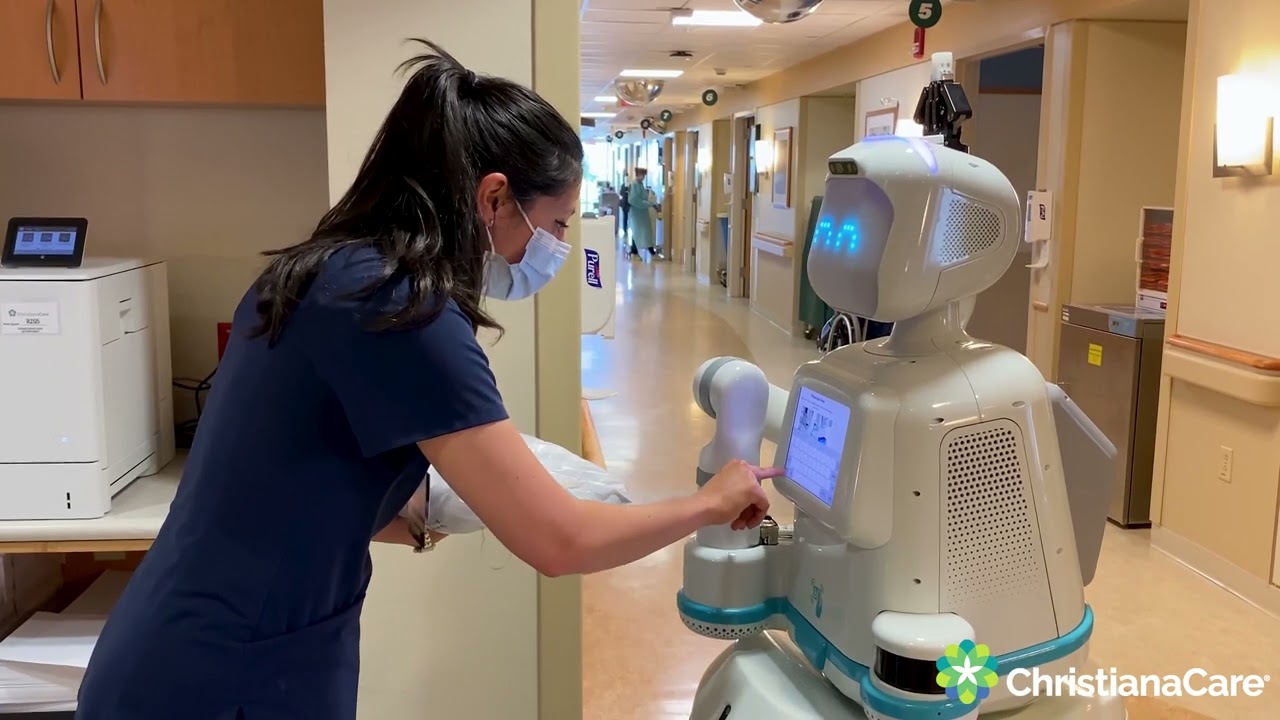
ChristianaCare is the first health system in the Philadelphia region piloting an innovative tool called Moxi, a collaborative robot — or “cobot”— that can assist in the hospital by making deliveries and performing other non-clinical tasks so that nurses and other clinical staff can spend more time focused on what they do best—caring for patients. With a landmark $1.5 million grant from the American Nurses Foundation, ChristianaCare will deploy a total of five Moxi cobots at Christiana Hospital. It is the largest single grant in the history of Nursing at ChristianaCare. Research published in the Journal of Nursing Management shows that nurses spend a significant amount of time — up to 33% of their shifts — on time-consuming but simple tasks such as dropping off lab specimens, collecting supplies or picking up medications from the pharmacy. By taking over these time-consuming but simple tasks, Moxi enables nurses to focus on patient care, where their skills are most needed. “Nurses need the time and space to deliver care and patient education at the top of their license,” said Ric Cuming, Ed.D., MSN, RN, NEA-BC, FAAN, chief nurse executive and president, ChristianaCare HomeHealth. “Moxi will be doing those hunting and gathering tasks such as getting equipment and supplies, which nurses are doing today but don’t need to be doing.” Cobots are designed to share workspace and interact directly with people. In ChristianaCare’s initiative, the Moxi cobots will be integrated with the Cerner Corporation electronic health record (EHR) platform and use artificial intelligence to proactively identify when nurses will need equipment, supplies, medications and lab tests. The Moxi cobots will be deployed to 11 inpatient units, partnering with more than 400 nurses. The American Nurses Foundation grant will enable ChristianaCare to evaluate the impact of cobots on nursing practice with the goal of scaling the technology if successful. “Moxi is not a replacement for a nurse or nursing position — or any position,” Cuming said. “It is an additional resource for nurses and their teams. “With robotic technology, we are using resources wisely and effectively, creating more efficient workflows, reducing repetitive tasks and freeing up nurses’ time for the complex clinical work that they excel at doing.” Reimagining Nursing ChristianaCare is one of 10 grant recipients from the American Nurses Foundation Reimagining Nursing (RN) Initiative. “We are proud that the American Nurses Foundation has the confidence in bold nurse-led ideas that will lead to large-scale, replicable change,” said Katherine Collard, MS, RN-BC, chief nursing informatics officer at ChristianaCare. “This grant will support nurses at ChristianaCare and our nursing colleagues across the nation in realizing their full potential, giving them the tools, resources and power to improve health care now and in the future.” With the American Nurses Foundation grant, ChristianaCare will conduct research on driving nursing outcomes through robotics. “We have a transformative opportunity to generate new knowledge and to move the science forward around robotics in nursing and in health care,” said Susan Birkhoff, Ph.D., RN, nurse scientist at ChristianaCare. “Through research, we will study Moxi’s impact to nursing caregivers that will have broad implications for nursing practice, workforce and education,” she said. ChristianaCare began exploring the potential of robotics to support Nursing with two Moxi cobots acquired in February, funded through the generosity of donors including Good Samaritan, Inc. and E.J. “Woody” Rice. With the grant, said Birkhoff, ChristianaCare will take Moxi to the next “bold frontier,” adding three more cobots with the goal of automating and optimizing nurses’ workflow without interrupting care. With five total cobots, ChristianaCare will be home to the largest number of Moxi robots in health care. The Little Bot That Can Before Moxi can become fully part of the care team, it must learn to navigate the hospital and respond to the nurses’ needs. Using artificial intelligence, Moxi is mapping out Christiana Hospital through sensors and other machine-learning technology so that the cobots can ultimately navigate and work autonomously. “When the Moxi cobots are fully integrated, we anticipate that they will complete up to 200 delivery tasks a day,” Collard said. “By making point-to-point deliveries, Moxi can save nurses hours of time and thousands of steps.” Designed to be compatible with the busy environments of hospitals, Moxi’s features include: Social intelligence: Moxi won’t bump into people or objects in hallways, waves when it sees someone new and happily poses for selfies. Mobile manipulation: Moxi can learn to use its robotic arm to operate existing automatic doors and elevator panels. Human-guided learning: The more Moxi is used, the more Moxi learns and adapts to the environment and specific ways of doing things. Friendly and safe design: With heart-shaped eyes and a friendly appearance, Moxi is designed to navigate safely and get the job done so nurses can focus on patient care. “What Moxi is doing in health systems like ChristianaCare is really transforming the way we think about health care and allowing staff to focus on the people in the hospital as opposed to the tasks,” said Dr. Andrea Thomaz, CEO and co-founder of Diligent Robotics, which created Moxi. “Robots are not something way in the future. Our robots work side-by-side with humans to ease the stress and workload of one of the most demanding jobs in society, nursing. The partnership between Diligent and ChristianaCare shows that the future is now.” Hospital Helper Directly from the Cerner EHR, Moxi will be able to anticipate clinician and patient needs and perform tasks without human involvement. Examples could include: Delivering items to patients based on nurses’ order requests. Making rounds across units to deliver lab samples on collections completed in the electronic health record. Making just-in-time deliveries of pharmaceuticals not stocked on the floor. Prioritizing tasks based on the nursing workload in a unit, so that the busiest nurses will get help first. “Connecting Moxi to the existing technology that clinicians use on a daily basis is key to making it easier to anticipate needs so clinicians can spend more time on patient care,” says Eva Karp, DHA, MBA, RN-BC, senior vice president, chief clinical and patient safety, Cerner. “Moxi could make a real difference in a nurse’s day — alleviating burnout and staffing shortages, which have become especially prevalent since the pandemic.” Incorporating the electronic health record into Moxi is part of the study funded by the American Nurses Foundation. “It’s absolutely in the best interest of our patients that Moxi can work alongside nurses so we can spend more time working directly with our patients to do what we do best,” said Pam Owen, MSN, RN-BC, nurse manager on 7E, one of the pilot units. “And Moxi brings a smile to people’s faces.” Fast Facts About Moxi Works in 22-hour shifts. Needs only two hours of charging time. Weighs about 300 pounds. Can carry a total weight of 70 pounds. Gender-neutral. Pronouns are “it” for a single Moxi cobot and “they” for more than one. Named one of America’s Greatest Disruptors in 2021 by Newsweek and one of the Best Inventions of 2019 by Time Magazine. About ChristianaCare Headquartered in Wilmington, Delaware, ChristianaCare is one of the country’s most dynamic health care organizations, centered on improving health outcomes, making high-quality care more accessible and lowering health care costs. ChristianaCare includes an extensive network of primary care and outpatient services, home health care, urgent care centers, three hospitals (1,299 beds), a freestanding emergency department, a Level I trauma center and a Level III neonatal intensive care unit, a comprehensive stroke center and regional centers of excellence in heart and vascular care, cancer care and women’s health. It also includes the pioneering Gene Editing Institute. ChristianaCare is nationally recognized as a great place to work, rated by Forbes as the 2nd best health system for diversity and inclusion, and the 29th best health system to work for in the United States, and by IDG Computerworld as one of the nation’s Best Places to Work in IT. ChristianaCare is rated by Healthgrades as one of America’s 50 Best Hospitals and continually ranked among the nation’s best by U.S. News & World Report, Newsweek and other national quality ratings. ChristianaCare is a nonprofit teaching health system with more than 260 residents and fellows. With its groundbreaking Center for Virtual Health and a focus on population health and value-based care, ChristianaCare is shaping the future of health care.


Ask the Expert: How to make agriculture more sustainable
MSU’s Bruno Basso outlines key steps the grain industry can take — with public support — to reduce its greenhouse gas emissions by more than 70% over the next decade Michigan State University Foundation Professor Bruno Basso has long been a believer in the power of digital agriculture. For years, he’s worked to show how emerging digital tools and technologies — things like drones, robotics, satellite imagery and computer models of soil and plant growth — can help farmers promote sustainability without sacrificing profits. Now, in addition to belief, he also has concrete numbers. Basso, an ecosystems scientist in the College of Natural Science and the W.K. Kellogg Biological Station, has helped outline how America’s grain industry can shrink its carbon footprint by 71% by 2030. The team — which included researchers at Duke University, the U.S. Department of Energy’s Argonne National Laboratory and Benson Hill, a sustainable food technology company — published its findings online on June 21 in the journal the Proceedings of the National Academy of Sciences. Basso, who recently won a $250,000 award for sustainability innovations, sat down with MSUToday to talk about how farmers can achieve those reductions and how the public can help. The full article is attached and well worth the read. Basso tackles tough questions such as: How big is this problem? How much of our greenhouse gas emissions come from agriculture? Your new paper focuses on grains in particular. How big of an emitter is grain production, especially compared to other ag sectors such as livestock, which tends to get more attention? You talked about getting a 23% reduction by better management of fertilizer. How do we get to a 70% reduction by 2030? What are the obstacles that we need to overcome by 2030? Are you a journalist looking to cover this topic - then let us help. Bruno Basso is available to speak with media, simply click on his icon now to arrange an interview today.


Aston University – inspiring more women into engineering careers
• Aston University is celebrating International Women in Engineering Day • College of Engineering and Physical Sciences photography campaign of females as #EngineeringHeroes • Campaign aims to encourage girls into engineering careers A team of female engineering heroes from Aston University’s College of Engineering and Physical Sciences has banded together to encourage girls into STEM careers. As part of International Women in Engineering Day (INWED), the world’s largest initiative to celebrate the achievements of women in engineering, Aston University’s very own team of engineers have shown themselves to be the very best STEM superheroes. Aston University Mechanical Engineering Student and STEM Ambassador Olamide Olabode Dressed in capes and taking selfies for the event on Wednesday 23 June, female ambassadors from the College, in collaboration with the Greater Birmingham and Solihull Institute of Technology, have also put together video content to show off their engineering skills and become ‘heroes’ for girls wanting to do the same. Also launching on the day will be a competition for participating schools linked to Aston University. Girls are being challenged to come up with their own superhero gadget / gizmo idea. Professor Sarah Hainsworth OBE FREng, Pro-Vice Chancellor and Executive Dean of the College of Engineering and Physical Sciences at Aston University, said they were proud to be a part of INWED2021. “It is so important to us to encourage more girls into STEM subjects. Our hope is that through our teaching, and our partnership with the Greater Birmingham and Solihull Institute of Technology with its focus on technical skills for advanced manufacturing and giving students a clear route to technical employment, many will follow in the footsteps of our incredible team and be the STEM leaders of the future. “At Aston University, we work on sustainability for the environment, bioengineering, robotics, machine learning, sensors, communications, artificial intelligence, technologies for future vehicles and the issues that shape our future. On International Women in Engineering Day (INWED 2021), our College of Engineering and Physical Sciences celebrates the amazing contribution of our women colleagues who represent the cutting edge of engineering who are making vital contributions to our health and wellbeing, our society and our planet,” she added. Katy Lewis, marketing manager, said schools invited to take part were from the Aspire to Aston progressive programme, which works with 10 schools in and around Birmingham from areas of high deprivation. “At each of these schools there are up to 40 pupils per year group who have the academic ability to aim for university but lack the knowledge and confidence to do so and are selected for the programme. Our aim is to raise aspirations and normalise the idea of going into higher education, which is why us doing challenges like this one is so vitally important, so we can’t wait to help find the STEM female stars of the future,” she said. Currently the College of Engineering and Physical Sciences has 25% female academic staff (the UK STEM staff benchmark being 17 – 19%). The amount of female students studying the engineering subjects at Aston University has also grown over the past five years from 22% - 27%, above the UK STEM benchmark of 17% – 19%. To find out more about engineering at Aston University, visit ww.aston.ac.uk/eps For more details about the Greater Birmingham and Solihull Institute of Technology, visit this link: http://gbsiot.ac.uk/

Rensselaer Experts Available To Discuss Federal Infrastructure Proposal
Federal lawmakers are discussing sweeping infrastructure improvements to transportation, manufacturing, and digital infrastructure, among other projects. Researchers at Rensselaer Polytechnic Institute, the country’s first technological research university, are leaders in improving the sustainability, safety, and performance of transportation systems, energy systems, and wireless networks, among other areas. Experts in civil and environmental engineering, electrical engineering, and mechanical engineering are available to discuss what impact large-scale infrastructure projects could have on a multitude of systems that impact people across the country. Improving Transportation and Freight Systems: José Holguín-Veras, the director of the Center for Infrastructure, Transportation, and the Environment at Rensselaer, and Cara Wang, an associate professor of civil and environmental engineering at Rensselaer, are leading experts on the role of infrastructure on freight systems and transportation, and the environmental impacts of both. Their research focuses on improving transportation and freight systems in order to increase efficiency, reduce traffic congestion and, in turn, reduce vehicle emissions. Professors Holguín-Veras and Wang are available to discuss the ways in which improved roads, bridges, railways, and ports could affect shipping and delivery of goods, congestion in cities, and emissions in the environment. They can also discuss what their research has uncovered that could guide policymakers as new projects are planned. Expanding Broadband: Alhussein Abouzeid, a professor of electrical, computer, and systems engineering, is an expert in networked systems, the smart grid, and the Internet of Things. Some of his research focuses on modeling wireless networks, as well as wireless spectrum and policies to optimize its use. Koushik Kar, also a professor of electrical, computer, and systems engineering, researches communication networks, particularly modeling, analysis, and optimization of the internet and wireless networks. Both researchers are available to discuss the ways in which digital infrastructure can meet future needs. Next-Generation Manufacturing: Part of the President’s infrastructure plan would allocate $300 billion to manufacturing. Next-generation manufacturing is a central area of expertise at Rensselaer, with the Institute’s Manufacturing Innovation Center and the Rensselaer Manufacturing Innovation Learning Lab. Faculty and staff from both state-of-the-art centers, including John Wen, the head of the Department of Electrical, Computer, and Systems Engineering, who is an expert in robotics, are available to discuss the role that Rensselaer research plays in preparing the manufacturing sector for the nation’s current and future needs. Upgrading Electric Grid, Investing in Clean Energy: Joe Chow, Jian Sun, and Luigi Vanfretti, all professors in the Department of Electrical, Computer, and Systems Engineering, hold extensive expertise in modeling, monitoring, and optimizing the electric power grid. Their work will be integral to the development of a cleaner, more resilient power grid, especially as clean energy sources are increasingly integrated. Christopher Letchford, the head of the Department of Civil and Environmental Engineering, is a global expert in wind engineering. His expertise includes wind power modeling, wind climatology, and the impacts of climate change on infrastructure, transportation, and energy production. Each of these experts is available to discuss the importance of upgrading the nation’s electric grid, and the move toward clean and renewable energy. Boosting Electric Vehicle Numbers: Part of President Biden’s plan focuses on increasing the number of electric vehicles on the road. A key component of improved and more cost-efficient electric vehicles is greener, cheaper, more efficient, and longer-lasting batteries. Nikhil Koratkar, an endowed chair professor of mechanical engineering, is a leading expert in energy storage technologies. He has dedicated his research to improving the batteries that society already uses, while also developing batteries of the future. He can discuss current battery technology and how advancements in energy storage research could help put more electric vehicles on United States roads. Upgrading Water, Wastewater, and Stormwater Systems: Chip Kilduff, an associate professor of civil and environmental engineering, is an expert in managing water quality and water treatment. He has a particular focus on water treatment approaches like membrane and adsorption-separation processes. Kilduff is available to discuss the importance of upgrading water and wastewater systems and what his research has uncovered about the best methods for managing water quality.


What will Donald Trump’s National Defense Strategy mean for Americans and its citizens?
The Department of Defense recently published an unclassified synopsis of the Trump administration’s first National Defense Strategy (NDS). The document, is missing the usual and sometimes expected Trump-like rhetoric of ‘America First’ and instead focuses on a balanced and cooperative approach among nations. At Augusta University, our experts have been examining the strategy, they have found that within the NDS the following stood out: • More money will be spent on military, private military contracting firms and cyber firms. This could benefit the local economy but does show that we’re worried. • Our military is growing more high-tech with artificial intelligence and robotics. The future of warfare could start to resemble something out of Hollywood. • For the last two decades, we were concerned with small-scale wars, counter-insurgency and counter-terrorism. Now, we are preparing our military for a Great Power War. In other words, we are preparing for a WWII type engagement, versus Iraq or Afghanistan. • Trump’s policy is very assertive whereas Obama’s policy was more conciliatory and forgiving in nature. • We are clearly focused on reasserting ourselves as the superpower. But what will this mean for every-day Americans? Will it be a boost to our economy as we invest in our military or will it mean other programs suffer as a result? Are we on the verge of another cold war? There are a lot of questions to answer – and that’s where our experts can help. Dr. Craig Albert is an expert on American politics and political philosophy. He was recently appointed director of Augusta University’s new Masters of Arts in Intelligence and Security Studies. Dr. Albert has experience with all forms of national and local news organizations and is available to speak to media regarding Donald Trump’s National Defense Strategy. Simply click on his icon to arrange an interview. Source:
