
Experts Matter. Find Yours.
Connect for media, speaking, professional opportunities & more.

From Asthma and Tick Bites to Dengue Fever, Nurses Tackle Health Impacts of Climate Change
According to statistics compiled by the National Aeronautics and Space Administration (NASA), carbon dioxide levels are at their highest in more than 650,000 years. In addition, 18 of the 19 warmest years ever have occurred since 2001, according to NASA. The World Health Organization reports that between 2030 and 2050 climate change is expected to cause 250,000 additional deaths per year from malnutrition, malaria, diarrhea and heat stress. “Many people don’t realize how much climate change can affect their health,” says Ruth McDermott-Levy, PhD, MPH, MSN, RN, director of the Center for Global and Public Health at Villanova’s M. Louise Fitzpatrick College of Nursing. “We see increases in ground level ozone from the changes in our climate here in the United States and in Europe. And we see the impact of climate change on our patients every day.” Earlier this year, Dr. McDermott-Levy spent several months in Finland collecting nurses’ observations on the impact of climate change. “In Finland extreme cold causes deaths, but increasing heat waves have become a health risk, too. This is especially a risk for the chronically ill and the elderly. And nurses will need to consider heat-related issues when they discharge elderly patients from the hospital to their homes.” In addition to health issues related to climate change, the increasing extreme weather events that bring on flooding and wildfires also disrupt the health care delivery supply chain, making much needed medications, medical supplies, and access to health care providers a greater challenge in delivering care.


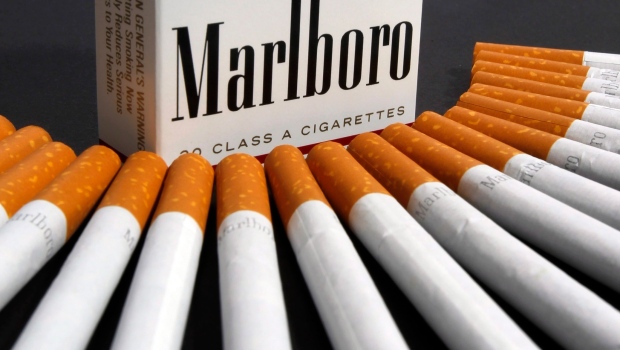
Covering World No Tobacco Day – Let our experts help!
May 31 is the WHO’s World No Tobacco Day. And despite all the awareness campaigns, education and advice – people are still lighting up. In fact, according to the CDC: More than 16 million Americans are living with a disease caused by smoking. Cigarette smoking is responsible for more than 480,000 deaths per year in the United States, including more than 41,000 deaths resulting from second-hand smoke exposure. This is about one in five deaths annually, or 1,300 deaths every day. On average, smokers die 10 years earlier than non-smokers. If smoking continues at the current rate among U.S. youth, 5.6 million of today’s Americans younger than 18 years of age are expected to die prematurely from a smoking-related illness. This represents about one in every 13 Americans aged 17 years or younger who are alive today. With marketing toward youth increasing and e-cigarettes and vaping now a part of the mainstream – is the fight against big tobacco becoming even harder? There’s a lot there to cover and that’s where our experts can help. Dr. Martha Tingen is a behavioral nurse scientist targeting prevention of tobacco use in children. She is available to speak with media any time – simply click on her icon to arrange an interview.


Expert perspective on a trade war with China and how it could impact a Trump presidency
Trade negotiations between the United States and China have continued to deteriorate over the last few weeks. In efforts to pressure the Chinese to make reforms to trade-related issues such as forced technology transfer and intellectual property rights, the United States has raised tariffs on nearly all Chinese exports. While there is a consensus among experts that these trade issues harm U.S. producers and must be dealt with, there is not universal agreement that a trade war is the best way to make it happen. Who will feel the effects? It is apparent that both consumers and producers in the U.S. will feel the effects of the trade war. Producers will not be able to absorb the increased costs from the raising tariffs and will need to pass them along to consumers. Consumers will begin to see the prices increase on a host of retail goods, such as clothing and apparel, toys, and home goods. Partners replaced? In addition, as the Chinese retaliate with increased tariffs on U.S. exports, such as agricultural goods, producers from other countries with lower tariffs are stepping in to take the place of the U.S. exporters. For example, Brazilian soybean producers are more than happy to sell their product to China at a lower cost. Once lost, it may be difficult for U.S. farmers to regain these important Chinese markets. A political price to pay? It appears that the effects of the trade war may hit the Trump administrations base, in agricultural and manufacturing regions, disproportionately. However, the administration may see the trade war as beneficial to Trump’s 2020 reelection campaign, as Trump is being perceived as being tough with the Chinese and holding them accountable to unfair trade practices. That appears to resonate with his base. However, it remains to be seen how long his base will continue to support this approach as both producers and consumers continue to feel the economic pinch of the growing trade war with China. There’s a lot to know about the short and long-term impacts of a trade war with China and that’s where or experts can help. Matt has taught business and marketing courses at Saint Mary’s University of Minnesota since 2008. Prior to Saint Mary’s, he worked in both the banking and the non-profit sectors, most recently with a non-governmental organization (NGO) with operations in more than a dozen countries. Matt is an expert in political and economic development and is available to speak with media. Simply click on his icon to arrange an interview.

/arc-anglerfish-arc2-prod-mco.s3.amazonaws.com/public/L6SURNCQV5FBDM3EJRPWVSETNU.jpg)
Modern times call for modern solutions. In these days of digital transformation – the new trenches of warfare are dug in cyberspace. In fact, just recently NATO ran a four-day drill where the exercise simulated a cyber attack on a country’s infrastructure and election process. Cyber-warfare is the new reality across the globe. It’s with these advancements that the Georgia Southern University Center for Applied Cyber Education (CACE) signed an Education Partnership Agreement (EPA) with the 688th Cyberspace Wing (688 CW). “As of now, we are the only academic organization in the country that has a direct EPA with the 688 CW,” said CACE Executive Director Scott Scheidt. “The collaboration supports research and development activities for Georgia Southern faculty and students across multiple disciplines, allowing them access to defense laboratory projects that would not otherwise be available in an educational environment.” Are you interested in cyber-warfare or covering this topic? Do you need to know more? Just how vulnerable is America? What are the likely targets? And who are the actual likely perpetrators? There’s still a lot to learn about this topic and that’s where an #expert from Georgia Southern University can help with your coverage. Scott Scheidt is the executive director of the Center for Applied Cyber Education at Georgia Southern University. He is an expert in cyber security and cyber workforce development. Scott is available to speak with media regarding this topic – simply click on his icon to arrange an interview.

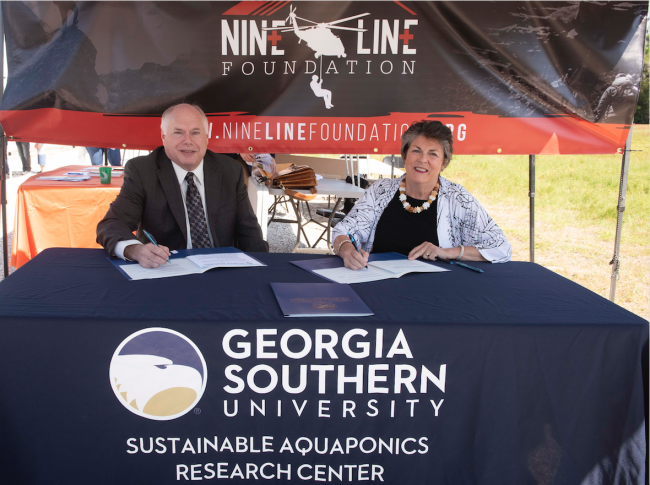
Working together to promote veteran education
Georgia Southern University recently signed an agreement (see attached) with Nine Line Foundation that will assist veterans as they transition back into civilian life. Veterans will be enrolled in an aquaponics training program with the University’s Armstrong Campus’ Sustainable Aquaponics Research Center (SARC) at a compound at Nine Line Apparel in Savannah, Georgia. Aquaponics, or soilless farming, mixes aquaculture, the farming of fish, and hydroponics, to fuel the growth of plants in water. The SARC, a 4,100 square-foot greenhouse, has four independent recirculating systems, each containing 900-gallon tanks capable of holding more than 100 mature tilapia. Working within the College of Science and Mathematics, the SARC is focused on providing students, faculty and volunteers with the opportunity to conduct fundamental, interdisciplinary research in the area of aquaponics. The partnership with Nine Line Foundation will extend education opportunities to area homeless veterans and provide faculty and students an opportunity to engage with the veterans. Are you interested in learning more about his project and how Nine Line Foundation and Georgia Southern University are working together to provide opportunities and training to veterans? SARC’s director, Brent Feske available to speak with media – simply click on his icon to arrange an interview.

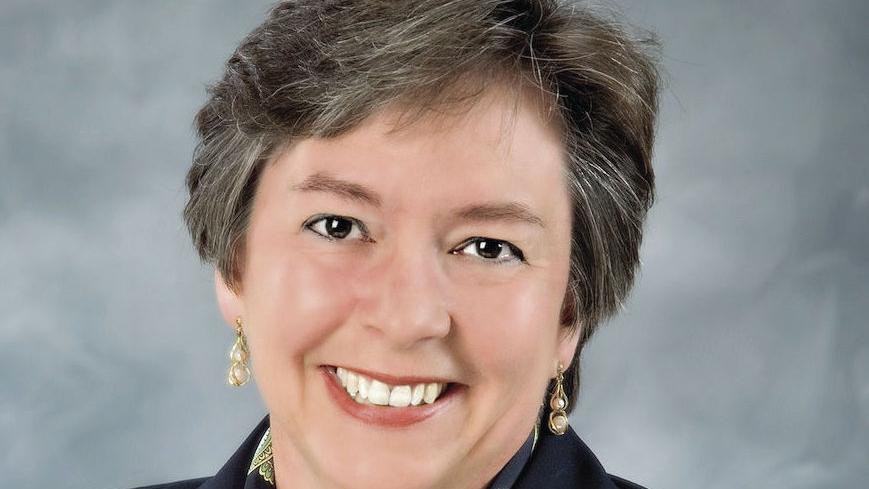
In her most recent column with The Free Lance-Star, University of Mary Washington’s Lynne Richardson extols a witty, pointed and yet optimistic piece about bad bosses, why they might be bad and how there’s even a silver lining to each bad boss’ behavior. Here’s a piece from her open letter. “Dear Bad Boss, Your staff complains about you. You’re a micro-manager. Or maybe you’re a detached manager, showing little interest in your people or the work they do. Or maybe you put such pressure on your employees that they feel stressed all the time and hate coming to work. Of course, because of this, productivity suffers. Maybe you have incredibly high expectations that are unachievable, especially because you either don’t know to hire or you don’t train your folks. There is no possible way for the folks in your organization to reach your ridiculous expectations. Whatever the reason your folks don’t respect you, I want to thank you. Say what? Yes, Bad Boss, I appreciate you being bad. And I have two reasons…” If you like this – read the rest of the article attached below. So, do you have a bad boss? Do you know someone who does? Any chance … you just might be a bad boss? Worry not – our experts can help. Dr. Lynne Richardson is a columnist, mentor and her expertise focuses on leadership management and higher education administration. She is available to speak with media about leadership … and even bad bosses. Simply click on her icon to talk with her and arrange an interview.

Transparency from charities about how funds are used builds trust and increases giving
BLOOMINGTON, Ind. -- Charitable and humanitarian organizations are increasingly tapping into a $30 billion crowdfunding market, not only to raise funds but to build donors' trust by being more transparent, according to research from Indiana University's Kelley School of Business. Certified charities like the American Red Cross regularly use crowdfunding after hurricanes and wildfires. But other, often local, organizations that are quickly created after emergencies can compensate for their lack of government certification by posting frequent updates about how funds are being used. Authors of the paper are Jorge Mejia, assistant professor of operations and decision technologies; Alfonso Pedraza-Martinez, associate professor of operations and decision technologies and Grainger Faculty Fellow; and Gloria Urrea, a visiting scholar of operations and decision technologies. Mejia, the paper's lead author, noted its timeliness in light of several recent fraud cases involving charitable giving, such as the college admissions scandal and questions about the charitable status of politicians' private foundations and religious organizations. "Our paper tackles some of these challenges head on by providing a way to increase the transparency of these organizations online," he said. The paper's findings also have implications for donors, who need to pay attention to how charities are using donations, as shown through regular operational updates and other communication and certification. "Our results indicate that individuals and humanitarian organizations willing to start crowdfunding campaigns benefit from transparency," the researchers said. "As updates have a positive effect on donations, organizations can increase funding by keeping donors informed on a regular basis about the campaign's progress." The process of receiving approval from the Internal Revenue Service as a certified 501(c)(3) tax-exempt organization can take months, long after the immediate needs of a disaster have passed. In the meantime, local organizations accept donations to help with recovery efforts immediately using crowdfunding. "Donations increased both when campaigns provided frequent updates about the work of the charity and when campaigns were certified," the Kelley professors said. "Strikingly, we found that the size of the positive effect derived from operational transparency -- from communications work -- is much greater than the size of the effect of conventional transparency, from being a certified tax-exempt charity. "But not all updates are the same. Operational transparency increases the financial benefits of updates," they added. "Campaign organizers should focus their efforts on posting work-related updates to describe how the campaign is achieving its objective." Researchers collected data from a large online platform for charity crowdfunding and analyzed nearly 108,000 emergency campaigns over a seven-year period. Just over half of the campaigns posted at least one campaign update, and just 9 percent of the campaigns were certified. Each work-related word in updates increased donations on average by $65 per month, while being a certified campaign raised funds on average by $22 a month. The research article, "Operational Transparency on Crowdfunding Platforms: Effect on Donations for Emergency Response," appears online in the journal Production and Operations Management.

Is it Time to Rethink Digital Transformation? Join our experts May 02 to Find Out!
Organizations are rethinking digital transformation. After some high-profile failures, innovation being treated as a sideshow, and elusive ROIs, organizations are reshaping their digital visions and their tactics for getting there. With greater clarity about what the future enterprise will look like and what it will take to compete in redefined industries, companies are pivoting away from digital for the sake of innovation to digital for the sake of the business. Join us and catch Dave Pearson, Research Director and Team Lead for IDC Canada's Infrastructure Solutions Research Group presenting: ‘The New Infrastructure Data World ’ at IDC Directions 2019 in Toronto on May 02. Data growth and capacity concerns continue to the be the number one stress on data centers in Canada. At the same time, IT is expected to support Digital Transformation (DX) and new business initiatives at nearline speed. What will your next generation of infrastructure need to look like to support the variety of workloads, applications, and data sources your organization requires, from core to cloud to edge? Find out in Dave's breakout session at IDC Directions in Toronto Location St. James Cathedral Centre: Snell Hall 65 Church Street | Toronto Date May 2, 2019 Time 8:00 AM - 8:30 AM - Registration & Networking Breakfast 8:30 AM - 3:30 PM Conference Program Register Today before it's too late! If you're a member of the media and would like to attend this event, please contact Cristina Santander at csantander@idc.com


Essays for sale – our experts weigh in with ABC news
As the college admissions scandal is becoming the story that just won’t end for some of the leading schools in the country – recently Good Morning America opened another chapter in the book that revealed just how easily college entrance essays are being offered and acquired by prospective students. From ghost writing, to essays up for grabs online at a steep price - It’s a multi-million-dollar industry and it’s growing. A leading expert from UMW was recently interviews by Good Morning America about the problem. “Contract cheating has grown a great deal over the past ten years, “said Professor David Rettinger of the University of Mary Washington in Fredericksburg, Virginia. Rettinger is president of the International Center for Academic Integrity, an organization that promotes integrity in academia throughout the world. "Students are willing to use internet sites, family members, friends and other technology to get contractors to do their work.” Are you covering this topic? We can help. Dr. David Rettinger is available to speak with media regarding this scandal as well as the importance of education in America. Simply click on his icon to arrange an interview.

Why Operation Varsity Blues has some experts seeing red
It’s a scandal that has all the right ingredients - celebrity, trusted institutions, entitlement, bribery and now stars potentially behind bars. The 50 people charged on March 12 in a college admissions conspiracy include the tennis coach for the Obama family, an investor and friend of Bono and TV celebrities Felicity Huffman from Desperate Housewives and Full House’s Lori Loughlin. They are all wealthy, connected and parents who participated in a scheme that saw cheating on admission tests and bribery of college coaches to get their kids into some of the most elite schools across America. It’s embarrassing for the kids, the parents and the schools. But nonetheless, there will be consequences. This conspiracy was brought down by the FBI after all. However, there is collateral damage that has also been done to America’s academic community. The reputation, importance and value of a degree from a post-secondary institution has been sullied. And undoing this damage will not be easy. Dr. David Rettinger is Director of Academic Integrity at the University of Mary Washington and President of the International Center for Academic Integrity, an organization founded to combat cheating, plagiarism and academic dishonesty in higher education. “With the recent revelations from the indictments in Operation Varsity Blues, the integrity of higher education is once again under attack. As a scholar of student ethics and President of the International Center for Academic Integrity, I encourage both condemnation of this behavior and understanding of the context in which it occurred. Our society is commodifying higher education, focusing on degrees and not learning. I hope that the public discourse about education can focus on authentic learning rather than degrees and qualifications, so that higher education can remain a public good.” Approved quote from Dr. David Rettinger Dr. Rettinger is available to speak with media regarding this scandal as well as the importance of education and how universities and colleges across America will need to work to rebuild trust in the institutions that have been impacted by these events. Simply click on his icon to arrange an interview.