
Experts Matter. Find Yours.
Connect for media, speaking, professional opportunities & more.

On Rethink What’s Possible, a podcast by Milwaukee School of Engineering, MSOE students, faculty, staff, alumni and community partners share their inventions, research, industry trends, projects, experiences and how they’re rethinking what's possible. Episode Four, 'Rooted in STEM,' features Seandra Mitchell, vice president of student affairs and campus inclusion, and Liz Taylor, director of STEM, as they dive into the importance of diversity in STEM and MSOE’s efforts to offer STEM experiences to shape a more equitable future. According to the National Science Foundation, 111,402 bachelor’s degrees in engineering were conferred nationwide in 2018, the most recent data available. Of those degrees, roughly 64% were white, roughly 12% were Hispanic or Latino, roughly 12% were Asian or Pacific Islander, roughly 4% were Black or African American, and the rest listed themselves as something else. In 2021, MSOE celebrated the opening of the We Energies STEM Center at MSOE. The new center is the premier STEM destination in Milwaukee for K-12 students and home to MSOE’s STEM outreach efforts. The purpose is to provide an accessible, dedicated space for students from all walks of life to explore, create and define their future in STEM. The podcast is available for download and well worth listening to. And, if you are a journalist interested in learning more or arranging an interview with MSOE's Director of STEM outreach, Liz Taylor – simply click on her icon now to arrange an interview today.



Aston University pollution expert praises Clean Air Zone roll out plans across UK
• Dr Stephen Worrall believes Birmingham’s Clean Air Zone is encouraging fewer drivers into city centre • The pollution expert said statistics show motorists are ‘changing their behaviour’ • He praised other cities for following suit but says changes need to come more quickly. A leading expert in air pollution from Aston University has examined available data on how many vehicles have paid to enter Birmingham’s Clean Air Zone (CAZ) and has said people’s behaviours are changing Atmospheric chemist, Dr Stephen Worrall, praised the introduction of Birmingham’s CAZ which launched on 1 June, saying it was an important step in tackling air pollution in the city and would have a considerable impact on people’s health. Whilst the full impact of the CAZ on pollution levels won’t become clear until 2022, Dr Worrall said since the “Go Live Date” the traffic data revealed that the number of non-compliant vehicles being driven in the zone was decreasing markedly. “In the first two weeks of June before charging was introduced, the daily number of non-compliant vehicles being driven within the CAZ was at an average of 18,787. “After charging was introduced, this dropped significantly to 11,850 for the remainder of June and this number has continued to fall, with the last reported daily average of 10,800 for August. “This isn’t just your average motorist with a car either, as the data shows similar trends for other categories of vehicles with the biggest improvement observed in light goods vehicles (LGVs). Over 75% of these vehicles were complying with the CAZ in August versus just 63% in June. This is a significant and sustained reduction which clearly demonstrates that people are modifying their behaviours,” he said. Dr Worrall added that the data was also able to hint at the manner in which people were modifying their behaviour, with a possible increase in public transport use, car sharing or a reduction in overall number of journeys. “Some people are upgrading their vehicles to newer, less polluting models as there has been a small rise of about 2,500 in the number of complaint vehicles entering the CAZ on a daily basis. However, this number is dwarfed by the approximately 8,500 reduction in the daily number of non-complaint vehicles. The upshot of this is that the total number of vehicles entering the CAZ every day has dropped by roughly 6,000 (around 6%). 6,000 fewer of the most polluting vehicles in our city centre is a real positive and a step in the right direction to improving our air quality and health,” he said. Air pollution particularly affects the most vulnerable in society, including children, and older people, and those with heart and lung conditions. The annual health cost to society of the impacts of particulate matter alone in the UK is estimated to be around £16 billion*. Levels of NO2 in Birmingham frequently exceed 45 to50 micrograms per cubic meter, mainly caused by road traffic emissions, with certain hotspots exhibiting even greater values such as the measuring site at St Chads Queensway where the last reported yearly average for the city centre was as high as 74 micrograms per cubic meter. The primary aim of the CAZ is to reduce the levels of NO2 to 40 micrograms per cubic meter. Dr Worrall said that although CAZs weren’t directly designed to address greenhouse gas emissions, if as suggested they result in less people using their vehicles for journey, then this would have an impact on emissions. “Whilst the CAZ target is to reduce nitrogen dioxide (NO2) levels, the knock-on effect of this reduction in car use will mean a reduction in pollution in general, including greenhouse gases such as CO2. This is really important and suggests that other cities need to be acting now rather than later. Bath has implemented a similar but less stringent system, London recently extended its ultra low emission zone (ULEZ) area and Portsmouth’s CAZ will be coming live shortly too, but other cities who have plans in the pipeline should really bring them forward as a matter of urgency,” he said. Dr Worrall added that with current COP26 discussions bringing pollution to the forefront, it was important to continue with awareness. “These policies are all small pieces in the puzzle for reducing emissions from transport and getting people to make wiser choices about the vehicles they own and buy, and as COP26 is making very clear we need to be doing all of these things now to save our planet” he said. Dr Worrall has great experience in the subject, having spent a portion of his post-doctoral research in Beijing where he took live air pollution measurements, monitored problematic levels and discussed with international colleagues’ ways to address these issues. Read more about the College of Engineering and Physical Sciences at Aston University, here: https://www.aston.ac.uk/eps ENDS * Defra (2017) Air quality plan for nitrogen dioxide in the UK


Aston University makes experts available through COP26
The University’s website is highlighting its experts, projects and research, latest news and podcasts around sustainability On 4 November the University’s Supergen Hub will co-host a ‘fishbowl’ conversation to develop and interrogate visions for a net zero energy future Aston Originals has produced three shows around finance, energy and transport ahead of the summit. Aston University has launched its COP26 campaign to highlight the work being done by its academics and researchers to support the United Nation’s biggest climate change targets. The University’s website will highlight its experts, projects and research, latest news and podcasts around sustainability and climate change. The COP26 summit will be attended by the countries that signed the United Nations Framework Convention on Climate Change (UNFCCC) – a treaty that came into force in 1994. More than 190 world leaders will meet in Glasgow, between 31 October and 12 November, to discuss ways of achieving net-zero carbon emissions by 2050 and keeping the global temperature rise to 1.5 degrees Celsius this century. High profile attendees are expected to include Greta Thunberg, Pope Francis and Sir David Attenborough. Representatives from Aston University will also be taking part at the global summit. On 4 November during ‘Energy Day’, the six UK Research and Innovation Supergen Hubs, one of which involves academics from Aston University, are hosting a ‘fishbowl’ conversation with the public, to develop and interrogate visions for a net zero energy future. It will be participant-driven, enabling multiple perspectives to be aired and offering an opportunity for a variety of participants to engage, and will be live-streamed for those who cannot attend in-person (tickets available for the live-stream here). Also during Energy Day at COP26, the Aston University Supergen Bioenergy Hub will be hosting a ‘Build your own biorefinery’ game on the COP26 Universities Network exhibition stand within the Green Zone. Members of the public will be invited to create their own biorefinery (where multiple products are created from one feedstock to extract maximum value), demonstrating the many routes to producing bioenergy and bioproducts and the co-benefits that can be achieved through different choices. The campaign will also look at the huge carbon footprint of asthma inhalers and a new project which aims to redesign the canisters, so they are more environmentally friendly. The University’s new digital content brand, Aston Originals, has produced three videos showcasing its experts under the topics of finance, energy and transport. Professor Simon Green, pro-vice chancellor research at Aston University, said: "COP26 highlights how big a challenge the climate crisis is for everyone around the world. “I am proud of the work being done at Aston University to combat the problems facing the planet – from the researchers in the College of Engineering and Physical Sciences carrying out world-leading research into new and innovative ways of converting biomass into sources of sustainable energy to experts in the College of Business and Social Sciences who are helping small and medium sized enterprises (SMEs) cut their carbon footprint.”

Aston University Professor Patricia Thornley elected Fellow of The Royal Academy of Engineering
• Professor Patricia Thornley joins a total of 69 leading engineers from around the world to the Fellows of the Royal Academy of Engineering • Each individual recognised for their outstanding and continuing contributions to their profession • Patricia Thornley is the Director of the Energy and Bioproducts Research Institute (EBRI) at Aston University Professor Patricia Thornley from Aston University has joined the Royal Academy of Engineering as a Fellow. The Director of the Energy and Bioproducts Research Institute, which is based at the University, joins a total of 69 leading figures in the field of engineering and technology to the Fellowship of the Royal Academy of Engineering this week. The group consists of 60 Fellows, four International Fellows and five Honorary Fellows, with each individual having made exceptional contributions to their sectors in their own way, as innovation leaders, inspiring role models, or through remarkable achievements in business or academia. This year’s new Fellows are the first to reflect the Academy’s Fellowship Fit for the Future initiative announced in July 2020, to drive more nominations of outstanding engineers from underrepresented groups ahead of its 50th anniversary in 2026. This initiative will see the Academy strive for increased representation from women, disabled and LGBTQ+ engineers, those from minority ethnic backgrounds, non-traditional education pathways and emerging industries, and those who have achieved excellence at an earlier career stage than normal. These new Fellows will be admitted to the Academy, which comprises nearly 1,700 distinguished engineers, at its AGM on 22 September. In joining the Fellowship, they will add their capabilities to the Academy’s mission to create a sustainable society and an inclusive economy for all. Sir Jim McDonald FREng FRSE, President of the Royal Academy of Engineering, said: “Our Fellows represent the best of the best in the engineering world, and we welcome these 69 excellent and talented professionals to our community of businesspeople, entrepreneurs, innovators and academics. “This year’s new Fellows are the most diverse group elected in the history of our institution. The engineering profession has long suffered from a diversity shortfall and the Academy is committed to changing that, including by ensuring that our own Fellowship community is as inclusive as it can be. It is well established that diverse organisations tend to be more agile and more innovative, and as the UK’s National Academy for engineering and technology, we have a responsibility to reflect the society we serve in addressing the shared challenges of our future.” Professor Thornley added: “It is such an honour to be admitted to the Academy and be able to represent Aston University, EBRI and females within engineering, and I look forward to working with the Royal Academy of Engineering in the future.”


Infrastructure and extreme weather expert on recent weather events
Hiba Baroud, assistant professor of civil and environmental engineering, is available for commentary on recent extreme weather events, including hurricanes, tropical storms and flooding. Baroud is an expert on infrastructure and climate change as they pertain to extreme weather events. She can speak to the potential dangers of the destruction and the cleanup decisions affected areas must make, including those that can help prepare for the future. Topics she can discuss include: How weathers and disasters are becoming more frequent and intense, therefore costing us more. Why cities must prepare before extreme weather hits, making future-based predictions and not just relying on historical data to understand potential concerns. With that, cities must also focus on restoration after an event happens, rather than prevention Additional dangers to residents' lives to be considered once the weather has passed - such as a lack of food and water, lack of power and road infrastructure issues


Three Aston University STEM pioneers shortlisted for Women in Tech Awards
• Three finalists from Aston University shortlisted for prestigious Women in Tech Awards • Two academics are up for the award which will be announced in October • A degree apprentice has also been nominated in the category Three STEM pioneers from Aston University are celebrating after being shortlisted for the prestigious Midlands Women In Tech Awards. Aston University’s Reham Badawy and Lucy Bastin have picked up nominations for the academic category while Jessica Morgan has been put forward for the apprentice category for the awards. The Midlands Women in Tech Awards are an opportunity to highlight and recognise the ongoing contribution of women in the tech sector. The aim of the awards is to raise the visibility of women in the tech space and enable the next generation to ‘see it and therefore aspire to it’. Jessica Morgan is studying a Digital Technology Solutions apprenticeship with Cap Gemini and Aston University, with experience working on projects within the public sector. She is in the final year of her degree apprenticeship and has been balancing work, studying and volunteering, while being on track for a first class honours. Reham Badawy is part of the Undergraduate Teaching Team at Aston University. Her research work has used smart tech to detect and monitor symptoms of Parkinson’s disease. She is a strong advocate for women in STEM and is a UK Ambassador for Women are Boring. Lucy Bastin has a Masters in GIS and a PhD in Urban Ecology. She is a senior lecturer in Computer Science and was recently on secondment to the Joint Research Centre of the European Commission. She developed web-based biodiversity information systems that support accessible and user-friendly reporting by the international community against policy and conservation targets such as the Sustainable Development Goals. Professor Kate Sugden, deputy dean for the College of Engineering and Physical Sciences at Aston University said: “We are delighted to see so many Aston University shortlisted candidates for the Women in Tech Awards. “In our eyes they are all winners and are great examples of our ongoing commitment to making significant contributions to the region and wider society.” Voting closes on August 20 and more details about the finalists can be found here: www.womenintechawards.co.uk The ceremony takes place on 7 October where the winners will be announced.


Podcast: 3D printing’s vital solution to medical problem caused by COVID-19
"They were looking to solve a problem and I was able to use my additive manufacturing knowledge to help them out, and the result of that was that we developed a new technology and span a company out of it." Dr Mark Prince Senior Lecturer in Mechanical Engineering Aston University New device created in Aston University lecturer's home during coronavirus lockdown Aston Business School expert explains how 3D printers are already used to make hearing aids, dental crowns and hips ‘Imagination is the only limit’ for additive manufacturing’s future, according to Dr Ahmad Beltagui A senior lecturer at Aston University is helping ear, nose and throat (ENT) clinics around the world by using the hi-tech ingenuity of 3D printing. Dr Mark Prince used 3D printing to prototype and produce a valve for a mask so that ENT surgeons could continue to examine and treat patients without fear of spreading the virus. Dr Prince, a senior lecturer in mechanical engineering at Aston University, was talking about his experiences in the latest episode of the 'Aston means business' podcast, presented by journalist Steve Dyson. The podcast also features Dr Ahmad Beltagui from Aston Business School, who talks about the wider benefits, some downsides and future potential of 3D printing in successfully disrupting traditional manufacturing. Dr Prince said his interest in additive manufacturing, or 3D printing, peaked after meeting two consultant ENT surgeons in the West Midlands. He said: "They were looking to solve a problem and I was able to use my additive manufacturing knowledge to help them out, and the result of that was that we developed a new technology and span a company out of it. "The company is Endoscope-i Ltd, founded in 2012 and now with an annual turnover of £200,000. The idea was simple: can we get medical endoscopic images of the ears and throat using a smartphone and we came up with a technique to do that." He said that, traditionally, he would have used large, expensive equipment to prototype the systems and new products. However, that wasn't possible with most of the university closed down at the height of the pandemic last year. He, therefore, had to look at other technologies that were safe to use in the home without breaking lockdown restrictions. Dr Prince explained: "When we are looking at diseases or concerns of the throat and nose we often stick an endoscope up the nose and down the throat, but of course you can't do that through a mask. "One of the founding members, Mr Ajith George, suggested that we could put a valve in the mask that allowed an endoscope to pass through it and allow the procedure to go ahead without breaking containment." "Work on the device started in mid-March 2020 and was ready for free supply to the NHS in November. Dr Prince added: "What that has allowed the NHS to do is any ENT clinic was able to fit it to a mask, put the mask on the patient, and carry on with an endoscopy procedure without all of the concerns of the pandemic." Meanwhile, Dr Ahmad Beltagui, a lecturer in operations and information management at Aston Business School, said you could get 3D printers from as little as £200 all the way up to expensive versions working with "exotic materials" like titanium. He said there were four main benefits to manufacturers: "Compared to traditional manufacturing methods you can produce shapes that are harder to produce; you can produce things in very small volumes; you can innovate faster and produce lots of prototypes, and you can produce things nearer to where they are required so you don't have to produce in a factory in one place and transport somewhere else." Dr Beltagui said: "The COVID-19 pandemic saw 3D printers used in homes to produce equipment such as cheap face visors for their local hospitals. The great thing about 3D printing is anyone can produce anything they want. "That's also the biggest risk – there is no control over what people produce or how safely they produce it. "At the beginning of the pandemic, someone in Italy found that they could produce some spare parts to keep the ventilators in their local hospital going. But then a few days later the manufacturer of those ventilators was considering whether or not it should take legal action." However, he said the printing machines had gradually become more reliable and there was a better level of quality, while the cost was coming down. Dr Beltagui added: "As to the future, the only limit is your imagination."


Ask an Expert: How do you manage a natural disaster during a pandemic?
Mark Abkowitz, Professor of Civil and Environmental Engineering, discusses the challenges in managing a natural disaster during a pandemic.
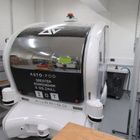
Aston University celebrates launch of first wave of Institutes of Technology
"There remains a significant national skills shortage for engineering and we are pleased to be helping to address this through the provision of courses for young people wanting to progress to higher technical education, adult learners and people who want to develop their engineering skills." Professor Sarah Hainsworth Pro-Vice Chancellor and Executive Dean of the College of Engineering & Physical Sciences Aston University Institutes of Technology (IoTs) are collaborations between further education (FE) providers, universities and employers IoTs focus on the specific technical skills needs required in their local area They provide employers with a skilled workforce and students with a clear route to technical employment Aston University is joining in a nationwide celebration to mark the launch of the first wave of 12 Institutes of Technology on Thursday 8 July. Institutes of Technology (IoTs) are collaborations between further education (FE) providers, universities and employers. They specialise in delivering higher technical education (at Levels 4 and 5 – equivalent to the first and second year of a degree) with a focus on STEM (science, technology, engineering and mathematics) subjects, such as engineering, digital and construction. IoTs focus on the specific technical skills required in their local area. They will provide employers with a skilled workforce and students with a clear route to technical employment. By bridging skills gaps, these new institutions will drive growth and widen opportunity. Gillian Keegan, minister for apprenticeships and skills, said: “Institutes of Technology are the pinnacle of technical education, helping to develop the highly-skilled talent pipeline employers will need for the future. “By bringing together Further Education colleges, universities and businesses, Institutes of Technology are unique partnerships which will help to tackle skills shortages in vital sectors, from marine engineering to healthcare, cyber security to agri-tech. “Institutes of Technology are also playing a vital role in our multi-billion Plan for Jobs, which is helping to level up opportunities and support people to get the skills they need to get good jobs as we recover from the pandemic.” The Greater Birmingham and Solihull IoT has brought together the most innovative education providers within the Greater Birmingham and Solihull Local Enterprise Partnership area with leading industry stakeholders to create a powerhouse for advanced manufacturing and engineering. The consortium is led by Solihull College & University Centre, Aston University and Birmingham City University, working alongside South and City College Birmingham as a core partner and supported by BMET College, University College Birmingham and the University of Birmingham. The partnership will jointly design, develop and widen education and training opportunities aligned to the latest skills needs of leading-edge employers and the local, regional and national economy. The group will target under-represented learners, facilitating clear opportunities for progression from school to high-level occupations. In this new video, partners and employers explain what the IoT means to them: The following passage was included in the recent Government Skills for Jobs white paper, with the GBS Institute of Technology highlighted as an example of good practice: Government Skills for Jobs white paper Building work has started on the GBSIoT Hub at Aston University. It will be completed at the end of 2021 and will be an innovative hub, providing a fabulous resource for students and learners from across the region. Andy Street, mayor of the West Midlands, said: “The Greater Birmingham and Solihull Institute of Technology is all about two things: economic growth and prosperity. The Greater Birmingham and Solihull Institute of Technology is going to give us wonderful new skills in the sectors of the economy that are really growing fast here.” Professor Sarah Hainsworth, pro-vice chancellor and executive dean of the College of Engineering & Physical Sciences at Aston University, said: “We are delighted to be working with our partners on the Greater Birmingham and Solihull IOT for Advanced Manufacturing. It has been really exciting to see the work progressing on delivering the new Hub for students and learners on the campus at Aston University. "There remains a significant national skills shortage for engineering and we are pleased to be helping to address this through the provision of courses for young people wanting to progress to higher technical education, adult learners and people who want to develop their engineering skills. "The Hub will be home to a new cyber physical manufacturing rig which will create a simulated working environment linked to advancing Industry 4.0 technology and state of the art digital facilities and I really look forward to when it becomes the new home for our IoT students.” Find out more about the Greater Birmingham and Solihull Institute of Technology at www.gbsiot.ac.uk

Environmental scientist on heat wave in western U.S.
Jonathan Gilligan, Associate Professor of Earth & Environmental Science and Civil & Environmental Engineering at Vanderbilt University, is available for commentary on the recent heat waves and how climate change plays a role. Professor Gilligan's research focuses on global climate change and environmental policy. He also serves on Vanderbilt's Climate Change Research Network, which focuses on the reduction of carbon emissions from individuals and households. He can speak to how climate change is affecting our temperatures and future related trends we might see.
