
Experts Matter. Find Yours.
Connect for media, speaking, professional opportunities & more.

Troops are amassing along both sides of the border separating Russia and Ukraine. Diplomatic efforts from leaders from across Europe are in high gear as the concerns of an invasion and potentially all-out war between Russia and Ukraine could send the region into chaos. As the world watches and both sides gather allies for support, there are a lot of questions to ask, history to explore and explanations needed about what’s going on now and why. Dr. Craig Albert, associate professor of political science and director of the Master of Arts in Intelligence and Security Studies at program at Augusta University, sat down with ABC News to answer some of those lingering questions. Q: What is the reason for Russia’s interest in Ukraine? "If NATO allows Ukraine to become a member of NATO, which is what Putin is fearing here, he might think that they might want to go to Belarus next. Where else are they going to go? Georgia, the Republic of Georgia? Putin does not want NATO literally bordering the Russian federation. He thinks that’s a threat and would allow NATO to put missiles and missile defense in those countries, which as you know, is much more of a direct threat to Russia." Q: Maybe it comes down to the possibility of military threats. Why does the US care what’s happening way over there? "So, when you have any type of European possible land mass war, conventional war, that’s going to be a cataclysmic problem for the world. I think of the untold numbers of dead that would happen in some type of land conventional war, kinetic operations on Europe. The last time we had something like that was the wars in the former Republic of Yugoslavia in the early ’90s. That resulted in up to 300,000 to 400,000 dead in two or three years. So, we live in a globalized world, so if you have Eastern or Central Europe that gets confronted with a massive conventional war, that’s going to effect the security and the economy of the entire world including us." Q: So, is it just the US being world police again? "Each side is viewing the other as acting aggressively and I think both sides are just trying to sure up their defenses, just trying to make sure that they can handle the current situation. The United States is entering in what’s called a status quo power cycle, where the United States just wants the power of the international arena to stay where it is.” With news reports of an invasion potentially happening soon, there will be an enormous amount of coverage on this topic – and that’s where the experts from Augusta can help with your stories. Dr. Craig Albert is director of the Master of Arts in Intelligence and Security Studies at Augusta University. He is a leading expert on war, terrorism, and American politics. This is an important national and international issue. Albert is available to speak with media – simply click on his name to arrange an interview today.


At the age of 88, American political giant and two-time former Secretary of Defense Donald Rumsfeld is dead. Donald Rumsfeld, the two-time defense secretary and one-time presidential candidate whose reputation as a skilled bureaucrat and visionary of a modern U.S. military was unraveled by the long and costly Iraq war, died Tuesday. He was 88. In a statement Wednesday, Rumsfeld’s family said he “was surrounded by family in his beloved Taos, New Mexico.” President George W. Bush, under whom Rumsfeld served as Pentagon chief, hailed his “steady service as a wartime secretary of defense — a duty he carried out with strength, skill, and honor.” Regarded by former colleagues as equally smart and combative, patriotic and politically cunning, Rumsfeld had a storied career in government under four presidents and nearly a quarter century in corporate America. June 30 - Associated Press If you're a journalist looking to know more about Rumsfeld's legacy and impact on American foreign policy, then let our expert help. Professor of Political Science and International Affairs Jason Davidson is an expert in American foreign and security policy, and international security. His study, The Costs of War to United States Allies Since 9/11, recently received an onslaught of media attention, landing in Forbes, The Guardian and Daily Mail. If you’re looking to arrange an interview with Dr. Davidson, simply click on his icon now to arrange an interview today.



Augusta University experts looking for clues to predict future cyber attacks
The threat of cyber attacks is a reality for every industry. Cybersecurity is top of mind after recent highly skilled and calculated attacks targeting the Colonial Pipeline in May and shutting down the world’s largest meat supplier earlier this month. With America’s energy and food supply chains making vulnerable targets, everyone from executives, lawmakers, security officials and the media are looking for answers. Augusta University’s Dr. Craig Albert and Dr. Lance Hunter explore the questions surrounding cybersecurity in a recently published study in The Cyber Defense Review. This project examines the political, economic and military factors associated with cyber attacks in an effort to understand which countries or groups are most likely to attack. Here’s an abstract of their piece: Factors that Motivate State-Sponsored Cyberattacks The study of the factors involved in the initiation of violent interstate conflicts has been well documented within international relations. However, scholars have yet to analyze the factors associated with the initiation of international state-sponsored cyberattacks due to the lack of available data. This study is a first attempt to address this limitation. This project examines the political, economic, and military factors associated with the initiation of state-sponsored cyberattacks from 2005–2012, using a unique dataset that incorporates author-collected political, economic, and military data, along with cyber data on known state-sponsored cyberattacks extracted from the Council on Foreign Relations (CFR) Cyber Operations Tracker Dataset. With this unique dataset, we seek to better understand those states most likely to cyberattack other states. The Cyber Defense Review, Spring 2021 The study was also referenced in Voice of America in a piece covering President Biden’s trip to the G-7 Summit in Britain. If you are a journalist looking to cover any aspect of cybersecurity and cyber attacks, Augusta University’s experts are world-renowned on the topic. Dr. Craig Albert is director of the Master of Arts in Intelligence and Security Studies at Augusta University. He is a leading expert on war, terrorism and American politics, and he testified before U.S. Congress regarding the threat from Chechnya following the deadly Boston Marathon bombing. Dr. Lance Hunter is an assistant professor of political science with a background in international relations. His research focuses on how terrorist attacks influence politics in democratic countries and how political decisions within countries affect conflicts worldwide. Both experts are available to speak with media about cyber attacks. Simply click on either expert’s icon to arrange an interview today.


It’s been an almost-weekly occurrence since the January 6, 2021 storming of the Capitol buildings in Washington. Authorities are meticulously tracking down and arresting those who wreaked havoc on the halls of the country’s democracy. With each arrest comes media coverage – and with that, the attention might be creating a brewing storm further dividing those on the far left and right of American politics. Recently, Steven Chermak, a professor of criminal justice at Michigan State University was interview by the Washington Post for a piece covering the ‘snowball effect’ of these arrests across the political spectrum. “It is ratcheting up and then getting a response and a back-and-forth,” said Steven Chermak, a professor of criminal justice at Michigan State University. Political violence remains far more common a feature of far-right groups than of those on the far left, according to law enforcement officials and data compiled by those who study extremist violence. Federal authorities have repeatedly described homegrown, right-wing extremists as the most urgent terrorism threat facing the nation. But high-profile right-wing attacks could be spurring far-left extremists to respond in kind, Chermak said. And cases like Baker’s can have a snowball effect, he said: Articles about Baker have been circulated online by members of the Proud Boys, a far-right group with a history of violence, who cite his arrest as evidence that left-wing activists are plotting against them. “An important part of convincing people that there’s an issue and there’s truth to what you’re saying is to home in on an example or home in on a particular case, and then that case becomes representative of a larger problem,” Chermak said. “It’s something to hang your hat on.” February 14 - Washington Post This emerging issue is one we can expect more to see as the investigations, arrests and eventual trials play out. And, if you’re a journalist looking to cover this important topic – then let our experts help. Steven Chermak is a professor in the School of Criminal Justice at Michigan State University. Dr. Chermak is also a lead investigator affiliated with The National Consortium for the Study of Terrorism and Responses to Terror (START). If you’re looking to talk to an expert or conduct an interview – simply click on his icon now to arrange a time today.


Inauguration day - Trump's legacy, Biden's priorities
Speaking this morning on BBC radio, Dr McCrisken said: "President Trump’s legacy is being written right now. He’s ending his presidency under such dark clouds - he’s been impeached, there’s going to be a trial in the Senate that could convict him and prevent him from becoming a candidate again for the Presidency, so he’s leaving with lots of controversy – which of course is something that he’s always cultivated to a large extent, he wants to make everything about him. "Even today, by not showing up at the inauguration, by having a separate departure address, by issuing pardons including to his close former adviser Steve Bannon, he’s still cultivating that attention. That’s going to be the biggest Trump legacy - the degree to which he has attempted to shake up American politics – but the normality of American politics continues, we’re going to have a handover of power today through this inauguration, in the way that it always happens, every 4 years and the pendulum will swing again politically back to the Democrats. "There’s lots of pomp and circumstance around the Inauguration but the main moment is at noon, when Joe Biden will take the oath of office to become President of the United States – place his hand on a bible and say the sacred words with the Supreme Court Chief Justice presiding, and then Kamala Harris, very significantly, will also be sworn in as Vice President. She’s the first woman to become VP and the first VP of Black and South Asian heritage. It’s a really significant moment for both of them. "After the swearing in the next significant moment is the Inaugural Address, the first time Joe Biden speaks to the country as President. He’ll try and set the tone for his presidency – we can expect him to seek unity and healing but also assert his policy positions and his approach and set himself apart from the last four years under Trump. "Biden wants to hit the ground running, as soon as all the ceremonies are over today he’s going to be heading up to the White House and he’ll start business as President. One of the first things he’ll do, which a lot of Presidents do when they take office, is issue a series of Executive Orders – these are orders that are given directly by the President to the rest of the Executive Branch to implement policy in particular ways, and he’s going to use these to very quickly overturn some of the things that Trump did, like re-joining the Paris Climate Agreement, changing policies around immigration, changing policies around COVID-19 as well. "But he’s also putting forward some really significant legislative proposals to Congress, he’s seeking a very quick economic stimulus, another 1.9 trillion dollars of COVID relief, and a new immigration policy is in the offing. COVID-19 particularly is the thing he really wants to challenge as quickly as possible and try to turn around the situation in the United States where the virus is still ripping though the country – from his position as President, he’s going to try and get 100 million vaccinations in his first 100 days, that’s what he’s promising. "There’s a lot of challenges here and it’s going to be very difficult for him - particularly being overshadowed perhaps by the impeachment trial – so it will be an interesting few weeks and months ahead at the start of his Presidency." 20 January 2021


Trump, the Capitol, and Social Media – Let our expert answer the questions everyone is asking
Social media played a significant role in the storming of the U.S. Capitol, and its influence in shaping American politics is unlikely to wane, says UConn's Marie Shanahan. And that’s why UConn recently published a piece where Professor Shanahan took on a lot of the trickier questions people are asking in the wake of the storming of the U.S. Capitol on January 6. In a piece just published – she addresses these key questions: While obscure social media platforms like Parler, Gab, and Telegram have gotten a lot of attention recently as gathering places for the kinds of far-right activists who were instrumental in what happened at the Capitol, most of the planning for that event seems to have taken place in the open, on sites like Facebook and Twitter. To what extent was this event a product of social media? It’s hard to talk about Donald Trump’s presidency without talking about social media. What might change now that he seems to have been permanently banned from the most popular platforms? Speaking of that deplatforming, even though Facebook and Twitter can ban any user who violates their terms of service, is there some validity to the argument that in doing so they’re restricting free speech? What kinds of things can be done to address some of these problems in how the public discourse is shaped? Is repealing Section 230 actually a good idea? The piece is attached and it is an insightful must-read for anyone following these developments. Professor Shanahan is an expert in the intersection of journalism and digital communication technology, online news, and digital discourse. If you are a journalist looking to cover this topic and would like to arrange an interview with Professor Shanahan – simply click on her icon now to arrange a time to talk today.


Experts available to discuss the 2020 election challenges
When voters cast their ballots across this country to participate in the Nov. 3 election, their votes — much like many of the events of 2020 — were like no other. Below are a few of the news stories to consider for your coverage of the 2020 presidential election. Clarifying the Electoral College and the popular vote As votes filtered in on election night, both presidential campaigns were focused on the number 270, the total of Electoral College votes needed to win the White House. Schedule an interview with American politics expert Dr. Gregg Murray to learn how a candidate can win the popular vote and another wins the electoral vote and presidency. To arrange an interview with Dr. Murray - simply click on his icon now to arrange a time. COVID-19’s impact on the 2020 presidential election Speculations are growing on how the COVID-19 pandemic influenced voters’ decisions. Schedule an interview with Dr. Mary-Kate Lizotte, an expert in public opinion and political science professor in Augusta University’s Department of Social Sciences, to gain more insight into how the health crisis may have deepened already wide differences among Americans. To arrange an interview with Dr. Lizotte - simply click on her icon now to arrange a time. View a complete list of our experts available for your coverage of the 2020 presidential election. CONTACT: Lisa Kaylor, 706-522-3023, lkaylor@augusta.edu Teleconferencing and phone interview opportunities are available for these story ideas. Call 706-522-3023 to schedule an interview on any of these topics. Also, check out the Augusta University Expert Center to view a complete list of our experts.


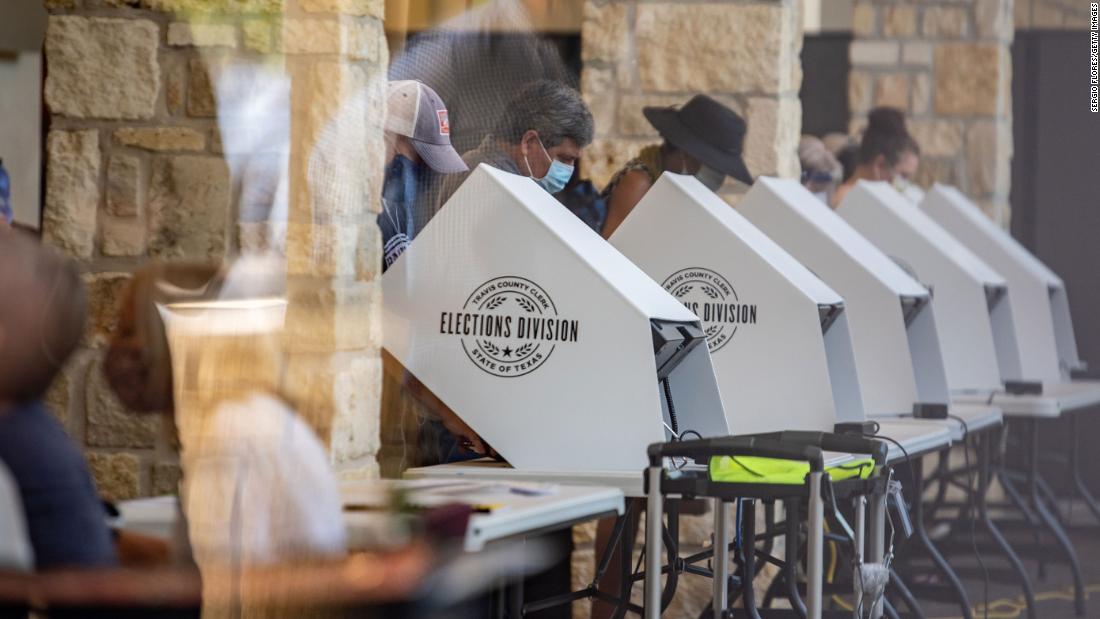
It’s finally here. The campaigns are on their final push and as of Tuesday night – the results will start rolling in. This has been one of the most unique elections in modern history. A divisive and bitter campaign fought during a global health crisis. Texas, which has 38 electoral college votes, second only to California in number – may be in play. Though Texas has not swung blue since 1976, Tuesday night a lot of eyes will be watching Texas to see what role it takes in deciding the outcome of the election. If you are a reporter covering the election in Texas, the key issues in the state and what motivates it to vote for either candidate – then let our experts help. Jim Riddlesperger is professor of Political Science at TCU and focuses on American politics, with emphasis in the presidency, Congress, and Texas politics. Professor Adam Schiffer writes and speaks on media bias, presidential nomination contests, political news, elections, and public opinion. Both are available to speak with media – simply click on either expert’s icon to book an interview today.


Is a reckoning coming to Washington's once most invincible politicians?
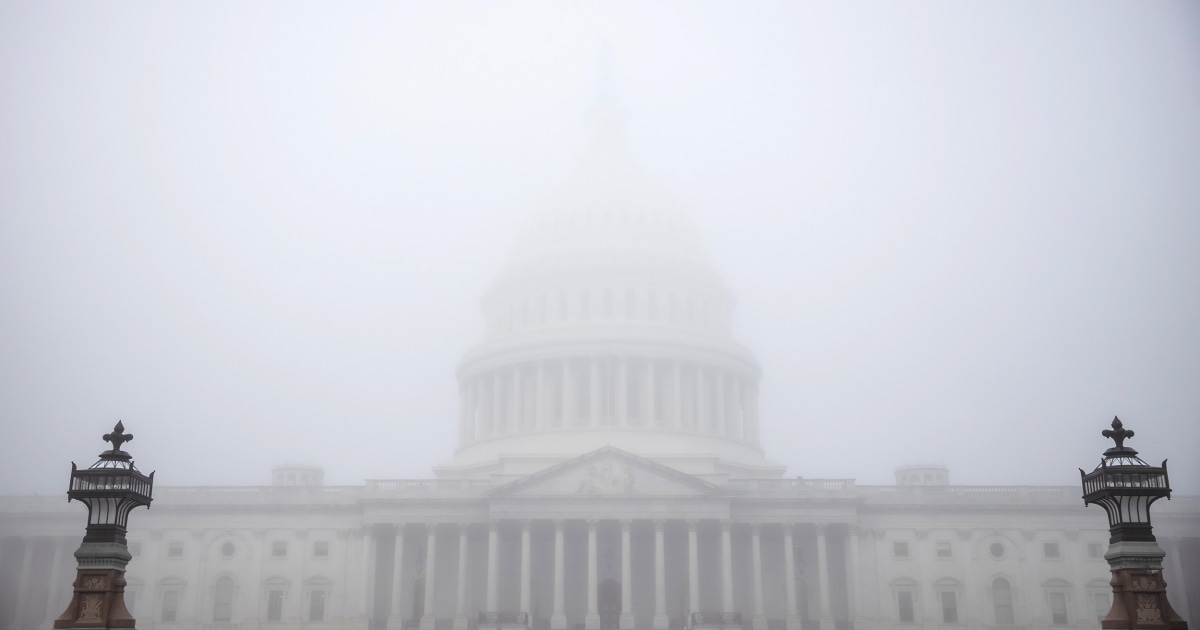
With all eyes on next Tuesday, America could be seeing a serious change in the make-up of the Senate and House of Representatives. With a divided country and an electorate on edge and looking for change, the usual gift of incumbency and re-election is now a far from guaranteed blessing for those Washington veterans for whom re-election is usually a given. According to NBC, there are more than a handful of high-profile and once thought to be invincible politicians on the ropes. But can popular politicians sustain the thirst for change when voters cast their ballots? Susan Collins, John Cornyn, Lindsey Graham and even Mitch McConnell may be looking for work in 2021. It’s a fascinating angle to what has been a truly unique time in American politics. And if you are a journalist covering the election and the balance of power in Congress, then let our experts help. Dr. Stephen Farnsworth is a sought-after political commentator on subjects ranging from presidential politics to the local Virginia congressional races. He has been widely featured in national media, including The Washington Post, Reuters, The Chicago Tribune and MSNBC. Dr. Rosalyn Cooperman, associate professor of political science at the University of Mary Washington and member of Gender Watch 2018, is an expert on women in politics. Both experts are available to speak to media – simply click on either icon to arrange an interview.


What does Kamala Harris' candidacy for vice president mean for women of color in America?
It wasn’t necessarily a surprise to insiders, but Joe Biden’s announcement that Sen. Kamala Harris will be his running mate in the 2020 presidential election took America by storm. News outlets, pundits and posters to social media all took to different mediums to discuss the historical significance of a female woman of color being on the ballot and what this means for America. Harris has obviously broken through the glass ceiling that still existed for those seeking the office of the vice president in Washington, but she is refreshingly just one of several strong females from minority communities who are starting to make a difference and have an impact on the makeup of modern American politics. In many recent elections, black women voters have voted overwhelmingly for Democrats, and had the highest turnout rate among all racial, ethnic and gender groups between 2008 and 2012, according to The New York Times. Women of color are an emerging force in politics, but is America ready to elect a woman of color to vice presidency? It will be an interesting campaign. With Biden and Harris in fact facing President Donald Trump and amid a global pandemic, this will be one of the most hotly followed and unconventional quests for the White House in history. If you are a journalist covering this topic – then let an expert from Augusta University help with your story. Dr. Mary-Kate Lizotte is an expert in political behavior and the implications of gender differences in public opinion, including society’s views of female candidates of color. She is available to talk about the upcoming election and all aspects surrounding each campaign. Click on her name to schedule an interview.