
Experts Matter. Find Yours.
Connect for media, speaking, professional opportunities & more.

How to rent an apartment with no credit history or job letter in Canada
For the first few months or even a couple of years, most newcomers moving to Canada consider renting accommodation versus buying property. As an essential and high priority task, this often turns out to be challenging as in addition to the rent deposit, landlords usually ask for an employment letter, a credit report, and references. And with just having moved to Canada, newcomers often aren’t able to meet these additional requirements. So, as a newcomer, how can you find permanent accommodation in Canada with no credit history and no job offer letter? In this article, we will share a few tips and workarounds on how to position yourself as a reliable tenant so you can find a suitable place for you and your family. Moving to Canada soon and looking for more tips on renting a place? See How to rent your first home as a newcomer in Canada. To build a stronger case as a reliable tenant, you can try combining as many tips as you can from the ones outlined below 8 tips to find a rental unit without credit history and job letter in Canada 1. Provide proof of savings from a bank account You can demonstrate your reliability as a tenant by showing proof of savings to cover a few months of rent. To do this, you don’t need to provide a detailed bank statement. Speak with your banking advisor to know your options; it may be possible to obtain a letter indicating that you are in possession of the funds to pay the rent. Moving to a new country comes with many challenges. Book an appointment with an RBC Advisor or call 1-800-769-2511 to find answers to any financial questions you may have. RBC’s phone services are available in up to 200 languages. Once you have your appointment booked, an advisor will reach out to check whether you’d like to meet via phone, video or in-branch. 2. Provide a local guarantor or co-signer A guarantor or a co-signer is someone who agrees to pay rent on your behalf if you are not able to. Being a guarantor or co-signer is legally-binding, and usually, only close friends or relatives will agree to act as a guarantor for you. You should also consider the impact on your relationship with them should you fail to hold up your end of the bargain. 3. Look for house-share or apartment-share arrangements You can try to find a shared accommodation by – Subleasing from an existing tenant; or Co-signing the lease agreement with a roommate who has a good credit history; or Leasing from a landlord who lives in the same apartment or house. What is a sublease? A sublease allows you to rent a room from the original tenant of an apartment. Rent payments are made to the existing tenant who, in turn, pays the landlord. Generally, rooms that are subleased by tenants don’t require you to provide a credit report or employment letter. This may differ from place to place and depends on the urgency of the tenant who is subletting. In Canada, many people seek out roommates for their living arrangements. Instead of signing a sublease with the existing tenant, you could explore the option of co-signing the lease with a roommate who has a good credit history, to meet the credit history requirement. Landlords renting out a room in their own house or apartment may be willing to overlook the requirement for credit history and/or employment letter. You can start your search by looking for shared accommodation listings on sites like Kijiji, Craigslist, and some provincially popular options like Home Zone on Facebook (for Toronto and GTA listings). Tip: Sites like Kijiji and Craigslist tend to have many scammers. If a listing seems too good to be true, it’s probably a scam. Do not make any payments until you verify the place in-person and sign the appropriate paperwork. 4. If you can, offer more than expected deposit Each province in Canada has legal guidelines on rent deposit payments to be made by tenants before moving in. For example, in Ontario, renters are required to pay first and last month rent; there’s no security deposit. But in British Columbia, you will be required to pay a security deposit equivalent to half the monthly rent. In the absence of a credit report and employment letter, you can offer the landlord a few more months of rent upfront – this can be a huge incentive for the landlord to accept your application over another. Remember, the landlord cannot legally ask you for any additional amount beyond the specified norms. So be sure to check the guidelines for the province you are moving to and accordingly present your offer to the landlord. 5. Explore condos rented out by individual owners It can be relatively easier to find a condo or apartment that’s owned by individual landlords versus those that are owned by property management firms or large institutional investors. The application process for apartments located in rental buildings is usually very strict and offers little to no flexibility in terms of credit and employment verification. However, in a condo setting, most landlords are individuals and might be open to accepting you as a tenant, subject to your reliability. 6. Consider neighborhoods that are away from prime locations Finding a place in the heart of the city or the city centre is usually challenging even for those who have credit history and employment records to show. Broadening your search and considering the suburbs or neighbourhoods that are on the radius of the city may prove helpful in finding a suitable place. While you do this, if you don’t have a car, keep a close eye on public transportation and commute time to the city centre. 7. Book temporary accommodation for the first couple of months If you have friends or family already residing in Canada and they’re open to hosting you, it may be a good idea to plan your stay with them for the first few months. For those who cannot leverage this option, you can try booking long-term stays at an Airbnb, a hotel, or a hostel. Hostels in Canada are clean, secure, and extremely budget-friendly; some even provide free breakfast. Often, you’ll be able to choose between staying in a mixed dorm or a male or female-only dorm. Some hostels also provide private rooms at a higher cost. Try exploring sites like HostelWorld, HI Hostels, Booking.com, or Kayak to find good deals. If you are moving to Toronto as a single young professional, you can now skip the temporary accommodation part entirely and book a SoulRoom. Get a fully furnished room in one of the great locations in the city, at an affordable price. All rooms at SoulRooms come at a minimum six-month lease and are ready to live, equipped with high-speed internet, cable and utilities with shared living spaces. Just unpack your bags and be at home! Some landlords are willing to rent to tenants with a two or three-month credit history. Booking or arranging temporary accommodation for the first few months will give you a couple of months of time to build your credit. For a deeper understanding of how to build your credit, download Arrive’s guide onCredit and credit scores in Canada. How to obtain a credit report It takes at least a few weeks to a month for newcomers to receive their first Canadian credit card and a few additional months of credit transactions to generate a credit history. EQUIFAX and TransUnion are the two major credit rating organizations in Canada, and you can choose either one to get your credit report. Detailed instructions to obtain the report are available on the respective websites. 8. Take up a survival job and/or volunteer Survival jobs are lower-skilled jobs where significant education or extensive professional experience is usually not required. For example, working as a driver with a ride-sharing service, warehouse or factory worker, cashier at a grocery store, barista at a coffee shop, food delivery person, sales associate, telemarketing associate, cleaner, or a server at a restaurant. Volunteering is an integral part of Canadian culture, and giving back to the community is usually well-regarded and valued in Canadian society. It involves giving personal time freely for the benefit of another person, group, or cause. Both survival jobs and volunteering are good ways to earn Canadian experience, practice your language skills, build your network locally, and gather references for your rental application. Survival jobs will also provide you with an employment letter and cover basic living expenses while still allowing you to continue looking for your desired role. Helpful articles: Taking up survival jobs as a newcomer in Canada: All you need to know The benefits of volunteering as a newcomer in Canada Finding your first long-term permanent accommodation in Canada can be stressful and challenging. Following the tips outlined in this article will ensure you have a place to stay while you build your credit history and find employment. And over time, you will be well-positioned to find a place you can call home! Original article located here, published by Arrive.


Your First Week as an International Student in Canada
Canada is one of the world’s leading study destinations, due to its high quality of education, diverse culture, and overall quality of life. Each year, the country welcomes thousands of international students and sets them on a path to academic and personal success. Whether you have just started researching options on where to study or have already been accepted into a Canadian university of your choice, this article will serve as a handy guide for what to expect during your first week in Canada as an international student. In this article: Getting settled in Following quarantine protocol Financial basics for international students Registration at your university Familiarizing yourself with the neighbourhood and campus Getting connected Understanding student life Getting settled in Once you’ve completed your landing formalities at the airport, you are ready to get started on your exciting journey as an international student in Canada. The first item on your agenda will be getting settled into your new accommodation or temporary quarantine location. You can use ride-sharing services like Uber or Lyft or ask a friend or relative to pick you up at the airport and take you to your accommodation. Note: Due to quarantine restrictions, all international travellers landing in Canada are required by law to go directly to their accommodation or quarantine location, without making any stops on the way. As an international student, you will need to secure accommodation (at least on a temporary basis) prior to your arrival in Canada. You can choose to live either on- or off-campus, depending on your budget and requirements. If you haven’t been able to secure accommodation on-campus, there are plenty of other housing options available for international students. Following quarantine protocol The Canadian government has recently eased border restrictions for fully vaccinated travellers, including international students. All international students, regardless of vaccination status, must have a quarantine plan in place and need to follow quarantine protocol as per the Government of Canada ArriveCAN app (this is unrelated to the Arrive app for newcomers). Fully vaccinated students are now exempt from most mandatory quarantine requirements. However, in addition to the pre-arrival COVID-19 (Coronavirus) test, you will also be required to take another COVID test upon arrival in Canada and must quarantine until a negative test result is received. International students who are NOT fully vaccinated will be required to: Take a COVID test immediately after arrival, Book a three-day stay at a government-approved hotel, where they must remain in quarantine until they obtain a negative result to their first post-arrival COVID test. You may leave the hotel as soon as the result comes in, without having to wait the full three days, and go to your personal quarantine location. Get a second post-arrival COVID test on day 8 before exiting their quarantine on day 15. Tip: Your Designated Learning Institution (DLI) may have a quarantine protocol in place for international students. Before arranging short-term accommodation for your first few days in Canada, check if your DLI will be making quarantine arrangements in an on-campus dorm. Financial basics for international students As an international student in Canada, there are some essential financial basics you will need to complete in your first few days here. You might be able to begin some of these tasks during your quarantine period to get a head start on your checklist. Obtaining a SIN If you plan to work part-time while you study in Canada, you will require a Social Insurance Number (SIN). Depending on the airport you land in and your time of arrival, you may be able to get your SIN at the airport. If you are unable to obtain a SIN at the airport, you have the option to apply online or by mail. Opening a bank account Use your quarantine period to explore the different banking options and offers available for international students. As an international student, you want a trusted partner who understands your banking needs and is committed to newcomer success. Some banks (like RBC) are currently allowing international students to open student bank accounts remotely while in quarantine. To open a student bank account with RBC, you will require the following documents: Your passport Student permit (IMM 1442) or Temporary Resident Visa (TRV) Proof of enrollment (optional, good-to-have) Social Insurance Number (SIN) or proof of residence (optional, good-to-have) Information: Book an appointment with an RBC Advisor to get answers to your questions about student banking, and to learn more about opening an RBC student bank account remotely while in quarantine. Getting a credit card Having a good credit score is essential for financial success in Canada. As an international student, you may need a credit score for accommodation rental or lease application, or a car loan. Getting a credit card is your first step towards building a good credit history in Canada. Credit cards are a convenient option for making payments, without having to carry cash. Unlike a debit card, a credit card allows you to make purchases first and pay later. However, credit cards typically have very high interest rates, and late payments can result in high penalties. Make sure you speak with your banking advisor to have a good understanding of how your credit card works before signing your contract. You can gradually build your credit history by paying off your credit card bills on-time and in full. Creating a budget A good budget can help you plan your expenses, save money for the future, and prevent financial worries as you study in Canada. As an international student, your biggest expense aside from tuition fees will likely be accommodation. In addition, you will also need to budget for utilities, transportation, food, groceries, phone and internet expenses, furniture, insurance, and entertainment. It is also a good practice to set aside a small sum each month for emergency expenses. Tip: The cost of living in Canada may be very different compared to your home country. The Arrive Monthly Expenses Calculator can help you estimate and plan your monthly budget in Canada. Registration at your university With quarantine and social distancing considerations in place, the registration and course enrollment process at your university might be fully or partially virtual. Check your university website or contact your university to get information about your semester timetable, the dates and process for class registration, and getting a student card. You can also sign up for the International Student Identity Card (ISIC) for special discounts from featured partners in Canada. Many universities in Canada are offering a mix of virtual and in-person classes, and your class schedule may vary depending on the course you’ve enrolled in. Sign up for orientation classes to prepare for your academic journey. Familiarizing yourself with the neighbourhood and campus You will likely be spending a lot of time in and around your campus. Walk around your campus and new neighbourhood (if you are living off-campus) to familiarize yourself with the area. Review your campus map or ask around to locate the gym, health services, library, dining hall, class buildings, restaurants, and grocery stores. Don’t hesitate to check if the stores or restaurants you visit offer discounts to students. Most cities in Canada have an extensive public transportation network. Whether you plan to commute to campus or explore the neighbourhood, the public transit system can be a convenient way of getting around. Learn about the transit system in your city, get a transit pass, and start exploring. Information: Get to know more about public transportation in key Canadian cities through our Getting Around article series for Toronto, Ottawa, Edmonton, Montreal, Calgary, Vancouver, and Winnipeg. Getting connected With “virtual” becoming the norm in student life, staying connected to your friends, family, and university will likely be on your list of essentials. In Canada, you have the option of choosing between a pay-as-you-go (prepaid) or postpaid phone plan. However, since postpaid plans typically require a credit check, most international students start with a prepaid phone service. Some carriers also allow you to purchase a prepaid SIM card online and have it delivered to your address. International students living on-campus typically have internet access through their local Wi-Fi network. If you are living off-campus, you may need to sign up for an internet service. The cost of a monthly internet plan typically ranges between $50 to $80 CAD, depending on the provider and plan. Do your research on comparative costs, offers, and typical usage limits, before selecting a phone and internet provider. Understanding student life Student life in Canada is about more than just academic success. Take the time to meet your new classmates, either in-person or virtually, to forge new connections and friendships. Many universities have on-campus student groups where you might find people with similar interests or backgrounds. Most academic institutions will be offering a mix of virtual and in-person classes in the coming semesters. Use your first week to ensure that you’re all set up for online learning, technology-wise, to avoid interruptions in classes later. Once you have your course timetable, keep your schedule in mind while planning extracurricular activities, such as socializing, sports, exercising, exploring the city, or working part-time. Working part-time can not only bring in extra income but can also help you build skills, grow your network, and explore future career opportunities. If your study permit allows you to work part-time as an international student, evaluate how many hours you might reasonably be able to work, without impacting your academic success. Your first week as an international student in Canada may seem overwhelming at first as you get the basics in place. But with some prior research and planning, you will be able to settle into your new schedule, make the most of your student life, and set yourself up for long-term success. The Arrive mobile app is your essential companion to prepare for and navigate life as an international student in Canada. Whether you’re just exploring study options in Canada or are getting ready for your move, you’ll get the information and resources you need, when you need them, all in one place. Original article located here, published by Arrive.

Even with a drastic reduction in driving due to the COVID-19 pandemic, Black Americans saw the largest increase in traffic-related deaths in 2020 when compared to other racial groups. An estimated 38,680 people died in motor vehicle traffic crashes in 2020 — the largest projected number of deaths since 2007 — and the number of Black people who died in such crashes was up 23 percent from 2019, according to the U.S. Department of Transportation’s National Highway Traffic Safety Administration. UConn’s Dr. Norman Garrick spoke with NBC News about the new report: Norman Garrick, a civil and environmental engineering professor at the University of Connecticut, said the numbers are saddening, but not surprising. “Black people tend to be overrepresented as walkers in this country,” Garrick said. “This is not by choice. In many cases, Black folks cannot afford motor vehicles. And people that walk in this country tend to experience a much, much higher rate of traffic fatality. We’re talking eight to 10 times more. It’s a perfect storm of a lot of horrible forces.” This most likely represents yet another way the health crisis has had an outsize effect on Black people. Even in the early days of the pandemic, the National Safety Council found that the emptier roads were proving to be more deadly, with a 14 percent jump in roadway deaths per miles driven in March. And Black people are more likely to face traffic injuries in general; from 2010-2019, Black pedestrians were 82 percent more likely to be hit by drivers, according to a 2021 report from Smart Growth America, a Washington, D.C.-based advocacy group focused on urban development. June 22 - NBC News Dr. Garrick is a professor in the UConn School of Engineering's Department of Civil Engineering and is co-director of the Sustainable Cities Research Group. He is an expert in the areas of transportation behaviors, parking, public transit, and bicycle lanes. Dr. Garrick is available to speak with media – simply click on his icon now to arrange an interview today.


A leading London based architectural metalwork company, specialising in the design, fabrication and installation of bespoke metal products has entered into a Knowledge Transfer Partnership (KTP) with Aston University, with the aim of developing antimicrobial coatings as a way to reduce infection in high risk environments. The Aston University research team will work with John Desmond Limited to develop high end metallic products that can be used where there is a high risk of the spread of bacteria. The antimicrobial coating will be developed for use in communal areas on products such as handrails, balustrades, push plates, door handles and faceplates, – all of which are common in high traffic areas such as hospitals, doctors surgeries, dental practices, schools and transportation hubs. A Knowledge Transfer Partnership (KTP) is a three-way partnership between a business, an academic partner and a graduate, called a KTP Associate. The UK-wide programme helps businesses to improve their competitiveness and productivity through the better use of knowledge, technology and skills. Aston University is the leading KTP provider within the Midlands. Microbiologists from Aston University’s College of Health and Life Sciences and materials scientists from its College of Engineering and Physical Science will establish the effectiveness of the antimicrobial coatings against a panel of bacteria under a range of conditions to further optimise the surface performance. The team will support John Desmond Ltd to establish an in-house microbiology laboratory to enable extensive testing of the developed coatings which will be carried out under lab conditions. Information from the lab tests will provide supporting evidence to prospective clients of the antimicrobial coating’s efficacy, expected lifespan and performance under varying conditions. Ian Desmond, owner of John Desmond Ltd, said: “We are very excited to be working with Aston University on this ground-breaking project to develop industrial coatings capable of reducing the spread of infection within public spaces. “We are confident that with the expert knowledge and experience that the Aston University team brings to this collaboration, we will succeed in formulating a potent cost-effective means to protect all of us from the threat of micro-organisms, and their impact on the environment in which we live and work.” The Aston University academic team consists of Dr Tony Worthington, associate professor in clinical microbiology and infectious disease; Professor Anthony Hilton, and executive dean of the College of Health and Life Sciences, and Dr Richard Martin from the Aston Institute of Materials Research in the College of Engineering and Physical Science. Professor Anthony Hilton said: “I’m delighted to be able to work on this exciting project with John Desmond Ltd, bringing together a multi-disciplinary team of scientists and engineers from across Aston University to work with an industry partner. “Knowledge exchange between academia and industry is a core element of Aston University’s strategy and it is exciting to be part of a team developing a product which has the potential to have real impact in preventing and controlling infection.” Dr Richard Martin, Aston Institute of Materials Research, said: “Over the past year, we have all become aware of just how important it is to limit the spread of microorganisms. This project is an exciting opportunity to develop new antimicrobial coatings that will significantly reduce the transmission of microorganisms from touchpoint surfaces such as door handles and handrails." The research team have found that claims for the effectiveness of the anti-microbial properties of products already on the market are not always backed with scientifically rigorous evidence. As a result of this, these products have not been able to penetrate markets such as healthcare, where generic claims are not sufficient for buyers to change suppliers. This KTP will establish a body of testing and efficacy data which will support the application and use of antimicrobial coatings in a range of settings where control of bacteria on environmental surfaces is critical for infection prevention and control. You can visit our website for more information about The College of Health and Life Sciences and The College of Engineering and Physical Science at Aston University.


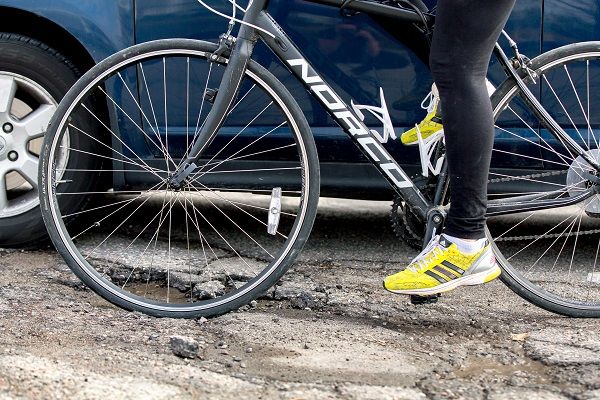
MEDIA RELEASE: Victoria Road in Prince Edward County voted Ontario’s Worst Road.
The votes are in and the CAA Worst Road for 2021 is Victoria Road in Prince Edward County. Making its debut on the Ontario top 10 list, voters cited potholes and crumbling pavement as the main concerns for the Prince Edward County road. Taking the second and third place spots are Carling Avenue in Ottawa and Barton Street East in Hamilton, respectively. “The quality of our roadways affect everyone,” says Tina Wong, government relations specialist for CAA South Central Ontario. “Our roads are the arteries used every day to keep essential workers, goods and services flowing. They should be maintained now more than ever.” Two notable changes in this year’s list include Riverdale Drive in Washago coming off the provincial top 10 list and Toronto’s Eglinton Ave East dropping from first to fifth place. “As people continue working from home and traveling locally during the pandemic, we are seeing different roads appear on the list. We should continue taking advantage of these lighter traffic patterns as an opportunity for necessary road repairs,” adds Wong. In Ontario, 117 municipalities saw roads in their communities nominated. Drivers accounted for a majority of the votes being cast, with cyclists and pedestrians accounting for about a quarter of the votes. Voters shared their primary reasons for selecting a road, with 81 per cent citing potholes or crumbling pavement, followed by traffic congestion (11 per cent) and no or poor walking infrastructure (7 per cent). Ontario’s top 10 list is verified by the Ontario Road Builders’ Association (ORBA). “We are very pleased to partner with CAA on the 2021 Worst Roads Campaign. ORBA provides analysis on the nominated roads, sheds light on why they were chosen and what issues are impacting them. Increased investment in our transportation infrastructure is vital in order to effectively maintain existing assets and plan for the future.” - Doubra Ambaiowei, Technical Director, Ontario Road Builders’ Association. Ontario’s Top 10 Worst Roads for 2021 Victoria Road, Prince Edward County Carling Avenue, Ottawa Barton Street East, Hamilton County Road 49, Prince Edward County Eglinton Avenue East, Toronto Hunt Club Road, Ottawa Eglinton Avenue West, Toronto Innes Road, Ottawa Algonquin Boulevard West, Timmins Queen Street, Kingston Worst Roads by Region Central— Bell Farm Road, Barrie Eastern— Victoria Road, Prince Edward County Halton-Peel-York-Durham— Speers Roads, Oakville Niagara— Whirlpool Road, Niagara Falls North— Algonquin Boulevard West, Timmins South West— Plank Road, Sarnia Western— York Road, Guelph The CAA Worst Roads campaign is a platform for Ontarians to make roads safer by helping municipal and provincial governments understand what roadway improvements are important to citizens and where they need to be made. Votes submitted to the CAA Worst Roads campaign are compiled and released as an annual provincial top 10 list along with a series on regional lists, all designed to spark a dialogue with governments and to help pave the way for safer roads across Ontario. For the full list of the 2021 Worst Roads, please visit www.caasco.com/worstroads


Pothole project to pave way to smoother roads
• Joint research project will combine effort and expertise of pavement engineers, material scientists and computational fluid dynamics experts • Project to look at improving quality, longevity and accessibility of the highway network • Aston University will be working with University of Nottingham and seven other industrial partners including Highways England and the Road Surface Treatment Association A project which will be the driving force behind the redesigning of roads and changes in road repairs could revolutionise the way potholes are repaired, and road surfaces are designed. The three-year collaboration, ‘Prevention and Management of Road Surface Damage’, is being led by Mujib Rahman, professor in civil engineering, Department of Civil Engineering at Aston University and Dr Nick Thom of the University of Nottingham. The project will combine the efforts and expertise of pavement engineers, material scientists and computational fluid dynamic experts from both universities. The research aims to improve the design and construction of roads to minimise surface damage caused by water freezing and thawing, and general wear and tear from traffic. It also will be looking at how to change the science behind road repairs and maintenance. Research will be looking at two main elements: - Enable the design of roads to prevent surface damage from water and environmental factors - Introduce a change in the management of road repair and create a more durable repair of the road surface. . Professor Rahman said that smoother roads were critical to the nation as the 250,000 miles of paved road, valued at £750 billion, which is the network for deliveries of goods and services across the UK. But he added potholes and damage to roads had become ‘increasingly problematic’ for all users. “We want to drive out the pothole epidemic that has overcome the UK in recent years. Due to record breaking rainfall, extreme cold weather and tight financial constraints on highway authorities, this situation has become much worse. This has been combined with the lack of longevity in some repairs” he said. Dr Nick Thom, from the Nottingham Transportation Engineering Centre Research Group, said: “The expected deliverables are material specifications and maintenance guidelines designed – like a Covid vaccine – to stop this disease of the road in its tracks. In the main this will be about doing better with currently-used resources, but, given the expected slump in future oil production with consequent loss of bitumen supplies, the search will also be on for alternative viable high-performance products.” The project has been funded by Engineering and Physical Science Research Council (EPSRC) and will be running until March 2024. Supporting it will also be ADEPT, Highways England, Transport for London, Nottinghamshire County Council, Cooper Technology and the Road Surface Treatment Association (RSTA).


Does the road ahead for successful cities mean removing highways?
If hindsight is 20/20, there might be a lot of urban planners from 50s and 60s looking back and regretting how the layout of America’s cities went wrong. A recent New York Times piece featuring UConn’s Dr. Norman Garrick looked at 30 cities across America and how they’re trying to undo the damage from more than a half-century ago. As midcentury highways reach the end of their life spans, cities across the country are having to choose whether to rebuild or reconsider them. And a growing number, like Rochester, are choosing to take them down. In order to accommodate cars and commuters, many cities “basically destroyed themselves,” said Norman Garrick, a professor at the University of Connecticut who studies how transportation projects have reshaped American cities. “Rochester has shown what can be done in terms of reconnecting the city and restoring a sense of place,” he said. “That’s really the underlying goal of highway removal.” The project’s successes and stumbling blocks provide lessons for other cities looking to retire some of their own aging highways. Nearly 30 cities nationwide are currently discussing some form of removal. May 27 - New York Times The concept of urban renewal is front and center and is getting a lot of attention as the government looks to invest in infrastructure and new modern cities. And if you’re a reporter looking to know more about this topic, let us help. Dr. Norman Garrick is professor in the Department of Civil Engineering and co-director of the Sustainable Cities Research Group at the University of Connecticut. He is an expert in the areas of transportation behaviors, parking, public transit, and bicycle lanes. Dr. Garrick is available to speak with media – simply click on his icon now to arrange an interview today.

Rensselaer Experts Available To Discuss Federal Infrastructure Proposal
Federal lawmakers are discussing sweeping infrastructure improvements to transportation, manufacturing, and digital infrastructure, among other projects. Researchers at Rensselaer Polytechnic Institute, the country’s first technological research university, are leaders in improving the sustainability, safety, and performance of transportation systems, energy systems, and wireless networks, among other areas. Experts in civil and environmental engineering, electrical engineering, and mechanical engineering are available to discuss what impact large-scale infrastructure projects could have on a multitude of systems that impact people across the country. Improving Transportation and Freight Systems: José Holguín-Veras, the director of the Center for Infrastructure, Transportation, and the Environment at Rensselaer, and Cara Wang, an associate professor of civil and environmental engineering at Rensselaer, are leading experts on the role of infrastructure on freight systems and transportation, and the environmental impacts of both. Their research focuses on improving transportation and freight systems in order to increase efficiency, reduce traffic congestion and, in turn, reduce vehicle emissions. Professors Holguín-Veras and Wang are available to discuss the ways in which improved roads, bridges, railways, and ports could affect shipping and delivery of goods, congestion in cities, and emissions in the environment. They can also discuss what their research has uncovered that could guide policymakers as new projects are planned. Expanding Broadband: Alhussein Abouzeid, a professor of electrical, computer, and systems engineering, is an expert in networked systems, the smart grid, and the Internet of Things. Some of his research focuses on modeling wireless networks, as well as wireless spectrum and policies to optimize its use. Koushik Kar, also a professor of electrical, computer, and systems engineering, researches communication networks, particularly modeling, analysis, and optimization of the internet and wireless networks. Both researchers are available to discuss the ways in which digital infrastructure can meet future needs. Next-Generation Manufacturing: Part of the President’s infrastructure plan would allocate $300 billion to manufacturing. Next-generation manufacturing is a central area of expertise at Rensselaer, with the Institute’s Manufacturing Innovation Center and the Rensselaer Manufacturing Innovation Learning Lab. Faculty and staff from both state-of-the-art centers, including John Wen, the head of the Department of Electrical, Computer, and Systems Engineering, who is an expert in robotics, are available to discuss the role that Rensselaer research plays in preparing the manufacturing sector for the nation’s current and future needs. Upgrading Electric Grid, Investing in Clean Energy: Joe Chow, Jian Sun, and Luigi Vanfretti, all professors in the Department of Electrical, Computer, and Systems Engineering, hold extensive expertise in modeling, monitoring, and optimizing the electric power grid. Their work will be integral to the development of a cleaner, more resilient power grid, especially as clean energy sources are increasingly integrated. Christopher Letchford, the head of the Department of Civil and Environmental Engineering, is a global expert in wind engineering. His expertise includes wind power modeling, wind climatology, and the impacts of climate change on infrastructure, transportation, and energy production. Each of these experts is available to discuss the importance of upgrading the nation’s electric grid, and the move toward clean and renewable energy. Boosting Electric Vehicle Numbers: Part of President Biden’s plan focuses on increasing the number of electric vehicles on the road. A key component of improved and more cost-efficient electric vehicles is greener, cheaper, more efficient, and longer-lasting batteries. Nikhil Koratkar, an endowed chair professor of mechanical engineering, is a leading expert in energy storage technologies. He has dedicated his research to improving the batteries that society already uses, while also developing batteries of the future. He can discuss current battery technology and how advancements in energy storage research could help put more electric vehicles on United States roads. Upgrading Water, Wastewater, and Stormwater Systems: Chip Kilduff, an associate professor of civil and environmental engineering, is an expert in managing water quality and water treatment. He has a particular focus on water treatment approaches like membrane and adsorption-separation processes. Kilduff is available to discuss the importance of upgrading water and wastewater systems and what his research has uncovered about the best methods for managing water quality.


New York and Tokyo: Global Cities as Essential Hubs for Our Collective Future
Throughout, cities have faced repeated pronouncements of their demise. Yet, as centers of soft power, cities adapt, persevere, and ultimately, reinvent themselves to thrive. Photo: Orbon Alija / Getty Images On August 24, 2020, in the dog days of the New York summer and at the peak of the COVID-19 pandemic, comedian Jerry Seinfeld wrote an op-ed for The New York Times titled "So You Think New York Is 'Dead' (It's not.)" The king is dead, long live the king! "Real, live, inspiring human energy exists when we coagulate together in crazy places like New York City," wrote Seinfeld. Cities change, "They mutate. They re-form. Because greatness is rare. And the true greatness that is New York City is beyond rare." In fact, megacities around the world have been experiencing similar trends related not just to the novel coronavirus--climate change, natural disasters, population shifts, and transformations in business, infrastructure, and transportation will all shape the contours of the 21st century. New York City's own history--when and why it has been pronounced "dead" during the last century--is instructive in and of itself. Other megacities of consequence should take note and take heart, especially Tokyo, which will be under the microscope in a new way as it prepares to host the Olympic Games in today's unprecedented environment. History repeats itself In the tensions of living in the present time, it's easy to forget New York City's long history of disaster, recovery, growth, and innovation--the 1918-19 influenza epidemic, the seasonal threat of polio, the scourge of HIV-AIDS, and the current pandemic, all define the city's history. In October 1975, New York City, America's largest and wealthiest city, narrowly averted bankruptcy. Refused rescue by the federal government and President Gerald Ford, the city was saved only through the beneficence of the city's own Teacher's Retirement System pension fund, which made up a $150 million shortfall. The next day, the Daily News headline shouted "Ford to City: Drop Dead." We survived, and we thrived! Then there was 9/11, 20 years ago this September, when the U.S. rallied around the city. New Yorkers cheered as heavy equipment driven from across America arrived to help clear the devastation, and were joined by the entire nation in mourning those who were lost. Along came the 2008 financial crisis, sounding another death knell for New York. Today, we know from past history that what has closed will reopen, or be reborn in a different form. And we'll be here to celebrate. Global cities generate soft power Like Tokyo, London, or Paris, New York is a global center for arts and culture, a place where diverse creative arts flourish and inspire people in close proximity, where there is always space for tradition and innovation, and a place, too, for those who come for entertainment. But whether in Japan, Europe, or America, whether in the arts, innovation, or civil society, the soft power of a global city is so much more than the sum of its parts. It is a treasure trove of history, a platform for the future, a home for diversity, and an incubator for social change. What is soft power and why do we need it? The term "soft power" was crafted by Harvard political scientist Joseph Nye in the 1980s, and is now widely used in a foreign policy context. As a 2004 Foreign Affairs review of Nye's book, Soft Power; The Means to Success in World Politics noted: "Nye argues that successful states need both hard and soft power--the ability to coerce others as well as the ability to shape their long-term attitudes and preferences... But overall, Nye's message is that U.S. security hinges as much on winning hearts and minds as it does on winning wars." Almost two decades later, soft power--the cultural, intellectual, and social bonds that bring diverse countries and societies together for mutual understanding--has become a critical component of American foreign policy. This is especially important for the U.S.-Japan alliance, as most recently evidenced by Hideki Matsuyama's thrilling Masters Tournament win and President Biden hosting Prime Minister Yoshihide Suga as the first head of state to visit the White House during his tenure. As I've written before, based on my experience from the State Department, "innovative and entrepreneurial partnerships based on shared objectives--economic growth, stability, and more--will be the engine for increased security and prosperity." In other words, the future of diplomacy will not only be national, but subnational, where megacities like Tokyo and New York will shape their own destinies based on the partnerships that their leaders--political, business, and civil--can forge together in the best interests of their constituents. Japan Society and New York As the President and CEO of Japan Society, my work is to take the Society's mission into its second century, to be the deep connection, or kizuna, that brings the United States and Japan together through its peoples, cultures, businesses, and societies. From our New York headquarters, which opened to the public 50 years ago, we are looking toward the next half century knowing that we will be defined not so much by our now-landmarked building but by our digital and ideational impact. Our future can only be enhanced by continuing to exchange with our friends in Tokyo and beyond. Long before soft power was defined, in the radical days of 1960s New York, Japan Society supported international exchange in the arts between Japan and the U.S. through fellowships and grants to Japanese artists and students, among them Yayoi Kusama, Yutaka Matsuzawa (Radicalism in the Wilderness: Japanese Artists in the Global 1960s), Shiko Munakata (Improvisation in Wood: Kawamata x Munakata, fall/winter 2021), and many others who made history in the arts in both the U.S. and Japan. Now, performing arts commissions and gallery exhibitions at Japan Society build on and evolve U.S.-Japan cultural exchange even as Japanese traditional and contemporary artists have been mainstreamed into New York's major cultural institutions. Our work continues--in arts and culture, education, business, and civil society. Even as the COVID pandemic recedes through continued social distancing practices and increasing vaccinations, the changes it has wrought on the ways we work and communicate are here to stay. Remote work, flexible schedules, and collaboration and connectivity across time zones all predate the pandemic but were scaled up at a rate that was previously unimaginable. While physical borders closed to travelers, virtual ones opened --and technology has allowed us to engage and convene with those near and far like never before. We at Japan Society are committed to finding new connections and building new bridges outside of New York City, starting with Tokyo and then the rest of the world. Our 37 other Japan-America sister societies across the United States have much to offer even as New York remains an essential global stage and financial platform. Partnerships will ultimately define the future of which global hubs thrive and where populations gravitate post-COVID. As we continue our mission for the future of the world, and for the U.S.-Japan alliance, I'm incredibly optimistic for Japan Society and for New York City's long-term evolution. This article was originally published in the Tokyo Metropolitan Government.


MEDIA RELEASE: CAA reminds motorists and cyclists to share the road ahead of the long weekend.
Ahead of the Victoria Day long weekend and the summer months, cycling is set to once again be a popular activity this year. As Ontarians start to prepare for the upcoming cycling season, CAA South Central Ontario (SCO) is reminding motorists and cyclists to prioritize safety when sharing the road. “After staying indoors all winter, we expect that more people will choose to get back on their bikes as the weather gets warmer,” says Michael Stewart, community relations specialist for CAA SCO. “With more cyclists re-emerging onto the roads, it is important to be vigilant and mindful of other road users.” All motorists and cyclists are also advised to follow public health guidelines, communicate their intentions with signals, be patient, regularly check blind spots and turn on their lights during dawn, dusk and dark hours when lighting is most limited. Another issue that CAA is reminding motorists to watch out for is dooring, which is described as when a cyclist is injured by the opening of a car door. CAA data shows that it continues to be a big safety concern for both cyclists and motorists alike. Last year the Toronto Police Service reported 77 dooring incidents. Recently the Minister of Transportation introduced the Moving Ontarians More Safely Act that proposes to update the collision reporting process. The proposed legislation would also change the definition of a reportable collision to include bicycles that collide with vehicle doors. A change that CAA supports. CAA is reminding all motorists of these important rules of the road: Pay attention. Avoid distractions like texting, adjusting your GPS or scrolling through your playlist. Yield to cyclists. Motorists should not be driving in a bike lane unless making a right turn. Watch for the approaching cyclists and never speed up and cut off a cyclist when making a right turn. Keep a safe distance. Drivers must keep at least a one-metre distance when passing a cyclist. If it is not possible, safely change lanes to pass. The penalty for not doing so is a $110 fine. Practice the Dutch Reach. Avoid “dooring” cyclists by doing the Dutch Reach. CAA launched a new Dutch Reach video for users to practice as more people are out on their bikes. Some cycling-specific safety tips: Ride with traffic. Riding against traffic flow is dangerous, illegal and a leading cause of car-bike collisions. Protect yourself. Cyclists, wear your helmets. Be visible. Use reflectors and lights in dark and overcast conditions. It’s the law. Be predictable. Obey traffic signs and be clear with your intentions with other drivers. Under Ontario’s Highway Traffic Act (HTA), a bicycle is considered a vehicle, just like a car or truck and must follow the same rules of the road. Ride close to home. As cyclists start to use their bikes for the first time in a while, remember to stay close to home as you are starting out. “By following these best practices and navigating the road respectfully, we can all do our part in keeping our roads safe for everyone,” says Stewart. For more information on cycling safety, visit caasco.com/cycling.
