
Experts Matter. Find Yours.
Connect for media, speaking, professional opportunities & more.

Public health crises such as COVID-19 — in which people may feel powerless and receive conflicting information — can lead to a flare-up of unsafe religious sentiments, says Baylor University epidemiologist Jeff Levin, Ph.D., who cites past persecution of religious and ethnic minorities who were blamed unfairly for spreading disease. While some possibly unreliable projections about COVID-19 are being spread, containment — and common sense — are key, Levin says. In addition, research shows that maintaining one’s spiritual life can help people remain strong in the face of health challenges and encourage them to reach out to help others. Levin is University Professor of Epidemiology and Population Health, director of the Program on Religion and Population Health in Baylor University’s Institute for Studies of Religion and adjunct professor of psychiatry and behavioral sciences at Duke University School of Medicine. He recently lectured at Duke about the COVID-19 outbreak, on infectious disease pandemics in general and on religious dimensions of the present crisis. In this Q&A, he speaks about these issues. Q. What do you feel is the most important message that needs to get out about the coronavirus outbreak? LEVIN: There are still folks out there saying, “Ah, this is nothing” or “It's all hype.” I'm not that guy. This is very serious. Still, I believe that some misinformation is getting out there that's scaring people, and that's not a helpful thing. I have some concerns about how the facts and nuances of this outbreak have been communicated to the public. In the past few weeks, the news and internet and social media have been inundated with some very alarming projections, some of which in my opinion may be off perhaps by an order of magnitude. This is due in part to mistaken calculations being made by people, including M.D.s who don't understand the parameters of disease transmission or the concepts that epidemiologists use to track outbreaks. This also includes some government officials who are miscommunicating issues regarding risk, pathogenesis and prognosis, and this information is then being picked up by the media and projected out to the general public. Suddenly, even laypeople people are throwing around very technical epidemiologic jargon — exposure, infectivity, case fatality, herd immunity, transmission, incubation period, flattening the curve — without knowing exactly what these words mean or how they’re used, and some faulty messages are getting out. There’s a pressing need for responsible public voices who can help separate the signal from the noise, but those voices seem to be scarce. But regardless, whatever the projections are — good, bad, or ugly — so much hinges on containment. If we manage that properly, such as through all the good advice we’ve been given about social distancing, washing our hands, disinfecting surfaces and so on, we'll get through this with minimal — a relative term — casualties. If we ignore this advice, things can go south in a hurry. It only takes one clinical case getting loose in the community to create a secondary outbreak. Noncompliance can easily create an army of “Typhoid Marys” in communities across the country. In any outbreak due to any pathogenic agent, such as the SARS-CoV-2 virus, there are things we can do, one, to break the chain of transmission and, two, to minimize the damage to ourselves. There’s a public health response and a personal response. The public health effort is focused on how to limit exposure and transmission, which is exactly what needs to happen. There are policies that we should follow as far as our own behavior and social interactions and as far as the environment we live in where the virus is circulating. We’ve all become familiar with what these things are. But there’s the other side of the coin. In epidemiologic terms, exposure does not imply infectivity. Not everyone who is exposed to the virus will become infected. Infectivity in turn does not imply pathogenicity. Not everyone who is infected, who receives a positive test, will become a clinical case, will become sick. And finally, not everyone who comes down with COVID-19 and manifests signs and symptoms of disease will have a virulent enough case that will require intensive medical care or hospitalization, and only a minority of those will lose their life. Most, we believe, will recover just fine. So the folks who are at risk of a very serious outcome are a subset of a subset of a subset of folks who are exposed to the virus. The problem right now is that we don’t have a definitive grasp on these percentages. So we all need to do everything that we can not just to limit exposure and transmission but to strengthen ourselves to withstand the natural course of infection and disease. Epidemiologists call this “host resistance.” Q. What can we do to strengthen our resistance to the infection and the disease? How does faith figure into this? LEVIN: We know from decades of research that so many things that we can do in our daily lives can help us to withstand and recover from illness. We can eat right — avoid junk food and overeating and consuming toxins. We should avoid smoking and abusing alcohol, we need to get enough sleep and manage our stress, we need to get some exercise and fresh air. We all know all of this, but in difficult times it’s easy to fall into inaction and depression, which itself can depress the immune system and impair our ability to stay healthy or to recover. One of the important things that we can do, and decades of research support this, is to maintain continuity in our spiritual life. Studies show that people with a strong ongoing faith commitment can marshal an ability to remain resilient and deal with stress and even have better medical outcomes. There is a longstanding research literature on the physical and mental health benefits of hope and optimism and positive attitudes, including in the context of one’s spiritual life, and including due to the tangible and emotional support that faith and being a part of faith communities give us. Faith matters. But this isn’t a magic bullet, and I want to be careful about overstating things. Folks who expect that by being a diligent Christian or Jew, believing in God, going to religious services — in person or online — showing strong faith, studying Scriptures regularly, that by doing all this somehow a pathogenic agent won’t enter their body or won’t cause signs or symptoms of disease — I think they’re laboring under some false expectations. They’re asking belief or faith to do things that are very difficult for me to envision. Maybe that’s just the scientist in me talking, although I too am a person of faith. On the other hand, our faith can indeed be part of keeping us strong and helping us to recover. But we ought to combine expressions of faith with careful efforts to limit our exposure and contain the outbreak, and to wisely seek medical care if we start to not feel well. The Bible encourages us with verses like “put on the full armor of God,” but at the same time if you stand out in the pouring rain you can’t sanely expect not to get rained on. Q. Will this outbreak lead to a resurgence of religious belief? Are there examples of this from history? LEVIN: Yes, there are, but not necessarily in a positive way. Times of crisis like this, especially when people feel powerless and are receiving conflicting information, can lead to a dangerous flare-up of unwholesome religious sentiments, including scapegoating. Look at the Black Plague of the 14th century. From a third to over one half of Europe perished, and the one constant in every country affected by the epidemic, besides the millions of bodies piling up, was a consistent and organized effort to massacre Jews, who were blamed for the disease. Lest we think those days are behind us, look at how we responded to the brief Ebola crisis in the U.S. in 2014, which ramped up hatred toward Mexican immigrants. Or consider the present outbreak, and the terrible animosity directed at Asian Americans. We aren’t immune to this kind of behavior, especially when we feel a sense of dread or hopelessness or a sense that our prayers to God have failed and that we are receiving a divine chastisement or punishment. It’s easy then to lash out and try to identify a “demonic” source for our travail and try to seek vengeance. There is also precedent for waves of apocalypticism, fear that the end of the world is nigh. We saw this during the 1918 influenza pandemic, and it gave rise to much of the end-times thinking that persists to the present day. So faith can sustain us, even benefit us physiologically, but it can also embitter us and make us do evil or drive us to become obsessed or crazy. Q. Are there other more positive ways that faith or spirituality come into play here? LEVIN: Sure, I can think of a few. There’s a bioethical dimension. Our faith traditions remind us of our obligations to others, especially those in grave need who lack the requisite material or social resources to care for themselves. This outbreak is a social-justice teaching moment for us as a society, and along with the medical and public health dimensions there are profound lessons in moral theology to learn and act on. Will we slip into a xenophobic fear-based response, self-absorbed with our own personal needs, or will we use this time, this enforced vacation for so many of us, to reach out to those in need? I have strong opinions about this. We have been given an opportunity to be selfless and act lovingly toward others, to represent the best of what faith has to offer. Or we can choose to reinforce the most selfish and hateful and ungodly aspects of what humans are capable of. This is a choice facing every one of us. There’s also a pastoral dimension here. Each of us, not just clergy or healthcare chaplains or pastoral counselors, has a role to play in offering consolation and reassurance to our fellow brothers and sisters. And also real, tangible assistance. Our family is Jewish, and we’re reminded in Exodus that we’ve been called to be “a nation of priests.” I think the same can be said for all of us, in our respective communities. We can also be thought of as a nation, or a community, of pastors. And in that role there is much for us to do. We can be a source of accurate information to counter the insidious memes circulating on social media. We can organize our neighbors and fellow congregants to provide help to people and families who need it. We can become leaders in our faith communities to help maintain study, prayer and worship activities while we are unable to attend church or synagogue. We can love and support those who are suffering and remind them of God’s love for us. These messages matter. Maybe it’s not realistic to expect them to cause a virus to not take hold or to become less virulent, but they can strengthen our ability to recover from this outbreak, both individually and as a community of people. ABOUT BAYLOR UNIVERSITY Baylor University is a private Christian University and a nationally ranked research institution. The University provides a vibrant campus community for more than 17,000 students by blending interdisciplinary research with an international reputation for educational excellence and a faculty commitment to teaching and scholarship. Chartered in 1845 by the Republic of Texas through efforts of Baptist pioneers, Baylor is the oldest continually operating University in Texas. Located in Waco, Baylor welcomes students from all 50 states and more than 90 countries to study a broad range of degrees among its 12 nationally recognized academic divisions.


A Letter to our Valued Customers
As I write this letter, I can’t help but think of how much the world we live in has changed over the course of a few short weeks. Like you, IDC Canada is carefully evaluating the ever-changing situation related to COVID-19. It is truly an unprecedented situation. The market is extremely fluid, and each day we are carefully balancing our commitment to providing the tools our customers need to Plan, Market and Sell, all the while mobilizing our entire Canadian workforce remotely. As a valued partner of IDC, we want you to know that we are here and we are ready to engage with your teams. Together we can navigate the “what’s next” in the Canadian ICT marketplace using our dedicated team of Canadian Analysts. The underpinning of IDC’s business has always been our data, our forecasts and our in-depth knowledge of the ICT markets. Be assured that our teams are working overtime to assess the impact on the Canadian ICT market, and more importantly, what the implications are to you, our valued partners. Many customers have also reached out to ask how to adjust their customer interactions and continue to drive their business forward. Marketers are under fire to find new ways to stay in touch with customers and target new prospects remotely. The good news is that IDC Canada has been providing effective virtual event services like webcasts, audio podcasts and other compelling assets for many years now. We offer a wide range of digital assets that will keep you in touch with your customers and help you generate leads. As we continue to learn more through monitoring the COVID-19 outbreak, we understand that “customer experience” in extraordinary times means working with our customers and partners in new ways. Now more than ever, we will navigate this situation together. If there are things you need from us or additional ways we can support you, please let us know. We remain committed to helping Canadian Businesses through this challenging time. Please look for more detailed insights on the effects of the COVID 19 virus on the Canadian ICT market in the form of IDC research documents and webcasts next week. Feel free to reach out directly to your IDC relationship manager or through our inquiry desk at askidc@idccanada.com at any time. Kind Regards and Stay Safe, Lars Goransson Managing Director, IDC Canada idc.com/ca


Is This New Potassium Metal Battery Design the Future of Energy Storage?
From cell phones, to solar power, to electric cars, humanity is increasingly dependent on batteries. As demand for safe, efficient, and powerful energy storage continues to rise, so too does the call for promising alternatives to rechargeable lithium-ion batteries, which have been the dominant technology in this space. Led by Nikhil Koratkar, researchers from Rensselaer Polytechnic Institute have discovered a way to overcome a persistent challenge known as dendrites in order to create a metal battery that performs nearly as well as a lithium-ion battery, but relies on potassium — a much more abundant and less expensive element. “In terms of performance, this could rival a traditional lithium-ion battery,” said Koratkar, an endowed professor of mechanical, aerospace, and nuclear engineering at Rensselaer. While metal batteries have shown great promise, they have also traditionally been plagued by accumulation of metal deposits, called dendrites, on the anode. Over time, Koratkar explains, the conglomerates of potassium metal become long and almost branch-like. If they grow too long, they will eventually pierce the insulating membrane separator meant to keep the electrodes from touching each other and shorting out the battery. Koratkar and his team found that by operating the battery at a relatively high charge and discharge rate, they can raise the temperature inside the battery in a well-controlled manner and encourage the dendrites to self-heal off the anode. The researchers previously demonstrated a similar method of self-healing with lithium metal batteries, but they found the potassium metal battery required much less heat to complete the self-healing process. That promising finding, Koratkar said, means a potassium metal battery could be more efficient, safe, and practical. “I want to see a paradigm shift to metal batteries,” Koratkar said. “Metal batteries are the most efficient way to construct a battery; however, because of this dendrite problem they have not been feasible. With potassium, I’m more hopeful.” This research, recently published in Proceedings of the National Academy of Sciences, is just the latest development in Koratkar's contributions to battery research. He is available to discuss a range of possible futures for energy storage.


Baylor Gerontology Expert Shares Tips to Care for Aging Population During Coronavirus Pandemic
“This is not a vacation from caring; it is a time when caring is needed most of all,” social work professor says The Center for Disease Control and Prevention (CDC) has announced that older adults and people who have serious chronic medical conditions such as heart disease, diabetes and lung disease are at a high risk for the coronavirus. The virus hit hard in late January at a nursing facility in the state of Washington, where a number of residents died. As a result, the CDC has recommended strong restrictions on visitors to long-term care facilities, and the health organization continues to preach limited physical contact and “social distancing” – creating intentional space of six feet or more between each person – to stem the spread of the virus. James Ellor, Ph.D., The Dorothy Barfield Kronzer Endowed Professor in Baylor University’s Diana R. Garland School of Social Work, is an expert on working with older adults as well as disaster behavioral health. He said it’s important in this time of uncertainty to continue to support and minister to those older adults who are self-isolating in their homes and those in long-term care facilities. “Remember, no one stops caring about others just because germs are in the way,” Ellor said. “Express your caring in appropriate ways. This is not a vacation from caring; it is a time when caring is needed most of all. We also know that prayer is very important. Hold the person in prayer and let them know you are doing so.” In the following Q&A, Ellor shares tips on how to care for this population during this time. Q: What are some ways we can check on older relatives and neighbors without using physical touch and interaction? A: There is a fine line in this unknown time between caution and paranoia. Respect for each other’s boundaries is the critical value. It seems very awkward to want to affirm someone, yet not shake their hand. However, we need to use our words and ask what the other person is comfortable with, and by the same measure, let them know what you are comfortable with. At this point, the most obvious ways to check on people is through social media or paper and pencil. Drop them a note, call them on a phone, use other social media devices as appropriate. I would suggest that if you normally visit them, say on Fridays, be sure to continue to do that, albeit by phone or even just drop them a card. Q: If people have chosen to self-isolate or if they’re scared to venture out due to this health crisis, what are some ways people can help? A: Be consistent. If you have a pattern, continue the pattern. Remember the principles above. If the person is feeling out of control, talk quietly with them and offer them a card or other gesture of caring. Q: Can you explain the importance of personal interaction for people who are shut in? A: People with human contact simply live longer than those completely cut off from the world, with few exceptions. While about 15 percent of older adults are “shut in,” only about 5 percent are bed bound. That means that persons who are dependent on oxygen, for example, will be in their house, but not in bed. They depend on all of their outside contacts. Keep your normal visiting pattern, albeit with a card in the mail or phone call. If you are a member of a church, have the youth group use some of their extra “stay at home” time to make greeting cards intended to cheer up a person in your church or group that is home bound. Older adults like tactile things, particularly if they are sensory-impaired. If you make a card, put a feather in it, or some other feel-good item. If you are purchasing a card, there are some that have things in them that you can feel, or even hear. Some cards will allow you to record a short message. Q: Since so many long-term care facilities now have strict rules about visitors, are there any ways that people can interact or show support to residents in a safe manner? A: Most facilities are cutting off all contact from the outside. Only their own staff, physicians and hospice nurses are being allowed in. Even social workers, chaplains and other clergy are being kept out. In the Waco area, physicians are being screened for a fever or cough and could be turned away. As such, phone calls, cards and letters are all important. Several facilities in this area have begun to put room numbers on the windows of their facility, so that family can come by and wave through the window. Persons in long-term care facilities, even those with dementia, will pick up on the anxiety of the staff and especially the TV, which is often on all the time. A person with dementia may not be able to understand the anxiety but will be anxious when others are anxious. This makes the job of staff that much harder. Q: Anything else you’d like to share? A: The workers at these homes have a much harder job now. Don’t hesitate to send them a card or a treat if it can be obtained safely. Staff, even the people at the door telling you that you can’t come in to see your loved one, have a tough job now and need extra support from everyone. ABOUT JAMES ELLOR, PH.D. James Ellor, Ph.D., serves as professor and The Dorothy Barfield Kronzer Endowed Professor in Family Studies in Baylor University’s Diana R. Garland School of Social Work. works with older adults around issues of mental and spiritual health. He has served on the executive committee of the Midwestern Geriatric Education Center and provided education, counseling, and planning for individuals and groups who work with seniors. His research includes work in entrostomal therapy, hunger, the church as service provider, spiritual assessment, and intervention techniques with cognitively impaired older adults. ABOUT BAYLOR UNIVERSITY Baylor University is a private Christian University and a nationally ranked research institution. The University provides a vibrant campus community for more than 18,000 students by blending interdisciplinary research with an international reputation for educational excellence and a faculty commitment to teaching and scholarship. Chartered in 1845 by the Republic of Texas through the efforts of Baptist pioneers, Baylor is the oldest continually operating University in Texas. Located in Waco, Baylor welcomes students from all 50 states and more than 90 countries to study a broad range of degrees among its 12 nationally recognized academic divisions. ABOUT THE DIANA R. GARLAND SCHOOL OF SOCIAL WORK AT BAYLOR UNIVERSITY Baylor University’s Diana R. Garland School of Social Work is home to one of the leading graduate social work programs in the nation with a research agenda focused on the integration of faith and practice. Upholding its mission of preparing social workers in a Christian context for worldwide service and leadership, the School offers a baccalaureate degree (B.S.W.); a Master of Social Work (M.S.W.) degree available on the Waco or Houston campuses or online; three joint-degree options, M.S.W./M.B.A., M.S.W./M.Div. and M.S.W./M.T.S., through a partnership with Baylor’s Hankamer School of Business and George W. Truett Theological Seminary; and an online Ph.D. program. Visit www.baylor.edu/social_work to learn more.
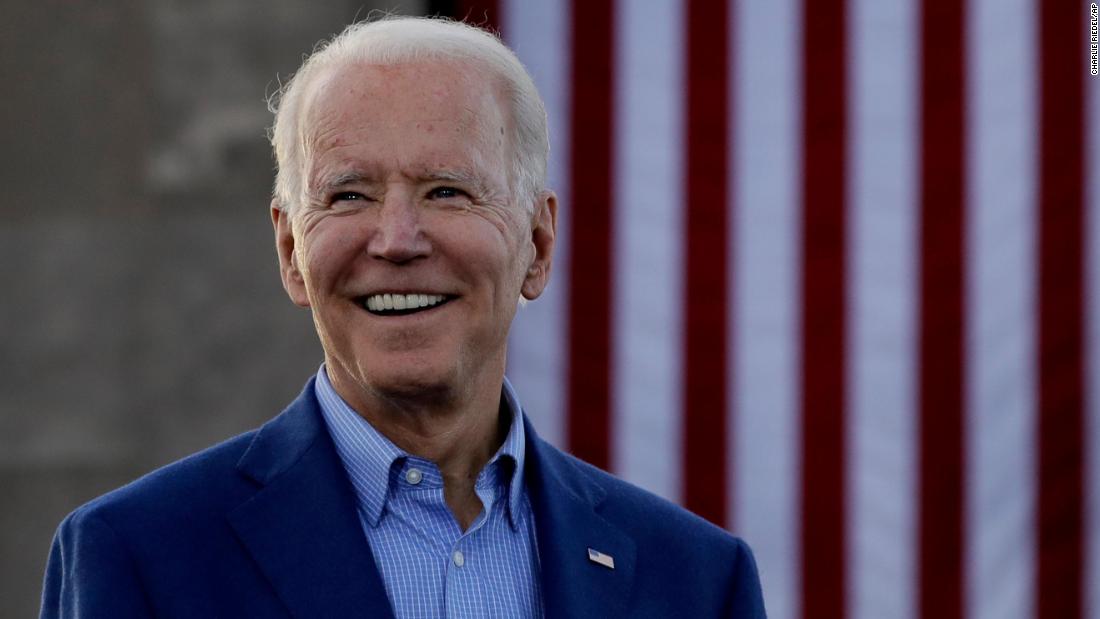
Who will Biden’s running mate be?
It seemed a bit of the cuff and unplanned, but the most recent DNC Primary debate, Joe Biden let it be known that’s he’s already set aside some very specific criteria for his would be V.P. should he win the Democratic nomination. "If I'm elected president, my Cabinet, my administration will look like the country, and I commit that I will, in fact, appoint a, pick a woman to be vice president," Biden said at the CNN-Univision debate in Washington, DC. Biden continued, "There are a number of women who are qualified to be president tomorrow. I would pick a woman to be my vice president." The comments come as Biden is seeing a surge in the presidential race over Vermont Sen. Bernie Sanders and seeks to broaden his appeal and unify the Democratic Party. March 15 - CNN There’s a long list of extremely qualified females for the job – but his comments have pundits and political junkies speculating on just who it could be? Kamala Harris is a solid candidate but being from Democratic friendly California and the scathing comments she levelled his way during the early primary may take her out of contention. Elizabeth Warren and Amy Klobuchar are also political heavy weights, both with very different perspectives on what America needs. What about the outliers like Tulsi Gabbard? The list goes on and on. And there’s always a dreamer’s chance Michelle Obama could make the ticket? It may be crazy, but not entirely impossible. Photo courtesy: Los Angeles Times Either way, there’s a lot of speculation out there, and if you are a journalist looking to rank the contenders or help figure out who has a chance – then let our experts help. Mark Caleb Smith is the Director of the Center for Political Studies at Cedarville University. Mark is available to speak with media regarding the DNC Primary, running mates and the upcoming election. Simply click on his icon to arrange an interview.


Coronavirus: What Voices Should We Listen To In These Uncertain Times?
Our smartphones, social media accounts, televisions and radios are clogged with information about COVID-19. Some is good information. Much is bad. So which voices do we listen to during this uncertain time of pandemic? Baylor University’s Marlene Neill, Ph.D., APR, associate professor of journalism, public relations and new media, is an expert on public relations ethics and management, and integrated communications. In this brief Q&A, she shares some tips to discover which voices to trust and follow during a crisis. Q: In this time of confusion and mixed messages, what are some steps people should take to find credible and consistent content and updates regarding Coronavirus? A: I used to work in city government and worked very closely with public health district officials. I prefer to seek out information from official government agency sources such as the CDC, public health district officials, physicians and epidemiologists. A good example is the CDC's coronavirus site. Local newspapers also have set up informational pages regarding local closures and cancellations. I personally am very skeptical of information I see on social media claiming to be from someone who experienced the coronavirus in another country or others whose credentials are unknown. Q: What are some characteristics of trustworthy messages? A: I trust information from credible sources in the medical community and public health. The information should be consistent with that reported by these official government sources. If you are unsure, double check online rumor websites such as snopes.com or consult official government websites. We need to start with doctors, epidemiologists and public health officials. This is their area of expertise and they want people to be properly informed to protect themselves and our communities. ABOUT BAYLOR UNIVERSITY Baylor University is a private Christian University and a nationally ranked research institution. The University provides a vibrant campus community for more than 17,000 students by blending interdisciplinary research with an international reputation for educational excellence and a faculty commitment to teaching and scholarship. Chartered in 1845 by the Republic of Texas through the efforts of Baptist pioneers, Baylor is the oldest continually operating University in Texas. Located in Waco, Baylor welcomes students from all 50 states and more than 90 countries to study a broad range of degrees among its 12 nationally recognized academic divisions.

COVID-19, cancellations and closings -- What do business owners need to know?
It might feel like 2008, but it’s not. “Expect coronavirus fears and behavioral changes from consumers to cause a sudden recession, but it won’t last long,” says Phil Powell, Indiana University Kelley School of Business associate dean of academic programs in Indianapolis and clinical associate professor of business economics and public policy. “I expect the economy will bounce back fairly quickly, and we could see some normalcy in the economy and the markets by May or June." Powell can speak to what business owners and consumers should know and do – and the economic impact of cancellations. If you would like to speak with Powell, please contact Teresa Mackin at tmackin@iu.edu or 317-274-2233.


Baylor University Marketing Professor Jim Roberts, Ph.D., has been studying consumer behavior and spending habits for decades. He is recognized internationally for his research and commentary on the subject. He said the consumer response during the current coronavirus pandemic -- evidenced by the frequent image of empty shelves of essentials -- is concerning and advises shoppers to refocus their actions on the good of the community. “This crisis is an ethical litmus test. I strongly suggest that people not horde essentials, but that they buy only enough for the near future. I am deeply disappointed when I see shoppers with carts full of water, Purell, toilet paper, etc. Essentially, they are saying, ‘Every man for himself,’ instead of, ‘What can we do to survive this crisis together?’ Working with each other always leads to better results. The Golden Rule should dictate at times like these as well as every day of our lives.” ABOUT JIM ROBERTS, PH.D. Jim Roberts, Ph.D., The Ben H. Williams Professor of Marketing in Baylor University’s Hankamer School of Business, is a nationally and internationally recognized expert on consumer behavior and has been quoted extensively in the media. He has appeared on CBS’ Early Show, ABC’s World News Tonight, ABC’s Good Morning America and NBC’s The Today Show. He has been quoted and/or featured in The New York Times, The Wall Street Journal, USA Today, National Public Radio, Cosmopolitan Magazine, Glamour and U.S. News and World Report, among many other newspapers, magazines, websites and television outlets.


Jon Quinn, lecturer in marketing at the Indiana University Kelley School of Business, who has served in senior marketing positions in the financial and food services industries, explains why many Americans may be unnecessarily hoarding supplies and seeking comfort through retail shopping. “The pandemic and the constant reporting of it is creating a significant threat and disruption to consumers’ perceived control over their daily lives, similar to a hurricane. This leads to a reduced feeling of security and well-being, driving us downward in our hierarchy of needs. When this happens, we rely more on our instinctive behaviors of self-preservation. We cease thinking logically and think and act more impulsively or even primitively. “As consumers, we have been conditioned to address problems and challenges by consumption-based solutions. We need to restore some sense of control and security, so we look for consumption-based solutions. In cases such as coming natural disasters or a pandemic, those solutions are everyday staples and items specific to protecting ourselves from the specific threat.” What should we do? -- “In a situation like this, retailers have to act with the greater good of society in mind. However, acting in such a way is also in their own best interest in the long-term. Putting quantity limits on products that are being purchased out of panic is the right thing to do, but retailers need to do a better job at explaining why. They can do this through social media, point-of-purchase and public relations. “This is an opportunity for retailers to build or fortify trust and loyalty and they can do that through dependability – avoiding stock outages as much as possible – as well as open and timely communication (explaining unit purchase limits) and accurately managing customer expectations (if they are out of stock, when will the items be back in stock). “Consumers should resist the natural and conditioned impulses and think logically. The greater the proportion of society that is protected, the greater the likelihood the spread will be contained and the greater the likelihood you and those close to you can remain healthy. Consumption will not make you safer. “Consumers will respond better if the media identified society-benefitting behaviors and demonstrated them by how these behaviors will benefit them personally. I have not seen such a message widely disseminated – but it needs to be.” Quinn can be reached at 614-390-1287 (m), 812-855-4671 (o) and jonquinn@iu.edu.

Harvey Weinstein Found Guilty. What's Next?
Harvey Weinstein was found guilty on two charges but acquitted on three of the more serious charges in a New York courtroom on February 23. He will be sentenced on March 11, facing five to 29 years in prison. He also awaits criminal charges of sexual assault in Los Angeles. Michelle Madden Dempsey, professor of law at Villanova University's Charles Widger School of Law, says there are three main takeaways from this verdict: Prosecutors were right to take this case to a jury, and even if the jury had acquitted, it still would've been an important "win" simply because it went to trial. The jury seems to have taken the case seriously and delivered a fair verdict. We can't read too much into this verdict (as far as #MeToo is concerned). When women and girls of color, socio-economically marginalized women and girls, prostituted people and others who lack relative structural power receive justice from the criminal legal system, then we can start to celebrate. That is to say, there's still a lot of work to be done before all sexual assaults are taken seriously in our criminal justice system. Prof. Dempsey also says we shouldn't be too quick to assume that a social movement is driving this verdict. "The social movement, I think, is driving prosecutors to take these cases to a jury—which is a good thing. But I think juries typically try to reach verdicts based on the fact and particular law of the jurisdiction in which the alleged offense occurred."
