
Experts Matter. Find Yours.
Search experts on 50,000+ topics. Or browse by topic category.
- Recent Searches


Featured
Global experts with a broad range of areas of expertise.







Lisa Briggs
- Title
- Professor, Director of Emergency and Disaster Management
- Role
- Western Carolina University
- Expertise

Norman Garrick, Ph.D.
- Title
- Professor Emeritus, Civil and Environmental Engineering Department
- Role
- University of Connecticut
- Expertise

David Banach
- Title
- Associate Professor of Medicine, Head of Infection Prevention, Hospital Epidemiologist
- Role
- University of Connecticut
- Expertise


Connecting credible expert sources & academic research
ExpertFile is a trusted resource for journalists, industry, funding agencies and government policymakers looking for fresh perspectives and innovative academic research.


Spotlights
Read expert insights on a wide variety of topics and current events.

Could a Supreme Court Power Play Backfire on Republicans?
With November's midterm elections approaching, Republicans may face a consequential decision: whether to confirm another conservative Supreme Court justice before potentially losing control of the Senate. In a new piece published October 14 in The Conversation, Paul M. Collins Jr., professor of legal studies and political science at the University of Massachusetts Amherst, examines how such a move could reshape the Supreme Court and intensify political divisions over the judiciary. Collins explains that if Democrats win control of the Senate, a retirement by conservative Justices Clarence Thomas or Samuel Alito before the new Congress takes office in January could give President Donald Trump an opportunity to appoint a fourth Supreme Court justice. While Republicans could potentially secure another conservative appointment, Collins argues the political consequences could extend well beyond the immediate confirmation battle. As Collins writes in The Conversation: If Alito or Thomas announced their retirement after the midterms, Republicans would have enough time to confirm a successor. The Senate has four and a half work weeks scheduled between Election Day and Jan. 3. Justice Amy Coney Barrett was confirmed less than a month after her nomination, making the timeline tight but doable. His analysis draws parallels to the contentious Supreme Court confirmation battles of 2016 and 2020, when Republicans blocked Merrick Garland's nomination before subsequently confirming Amy Coney Barrett shortly before a presidential election. Collins suggests another controversial confirmation could further undermine public confidence in the Supreme Court and strengthen calls for judicial reform, including expanding the number of justices. The stakes are significant. With lifetime appointments shaping constitutional interpretation for decades, the outcome could influence not only the Court's ideological direction but also the future of judicial independence and the relationship between Congress and the judiciary. Paul M. Collins, Jr. is a professor of legal studies and political science at the University of Massachusetts Amherst. His research focuses on understanding bias and inequality in the legal system, the selection and work of judges and social movement litigation. View his profile An established authority on Supreme Court nominations, Collins has researched judicial appointments, political influences on the courts and the confirmation process. He is co-author of Supreme Court Confirmation Hearings and Constitutional Change and Supreme Bias: Gender and Race in U.S. Supreme Court Confirmation Hearings. As the midterm elections approach, Collins can provide journalists with expert analysis of Supreme Court vacancies, Senate confirmation procedures, judicial politics and the potential long-term consequences of another contentious appointment. If you're interested in speaking with Paul M. Collins Jr. about Supreme Court nominations, judicial independence, Senate confirmation battles and the future of the U.S. judiciary, simply click on his profile to arrange an interview today.



Georgia Governor's Race Draws National Attention as Obama Endorses Keisha Lance Bottoms
Former President Barack Obama's endorsement of Keisha Lance Bottoms in Georgia's gubernatorial race has brought renewed national attention to one of the state's closely watched political contests. In recent coverage by Newsweek, the endorsement was examined alongside polling showing a competitive race between Democrat Keisha Lance Bottoms and Republican Rick Jackson. Among the experts providing perspective was William Hatcher, PhD, chair and professor of social sciences at Augusta University, who discussed the differences between polling results and election forecasting models. Hatcher's analysis highlights the importance of understanding what polls can reveal about voter preferences, how forecasting models interpret available information and why election outcomes remain uncertain. Augusta's experts are regulars – when it comes to national media. Hatcher's inclusion in Newsweek reinforces the role university experts can play in helping national media audiences understand the political forces shaping important elections. William Hatcher, chair and professor of social sciences at Augusta University, told Newsweek the race is a “statistical tie” based on limited polling, but noted there have not been many high quality surveys so far. “The few polls that have been conducted show a statistical tie, as noted, but often do have Jackson with a small lead. On the other hand, the predictive models are showing that Bottoms may have a slight edge,” he said. Oct. 8 – Newsweek With Georgia voters preparing for the Nov. 3 election, Hatcher can help journalists explore polling, voter turnout, political endorsements and the broader implications of the state's gubernatorial contest. If you're interested in speaking with Dr. William Hatcher about Georgia politics, the governor's race, election polling and public policy, simply click on his profile to arrange an interview today.



Got Expertise to Share?
ExpertFile works with leading organizations with trusted experts. We help make their expertise more discoverable, structured, and actionable for AI-driven discovery, strategic outreach, and real-world opportunities.

When Seeing Is No Longer Believing: AI Deepfakes Are Changing Political Advertising
As artificial intelligence becomes increasingly sophisticated, distinguishing authentic political messages from fabricated content is becoming a growing challenge for voters, journalists and election officials. AI-generated videos, images and audio can now convincingly portray political candidates saying or doing things that never happened. With the November midterm elections approaching, the technology is raising important questions about misinformation, political persuasion and public trust. The issue was recently highlighted in an Oct. 13 WRDW News report, Real or Fake? Deepfakes Flood Georgia Political Ads, featuring Augusta University's Lance Hunter, PhD. The report examined the growing presence of AI-generated political advertising, including a fabricated video involving Georgia Senator Jon Ossoff, and the challenges associated with identifying and regulating this material. A New Challenge for Political Communication Hunter explained how artificial intelligence is fundamentally changing the way political content can be created and distributed. "Artificial intelligence can really increase the persuasiveness, the amount of content it can create." Unlike traditional political advertising, AI-generated content can create seemingly authentic footage of events that never occurred. "What makes this different is the ability to actually show someone doing something that they did not do." The technology raises important questions about how voters evaluate political information, whether existing regulations provide adequate protections and how campaigns may use artificial intelligence in future elections. Lance Hunter, PhD, is a political science professor at Augusta University whose expertise in political behaviour, elections and political communication makes him a valuable resource for journalists covering the growing influence of artificial intelligence on American politics. View his profile An Emerging Story With National Implications While the WRDW report focused on Georgia, the implications extend well beyond one state or election. As AI-generated political content becomes more accessible and convincing, journalists are increasingly examining several important questions: How can voters distinguish authentic political content from AI-generated misinformation? What influence could deepfakes have on public opinion and voter confidence? Should political campaigns be required to disclose their use of artificial intelligence? How can election officials and policymakers respond as the technology evolves? These are emerging issues at the intersection of political science, technology, public policy and democratic participation. As news organizations continue examining AI-generated campaign advertising, election misinformation and the future of political communication, Hunter can provide expert analysis of the challenges facing voters and the broader implications for democracy. If you're interested in speaking with Dr. Lance Hunter about AI deepfakes, political advertising, election misinformation, voter behaviour and the impact of emerging technologies on democracy, simply click on his profile to arrange an interview today.

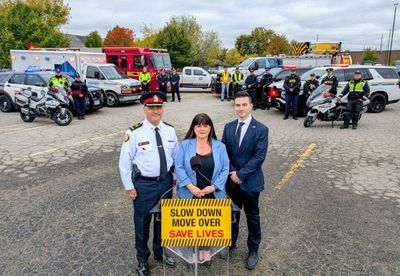
Ahead of National Slow Down, Move Over (SDMO) Day, CAA South Central Ontario, in partnership with the Ministry of Transportation, Canadian Towing Association, Toronto Police Service (TPS), Ontario Provincial Police (OPP), Toronto Fire, Toronto Paramedic Services, and 407 ETR, have joined forces to remind Ontario drivers that slowing down and moving over is one of the simplest actions they can take to help protect tow operators, first responders and other roadside workers. “For tow operators and first responders, the roadside is their workplace,” says Teresa Di Felice, assistant vice-president of government and community relations at CAA South Central Ontario. “When drivers see flashing lights, we need them to recognize that there is a trained professional helping someone at the roadside. Slowing down and moving over gives those workers the space they need to do their jobs more safely.” While most Ontario drivers are familiar with the law, that awareness does not always translate into consistent action on the road. “Every day, the men and women who respond to emergencies, assist stranded drivers and maintain our highways put themselves at risk to keep others safe,” said Prabmeet Sarkaria, Minister of Transportation. “That’s why, beginning January 1, 2027, we’re expanding Ontario’s Slow Down, Move Over law to protect more roadside workers on the job because something as simple as slowing down and moving over can save lives and help ensure those who keep our roads safe make it home to their families.” Toronto Police Service says those protections are critical for officers and other roadside workers who routinely work alongside moving traffic. "Many police officers have found themselves in situations where they are stopped on the side of the road doing their job, only to have vehicles pass dangerously close by," says Robert Johnson, Deputy Chief, Toronto Police Service. "When first responders or tow truck drivers have their lights flashing, drivers are legally required to slow down safely below the speed limit and leave space for emergency vehicles." As part of its continuing road safety work, CAA is piloting Variable Message Signs (VMS) technology on tow trucks across Ontario to determine whether enhanced visibility and directional messaging can help motorists recognize roadside incidents sooner and respond safely. Research from the AAA Foundation for Traffic Safety found drivers were 95 per cent more likely to change lanes when a VMS was active. CAA’s pilot will assess whether the technology can help motorists identify a roadside response earlier and encourage them to slow down and move over. “Drivers are processing a lot of information when they approach a roadside incident,” said Di Felice. “A clear, visible message may help them understand what is happening sooner and give them more time to slow down, check surrounding traffic and move over safely.” Putting drivers in the worker’s shoes Technology is one part of the solution. CAA is also using public education to help drivers understand the people Ontario’s SDMO law is intended to protect. CAA’s SDMO public service announcement puts motorists in the shoes of the people who assist stranded drivers every day. Rather than focusing only on the rules of the road, it highlights the individuals behind the flashing lights and the risks they face while working just feet from live traffic. Watch the PSA here. Ontario expanding slow down move over law to protect more workers Starting January 1, 2027, drivers must also slow down and move over for certain work vehicles stopped at roadside with flashing amber lights activated. Work vehicles under the expanded law include highway maintenance vehicles, public utility vehicles (such as electricity, water, natural gas, telecommunications), waste collection vehicles (such as garbage, recycling or organic waste trucks) and roadside assistance vehicles (like CAA or other providers). CN Tower to shine for roadside safety On Saturday, October 17, the CN Tower will be illuminated in yellow and black to mark National Slow Down, Move Over Day, commemorated by all the CAA clubs across the country, and in honour of the tow operators, emergency responders and other roadside workers who assist motorists every day. A standard light show will run for 5 minutes at the top of every hour, followed by another light show on the half hour. To learn more about SDMO laws, please visit: www.caasco.com/SDMO Quick Facts CAA research shows that Ontario drivers report slowing down and moving over for emergency vehicles more than 90 per cent of the time, but only 49 per cent of the time for tow trucks. Nearly 4 in 5 Ontario drivers have heard of the SDMO law, but only 55 per cent knew they were required to slow down and move over for stopped tow trucks with flashing lights. The same study found that 93 per cent of Ontarians support the use of Variable Message Signs. Respondents also said the signs would encourage drivers to slow down and move over, improving safety for roadside workers and stranded motorists. Quotes “Tow operators are often called to the roadside when someone needs help. Everyday members of our industry are available 24-hours in all kinds of weather. Doing the work safely depends in part on the actions of passing drivers. When motorists slow down and move over, they give tow operators the room they need to assist stranded drivers and clear vehicles safely. It is a small action behind the wheel that can make a big difference at the roadside.” – Joey Gagne, President, Canadian Towing Association "First responders are there to help those in crisis and keep our roads safe, but we can’t do it alone. When approaching a stopped emergency vehicle with its flashing lights activated, slow down and, where possible, move over. The Slow Down, Move Over law helps create a safer environment for emergency personnel working on our roads. It’s the law. Road safety is a shared responsibility, and a simple action can make a meaningful difference for everyone on our roads.” - Deputy Commissioner Bryan MacKillop, Ontario Provincial Police "Toronto Fire Services is proud to support CAA's Slow Down, Move Over campaign. Every day, emergency responders work in and around live traffic to keep our communities safe. Slowing down and moving over when approaching emergency scenes helps protect firefighters, paramedics, police officers, tow operators, and all roadside workers who put themselves at risk to serve others. This simple action can save lives." - Fire Chief Jim Jessop, Toronto Fire Services "Every day, emergency responders, tow truck operators and highway patrollers put themselves at risk to help keep people moving safely. At 407 ETR, we see this firsthand through the work of our patrollers, OPP officers and first responders who assist drivers and respond to incidents around the clock. That's why we're proud to support CAA's Slow Down, Move Over campaign. Slowing down and moving over isn't just the law, it's a simple action that helps protect the people working roadside and can prevent tragedies on our roads.” -Jose Espinosa, President & CEO, 407 ETR “Paramedics work in dynamic environments, including at the roadside alongside live traffic. When drivers slow down and move over, they help create a safer space for all emergency responders to do their jobs and care for those in need. Road safety is a shared responsibility.” - Chief Bikram Chawla, Toronto Paramedic Services



People Likely to Turn to Influencers for Fitness and Nutrition Information
Martine Hackett, associate professor and chair of population health, spoke with Newsday about health and wellness advice disseminated by social media influencers. People looking to make a lifestyle change are likely to look at posts by influencers. Dr. Martine Hackett, chair of the population health department at Hofstra University, said posts from these influencers can be helpful to people looking for detailed wellness information that they might not be able to get at a routine office visit with their doctor. “You can go for your annual health checkup, but if you are younger and don’t have a chronic disease, you might be told to exercise, but they don’t have the time to tell you how,” she said. “And you may not be able to go to a nutritionist or a trainer.”

When Diesel Prices Surge, What Happens to the Supply Chain?
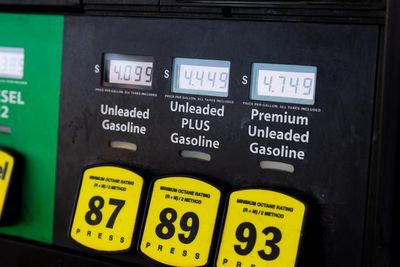
Diesel rarely gets the same public attention as gasoline, but its price can reverberate across almost every part of the economy. Global diesel prices have climbed to record levels amid significant supply disruptions, putting additional pressure on trucking, agriculture, manufacturing and the movement of goods. The impact is raising an important question for businesses: When does a fuel-price spike become a genuine supply-chain problem? Dr. Chris Caplice, founder and director of the MIT FreightLab at the MIT Center for Transportation and Logistics, says the freight industry has spent decades developing mechanisms to manage fuel volatility. But that doesn't mean every carrier experiences the impact equally. “Smaller carriers not only have older equipment and are not getting fully reimbursed, they also have cash flow challenges.” Caplice notes that fuel surcharge programs help shippers and carriers share the risk of changing diesel prices. However, carriers must pay for fuel immediately while surcharge payments can arrive 30 days or more later — creating particular pressure for smaller operators. Dr. Chris Caplice serves as the Executive Director of the Massachusetts Institute of Technology’s Center for Transportation & Logistics (CTL) where he is responsible for the planning and management of the research, education, and corporate outreach programs for the center. View his profile The consequences can extend well beyond the trucking company. According to Caplice, every 20-cent-per-gallon increase in diesel costs a shipper approximately three to four cents per mile. Rather than immediately redesigning supply chains, companies are more likely to look for operational efficiencies, including increasing truck utilization or shifting freight to intermodal transportation where practical. So, what should businesses be watching? Small-carrier vulnerability: Sustained fuel costs could create significant cash-flow pressure and contribute to some smaller trucking companies exiting the market. More efficient freight: Companies may increasingly focus on fuller loads, better utilization and other measures that reduce unnecessary miles. Intermodal opportunities: Higher trucking costs could make shifting appropriate freight between truck and rail more attractive. Electric trucks: Persistently expensive diesel could strengthen the economic case for electric Class 8 trucks in some applications. The six-month question: Caplice suggests duration matters. If elevated diesel prices persist for six months, businesses may have greater reason to view the situation as something more significant than temporary volatility. The broader freight network has considerable capacity to adapt, Caplice says. But the longer high diesel prices persist, the more important efficiency, carrier stability and transportation strategy become for companies trying to manage costs and maintain resilient supply chains. Dr. Chris Caplice is founder and co-director of the MIT FreightLab and Executive Director of the MIT Center for Transportation & Logistics. His research focuses on freight transportation, procurement, planning, performance and infrastructure. If you’re interested in speaking with Dr. Caplice about rising diesel prices, freight transportation and what sustained fuel costs could mean for supply chains, simply click on his profile below to arrange an interview today.



When Food Supply Chains Break: Why Traceability Matters
A foodborne illness outbreak can begin with a single contaminated product. Finding where that contamination occurred, however, can mean tracing a product backward through a complicated network of retailers, distributors, brokers, carriers, wholesalers and suppliers. That challenge has been brought into focus by the 2026 Cyclospora outbreak, which has disproportionately affected lettuce and resulted in thousands of confirmed cases and thousands more under investigation in the United States. Dr. Christopher Mejía Argueta, a Research Scientist at the MIT Center for Transportation and Logistics, compares tracing the source of a foodborne illness outbreak to a “criminal investigation. “After officials investigate that, they go back and identify where the retailers sold those potential products, and then they start going upstream in the supply chain.” The process starts with consumers who have been diagnosed and works backward through the supply chain, identifying where products were sold before moving upstream through distributors and brokers and ultimately toward suppliers and vendors. But the more complicated the supply chain becomes, the harder that investigation can be. “The more the complexity grows, the more difficult it is to identify where all of this happened.” Chris Mejía Argueta is a Senior Research Scientist at the MIT Center for Transportation and Logistics with 20 years of experience delivering applied research in 20+ countries. His work helps organizations turn complex supply chain challenges into practical strategies that improve competitiveness, efficiency, and flexibility. View his profile Mejía Argueta explains that contamination could potentially occur at several points, including at the carrier or wholesale level. With fresh produce often moving through numerous intermediaries before reaching consumers, each additional participant can add another layer to the investigation. Once a likely source is identified, recalls become an important tool for containing the outbreak. Potentially contaminated products must be located, brought back and destroyed, while supply chain stakeholders also need to consider the possibility of cross-contamination involving other products that came into contact with them. The 2026 Cyclospora outbreak raises broader questions about how food supply chains can improve visibility and traceability as they become increasingly complex. How can better traceability help investigators identify the source of contaminated food faster? What happens when products move through numerous distributors, brokers and carriers? Where can contamination occur as food moves through the supply chain? How do recalls work once a potentially contaminated product has been identified? What role does supply chain visibility play in limiting cross-contamination? How can food supply chains become better prepared to identify and contain future outbreaks? If you’re interested in speaking with Dr. Mejía Argueta about food supply chain traceability, the challenges of tracking contamination and what the 2026 Cyclospora outbreak reveals about supply chain visibility, simply click on his profile below to arrange an interview today.

Supreme Court Expansion Debate Raises Questions About Judicial Independence
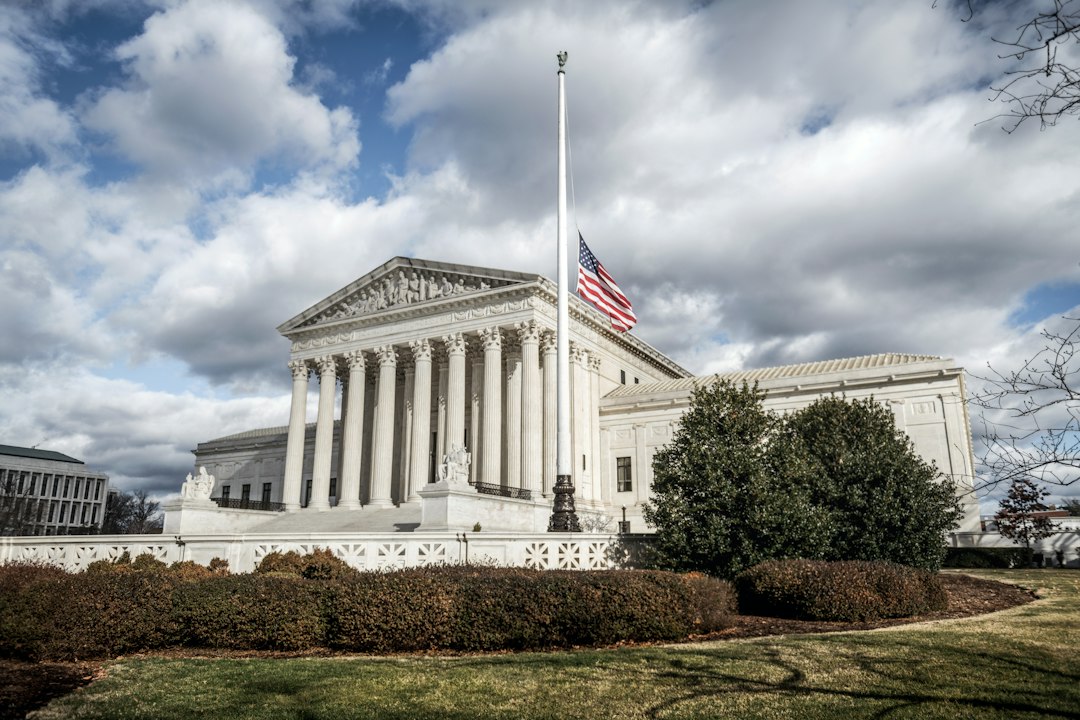
Should the Supreme Court remain at nine justices, or would a larger bench strengthen the nation’s highest court? That question is drawing renewed attention after a Republican-backed constitutional amendment to permanently limit the court to nine seats failed in the House in September. Democratic proposals include expanding the court to 13 justices, while supporters and opponents disagree over whether changing its size would improve its credibility or deepen political divisions. Although nine justices may seem like a constitutional requirement, Congress determines the court’s size. Its membership changed several times before settling at nine in 1869. Legislation introduced by Rep. Al Green would increase that number to 13, reopening a debate over how much influence elected officials should have over the structure of the judiciary. Supporters see expansion as a way to restore balance and bring additional perspectives to the bench. Critics worry that adding seats to secure favorable rulings could encourage future majorities to pursue similar changes. The broader issue is how to preserve public confidence in an institution designed to exercise independent judgment. The Constitution’s protections for federal judges, including service during good behavior and protection against salary reductions, are intended to shield them from partisan pressure. Changing the court’s membership would create new opportunities for presidential appointments, with consequences that could extend well beyond a single administration. As the debate continues, Americans face a consequential question: What reforms would strengthen accountability while preserving the Supreme Court’s ability to interpret the law independently?


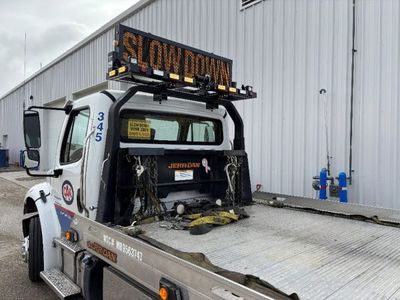
Ahead of National Slow Down Move Over (SDMO) Day, acknowledged on October 17, CAA Manitoba is calling for regulatory changes that would allow tow trucks to use vehicle-mounted electronic warning signs, known as Variable Message Signs (VMS), to give approaching drivers an earlier warning of roadside incidents. Every day, tow truck operators work alongside live traffic to help stranded motorists, but many drivers still do not give them the same space and protection they provide emergency vehicles such as police, fire and ambulances. "For tow operators and first responders, the roadside is their workplace," said Teresa Di Felice, assistant vice president, government and community relations, CAA Manitoba. "Slowing down and moving over is a simple action drivers can take to make a meaningful difference to protect the people who assist Manitobans every day." Variable Message Signs (VMS) provide drivers with advance warning of roadside incidents, giving them more time to react safely. The technology is already authorized in over 40 U.S. states, as well as in Australia and across the European Union. Research from the AAA Foundation for Traffic Safety found drivers were more likely to slow down and move over when a VMS was active, with the odds of a vehicle moving over increasing by 95 per cent. CAA Manitoba continues to discuss the use of truck-mounted VMS technology with government and industry stakeholders as part of broader efforts to improve roadside safety. A pilot project underway in Ontario is testing how the technology can help protect roadside workers, including tow operators. Despite growing awareness of SDMO laws, compliance around tow trucks continues to lag behind other emergency vehicles. CAA research found members were less likely to move over for tow trucks than for police, ambulances or fire trucks. Among those who did not move over for a tow truck, nearly half said they did not know it was required by law. "Tow truck operators are often among the first people to arrive when someone needs help," says Di Felice. "They deserve the same care and protection we give other emergency responders." To help address the issue, CAA has launched a new public service announcement that puts motorists in the shoes of the roadside workers who assist drivers every day. Rather than focusing solely on the rules of the road, the campaign highlights the people those rules are designed to protect. Watch the PSA here. CAA research also found that while eight in 10 members understand the core Slow Down, Move Over message, some remain unclear about the exact action required when approaching a roadside incident. The campaign aims to close that gap through education and awareness. To learn more about SDMO laws, please visit: https://www.caamanitoba.com/SDMO