
Experts Matter. Find Yours.
Connect for media, speaking, professional opportunities & more.

The Battle Begins - How Long will Trump's Trade Wars Last Between China, Canada and Mexico?
It has begun. March 04 signaled the first day of what could be a long and drawn out trade war between America and it's two closest neighbors and trading partners - Canada and Mexico. President Trump also doubled the tariff he slapped last month on Chinese products to 20%. Markets are reeling, politicians are scrambling and the world is watching to see how the tariffs on Mexican and Canadian imports will affect consumers and the economy. In Canada, the reaction was swift. Businesses pulled American bourbon, wine and other imported spirits from store shelves along. Canada also threatened to turn off imported power that keeps the lights on and factories running in states like Michigan, Minnesota and New York. As well, Canadian Prime Minister, Justin Trudeau announced immediate retaliatory measures. Trudeau said Canada will not back down from a fight in the face of "completely bogus and completely unjustified" trade action that has the potential to ruin bilateral relations and prompt job losses, economic devastation and higher inflation on both sides of the border. Trudeau has already slapped tariffs on an initial tranche of $30 billion worth of American goods and promised $125 billion more will face levies in three weeks' time. He said more, non-tariff measures are coming if Trump doesn't immediately back down. Trudeau said Trump is doing something "very dumb" by attacking Canada like this, given there will be serious ramifications for American workers and consumers with higher prices on everything from food, car parts and fertilizers to pharmaceuticals and paper products. March 04 - CBC News Meanwhile, there have been some indicators that President Trump may be willing to negotiate. President Donald Trump will “probably” announce tariff compromise deals with Canada and Mexico soon, Commerce Secretary Howard Lutnick said Tuesday. The potential agreements would likely involve scaling back at least part of Trump’s brand new 25% tariffs on imports from Mexico and Canada, he added. Lutnick’s comments came minutes after the U.S. stock market limped to a close for a second day of sharp declines, spurred at least in part by investors’ fears that Trump’s aggressive policies will ignite a crippling trade war. After his remarks, U.S. stock futures tied to all three major averages rose. The compromises with Canada and Mexico will likely be revealed as soon as Wednesday, Lutnick said on “Fox Business.” March 04- CNBC News There's a lot of speculation out there - and lingering questions: What key American industries will benefit, which ones will suffer? When and will consumers see price hikes at the stores? Will there be a lasting negative impact felt on the American economy? What does this mean for the USMCA that was currently in place? If you're a journalist covering tariffs and the trade war - then let us help. William J. Luther, Ph.D., is an associate professor of economics at Florida Atlantic University, director of the American Institute for Economic Research’s Sound Money Project, and an adjunct scholar with the Cato Institute’s Center for Monetary and Financial Alternatives William is available to speak with media. Simply click on his icon now to arrange an interview today


Trade Wars: Economic Strategy or Risky Gamble for the U.S.?
As global markets become increasingly interconnected, trade wars have emerged as a high-stakes economic strategy with far-reaching consequences. A potential trade conflict between the U.S., Canada, and Mexico—key partners in the North American supply chain—raises critical questions about economic growth, job security, and consumer prices. While proponents argue that tariffs and trade restrictions protect domestic industries, critics warn of rising costs, retaliatory measures, and disruptions to vital industries such as agriculture, manufacturing, and technology. Understanding the impact of trade wars is essential to assessing the future of North American economic relations, with key areas of interest including: The economic implications of tariffs on American businesses, workers, and consumers How a trade war with Canada and Mexico could impact the USMCA agreement and cross-border trade The industries most vulnerable to supply chain disruptions and retaliatory tariffs The historical impact of past trade wars on economic growth and stability The role of globalization and shifting alliances in modern trade policies Potential winners and losers: Which sectors stand to benefit, and which face economic hardship? This issue presents a timely and complex discussion about economic policy, international relations, and the future of North American trade. Connect with an expert about trade and trade wars: To search our full list of experts visit www.expertfile.com


UPI news service interviewed Dr. Meena Bose for the article “Trump USAID cuts create vacuums of food, medical care for vulnerable populations.” The president’s effort to downsize government agencies makes good on one of his biggest campaign promises, according to Dr. Bose. While presidents have attempted to increase the efficacy of agencies in the past, the article says Trump’s approach is different. “This is kind of a hatchet approach to doing so but I think it has a certain appeal to the president’s constituencies,” Bose told UPI. “He’s getting things done, cutting through red tape.” Dr. Bose is a Hofstra University professor of political science, executive dean of the Public Policy and Public Service program, and director of the Kalikow Center for the Study of the American Presidency.



Three Year Anniversary of Ukraine War
Three years ago, this Monday, Russian troops invaded Ukraine expecting a a quick victory. This invasion has incited Europe's largest conflict since WWII, taking tens of thousands of lives, destruction of countless cities, and the isolation of Russia. Despite this, Putin appears closer to taking a fifth of Ukraine's territory and preventing it's membership. President Trump broke the three year long policy of isolating Russia by working with Putin to work together to end the war. President Trump's explicit support for Russia's demand against Ukraine's NATO membership reveals a shift in U.S. policy. How will President's Trump's relationship with Putin shift U.S. policy? Despite majority of the West and Ukraine seeing Russia's invasion as an unprovoked act of aggression, Putin continues to insists it's necessity for Russia's security and protection of citizens in Ukraine. In 2023 Russia momentum with offensives across a 1,000kilometer front, securing necessary territorial gains. How does the progression of Russia's invasion effect it's image for American citizens? In response to the invasion, Ukrainian President Zelenskyy demanded Russia's retreat as a condition to talk. President Zelensky emphasizes Ukrainians need for support from the West; while stressing Ukraine goal to join NATO. How will the shift of support affect Ukraine mission to join NATO? Putin refuses a truce, hoping to weaken the Ukrainian government through a contentious election. Ukraine argues elections are not possible during war times. Putin refuses to accept international peacekeeping forces, remain confident in Russia ability to achieve its goal without negotiation with Ukraine. How will Putin's refusal to find a truce affect Russia and Ukraine's role in the war? Dr. Duerr is an expert on this subject and is available to speak to media regarding this ongoing conflict in the Middle East and the ongoing the war between Israel and Hamas – simply click on his icon to arrange an interview. Or schedule an interview by contacting Mark Weinstein at mweinstein@cedarville.edu


In another milestone commitment to community health, ChristianaCare today announced a $1.6 million investment in 25 local nonprofits, unveiling the recipients of its Community Investment Fund during a special celebration at The Ministry of Caring in Wilmington. Since 2019, ChristianaCare’s Community Investment Fund has provided more than $5.6 million to 64 organizations, addressing social, behavioral and environmental health factors. ”ChristianaCare is empowering and supporting our nonprofit partners so they can help meet the many needs of the people they serve, and work with us to improve patient health and create healthy communities and a healthy Delaware,” said Bettina Tweardy Riveros, chief health equity officer at ChristianaCare. This year’s recipients received funding to support health improvement initiatives in neighboring communities and address critical issues and community needs. “Each of these recipients is making a significant and positive impact by addressing critical health challenges throughout our communities, including food insecurity, housing insecurity and environmental health. At ChristianaCare, we are honored to be joining forces with these 25 organizations to provide them with more resources so that they do more for those in need. It is another way we care for our community,” she said. The funded initiatives will be implemented throughout the upcoming year and were selected based on the quality of applicants’ proposals and implementation plans, and on the alignment of their proposals with the critical issues prioritized by the community in ChristianaCare’s Community Health Needs Assessment and Community Health Implementation Plan. Recipient Spotlight: Healthy Food for Healthy Kids "The impact of ChristianaCare’s 2024 Community Investment Awards funds on Healthy Foods for Healthy Kids will be felt not only in 2025 but for years to come. This funding will expand our program to an additional school, serving over 600 more students, and support data and research for future growth." Healthy Food for Healthy Kids, Lydia Sarson, Executive Director. Recipient Spotlight: Project New Start “Approximately 85% of the justice-involved individuals served by Project New Start are housing and food insecure. With ChristianaCare’s 2024 Community Investment Fund Award to Project New Start, which began 11/01/24, we have already been able to assist 23 individuals with clothing and household goods; 20 individuals with transportation assistance; 17 individuals with food support; and 7 individuals with housing as of 12/31/24. The impact of these funds cannot be overstated as this investment by ChristianaCare provides Project New Start the means to provide the critical basic needs an individual requires to live with dignity without the trauma of worrying about where they will sleep, how they will eat and how they can sustain employment. We are so grateful to ChristianaCare for their ongoing support.” Priscilla Turgon, Founder and Executive Director of Project New Start, Inc. Recipient Spotlight: YMCA of Delaware - Central YMCA Supportive Housing Program “The Central YMCA Supportive Housing Program, in partnership with Christiana Care, serves low-income men at risk of homelessness who often face trauma, addiction, disabilities or lack of family support. Through stable housing, nutritious meals, welcome packages, rental assistance and supportive activities, the program fosters community wellbeing, improves health outcomes, prevents homelessness and empowers residents to achieve self-sufficiency.” Jimia Redden, Executive Director of Housing. This year’s Community Investment Fund recipients are: • AIDS Delaware: AIDS Delaware’s mission is to eliminate the spread and stigma of HIV/AIDS, improve the lives of those living with HIV/AIDS and promote community health through comprehensive and culturally sensitive services, education programs and advocacy. • Black Mothers in Power: Black Mothers in Power seeks to eradicate racial health disparities for Black birthing people and Black babies throughout Delaware. • Boys & Girls Club of DE: Boys & Girls Clubs of Delaware inspires and enables young people, especially those most in need, to reach their full potential as productive, responsible, caring citizens. • Children and Families First DE: Children & Families First is one of Delaware's oldest and most trusted non-profit leaders in providing the supports and services children and their families need to thrive. • Claymont Community Center - Brandywine Resource Council: Claymont Community Center is a base for a variety of community organizations supporting educational, social, recreational, cultural, personal development, financial and wellness needs. • Delaware Center for Horticulture: The Delaware Center for Horticulture cultivates greener communities by inspiring appreciation and improvement of the environment through horticulture, education and conservation. • Delaware Futures, Inc: Delaware Futures empowers at-promise high school and middle school youth across the state of Delaware by providing year-round, trauma-informed curricula tailored to students at each grade level. • Delaware Nature Society: Delaware Nature Society connects people and nature to create a healthy environment for all through education, conservation and advocacy. • Do Care Doula: Do Care Doula provides grant-funded Doula training and development, subsidized Doula support and a variety of community outreach programs. • Healthy Food for Healthy Kids: Healthy Food for Healthy Kids supports educators in Delaware, bringing life-lasting benefits of gardening and good nutrition to kids. • Jefferson Street Center: The mission of JSC is to advance community-driven priorities in Northwest Wilmington that promote the conditions necessary for all residents to thrive. • Latin American Community Center: LACC seeks to empower members to become contributing members of society through advocacy and offers programs and services to anyone ages of one to 101. • Milford Housing Development Corporation: Milford Housing Development Corporation is a value-driven, nonprofit, affordable housing developer, providing services throughout Delaware. Its mission is to provide decent, safe, affordable housing solutions to people of modest means. • Ministry of Caring: Since Brother Ronald began the ministry in 1977 with the first shelter for homeless women on the Delmarva Peninsula, the Ministry has worked ceaselessly to ease the needs and struggles of our neighbors. • ONCOR Coalition: ONCOR’s vision is to build and promote spaces that connect people to the city and each other. It promotes positive relationships through community-based educational programs and recreational opportunities. • Our Daily Bread Dining Room of MOT: ODB is the only soup kitchen in the Middletown, Odessa and Townsend region. ODB is a volunteer run organization with over 300 volunteers. Volunteers help purchase and pick up food and ingredients, prepare and serve meals and clean and maintain the facility. • Project New Start: Project New Start provides a comprehensive cognitive behavioral change/workforce development initiative for individuals transitioning out of state and federal institutions. • Ray of Hope Mission Center: Ray of Hope’s mission is to recognize and address the needs of those who are struggling within our community and assist them in their efforts to provide for themselves and their families, both physically and spiritually. • St. Patrick's Center: Serving people in Wilmington’s East Side neighborhood since 1971, St. Patrick’s Center is a nonprofit organization that operates a Senior Center, and provides meals, groceries, clothing, paratransit and social service support to the public. • The Resurrection Center: The purpose of the Resurrection Center is to spread the gospel of Jesus Christ and create a spirit-filled environment that hungers for the Gospel and to serve as liberating agents in the midst of the world. • Voices of Hope: Voices of Hope’s mission is to empower lives and foster recovery. The nonprofit is dedicated to supporting individuals and families facing substance use disorder. Through compassion, education and community engagement, Voices of Hope strives to break the chains of addiction, promoting a healthier, brighter future for all. • West End Neighborhood House: At West End Neighborhood House, staff, clients, volunteers and donors work together to resolve complex social challenges throughout Delaware. Through outcomes-driven programming, the West End Neighborhood House provide support that meets community needs in finances, housing, education, employment and family services. • Westside Family Healthcare: Westside Family Healthcare is a community-minded, non-partisan health center located in Delaware. Westside opened its doors in 1988 and has maintained status as a Federally Qualified Health Center since 1994. • Wilmington HOPE Commission Inc.: The Hope Commission is a reentry program that helps formerly incarcerated men return to their community. It offers support services that address factors known to lead to repeat offenses. • YMCA of Delaware: The Central YMCA Supportive Housing Program offers housing for men aged 18 and older. Residents benefit from dorm-style accommodations, discounted access to the fitness center and connections to a range of health and human service providers in partnership with the YMCA.



Tariffs are coming - and our experts can help with your coverage
The steel and aluminum industries are fundamental to the strength and stability of the U.S. economy, playing a critical role in infrastructure, manufacturing, and national security. These industries support millions of jobs, drive technological advancements, and serve as key components in everything from automobiles and construction to defense systems and clean energy. As global trade policies, sustainability efforts, and economic shifts impact these sectors, their significance continues to grow, making them a critical topic for public discourse. Journalists covering this issue can explore: The economic impact of steel and aluminum manufacturing on American jobs and industries Trade policies, tariffs, and their effects on domestic production and global competition The role of steel and aluminum in national security and defense manufacturing Innovations in sustainable metal production and efforts to reduce carbon emissions Supply chain challenges and how they affect construction, automotive, and technology sectors The future of American steel and aluminum in a rapidly evolving global economy This topic offers rich opportunities for coverage, highlighting the industries' influence on economic stability, innovation, and national security. Connect with an expert about the aluminum and steel industries: To search our full list of experts visit www.expertfile.com
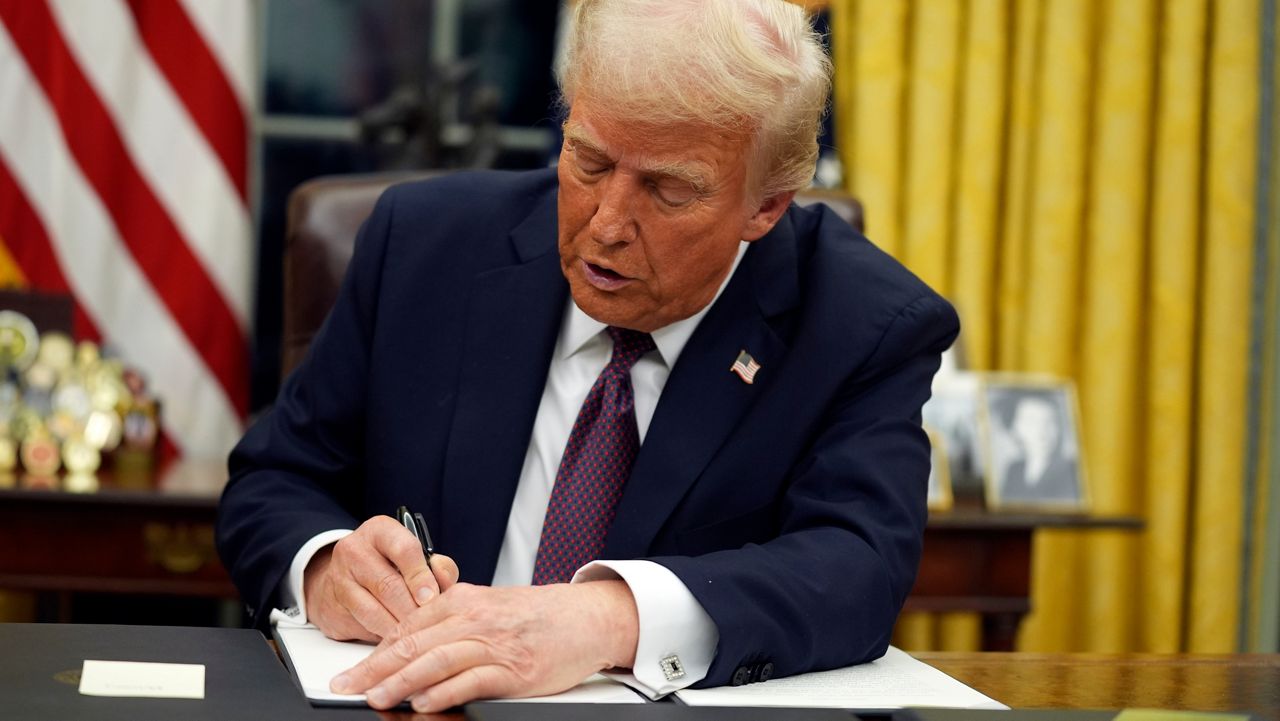
Takeaways from Trump’s Inauguration and Executive Orders
Dr. Meena Bose was interviewed by NY 1 Spectrum News about President Trump’s first day in office and his inauguration. She was also interviewed by WFMD radio in Frederick, MD, about the president repealing restrictions placed on federal immigration officials under the Biden administration. Dr. Bose is a Hofstra University professor of political science, executive dean of the Public Policy and Public Service program, and director of the Kalikow Center for the Study of the American Presidency.

Covering the Tragic Crash in Washington - Our Experts Can Help
The shocking news of an in-air collision in Washington has garnered massive attention from media, airline authorities and industry experts. Reporters covering the story - rely on experts. And that's where's Florida Tech's Shem Malmquist was called to lend his expert perspective, insight and opinion on a story that's making international news. "It just shows that traffic is in our location, there's a potential collision hazard," said Shem Malmquist, a pilot and visiting instructor of general aviation and transport aircraft at the Florida Institute of Technology. And in certain situations, it will provide guidance for the pilots on how to avoid a collision, he said. For example, if TCAS believes the pilot needs to pay attention to other air traffic in the area, it may say "traffic traffic," Malmquist said. January 30 - CBC News Shem Malmquist, who is a pilot and instructor at the Florida Institute of Technology, said midair collisions are extremely rare. Malmquist said if they happen they normally happen at smaller airports without air traffic control towers like the Lantana Airport. "The only method of separating traffic is visually, as well as airplanes communicating their positions to other airplanes, and that's going to create more risk," Malmquist said. January 30 - WPTV/NBC News American Airlines Flight 5342 and a military helicopter collided mid-air late Wednesday night near Ronald Reagan Washington National Airport. Officials believe all 64 people aboard the airplane -- 60 passengers, 4 crew members -- and the three people aboard the helicopter are dead. Officials conducted a frantic rescue effort overnight, which transitioned to a recovery effort early Thursday. Many aboard the plane were in Wichita, Kansas for a figure skating competition. Captain Shem Malmquist, an aviation expert at Florida Institute of Technology, joins FOX 35 to talk more about what happened. January 30- Fox News Orlando Looking to connect with Shem Malmquist regarding this ongoing story? He's available, simply click on his icon now to arrange an interview today.


Expansion Plans? What's Behind Donald Trump's Approach to Canada, Greenland and Panama?
With the inauguration of President Donald Trump just days away, there are many people in America and abroad who are watching and waiting on the first moves of the incoming Trump administration. President Trump has been giving some bold suggestions about the importance of places like Greenland, Canada and Panama to America's national and economic security. Some are explaining Trump's approach as a negotiating tactic to spur on deeper conversations. Others are concerned there's some seriousness to his plans for expansion. Either way, it's getting a lot of coverage as the countdown is on to his resumption of the country's leadership. Last week, Trump waded boldly into global affairs — but he barely touched on those purported priorities. Instead, at a news conference at Mar-a-Lago, he focused on a list of obscure, arguably eccentric goals: acquiring Greenland from Denmark, absorbing Canada as a very large 51st state, and retaking control of the Panama Canal. The president-elect said he would bring all three territories under U.S. control through economic coercion, but did not rule out using force to seize Greenland and the canal. January 13 - Los Angeles Times “That would really be something,” Trump said of the United States' taking control of Canada. “You get rid of that artificially drawn line, and you take a look at what that looks like. And it would also be much better for national security,” Trump said. “They’re great, but we’re spending hundreds of billions here to protect it.” Trump said that the subsidies include substantial military support and that the United States loses out through trade deficits. January 07 - NBC News President-elect Donald Trump has reiterated his desire for the US to acquire Greenland and the Panama Canal, calling both critical to American national security. Asked if he would rule out using military or economic force in order to take over the autonomous Danish territory or the Canal, he responded: "No, I can't assure you on either of those two. "But I can say this, we need them for economic security," he told reporters during a wide-ranging news conference at his Mar-a-Lago estate in Florida. Both Denmark and Panama have rejected any suggestion that they would give up territory. January 08 - BBC The coverage has been intense, but there are still some questions to be asked: How would the world and America's allies react if President Trump applies pressure or force to make any of these countries comply? How might relations between Trump and the U.S. military and intelligence community change in his second term? And, is this just a tactic or could President Trump possibly be serious about his plans? Looking to know more? Professor Peter Campbell studies international security, civil-military relations, international relations and policy relevance. Peter is available to speak with media about this ongoing topic - simply click on is icon now to arrange an interview today.


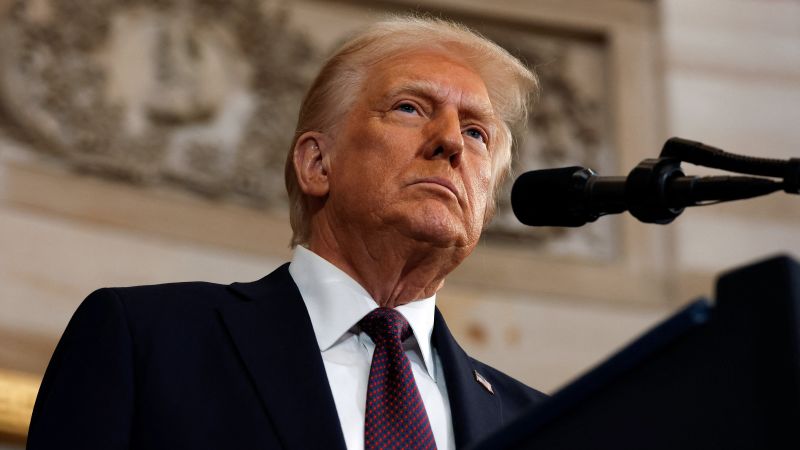
Trump, Trade and Tariffs What to Expect, Will They Work and Who Benefits?
The threat of 25 % tariffs on Canada and Mexico had newsrooms buzzing, politicians scrambling and economists calculating who wins and who loses when trade wars break out among usually amicable neighbors. Factor in Greenland and China - and the story went global. It was a topic that headlined the news as many have watched and waited since the election for President Trump's first days in office to see what the country can expect with incoming policy changes. President Donald Trump said in an Oval Office signing ceremony Monday evening that his administration will impose 25% tariffs on Mexico and Canada on February 1, an extraordinary change in North American trade policy that could raise prices for American consumers. Trump still outlined his broader trade policy for his second term in an executive action Monday. But that action — described by sources as a “placeholder” — doesn’t institute new global tariffs that Trump promised on Day One. As a candidate, Trump proposed sweeping and across-the-board tariffs: up to 20% on imports from all countries, with a 25% tax on goods from Mexico and Canada, plus a punishing 60% levy on goods from China. He also pledged to use tariffs as a negotiating tool on other countries, including, for example, Denmark — putting pressure on the European nation to give control of Greenland to the United States. Asked Monday at an Oval Office signing ceremony about tariffs on China, Trump noted extensive tariffs he imposed during his first administration were still in effect after former President Joe Biden largely left them in place. And on universal tariffs, Trump punted, saying, “We may, but we’re not ready for that just yet.” The executive action signed Monday directed the secretaries of Commerce and Treasury and the United States Trade Representative to investigate the causes of America’s trade deficits with foreign nations, to determine how to build an “External Revenue Service” to collect tariffs, to identify unfair trade practices and to review existing trade agreements for potential improvements. It also directs the government agencies to analyze how the US-Mexico-Canada trade agreement (the USMCA) signed by Trump in his first term is affecting American workers and businesses — and whether America should remain in the free trade agreement. January 21 - CNN As business and political leaders in many countries, especially North America wait for what's ahead, there are questions to be asked: What industries will be targeted? Will tariffs cause higher prices for consumers and increased inflation? Who wins if an all-out trade war happens? How will interwoven sectors like the auto industry and agriculture be impacted? If you're a journalist covering this ongoing story - then let us help. William J. Luther, Ph.D., is an associate professor of economics at Florida Atlantic University, director of the American Institute for Economic Research’s Sound Money Project, and an adjunct scholar with the Cato Institute’s Center for Monetary and Financial Alternatives William is available to speak with media. Simply click on his icon now to arrange an interview today.