
Experts Matter. Find Yours.
Connect for media, speaking, professional opportunities & more.

The health and safety of their children is the top priority of every parent. And after more than a year and a half of enduring a pandemic, mothers and fathers across America have been inundated with news, information and debate about what’s best for all of our health and how to avoid contracting COVID-19. And now, as America is seeing vaccines approved for children five and over, parents and the media are relying on leading experts to provide honest guidance, advice, and clarity on what parents need to know about what’s best for the health of America’s kids. It’s why Dr. Jody Terranova, a physician at UConn Health and the president-elect for the Connecticut chapter of the American Academy of Pediatrics, is getting the word out to parents: The state of Connecticut is already rolling out vaccinations for children ages five to eleven. This move comes on the heels of the CDC's formal recommended emergency use authorization. Within hours of the announcement, children here have rolled up their sleeves. One UConn School of Medicine pediatrician says she understands why parents have questions and hopes to clarify a few important details. Not only is Dr. Jody Terranova the president-elect for the Connecticut chapter of the American Academy of Pediatrics, she was also a member of the scientific sub-group of the state of Connecticut governor’s COVID-19 vaccine advisory group. “At this point, we are really recommending that all five to eleven-year-olds get vaccinated. There are very few children that should not get vaccinated right now," Dr. Terranova explained. Dr. Terranova admits the topic of vaccines for children ages five to eleven is a sensitive issue. That’s why in order to make an informed decision for your family, it's critical to ask important questions, like how does the vaccine work to protect the pediatric population from COVID-19? “The vaccine that we are giving for COVID works very similar to other vaccines, where it’s really activating your immune system to mount a response to recognize that virus when it invaded your body and create antibodies that will attack it so that it can’t replicate and infect you or your child," continued Dr. Terranova. November 4 - Eyewitness News If you are a journalist looking to know more about the COVID vaccine for children and the important information parents need to know, let us help with your coverage. Dr. Terranova is available to speak with media – simply click on her icon to arrange an interview today.


On Rethink What’s Possible, a podcast by Milwaukee School of Engineering, MSOE students, faculty, staff, alumni and community partners share their inventions, research, industry trends, projects, experiences and how they’re rethinking what's possible. Episode Four, 'Rooted in STEM,' features Seandra Mitchell, vice president of student affairs and campus inclusion, and Liz Taylor, director of STEM, as they dive into the importance of diversity in STEM and MSOE’s efforts to offer STEM experiences to shape a more equitable future. According to the National Science Foundation, 111,402 bachelor’s degrees in engineering were conferred nationwide in 2018, the most recent data available. Of those degrees, roughly 64% were white, roughly 12% were Hispanic or Latino, roughly 12% were Asian or Pacific Islander, roughly 4% were Black or African American, and the rest listed themselves as something else. In 2021, MSOE celebrated the opening of the We Energies STEM Center at MSOE. The new center is the premier STEM destination in Milwaukee for K-12 students and home to MSOE’s STEM outreach efforts. The purpose is to provide an accessible, dedicated space for students from all walks of life to explore, create and define their future in STEM. The podcast is available for download and well worth listening to. And, if you are a journalist interested in learning more or arranging an interview with MSOE's Director of STEM outreach, Liz Taylor – simply click on her icon now to arrange an interview today.



Ray A. Blackwell, M.D., MJ, chief of Cardiac Surgery and the W. Samuel Carpenter, III, Distinguished Chair of Cardiovascular Surgery at ChristianaCare, received the 2021 Tilton Award from the Medical Society of Delaware on Oct. 28 at the Tilton Mansion, now the University & Whist Club in Wilmington, Del. The award recognizes Dr. Blackwell as a pre-eminent cardiac surgeon the past 21 years and for his life-long commitment to service for the betterment of patients, the local community and the nation. The award is named for James Tilton, M.D., the first U.S. Army Surgeon General of the United States and the first president of the Medical Society of Delaware. “Dr. Blackwell is an outstanding choice for this prestigious award,” said Kirk Garratt, M.D., medical director of ChristianaCare’s Center for Heart & Vascular Health. “He has given a great deal to his patients, his colleagues and his profession. His strong leadership and clinical expertise have led to optimal health and an exceptional experience for many patients in our community. In addition to being an excellent surgeon, Dr. Blackwell has been dedicated to driving innovations that improve patient outcomes and has been committed to finding ways of keeping patients healthy and preventing cardiovascular disease.” Since joining ChristianaCare in 1996, Dr. Blackwell has been recognized among the top cardiac physicians in our region and has been instrumental to the development of the cardiac surgery program. In 2011, he became the surgical director of the Mechanical Circulatory Support Program and led the initiative to establish Christiana Care’s Ventricular Assist Device Program. In 2017 he was named Chief of Cardiac Surgery and has since led the health system’s team of highly skilled and experienced heart surgeons who perform more than 700 heart surgeries each year. Dr. Blackwell is a clinical assistant professor of Surgery at Sidney Kimmel Medical College of Thomas Jefferson University. He served as the chair of ChristianaCare’s Blood Pressure Ambassador Advisory Committee. Dr. Blackwell has dedicated his life to service of others, especially on behalf of underprivileged and underrepresented people. As a high school student, he participated in A Better Chance Program, which places underprivileged, underrepresented and underfunded students in better academic environments. He is still active with the organization. He also served on the minority admissions subcommittee and later became a regional recruiter for Dartmouth College and Dartmouth Medical School. In 2019, he received a lifetime achievement award as part of a Dartmouth College celebration, “Standing at the Threshold,” honoring Dr. Martin Luther King Jr. Dr. Blackwell also received the Raising Kings award in 2018 from the One Village Alliance, an agency dedicated to elevating positive images and setting high expectations for Wilmington’s Black men and boys, He is a regional alumni council member of National Medical Fellowships, which funds underrepresented and underfunded medical students and is co-founder of the Association of Black Cardiovascular and Thoracic Surgeons, which supports and develops upcoming and practicing cardiothoracic surgeons. He has also held numerous leadership board positions for Delaware organizations, including the Delaware Medical Education Foundation, the Delaware Board of Medical Licensure and Discipline, the New Castle County and Great Rivers Affiliate Boards of Directors for the American Heart Association. He is also a board member of the Friends of Hockessin Colored School 107C and Indoor Track Delaware. Dr. Blackwell is also a recipient of the James H. Gilliam, Jr. Award from the American Heart Association for his contributions to the health, welfare and benefit of the community.

/cloudfront-us-east-1.images.arcpublishing.com/gray/EQ34NHJNIVCAVDO6SOO4FDJHRE.jpg)
As America continues down the long road of adapting, adjusting, and advancing safety efforts in order to overtake COVID 19 – vaccinations have now been approved for children five and older. It’s welcome news for health care experts and epidemiologists – but there’s no doubt this most recent development has parents concerned about the safety and potential consequences children could face if they roll up their sleeves to get immunized. Since this next step was announced, it’s gotten the attention of media and parents from across the country. Augusta University experts have been front and center to help with the messaging. The vaccine rollout for kids ages 5 to 11 starts now. Right now, local hospitals and pediatric offices are working to get doses to the river region. For the past nine months, we’ve seen different rollouts for different age groups come through Augusta University Health’s mass vaccination site. AU Health says it’s still up in the air right now whether this will be the main site you’ll bring your kids to get vaccinated. But what we do know is that 1,200 doses are on the way. “Every single individual has been paramount in this response,” said Dr. Joshua Wyche, AU vaccine coordinator. AU Health officials say they aren’t even close to accomplishing their mission to get everyone vaccinated. “We’re very fortunate to have caregivers that care so much about their community that want to make this impact and continue to push through during this pandemic,” Wyche said. November 03 - WRDW/WAGT Augusta An update from the CDC: kids can start rolling up their sleeves to get their COVID-19 vaccine. This means nearly 30 million American children ages five to 11 are now eligible for the vaccine. That's a little under 1 million in Georgia and 450,000 in South Carolina. But some parents still have concerns about the vaccine's safety. “For the vast majority of people and for parents as they’re looking for how they can protect they’re children best from COVID-19, having access to the vaccine now gives them another tool to protect their child,” says Augusta University Strategic Planning & Pharmacy VP Dr. Joshua Wyche. November 03 – Fox News Child vaccinations are an important topic – and it is essential that accurate details and information are shared with media and parents across the country, and that’s where Augusta’s experts can help. Dr. Joshua Wyche is accomplished pharmacist with an extensive background in business management. He is an expert in strategic planning and pharmacy services. Dr. Wyche is available to speak with media regarding this important topic – simply click on his icon now to arrange an interview today.


Emory Experts - Why Companies Invest in Local Social Media Influencers
Companies seek local influencers to pitch products. Even though most influencers amass geographically dispersed followings on social media, companies are willing to funnel billions of sponsorship dollars to multiple influencers located in different geographic areas, effectively creating sponsorships that span cities, countries, and in some cases even, the globe. The desire to work with local influencers has spawned advertising agencies that specialize in connecting companies with influencers and may soon redefine the influencer economy. This trend has merit, our research team finds. In a new Journal of Marketing study, we show a positive link between online influence and how geographically close an influencer’s followers are located. The nearer a follower is geographically to someone who posts an online recommendation, the more likely she is to follow that recommendation. To investigate whether geographical distance still matters when word of mouth is disseminated online, our research team examined thousands of actual purchases made on Twitter. We found the likelihood that people who saw a Tweet mentioning someone they follow bought a product would subsequently also buy the product increases the closer they reside to the purchaser. Not only were followers significantly associated with a higher likelihood to heed an influencer’s recommendation the closer they physically resided to the influencer, the more quickly they were to do so, too. We find that this role of geographic proximity in the effectiveness of online influence occurs across several known retailers and for different types of products, including video game consoles, electronics and sports equipment, gift cards, jewelry, and handbags. We show the results hold even when using different ways to statistically measure the effects, including state-of-the-art machine learning and deep learning techniques on millions of Twitter messages. We posit that this role of geographic proximity may be due to an invisible connection between people that is rooted in the commonality of place. This invisible link can lead people to identify more closely with someone who is located nearby, even if they do not personally know that person. The result is that people are more likely to follow someone’s online recommendation when they live closer to them. These online recommendations can take any form, from a movie review to a restaurant rating to a product pitch. What makes these findings surprising is that experts predicted the opposite effect when the internet first became widely adopted. Experts declared the death of distance. In theory, this makes sense: people don’t need to meet in person to share their opinions, reviews, and purchases when they can do so electronically. What the experts who envisioned the end of geography may have overlooked, however, is how people decide whose online opinion to trust. This is where cues that indicate a person’s identity, such as where that person lives in the real world, come into play. We may be more likely to trust the online opinion from someone who lives in the same city as us than from someone who lives farther away, simply because we have location in common. Known as the social identity theory, this process explains how individuals form perceptions of belonging to and relating to a community. Who we identify with can affect the degree to which we are influenced, even when this influence occurs online. Our findings imply that technology and electronic communications do not completely overcome the forces that govern influence in the real world. Geographical proximity still matters, even in the digital space. The findings also suggest that information and cues about an individual’s identity online, such as where he/she lives, may affect his/her influence on others through the extent to which others feel they can relate to him/her. These findings on how spatial proximity may still be a tie that binds even in an online world affirm what some companies have long suspected. Local influencers may have a leg up in the influence game and are worth their weight in location. For these reasons, companies may want to work with influencers who have more proximal connections to increase the persuasiveness of their online advertising, product recommendation, and referral programs. Government officials and not-for-profit organizations may similarly want to partner with local ambassadors to more effectively raise awareness of—and change attitudes and behaviors towards—important social issues. Goizueta faculty members Vilma Todri, assistant professor of Information Systems & Operations Management, Panagiotis (Panos) Adamopoulos, assistant professor of Information Systems & Operations Management, and Michelle Andrews, assistant professor of marketing, shared the following article with the American Marketing Association to highlight their new study published in the Journal of Marketing. To contact any of the experts for an interview regarding this topic, simply click on their icon to arrange a time to talk today.



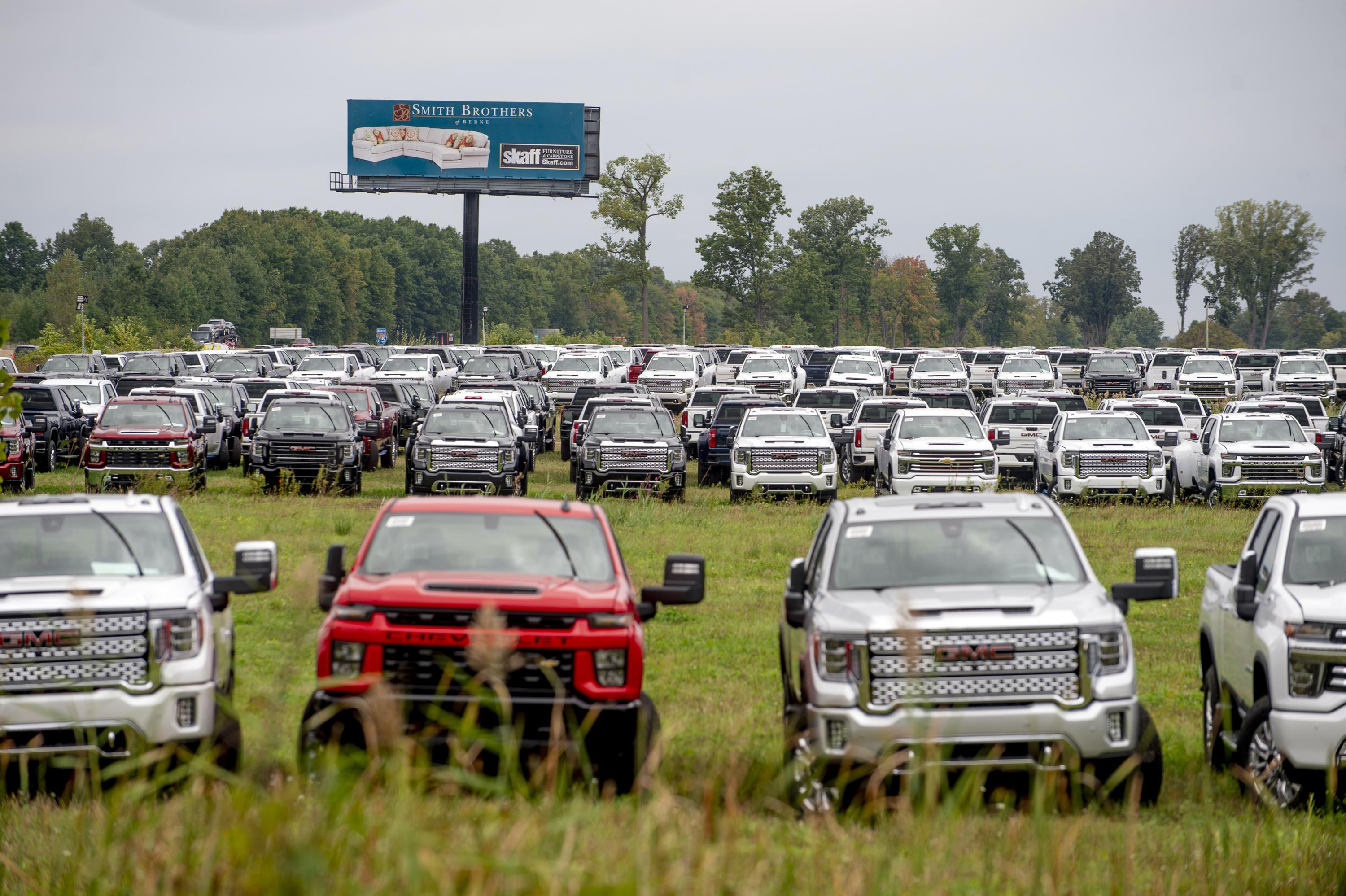
What can America expect as supply chain issues leave the auto industry stuck in park?
America’s auto industry is slowing down – and this time the main source is not a matter of labor issues or a lack of customers. This time this crisis, like those plaguing so many other industries lies in the tangled web of supply chain issues that is challenging manufacturing, industries and economies across America and the continent. In the United States, the auto industry has been hit particularly hard. The nation’s largest automaker and the rest of the global auto industry have been sporadically shutting down plants since late last year due to the semiconductor shortage, which has cut supplies on dealer lots and driven new vehicle prices to record levels. To be sure, production still isn’t back to normal because some of the factories will only run on one shift per day. Phil Amsrud, senior principal analyst for IHS Markit who studies the chip market, said GM’s move is a good sign, but doesn’t signal the end of the chip shortage. “It’s just not a sign that the patient is through all the rough spots and it’s a matter of weeks before they’re released from the hospital,” he said. October 22 - Associated Press There has been a lot of coverage, and a lot of questions asked as to how this happened and what it will take to untangle the mess. And that’s where experts from Augusta can help with coverage. "There are several factors but the main themes are suppliers inability to react to the increased demand, and governmental policies and responses,” explains Dr. Mark Thompson an economist and expert regarding the industrial issues facing America. “When COVID initially hit, demand dropped considerably. As it relates to the shortage of computer chips, what do you think consumers were demanding during the early phase of COVID...computers, laptops, handheld devices, etc. Technology companies responded and chip manufacturers switch to produce these items. Now, as consumers demand for new cars pick up, there is a shortage of the chips necessary for new cars. As it relates to government intervention, the stimulus has also increased demand for various goods and services furthering the shortage." As for how long will it take for America to see the supply chain replenished? "Good guess,” says Thompson. "I would say that we should expect to continue to see these shortages through the rest of 2021 and part of the way in 2022." If you’re a journalist covering the ongoing supply-chain issues – then let our experts help with your stories. Dr. Mark Thompson is an economist with highly accomplished work in business conditions, risk analysis, energy and the healthcare industry. Dr. Thompson is available to speak with media regarding the economic and industrial issues facing America during this supply chain crisis - simply click on his icon now to arrange an interview today.


Presidential plantations – are they leaving out slavery when telling the story of America’s history?
The presidential plantations once belonging to George Washington, Thomas Jefferson, James Madison and James Monroe are picturesque destinations for tourists who want to learn more about these Founding Fathers from Virginia. But these museums often fail to adequately tell the stories of the enslaved people who lived and toiled there. UMW Professor of Geography Stephen Hanna's research on the topic was recently highlighted in Northern Virginia Magazine. Do plantation museums do justice to the memory of the enslaved? Local professor Stephen Hanna wanted to find out, so in 2014 he joined a team of researchers associated with TourismRESET, a world-wide network of scholars who study and challenge social inequity in tourism. Hanna, who teaches geography at the University of Mary Washington in Fredericksburg, received a grant from the National Science Foundation, enabling him to lead undergraduate students through multi-year research on how narratives and exhibits about enslaved populations and slavery were presented or absent at 15 different plantation sites. The goal was to present their findings to museum managers and thus facilitate more historically accurate and meaningful tours. His team is in the final stages of publishing a book summarizing their data and findings, to be released in March 2022. The full article is attached below and is well worth the complete read. If you are a journalist covering this critical topic about American history, then let us help with your questions and stories. Dr. Hanna is available to speak with media regarding this topic. Simply click on his icon to arrange an interview.


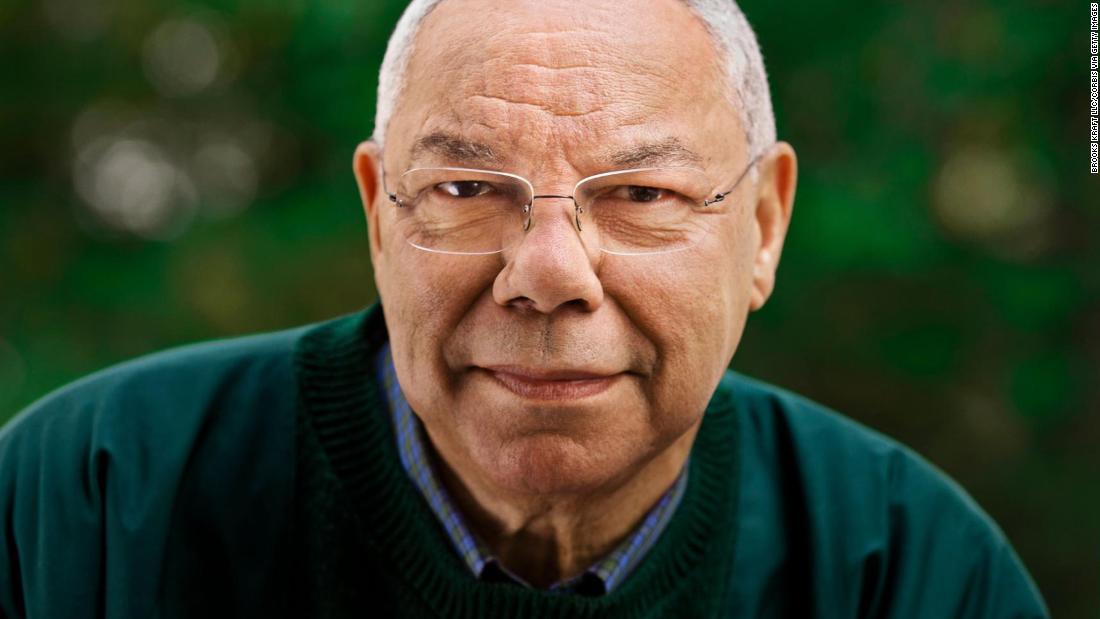
Covering the death of Colin Powell? UMW's foreign policy expert can help
Colin Powell, the first Black US secretary of state whose leadership in several Republican administrations helped shape American foreign policy in the last years of the 20th century and the early years of the 21st, has died from complications from Covid-19, his family said on Facebook. He was 84. "General Colin L. Powell, former U.S. Secretary of State and Chairman of the Joint Chiefs of Staff, passed away this morning due to complications from Covid 19," the Powell family wrote on Facebook, noting he was fully vaccinated. A source familiar with the matter said Powell had multiple myeloma, a cancer of plasma cells that suppresses the body's immune response. Even if fully vaccinated against Covid-19, those who are immunocompromised are at greater risk from the virus. "We have lost a remarkable and loving husband, father, grandfather and a great American," the family said. October 18 - CNN If you are covering the life and legacy of Colin Powell - then let our experts help with your questions and coverage. University of Mary Washington Political Science and International Affairs Professor Jason Davidson is an expert in American foreign and security policy, and international security. He is also the author of the commissioned study, "The Costs of War to United States Allies Since 9/11," which focuses extensively on the human and monetary sacrifices made by America's allies in these conflicts. Davidson, and the document, made waves this spring, landing in the likes of Forbes, The Guardian and The Daily Mail. If you’re looking to arrange an interview with Dr. Davidson, simply click on his icon.


It’s the bug that been in the news all summer long. The spotted lanternfly is an invasive species that was first spotted on American soil seven years ago and is now moving at a fever pitch across the country. The petulant pest has the potential to devastate crops and agriculture – and there were hopes that steps to eradicate or at least minimize the insect’s spread would work. That’s why media are looking to experts like Josephine Antwi from the University of Mary Washington for answers. "The key right now, is to keep them from spreading and to keep their numbers down in areas where they currently occur," said Josephine Antwi, an entomologist at the University of Mary Washington in Virginia. "By destroying egg masses in the winter, we keep the number of the following generation down." September 30 - NorthJersey.com If you're writing about the Spotted Lanternfly, Dr. Antwi is available to speak with media; simply click on her icon to arrange an interview today.

Friends or enemies? Is there any solving the ancient secret that is Chinese diplomacy?
When it comes to trade, investment and trillions of dollars of opportunity for American companies – it would appear that China and the United States should be close-knit allies. However when it comes to military escalation, an emerging global bull and national security – China is also a country that the U.S. government is very concerned about. NPR recently got in touch with UMW Professor of Political Science and International Affairs Elizabeth Larus to lend her expertise when it comes to the politics of China. Elizabeth Larus, who teaches Chinese studies at the University of Mary Washington in Virginia, says any economic "de-coupling" between the U.S. and China will be very difficult. "You can't just say you're going to pick up your factory and move all your resources and have a consistent, reliable energy source and the shipping port to get your stuff out at a decent price, and the logistics. China has nailed that down," said Larus, the author of Politics and Society in Contemporary China. China's President Xi Jinping uses this as leverage, she noted. "One of the goals of this Xi Jinping regime is to make the world really reliant on China for its supply chain, but not to have China reliant on the rest of the world," she added. "So that makes it difficult for the businesses." Is there a way out of this downward spiral? "I do not see a de-escalation anytime soon," she said. October 08 - NPR There will be no easy or immediate solution to the hot-and-cold relationship between the United States and China. But if you are covering this ongoing story – then let our experts help with your questions and coverage. Dr. Elizabeth Larus is an expert in the politics of China. She is available to speak to media, simply click on her icon to arrange an interview today.
