Experts Matter. Find Yours.
Connect for media, speaking, professional opportunities & more.

Villanova Experts Reflect on the 2010s
The iPad. Hurricane Sandy. Affordable Care Act. #MeToo. Brexit. Streaming services. Since 2010, there have been so many memorable and historic events that have shifted culture and society into unfamiliar territory around the world. Two Villanova experts have put together thoughts on a few of the decade's top stories that will continue to be relevant for the next ten years—and beyond. Stephen Strader, assistant professor of geography and the environment Over the last decade we have seen the issue of anthropogenic or human-induced climate change shift from something discussed between select, interested scientists to the front page of the news on a daily basis. This dramatic change in the importance and coverage of climate change makes complete sense given six of the last ten years globally have been in the top ten warmest on record. Actually, it's very likely, if not certain, that the last five years will be the hottest globally on record. The odds of that happening naturally are very close to zero. Nowhere have the effects of a changing climate been realized more so than in the western United States, where wildfires have wreaked havoc year after year in the 2010s. States such as California, Colorado, Kansas, Oklahoma, New Mexico and Washington all experienced record-breaking wildfires over the last decade. Specifically, the Camp Fire in 2018 became the deadliest and most destructive wildfire in California history, destroying 18,000-plus homes and killing 85 people in the town of Paradise. Additionally: Hurricanes Dorian, Irma, Harvey, Maria, etc. damaged entire countries (Puerto Rico and Bahamas) so much that there is question whether they will ever recover from the effects. The deadliest tornado season on record occurred in 2011, including the devastating April 27, 2011, tornado outbreak and the deadliest U.S. tornado in modern history, which struck Joplin, Missouri (158 fatalities). Between 2011 and 2017, drought and water shortages impacted the western U.S., with California seeing its worst drought in history (or worst in 1,200 years). The drought killed 100-plus million trees and resulted in water shortages that affected crops and caused municipalities to limit water use. Record-setting rainfall and floods occurred in locations such as Colorado, New York, Oklahoma, Texas, etc., resulting in hundreds dead and millions of dollars in crop losses. If the last 10 years have taught scientists, climatologists, policy makers and the general public anything, it's that we have our work cut out for us if we are to reverse this trend of increasing disasters around the world. The atmosphere continues to warm, and all model projections point to a progressively warmer future Earth if action is not taken. And this action can't be tomorrow or by 2025, 2050 or some other arbitrary year; it has to happen now if we want to reduce future economic and societal losses. Yes, it's easy to be afraid and fearful of the future when all we see as scientists and citizens are rising temperatures, deadlier disasters and a lack of drastic climate action. However, we can't let this fear result in crippling inaction; we have to let it motivate us to fight, not for just our futures but our children's, grandchildren's and great-grandchildren's futures. Let's give them a chance to see the world the way we used to: beautiful. Jerusha Conner, associate professor of education and counseling The latter half of this decade witnessed a resurgence of student activism, sparked by Black Lives Matter protests and the dramatic events at the University of Missouri in the fall of 2015. Highlighting 2015 as a pivotal year for student activism, the authors of the American Freshman National Norms survey deemed the 2015 freshman class "the most ambitious" group in 49 years of the survey's administration in terms of their expectations for participating in protests, connecting to their communities and influencing the political structure; and the numbers of freshmen who report having participated in demonstrations as high school seniors has ticked up every year since. In my own research with college student activists in 2016, I found three striking trends: Nearly half came to college already seeing themselves as activists; only 10% consider themselves single-issue activists (with more than half identifying seven or more issues their activism addressed); and a significant share were not protesting their own institution's policies or practices, but instead concerning themselves with broader social and political issues. They are what I call "outward-facing activists," who use their campuses to stage and mobilize campaigns, rather than as the targets of their change efforts. In the last couple of years, we have seen activism among high school students take off, as students have staged walkouts and school strikes to protest inaction on climate change and gun violence. Although these movements may appear narrowly focused on a single issue, the students involved have intentionally advanced an intersectional perspective, which draws attention to the racialized, economic and gendered dimensions of the multifaceted problems they are seeking to address. Digital natives, these young people have deployed the affordances of social media not only to mobilize their peers in large-scale collective action, but also to attract and sustain the attention of the media, pressure business leaders and politicians and shape public understanding of the issues. One interesting shift with this generation of student activists is that, rather than turning their backs on the system or seeking to upend it, they are focused on enhancing voter registration and turnout, especially among young people. And their efforts appear to be working. Youth turnout in the 2018 midterms was double that of 2014, and record numbers of youth are continuing to register to vote. As the decade comes to a close and the 2020 campaign season revs up, the engagement of student activists in electoral politics will be important to continue to track.


November has been a busy month for Cedarville University’s Mark Caleb Smith. As the Director of the Center for Political Studies at Cedarville, Smith has found himself doing double duty as both professor and the go-to person and pundit for local, state and national political coverage In November Smith was interviewed by TV, radio and print for issues pertaining to impeachment, Michael Bloomberg entering the presidential race and the DNC debates. Mark Caleb Smith averages approximately 160 media interviews a year – and for good reason. He teaches courses in American Politics, Constitutional Law, and Research Methodology/Data Analysis and has fast become a media-ready expert who provides accurate, objective and laser-cut insight to reporters and journalists covering politics. If you’re a journalist covering politics – let Mark Caleb Smith help with your stories. He’s available, simply click on his icon to arrange an interview today.


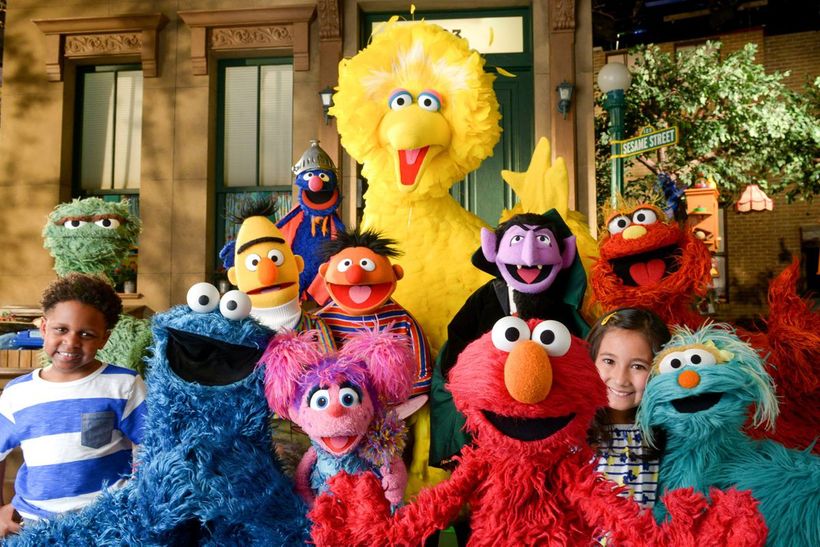
Sesame Street Celebrates 50 Years
Sesame Street, the longest-running children's show in American history, recently celebrated its 50th anniversary. Villanova's Emory Woodard, PhD, Dean of Graduate Studies in the College of Liberal Arts and Sciences, spent time working at Children's Television Workshop (now Sesame Workshop), the nonprofit organization that puts on Sesame Street. He reflects back on its legacy, its important focus on diversity and what lies ahead. Concerning the Program's Legacy "Sesame Street transformed the landscape for educational television at a time when very few content producers were paying attention to quality content for children. The show has effectively reduced the school readiness gap and prepared millions for scholastic success." On Special Memories "My parents could not afford to send me to preschool but used Sesame Street to reinforce the literacy and numeracy skills they taught me. I have fond memories of learning to count with Count von Count, learning the alphabet with Cookie Monster and even getting phonetics lessons with Big Bird. I cannot tell you how much of a delight it was to have Big Bird speak at one of our Commencement Ceremonies... "Perhaps more than the literacy and numeracy skills that I learned from Sesame Street, I remember the prosocial lessons of the show. At such a formative stage, I remember learning about sharing, cooperation and appreciating the differences between people." On Sesame Street and Diversity "Sesame Street has been keenly aware of the dual audiences it engages: children and their parents. At the preschool age, parents tend to be very involved in the media diet of their children. Sesame Street has taught a generation of parents to be more sensitive to issues of diversity." On the Program's Future "I think the future is bright. With the advent of increasingly diverse content distribution platforms (e.g., Netflix, Sling, Roku, Apple TV, etc.), the demand for quality content will remain strong. The makers of Sesame Street may have to be creative in figuring out how to support the production of their high-quality content while still serving their primary mission. Nonetheless, their longevity is a testament to the good thinkers they have charting the course to ongoing success. "The partnership with HBO is an industry reality. The funding for public television remains under threat and the choice is to either fold or be financially creative. I am delighted that the makers of Sesame Street have chosen to be financially creative. Moreover, they chose to partner with an outlet that has demonstrated itself to be a purveyor of high-quality content. As long as that content is shared with platforms that are more accessible to the economically disadvantaged, I do not see this much differently than the decision to use television as a distribution platform that was not universally accessible back in the late 1960s. "Sesame Street will remain relevant as long as they remain true to their original mission of bringing literacy and numeracy skills to disadvantaged populations through high-quality content. No one is and perhaps will ever be better at it than the makers of Sesame Street."

As director of engineering at the Virginia Commonwealth University College of Engineering, Supathorn Phongikaroon, Ph.D., leads Virginia's only nuclear engineering education program offering bachelor's, master's and doctoral degrees. VCU Engineering is also home to the nation's only hybrid doctorate in mechanical and nuclear engineering. Phongikaroon is a nationally recognized expert on nuclear waste minimization. He has developed novel ways to process and store used nuclear fuel. He has also developed new techniques to ensure safeguard special nuclear materials. Prior joining the Virginia Commonwealth University (VCU) in January 2014, he held academic and research positions at University of Idaho in Idaho Falls, Idaho; the Idaho National Laboratory in Idaho Falls, Idaho; and the U.S. Naval Research Laboratory in Washington, D.C. Phongikaroon grew up in a restaurant family. While working at the Idaho National Laboratory, he authored "Thaidaho," a cookbook for creating Thai cuisine in American kitchens.


Higher education must rediscover the 'service ethic' of teaching
Earlier this autumn, Otterbein University hosted the Democratic National Congress for a debate of its presidential candidates. All eyes from across America and around the world were on Otterbein and it was with that attention that the school’s president John Comerford weighed in with his thoughts on how leaders need to prioritize higher education. “Today the nation’s attention will shift to Otterbein University in Westerville, Ohio, as we host the next Democratic presidential primary debate. Questions will abound — of the candidates, between the candidates and, afterward, about who may or may not have “won” the night, all in the service of helping voters decide who might be best suited to lead. An important question that should be asked and won’t, however, isn’t for the candidates at all but for higher education: “Are you ready to lead?” Sadly, the answer is, “No.” Make no mistake, I fully expect plenty of discussion about higher education at the debate — its high costs, student debt, workforce shortages and the difficulty of change. I just hope the candidates don’t hold back in calling to account higher education itself simply because we happen to be their hosts. There is plenty of blame to go around with the challenges in higher education today, and higher education institutions themselves own a fair share of it. Perhaps no issue contributes more to higher education’s affordability problems than institutions’ — and parents’ — preoccupation with “prestige.” Exclusivity and selectivity are thought to be hallmarks of quality, which fosters a system that rewards institutions for perpetually raising admission standards and prices. The problem with this is that test scores — the most frequently-used metric for a student’s academic strength — generally track with a family’s income. Students from higher-wealth families have higher test scores and more frequently gain entrance to “selective” institutions, which steadily become less and less diverse. To essentially segregate students by their parents’ income this way, however, is un-American and does nothing to enrich an education or advance quality in research or instruction. It is the inevitable product, though, of a mindset that “selective” and high rankings are the top priorities in higher education. This is a falsehood that needs to be turned upside down…” October 15 – The Hill The rest of the op-ed is attached – and it is well worth the read. But if you are a journalist covering this topic or wish to learn more – then let us help. John Comerford is an expert in higher education, regional and national topics. He is the President of Otterbein University and is available to speak with media regarding higher education in America. Simply click on his icon to arrange an interview.


Is Donald Trump playing nuclear chicken with Turkey?
As Elvis Presley used to sing “Wise men say, only fools rush in…” and it seems America’s hasty retreat from northern Syria and its seemingly unprepared rhetoric with Turkey may have landed America in a bit of a pickle. Unbeknownst to most, the United States has an arsenal of nuclear weapons in Turkey, and senior officials are now scrambling with what they can or may have to do. “And over the weekend, State and Energy Department officials were quietly reviewing plans for evacuating roughly 50 tactical nuclear weapons that the United States had long stored, under American control, at Incirlik Air Base in Turkey, about 250 miles from the Syrian border, according to two American officials. Those weapons, one senior official said, were now essentially Erdogan’s hostages. To fly them out of Incirlik would be to mark the de facto end of the Turkish-American alliance. To keep them there, though, is to perpetuate a nuclear vulnerability that should have been eliminated years ago. “I think this is a first — a country with U.S. nuclear weapons stationed in it literally firing artillery at US forces,” Jeffrey Lewis of the James Martin Center for Non-proliferation Studies wrote last week.” October 14 - New York Times It’s quite the conundrum, and if you are a journalist covering this escalating issue – let our experts help. Dr. Glen Duerr's research interests include comparative politics and international relations theory. Glen is available to speak to media regarding this topic– simply click on his icon to arrange an interview.


The link between veterans coming home and racial violence in America. Our expert can explain.
There is a long history of white supremacist and white-power ideology developing out of the wars the United States has fought. In Bring the War Home: The White Power Movement and Paramilitary America (Harvard University Press, 2018), Kathleen Belew shows that, beginning in the 1970s, a small but committed number of Vietnam War veterans took the racist understanding of the Vietnamese and Asians more broadly that the U.S. military taught them and became instrumental in building the current white-power movement. These vets often did not initially know each other, but they eventually built a wide variety of organizations: the White Aryan Resistance, the latest, post-Civil Rights Era iteration of the Ku Klux Klan, various Christian Identity and white skinhead organizations, and the militia movement of the 1980s and 1990s. In his forthcoming book, Guarding the Empire: Soldier Strikebreakers on the Long Road to the Ludlow Massacre, Otterbein’s Dr. Anthony DeStefanis has found that the men who fought the Plains Indians in the late nineteenth century and who served in Cuba and the Philippines during the Spanish-American-Filipino War (1898-1902) came to understand Native Americans, Cubans, and Filipinos as formidable but racially inferior enemies. When these same men joined the National Guards in states across the country and were called out on strike duty during the late nineteenth and early twentieth century, they took what they learned on the Plains and overseas to create a racist rationale for breaking the labor strikes of a working class that was increasingly made up of southern and eastern European, Mexican, and Asian immigrants. Many of these same men also joined the Second Ku Klux Klan that emerged in the late 1910s and became a nationwide organization by expanding the targets of its hatred beyond African Americans to include Jews, Catholics, and immigrants. Racism is a many-headed hydra with multiple roots in experience at home and abroad. Some white southerners who were central in the project of creating and maintaining Jim Crow white supremacy were Confederate military veterans and it is clear that wars across the twentieth century – from Cuba and the Philippines to Vietnam – pushed some veterans into the white- power movement. Today, we know that white-power organizations concentrate on recruiting military veterans and we have seen a spike in support for these organizations among current members of the military. It’s no accident that some of these active troops and veterans served in the Iraq and Afghan Wars, where they faced a Muslim enemy with unfamiliar social and cultural practices, and who did not welcome the U.S. military presence with open arms. Clearly, we must reckon with what our wars overseas have brought back to the United States. If you are a reporter covering this topic – let the experts from Otterbein University help. Dr. Anthony DeStefanis is an associate professor of history at Otterbein University. He specializes in modern U.S. history with an emphasis on labor and the working class and immigration, race, and ethnicity. Dr. DeStefanis is available to speak with media regarding the history of racial violence in America – simply click on his icon to arrange an interview.
On August 3, 2019, a white power-inspired gunman killed 24 people and injured 22 others at a Wal-Mart in El Paso, Texas. We tend to understand mass shootings as isolated events committed by “lone wolf” gunmen who might have mental health problems, but what we know about the El Paso gunman – as well as the terrorists who carried out mass killings at the Al Noor Mosque and Linwood Islamic Center in Christchurch, New Zealand in March 2019, the Tree of Life Synagogue in Pittsburgh in 2018, and at the Emanuel African Methodist Episcopal Church in Charleston, South Carolina in 2015 – tell a different story. The evidence investigators have complied shows that these white-power terrorists had never met one another, but that they lived in an on-line world created by 4chan, 8chan, and white-power organizations’ websites, where they consumed racist ideas and propaganda that shaped their decision to kill African-Americans, Muslims, Jewish people, and Mexicans and Mexican-Americans. We also know that white-power terrorists have particular goals in mind. Message boards like 8chan reveal a competition among participants about who can top the number of people killed in the last mass shooting. There is also a strong belief expressed on-line that killing racial minorities will foment a race war and allow white-power advocates to create an all-white world. I describe these terrorists as advocates of white power because it is important to understand that “white power” and “white nationalism,” a term often used in the media to describe the perpetrators of recent mass killings and the movement that animates them, are not the same thing. White nationalism calls to mind an effort to shore up the interests of white people within the American nation as it currently exists. The white-power movement, on the other hand, imagines a transnational, Aryan nation of white people living in an all-white world after wiping out non-whites. This might sound far-fetched, but does not mean that those who carry out mass killings in pursuit of this goal are mentally ill. Rather, their actions are the result of a white-power ideology fostered and spread on-line. What is new about how white-power advocates communicate with each other is that some of it now happens on-line. Interaction between racists who never met one another, however, has a long history in the United States. Approximately 4,100 African Americans were lynched between the end of the Civil War in 1865 and the 1960s. The white perpetrators of these lynchings lived hundreds of miles apart and often did not know one another, but they were united in a collective effort to enforce Jim Crow white supremacy in the American South (I use “white supremacist” here because white southerners who carried out lynchings did not, broadly speaking, subscribe to white power as the current movement defines it: the creation of a transnational, Aryan nation of white people living in an all-white world after wiping out non-whites). Lynchings were sometimes public events that drew hundreds or thousands of people with the purpose of “teaching” southern African Americans what would happen to them if they violated the rules of Jim Crow. Southern newspapers ran stories that justified lynchings; perpetrators took pieces of flesh, body parts, and hair from lynching victims as souvenirs and passed them around; and white southerners took lynching photographs, turned them into postcards, and mailed them to friends, family, business associates, and fellow travelers in the white supremacist movement. This racist community building had the goal of creating and maintaining white supremacy and, of course, it all happened without the help of the Internet. Communication, whether on-line or through the more traditional means has played an integral role in fostering and perpetuating racial violence and hatred. If you are a reporter covering this topic – let one of our experts help. Dr. Anthony DeStefanis is an associate professor of history at Otterbein University. He specializes in modern U.S. history with an emphasis on labor and the working class and immigration, race, and ethnicity. Dr. DeStefanis is available to speak with media regarding the history of racial violence in America – simply click on his icon to arrange an interview.

October is Breast Cancer Awareness Month – Let our experts help with your coverage
October is Breast Cancer Awareness Month and if you are a reporter looking to know more or considering covering this topic, here are a few key facts to get started according to Breastcancer.org: About 1 in 8 U.S. women (about 12%) will develop invasive breast cancer over the course of her lifetime. In 2019, an estimated 268,600 new cases of invasive breast cancer are expected to be diagnosed in women in the U.S., along with 62,930 new cases of non-invasive (in situ) breast cancer. About 2,670 new cases of invasive breast cancer are expected to be diagnosed in men in 2019. A man’s lifetime risk of breast cancer is about 1 in 883. About 41,760 women in the U.S. are expected to die in 2019 from breast cancer, though death rates have been decreasing since 1989. For women in the U.S., breast cancer death rates are higher than those for any other cancer, besides lung cancer. Besides skin cancer, breast cancer is the most commonly diagnosed cancer among American women. In 2019, it's estimated that about 30% of newly diagnosed cancers in women will be breast cancers. In women under 45, breast cancer is more common in African-American women than white women. A woman’s risk of breast cancer nearly doubles if she has a first-degree relative (mother, sister, daughter) who has been diagnosed with breast cancer. Less than 15% of women who get breast cancer have a family member diagnosed with it. At Augusta University, we have leading experts who can help with any of your questions, assist with your coverage and ensure your story has all the facts and details it requires to be a compelling and effective piece. Dr. Alicia Vinyard is a Board-Certified General Surgeon and Fellowship Trained Breast Surgical Oncologist at the Georgia Cancer Center and Medical College of Georgia at Augusta University. Dr. Vinyard is also an expert in breast cancer, cancer surgery and cancer survivorship. She is available to speak to media about Breast Cancer Awareness Month – simply click on her icon to arrange an interview.


How are Governments Using Artficial Intelligence? How are They Misusing AI?
There has been a lot of talk about artificial intelligence – who is using it, how it works, and what it will lead to. Rensselaer Polytechnic Institute professor James Hendler – who was recently named to the newly formed Association for Computing Machinery (ACM) Technology Policy Council – penned a piece for The Conversation outlining the danger A.I. could pose to American society if there is not enough oversight. Here are some excerpts: “Artificial intelligence systems can – if properly used – help make government more effective and responsive, improving the lives of citizens. Improperly used, however, the dystopian visions of George Orwell’s “1984” become more realistic. On their own and urged by a new presidential executive order, governments across the U.S., including state and federal agencies, are exploring ways to use AI technologies. As an AI researcher for more than 40 years, who has been a consultant or participant in many government projects, I believe it’s worth noting that sometimes they’ve done it well – and other times not quite so well. The potential harms and benefits are significant...” “...Other government uses of AI are being questioned, too – such as attempts at 'predictive policing,' setting bail amounts and criminal sentences and hiring government workers. All of these have been shown to be susceptible to technical issues and data limitations that can bias their decisions based on race, gender or cultural background. Other AI technologies such as facial recognition, automated surveillance and mass data collection are raising real concerns about security, privacy, fairness and accuracy in a democratic society....” “...As the use of AI technologies grows, whether originally well-meant or deliberately authoritarian, the potential for abuse increases as well. With no currently existing government-wide oversight in place in the U.S., the best way to avoid these abuses is teaching the public about the appropriate uses of AI by way of conversation between scientists, concerned citizens and public administrators to help determine when and where it is inappropriate to deploy these powerful new tools.” Are you a reporter covering AI? Then let us help with your stories and ongoing coverage. Professor James Hendler is the Director of the Institute for Data Exploration and Applications at Rensselaer Polytechnic Institute. He is available to speak with media – simply click on his icon to arrange an interview.