
Experts Matter. Find Yours.
Connect for media, speaking, professional opportunities & more.

Local Elections and Early Voting Turnout
Dr. Meena appeared on WNYW-TV Fox 5 to discuss the New York City mayoral race and the New Jersey gubernatorial race, the high turnout for early voting, and why the nation will be closely monitoring the election results in our area. Dr. Bose is a Hofstra University professor of political science, executive dean of the Public Policy and Public Service program, and director of the Kalikow Center for the Study of the American Presidency.


Why College Students Are Storming Fields More Often
In his most recent Forbes article, Dr. Marshall Shepherd takes a scientific look at why college students and fans storm football fields, blending insights from psychology, meteorology, and social dynamics. He explains that field-storming is not simply a burst of emotion—it’s a predictable outcome of collective excitement and shared identity. After an unexpected win or a high-stakes rivalry game, thousands of people simultaneously experience what psychologists call “emotional contagion,” amplifying feelings of unity and celebration. This shared surge, combined with environmental cues like stadium acoustics and crowd density, transforms the act into what Shepherd calls a form of “social weather event.” “Storming the field isn’t chaos—it’s choreography fueled by emotion and crowd physics.” Shepherd also examines the logistical and safety implications. He notes that while universities often celebrate these spontaneous displays of school pride, they carry risks ranging from crowd injuries to property damage. Yet, institutions are reluctant to ban them outright because these moments reinforce fan loyalty and media attention. Shepherd suggests that the solution lies in better understanding crowd behavior: designing stadiums with safe egress routes, training security teams to manage surges, and anticipating emotional tipping points rather than reacting afterward. “Understanding the science behind fan behavior lets us manage energy, not suppress it.” Ultimately, Shepherd’s piece reframes field-storming as a fascinating mix of culture and physics—where joy, identity, and momentum collide. He urges universities to see these moments not as mere rule-breaking but as opportunities to study human behavior in motion, and to design environments that celebrate passion without compromising safety. Dr. J. Marshall Shepherd is a leading international weather-climate expert and is the Georgia Athletic Association Distinguished Professor of Geography and Atmospheric Sciences at the University of Georgia. Dr. Shepherd was the 2013 President of American Meteorological Society (AMS), the nation’s largest and oldest professional/science society in the atmospheric and related sciences. View his profile here Dr. J. Marshall Shepherd is available to speak with the media about this interesting topic - simply click on his icon now to arrange an interview today.

Covering Hurricane Melissa? Our Expert is Here to Help with Your Coverage
Hurricane Melissa has exploded into a record-breaking Category 5 storm, tearing through the Caribbean with catastrophic force. It made landfall in Jamaica with sustained winds near 185 mph, unleashing torrential rain, landslides, and widespread destruction across the island — the strongest storm ever recorded there. The hurricane has already caused fatalities in Jamaica, Haiti, and the Dominican Republic, and now barrels toward eastern Cuba and the Bahamas, where mass evacuations are underway. Meteorologists warn of up to 30 inches of rainfall in some areas, storm surges reaching 11 feet along southern coasts, and a severe risk of flash flooding and mudslides due to the storm’s slow, grinding pace. Dr. J. Marshall Shepherd is a leading international weather-climate expert and is the Georgia Athletic Association Distinguished Professor of Geography and Atmospheric Sciences at the University of Georgia. Dr. Shepherd was the 2013 President of American Meteorological Society (AMS), the nation’s largest and oldest professional/science society in the atmospheric and related sciences. View his profile here While Melissa is expected to weaken slightly as it moves north, its enormous size means destructive winds, life-threatening flooding, and dangerous coastal waves will persist through the week — with Bermuda now bracing for potential impact and the U.S. East Coast monitoring for high surf and rip currents as the storm churns offshore. Covering? We can help. Dr. J. Marshall Shepherd is a leading international weather-climate expert and is the Georgia Athletic Association Distinguished Professor of Geography and Atmospheric Sciences at the University of Georgia. His expertise has been sought recently by ABC News, Forbes Magazine and The New York Times. He's available to speak with the media about this ongoing story and storm - simply click on his icon now to arrange an interview today.

Adam Frank: New Peer-reviewed Studies Change the Conversation on UFOs
For decades, talk of UFOs has thrived on fuzzy photos and personal anecdotes—never the kind of hard data scientists can actually test. But new peer-reviewed studies have changed the conversation, says Adam Frank, a University of Rochester astrophysicist who studies life in the universe and the nature of scientific discovery. Two recent papers, published in reputable astronomy journals, claim to have found evidence of “non-terrestrial artifacts” in astronomical photographs from the 1950s — objects that appear to be orbiting Earth before the Space Age began. “That’s an extraordinary claim,” Frank says, “and, as Carl Sagan famously said, 'Extraordinary claims require extraordinary proof.' “The good news is that, finally, there’s something associated with UFOs that science can work with.” Led by astronomer Beatriz Villarroel and her VASCO project (Vanishing and Appearing Sources during a Century of Observations), the studies passed the first test of scientific credibility: rigorous peer review. Now, Frank says, comes the harder part — the “call-and-response” that defines real science. “Getting a paper published doesn’t make the claim right,” he explains. “It just means the debate can begin. Other scientists will now dig into the data, test the methods, and try to tear the claim apart. That’s how science works.” Frank is a frequent on-air commentator for live interviews and segments in national media outlets and the author of The Little Book of Aliens (Harper Collins, 2023). He also regularly contributes to written publications, including The Washington Post, The Atlantic, The New York Times, and Scientific American. In 2021 he received the Carl Sagan Medal, which recognizes and honors outstanding communication by an active planetary scientist to the general public. It is awarded to scientists whose efforts have significantly contributed to a public understanding of, and enthusiasm for, planetary science. Connect with him by clicking on his profile.



Lighting the Night: The History and Meaning of the Jack-o’-Lantern
No Halloween is complete without the warm flicker of a Jack-o’-Lantern glowing from porches and windowsills. But long before it became a symbol of trick-or-treating and fall décor, the carved pumpkin had deep roots in folklore, superstition, and the immigrant experience that shaped North American culture. From Folklore to Flame The story begins in Ireland, where early Jack-o’-Lanterns were not pumpkins at all, but turnips and beets. The tradition sprang from an old Irish folktale about “Stingy Jack,” a clever but dishonest man who tricked the Devil and was doomed to wander the Earth with only a burning coal inside a hollowed-out turnip to light his way. People began carving their own “Jack’s lanterns” to ward off wandering spirits and evil forces during Samhain, the Celtic festival marking the end of the harvest and the beginning of winter. When Irish and Scottish immigrants brought this tradition to North America in the 19th century, they discovered that the native pumpkin—larger, softer, and easier to carve—was the perfect replacement. The transformation from turnip to pumpkin turned a small superstition into a dazzling new folk art. The American Reinvention By the mid-1800s, Jack-o’-Lanterns had become a staple of Halloween celebrations in the United States. Newspapers of the era described “pumpkin lanterns” lighting up autumn gatherings, and by the early 20th century, the smiling (and sometimes sinister) carved pumpkin was the defining symbol of the holiday. Over time, the tradition evolved from scaring away spirits to creating community and creativity. Towns began holding carving contests, families passed down patterns and designs, and pumpkin patches and Halloween festivals turned the once-humble lantern into an essential piece of American seasonal culture. A Symbol Beyond Scares Today, Jack-o’-Lanterns carry layered meanings: they celebrate harvest, creativity, and folklore while keeping a touch of the supernatural alive. In many ways, they embody the blend of ancient myth and modern celebration that defines Halloween itself—where fear meets fun, and the flicker of a candle becomes both decoration and tradition. Whether whimsical or eerie, the glowing face of a Jack-o’-Lantern continues to connect generations to an age-old story about light overcoming darkness—a reminder that even the spookiest traditions began with a spark of human imagination. Connect with our experts about the folklore, cultural history, and enduring legacy of the Jack-o’-Lantern. Check out our experts here : www.expertfile.com


In a September article featured in Forbes, Marshall Shepherd reports on a new tool launched by Project Drawdown that aims to deliver personalized climate-action strategies to different users—including policymakers, businesses, and individuals. In the piece, he explains that the tool helps match context-specific emissions reduction or resilience options to the particular needs, geography, and capacities of the user, rather than prescribing one-size-fits-all solutions. Shepherd also emphasizes that tools like this can help bridge the gap between climate science and real-world decision-making. He argues that equipping stakeholders with tailored pathways could accelerate uptake of effective interventions by making them more relevant, feasible, and compelling. Ultimately, Shepherd presents the new Drawdown resource as a promising model for democratizing access to climate solutions, enabling individuals and organizations to engage in strategies best suited to their specific circumstances. Dr. J. Marshall Shepherd is a leading international weather-climate expert and is the Georgia Athletic Association Distinguished Professor of Geography and Atmospheric Sciences at the University of Georgia. Dr. Shepherd was the 2013 President of American Meteorological Society (AMS), the nation’s largest and oldest professional/science society in the atmospheric and related sciences. View his profile here Dr. J. Marshall Shepherd is a leading international weather-climate expert and is the Georgia Athletic Association Distinguished Professor of Geography and Atmospheric Sciences at the University of Georgia. He's available to speak with the media about this topic - simply click on his icon now to arrange an interview today.

3 Things A Climate Scientist Learned From Jane Goodall
In a recent Forbes article, Marshall Shepherd reflects on three key lessons he has drawn from the life and work of Dr. Jane Goodall. Shepherd frames Goodall’s legacy—spanning primatology, conservation, and public engagement—as deeply instructive for climate scientists and environmental advocates. He argues that her methods and mindset have more to teach than simply how to observe nature; they speak to how we engage with the world. First, Shepherd highlights immersion: Goodall’s decades of patient observation in the Tanzanian forests demonstrates the power of being physically—and emotionally—present to truly learn from ecosystems. For Shepherd, climate science must go beyond remote data collection: getting into the field and understanding local realities matters. Second, he emphasizes patience. Goodall’s willingness to wait, sometimes for years, for breakthroughs in understanding primate behavior offers a lesson for climate researchers, whose progress may unfold over decades. Third, he admires her tenacity—a commitment sustained over a lifetime, even under adversity. Shepherd suggests that tackling climate change requires that same kind of enduring resolve, especially when public attention or funding waxes and wanes. Through these reflections, Shepherd presents Goodall not just as an icon of conservation but as a model for scientific humility and perseverance. He invites readers to see the parallels between animal behavior research and climate work—and to adopt practices of listening, patience, and resolve in confronting our planet’s changing trajectory. Dr. J. Marshall Shepherd is a leading international weather-climate expert and is the Georgia Athletic Association Distinguished Professor of Geography and Atmospheric Sciences at the University of Georgia. Dr. Shepherd was the 2013 President of American Meteorological Society (AMS), the nation’s largest and oldest professional/science society in the atmospheric and related sciences. View his profile here Dr. J. Marshall Shepherd is a leading international weather-climate expert and is the Georgia Athletic Association Distinguished Professor of Geography and Atmospheric Sciences at the University of Georgia. He's available to speak with the media about this topic - simply click on his icon now to arrange an interview today.

Pumpkins have become a ubiquitous part of the autumn landscape. How exactly did that happen? Cindy Ott, associate professor of history at the University of Delaware and author of Pumpkin: The Curious History of an American Icon, has been featured twice on NPR this fall to discuss just that. On Morning Edition, she explored the evolution of the jack-o’-lantern – from Celtic folklore to the playful, child-friendly Halloween decorations of today – highlighting how pumpkins became symbols of rural life and harvest traditions. On All Things Considered, Ott traced the word “pumpkin” and the plant itself from Indigenous cultivation in the Americas to its status as a beloved autumn icon, showing how pumpkin imagery and nostalgia help sustain small family farms. Journalists covering food history, cultural traditions, seasonal trends or rural life will find Ott’s insights compelling, blending rigorous research with engaging storytelling. She can speak on pumpkins, jack-o’-lanterns, the cultural power of seasonal foods and how historical symbolism continues to shape modern American practices. Ott can be reached by emailing mediarelations@udel.edu.


Experts in the Media: Hurricane Season Isn’t Shutdown. A Busy Week Looms For Meteorologists
When you think hurricane season is winding down, think again. Just as many people begin to relax after a stretch of calm weather, the atmosphere often has other plans. Meteorologists are warning that even as we head deeper into October, the tropics are far from done stirring. The “off-season,” as Dr. Marshall Shepherd puts it, can be one of the most deceptive times of year—when attention fades but nature remains restless. Dr. J. Marshall Shepherd is a leading international weather-climate expert and is the Georgia Athletic Association Distinguished Professor of Geography and Atmospheric Sciences at the University of Georgia. Dr. Shepherd was the 2013 President of American Meteorological Society (AMS), the nation’s largest and oldest professional/science society in the atmospheric and related sciences. View his profile here In his recent Forbes article, Shepherd, a leading atmospheric scientist and former president of the American Meteorological Society, reminds readers that the Atlantic hurricane season doesn’t have an on-off switch. While it may appear to be slowing, meteorologists are bracing for a busy week ahead as multiple weather systems continue to develop. He explains that this year’s pattern demonstrates how tropical activity often ebbs and flows, and a lull in storms doesn’t mean the threat has passed. Shepherd highlights how experts are closely watching sea-surface temperatures, wind shear, and atmospheric moisture—factors that can quickly transform calm seas into cyclone breeding grounds. Despite the calendar inching toward November, he warns that conditions remain ripe for sudden storm formation. Ultimately, Shepherd’s message is one of preparedness and respect for nature’s unpredictability. Even when the radar looks clear, the tropics can still surprise us. His call to stay alert is a timely reminder that meteorology is not about predicting the past—it’s about anticipating the next twist in the weather’s unfolding story. Dr. J. Marshall Shepherd is a leading international weather-climate expert and is the Georgia Athletic Association Distinguished Professor of Geography and Atmospheric Sciences at the University of Georgia. He's available to speak with the media about this topic - simply click on his icon now to arrange an interview today.
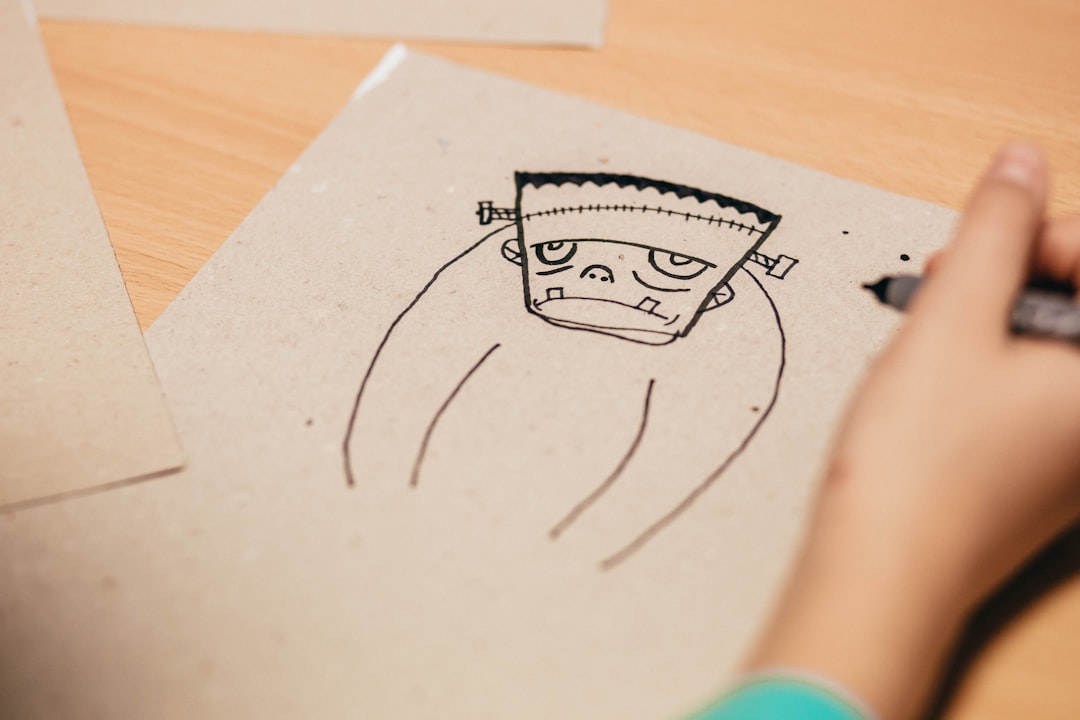
Have you ever wondered why we just can't get enough of the creatures hiding beneath our beds and lurking in the shadows? Whether it's watching a spine-tingling horror movie or telling ghost stories around the campfire, Americans have a long-standing love affair with all things spooky and scary. But what's driving this fascination? Persephone Braham is a Professor of Spanish & Latin American Studies at the University of Delaware and has those answers. She can talk about monsters in a variety of ways including the following: Monsters are therapeutic. They act out our fears – and our fantasies. We love to hate monsters. They channel our anxieties and expose our desires. Monsters sneak into our dreams, stalk us in the dark and make us scream. Why do we love them? Have you hugged a monster today? Why do we need monsters? They keep us from crossing the line. Who believes in monsters? Anyone who considers themselves human. What are monsters, and why do we need them? From ghosts to vampires, every culture has its favorite monsters. Halloween scream: Why we like to play vampires. Who decides what a monster is? You do! Why do zombies want your brains? Monsters and eerie tales serve as representations of our internal anxieties and societal fears. They act as metaphors for the complex emotions and situations we encounter. Braham can give this context and more. She can be contacted by emailing mediarelations@udel.edu.