Experts Matter. Find Yours.
Connect for media, speaking, professional opportunities & more.
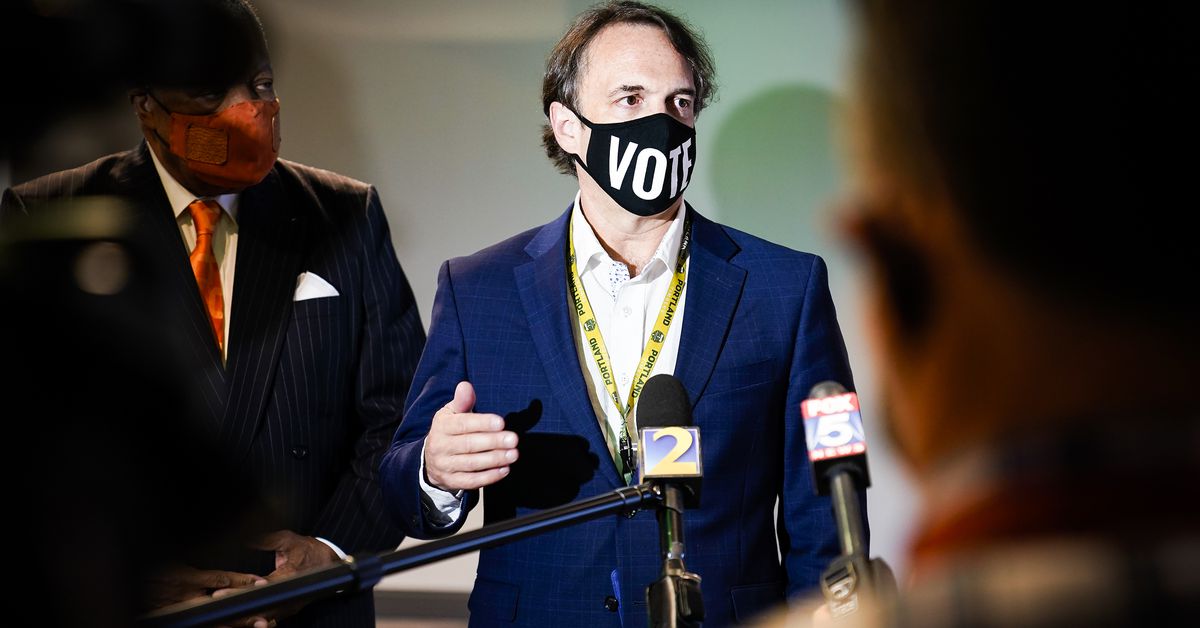
Is it time to stop taking Georgia for granted? The state voted blue – let our experts explain why
As the final few votes still remain to be counted, the state of Georgia has taken a political turn it has not seen in more than two decades. After a long stretch as a presumptively Republican stronghold, in 2020, voters in Georgia made their voices heard and likely shifted the balance of power in Washington. What has changed? Are more voters engaged and showing up to vote? Have demographics shifted? Has the population changed? Have Peach State citizens changed their outlook on issues and politics? Moving forward, few will take the state’s 16 electoral college votes for granted. Is Georgia now one of the battleground states that will shape presidential elections in the future? If you are covering this topic, then let our experts help with your story. Dr. Gregg R. Murray, professor of political science at Augusta University, is available to talk about the presidential race and election results. Murray’s research focuses on political behavior and psychology with specific interests in voter mobilization and turnout. He is also executive director of the Association for Politics and the Life Sciences. Simply click on Murray's icon now to arrange an interview today.



The tug between protecting privacy and building brand loyalty
The coronavirus pandemic has put much of normal life on hold, but it hasn’t stopped hackers. According to Securityboulevard.com, in the first quarter of 2020, more than 8.4 billion records from healthcare institutions, technology, software, social media, and meal delivery companies were exposed — a 273 percent increase from Q1 2019. While data breaches are costly to companies — a recent Ponemon Institute data breach report found that data breaches cost organizations an average of $7 million in the U.S. — their frequency is enough to cause some consumers to wonder if their private information is safe with their favorite brands. The increase in data breaches is concerning, noted Jesse Bockstedt, associate professor of information systems & operations management, but several studies have found that the out-of-pocket expense to consumers due to identity theft is less than $1,000. “Which isn’t zero, but it’s not like a few years ago when [identity theft] ruined your life and destroyed your credit,” Bockstedt said. As for the companies, he added, “It’s not a brand killer anymore.” Yet despite consumers’ growing unease, Goizueta faculty say the relationship between privacy and brand loyalty is a bit more intricate. While a data breach can nick a firm’s reputation, it’s the data that is purposely collected beyond the name and vital statistics that worry consumers more. Our experts found the following key points were necessary when it comes to finding the safe ground between privacy and brand loyalty. In fact, we have an expert from Goizueta who can explain each one: Building digital trust “Companies are increasingly worried that people will buy less from their brand if they’re perceived to be fast and loose with customer data,” said Daniel McCarthy, assistant professor of marketing. For instance, after political data-analytics firm Cambridge Analytica secretly collected data on roughly 87 million Facebook users, back-lash followed. In an effort to regain users’ trust, Facebook founder and CEO Mark Zuckerberg laid out a “privacy-focused vision” for Facebook, but those efforts were widely criticized as not going far enough. Advertising boycotts followed. Trust: the key to customer loyalty Minus regulatory guardrails, the differentiating factor is trust, explained Jagdish Sheth, the Charles H. Kellstadt Chair in Marketing. “Trust is built over time by doing what you promise to do and by company behavior that is considered appropriate or right,” Sheth said. Loyalty programs such as those with airlines, hospitality companies and grocery stores are founded on a relationship between a consumer and a brand. “Loyalty programs mean relationships, and in all relationships, trust and commitment are key,” he added. Let’s make a deal “Brands that are able to deliver a personalized experience in a privacy-friendly manner will have a competitive advantage,” explained David Schweidel, professor of marketing, in a recent “Goizueta Effect” podcast. “Putting a premium on privacy means forgoing the benefits that come from allowing organizations to collect data they use to deliver a better experience. From a commercial standpoint, the onus is on the marketers to make the case that the benefits outweigh privacy concerns.” We’ve attached a full article with even more advice and helpful information from our experts – but if you are looking to learn more or cover this topic, we can help. All of our faculty are available to speak with media, simply click on either expert’s icon now – to book an interview today.



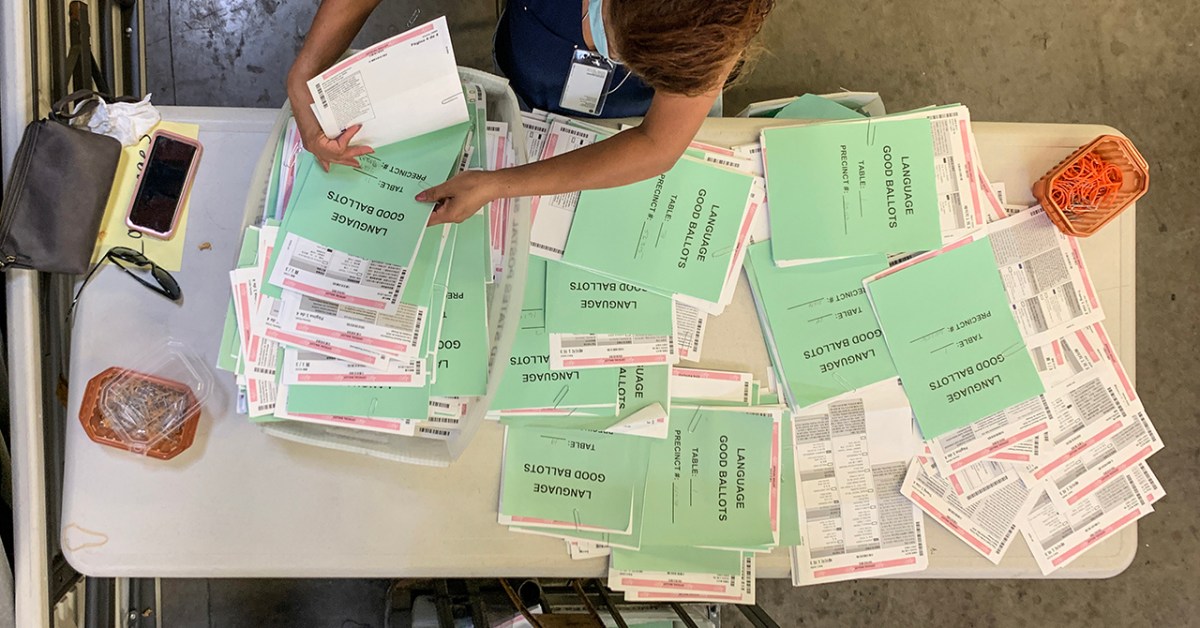
Will it be a long wait for the results on Tuesday?
The election is finally here. And in a year like few others in modern history, the 2020 election may go down like no other as well. Americans are engaged, there is no doubting that. In fact, CNN reported that with one week before the election 75.8 million ballots had been cast representing about 56% of the more than 136.5 million total ballots cast for president in 2016. And there was still time left for more votes to pour in. On Election Day, a massive turnout is expected. But with social distancing in play and other COVID-19 precautions enacted, the day that is already wrought with long lines and delays in the best of years could see for an even longer night for election officials in most states. Americans are making themselves heard – but the results they want to see might not be on election night. A recent article by Pew Research explains why: "Mail ballots pose a challenge to election workers, because they must be manually removed from their envelopes and verified as valid before they can be fed into the tabulating machines. Although election workers in at least 33 states can start processing ballots (but not, in most cases, counting them) a week or more before Election Day, these counts may not be finished by election night depending on how many come in. In a half-dozen states, including the battlegrounds of Pennsylvania and Wisconsin, processing can’t start until Election Day itself. Also, in 22 states (plus D.C.), mail ballots postmarked by Election Day (or in a few cases the day before) can still be counted even if they arrive days later – further lengthening the counting process. Bottom line: Any vote totals reported on election night will be even more unofficial than they typically are." There is going to be a lot to cover leading up to and after Nov. 03 about the final results of what is poised to be a very close and hard-fought election. And if you’re covering, that’s where our experts can help. Dr. Gregg R. Murray, professor of political science at Augusta University, is available to talk about the current race to lead the DNC. Murray’s research focuses on political behavior and psychology with specific interests in voter mobilization and turnout. He is also executive director of the Association for Politics and the Life Sciences.
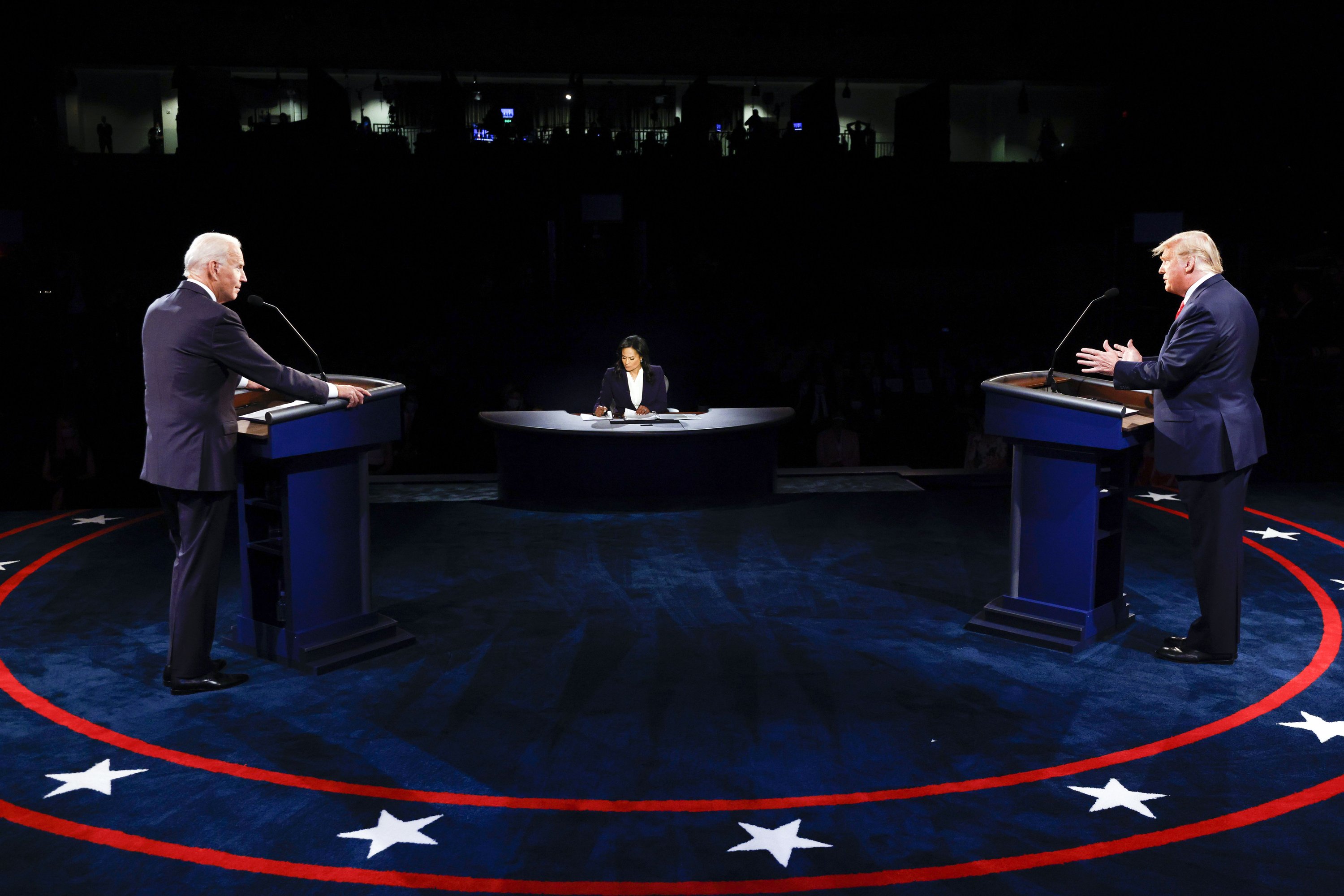
With debating done – what left in the last week of the 2020 presidential election campaign?
The road to the White House and the long and winding road of the 2020 presidential election campaign is finally coming to an end. With three debates schedules – one raucous, one canceled and the final one well moderated and with bad behavior reigned in by muted microphones, all that is left is getting out the vote and the final push to sway undecideds. This year, and the election race that took place during it, was like no other – and though voters and the American people can now see the light at the end of the tunnel, there’s still a lot to watch for as November 3rd approaches. And that’s where our experts can help if you are covering. The University of Mary Washington has one of the foremost political experts in the country who can help with your stories. Dr. Stephen Farnsworth is a sought-after political commentator on presidential politics. He has been widely featured in national media, including The Washington Post, Reuters, The Chicago Tribune, and MSNBC. Stephen is available to speak with media any time regarding the election – simply click on his icon to arrange an interview today.



More than just money – what corporate America needs to do to motivate today’s workforce
In a modern workplace no longer characterized by rigid hierarchies and where power is more diffused, traditional methods of motivation may no longer be enough. We have come to understand the value of providing people with ‘intrinsic motivation’ – a sense of purpose, the importance of creative, interesting work, and maintaining work-life balance. We have naturally moved away from a sole dependence on monetary incentives. However, in a New York Times opinion piece, management author Alfie Kohn asserts that “science has confirmed” that monetary rewards amount to “bribes” that don’t work. Somehow this doesn’t ring true. Has science really confirmed this? Would businesses continue to incentivize performance with monetary rewards if they did not work? And aren’t we all, at least to some extent, motivated by money? To understand if Kohn is right, or if there is a more nuanced answer, Karen Sedatole, Professor of Accounting at Emory University’s Goizueta Business School says we need to look at patterns of human behavior. The classical economic theory, which gave us ‘homo economicus,’ assumes people always behave in a rational way and, as with Gordon Gekko in the ‘Wall Street’ movies, selfishness predominates. Findings from psychology and particularly behavioral economics have started to show this to be incorrect. In fact, people tend to make illogical choices contrary to self-interest. Our capacity to think – via a mix of deep reflective thinking and rapid automatic thinking – can lead us to what economists might consider to be irrational behaviors – albeit with the cognitive biases behind our thinking staying mostly predictable. Do monetary incentives work? We all value money, but our perception of its value is influenced by the importance that we also place on reciprocity and fairness, social norms, trust, and trustworthiness. When it comes to monetary rewards for performance the results will also greatly depend on the quality of the performance measures, along with the type of task being rewarded, and the type of reward. Contrary to Kohn’s assertion, Sedatole points out there are many real-world examples that show monetary incentives can deliver big performance and productivity improvements. In fact, if uncontrolled, bonus incentives can be too powerful a motivator, causing damage – as the UK’s PPI and the Wells Fargo mis-selling scandals both firmly attest. There is also strong academic evidence that monetary rewards can have a positive effect, and equally strong evidence that, when over-used, they can elicit bad behavior. Based on relevant academic research in this area, Sedatole identifies four core principles for the use of monetary incentives: Payment for performance can certainly lead to people making a greater effort than when they are rewarded by salary alone, but only if these core principles are followed: 1. Performance targets – Performance targets should be difficult to hit but not too difficult. 2. Performance metrics – The way performance is measured should be sensitive to the employees’ perceptions and sense of control. Employees should believe that their increased effort improves performance, improved performance leads to greater reward, and reward is valued. Metrics must be precise and not prejudiced by external factors. And, from the organization’s perspective, metrics should be set to meet its objectives. 3. Fairness and social norms – Monetary rewards must be seen to be fair and to comply across organizations. They should also conform to social norms. 4. Characteristics of the task – The efficacy of monetary incentives can depend on the nature of the task and to what extent the task provides intrinsic incentives. Here Alfie Kohn has a point; in some cases, monetary rewards tend to undermine intrinsic incentives. ‘Boring’ tasks have little or no intrinsic motivation, whereas creative tasks – the work of a physician, designer, scientist, etc. – are intrinsically motivating. Where there is intrinsic motivation money can be less relevant and in extreme cases can be seen to devalue the intrinsic factors. Professor Sedatole’s recent webinar: ‘Irrational but Predictable! When to Use Monetary Incentives to Motivate Employees’ explains her findings in further details: simply visit it to view and watch for here: If you are journalist covering this topic – Professor Sedatole is available to speak with reporters – simply click on her icon today to arrange an interview.


BLOOMINGTON, Ind. -- During the pandemic, the amount of screen time for many people working and learning from home as well as binge-watching TV has sharply increased. New research finds that wearing blue-light glasses just before sleeping can lead to a better night's sleep and contribute to a better day's work to follow. "We found that wearing blue-light-filtering glasses is an effective intervention to improve sleep, work engagement, task performance and organizational citizenship behavior, and reduced counterproductive work behavior," said Cristiano L. Guarana, assistant professor of management and entrepreneurship at the Indiana University Kelley School of Business. "Wearing blue-light-filtering glasses creates a form of physiologic darkness, thus improving both sleep quantity and quality." Most of the technology we commonly use -- such as computer screens, smartphones and tablets -- emits blue light, which past research has found can disrupt sleep. Workers have become more dependent on these devices, especially as we navigate remote work and school during the coronavirus pandemic. The media have recently reported on the benefits of blue-light glasses for those spending a lot of time in front of a computer screen. This new research extends understanding of the circadian rhythm, a natural, internal process that regulates the sleep-wake cycle and repeats roughly every 24 hours. "In general, the effects of wearing blue-light-filtering glasses were stronger for 'night owls' than for 'morning larks,' said Guarana, who previously has studied how lack of sleep affects business decisions, relationships and other behaviors in organizations. "Owls tend to have sleep periods later in the day, whereas larks tend to have sleep periods early in the day. "Although most of us can benefit from reducing our exposure to blue light, owl employees seem to benefit more because they encounter greater misalignments between their internal clock and the externally controlled work time. Our model highlights how and when wearing blue-light-filtering glasses can help employees to live and work better." The findings appear in the paper, "The Effects of Blue-Light Filtration on Sleep and Work Outcomes," published online by the Journal of Applied Psychology. Guarana is the corresponding author; his co-authors are Christopher Barnes and Wei Jee Ong of the University of Washington. The research found that daily engagement and performance of tasks may be related to more underlying biological processes such as the circadian process. "Our research pushes the chronotype literature to consider the relationship between the timing of circadian processes and employees' performance," the researchers wrote. A good night's sleep not only benefits workers; it also helps their employers' bottom lines. "This study provides evidence of a very cost-effective means of improving employee sleep and work outcomes, and the implied return on investment is gigantic," said Barnes, professor of management and the Evert McCabe Endowed Fellow at the University of Washington's Foster School of Business. "I personally do not know of any other interventions that would be that powerful at that low of a cost." Across two studies, researcher collected data from 63 company managers and 67 call center representatives at Brazil-based offices for a U.S. multinational financial firm and measured task performance from clients. Participants were randomly chosen to test glasses that filtered blue light or those that were placebo glasses. "Employees are often required to work early mornings, which may lead to a misalignment between their internal clock and the externally controlled work time," the researchers said, adding that their analyses showed a general pattern that blue-light filtration can have a cumulative effect on key performance variables, at least in the short term. "Blue-light exposure should also be of concern to organizations," Guarana said. "The ubiquity of the phenomenon suggests that control of blue-light exposure may be a viable first step for organizations to protect the circadian cycles of their employees from disruption." Researchers received no financial support or compensation for this research. The glasses were donated by the Austin, Texas-based company Swanwick.


Tonight’s face-to-face U.S. presidential debate between Democratic nominee Joe Biden and U.S. President Donald Trump has had all the lead up and electricity of a prize fight. This election, like this year – will be like no other. With traditional campaign festivities for the most part curbed due to COVID-19, this U.S. presidential debate, along with the next two, will serve as the only opportunity for the two candidates to be together in the same place to duke it out live before millions of viewers watching around the globe. There is a lot at stake, and if you are a reporter covering the U.S. presidential debates, Florida Atlantic University’s renowned political science expert, Kevin Wagner, Ph.D., is here to answer all of your questions and is available for interviews. Wagner's research and teaching interests include presidential and judicial politics, political behavior, and legislative behavior. He is also a research fellow of the FAU Business and Economics Polling Initiative (BEPI). Wagner is readily available to speak with media about the debates and the ongoing election – simply click on his icon to arrange an interview today.


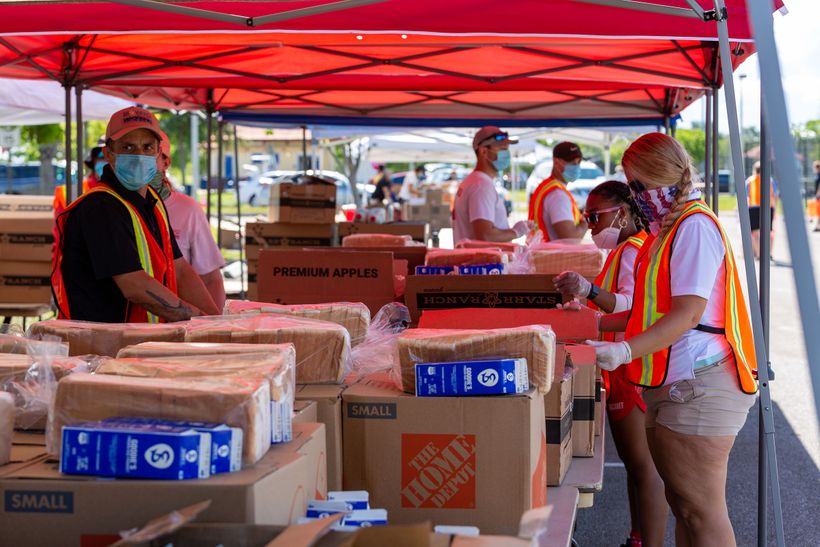
Volunteers receiving government aid while unemployed face scrutiny, bias from public
With the worldwide spike in unemployment caused by the COVID-19 pandemic, many people may turn to volunteerism as a way to pass their newly found free time. But new research suggests that volunteers who also receive government aid are often judged negatively as "wasting time" that could be used to find paid employment. "We found that aid recipients are scrutinized to a greater extent than those who are working, including the underemployed, with observers demonstrating a strong bias toward believing that aid recipients should be using their time to pursue employment opportunities above all else," said Jenny Olson, an assistant professor of marketing at the Indiana University Kelley School of Business and corresponding author of the research forthcoming in the International Journal of Research in Marketing. "This is beyond education, personal leisure, and spending time with family and friends. "As a result, they are given less latitude in how they use their time, and can even be seen as more moral for choosing not to engage in prosocial behaviors, when such behaviors take time away from gaining paid employment," Olson added. "The simple act of volunteering among aid recipients -- versus not mentioning volunteering -- not only shapes judgments of the individual aid recipients, but this information can also impact views toward federal tax policy more broadly." Although volunteering is a positive activity that partially combats the negative stereotype of a welfare beneficiary, Olson and her colleagues found that it also sparks anger among observing consumers, with aid recipients being perceived as being "less moral for choosing to volunteer." Factors that minimize these judgments include being perceived as taking strides toward gaining employment via education and being perceived as unable to work. Other co-authors of the paper, "How Income Shapes Moral Judgments of Prosocial Behavior," are Andrea Morales of Arizona State University, Brent McFerran of Simon Fraser University in Canada and Darren Dahl of the University of British Columbia. The research was supported in part by grants from the Social Sciences and Humanities Research Council of Canada. According to a 2019 report from the Organisation for Economic Cooperation and Development, public spending on government assistance averaged more than 20 percent across 36 countries in 2018. Many countries -- including those in Asia, Europe, and the Americas -- have seen a rise in the number of people receiving benefits over the years, a total now reaching into the billions. The extent to which the welfare state is supported depends, in no small part, on public sentiment. Previous research has shown that support for government spending on welfare programs is directly related to how the voting public perceives the beneficiaries. This is the first paper to document a link between prosocial behavior and support for federal spending on welfare programs. "Given that individuals perceive opportunity costs for their own time, it stands to reason that they perceive them for others as well," Olson said. "Because government programs are supported by 'their' taxpayer dollars, observers often feel justified in suggesting how aid recipients spend their time." The research shows that consumers prefer different patterns of tax redistribution as a function of viewing aid recipients making nonfinancial choices. Specifically, consumers support allocating fewer tax dollars toward supporting government assistance programs after hearing about an aid recipient who volunteers his time. Researchers conducted nine studies across three countries. They randomly presented participants with scenarios about hypothetical aid recipients and asked them to offer judgment about how the recipients used their time, such as engaging in volunteer activities or sending out resumes. Participants were asked how they viewed target individuals on a morality index and how they felt about them emotionally. For interviews with Jenny Olson, contact George Vlahakis at 812-855-0846 or vlahakis@iu.edu.
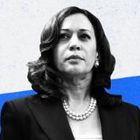
What does Kamala Harris' candidacy for vice president mean for women of color in America?
It wasn’t necessarily a surprise to insiders, but Joe Biden’s announcement that Sen. Kamala Harris will be his running mate in the 2020 presidential election took America by storm. News outlets, pundits and posters to social media all took to different mediums to discuss the historical significance of a female woman of color being on the ballot and what this means for America. Harris has obviously broken through the glass ceiling that still existed for those seeking the office of the vice president in Washington, but she is refreshingly just one of several strong females from minority communities who are starting to make a difference and have an impact on the makeup of modern American politics. In many recent elections, black women voters have voted overwhelmingly for Democrats, and had the highest turnout rate among all racial, ethnic and gender groups between 2008 and 2012, according to The New York Times. Women of color are an emerging force in politics, but is America ready to elect a woman of color to vice presidency? It will be an interesting campaign. With Biden and Harris in fact facing President Donald Trump and amid a global pandemic, this will be one of the most hotly followed and unconventional quests for the White House in history. If you are a journalist covering this topic – then let an expert from Augusta University help with your story. Dr. Mary-Kate Lizotte is an expert in political behavior and the implications of gender differences in public opinion, including society’s views of female candidates of color. She is available to talk about the upcoming election and all aspects surrounding each campaign. Click on her name to schedule an interview.


Digital Media Consumption in Canada is Being Dramatically Impacted by the Coronavirus Crisis
A Canadian perspective on Comscore’s ongoing special investigation into how the COVID-19 pandemic is leading to significant audience and consumer behaviour changes across digital platforms. Insights from our Analysis: News, news and more news: Canadians are consuming news at a record pace Social media and messaging: Canadians are staying ultra-connected with their communities Entertainment, music, and spirituality content: increased consumption seen as behaviours change Government: information from government websites are becoming top-of-mind Finance: increased focus on investments and payments Analysis of News & Information Category We have seen an explosion on engagement with news and information sites. In looking at the news categories and its subcategories, the week of Mar 9-15, 2020 saw big increases in engagement over the benchmark week of Dec 30, 2019 - Jan 5, 2020. As a trend, news consumption in general is also on the rise in Canada in terms of aggregate daily unique visitors and visits over time. Analysis of Social Media and Messaging Category As Canadians respond to the Coronavirus reality, we are seeing that their engagement with digital communication channels has increased significantly. When comparing daily engagement with email, instant messengers and social networking sites between the week of March 9-15, 2020 and the benchmark week of Dec 30, 2019 -Jan 5, 2020 as it relates to the % change in usage, we saw large increase in activity. The raw increase in numbers in social media provides greater detailsof the growth in usage: Analysis of Entertainment, Misc and Religious / Spiritual Category Content is Queen, King, Prince, and Princess – between the weeks of Dec 30– January 5 and March 9-15, greater amounts of time at home and the associated increased screen time drove incremental usage of the Entertainment category and the Religious/Spiritual subcategory. Driving the growth is the explosion of Entertainment – Music, which saw an increase of 32% in aggregate daily UV, a 33% increase in visits, and a 31% increase in minutes during this time. Analysis of Government Category Another category that has seen an explosion of visitation and engagement is government sites. Overall there has been huge audience and time spent with government-related content. Here is the build of visits and aggregate Daily UV over the past 10 weeks: We reviewed the Government category between week of Dec 30, 2019 – January 5, 2020 to March 9 – March 15, 2020 and looked at the % change in usage, which really showed a large increase in activity by Canadians. Based on this trend and growing global cases of Coronavirus, it is expected that Canadian audiences will continue to flock to the content from the government in these uncertain times. Analysis of Finance Category There is a saying that we hear in society – “Follow the Money”. The digital behavior of Canadians has been analogous in recent weeks as we have seen increased measures taken relating to the Coronavirus. Overall the Business/Finance category has seen some increased usage over the time period reviewed. Banking, Payments, Investments, and especially Taxes have seen high visitation. Between the week of Dec 30, 2019 – January 5, 2020 to March 9 – March 15, 2020 we saw an increase of +19% and +59%, respectively, in visits in the Investments and Payments subcategories. Additional insights from Comscore’s initial COVID-19 insights for Canada show that: Overall Digital Consumption across the Total Internet has increased. During the time period of this review visits have increased by 10% and time spent has increased by 14% In a time of crisis, people turn to News/Information Websites There have been significant increases in activity by Canadians on Social Media, Email, and Messaging pointing to the need for communication. Social distancing is safe on the internet. Interest soars for government information sources – where we see an explosion of usage. Increases in certain content Categories like Entertainment, Games, Music, Dating, and Religion/Spirituality have spiked Spikes in traffic are occurring for the e-commerce giants as social distancing and local restrictions impact in-store retail – with specific focus on Food and Supermarket Global movement restrictions lead to tumultuous traffic for travel sites