
Experts Matter. Find Yours.
Connect for media, speaking, professional opportunities & more.

Do the math: We’re awake roughly 16 hours a day. We spend 10 of those hours staring at screens – phones, tablets, computers, TV, gaming devices. That’s 63% of our waking life. The first platform dedicated entirely to digital balance launching today reveals something even more startling: It's not that we lack willpower to change our behavior. It's that we lack confidence. New proprietary research from Offline.now shows that 8 in 10 people are ready to change their relationship with technology, but more than half are so overwhelmed with their digital habits, they don’t know where to start. “If you don’t learn how to manage the screens in your life, they will manage you,” says Eli Singer, Founder of Offline.now and author of Offline.now: A Practical Guide to Healthy Digital Balance. “When people tell us they feel overwhelmed, it’s not laziness. It’s a crisis of confidence. And confidence is something that can be built.” Digital Wellness Experts Address the Struggles No One Else Will These insights come from digital wellness experts in the Offline.now Digital Wellness Directory – a growing community of licensed professionals across North America specializing in ADHD, relationships, family dynamics, high-achievers, and sustainable behavior change. They’re not offering generic advice. They’re addressing specific digital struggles that define contemporary life. Psychotherapist Harshi Sritharan, who specializes in modern anxiety and ADHD, explains: “The biggest mistake people make is reaching for their phone or turning on their computer first thing in the morning. It injects your dopamine full of uncertainty. You’ve essentially told your brain the most important thing you have to do today is put out fires. I tell clients to delay that first scroll as long as possible and never hit ‘snooze’. You’re fragmenting your REM sleep and making yourself more exhausted. These aren’t willpower issues; they’re about understanding how blue light disrupts your circadian rhythm, especially for those with ADHD who already struggle with sleep regulation.” According to Sritharan, the breakthrough happens when people understand the dopamine cycles driving their dependence and “reframe how they connect with all their screens, whether it’s their phone, gaming console, or streaming TV.” High Achievers Can’t Unplug. The ‘Always-On’ Trap is Killing Productivity, Not Boosting It “A lot of high performers think they need better time management,” says Executive Function Coach, Craig Selinger. “But what they actually need are boundaries. They’ve built empires by being available 24/7, and their phones have become permission slips to say yes to everything.” The difference between old and new technology matters,” he explains. “Back in the day with TV, there was a clear demarcation of beginning and end, right? The episode ends and you move on. Now it’s like Minecraft or TikTok – there’s no ending. And mobility makes it sticky, because you’re physically carrying the drug with you, versus a TV that stayed in one room.” The breakthrough happens when they realize being unavailable on purpose isn’t a weakness. “Things like turning off notifications during deep work, or setting ‘do not disturb’ windows? Those aren’t luxuries. They’re the competitive advantages they’ve been missing.” Digital Dependency as a Third Party in a Relationship Licensed Marriage and Family Therapist Gaea Woods says digital devices are killing interpersonal relationships, not because tech is evil, but because “we use it unconsciously at the moments when connection matters most. When you’re scrolling at dinner, you’re telling your partner ‘my phone is more interesting and important than you’.” The breakthrough happens when couples set explicit agreements: response times, when devices go off-limits – and even what’s it’s OK with AI companions. “We’ve exited the era of meaningful communication without realizing it, and now we must deliberately rebuild it. Nature isn’t ‘Nice to Have’. It’s the Antidote to Screen Fatigue No One is Talking About After running a tech-free camp for 25 years, Personal Development Coach Mark Diamond says he’s seen what happens when kids get genuine face-to-face time interaction outdoors. “Their brains reset. The beauty and physical activity provide perspective that screens can never replicate. Digital dependency has eroded our ability to develop real human connections across all ages, not just teenagers. Screens should not replace the moments that define our wellbeing.” Why This Matters Now The stakes extend beyond personal frustration. Unchecked screen dependency is linked to rising rates of anxiety, deteriorating sleep quality, relationship breakdown, and what mental health experts call “continuous partial attention”, a state where we’re always connected, but never fully present. The Data Reveals When Change is Possible Beyond the confidence divide, Offline.now’s research uncovers the precise moments when users are most open to shifting their digital habits: Evenings from 6 pm-11:59 pm emerge as the “Go Time” window. 40% of self-assessment responders peak readiness to act. Sunday is “Reset Day, when 43% want to set boundaries for the week ahead. Saturdays offer natural opportunities for self-compassion and rest. Afternoons become the “Overwhelm Window”, with 57% feeling consumed by their screens. Critically, Fridays – despite having the highest overwhelm factor – are the worst time for interventions. Users are depleted and change rarely sticks. The Framework That Powers the Platform At the platform’s core is the Offline.now Matrix, a behavioral framework that maps the confidence and motivation levels of users to reveal their starting point: Overwhelmed, Ready, Stuck, or Unconcerned. Based on Singer’s book, Offline.now: A Practical Guide to Healthy Digital Balance, the approach replaces willpower-based advice with microlearning strategies – each taking 20 minutes or less – that track emotional triggers rather than just screen time totals. It offers 100 real-world alternatives to scrolling, from reorganizing a drawer to visiting a thrift shop, and reframes slip-ups as data, not disasters. “The books shows that lasting change doesn’t require deleting Instagram or TikTok tomorrow,” says Singer. “You need to win one personal victory today, and then another tomorrow. That’s how confidence rebuilds.” Propelled by University of Toronto’s Innovation Ecosystem Offline.now is a University of Toronto-affiliated startup, leveraging one of the world’s most powerful innovation networks. U of T is ranked among the top five university-managed business incubators globally and has helped create more than 1,500 venture-backed companies and secured more than CAD$14 billion in investment over the past decade. How Offline.now Works For individuals and families: Take the free self-assessment quiz using the Offline.now Matrix to map your motivation and confidence levels in under three minutes. Receive instant access to practical strategies, curated resources, and a searchable directory of digital wellness experts organized by specialty, location, and insurance coverage. For digital wellness professionals: Join a growing community of licensed mental health practitioners, certified behaviorial coaches, and registered social workers by creating your profile at Offline.now. The platform provides new client leads, professional development opportunities, and visibility in a rapidly expanding market. About Offline.now Offline.now is the first global platform dedicated entirely to achieving digital balance. Founder and author Eli Singer built one of North America’s first social media agencies before seeing technology shift from community-building to attention-harvesting. As a parent, he experienced firsthand the struggle to maintain digital balance. The platform combines proprietary behavioral research, expert guidance and counselling from licensed professionals, and science-backed strategies to help individuals and families build healthier relationships with their screens. Visit Offline.now at https://offline.now Expert Interview Availability Offline.now can arrange interviews with: Eli Singer, Founder – Vision for digital wellness; behavioral data insights Harshi Sritharan, Psychotherapist – Dopamine cycles, ADHD, anxiety and intentional tech use Craig Selinger, Executive Function Coach – Digital distraction in high achievers, family dynamics, ADHD Mark Diamond, Personal Development Coach – Outdoor wellness, sustainable behavior change, happiness, connection Gaea Woods, Licensed Marriage and Family Therapist – Communication, digital third-party relationships, phubbing Additional Resources Free self-assessment quiz - The Offline.now Matrix: https://offline.now/quiz Expert directory and booking: https://offline.now/experts/ Join the directory: https://offline.now/join/ Order Offline.now: A Practical Guide to Healthy Digital Balance: https://offline.now/book/







Beyond the Repo Headlines: What the Liquidity Signals are Really Saying
In late October and early November 2025, usage of the Federal Reserve's Standing Repo Facility (SRF) reached elevated levels exceeding $50 billion at month-end -- the highest utilization since March 2020. Simultaneously, the Overnight Reverse Repo (ON RRP) facility has collapsed to approximately $24 billion, down from peak levels exceeding $2 trillion in 2023. This combination signals structural stress in U.S. money markets extending beyond seasonal factors. These two facilities serve opposite functions in the Fed's monetary policy framework. The SRF is an emergency lending facility where banks can borrow reserves overnight by pledging Treasury or agency securities as collateral, paying the SRF rate (currently 4.50%). It acts as a ceiling on overnight rates. The ON RRP works in reverse: money market funds and other institutions lend cash to the Fed overnight, earning the ON RRP rate (currently 4.30%). It provides a floor on rates. The depletion of ON RRP removes a critical shock absorber. When the facility held trillions in 2021-2023, it functioned as a deployable liquidity reservoir. During stress events, as repo rates in private markets rose above the ON RRP rate, money market funds would withdraw their cash from the Fed and deploy it into higher-yielding private repo markets. This automatic flow of liquidity would stabilize rates without Fed intervention. With ON RRP now depleted to $24 billion, this reservoir is empty. When liquidity shocks occur, there is no pool of cash to flow into stressed markets. Instead, all pressure falls directly on bank reserves, currently at approximately $2.8 trillion. The elevated SRF usage indicates that despite aggregate reserves appearing adequate, banks are unable to efficiently reallocate liquidity across the system. The core problem is that banks with surplus reserves face prohibitive costs to intermediating due to post-2008 regulations, particularly the Supplementary Leverage Ratio (SLR) and G-SIB capital surcharges. The SLR requires capital against all balance sheet assets, including reserves. For a large bank to lend $1 billion overnight, it expands its balance sheet by that amount, increasing SLR denominators and potentially triggering higher surcharge brackets. The capital costs of holding additional assets on the balance sheet often exceed repo market spreads, rendering arbitrage unviable. Banks with surplus reserves therefore park them at the Fed rather than lending to institutions that need them. Current conditions reveal that while dealer behavior around period-ends follows established patterns, the magnitude of rate effects has grown substantially. Recent Federal Reserve research documents that SOFR rose as much as 25 basis points above the ON RRP rate at recent quarter-ends, far exceeding the 5-10 basis point moves typical in 2017. The Fed's analysis attributes this to "growing tightness in the repo market and a diminishing elasticity of supply and demand" as reserves decline. Critically, the research shows that dealer quarter-end behavior -- reducing triparty borrowing and shifting to central clearing -- has remained "remarkably stable," yet rate impacts have intensified. This indicates the problem is not changing behavior but deteriorating underlying conditions. The pattern mirrors 2018-2019, when similar dynamics preceded the September 2019 crisis. Academic work from that episode documented that foreign banks reached minimum reserve levels while domestic G-SIBs maintained surpluses but declined to intermediate due to balance sheet constraints.¹ November 2025 differs critically from September 2019: the ON RRP buffer is now depleted. In 2021-2023, that buffer absorbed surpluses and prevented repo rate collapse. Its near-zero level means the system lacks this stabilizer precisely when QT has reduced reserves and Treasury issuance remains elevated. Additional liquidity pressure falls directly on reserves, leaving repo markets vulnerable to quarter-end dynamics, tax payments, or Treasury settlement volatility. Chairman Powell announced that QT will slow dramatically, with Treasury runoff ending while mortgage-backed securities continue maturing. However, this addresses only aggregate levels, not the structural issues driving period-end stress. The question remains whether current reserve levels are sufficient given elevated post-pandemic deposits, outstanding credit line commitments, tighter balance sheet constraints, and the expired Bank Term Funding Program. What do these signals indicate? Three interpretations emerge. The most likely is that quarterend and month-end rate effects will continue intensifying as reserves decline further, with the spread between SOFR and ON RRP at period-ends serving as a barometer of underlying tightness. Federal Reserve research suggests that as Treasury issuance continues and reserves decline, "the repo market is likely to tighten further and the effects of quarter- or month-ends on repo rates may grow, providing another potential indicator that reserves are becoming less abundant." This would manifest as larger SRF usage at period-ends and persistent elevated Fed facility usage, though system functioning would remain generally stable between these events. A more adverse interpretation sees a triggering event during an already-stressed period-end causing broader repo market seizure, forcing the Fed to resume asset purchases and confirming that meaningful balance sheet normalization is impossible under current structures. An optimistic interpretation requires regulatory reform -- SLR exemptions for reserves or changes to quarter-end reporting requirements -- to reduce incentives for balance sheet window dressing, though this appears politically unlikely. For banks, the implication is that reserve buffers need to be higher than pre-2019 benchmarks, and the ratio of demandable claims to liquid assets requires closer monitoring. For investors, continued volatility in short-term interest rates should be expected, particularly around periodends. The Fed's weekly H.4.1 release tracking SRF and ON RRP levels provides leading indicators. Money market fund flows have outsized impact as their allocation decisions directly affect system liquidity buffers. The transformation underway represents a fundamental shift from bank-intermediated to partially Fed-intermediated money markets. Post-2008 regulations strengthened individual bank resilience but broke private intermediation chains. The central bank now serves as both lender and borrower of last resort, with private markets unable to efficiently connect flows. September 2019, March 2020, March 2023, and November 2025 episodes demonstrate a pattern: reserves appear adequate until buffers thin, after which modest events trigger outsized disruptions. 1. Bostrom, E., Bowman, D., Rose, A., and Xia, A. (2025), "What Happens on Quarter-Ends in the Repo Market," FEDS Notes, Board of Governors of the Federal Reserve System; Copeland, A., Duffie, D., and Yang, Y. (2021), "Reserves Were Not So Ample After All," Federal Reserve Bank of New York. 2. Du, W. (2022), "Bank Balance Sheet Constraints at the Center of Liquidity Problems," Jackson Hole Economic Symposium.


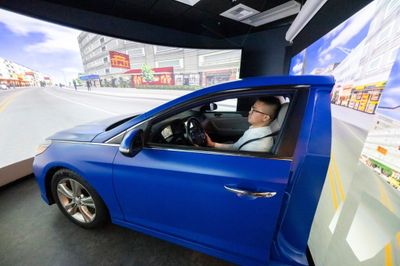
Motor vehicle crashes remain one of the leading causes of death among teenagers. For the youngest drivers, getting behind the wheel marks freedom but also comes with measurable risk. At the University of California, Irvine, Dr. Federico Vaca, professor and executive vice chair of emergency medicine, is determined to change that trajectory. “Driving licensure among our youngest drivers remains a major life milestone, and it allows for newfound freedom and opportunity for not only youth but their parents as well. At the same time, learning to drive and licensure come at a time when youth are rapidly moving through life with new transitions in school, with friends, and likely exposure to alcohol and drugs,” he says. “Our priority … is to examine the complexities of young driver behavior and to thoroughly understand crash injury risk and crash prevention among this special group of drivers.” Vaca’s work is at the intersection of health, transportation science and policy. A fellow of the Association for the Advancement of Automotive Medicine and a researcher at UC Irvine’s Institute of Transportation Studies, he previously served as a medical fellow at the U.S. Department of Transportation’s National Highway Traffic Safety Administration in Washington, D.C. His long-standing goal is to prevent the injuries he has seen and treated in emergency departments and trauma centers through rigorous research, using the findings to inform and advance evidence-based programs and policies that save lives on the road. Innovating safety science UC Irvine is home to a new hub for understanding and preventing crash injuries among young drivers, the Brain, Body & Behavior Driving Simulation Lab, founded by Vaca and his interdisciplinary team. At the heart of the B3DrivSim Lab is a high-fidelity, half-cab driving simulator capable of replicating real-world conditions with precision. It uses advanced software to design customized driving scenarios – from complex roadway environments to the inclusion of such human elements as distraction and fatigue – all while capturing real-time video and driving behavior as well as vehicle control metrics. This integration of medicine, behavioral science and engineering enables researchers to measure how developmental and socioecological factors shape driver decisions in unique and consequential ways. The B3DrivSim Lab also represents a growing mentorship ecosystem at UC Irvine. In mid-June, the facility welcomed Siwei Hu, a postdoctoral scholar who earned a Ph.D. in civil and environmental engineering, with a focus on transportation studies, at UC Irvine. Hu works closely with Vaca to combine engineering and modeling analytics with behavioral and crash risk insights. The half-cab driving simulator uses advanced software to replicate real-world conditions and design customized driving scenarios – from complex roadway environments to the inclusion of such human elements as distraction and fatigue – all while capturing real-time video and driving behavior as well as vehicle control metrics. Steve Zylius / UC Irvine From the lab to policy Beyond simulation, Vaca’s latest National Institutes of Health-funded study, separate from his lab’s work, takes this philosophy to the national level. His project, “Modeling a National Graduated-BAC Policy for 21- to 24-Year-Old Drivers,” explores whether lowering the legal blood alcohol limit for young adults could reduce alcohol-related crashes and deaths. “When you turn 21, at that very moment, the application of several alcohol-related prevention laws changes in the blink of an eye,” Vaca says. “Before that, the minimum legal drinking age and zero-tolerance laws are in place to protect young drivers from alcohol-impaired driving. Effectively, the second you turn 21, those prevention policies don’t apply, and you’re suddenly allowed to have a much higher blood alcohol concentration in your body that’s intimately tied to serious and fatal crash risk. It’s a very dangerous disconnect.” The study will use national crash data, behavioral surveys and system dynamics modeling to examine how a “graduated BAC policy” might bridge that gap, giving young adult drivers a safer transition into full legal responsibility and saving many more lives. Bridging science, education and prevention Earlier this year, Vaca and his B3DrivSim team joined prevention program educators, policymakers, engineers and law enforcement professionals in Anaheim at a Ford Driving Skills for Life event, part of a Ford Philanthropy-sponsored national effort teaching teens hands-on safe driving techniques – from hazard recognition to impaired-driving awareness. Speaking to more than 130 high school students and their parents from local and distant communities, Vaca emphasized the connection among driving, independence, opportunity and responsibility. That message aligns with his broader initiative, Youth Thriving in Life Transitions with Transportation, which introduces high school students to traffic safety and transportation science and their role in promoting health, education and employment in early adulthood. By linking research and real-world experience, the project empowers youth to see mobility as a foundation for opportunity with safety as its cornerstone. With overall young driver crash fatalities rising 25 percent nationally over the last decade and a 46 percent increase in fatal crashes where a young driver had a BAC of ≥ .01/dL, Vaca’s work represents a crucial step toward reversing that trend. Through a combination of clinical insight and prevention, transportation and data science underscored by community collaboration, he and his team are redefining how researchers and policymakers think about youth driver safety.


From classrooms to communities: Rethinking civic engagement in K–12 education
When national headlines focus on school board battles and political polarization, James Bridgeforth, assistant professor of educational leadership at the University of Delaware, is focused on what’s possible instead: building a more inclusive, participatory model of democracy through public education. His research in UD's College of Education and Human Development explores how community voice, equity and local leadership intersect to shape education policy – and how school boards can serve as vital engines for rebuilding public trust in government. "Despite the often sensationalized stories of chaotic school board meetings and the influence of more national "culture war" issues, I still believe that it's possible for people from different backgrounds, experiences, and points of view to come together to figure out how to best serve the needs of all of our children." – Bridgeforth Bridgeforth’s work centers on education governance, policy and leadership, with particular attention to how racism and anti-Blackness manifest in schools and policymaking spaces. His scholarship highlights the importance of inclusive decision-making, arguing that effective education policy must be representative of the diverse communities it serves. He recently published the report "Navigating Democracy in Divided Times" with co-authors on this topic. As part of his work with the Getting Down to Facts III project at Stanford University, Bridgeforth collaborates with researchers studying how to improve California’s TK–12 system and inform the next governor’s education policy agenda. His work documents the complex realities faced by local school board members – often minimally paid community leaders navigating contentious public discourse, social media pressure and limited resources. He notes that this research can be applied to school boards around the country. The next frontier: Youth civic engagement Over the next several years, Bridgeforth aims to deepen understanding of how schools can nurture young people’s civic skills and leadership capacity through participation in governance. One proposed project – "Strengthening Opportunities for Youth Civic Engagement and Student Voice in Educational Governance" – uses participatory action research to explore how student board member policies and engagement practices foster civic agency and democratic mindsets. This collaborative work brings together youth-led community organizations and education researchers to study how these experiences shape long-term civic behavior – from voting to public service. Why it matters Bridgeforth’s research arrives at a pivotal time for American democracy. As trust in public institutions erodes, local school boards remain one of the spaces where citizens can directly shape policy. His work points to a hopeful truth: democracy’s renewal may begin in classrooms, communities and the local school board meetings shaping them. For journalists covering education, race or civic engagement, Bridgeforth offers data-driven insight, lived experience and policy expertise – helping make sense of one of the most pressing questions of our time: How can we build systems that truly serve all students and communities? This work collectively demonstrates a number of promising opportunities to foster more inclusive, community-connected forms of governance, particularly in a time of eroding trust in government institutions." – Bridgeforth ABOUT JAMES BRIDGEFORTH Assistant Professor, College of Education and Human Development James Bridgeforth is an educator, researcher and policy advocate whose work focuses on community voice in education policy and the politics of educational leadership. His scholarship has appeared in top journals including Journal of School Leadership, Education Policy Analysis Archives, Educational Evaluation and Policy Analysis and Educational Administration Quarterly, and he has contributed to Education Week and The Washington Post. A recipient of the National Academy of Education/Spencer Foundation Dissertation Fellowship, Bridgeforth holds a Ph.D. in Urban Education Policy from the University of Southern California, an M.Ed. in Educational Administration and Policy from the University of Georgia, and a B.A. in Political Science and Sociology from Georgia College & State University. Expert available for: Interviews on K–12 school governance, education policy and democracy Commentary on community voice and equity in education decision-making Analysis of youth civic engagement and participatory leadership To contact Bridgeforth, email mediarelations@udel.edu.


Why College Students Are Storming Fields More Often
In his most recent Forbes article, Dr. Marshall Shepherd takes a scientific look at why college students and fans storm football fields, blending insights from psychology, meteorology, and social dynamics. He explains that field-storming is not simply a burst of emotion—it’s a predictable outcome of collective excitement and shared identity. After an unexpected win or a high-stakes rivalry game, thousands of people simultaneously experience what psychologists call “emotional contagion,” amplifying feelings of unity and celebration. This shared surge, combined with environmental cues like stadium acoustics and crowd density, transforms the act into what Shepherd calls a form of “social weather event.” “Storming the field isn’t chaos—it’s choreography fueled by emotion and crowd physics.” Shepherd also examines the logistical and safety implications. He notes that while universities often celebrate these spontaneous displays of school pride, they carry risks ranging from crowd injuries to property damage. Yet, institutions are reluctant to ban them outright because these moments reinforce fan loyalty and media attention. Shepherd suggests that the solution lies in better understanding crowd behavior: designing stadiums with safe egress routes, training security teams to manage surges, and anticipating emotional tipping points rather than reacting afterward. “Understanding the science behind fan behavior lets us manage energy, not suppress it.” Ultimately, Shepherd’s piece reframes field-storming as a fascinating mix of culture and physics—where joy, identity, and momentum collide. He urges universities to see these moments not as mere rule-breaking but as opportunities to study human behavior in motion, and to design environments that celebrate passion without compromising safety. Dr. J. Marshall Shepherd is a leading international weather-climate expert and is the Georgia Athletic Association Distinguished Professor of Geography and Atmospheric Sciences at the University of Georgia. Dr. Shepherd was the 2013 President of American Meteorological Society (AMS), the nation’s largest and oldest professional/science society in the atmospheric and related sciences. View his profile here Dr. J. Marshall Shepherd is available to speak with the media about this interesting topic - simply click on his icon now to arrange an interview today.

Multi-university AI research may revolutionize wildfire evacuation
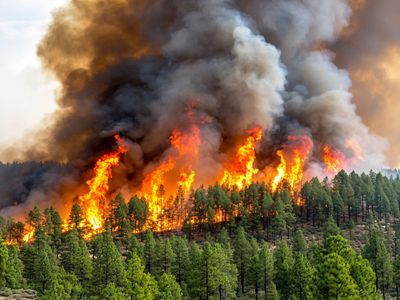
As wildfires grow wilder, the University of Florida and two other universities are developing large language models to make evacuations safer and more efficient. Armed with a nearly $1.2 million National Science Foundation grant, UF, Johns Hopkins University and the University of Utah are creating these AI-based models to simulate human behavior during evacuations – information that will help emergency managers shape more effective evacuation plans. “Strengthening wildfire resilience requires accurate modeling and a deep understanding of collective human behavior during evacuations,” said UF project lead Xilei Zhao, Ph.D., an associate professor with the Engineering School of Sustainable Infrastructure and Environment. “There is a critical need for simulation models that can realistically capture how civilians, incident commanders and public safety officials make protective decisions during wildfires.” Xilei Zhao focuses on developing and applying data and computational science methods to tackle problems in transportation and resilience. View her profile here Existing simulation models face limitations, particularly with reliable predictions under various wildfire scenarios. New AI models can simulate how diverse groups of people behave and interact during the hurried scramble to seek safety. Zhao’s team is developing a convergent AI framework for wildfire evacuation simulations powered by psychological theory-informed large language models. The project will produce simulation methods to promote teaching, training and learning, and support wildfire resilience by allowing public safety officials to use open-access tools. “This research seeks to be a transformative step toward improving the behavioral realism, prediction accuracy and decision-support capability of wildfire evacuation simulation models,” Zhao said. Zhao partnered with John Hopkins professor Susu Xu, Ph.D., and University of Utah professors Thomas Cova, Ph.D., and Frank Drews, Ph.D. The preliminary results of the study were recently presented at the 63rd Annual Meeting of the Association for Computational Linguistics. “In that paper, we started to train the model on the survey data we collected to see how we can accurately predict people's evacuation decisions with LLMs,” Zhao said. Research objectives include extending the Protective Action Decision Model for civilians and public safety officials, developing psychological theory-informed large language model agents for protective modeling and generating a realistic synthetic population as input for the simulation platform. The team also plans to develop learning-based simulations and predict human behavior under scenarios such as fire spread, warning and infrastructure damage. This research comes at a critical time, as the number of wildfires has significantly increased globally. About 43% of the 200 most damaging fires occurred in the last decade leading up to 2023, according to a recent study in Science. The intensity, size and volume of wildfires are threatening more urban areas. “If you go into the urban area, many people do not have cars, or they need additional mobility support,” Zhao said. “For example, the LA fires impacted nursing homes with a lot of elderly people, many of whom are immobile or lack the ability to drive. That's a big problem. This would be very relevant to them.” The large language models will provide important context for evacuation planning as well as real-time decision making. “We envision this tool being used during planning,” Zhao said, “so emergency managers can test different kinds of scenarios to determine how to draw the evacuation zones, where to issue the orders first and how to design the communications messaging.” This is important research and critical as wildfires become more common across North America. If you're a reporter looking to connect and learn more - then let us help. Xilei Zhao is available to speak with media - simply click on her icon now to arrange an interview today.



3 Things A Climate Scientist Learned From Jane Goodall
In a recent Forbes article, Marshall Shepherd reflects on three key lessons he has drawn from the life and work of Dr. Jane Goodall. Shepherd frames Goodall’s legacy—spanning primatology, conservation, and public engagement—as deeply instructive for climate scientists and environmental advocates. He argues that her methods and mindset have more to teach than simply how to observe nature; they speak to how we engage with the world. First, Shepherd highlights immersion: Goodall’s decades of patient observation in the Tanzanian forests demonstrates the power of being physically—and emotionally—present to truly learn from ecosystems. For Shepherd, climate science must go beyond remote data collection: getting into the field and understanding local realities matters. Second, he emphasizes patience. Goodall’s willingness to wait, sometimes for years, for breakthroughs in understanding primate behavior offers a lesson for climate researchers, whose progress may unfold over decades. Third, he admires her tenacity—a commitment sustained over a lifetime, even under adversity. Shepherd suggests that tackling climate change requires that same kind of enduring resolve, especially when public attention or funding waxes and wanes. Through these reflections, Shepherd presents Goodall not just as an icon of conservation but as a model for scientific humility and perseverance. He invites readers to see the parallels between animal behavior research and climate work—and to adopt practices of listening, patience, and resolve in confronting our planet’s changing trajectory. Dr. J. Marshall Shepherd is a leading international weather-climate expert and is the Georgia Athletic Association Distinguished Professor of Geography and Atmospheric Sciences at the University of Georgia. Dr. Shepherd was the 2013 President of American Meteorological Society (AMS), the nation’s largest and oldest professional/science society in the atmospheric and related sciences. View his profile here Dr. J. Marshall Shepherd is a leading international weather-climate expert and is the Georgia Athletic Association Distinguished Professor of Geography and Atmospheric Sciences at the University of Georgia. He's available to speak with the media about this topic - simply click on his icon now to arrange an interview today.

A global team of researchers using the new X-ray Imaging and Spectroscopy Mission (XRISM) telescope, launched in fall 2023, discovered something unexpected while observing a well-studied neutron star system called GX13+1. Instead of simply capturing a clearer view of its usual, predictable activity, their February 2024 observation revealed a surprisingly slow cosmic wind, the cause of which could offer new insights into the fundamental physics of how matter accumulates, or “accretes,” in certain types of binary systems. The study was one of the first from XRISM looking at wind from an X-ray binary system, and its results were published in Nature—the world's leading multidisciplinary science journal—in September 2025. Spectral analysis indicated GX13+1 was at that very moment undergoing a luminous super-Eddington phase, meaning the neutron star was shining so brightly that the radiation pressure from its surface overcame gravity, leading to a powerful ejection of any infalling material (hence the slow cosmic wind). Further comparison to previous data implied that such phases may be part of a cycle, and could “change the way we think about the behavior of these systems,” according to Joey Neilsen, PhD, associate professor of Physics at Villanova University. Dr. Neilsen played a prominent role as a co-investigator and one of the corresponding authors of the project, along with colleagues at the University of Durham (United Kingdom), Osaka University (Japan), and the University of Teacher Education Fukuoka (Japan). Overall, the collaboration featured researchers from dozens of institutions across the world. GX13+1 is a binary system consisting of a neutron star orbiting a K5 III companion star—a cooler giant star nearing the end of its life. Neutron stars are small, incredibly dense cores of supergiant stars that have undergone supernovae explosions. They are so dense, Dr. Neilsen says, that one teaspoon of its material would weigh about the same as Mount Everest. Because of this, they yield an incredibly strong gravitational field. When these highly compact neutron stars orbit companion stars, they can pull in, or accrete, material from that companion. That inflowing material forms a visible rotating disk of gas and dust called an accretion disk, which is extremely hot and shines brightly in X-rays. It’s so bright that sometimes it can actually drive matter away from the neutron star. “Imagine putting a giant lightbulb in a lake,” Dr. Neilsen said. “If it’s bright enough, it will start to boil that lake and then you would get steam, which flows away like a wind. It’s the same concept; the light can heat up and exert pressure on the accretion disk, launching a wind.” The original purpose of the study was to use XRISM to observe an accretion disk wind, with GX13+1 targeted specifically because its disk is persistently bright, it reliably produces winds, and it has been well studied using Chandra— NASA’s flagship X-ray observatory—and other telescopes for comparison. XRISM can measure the X-ray energies from these systems a factor of 10 more precisely than Chandra, allowing researchers to both demonstrate the capabilities of the new instrument and study the motion of outflowing gas around the neutron star. This can provide new insights into accretion processes. “It's like comparing a blurry image to a much sharper one,” Dr. Neilsen said. “The atomic physics hasn't changed, but you can see it much more clearly.” The researchers uncovered an exciting surprise when the higher-resolution spectrum showed much deeper absorption lines than expected. They determined that the wind was nearly opaque to X-rays and slow at “only” 1.4 million miles per hour—surprisingly leisurely for such a bright source. Based on the data, the team was able to infer that GX13+1 must have been even brighter than usual and undergoing a super-Eddington phase. So much material was ejected that it made GX13+1 appear fainter to the instrument. “There's a theoretical maximum luminosity that you can get out of an accreting object, called the Eddington limit. At that point, the radiation pressure from the light of the infalling gas is so large that it can actually hold the matter away,” Dr. Neilsen said, equating it to standing at the bottom of a waterfall and shining light so brightly that the waterfall stops. “What we saw was that GX13+1 had to have been near, or maybe even above, the Eddington limit.” The team compared their XRISM data from this super-Eddington phase to a set of previous observations without the resolution to measure the absorption lines directly. They found several older observations with faint, unusually shaped X-ray spectra similar to the one seen by XRISM. “XRISM explained these periods with funny-shaped spectra as not just anomalies, but the result of this phenomenally strong accretion disk wind in all its glory,” Dr. Neilsen said. “If we hadn’t caught this exact period with XRISM, we would never have understood those earlier data.” The connection suggests that this system spends roughly 10 percent of its time in a super-Eddington phase, which means super-Eddington accretion may be more common than previously understood—perhaps even following cycles—in neutron star or black hole binary systems. “Temporary super-Eddington phases might actually be a thing that accreting systems do, not just something unique to this system,” Dr. Neilsen said. “And if neutron stars and black holes are doing it, what about supermassive black holes? Perhaps this could pave the way for a deeper understanding of all these systems.”



Some interesting areas that I’ve seen in the press: "Consumer Sentiment was measured at the 7th lowest point (55.1) since its inception in 1952, yet we’re not seeing a huge decrease in spending (CNN). Part of the argument is the spending is an average measure and really wealthy consumers are not feeling the pinch and spending like normal or moreso, while less financially-well-off-individuals are pulling back their spending (Spectrum Local News). Presumably, the shutdown doesn’t help that figure. In terms of consumer groups affected, let’s look at government workers first. An article by the BBC claimed roughly 750,000 “non-essential” federal workers could be furloughed without pay. This means that many to most of those are going to struggle with paying for the necessities and this becomes more and more of a strain the longer the shutdown wears on. Furloughed Workers: Most furloughed workers are required to be paid back pay when the shutdown is over by law. That could in some ways create more purchases in the future if they can’t be bought currently, but could also lead to things like more credit card debt as people can put charges on a credit card to pay back later. While from a consumer psychology standpoint that might make sense, but it’s a very risky practical strategy. Gov’t contractors don’t get the same guarantee. Businesses that rely heavily on such groups (e.g., in a town where many fall into those segments) might suffer or shutter. This means other consumers that frequent those establishments have their routines disrupted , and force them to find other providers. Essential Workers: Then we have the group of “essential” workers that must go to work and still not be paid, Air Traffic Controllers, The military, TSA Agents, certain law enforcement groups, etc. that all might draw back spending with no immediate income. That can cause major issues for retailers and producers, which could lead to more layoffs in the private sector, putting more consumers into financial straits. If you’re someone that likes to visit national parks or zoo’s like the National Zoo, or the Smithsonian Museums (which has claimed they’ll have funding at least through October 6th), you could be disappointed to have reduced accessibility or outright closures due to the shutdown, again according to the BBC. Healthcare: Healthcare could definitely be affected, particularly for those on Medicaid and medicare (i.e., the elderly and poor). So if you view medical services as consumer good, then there will be issues there as well (increased wait times, decreased satisfaction, etc.), which is likely to add apprehension and anxiety to many consumers. Travel: If you’re a traveler, staffing shortages in the TSA and Air Traffic Controllers could lead to significant travel delays, which could disrupt leisure or business plans, or force people to cancel plans altogether. If you’re traveling abroad getting your passport updated could take longer. All these things (and many more) may happen or not depending on the length of the shutdown and the severity of the furloughs. Those in better financial positions will suffer less, while those already in less desirable financial situations might find that delays in some of their normally federally funded services (e.g., SNAP, WIC, etc.) create even bigger issues."


Recently, Craig Albert, PhD, was published in the Journal of Political Science Education. The article, 'Cyber-Enabled Education Operations: Towards a Strategic Cybersecurity Curriculum for the Social Sciences,' looks into how U.S. cyber intelligence training is overly technical and should integrate political science and social science courses to build strategic thinkers who understand adversaries’ motives and policies, ultimately strengthening U.S. national security. Craig Albert, PhD, is a professor of Political Science and the graduate director of the PhD in Intelligence, Defense, and Cybersecurity Policy and the Master of Arts in Intelligence and Security Studies at Augusta University. His areas of concentration include international security studies, cybersecurity policy, information warfare/influence operations/propaganda, ethnic conflict, cyberterrorism and cyberwar, and political philosophy. View his profile here. Here's the abstract from the paper in Research Gate: Most cyber intelligence analysts within the United States Intelligence Community (USIC) typically enter the field with strong technical expertise, often derived from degrees in computer science or extensive technical training. However, a critical gap exists in education and training on the strategic dimensions of cyber threats. This paper advocates for the integration of cybersecurity-focused courses within social science disciplines, particularly political science, to cultivate strategic thinkers who can contribute effectively to the USIC. The inclusion of strategic policy coursework in political science curricula, as well as more broadly across social science programs, would better prepare students for careers in the USIC by deepening their understanding of the motivations, capabilities, and intentions of the United States’ strategic adversaries in cyberspace—specifically Russia, China, Iran, and North Korea. Such training would equip analysts with critical insights to improve their effectiveness in identifying, attributing, and mitigating cyber intrusions. Moreover, a stronger emphasis on the human behavior and policy dimensions of cybersecurity would enhance the overall competency of the USIC workforce, thereby strengthening U.S. national security policy. Looking to know more? Let us help. Craig Albert, PhD, is available to speak with media. Simply click on his icon now to arrange an interview today.

