
Experts Matter. Find Yours.
Connect for media, speaking, professional opportunities & more.
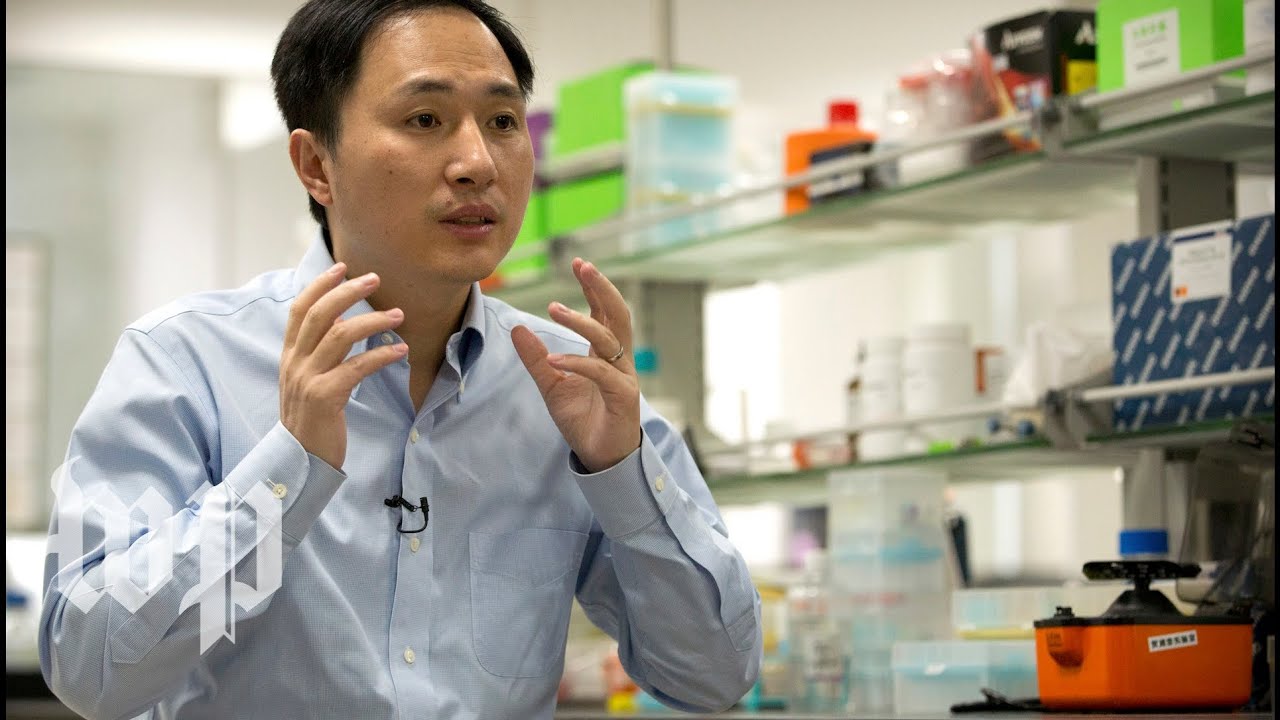
Chinese scientists are creating CRISPR babies
A daring effort is under way to create the first children whose DNA has been tailored using gene editing. When Chinese researchers first edited the genes of a human embryo in a lab dish in 2015, it sparked global outcry and pleas from scientists not to make a baby using the technology, at least for the present. It was the invention of a powerful gene-editing tool, CRISPR, which is cheap and easy to deploy, that made the birth of humans genetically modified in an in vitro fertilization (IVF) center a theoretical possibility. Now, it appears it may already be happening. According to Chinese medical documents posted online this month, a team at the Southern University of Science and Technology, in Shenzhen, has been recruiting couples in an effort to create the first gene-edited babies. They planned to eliminate a gene called CCR5 in hopes of rendering the offspring resistant to HIV, smallpox, and cholera. He Jiankui leads a team using the gene-editing technology CRISPR in an effort to prevent disease in newborns. The clinical trial documents describe a study in which CRISPR is employed to modify human embryos before they are transferred into women’s uteruses. The scientist behind the effort, He Jiankui, did not reply to a list of questions about whether the undertaking had produced a live birth. Reached by telephone, he declined to comment. However, data submitted as part of the trial listing shows that genetic tests have been carried out on fetuses as late as 24 weeks, or six months. It’s not known if those pregnancies were terminated, carried to term, or are ongoing. [After this story was published, the Associated Press reported that according to He, one couple in the trial gave birth to twin girls this month, though the agency wasn't able to confirm his claim independently. He also released a promotional video about his project.] The birth of the first genetically tailored humans would be a stunning medical achievement, for both He and China. But it will prove controversial, too. Where some see a new form of medicine that eliminates genetic disease, others see a slippery slope to enhancements, designer babies, and a new form of eugenics. Dr. Sullivan serves as professor of pharmacy practice and director of the Center for Bioethics. His research and writing interests include biomedical ethics, moral philosophy, and reproductive ethics. Contact him today for your story! Simply click on his icon to arrange an interview.


Environmental scientists have identified 22 key research questions surrounding the risks associated with chemicals in the environment in Europe. Chemicals released into the environment by human activity are resulting in biodiversity loss; increased natural hazards; threats to food, water and energy security; negative impacts on human health and degradation of environmental quality. Now an international study, coordinated by scientists from the University of York, Wageningen University and Baylor University, has identified the most important research questions that need to be answered to fill the most pressing knowledge gaps over the next decade. They include questions about which chemicals we should be most concerned about and where the hotspots of key contaminants are around the globe, as well as how we can develop methods to protect biodiversity and ecosystems. The research, which resulted from a recent "big questions" exercise involving researchers from across Europe, aims to serve as a roadmap for policymakers, regulators, industry and funders and result in a more coordinated approach from the European environmental science community to chemicals in the environment. “Our research has highlighted international scientists' research priorities and our key knowledge gaps when it comes to the risks and impacts of chemicals,” said one of the lead authors of the study Alistair Boxall, Ph.D., with the University of York’s environment department. “The study aims to help focus scientific effort on the questions that really matter and inform decisions about the type of research needed to update policies and regulations.” Bryan W. Brooks, Ph.D., Distinguished Professor of Environmental Science and Biomedical Studies at Baylor University, who also coordinates a much larger global horizon scanning exercise, said the project is “intentionally transparent, inclusive of multiple sectors and multidisciplinary.” “Though this paper focuses on critical research needs for Europe, we partnered with the Society for Environmental Toxicology and Chemistry to perform similar studies in North America, Africa, Asia, Australia and Latin America,” Brooks said. “In fact, output from the Latin American study was recently published. This unprecedented exercise, which also includes a key partnership with the American Chemical Society in North America, is for the first time identifying global research priorities from academic, government and industry scientists and engineers to understand, avoid and manage adverse outcomes of chemicals in the environment.” A key suggestion in the report is that the basic and translational research is needed to advance robust assessments of chemical risks to the environment and human health. “These big research questions aim to reduce uncertainty during scientific evaluations of environmental contaminants and to advance innovation and sustainability through development of less hazardous chemicals to public health and the environment. Such research recommendations from our European colleagues are thus timely, necessary and internationally important if we are to achieve the United Nation’s Sustainable Development Goals,” Brooks said. Towards Sustainable Environmental Quality: Priority Research Questions for Europe is published in the journal Environmental Toxicology and Chemistry. It is one of six papers in a global horizon scanning study. ABOUT BAYLOR UNIVERSITY Baylor University is a private Christian University and a nationally ranked research institution. The University provides a vibrant campus community for more than 17,000 students by blending interdisciplinary research with an international reputation for educational excellence and a faculty commitment to teaching and scholarship. Chartered in 1845 by the Republic of Texas through the efforts of Baptist pioneers, Baylor is the oldest continually operating University in Texas. Located in Waco, Baylor welcomes students from all 50 states and more than 80 countries to study a broad range of degrees among its 12 nationally recognized academic divisions. ABOUT BAYLOR COLLEGE OF ARTS & SCIENCES The College of Arts & Sciences is Baylor University’s oldest and largest academic division, consisting of 25 academic departments and seven academic centers and institutes. The more than 5,000 courses taught in the College span topics from art and theatre to religion, philosophy, sociology and the natural sciences. Faculty conduct research around the world, and research on the undergraduate and graduate level is prevalent throughout all disciplines.



National Nutrition Month - Eat better, save money, live longer
March is National Nutrition Month and it couldn’t come any quicker. After a long winter and spring around the corner, many Americans are ready to start eating healthier. Healthy eating is not merely about shedding pounds. Good nutrition often leads to financial savings and enables us to reduce waste. One way to eat healthier is by cooking at home instead of eating out. Unfortunately, according to the Bureau of Labor Statistics, the average household spends about $3,008 per year on dining out and the food consumed is usually high in trans-fats, sodium and calories. Eating out is an expensive and often times unhealthy habit. That habit is also becoming an addiction – in 1900, only two percent of U.S. meals were eaten outside the home. Recently, that number has climbed to more than 50. It’s not always easy forgoing eating out, but the reward is truly worth the effort. Cost savings aside, cooking at home and eating as a family has proven to make people happier and feel more connected. RD Natalie Allen, clinical instructor of biomedical science at Missouri State University, can share insights about cooking home-cooked meals that are tasty, healthy, cost-effective and don't take a lot of time. Contact her for an interview. Source:


Dr. Bryan Brooks, Ph.D., Distinguished Professor, Environmental Science and Biomedical Studies, examines water quality, environmental health & contaminants, and sustainability issues, particularly in rapidly urbanizing areas. He has published water-quality research specifically regarding the Dickinson and Buffalo bayous in the Houston area, as well as the Houston ship channel. He's available to speak on: * Status of surface water contamination * Associated risks to people and ecosystems in the Houston/Galveston area * What information is needed to prioritize interventions and restoration activities * Implications for system recovery and management Source:

Ten Types of Food Can Make or Break Your Health
According to a new study published in the Journal of the American Medical Association, eating the right amount of certain types of food can help to reduce deaths from heart disease, stroke and type 2 diabetes in the U.S. by almost half. The researchers at Tufts Friedman School of Nutrition Science and Policy identified 10 dietary components closely tied to heart disease, stroke and type 2 diabetes - six of them (nuts and seeds, seafood rich in omega-3 fatty acids, fruits, vegetables, whole grains and polyunsaturated fats like soybean or corn oils) will help your health, while four of them (sodium, processed meats, sugar-sweetened beverages and red meat like steak) will hurt it. So how much of the good stuff should we eat more of? And how much of the bad stuff should we cut out? How should we alter our dietary habits to ensure we lower our risks of heart disease, stroke and type 2 diabetes? Natalie Allen, clinical instructor of dietetics in the biomedical sciences department at Missouri State University, can provide some insight. Allen has a background in clinical, community and sports dietetics, and is the team dietitian for MSU Athletics. She is an expert in this area and is available to speak to media. Click on her icon to arrange an interview. Source:

The Value of a Cure and Do All Americans Benefit from Medical Breakthroughs?
On February 28, 2017 policymakers, health officials, industry representatives and patient advocates were meeting in Washington to discuss the ‘value of a cure’ – the costs, the public health benefits and how America will move forward following the passage of the 21st Century Cures legislation. The Act, which was signed in December promises to accelerate funding for biomedical research while it also loosens regulations governing drugs and medical equipment and devices. Innovations in medical research and technology have produced cures and breakthrough therapies to overcome diseases that were once considered a death sentence. Polio is preventable with a vaccine, HIV is managed with a daily drug regimen, and Hepatitis C now has a cure. But are these breakthroughs reaching all communities? How can we balance the high costs of drug development with affordability? And what can we do to ensure that new cures continue to be developed? This is where Virginia Commonwealth University can help. Our experts are thought leaders and are some of the go-to opinions in this field. Dr. Thomas Roper is a professor and the director of the Department of Chemical and Life Science Engineering at the VCU School of Engineering. Thomas specializes in efforts to bring engineering and science closer to patients who utilize medicines via novel technologies. Dr. Frank Gupton is a professor and the chair of the Department of Chemical and Life Science Engineering at the VCU School of Engineering. He leads the school’s Medicines for All project that is striving to reduces costs of treatment for AIDS. He is an award-winning researcher and an expert in his field. Both Dr. Roper and Dr. Gupton are available to speak with media regarding this very important issue. Simply click on either of their icons to arrange an interview. Source:



Nanotechnology is huge - is it the way of the future?
Earlier this week, the International Nanotechnology and Conference took place in Tokyo, Japan. Thousands of researchers, scientists and academics attended from around the world to discuss advances in the field, applications and how nanotechnology is transforming and shaping our world for the future. Nanoscience and nanotechnology are the study and application of extremely small things and can be used across all the other science fields, such as chemistry, biology, physics, materials science and engineering. It's the stuff once only seen in movies and books. Science fiction is now reality. But what will it mean for the public, for academics and for business? The benefits seem extraordinary, but what are the cautions or consequences? Like stem cells, there was much ethical, moral and scientific concerns about their use. Today, science and how we approach the human body has been radically changed because of that research. Will nanotechnology transform the scientific world in the same way? As well, what are the economic benefits? Will we one day just see nanotechnology as an everyday occurrence in our regular lives? There are a lot of questions and this is where Missouri State University's experts can help. We have two experts who can speak to media regarding this very interesting field of research: Dr. Adam Wanekaya's research focuses on the fabrication, modification, characterization and application of nanoscale materials. He also works on integrating these materials into functional devices with specific applications in chemical sensing, biomedical sensing and remediation of heavy metals and other toxins from the environment. Dr. Robert Mayanovic works on investigating the physical and chemical properties of primarily nanophase materials in extreme environments. Both professors will be able to explain the field of nanotechnology and how it is shaping the future of technology, healthcare and the world we live in. Simply click on either of their icons to arrange an interview. Source:

Super Bowl is over. Is it time to kick-off a healthier lifestyle?
The big game is over and football players have hung up their cleats for another season. Odds are just about everyone had their fill of food. And with that, perhaps it is time to put away the snacks and call time out on the junk food as well? In America, heart disease remains the leading cause of death for all adults in the United States. Most of these deaths could be prevented by simple changes to diet, lifestyle and increased physical activity. But it’s not as simple as it sounds. What to eat, when to eat and how to eat are all factors in changing habits and leading a healthier, longer life. Natalie Allen is a clinical instructor in biomedical sciences at Missouri State University. She is also the lead dietitian for all MSU athletes. She is an expert in this area and is available to speak to media. Click on Allen's icon to arrange an interview. Source: