Experts Matter. Find Yours.
Connect for media, speaking, professional opportunities & more.

Seventy There it is. Just sitting there. A number that tends to land somewhere between “good for you” and “are you feeling alright?” And before you answer that, let me tell you I am more than alright. I am thriving. Loudly. Definitely with dancing. And with just enough attitude to make a few people slightly uncomfortable, which I have decided is a sign of a life extremely well lived. But first, let me tell you about the plan. ⁂ The Plan Was Magnificent. It Lasted Eleven Minutes The plan was to retire gracefully. Ease into a slower pace. Read more. Maybe garden. Drink better wine. Finally, work through all those documentaries piling up in my queue with the quiet confidence of someone who had absolutely earned the right to nothing. Here is what actually happened. The documentaries stayed in the queue, and the garden did not get planted. I did, however, read one book. Just one. But it turned out to be exactly the right one. David Brooks wrote The Second Mountain: The Quest for a Moral Life, and I picked it up the way you pick up something that does not look urgent, only to find you cannot put it down. Brooks argues that we spend the first part of our lives climbing what he calls the first mountain: the career, the credentials, the identity, the whole elaborate structure of proving ourselves. And then something happens. You reach the top, or you fall off, or the mountain turns out to be considerably smaller than it looked from the bottom. Either way, you end up in a valley, slightly winded, wondering what comes next. And that, Brooks says, is where real life begins. The second mountain. The one you climb not for yourself but for something greater. The one where the question shifts from “what do I want?” to “what does the world need from me?” I read that while sitting in my living room and thought: that is the whole story, right there. There is a phrase I use throughout this blog: try to keep up. I say it because seventy feels faster and fuller than I ever expected, and because it is an invitation, not a taunt. You still have tread on your tires. I mean that warmly. Try to keep up. ⁂ The Valley Was Not Optional My valley arrived without warning or invitation: I lost my job unexpectedly. No graceful wind-down. No farewell luncheon with a tasteful card, no parade! Just the particular silence that follows the end of something you had not quite finished. Nobody glides gracefully from mountain one to mountain two, no matter how it looks on social media. What nobody tells you about retirement, voluntary or otherwise, is that stopping is quite difficult. Not the logistics. The identity. You spend thirty years answering the question “What do you do?” and then one day no one asks anymore. We carefully plan the money. We almost never plan for the morning when your calendar is empty, your inbox is quiet, and no one expects you anywhere. That morning is its own kind of reckoning. Brooks calls this the valley experience, and he is right that it is unavoidable. It is where you shed the old self so a new one can emerge. There are no shortcuts. I tried several. But then I hired a coach. Not just any coach. A thought leadership coach, which sounds very impressive but turns out to involve a great deal of uncomfortable self-reflection and at least one conversation in which the coach tells you to write a blog. “Do your research,” he said. “Find your niche. Share what you know. And honestly, you should probably write a book.” (Thank you, Peter!) I nodded. I smiled. I thanked him warmly. Then I went home, sat down, and had a completely private, entirely dignified meltdown that I will describe only as spirited. Action absorbs anxiety, so once the spirited moment passed, I got to work. Try to keep up. ⁂ The Second Mountain Has a Name. It Is Retire with Equity I started writing. Article after article, something unexpected happened: I found my voice. It turns out my voice is part educator, part agitator, and part hilarious, where kitchen-table logic meets a spreadsheet. I began calling her Aunt Equity, and she has been absolutely delightful company ever since. A word on naming your alter ego after a financial product: no one recommends it. No self-help book has a chapter that says ‘step three, create a persona rooted in home equity solutions and give her a sassy name.’ And yet Aunt Equity arrived fully formed, with opinions, a logo, and an inexplicable amount of charisma. She is part brand, part character, and entirely my fault. I am keeping her. For Brooks, the second mountain is a calling, not a career move. For me, it is a community. The Canadian retirement community. The people who built this country, paid into it, raised children in it, and are now quietly panicking about whether they have enough to keep going. That community. They are my people, and this is my mountain and I have built my company, Retire with Equity to support it. And I will be honest: this mountain is considerably steeper and way more fun. Try to keep up. ⁂ What Is Your Second Mountain? Here is where this stops being about me and starts being about you. The second mountain is not one thing. It is not a prescription. It is not reserved for people who write blogs, build platforms, or have particularly spirited meltdowns. It is waiting for you, wherever you are, whatever you are carrying, whether you are fifty or seventy or somewhere in between and still not entirely sure you are allowed to want something new. The second mountain looks different for everyone, and that is entirely the point. Also, a feature, not a bug. For some people, it is family. Really showing up for grandchildren in ways that a demanding career never allowed. Being present, not just present-ish. Taking the grandkids to school on Tuesdays because Tuesday is your day now and the best day of the week. Becoming the person in the family who holds things together, not because you have to, but because you finally have the time and the wisdom to do it right. For others, it is community. A neighbourhood organization, a cause that has been pulling at you for years, or a faith community that needs exactly the skills you spent a career building. Brooks tells the story of a woman who was moving out of a rough Chicago neighbourhood, looked out the window, saw little girls playing with broken bottles in an empty lot, turned to her husband, and said: we are not leaving. She ended up running a major community organization. She did not set out to build a movement. She just decided not to look away. And then there are the callings that have been patiently waiting in the back of a drawer since approximately 1987. This is my personal favourite category because it is full of people who surprise themselves completely. Andrea, whom I see every week at the gym, spent her late fifties doing something most people her age were emphatically not doing: she went to law school. In London, England. A yearning carried for decades, quietly set aside while she built a career and raised a family. Then one day she stopped being polite about it and went. She is one of the most alive people I know. David discovered painting. Not dabbling. Painting. He picked up a brush at a class a friend dragged him to, and something clicked open that had apparently been waiting for that exact moment. He paints almost every day now, and the look on his face when he talks about it is that of someone who found something he did not know he had lost. If you are sitting there thinking you have left it too long, or that your moment has passed, that is a you problem, and I say that with complete affection. The door is still open. Walk through it. Brooks calls it the place where your deep gladness meets a deep hunger in the world. I think of it as the morning when you wake up and you are not just filling time. You are fulfilling a purpose. Try to keep up. ⁂ What Actually Works (And What Dottie Has to Do With It) I have a ten-pound dog named Dottie. She is the canine embodiment of purposeful living and, frankly, an unsolicited life coach. Full speed, tail up, no apologies. I take notes. The retirements that work, the ones people describe as genuinely meaningful rather than merely solvent, share a few things in common. They move. Consistently, enjoyably, sustainably. The body is not a liability to be managed in retirement. It is an asset, and it responds remarkably well to being treated like one. For me, part of that meant I needed a break from drinking, and the origin story is not glamorous: I woke up one morning and could not remember how the movie I watched the night before ended. That was the moment. What began as a one-month experiment quietly became almost two years. I sleep better, think more clearly, and no longer find myself wide awake at 2 am doing mental arithmetic about nothing. I feel sharper and more energized at seventy than I did a decade ago. The fifties, it turns out, were not the peak. They were the warm-up act. And for the record, I still cannot remember how that movie ended some mornings. Some things are beyond even sobriety. Physical vitality expands your options. Financial clarity reduces your dread. Purpose gives both of those things a reason to matter. Tend to all three. Not perfectly. Just intentionally. Dottie, for what it is worth, nails all three before anyone else in the house has had coffee. If she is the bar, she is not wrong to set it there. Try to keep up. ⁂ A Confession. Then a Celebration Almost five years into this accidental, exhilarating, occasionally terrifying reinvention, I still do not have it entirely figured out. The documentaries remain unwatched. I still cannot tell you how they end. What I do have is this: evidence, personal and otherwise, that the second mountain is real and better. Not easier. Better. Because when you are climbing toward something that matters beyond your own resume, the climb itself changes. The effort feels different. The setbacks feel survivable. And the view, when you get there, means something. You do not need to have it figured out before you start. You just need to take a step. Then another. Then hire a coach, have your spirited moment, and remember: action absorbs anxiety. Say the number out loud, whatever it is. Forty, fifty, sixty, seventy. Say it. Then decide what it means, because that part is entirely up to you. The first mountain shows you what you are capable of. The second one shows you who you actually are. If you have not read David Brooks’ The Second Mountain, put it at the top of the list. The documentaries can wait. I have confirmed this from personal experience. The Friday night of my birthday week, there was an epic dance party at a local brewery, organized by my wife Bonnie, the woman I met on a dance floor thirty-three years ago and have been dancing with ever since. Bonnie deserves more than a shout-out here. She deserves a medal, a monument, and honestly, serious consideration for sainthood. For over three decades, she has lived with my schemes, my pivots, and my absolute certainty that each new thing is the thing. She has never once wavered. Bonnie is the reason any of this works, and the reason that dance floor was full of people who love me. I am, by any objective measure, an extremely lucky person. I am also aware that she will read this, so I want to be clear: yes, I mean every word, and no, this does not get me out of whatever I am currently scheming. The glow of that party remains, and I know I have truly arrived because there was even a party crasher. I named her Mona. Mona could not resist the pull of that much joy and some absolutely kickin’ eighties music. The story of Mona, the early thirties party crasher, is being reserved for another time, but know this: if your birthday celebration attracts a stranger named Mona, you are doing seventy exactly right. The second mountain, it turns out, has a very good playlist. And if you are worried you are not quite ready for it, or that the moment may have passed, I want to leave you with this: you still have tread on your tires. So does everyone in this community. And if you cannot keep up, at least come dance. You might surprise yourself. Just ask Mona. I am seventy. I am on my second mountain. Come find yours. Try to keep up. ⁂ Sue Don't Retire...Re-Wire! My Book is Now Available for Pre-Order I hope you will consider pre-ordering a copy of Your Retirement Reset for you, a friend or loved one. It's available September 8, 2026 - You can now order on the ECW Press site here. And if you love supporting Canadian booksellers, please also check with your local independent bookstore. Most can easily order it for you.


TV News Talent Looks to Build Their Brand on Nontraditional Platforms
Mark Lukasiewicz, dean of The Lawrence Herbert School of Communication, was interviewed by The Hollywood Reporter for the article “With TV News In Free Fall, Anchors Try Breaking Away,” about the trend of TV news veterans leaving the declining world of linear media to build businesses and their brand on social media, podcasts, and other platforms.


-fotor-20250826990.jpg)
How a UF reading program is reaching classrooms worldwide
For more than 25 years, Holly Lane, Ph.D., has been laser-focused on a global educational goal: to ensure that students worldwide have access to information about reading. Her passion project, known as the University of Florida Literacy Institute, or UFLI, has already improved the literacy skills of more than 10 million children. What began as a modest classroom tool now has a Facebook community of over 273,000 members; 18 million online toolbox views; and more than 500,000 instructional manuals in classrooms. And as the UFLI brand gains traction, Lane continues to champion what the acronym means and why the program has been so life-changing. “When you learn to read, you fly,” said Lane, who serves as the UFLI director and a professor of special education at UF. UFLI is an ongoing effort by UF faculty and students to improve literacy outcomes for struggling students by addressing two key areas: reader development and teacher development. The program began in 1998 as a tutoring model for beginning readers working with Lane’s pre-service teachers. The idea was that, if teachers understood how to employ effective, evidence-based practices in a one-on-one tutoring session, they could transfer those skills to their small-group or classroom instruction. However, some teachers struggled to make that transition, so a dedicated small-group lesson model was created. That foundation eventually expanded into a dyslexia support program and caught the attention of a surprising partner, best-selling author and philanthropist James Patterson. Known worldwide for his literacy advocacy and generous support of reading initiatives, Patterson has become a key benefactor for the program. When the COVID-19 pandemic hit, a challenge turned into a breakthrough. UFLI started its Virtual Teaching Resource Hub and, in the first week, about 70,000 teachers visited the site and downloaded materials. The turning point came when a school in St. Augustine reached out to UFLI, asking for professional development. “I said, ‘Well, what if we planned the lessons for you instead of teaching you how to plan these lessons?’” Lane said. What followed was what Lane called her “accidental phonics program.” “They ended the year with the best scores they'd ever seen, better than their pre-COVID scores, and that was unheard of,” Lane said. That success led to an effective district-wide pilot in Alachua County with 21 elementary schools. UFLI leaders decided to publish the contents of the program and create a manual that individual teachers could purchase. This concept boomed, and the program even made waves overseas. “Starting with the virtual teaching hub… we had a huge following in Perth and in Melbourne, and now we have an Australian edition of the manual,” Lane said. “We’ve been in every state and every Canadian province and territory, but we're also now in something like 60-some other countries.” Patterson has continued his support by directing efforts toward expanding UFLI’s reach in Florida, aiming to bring the program to every district in the state. Looking ahead, Lane is especially excited about UFLI’s new technology. “We're calling it our assessment and planning portal,” Lane said. “Teachers assess two skills a week, and they enter their data into this program and it spits out small-group lesson plans for the following week that target specific needs of their students.” The data input system is highly advanced, requiring the teacher to simply hold up work in front of a webcam, and the system then reads the student handwriting and imports the data. The program’s structure also ensures that students apply new concepts daily and revisit them regularly. But behind it all is a deeply connected community. For Lane, the success of UFLI boils down to people. “We have an amazing team here,” Lane said. “If anything, that's my superpower, finding really good people who are really good humans but also really good at what they do.” For more information about UFLI, visit ufli.education.ufl.edu.



Beyond the field: New research highlights how NIL is reshaping college athlete identity
In an era of name, image and likeness, or NIL, many college athletes are thinking differently about who they are — seeing themselves not just as competitors or students, but also as influencers with distinct voices and causes, according to a new study from the University of Florida. Molly Harry, Ph.D., an assistant professor in the Department of Sport Management at the UF College of Health and Human Performance, surveyed 200 athletes from 21 Power Four universities to better understand how NIL, which refers to the rights of college athletes to earn money through endorsements, sponsorships, social media promotions and other commercial opportunities, has impacted the way athletes perceive their roles and identities. “Historically, we’ve viewed them (college athletes) through the lens of athletics or academics, but they’re daughters, brothers, role models, and increasingly, they’re now cultivating public personas and marketing skills.” —Molly Harry, Ph.D., an assistant professor in the Department of Sport Management The findings, published Friday in the Sociology of Sport Journal, reveal a growing recognition among athletes that they are more than the two-dimensional “student-athlete” model that is traditionally used in research and policy. “With the shift in NIL policies, athletes are starting to develop roles and identities related to that of the influencer,” Harry said. “Historically, we’ve viewed them through the lens of athletics or academics, but they’re daughters, brothers, role models, and increasingly, they’re now cultivating public personas and marketing skills.” Through survey responses across seven major sports — football, baseball, men’s and women’s basketball, gymnastics, volleyball and softball — Harry and UF doctoral student Hannah Kloetzer examined athletes' engagement with NIL opportunities, as well as the personal sacrifices they made to pursue them. They found that many athletes now view NIL as a platform to promote causes they care about, build connections with their communities and explore career pathways after college. One softball player described the value of NIL in a way that highlights the broader impact: “It’s been great to feel seen and have your hard work in a sport help in other parts of life. It’s really nice to use NIL on a resume as marketing experience.” Athletes surveyed said they found deals not just with big-name brands, but more often with local businesses like restaurants, boutiques and community partners. This entrepreneurial approach often required initiative and personal outreach, something many athletes had to learn on their own. “Some athletes told us they felt lost when trying to navigate NIL,” Harry said. “Others shared how they reached out to local businesses or organized their own camps.” One particularly striking finding, Harry said, was that some athletes were making athletic sacrifices — like spending less time training — to pursue NIL work, a shift that underscores the importance of these opportunities. Harry stressed that while no one reported skipping practices, athletes did acknowledge shifting their priorities to make room for NIL-related endeavors. “If you’re willing to give up something in your athletic routine, that speaks volumes about how central NIL — and influencer identities — could become for some athletes,” she said. Another key insight: football players of color from low socioeconomic backgrounds were most likely to self-identify as influencers. This emerging pattern stands in contrast to perceived broader trends in the social media world. “That was one of the most fascinating takeaways,” Harry said. “We have this unique subset of influencers — college football athletes — that are starting to enter this space.” Harry’s research builds on a growing conversation in the academic community about the evolving identity of college athletes. A few conceptual pieces have previously proposed the idea of a “student-athlete-influencer,” but Harry’s team is one of the first to gather empirical data to back it up. This new perspective has broad implications for how universities and organizations like the NCAA support college athletes, both during their playing years and as they prepare for life after sport. “As fans, we often see athletes as commodities on the field,” Harry said. “But they’re humans first, and they’re starting to recognize their own value and tap into their potential beyond the playing field.” In addition to academic and athletic support, Harry believes universities should invest in more targeted resources tailored to influencer pressures, like mentorship opportunities and training that goes beyond basic social media etiquette. “Athletes who take on influencer roles may deal with unique stressors, whether it’s comparing engagement numbers or coping with public scrutiny,” she said. “It would be valuable to provide opportunities where athlete-influencers can support each other, share strategies and protect their mental health.” A football player who participated in the study summed up the broader potential of NIL: “I’m very appreciative of NIL opportunities and the ability to continue to grow my camp and greater brand outside of my football program.” Looking ahead, Harry plans to explore this evolving identity through more qualitative research, with a focus on what it truly means to be an “influencer” in the context of college athletics. “Athletes are more than football players. They are more than swimmers,” she said. “They are people who we walk with on our college campuses, and they are people who bring value to our society in a host of ways.”

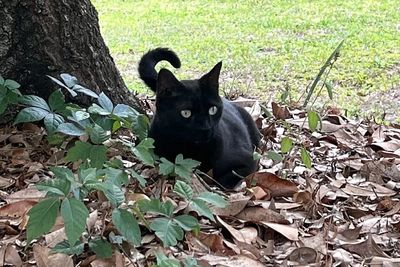
Scientist’s cat, again, helps discover new virus
Pepper, the pet cat who made headlines last year for his role in the discovery of the first jeilongvirus found in the U.S., is at it again. This time, his hunting prowess contributed to the identification of a new strain of orthoreovirus. John Lednicky, Ph.D., Pepper’s owner and a University of Florida College of Public Health and Health Professions virologist, took Pepper’s catch — a dead Everglades short-tailed shrew — into the lab for testing as part of his ongoing work to understand transmission of the mule deerpox virus. Testing revealed the shrew had a previously unidentified strain of orthoreovirus. Viruses in this genus are known to infect humans, white-tailed deer, bats and other mammals. While orthoreoviruses’ effects on humans are not yet well understood, there have been rare reports of the virus being associated with cases of encephalitis, meningitis and gastroenteritis in children. “The bottom line is we need to pay attention to orthoreoviruses, and know how to rapidly detect them,” said Lednicky, a research professor in the PHHP Department of Environmental and Global Health and a member of UF’s Emerging Pathogens Institute. The UF team published the complete genomic coding sequences for the virus they named “Gainesville shrew mammalian orthoreovirus type 3 strain UF-1” in the journal Microbiology Resource Announcements. “There are many different mammalian orthoreoviruses and not enough is known about this recently identified virus to be concerned,” said the paper’s lead author Emily DeRuyter, a UF Ph.D. candidate in One Health. “Mammalian orthoreoviruses were originally considered to be ‘orphan’ viruses, present in mammals including humans, but not associated with diseases. More recently, they have been implicated in respiratory, central nervous system and gastrointestinal diseases.” The Lednicky lab’s jeilongvirus and orthoreovirus discoveries come on the heels of the team publishing their discovery of two other novel viruses found in farmed white-tailed deer. Given the propensity of viruses to constantly evolve, paired with the team’s sophisticated lab techniques, finding new viruses isn’t entirely surprising, Lednicky said. “I’m not the first one to say this, but essentially, if you look, you’ll find, and that’s why we keep finding all these new viruses,” Lednicky said. Like influenza virus, two different types of orthoreovirus can infect a host cell, causing the viruses’ genes to mix and match, in essence, creating a brand new virus, Lednicky said. In 2019, Lednicky and colleagues isolated the first orthoreovirus found in a deer. That strain’s genes were nearly identical to an orthoreovirus found in farmed mink in China and a deathly ill lion in Japan. How in the world, the scientific community wondered, could the same hybrid virus appear in a farmed deer in Florida and two species of carnivores across the globe? Some experts speculated that components of the animals’ feed could have come from the same manufacturer. With so many unanswered questions about orthoreoviruses and their modes of transmission, prevalence in human and animal hosts and just how sick they could make us, more research is needed, DeRuyter and Lednicky said. Next steps would include serology and immunology studies to understand the threat Gainesville shrew mammalian orthoreovirus type 3 strain UF-1 may hold for humans, wildlife and pets. For readers concerned about Pepper’s health, rest assured. He has shown no signs of illness from his outdoor adventures and will likely continue to contribute to scientific discovery through specimen collection. “This was an opportunistic study,” Lednicky said. “If you come across a dead animal, why not test it instead of just burying it? There is a lot of information that can be gained.”


The Ads are Coming ! OpenAI is testing ads inside ChatGPT starting this month.
But there's a catch: You can’t just buy your way in ChatGPT will soon include “clearly labeled sponsored listings” at the bottom of AI-generated responses. And while the mock-ups don't appear all that sophisticated, it's important to focus on the bigger picture. We're about to see a new wave of 'high-intent advertising' that combines the targeting sophistication of social media with the purchase-intent clarity of search advertising. More on that in a moment. How Do ChatGPT Ads Work? Starting later this month, free users of the ChatGPT platform and those under 18 will begin receiving Ads at the bottom of their screens. First, they will see ChatGPT's answer to their question, which provides a comprehensive, relevant response that builds trust. Then they will see an ad for a sponsored product/service below. An ad that suddenly doesn't feel like a blunt interruption. It feels like a natural next step. This is premium placement. The user has already received value. They've been educated. And now there's a clear call to action (CTA) that's in context. Open AI has stated that their new Ads “support a broader effort to make powerful AI accessible to more people.” Translation: As they approach 1 billion weekly users across 171 countries using ChatGPT for free, OpenAI needs to offset its astronomical burn rate with ads. Makes sense. This New Era of Conversational Ads Will be Complicated But there's a structural difference with these new ads. OpenAI has stated that ads will only appear when they're relevant to that exact conversation. This means you can't just buy your way into ChatGPT Ads. In fact, with ChatGPT you are being selected because you're the right answer the user needs at that time. Put another way: When ChatGPT evaluates which sponsored products to show, it will favor brands with demonstrated authority on the topic. So unlike traditional paid search, where a higher bid gets you ranked in sponsored results, ChatGPT Ads will reward the brands whose content has already been recognized as authoritative by the AI model. Brands with strong organic visibility, topical expertise, and content that aligns with user intent will have a distinct competitive advantage from day one. Brands without that foundation will be paying premium rates to compete with established authorities. How ChatGPT's Ad Strategy is Set to Change Digital Marketing For years, CMOs have treated organic search and paid search as separate budget lines, often managed by different teams. I saw this firsthand, as I helped my client DoubleClick launch it’s first Ad Exchange network in the US market. Programmatic exchanges brought a new efficiency to digital ad buying. It was a very groovy time. This feels very different. Why? Because, the conventional wisdom has always been that paid search and ads drive immediate results while organic search plays the long game. In 2026, that strategy isn’t completely obsolete. But that type of thinking is about to get a lot more expensive for clients if they don't start to appreciate quality "organic" content and its ability to improve their paid advertising ROI. Now organic and paid need to get along, to get ahead. ChatGPT Ads Are Looking for Topical Authority that Experts Can Demonstrate When ChatGPT evaluates which sponsored products to show, it will favor brands with demonstrated authority on the topic. Brands won't simply be able to "buy" visibility. OpenAI in its announcements, has been explicit: ads must be relevant to the conversation. Relevance is determined by topical alignment, not budget. A brand spending millions on generic bidding will lose to a smaller competitor whose product is more precisely aligned with what the user actually asked. The ads aren't live yet. But the infrastructure supporting them is. Open AI, Google and many of the other generative search platforms are building very sophisticated systems that track topical authority and content quality signals. They're already reshaping how organic search, AI recommendations, and paid advertising work together. Topical Relevance + Expert Authority is the Path to Visibility in Search Investing in well-developed thought leadership programs generates compound returns. You get the organic search results plus an improvement in your paid search metrics in Generative AI search platforms. When done right, you build authority for AI citations, which then positions you better for ChatGPT ads. Remember, your organic traffic gains are built on authoritative content. They're built on being the answer that search engines and AI systems select. And once you've built that authority, it works everywhere—traditional search, AI Overviews, ChatGPT, and soon… ChatGPT ads. What To Do Before AI Ad Networks Start to Scale The early advantage will go to brands that invest in quality content right now. Organizations that invest in expert-authored, intent-aligned content over the next six months will have more AI citation visibility from Google Overviews and similar LLM's like ChatGPT. That means more trust signals, making paid ads more effective when they run. Content that is aligned with user intent: Answers a specific question. Not tangentially, not after 2,000 words of context. The answer appears in the opening paragraph, structured for AI extraction. Includes expert perspective. Generic information that could come from anywhere doesn't differentiate you. Expert insight, original research, or proprietary frameworks do. Demonstrates topical authority. A single authoritative article matters less than a cluster of related content that shows comprehensive expertise on a topic. Is structured for scanning. Clear headings (H2, H3), bullet points, tables, Q&A blocks. This structure helps both human readers and AI systems parse meaning. Remember, the brands that get the most value out of ChatGPT Ads will be the ones that built intent-aligned content years before the ads launched. They'll have topical clusters, expert perspectives, and the authority signals that make them the natural choice for sponsorship. Questions CMO’s Should Be Asking their Teams Now to Prepare for ChatGPT Ads Q. Can I pre-purchase Chat GPT Ads? As of today, there are currently no ads in ChatGPT. Open AI has announced that they will begin internal testing ads in ChatGPT later this month for Free users in the US market. Q. Do Ads influence the answers ChatGPT gives you? What about privacy? Open AI in their release states that answers are optimized based on what's most helpful to you. Ads are always separated and clearly labeled from Answers. They also state that they keep your conversations private from advertisers and will never sell your data to advertisers. Q. How do we audit our site content to ensure we're aligned with user intent? For your top 20-30 decision-stage queries (the ones that drive revenue), here's a quick test. Does the content directly answer the question in the opening paragraph? Are you including question-and-answer formats in your content? If you're burying the answer in a 3,000-word article full of tangents, you're losing visibility in organic search, and you're already failing in ChatGPT's environment. Restructure. Q. How do we prepare for ChatGPT Advertising Opportunities? Build topical authority through content clusters. Don't publish isolated blog posts. Organize your content around core topics your audience cares about. Create a long-form hub article that comprehensively covers the topic, then develop additional linked articles that dive into sub-topics and questions. Link them together. This structure helps AI systems over time, recognize your brand as authoritative on that topic, which improves both organic rankings and AI citation rates. Q. Can we still get traction with content that is not authored by experts? Generic AI-written content won't differentiate you. Get expert voices into your content. Feature your subject-matter experts, partner with practitioners, and customers to contribute original insights, case studies, or frameworks. AI systems can detect authenticity, and original expert perspectives is now a ranking signal. This is especially critical as you prepare for ChatGPT ads. OpenAI has prioritized conversations that cite authoritative sources. Q. How does content need to be structured for citations? Implement proper schema markup and structured data. AI systems extract information by parsing content structure. If your pages include proper schema markup (FAQPage, HowTo, Review, Product schema), you're making it easier for AI to pull your content into answers. This increases citation rates, which builds authority before ChatGPT ads scale. Q. How do we allocate our organic and paid programs? Own the organic + paid intersection. For your highest-intent topics, if you have a budget, invest in both organic visibility and paid campaigns. Run ads targeting the same keywords where you rank organically. This takes up more real estate on the results page and signals authority. It also gives you direct feedback on keyword performance, messaging, and landing page effectiveness—data that informs your organic content strategy and drives more citations - a virtuous cycle. Q. What types of creative will work best in these new Ad products? Until they roll out, it's unwise to make too many predictions. The safe bet here is to prepare your team for conversational advertising. ChatGPT ads won't reward traditional ad copy. They'll reward clarity, specificity, and direct value messaging. If you're used to brand-heavy, aspirational creative, this will feel foreign. Start testing conversationally-appropriate messaging now. Short, clear, problem-focused. Test on existing paid channels and refine before ChatGPT ads launch. Our Prediction When ChatGPT ads fully launch and scale, many brands that have invested in organic visibility and content quality will start to pull away from the pack. Remember…The brands that win won't be the ones with the biggest ad budgets. They'll be the ones whose content has already proven they're the right answer. They'll be the ones users already trust, already cite, and already know. The ads are coming. Are you ready?



CPP, OAS, and the Retirement Timing Tango — The Most Important Dance of Your Life
You’ve been contributing to it your whole life—now let’s get it right. Every retiree dreams of mastering one crucial dance: the Retirement Timing Tango. And here’s the truth—next to good health, guaranteed, predictable income (GPI) sits at the top of every retiree’s wish list, mind list, and need list. Enough income opens the door to independence, autonomy, dignity, and the most sought-after prize of all: aging in place. Not enough income? That will rob you of sleep and enjoyment, creating a non-stop loop of 3 a.m. worry sessions that no melatonin can fix. A badge of a successful retirement starts with enough income to meet all your obligations. This matters far more than leaving an inheritance or making sure your ungrateful nephew gets the cottage. But here’s the thing about this particular tango: you need proper footwear. Orthopedic dance shoes, folks. Not slippers. Not boots. And definitely not Crocs (no shade here). Think support, stability, and a sole that won’t let you down over a long retirement. Here’s the sobering reality: 61% of Canadians fear running out of money in retirement. Women experience this anxiety even more—66% compared to 56% of men (CPP Investments, 2024). Meanwhile, 57% of working Canadians feel unprepared for retirement, and 13% don’t believe they’ll ever retire at all (HOOPP, 2024). Many overlook this, but two powerful government programs—the Canada Pension Plan (CPP) and Old Age Security (OAS)—can form the foundation of retirement income. The CPP fund holds over $675 billion in assets and is expected to remain sustainable for at least 75 years. Nearly three in four Canadians depend on it. The key is timing. Get it wrong, and you could leave serious money on the dance floor. Get it right, and your decisions could result in over $100,000 more in lifetime income. That’s not small change—that’s peace of mind. Think of CPP and OAS as your retirement dance partners—two leads working together to keep you steady and confident. But timing is crucial. When you decide to claim these benefits can mean the difference between a smooth glide across the dance floor and a financial stumble. How Much Money Do OAS and CPP Pay Out? Canadian Pension Plan (CPP): The maximum CPP retirement pension at 65 is $1,433 per month, though most Canadians receive between $830 and $899 based on their contribution history. Old Age Security (OAS): Payments for OAS are up to $740 monthly for ages 65–74 and $999 monthly for those 75 and older—these benefits can support your retirement if used strategically. You cannot start OAS before age 65. How to Calculate Your OAS Monthly Benefit The maximum monthly OAS payment for someone aged 65 to 74 is around $740–$742 per month in 2026, assuming you qualify for the full amount and do not have a clawback due to high income. If you defer OAS till Age 70, the monthly payments increase. Here's the formula. For each month you defer past age 65, your monthly OAS pension increases by 0.6%. That’s 7.2% per year. Over 5 years (age 65 → 70), this adds up to a maximum increase of 36%. Note: There’s no additional benefit to waiting past age 70; the 36% maximum applies at age 70. The Monthly OAS amount you receive depends on a Number of Factors: The age you start receiving benefits (see above) Your residency history in Canada (minimum of 10 years after age 18 to qualify; to reach the full payment amount generally requires 40 years). Income can reduce or eliminate your OAS benefit, even if you defer, due to an income-related “clawback”. Please note these amounts are subject to change. For updates, check the Government of Canada website here. Let’s be crystal clear: CPP and OAS are not handouts CPP is your deferred earnings—your money, matched by your employer. OAS is your citizens’ dividend, earned through residency in Canada. As Grant Roberts, CFP, a financial planner with the accounting firm Welch LLP, says, “OAS is a security blanket. Society is better when people aren’t impoverished at the end of life.” Lose the stigma. You earned this. This is where the choreography becomes tricky. You must make lifetime decisions without knowing how long you'll live (fun, right?). According to Statistics Canada, a 65-year-old Canadian can expect to live another 20 years on average, and if you’re already 65 in good health, your personal runway might be even longer. Taking CPP at 60 lowers benefits by 36%. Waiting until 70 increases benefits by 42%. Using average benefits, deferring can result in more than $100,000 extra in lifetime income. If you live long enough. Fred Vettese, a former chief actuary of Morneau Shepell (now Telus Health) and a national thought leader on retirement issues who has published the bestseller, Retirement Income for Life (ECW Press) has some important insights to share on how age impacts these OAS and CPP payouts. Vettese explains, “Approximately 75% of people win by deferring CPP to age 70 because they live past the break-even point.” His research indicates that about 75% of retirees benefit from delaying CPP until 70, while around 25% do not. Most people underestimate their longevity, but the odds are actually in favour of living long enough for the deferral to pay off. This is where inaction becomes dangerous. As Grant Roberts warns, “Inaction isn’t neutral—it’s a decision by default. While CPP does not start automatically at 65, OAS generally does for most people. The government won’t call to ask if you want to delay OAS for a higher payment—or remind you to apply for CPP at all. You have to ask, and you have to act.” And this isn’t theoretical. Roberts has seen seniors in their 70s who had never started CPP, simply because no one told them they had to apply. We’ve spent our entire adult lives being trained to save, so it’s unreasonable to think we can just flick a switch and suddenly become confident spenders the day we retire. As Grant Roberts puts it, “We teach saving for 50 years—no one teaches spending.” So here’s the real question: what’s your money brand? Saver? Spender? A hybrid in sensible shoes? Retirement requires a rebrand. Lifelong savers often need permission to spend—on experiences, joy, and yes, even dance lessons. Lifelong spenders may need to learn how to waltz with a budget (spoiler alert: let the budget lead). Either way, retirement isn’t about changing who you are—it’s about adjusting your rhythm so your money finally works for the life you’re living now. What About OAS Clawbacks? If your income exceeds about $90,000, the OAS clawback is 15 cents for every dollar. OAS clawbacks often discourage people unnecessarily. As I always say, "don’t let a dime stand in the way of a dollar." Strategic RRSP withdrawals between ages 65 and 70 can greatly reduce future clawbacks and enhance long-term results. This is choreography, not chaos. CPP and OAS planning should begin in your 50s, not at 64½. Ask yourself whether you intend to work past 65, whether you’re healthy enough to delay, and what income sources will fill the gap. Waiting for someone else to lead this dance is a sure way to step on your own toes. Proactively Managing Your OAS and CPP Benefits While most Canadians are automatically enrolled for Old Age Security (OAS) and will receive an enrollment letter around their 64th birthday, you may need to take action if you want to delay your start date to receive higher monthly payments. If you wish to delay, change your start date, or correct any information in your enrollment letter, you'll need to contact Service Canada directly. You can manage these choices in one of three ways: Go Online: Visit "My Service Canada Account" By Telephone: Call 1-800-277-9914 In-Person: Visiting a Service Canada Centre near you Don't assume automatic enrolment means the timing is right for you—review your options carefully, as the decision to delay could significantly increase your retirement income. The Last Dance (Remember the Poorly Lit High-School Gym?) Because the Retirement Timing Tango isn’t a sprint—it’s a 30-year dance marathon, and you are both the dancer and the charity you’re raising money for. CPP and OAS, timed well, aren’t about financial flash; they’re about stamina, balance, and staying upright long after the music changes. Get the timing right and your later years won’t feel like a frantic scramble under flickering gym lights—they’ll feel like a slow, confident final song where you know the steps, trust your footing, and aren’t worried about collapsing halfway through. That’s the point. Not just surviving retirement, but staying on the floor until the very last dance—with dignity, confidence, and enough income to enjoy the moment instead of counting the minutes until it’s over. Sue Don’t Retire… ReWire! Know someone who’s about to leave serious money on the dance floor? Forward this blog before the music stops. Consider it a public service announcement disguised as friendship. And if you want regular doses of retirement clarity, confidence, and choreography (no leotards required), subscribe here.

Charities spend big to defend their board’s corporate agendas, new study reveals
Charities with corporate leaders on their boards spend an average of $130,000 a year lobbying on behalf of their connected companies. That’s according to a first-of-its-kind study that shows how companies benefit from their charitable work — and how charities may be all-too-happy to support their powerful board members in return for lucrative connections. The researchers behind the study say the findings could help policymakers and charity stakeholders keep tabs on a previously hidden form of political influence, but that such arrangements are perfectly legal for now. “Charities stand to gain something by behaving in this way. It doesn’t always have to be corporations pushing charities to behave in a way they don’t want to,” said Sehoon Kim, Ph.D., a professor of finance at the University of Florida and senior author of the new study. “It’s a natural quid pro quo arrangement that arises from the incentives corporations and charities have.” The American Medical Association shows one example of these incentives in action. In the 2010s, they actively lobbied against efforts by federal agencies to curb opioid prescriptions. This benefited companies like Purdue Pharma, the maker of OxyContin widely blamed for exacerbating the opioid epidemic in the U.S. It turned out that Richard Sackler, the former president of the company, sat on the board of AMA Foundation, a relationship viewed by many as controversial at the time. But Sackler had arranged for millions in donations to the foundation, and other charities are likely looking to corporate board members to help engineer large donations for their charitable work by connecting charities to other companies and leaders with deep pockets. Lobbying on behalf of their new friends, then, may simply be the most efficient way to ensure those donations keep flowing. Kim collaborated with UF Professor Joel Houston, Ph.D., and Changhyun Ahn, Ph.D., of the Chinese University of Hong Kong to conduct the analysis, which is forthcoming in the journal Management Science. They painstakingly hand collected data covering more than 400 charities and over 1,000 corporations that identified board connections, donations and lobbying activities that fell both within and outside of the charities’ typical political activity. The researchers focused on larger charities that already engage in some lobbying on their own behalf. These lobbying charities are three times larger than smaller nonprofits that never lobby. After a new corporate board member joined, these charities changed their behavior. They were far more likely to lobby outside of their own interests and to even work to support or defeat legislation that affected their new board member’s company, even when that legislation had nothing to do with their charitable mission. It worked out to about a 14% increase in the charity’s lobbying expenditures. “These were the smoking guns that there’s something going on that’s not supposed to be happening,” Kim said. Because lobbying is such an efficient use of resources, and because charities may lend their friendly brand to these lobbying efforts, this help from charities could significantly benefit these connected corporations. “These are previously unrecognized channels at play in terms of corporate political influence that policymakers need to be mindful of when assessing how influential corporations are likely to be,” Kim said.


AI as IP™: A Framework for Boards, Executives, and Investors
Under current corporate accounting practices, artificial intelligence (AI) companies’ most valuable resources – large language models, training datasets, and algorithms – remain “off the books” or uncapitalized. As the importance of AI continues to grow in the global knowledge-based economy, financial statements are becoming less representative of a company’s true worth, creating a recognition gap. In this article, James E. Malackowski, Eric Carnick, and David Ngo present several conceptual frameworks to bridge this gap. They explain how the triangulation of three valuation approaches can reveal both the tangible investment base and the intangible, strategic upside of AI assets. In turn, these approaches provide board-level visibility into where AI capital resides and how it contributes to enterprise value. James E. Malackowski is the Chief Intellectual Property Officer (CIPO) of J.S. Held and Co-founder of Ocean Tomo, a part of J.S. Held. Mr. Malackowski has served as an expert on over one hundred occasions on intellectual property economics, including valuation, royalty, lost profits, price erosion, licensing terms, venture financing, copyright fair use, and injunction equities. He has substantial experience as a Board Director for leading technology corporations, research organizations, and companies with critical brand management issues. This article is the second installment in our three-part series, Artificial Intelligence as Intellectual Property or “AI as IP™”, which explores how artificial intelligence assets should be treated as a form of intellectual property and enterprise capital. The first article, “A Strategic Framework for the Legal Profession”, explored the legal foundations for recognizing and protecting AI assets. The upcoming third article, “Guide for SMEs to Classify, Protect, and Monetize AI Assets”, will provide practical steps for small and mid-sized enterprises to turn AI into measurable economic value. To explore the topic further, simply connect with James through his icon below.


The holiday season is a whirlwind of joy, lights, and laughter, but sometimes it can also sneak in some added stress. Experts from the University of Delaware are here to remind us that our mental wellness shouldn’t take a backseat during these festive times. By weaving mindfulness into our holiday plans, we can maximize the joy and peace we experience. Prioritizing presence over presents Let's face it: the holiday rush often translates to an avalanche of consumerism. But Amit Kumar, a marketing professor who focuses on the scientific study of happiness, suggests focusing on being present rather than the presents. Carving out mindful time The holidays can stir up complex emotions as families come together. Psychology professors Franssy Zablah and Zachary Meehan offer strategies to support mental well-being this season. Valerie Earnshaw and Raphael Travis, professors who study health and wellbeing, can share guidance for supporting family members with substance use disorders this holiday season. Gifting intentionally this year Education professors Myae Han and Roberta Golinkoff can talk about gifts for children that promote reading or positive play. Keeping the spirts bright year after year Debra Hess Norris offers tips on how to preserve decorations and make them look brand new every year. To contact any of these experts, click on their expert profiles or email MediaRelations@udel.edu.