
Experts Matter. Find Yours.
Connect for media, speaking, professional opportunities & more.

10 tips for choosing the right Canadian study program as an international student
To start your journey as an international student in Canada, you’ll need to find a study program that fits your needs and academic goals. Each year, hundreds of thousands of international students get admission into a variety of study programs in Canadian universities and colleges. If you’re planning to move to Canada for your undergraduate or graduate studies, you’ll have many options to choose from, based on your areas of interest, career objectives, and budget. Choosing the right study program can introduce you to new areas of learning, uncover additional professional pathways, and set you up for a successful career. Here are some tips for choosing the right Canadian study program as an international student. 1. Choosing between university and college As an international student, the difference between university and college may be unclear to you. In many countries, the two terms are used interchangeably, but in Canada, they have different meanings. Both colleges and universities offer post-secondary education programs which students can enrol in after completing high school, but they differ in many ways. Canadian universities Canadian universities offer undergraduate (or bachelor) and graduate (or master’s or doctoral) programs in academic or professional fields. Once you have completed the program, you’ll be awarded a degree. Undergraduate programs typically require three years of study with a fourth “honours” year, if you want admission into a graduate program. Some undergraduate university programs, like Engineering, may require four years to complete. If you’re looking for admission into specialized professional programs such as Medicine, Law, and Dentistry, you may first need to complete two to four years of undergraduate study with relevant courses to qualify. Graduate (Master’s) programs are only offered by universities and you’ll require an undergraduate degree, and in some cases, prior work experience, to be eligible. In addition, many universities also offer doctoral or PhD programs across various fields. Colleges in Canada Canadian colleges offer programs of study that focus on job market readiness, such as technology, trades, or technical training. Typically, college courses lead to a diploma or certification, although some colleges also offer degree programs in applied areas of study. International students also find college programs useful for skill upgrading, continuing education, and language training. Many newcomers who come to Canada with an undergraduate or graduate degree from their home country find it valuable to add a Canadian certification or diploma to their resume to increase their employability in the Canadian job market. A diploma from a Canadian college may also be useful if you’re planning to switch career paths and move to a new industry or job function. Unlike universities, college programs are usually one or two years long. There’s a common misconception that colleges are less serious, but in reality, college programs can be as intensive as university courses, given that they are shorter and more technical in nature. Which is better for you – university or college? Whether you choose a university or college will depend on your career goals and your current educational credentials, the study programs offered, and what you want to achieve from your education. Here are some things to keep in mind while comparing your options: Academic versus technical training: Universities have a more academic approach, with a focus on research, lectures, and assignments. On the other hand, college programs are less theoretical and focus more on applied knowledge and work-related training. Program length and cost: University programs are typically longer and more expensive than colleges. Program flexibility: Many college courses offer the option of part-time study, while university programs are more likely to be rigorous and immersive. However, you may have fewer course options or elective subjects to choose from in a college. 2. Understand your interests and career goals Before choosing a study program, spend some time thinking about your areas of interest and long-term career goals. This will help you narrow down your options to programs that align with your interest. If you already have a target career in mind, you may also want to go through some job postings in that field to see what education requirements employers are looking for. If you’re unsure, don’t worry. You may still have room to change your mind later. If you’re applying to an undergraduate program or Bachelor’s in Canada, you generally don’t need to commit to a specialization at the time of admission. Instead, you have the freedom to pick a general subject and then opt for specific courses or electives that interest you as you progress in your studies. Universities may offer more flexibility compared to colleges, and you’ll have a wider range of subjects to choose from. 3. Identify top institutions in your field of interest Once you’ve identified the potential programs you might be interested in, the next step is to make a list of top institutions that offer those study programs in Canada. Canada has many prestigious universities and colleges and no matter what subjects you’re interested in, you’ll find some leading institutions that offer it. As an international student, it’s important that you don’t discount colleges while looking for options to study in Canada. College programs can help prepare you for the Canadian work environment faster, especially if you’re interested in technical or applied programs. 4. Review the eligibility criteria for study programs you’re interested in Like in many other countries, you’ll need to meet certain qualifying criteria to be eligible for admission to Canadian study programs. Depending on your chosen field of study or institution, you may require a certain score or GPA (grade point average) in your past academic record, proof that you’ve completed specific courses or credits, proof of language proficiency, or prior work experience. You may also need to sit for a qualifying exam and secure a minimum score to be eligible for some courses. For some competitive programs, you may also require a proven track record of extracurricular activities or volunteer work, a letter of intent or statement of purpose, and professional or academic references to support your application. Once you have a list of study programs you’re interested in, be sure to check the eligibility criteria for international students for the programs at the top universities on your list. This will help you shortlist programs where you’re more likely to qualify for admission. 5. Identify the province or city you want to live in While the quality of education may be your primary deciding factor, you may also want to shortlist programs or institutions based on the province or city they are in. While many international students choose to move to popular provinces like Ontario and British Columbia for their education, you may find the cost of living (and even program costs) to be lower in other provinces. Each province in Canada has something unique to offer, in terms of culture, quality of life, ease of immigration, or future job opportunities. Be sure to learn about the various provinces and territories in Canada and make a decision based on where you’d like to spend your academic years. 6. Make sure the institutions you’ve shortlisted are DLIs A Designated Learning Institution (DLI) is an educational institute that’s approved by the provincial or territorial government to accept international students. You will only be eligible for a study permit for Canada if you receive an acceptance letter from an authorized DLI. Before you apply, be sure to check that the post-secondary schools you’ve shortlisted are on the government’s designated learning institutions list. If you’re planning to start your study program in Canada during COVID-19, you’ll also need to make sure that your DLI has a COVID-19 Readiness Plan in place. 7. Evaluate admission and program costs The cost of studying in Canada as an international student can be high, even though the education cost is generally less expensive compared to countries like the United States or the United Kingdom. The tuition costs vary by program and institution, with the average cost of undergraduate programs being higher than that for graduate programs. If you’re assessing how much it’ll cost to study in Canada, be sure to factor in fees for university/college applications, study permit application, biometrics and medical tests, tuition fee, and living costs, including the funds you’ll need to put in a Guaranteed Investment Certificate (GIC) as part of your application. A full or partial scholarship can offset not only your tuition fee but also your cost of living in Canada during your study period. Be sure to check if your academic institution offers scholarship options for international students. If not, explore other ways in which you can fund your education, such as through student loans, lines of credit, education grants, bursaries, or by working part-time while studying. If you’re planning to apply for a student loan or line of credit, be sure to check your eligibility and the amount you may qualify for before applying for admission to the study program of your choice. 8. Understand future career opportunities after your study program The study program you choose should set the foundation for your future professional success. This means that not only should the program align with your career goals, it should also provide you with the support you’ll need to enter the Canadian job market in terms of skills, professional networking opportunities, workplace readiness, and career support or coaching. Do your research about whether the study program offers co-op or internship opportunities, and whether that work experience is considered to be Canadian experience by recruiters. To further narrow down the list of study programs that meet your requirements, you can check if the universities or colleges you’re targeting offer career resources for resume building, interview preparation, or placement support. At this stage, it’s also a good idea to research the alumni of each program to look at the job roles they are in and their career paths. This will give you a better idea of the types of career opportunities that’ll be available to you after you graduate and the companies that recruit students from different institutions. 9. Explore extra-curricular programs offered by the institution In addition to academic courses, many universities and colleges in Canada also offer extra-curricular programs that can help in your overall development. If you’re interested in sports and athletics, check if the institution has sports clubs or teams. You may also be able to find student clubs around other areas of interest, such as volunteer work, theatre, or politics, or student societies based on culture or religion. Joining student groups is a great way of making friends in your new country, building your professional network, and learning new skills. Some Canadian universities and colleges also offer English as a Second Language (ESL) programs for international students to help them improve their language skills. 10. Check if the program fits your lifestyle Not all Canadian study programs are structured in the same manner. As an international student, it's important to check if the program you’re applying to fits your overall lifestyle. For instance, if you plan to work while studying in order to support yourself financially, you may want to look for a program that has a flexible class schedule or a program that will qualify you for a student work permit. If your objective is to prepare yourself for the Canadian job market, you may be more interested in technical programs or programs that have internship or co-op terms, so you can get some valuable work experience while studying. Some international students also move to Canada with their families, and balancing their studies and family obligations becomes an important priority. In such cases, a hybrid model of course delivery that offers a mix of in-person and online classes might be more suitable than a completely on-campus program. The length of the study program can also be an important factor for many international students, both from a cost and ease of immigration perspective. Studying in Canada is a great way to prepare yourself for the global workforce. Canadian universities and colleges offer a wide range of study programs for international students to choose from. While choosing a program, you should make sure that it meets your needs based on your lifestyle, financial considerations, and your academic and career goals. Original article located here, published by Arrive. About Arrive Arrive is powered by RBC Ventures Inc, a subsidiary of Royal Bank of Canada. In collaboration with RBC, Arrive is dedicated to helping newcomers achieve their life, career, and financial goals in Canada. An important part of establishing your financial life in Canada is finding the right partner to invest in your financial success. RBC is the largest bank in Canada* and here to be your partner in all of your financial needs. RBC supports Arrive, and with a 150-year commitment to newcomer success in Canada, RBC goes the extra mile in support and funding to ensure that the Arrive newcomer platform is FREE to all. Working with RBC, Arrive can help you get your financial life in Canada started – right now.


Questions to ask the interviewer in a job interview: Tips for newcomers
As a newcomer, landing your first job in Canada requires a lot of preparation and patience. Before you start applying to job openings, you’ll need to invest time in crafting a Canadian-style resume, perfecting your elevator pitch, and building your professional network. Even with all this work, it can sometimes take newcomers several months to get their first job interview in Canada. However, when that inevitable call does come, you want to be thoroughly prepared to ace your job interview. Typically, this means researching the company, practising your responses in advance, and having a ready list of questions to ask the interviewer to position yourself as a suitable candidate for the job. Why is it important to ask questions at the end of a job interview? At the end of job interviews in Canada, an interviewer usually asks if you have any questions for them. Many newcomers hesitate when it comes to asking the recruiter or hiring manager questions, or worry that it may make them seem unprepared or overenthusiastic. On the contrary, it’s completely acceptable—and even expected—that you’ll have questions for the recruiter. In Canada, interviewers will assess you not only based on how well you answer the interviewer's questions, but also on the questions you ask them. Having questions for the interviewer shows them you’re interested in the role. Well-researched, intelligent questions demonstrate that you’ve done your research about the organization and want to learn more about working there. A job interview isn’t meant to be one-sided. As a newcomer, asking questions is also an opportunity for you to gather information that’ll help you assess whether an organization, team, or the role are a good fit for you. Top questions to ask the interviewer in a job interview It’s always good to have a prepared list of questions to ask at the end of an interview. One rule of thumb to keep in mind while preparing for interviews is to steer clear of obvious questions that can easily be answered with a little bit of online research. In this section, we’ll share some indicative questions you can use or build upon, based on the role you’re applying for and your own interview discussions. Questions to ask about the job What will the person in this position be responsible for? This is a good question to ask if the job description doesn’t have a lot of information about the role and if the job responsibilities haven’t been discussed during the interview. Usually, you’ll have some information about what the job will entail to begin with, so phrase the question in a way that shows what you know. For instance, if you already know that the position is for a social media manager, you might want to ask what social media platforms you’ll be responsible for, or whether you’ll also be required to create video content. What are the qualities you’re looking for in a candidate? While a job description typically mentions some of the skills and qualities a role requires, this question allows you to assess how well your expertise and personality match what the hiring manager is looking for. It will also give you an idea of the qualities or soft skills valued by the organization, such as teamwork or being self-driven. This could be a good opportunity to showcase these same qualities through a well-chosen example. If you’re looking for your first job in Canada, this question can also give you insight into the qualities Canadian employers in a particular industry typically seek in applicants. What would my typical day in this role look like? This question serves a dual purpose. One, it subtly positions you as an insider and shows that you’re truly interested in the position and are already thinking about what working there will be like. Secondly, the response will give you additional information about the job, the stakeholders you’ll engage with, and the things you’ll be responsible for on a daily basis. What are the biggest challenges someone in this position will face? Questions like these are a great way to learn more about the role, potential roadblocks, or dealbreakers. Depending on the interviewer’s response, you may also get an opportunity to elaborate on ways in which you’ve dealt with that particular challenge in your prior roles, helping you to stand out as the ideal candidate. For instance, if managing tight timelines is a challenge you’ll be expected to deal with, sharing how you’ve used your organizational or delegation skills to deliver quality output ahead of time could give you an advantage. What will my immediate priorities or projects be in this role? In addition to giving you more insight into the work you’ll do, this question demonstrates your eagerness to get started. Even more, it allows the interviewer to imagine you in the role and think of you as part of the team. If, during your research, you uncover some exciting new projects the company is planning, such as a product launch, this can also be a good time to ask if you’ll be involved in those or express your interest in doing so. Questions to ask about the organization Can you tell me about the company’s growth plans over the next few years? Showing you’re interested in the organization’s future gives the interviewer confidence that you intend to stick around and aren’t looking at this job as a short-term arrangement. If you’ve read about an upcoming partnership the company is exploring or about the industry being impacted by economic changes, don’t forget to mention it. The recruiter’s response will also give you some idea about where the business is headed, possible team expansions, or new projects in the future. How does this team support the company’s overall objectives? If the job description doesn’t provide a lot of information, this question is a good way to learn both about the organization’s goals and your future team’s responsibilities. If the answer is obvious, like if you’re joining the accounting team, rephrase the question and ask about the team’s key performance indicators instead. This will also give you some insight on the metrics on which your individual performance will be evaluated in the role. How would you describe the company’s values? A company’s values are essentially the traits or beliefs that guide the organization and its people towards their ultimate goal. If you can relate to these values, you’ll be more likely to fit in and work well with others on your team. For instance, if humility is a core company value, it’ll be best not to boast about your achievements in front of your team. Refrain from asking this question if the company values are openly stated on the company website. What do you like the most about working with [company name]? Phrasing some of your questions in a way that asks for the interviewer’s opinion makes them feel that you value their personal insight. You’ll also be more likely to get more relatable answers that may not have been included in the job description. An alternative question along similar lines could be, “What do you find most challenging about working with [company name]?” What is the company culture like? OR How would you describe the company’s management/leadership style? When looking for your first job in Canada, it can be easy to focus on immediate priorities, such as salary, working hours, and travel time. However, it’s also important to keep in mind things that keep you motivated over the long run, such as a company’s culture and leadership style. Asking about these will give you a sense of your future work environment and help you adapt to the culture within your team. Questions to ask about growth and team What opportunities does the company offer for professional development? This question can help you assess if and how the company invests in the success of its people. As a newcomer, access to professional development resources, whether it’s a mentor, personalized training, or online courses, can help you bridge skill gaps, expand your areas of expertise, or prepare for the next step in your career path. Be careful how you phrase this question—it shouldn’t seem like you’re only interested in your own development and not in the position or company! What metrics, goals, or KPIs will be used to evaluate my performance? For most Canadian companies, success needs to be measurable and quantifiable. Asking how your success will be measured shows the interviewer that you’re serious and results-oriented. It also gives you insights about what your performance focus will be. For instance, if you’ll be assessed based on the number of new business prospects you bring in, you may have follow up questions about the average value per prospect. You may also be able to share some of your business development achievements from previous roles. What does the career path look like for someone in this position? When you interview with a company, you’ll likely do some research beforehand to get a glimpse into what your future in the company could be like. For instance, you may look up the interviewer or other team members on LinkedIn and track their career growth. In case this information is unclear or hard to find, it’s also perfectly acceptable to ask the interviewer about your potential career path in the organization. Try not to ask probing questions about lateral growth opportunities or the possibility of moving to another department, as it could lead them to question your interest in the role you’re actually interviewing for. Other questions for the interviewer during a job interview What are the next steps in the hiring process? The hiring process in Canada often involves multiple rounds of interviews to assess if you’re a technical and cultural fit. Once all your other questions are answered, ask what the next round will look like. If possible, get the names and designations of people you’ll meet next so you can research them in advance. If the next step is an assignment or test, ask about timelines so you can plan your week accordingly. When can I expect to hear from you on the next steps/decision? While asking whether you got the job is a big no-no, it’s perfectly okay to ask when you can expect to hear about the outcome of the interview. First, this will show the interviewer that you understand that the decision process takes time, but also that you’re excited to know if you’ve made it to the next step. Second, you may be able to get a subtle hint about how the interview went. If the interviewer seems eager to connect with you again, you likely have a good chance of being selected for the next round. However, these hints aren’t foolproof, so until you hear from the recruiter with a definite yes or no, don’t lose hope and keep up with your preparation. Do you have any concerns or final questions for me? Asking the interviewer if they have any concerns about your candidature gives you a final chance to address points that may negatively impact your chances. If the interviewer brings up a weak spot in your application, use this opportunity to give specific examples about your experience or transferable skills that’ll help you succeed in the role. Additional questions based on conversations during the interview While the list of questions we’ve shared is a good starting point, it’s also very important to listen to what the interviewer says during the interview and ask questions based on that. There’s nothing wrong with asking an occasional follow up question during the conversation to gather more information, as long as you’re not interrupting them or using up too much of the interview time. However, it’s usually best to save your questions for the end. It’s acceptable to take notes during an interview (although you’ll still want to prioritise making eye contact), and this can help you keep track of questions you may want to ask later on. Asking relevant questions based on your conversation is a great way to showcase that you’re an active listener, can think on your feet, and grasp key points on the fly. For instance, if the interviewer indicated that they’ve tried something in the past and it didn’t work, you may want to ask why they think it didn’t succeed or if they’re considering alternative approaches. These questions give you an opportunity to demonstrate what you already know about the company, the business environment, or the latest tools and technology. If you have experience with something similar, you may also want to talk about how you overcame challenges and solved the problem. A job interview isn’t just an opportunity for a potential employer to assess whether your skills are in line with what they are looking for. It’s also a chance for you to learn more about the company and decide whether it is the right fit for you. Towards the end of the interview, most hiring managers will ask if you have any questions for them. Going in prepared with intelligent questions is a great way to stand out as an ideal candidate and will help you land your first job in Canada. Original article located here, published by Arrive. About Arrive Arrive is powered by RBC Ventures Inc, a subsidiary of Royal Bank of Canada. In collaboration with RBC, Arrive is dedicated to helping newcomers achieve their life, career, and financial goals in Canada. An important part of establishing your financial life in Canada is finding the right partner to invest in your financial success. RBC is the largest bank in Canada* and here to be your partner in all of your financial needs. RBC supports Arrive, and with a 150-year commitment to newcomer success in Canada, RBC goes the extra mile in support and funding to ensure that the Arrive newcomer platform is FREE to all. * Based on market capitalization

Provincial Nominee Program (PNP): Moving to Canada as a permanent resident (PR)
Canada has specific immigration programs designed to enable individuals with different skills, education, and work experience to settle in Canada and contribute to the Canadian economy. For those intending to move to Canada as a permanent resident (PR), the permanent residence programs managed through the Express Entry system are the most popular options, but not the only ones. There are other options such as the Provincial Nominee Programs (PNP), Family sponsorship, Atlantic Immigration Pilot (AIP), the Rural and Northern Immigration Pilot (RNIP), the Caregiver program, and the Start-up Visa program. In this article, we will be focusing on the Provincial Nominee Programs (PNP) to help you understand how the various processes work, and the steps to be followed to apply for permanent residency through a PNP. How do Provincial Nominee Programs (PNP) work? According to Immigration, Refugees, and Citizenship Canada (IRCC), Provincial Nominee Programs (PNP) are primarily aimed at individuals who: 1. Have the skills, education and work experience to contribute to the economy of a specific province or territory, 2. Intend to settle permanently in that province or territory, and 3. Want to become permanent residents of Canada. Each province and territory has its own Provincial Nominee Program streams (immigration programs that target certain groups such as new graduates, business people, skilled workers in specific professions, or semi-skilled workers), and unique requirements. Understanding PNP application options There are two ways to apply for PR through the PNPs: 1. Paper-based process (involves submitting a physical application and supporting documents) 2. Express Entry (online application) The mode of application will depend on the PNP stream under which you apply. How to apply for PNP: Paper-based process The paper-based process involves two stages: Stage 1: Receiving a nomination certificate from the province or territory you intend on settling in permanently. Stage 2: Applying to IRCC for PR status after the province or territory nominates you. Here’s a step-by-step approach on how to apply for permanent residency as a Provincial Nominee, through the paper-based process. Stage 1 includes steps 1 to 4, while steps 5 and 6 are part of stage 2. Step 1: Identify where you want to live in Canada Canada has ten provinces and three territories. To apply for PR status as a Provincial Nominee, it is important to decide where you want to settle – more specifically, in which province or territory. You might want to take into consideration factors such as the cost of living, employment opportunities, and the type of lifestyle you want to adopt. Step 2: Check the PNP eligibility criteria To be nominated by a province or territory, you must follow the instructions on their website and contact them directly. To check the eligibility criteria, here are the PNP websites for each province/territory: • Alberta Immigrant Nominee Program (AINP) • British Columbia Provincial Nominee Program (BCPNP) • Manitoba Provincial Nominee Program (MPNP) • New Brunswick Provincial Nominee Program (NBPNP) • Newfoundland and Labrador Provincial Nominee Program (NLPNP) • Northwest Territories Nominee Program (NTNP) • Nova Scotia Nominee Program (NSNP) • Ontario Immigrant Nominee Program (OINP) • Prince Edward Island Provincial Nominee Program (PEI PNP) • Saskatchewan Immigrant Nominee Program (SINP) • Yukon Nominee Program (YNP) Nunavut is currently only accepting applications for entrepreneurs wanting to start their business in the territory. Applicants intending to settle permanently in the Province of Quebec should contact the province directly for instructions on how to apply for PR status – they should not use the below guidance. Step 3: Apply to the Canadian province or territory where you intend to live Each province has various PNPs designed to fill their specific labour market needs. Applicants should review the PNP streams for their province of interest carefully, as each will have unique eligibility criteria, and application intake processes. In general, applicants can either: 1. Apply to the province directly for a provincial nomination, OR 2. Be invited to apply to the province for a provincial nomination. Tips: While applying to a specific province/territory through the paper-based process, you must select a non-Express Entry stream AND meet the eligibility requirements of the chosen stream for the province/territory. Many provinces have very specific deadlines for application submissions. Applicants may wish to begin gathering necessary documents before they are invited, so they can ensure everything will be available within the deadline imposed by the province. Step 4: Wait for the nomination After submitting an application, if you meet the program’s eligibility criteria including demonstrating an intention to settle in that province, you will receive a provincial nomination certificate. You may refer to specific provincial or territorial PNP websites for processing timelines. Step 5: Apply Once you’ve been nominated by a province or territory, you can submit your application for Permanent Residence to Immigration, Refugees and Citizenship Canada. The application package for Provincial Nominees includes the instruction guide, document checklist, and all the forms you need. Tip: Be honest, accurate, and truthful while completing your application. If you are found to have misrepresented any information in your application, it may lead to a refusal of your application, and you could be found inadmissible to Canada and barred for up to five years. The next step in the application process is to pay the fees. As of April 30, 2020, these fees have increased from $1,040 CAD per adult applicant and an additional $150 CAD per child, to $1,325 CAD per adult applicant and $225 per dependent child. This amount includes: • Processing fees for you and anyone you include on your application. • The Right of Permanent Residence Fee (RPRF) – $500 CAD which must be paid by all adult applicants on the application; you can opt to hold on to it and pay at the next step. Although the application is paper-based, you must pay the fees online and print out a copy of your payment receipt to be included in the application. For biometrics: You must also pay a biometrics fee of $85 per adult applicant, to a maximum of $170 per family. You must include proof of having paid these fees in your application. After your application is received, you will receive a confirmation letter with instructions on how to submit your biometric data. Biometrics (fingerprints and photo) are required to be given in-person at various collection centres worldwide. You will have 30 days from the date of the letter to complete this process. You must book an appointment at a collection point close to you and show the confirmation letter when you give your biometrics. Third-party fees: Depending on your situation, you may need to pay third parties for medical exams, police certificates, language testing, and educational credential assessment (ECA). The instruction guide for your application will help you understand which fees apply to you. After completing the application package and gathering all the supporting documents, you have to mail your application along with the online payment receipt to the address in the instruction guide. Remember, do not send the application to your local visa office; it must be sent to the Centralized Intake Office in Canada, after which it may be transferred to your local visa office abroad. Tip: To avoid rejections, before you send your application, ensure you answer all questions, sign your application and all forms, and include the correct processing fee, and supporting documents. You must also include a copy of the valid nomination certificate that the province or territory sent you. If your nomination has expired, you should contact the issuing province or territory. Step 6: Receive the Confirmation of Permanent Residence and arrive in Canada The processing time for each application depends on which visa office is processing it. After submitting your application, at any time, you can check the application processing times and status of your application online. As of April 2020, the average processing time for paper-based applications is 15 to 19 months. While your application is being processed, you will be informed when to submit medical exams and police certificates if they were not provided with your initial application, or have expired since submitting. Medical exams: You and all dependent family members (even if they are not moving to Canada with you) will be required to complete a medical examination from a designated panel physician. Police certificates: You may need a police certificate from any country or territory in which you have spent six months in a row or more since the age of 18. In some countries, it can take a long time to get a police certificate. Therefore, you may want to get them early. If you meet program and admissibility criteria, IRCC will reach out to request the documents required to finalize the application, including your passport (or passport copies) and photos. You’ll also need to pay your Right of Permanent Residence fee, if you haven’t already. At this stage, you must update IRCC on any significant changes to your circumstances, such as family status or new medical concerns. If no changes are reported, IRCC will finalize your application and issue you a: • Confirmation of permanent residence (COPR) document • Permanent resident visa (if you are from a country where you need a visa) • Letter with important information about your COPR and other requirements Tip: Keep your COPR document in a safe and secure place. Do not alter your COPR in any way, and do not sign the document until your arrival in Canada as a permanent resident. Arrival in Canada Once your application has been approved, you must travel to Canada to complete the Permanent Resident landing process – this is the final stage in processing, and once complete, your permanent residence status will be granted! During the landing process, upon your arrival to Canada you must present your COPR, and your PR visa (if you need one). You will also need to show your passport, and you may be asked for proof of funds to support yourself and your family. The officer will ask you a few questions to make sure you still meet the terms to immigrate to Canada. They will be similar to the ones you answered when you applied. Once satisfied that you remain admissible to Canada, the officer will allow you to enter Canada as a PR. The officer will also confirm your Canadian mailing address, and your PR card will be mailed to you at this address. Note: You don’t have to apply separately for a PR card, if you provide a Canadian mailing address. The application for a PR card is submitted by the officer at the time of completing your landing formalities. If you are already in Canada, you can make an appointment at an IRCC office near where you live in Canada to complete the landing process and have your permanent resident status granted. You can also leave Canada and return through a Canadian port of entry (an international airport or a Canadian land border) to complete the landing process. How to apply for PNP: Express Entry process There are two ways to apply for PNP through the Express Entry process: Option 1: You contact the province You contact the province or territory and apply for a nomination under their Express Entry stream. If the province or territory agrees to nominate you, you can then proceed to create an Express Entry profile (or update your profile if you already have one) and show you have been nominated. Option 2: Province contacts you You create an Express Entry profile first and indicate the provinces and territories you are interested in while creating the profile. If a province or territory sends a notification of interest to your account, you can contact them directly and apply through their Express Entry stream. Tip: In both cases, you will need to create an Express Entry profile during the process, so you should do it right from the start. Here’s a step-by-step approach on how to apply for PNP through the Express Entry process. Each step outlines the approach for option 1 and 2. Tip: In our blog, Express Entry: Moving to Canada as a PR, we’ve outlined a step-by-step approach to creating and submitting an Express Entry profile. We encourage you to read it and follow the instructions mentioned. Step 1: Get provincial nomination For option 1: If you are already in the Express Entry pool, and you wish to be considered for the PNP, certain streams allow you to apply to the province/territory directly through the Express Entry stream. For option 2: If a province/territory contacts you with a notification of interest for PNP and you want to be nominated by that province or territory, you must contact them directly and apply to their PNP Express Entry stream. (This process will happen between you and the province or territory – you will not use your IRCC account). Note: The notification of interest is not a provincial nomination and does not guarantee you will be nominated. The next steps for both options are similar to Step 2 and 3 of the paper-based process as outlined above, with the only exception of specifically choosing the Express Entry immigration stream while applying on the provincial/territorial PNP websites. Once the province/territory agrees to nominate you, • You must update your profile with the nomination and share your Express Entry profile number and Job Seeker Validation Code with the province/territory; OR • Wait for the province or territory to confirm your nomination with IRCC and accept or reject the nomination in your IRCC Express Entry account within 30 calendar days. Step 2: Apply for PR Once you receive your nomination, there are two things to consider – 1. If you accept the nomination • o The Express Entry system will generate a letter in your account that confirms your nomination. o You will be awarded 600 additional points in your Express Entry profile, which will help you get invited to apply. Note: 600 points is the maximum number of points you can be awarded under the ‘additional’ factors. If you were previously awarded points for having a job offer and/or study in Canada, these points will not be listed in your CRS score. However, as they may be relevant to your ability to meet the criteria of the Express Entry program, you should provide proof of this in your Express Entry application. Upon receiving the invitation to apply, you will have 60 days to submit your online application for PR. Average processing times for Express Entry applications are generally 6 months – you can check the status of your application in your Express Entry account. 2. If you reject the nomination o Your profile will remain in the Express Entry pool, and you may be invited to apply under any other program. o You won’t be eligible for the PNP unless another province nominates you. Step 3: Receive the Confirmation of Permanent Residence and arrive in Canada Refer to Step 6 of the paper-based process. Preparing to settle in Canada Once you receive your COPR and PR visa (if required), there are things you can do to prepare for life in Canada. Pre-arrival • Use free pre-arrival services, which help you find out more about living and working in Canada. • Take steps to get recognition in Canada for your education, work experience, and professional licences/certificates. • Read about living and finding work in Canada. • Learn about the networking culture in Canada, work on your resume, and start building your personal brand. Post-arrival • Find immigrant services which will help you settle and adapt to life. • Read the Welcome to Canada guide to help you adjust. • Use the Living in Canada tool to find the right services. You can use the following Arrive resources to prepare for your job search, even before you arrive in Canada. • Read the Arrive career guide • Improve your resume • Craft and practice your elevator pitch • Practice interview questions • Start building your Canadian network from home • Understand the Canadian market before leaving • Read the newcomer stories on the Arrive blog Arrive supports newcomers step of the way. What can you bring to Canada Before you travel to Canada, see the Canada Border Services Agency (CBSA) website to find out what you can and cannot bring into the country. Remember: You must tell the border officer if you arrive in Canada with more than $10,000 CAD. If you do not disclose this, you may be fined and your funds will be seized. The PNP process may seem daunting as there are many steps involved. However, if you follow the instructions provided by the Government and consult with authorized immigration representatives, you will be able to successfully realize your dream of moving to Canada! Original article located here, published by Arrive. About Arrive Arrive is powered by RBC Ventures Inc, a subsidiary of Royal Bank of Canada. In collaboration with RBC, Arrive is dedicated to helping newcomers achieve their life, career, and financial goals in Canada. An important part of establishing your financial life in Canada is finding the right partner to invest in your financial success. RBC is the largest bank in Canada* and here to be your partner in all of your financial needs. RBC supports Arrive, and with a 150-year commitment to newcomer success in Canada, RBC goes the extra mile in support and funding to ensure that the Arrive newcomer platform is FREE to all. Working with RBC, Arrive can help you get your financial life in Canada started – right now

Declining viewership for live events, including the Super Bowl, presents concerns for advertisers
This year’s NFL Championship, best known as the Super Bowl, will again be one of the most watched events. But public interest in live events appears to be declining, even for the “Big Game,” say two marketing professors at the Indiana University Kelley School of Business. “Live sports events are the last stand for live TV, with the Super Bowl being the biggest spectacle to unite the American audience. Live events like this are languishing. Need proof? Look at record low ratings for award shows,” said Ann Bastianelli, teaching professor of marketing at Kelley, who added that the Super Bowl remains “a rare opportunity to gauge the U.S. cultural consciousness.” “The early reports and teasers suggest that Super Bowl viewers are in for a smorgasbord of memorable and even humorous commercials, providing some much-needed laughs during the ongoing pandemic. Even so, the Super Bowl isn’t enjoying the same viewership it once had which should prompt changes in marketing decisions,” added Demetra Andrews, clinical associate professor of marketing. With a television audience of more than 90 million last year, the Super Bowl continues to provide the biggest platform for advertisers. But, according to Andrews, television viewership of the Super Bowl has declined fairly steadily for years and the increase in livestreaming of the game does not account for the decline. Of note, she said, is a persistent decline in watchers aged 18-49 since 2008, a key component of the Super Bowl audience. According to Morning Consult, 40% of Generation Z-aged American aren’t sports fans, compared to only 24% of Millennials opting out of sports. Gen Z may be more likely to watch and share ads online than during the sporting event. “Despite this, the price for advertising during the Super Bowl has remained high for a 30-second ad. This is likely to prompt marketing organizations to reexamine the value of the Super Bowl as a promotional platform,” Andrews said. The cost of a 30-second commercial in the 2022 game is $6.5 million, up significantly from the $5.5 million price tag of just a year ago. “Clearly, the network is not bashful about asking that, even with the misgivings that advertisers have had in the past few years,” Bastianelli said. Super Bowl parties traditionally have been a big part of the game day experience and something most attractive to advertisers. But with larger gatherings discouraged and even restricted last year, this aspect was greatly diminished for the 55th Super Bowl. More people may gather to watch the game, while others will be hesitant to do so. “Without Super Bowl parties, brands might not get the same return on investment, because people couldn’t discuss ads in real-time with others, so brands shifted to digital/online advertising to avoid the $5.5 million price tag,” Bastianelli said. They also do this “because spending money online builds reach and frequency and gives brands valuable data to maximize customer engagement much more cost-efficiently. “The downside is that, while culture spreads at the speed of social, it’s much harder to stand out with sustained hype,” she added. Reevaluation of the Super Bowl as a promotional platform should include a determination of whether an organizations’ target customer groups are likely to watch or attend a Super Bowl event, Andrews said. Both professors are available for interviews. Contact George Vlahakis at vlahakis@iu.edu for assistance.


The world's gone crazy for Wordle - Our expert explains why
You can't avoid it these days - Wordle is everywhere. Social media is peppered with people's results, it's the topic of talk shows, and even SNL did a parody of it - essentially baptizing Wordle as a part of American culture. It's a phenomenon that has caught fire - and media everywhere are trying to figure out why. That's why when the Washington Post was trying to spell out just what makes Wordle so enticing - the reporter contacted Dimitris Xygalatas from UConn to get to the source of this five-letter craze. In the beginning, Americans created sourdough starters. As people looked for rituals to cope with the early uncertainties of the pandemic, many bought Peloton bikes, built gardens and watched “Tiger King.” And in Brooklyn, a software engineer said: “Let there be Wordle!” And there was Wordle. Big-time. In recent weeks, the online game has become a kind of ritual for its players, who pilgrimage daily to a website to solve a five-letter puzzle. After completing the game, many share their score with their friends, along with the grid of yellow and green squares that show how many tries it took them to solve the puzzle. The game with no ads was created in late 2021 by Josh Wardle for his partner as a way to kill time during the pandemic. Humans’ brains are designed for pattern-seeking in order to help us make sense of the world, said Dimitris Xygalatas, an anthropologist and cognitive scientist at the University of Connecticut. When humans aren’t able to find patterns, we can experience stress, he said. Something like doing Wordle daily can give people a sense of regularity and a sense of control. Xygalatas’s studies have found that people who participate in collective rituals have lower levels of cortisol that correspond with lower stress and are often able to build social-support networks. This is why, he said, communal rituals — such as cheering for health-care workers from apartment balconies — took off in the early months of the pandemic. “Our mind craves regularity,” he said. “It’s one of the main ways we try to fight anxieties.” Professor Xygalatas is an anthropologist and cognitive scientist at the University of Connecticut who specializes in some of the things that make us human, including ritual, sports, music, cooperation, and the interaction between cognition and culture. He is available to speak with media, answering all your Wordle questions. Click on his icon to arrange an interview today.



Ask an Expert - Are American Fan-Based Businesses at Risk for Decreased Revenue?
Modern fandom, according to Mike Lewis, is about having a passion for something—a sports team, entertainer, politician, fashion brand, a university—something. Lewis, professor of marketing and faculty director, Emory Marketing and Analytics Center (EmoryMAC) and host of the podcast, Fanalytics, considers fandom important because what people are fans of defines a modern culture. We can laugh at the sports fan with the painted face and the open shirt and the spikes on the sleeves, but the reality is, the traits that drive that level of enthusiasm and commitment are the traits that change the world outside of the arena. Mike Lewis, professor of marketing and director of EmoryMAC To better understand modern fandom and its effect on culture, Lewis, along with Yanwen Wang, Associate Professor of Marketing and Behavioral Science, and Canada Research Chair in Marketing Analytics, University of British Columbia, created EmoryMAC’s “Fandom Analytics Initiative.” The Fandom Analytics Initiative’s first report, Next Generation Fandom Survey, Generation Z: The Lost Generation of Male Sports Fans, published in September 2021, examines the results of a national survey the initiative commissioned. Nearly 1,400 people across four demographic groups—Generation Z, Millennials, Generation X and Baby Boomers—participated in the survey. Is Gen Z the Lost Generation of Male Sports Fans? The results reveal a somewhat troubling trend: Generation Z males (those born between 1990 and 2010) “seem to be increasingly indifferent and negative to traditional sports,” Lewis and Wang write in their report. “Generation Z’s relative lack of passion for sports and other categories is troubling for fandom-based businesses and a curiosity for those interested in the state of American society.” While only 23 percent of Generation Z defined themselves as “avid sports fans,” 42 percent of Millennials did, along with 33 percent of Gen Xers and 31 percent of Baby Boomers. Perhaps even more revealing is the percentage of respondents who considered themselves “anti-sports fans”—a startling 27 percent of Generation Z tagged themselves as “anti-sports” compared to 7 percent of Millennials, 5 percent of Gen X, and 6 percent of Baby Boomers. “That was unexpected,” says Lewis, who thought Generation Z would line up similar to Millennials, given that both groups are digital natives. “I’m still more and more surprised at how different Generation Z is than Millennials and, frankly, everyone else.” When Lewis and Wang took a look at the differences between male and female Generation Zers, things got even more interesting. In traditional sports categories (football, basketball, hockey, baseball, soccer), more Generation Z females defined themselves as “avid sports fans” than did their male counterparts. When it came to football, 20 percent of both Generation Z males and females described themselves as avid fans (the lowest percentage of all the demographic groups). But in every other traditional sport, Generation Z “avid sports fan” females outnumbered males by a discernable margin. Only when it came to eSports did Generation Z males outnumber Generation Z females. “I think there’s a very deep issue going on,” says Lewis. “Something fundamental has shifted.” The survey included questions about fandom-related psychological traits, specifically, community belonging and self-identity. On both, Generation Z males scored lower than Millennials. “The findings related to sports are particularly germane from a cultural perspective,” states the report. “Part of the lack of Generation Z fandom is due to younger individuals having less intense feelings of group belonging in general.” Beyond the Playing Field, How Does Loyalty Shine? While the report doesn’t take a deep dive into the psychology behind Generation Z’s fandom differences, it does note that Generation Z came of age during a time of “ubiquitous social media, dramatic demographic changes, and a hyper-partisan political environment,” they write. “These dramatic changes may fundamentally alter how members of Generation Z engage with cultural industries.” Overall, Millennials were shown to have the “highest preference across all sports,” according to the report. Millennials are not only willing to watch games, but they also enthusiastically wear team gear. Baby Boomers are up for watching games but are less interested in following teams on social media. As it turns out, note the authors, Generation Z isn’t totally disconnected. Across the entertainment categories, Generation Z is similar to other generations. “Sports fandom is the outlier,” they state. In addition to sports, Lewis and Wang looked at six other fandom segments: new and now celebrities, social justice culture, athletic excellence, old school personalities, brand fanatics, and Trump Fans. Lewis points to the fact that whatever one thinks of Donald Trump, he does generate fandom. “That passion for whatever it is—sports, politics, movies, music—that’s really what drives the world,” says Lewis. Because of its importance, fandom is, notes the study, “increasingly actively managed,” whether to garner viewers, money, or votes. Recent trends such as streaming across devices, the ubiquity of social media, an increase in demographic diversity (not to mention a once-in-a-lifetime pandemic), have affected mainstream sports and entertainment. As a result, Lewis believes it’s important to study how fans are changing across generations. Leagues, teams, networks, studios, celebrities, and others need to understand why there is less engagement to formulate strategies for acquiring the next generation of fans. Authors Mike Lewis and Yanwen Wang As sports leagues and teams see more growth opportunities with women and increasingly diverse fan bases, Lewis wonders if some sports teams may alienate their current fan bases by marketing to non-traditional groups. “If you’re a league or a team, you’ve got a real dilemma at this point,” he explains. “If the NFL wants positive press, it has to market to the non-traditional fan segments. If they do that, are the traditional fan segments going to be less interested? Perhaps.” EmoryMAC’s research on fandom in the modern age is ongoing. A study into how eSports’ fandom differs from traditional sports fandom is also in process—as is research on how younger demographic groups see colleges and universities as institutions worthy of fandom. EmoryMAC will continue to make data and insights available on its fandom analytics website. “Looking at the fandom and passion of young groups now will tell you a lot about what the world will look like in 20 years,” says Lewis. I suspect that the era of sports being a mass marketing product and also a cultural unifier is probably going to end. Mike Lewis While that strikes Lewis as sad, he and EmoryMAC are merely following the data. “It may be the reality of where this is going,” he adds. If you're a reporter looking to know more - then let us help. Professor Michael Lewis is an Associate Professor of Marketing at Emory University’s Goizueta Business School. In addition to exploring trends in the overall marketing landscape, Lewis is an expert in sports analytics and marketing. He is available for interview - simply click on his icon to arrange a discussion today.


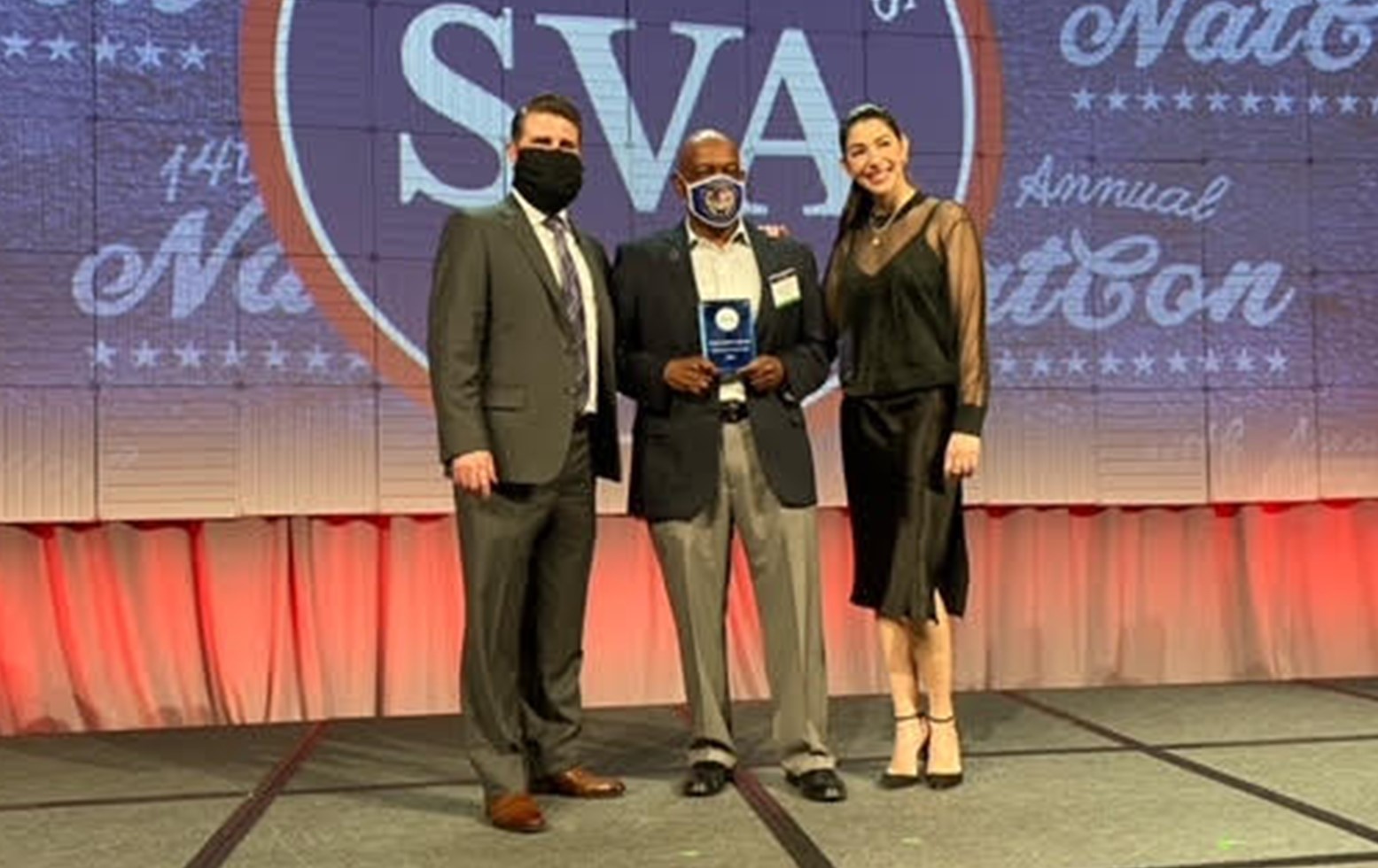
Georgia Southern University was selected as a finalist for the Chapter of the Year awarded by Student Veterans of America (SVA), an organization focused on advocating for and advancing resources for veterans in higher education. The University has SVA chapters on the Statesboro Campus and Armstrong Campus in Savannah, both of which were recognized with the award. “I am so proud of both of our SVA Chapters,” said Col. George Fredrick, Ed.D., director of Military and Veteran Services. “They offer truly outstanding support to our military-connected student population at Eagle Nation.” While this is the first time Georgia Southern has been a contender for this acknowledgement, the University has a tradition of being recognized for its investment in the military community. The Army ROTC program was established in 1980, and has won the MacArthur Award four times since 2009 for being one of the nation’s top ROTC programs. The Military Times publication named Georgia Southern as a Top 15 Best for Vets 4-year school for five consecutive years, including in 2019 when the University was ranked No. 1. Because the University operates near Hunter Army Airfield in Savannah and Fort Stewart in Hinesville, a number of students, faculty and staff are enlisted, retired or spouses of military members. Richelle Keilholz, Ed.D., is the staff advisor for SVA-Armstrong, and she believes this makes the campus community and military community deeply intertwined. “They become part of the campus culture, and I think that’s where you start to see that excellence comes when you have that kind of devotion,” said Keilholz. “You want to see our military service members, our family members and our spouses succeed in the military community and in higher education.” Georgia Southern’s relationship with veterans isn’t common among other universities, said military veteran project coordinator Rudy Duero. Many veterans feel overlooked and are an “untapped resource,” but not at Georgia Southern. “It’s awesome to have a group of individuals at the executive level who care and respect the opinions of the veteran students,” Duero said. “Veterans are being heard and they know that they’re being heard when they have good leadership representing them. The communication is always open.” Georgia Southern is one of five schools to be named a finalist for the award. The University sent a delegation to Orlando to attend the awards ceremony on Jan. 7. Academic and financial resources for veterans looking to pursue a degree can be found here. And if you’re a journalist looking to cover how Georgia Southern is working to support our veterans and the university’s military veteran project – then let us help. Rudy Duero is available to answer your questions - simply reach out to Georgia Southern Director of Communications Jennifer Wise at jwise@georgiasouthern.edu to arrange an interview today.


Georgia leaders to speak as part of Georgia Southern’s 2022 MLK Jr. commemorative events
Rev. Francys Johnson, J.D., (‘01) and Amir-Jamal Touré, J.D., will serve as speakers during Georgia Southern’s 2022 Martin Luther King (MLK) Jr. Celebration Dinners on Jan. 25 in Statesboro and Jan. 26 on the Armstrong Campus in Savannah, respectively. Johnson is a civil rights attorney, public theologian, educator and advocate who succeeded Stacey Abrams and Raphael Warnock as chair of the New Georgia Project. Johnson will speak at the MLK Celebration Dinner on Jan. 25 at 6 p.m. in the Nessmith-Lane Center Ballroom on the Statesboro Campus. Touré is the resident scholar for Geechee Kunda Cultural Center and Museum in Riceboro, Georgia, and a Djeli (chronicler of Gullah Geechee history). He has performed internationally in sharing history and culture and is known for his work in socioeconomic, politics and social justice areas. Touré will speak on Jan. 26 at 6 p.m. in the Student Union Ballroom on the Armstrong Campus in Savannah. During the celebration dinners, the Office of Multicultural Affairs (OMA) will hand out inaugural Drum Major of Justice Awards, which will be given to student leaders and student organizations that OMA leadership determine best exemplify MLK’s commitment to social justice. In addition to the evening events, student, faculty and staff volunteers will join OMA and Office of Leadership and Community Engagement for a weekend of community service from Jan. 15 through Jan. 17 as part of the Eagles in Action: MLK’s Legacy of Service initiative.

Expert available to discuss Holmes trial verdict
Elizabeth Holmes, founder of the failed blood testing start-up Theranos, was found guilty Monday of four of 11 charges of fraud, after a closely watched trial that lasted nearly four months. A jury determined that she deliberately misled investors. Todd Haugh, associate professor of business law and ethics and the Arthur M. Weimer Faculty Fellow in Business Law at the Indiana University Kelley School of Business, is available to comment on the verdict and future sentencing. Haugh’s research focuses white collar and corporate crime, business and behavioral ethics, and federal sentencing policy, exploring the decision-making processes of the players most central to the commission and adjudication of economic crime and unethical business conduct. He can discuss: • The size of the potential sentencing and the calculation the judge will make in determining it (the statutory maximum is high -- 20 years; the sentencing guideline will be very high -- maybe life imprisonment; but the actual sentence will be much, much lower); • The impact the acquitted conduct will have on the sentence (none -- the law allows the judge to consider all conduct, even counts she was acquitted of) • The impact of Holmes going to trial versus pleading guilty (significant because she loses cooperation credit, for example); • The larger business ethics and compliance implications of the case, which Haugh believes are significant, given the high profile nature of Theranos and Holmes, the culture of Silicon Valley, and the rarity of a criminal trial in a case like this); Haugh can be reached at thaugh@indiana.edu and 812-855-6539

Is it better to give than receive? Our expert explains the science behind holiday gift giving
It's the holiday season -- full of merriment and cheer and gift giving. But why do we give gifts? And why is it a ritual that cuts across cultures on just about every continent on Earth? UConn professor Dimitris Xygalatas, an expert in human rituals, details the social science behind the centuries old tradition of exchanging gifts in a new essay for The Conversation: From the shells exchanged by Pacific islanders to the toys and sweaters placed under Christmas trees, sharing has always been at the center of many ritual traditions. This is fundamentally different from other forms of material exchange, like trade or barter. For the Massim, exchanging a shell necklace for a shell armband is not the same as trading yam for fish, just as giving a birthday present is not the same as handing a cashier money to purchase groceries. This speaks to a more general rule of ceremonial actions: they are not what they appear to be. Unlike ordinary behaviors, ritual actions are nonutilitarian. It is this very lack of obvious utility that makes them special. Professor Xygalatas is an anthropologist and cognitive scientist at the University of Connecticut who specializes in some of the things that make us human, including ritual, sports, music, cooperation, and the interaction between cognition and culture. He is available to speak with media, answering all your holiday ritual questions. Click on his icon to arrange an interview today.