Experts Matter. Find Yours.
Connect for media, speaking, professional opportunities & more.

Cybersecurity expert offers holiday shopping tips for protecting identity
Amid the many warnings this holiday season about protecting your identity while shopping online comes advice from Scott Shackelford, associate professor of business law and ethics in the Indiana University Kelley School of Businessand one of the nation's leading cybersecurity experts. "In some ways shopping online is getting safer," said Shackelford, also chair of the Kelley School's Cybersecurity Program in Risk Management and director of the Ostrom Workshop Program on Cybersecurity and Internet Governance. "For example, a few years ago it was relatively uncommon for many sites to use encrypted https technology, but that's become the norm. However, as may be seen by a quick scan of the news, data breaches continue. "The good news is that the cost of those breaches is going up with Federal Trade Commission and European Commission investigations ongoing into firms like Equifax and Facebook, and consumer patience is also wearing thin," he added. "One recent survey, for example, found that 20 percent of consumers would not shop again at a firm that experienced a data breach." Shackelford offers practical advice for holiday shoppers. In essence, there's a lot you can do to become harder targets for cyber criminals, including: Consider freezing your credit. You don't need it open unless you open a new credit card or loan, and even then you can unfreeze it for a short window to allow for the credit check. Install antivirus and antispyware software, use auto-update, and always enable multifactor authentication on all of your accounts. When using public Wi-Fi, use browsers like Tor to make it more difficult for hackers to spy on you. Keep all software up to date -- especially Windows, but also programs like Adobe Reader, Flash and Java, which are often convenient backdoors that can be closed through frequent updates. Use strong passwords of at least 14 characters, keep them secret, and change them often. Consider starting with a favorite sentence, and then just take the first letter of each word. Add numbers, punctuation or symbols for complexity. And be sure to change any default passwords on your new smart devices. Never turn off your firewall; it's an important software program that helps stop viruses and worms. Use flash drives cautiously; they are easily infected. In fact, one of the biggest breaches of U.S. military systems to date was due to a flash drive. Encrypt sensitive information on your computer. Be conscious of what you click on, both in emails and on the web. When in doubt, double check before accessing new files. Look for sites with "https" in the URL. Do not use banks or other sensitive websites that do not have the "s."


Top 9 ROI Metrics for Expertise Marketing
When it comes to digital marketing, organizations are looking for data-driven solutions that are proven to support their bottom line. Here are 9 families of quantitative and qualitative metrics that will help you measure and track the success of your organization’s Expertise Marketing. (Taken from Chapter 5 of Expertise Marketing Whitepaper: Next Wave in Digital Strategy) REPUTATION Move Brand Metrics - Position research, client work, thought leadership perspectives and achievements in the context of relevant topics in the news. MARKET AWARENESS Move Search Metrics - Boost search-engine rankings and increase overall breath of search results. LEAD GENERATION Grow Inbound Leads - Increase the number of direct lead inquiries from the following audiences: Customers | Students | Patients | Donors | Patients | Media | Recruits | Conferences | Partners | Alumni | & More... AUDIENCE ENGAGEMENT Drive Engagement Metrics - A single familiar digital touchpoint provides access to all content marketing assets and encourages enhanced content browsing. Download our Free Whitepaper Expertise Marketing: The Next Wave in Digital Strategy TALENT DEVELOPMENT Boost People Performance - Better engage stakeholders, researchers & subject-matter experts in the development and distribution of content. INTERNAL COLLABORATION Improve Teamwork & Internal Efficiency - Better coordinate the knowledge and resources across internal communications teams and other departments as they engage experts. Provide a faster, more efficient way to generate content for breaking news and events. CONTENT CONTRIBUTION Expand Reach - Increase the size of the organization’s digital footprint by aggregating more content and distributing it contextually to multiple websites and third-party databases. EFFICIENCY Deliver More with Less - Help employees get their jobs done faster and more efficiently. Enable them to find information faster, speed up internal processes and foster collaboration among people in multiple locations. LEVERAGE CURRENT & FUTURE INFRASTRUCTURE Extract More Value From Existing Investments - Properly integrated, new technology investments should integrate seamlessly to leverage existing/proposed infrastructure such as content management systems (CMS). What’s most important to you? Get in touch with Deanne and start the conversation about how ExpertFile can begin moving that dial within 6 weeks. Get Your Copy and Get Started Expertise Marketing: The Next Wave in Digital Strategy About ExpertFile ExpertFile is the world’s first Expertise Marketing Platform that helps organizations solve the challenge of creating, managing and amplifying expert content. Our software platform and services help you showcase your people and their insights to the audiences that matter across a range of channels including distribution through the Associated Press to over 15,000 newsrooms. Learn more about ExpertFile.





Overhaul of FDA's approval process for medical devices overdue, but balanced approached needed
The Food and Drug Administration has announced plans to overhaul its system for approving a certain category of medical devices, which critics have said fails to protect consumers from risky implants and medical instruments. George Ball, assistant professor of operations and decision technologies and the ArcelorMittal Supply Chain Faculty Fellow, at the Indiana University Kelley School of Business, studies the medical device industry, in particular medical device recalls. There are two primary approval pathways for medical devices. “510(k)” clearances are reserved for products that demonstrate substantial equivalence to a previously approved device. Clinical trials are normally not required and this method is much faster and cheaper than the other pathway, a “Pre-Market Approval (PMA).” PMA new product submissions are reserved for those products that are new or substantially modified from previously approved devices. Clinical trials in humans and laboratory study data are normally required to demonstrate safety and efficacy. In comparison to 510(k) clearances, PMA approval pathways are time-consuming and expensive. “The FDA’s announcement regarding an overhaul of the 510(k) approval process seems to be warranted, as medical device product approvals are currently on two ends of an extreme spectrum,” Ball said. “New PMA products can require years and millions of dollars to successfully obtain approval by the FDA. Conversely, 510(k) clearances are significantly faster and cheaper, as the manufacturer has to simply demonstrate equivalence with similar, already approved products. “As 510(k) products represent the bulk of new product approvals, they also represent the bulk of medical device recalls, unsurprisingly,” Ball said. “In the last decade, 510(k) products were recalled at a ratio of 17-to-1, compared to PMA products.” “However, the method of approval currently practiced for 510(k) products has many benefits for manufacturers as well,” he said. “Demonstrating equivalence with prior approved similar devices makes the development time exponentially faster compared to PMA product approval times. “A middle-ground here seems logical and advisable. For example, the FDA approves products using a two-pronged approach: safety and efficacy. While efficacy may be easily established by demonstrating similarity to prior products, evidence of safety for 510(k) products may require additional verifications and tests. Doing so may help ensure that new 510(k) products, which are often much more technologically advanced than the ones they are compared against for approval purposes, are also safe for patients.” Ball can be reached at 812-856-0625 or gpball@indiana.edu
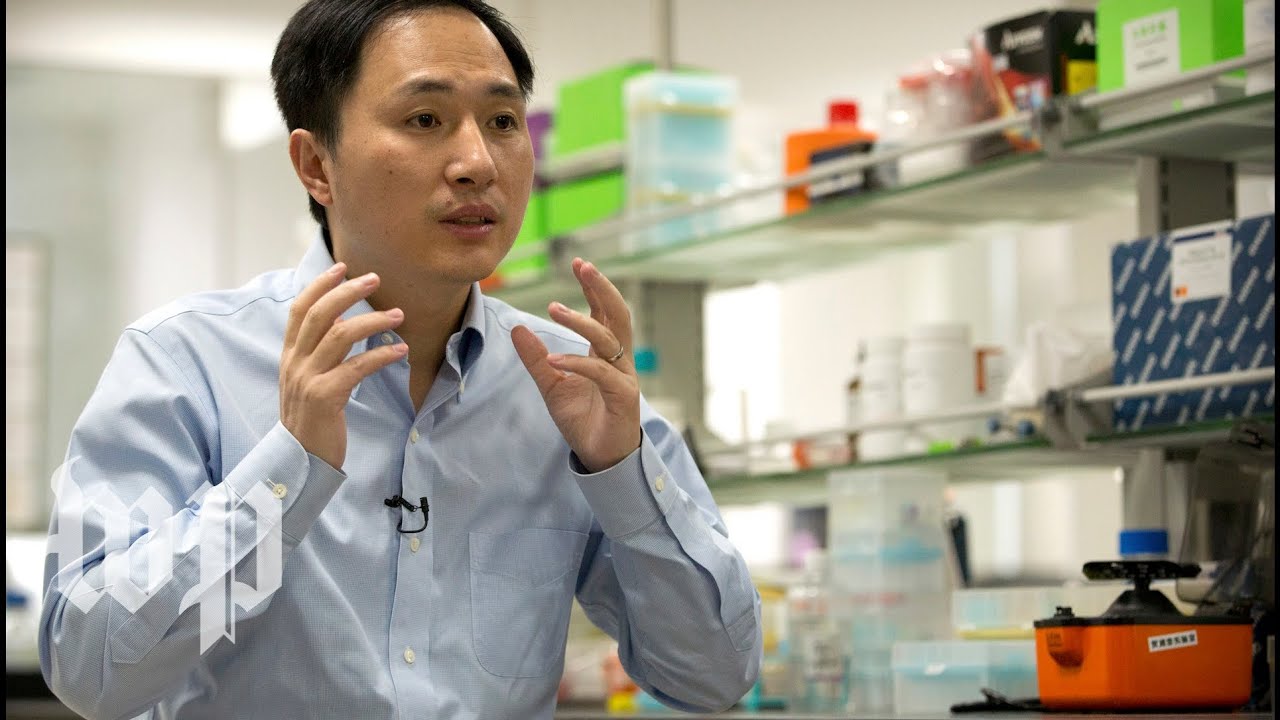
Chinese scientists are creating CRISPR babies
A daring effort is under way to create the first children whose DNA has been tailored using gene editing. When Chinese researchers first edited the genes of a human embryo in a lab dish in 2015, it sparked global outcry and pleas from scientists not to make a baby using the technology, at least for the present. It was the invention of a powerful gene-editing tool, CRISPR, which is cheap and easy to deploy, that made the birth of humans genetically modified in an in vitro fertilization (IVF) center a theoretical possibility. Now, it appears it may already be happening. According to Chinese medical documents posted online this month, a team at the Southern University of Science and Technology, in Shenzhen, has been recruiting couples in an effort to create the first gene-edited babies. They planned to eliminate a gene called CCR5 in hopes of rendering the offspring resistant to HIV, smallpox, and cholera. He Jiankui leads a team using the gene-editing technology CRISPR in an effort to prevent disease in newborns. The clinical trial documents describe a study in which CRISPR is employed to modify human embryos before they are transferred into women’s uteruses. The scientist behind the effort, He Jiankui, did not reply to a list of questions about whether the undertaking had produced a live birth. Reached by telephone, he declined to comment. However, data submitted as part of the trial listing shows that genetic tests have been carried out on fetuses as late as 24 weeks, or six months. It’s not known if those pregnancies were terminated, carried to term, or are ongoing. [After this story was published, the Associated Press reported that according to He, one couple in the trial gave birth to twin girls this month, though the agency wasn't able to confirm his claim independently. He also released a promotional video about his project.] The birth of the first genetically tailored humans would be a stunning medical achievement, for both He and China. But it will prove controversial, too. Where some see a new form of medicine that eliminates genetic disease, others see a slippery slope to enhancements, designer babies, and a new form of eugenics. Dr. Sullivan serves as professor of pharmacy practice and director of the Center for Bioethics. His research and writing interests include biomedical ethics, moral philosophy, and reproductive ethics. Contact him today for your story! Simply click on his icon to arrange an interview.


Baylor Journalism Professor, Public Relations Ethics Expert, Selected as Arthur W. Page Fellow
Marlene Neill, Ph.D., assistant professor of journalism, public relations and new media in Baylor University’s College of Arts & Sciences, has been designated as a research fellow at the Arthur W. Page Center for Integrity in Public Communication, a research center at the Penn State University College of Communications. The Page Center has asked Neill to focus on developing a response to a new report from the Commission on Public Relations Education that recommends public relations education programs offer a stand-alone ethics course, as well as integrate ethics throughout curriculum. The study found that public relations professionals ranked ethics third behind writing and communication as a necessary competency to work in public relations. In addition, public relations professionals in the study indicated that new professionals are not meeting their expectations in this area. “This is a great project because it combines my interests, the first being ethics, which is an area that I enjoy studying, and the second is a focus on public relations education,” Neill said. “I will be teaching the media ethics class in the spring for the first time, and one of the things I like about doing these studies is that it helps me gather insights from industry and then bring those insights back to the classroom.” Since receiving her invitation in June, Neill has begun preparations for research this fall with different groups across the nation, including the Public Relations Society of America. She will use the Delphi research method, where she will gather feedback from a variety of experts including senior- and middle-management executives as well as young professionals, and will then follow up with in-depth interviews, which last anywhere from 30 minutes to an hour. In addition, she will be serving on a subcommittee of the Commission on Public Relations Education, which is charged with making recommendations for public relations ethics curriculum. “On a typical study, I’ll spend about nine months going through the process of collecting the data, analyzing it, writing the papers, presenting to conferences and submitting to journals,” Neill said. “The second year will be spent preparing reports and writing recommendations based on those findings. While it sounds like a long time, when you think about it from that perspective, there’s a lot involved in doing an in-depth study like this.” In-depth interviews work well for this type of study, Neill said, because they provide specific examples of dilemmas and how people choose to handle them. “With qualitative research, you really get an understanding of the decision-making that people go through when faced with an issue and the step-by-step process they take to reach those decisions,” Neill said. “You get that inside scoop into the motivations and reasons for their actions.” Neill had previously received four grants from the Page Center, which resulted in a book, “Public Relations Ethics: Senior PR Pros Tell Us How to Speak Up and Keep Your Job,” published in 2018, as well as four journal articles, four academic conference papers and two top paper awards. In one of her most recent studies, Neill found that millennials often do not expect to face ethical dilemmas and do not feel prepared to address them. “There is a need to improve and enhance our ethics training at our colleges and universities, and by tapping in to what is actually happening in the industry, it makes it more relevant and helps better prepare students for some of the issues they will be facing today,” Neill said. As part of her subcommittee, Neill will gather sample syllabi and other teaching resources from universities across the nation and then share them with different public relations educators to help them prepare to cover ethics in ethics courses, as well as other public relations courses.



Terror sways voters - just not the way terrorists want
Those hoping to use fear to sway elections are in for a shock come election day. Terrorist attacks meant to suppress voter turnout — like the ethnically and racially-motivated attacks in Pittsburgh and Louisville, Kentucky in October — often have the opposite effect according to a study published by Augusta University researcher Dr. Lance Hunter. The study, published in “Behavioral Sciences of Terrorism and Political Aggression” in 2017, examined voter turnout following terrorist attacks in seven major urban centers across the United States over the course of four decades. The study found that attacks not only increase voter turnout, but that the severity of an attack may also impact how more voters show up at the polls. “Severity was measured as the number of individuals wounded in attacks and the amount of property value damage that occurred due to attacks,” said Hunter, assistant professor of Political Science in the Katherine Reese Pamplin College of Arts, Humanities, and Social Sciences. “We found that more severe terrorist attacks were associated with higher voter turnout.” The frequency of terror attacks also increased voter turnout, with every 10 attacks contributing to a 1.7 percent increase in turnout for gubernatorial elections and a 1.8 percent turnout for senate elections. “When the terrorist attacks variable was set at its minimum level (0 attacks) expected voter turnout was 28% for gubernatorial elections and 30% for senatorial elections,” Hunter said. “However, expected voter turnout increased to 43% for gubernatorial elections and 44% for senatorial elections as the number of terrorist attacks increased to its maximum level (80). Hunter attributed these findings to the notion that more severe terrorist attacks tend to have a greater psychological impact on citizens. That impact, he theorized, leads citizens of affected areas to pay greater attention to their political environment and encourages them to vote in greater numbers. “In other words, terrorism makes politics more salient for citizens,” he said. “As they become more attuned to the politics of the day, they are more likely to turnout to vote.” The data, which looked at elections held from 1970 to 2012, found that the type of election did not lessen or increase voter turnout following a terrorist attack. Voters in affected areas turned out in greater numbers for both midterm and presidential elections. Voter turnout is typically higher in presidential elections, regardless of attacks. Contact Nick Garrett at (706) 993-6411 or ngarret1@augusta.edu to schedule an interview with Dr. Hunter on this topic.


U.S. economy to remain strong through most of 2019, with output averaging 3 percent
Higher than expected economic growth in 2018 should continue into next year, with U.S. output averaging 3 percent and continued strong gains in domestic job growth. Indiana will continue to outperform the nation, with output growing at a rate of 3.2 percent, according to a forecast presented today by Indiana University's Kelley School of Business. A year ago, members of Kelley's Indiana Business Outlook Tour panel predicted that U.S. gross domestic product would grow by 2.6 percent this year and about 3 percent if tax reform were enacted. Indiana was forecast to see growth of 2.8 percent. Friday's release of GDP data for the third quarter supports their view that 2018 should end up with output growth above those levels. "The tax cut has produced an acceleration in the U.S. economy during 2018 to well above the new normal status quo of 2 percent growth," said Bill Witte, associate professor emeritus of economics at IU. "We expect output growth in 2019 to average 3 percent, but with deceleration as the year proceeds. By this time next year, quarterly growth will be heading toward equilibrium growth at a little below 2.5 percent." The story in Indiana and the greater Indianapolis area is very similar. "The state economy appears poised to see its strongest growth in the first quarter of 2019, after which growth rates are expected to slow but remain strong through the end of the year," said Ryan Brewer, associate professor of finance at Indiana University-Purdue University Columbus and author of the panel's Indiana forecast. "It is most likely Indiana will continue to experience growth across the board -- in jobs, numbers of establishments, income levels, wages as well as gross state product." The Kelley School released its forecast this morning at the Indianapolis Artsgarden and will present it again at 11 a.m. today in Bloomington. The Business Outlook Tour panel also will present national, state and local economic forecasts in eight other cities across the state through Nov. 28. The national labor market has exceeded expectations for two years now. A year ago, the panel felt the U.S. economy would create jobs at a monthly rate of about 175,000 and that the unemployment rate would fall to 4 percent. Instead, monthly job creation through September has averaged nearly 200,000, and the jobless rate has fallen to 3.7 percent. These job creation trends are expected to continue into 2019, with average monthly job gains of 200,000, and the participation rate -- which measures the percentage of the U.S. population that was employed or looking for a job -- remaining flat. "The labor market will be increasingly tight," Witte said. "The unemployment rate could decline a little, but firms unable to find workers will remain an important theme." Risks to the forecast include the effects of political uncertainty, further trade disputes and economic concerns being felt in other parts of the world, including China and Europe. The panel also expressed reservations about the impact of further Federal Reserve interest rate hikes. They expect the federal funds rate to rise above 3 percent by the end of 2019. Kyle Anderson, clinical assistant professor of business economics and author of the forecast for an 11-county area that includes Indianapolis, Carmel and Anderson, said the region is at full employment, and continued job growth will ensure it stays there. Economic growth in the area will average about 2.5 percent. "Communities around Central Indiana are finding it necessary and important to invest in projects that improve quality of life and provide amenities for residents," Anderson said, referring to examples of this in downtown areas of Indianapolis and Speedway and in Carmel. "The message to community leaders is clear: Investing in infrastructure to improve quality of life is necessary to maintain a healthy local economy. "Tax incentives are not sufficient to draw in businesses and residents. Bike trails, community centers and connected neighborhoods were once seen as luxuries, but now are important economic development tools," he added. "This trend will continue, especially if the economic expansion continues nationally." Other highlights from today's forecast: · Consumer spending will continue to grow, although at a rate less than in 2018. · Business investment will be good, but held back by trade concerns. · Housing will resume growth with a small boost from the aftermath of hurricanes Florence and Michael. Elsewhere, including in Central Indiana, 30-year mortgage rates, nearly a full point higher than a year ago, could dampen enthusiasm for new housing and constrain prices. · Government spending will be strong early in the year, but growth could slow significantly toward year end. · The trade balance will show increasing deficits. A detailed report on the outlook for 2018 will be published in the winter issue of the Indiana Business Review, available online in December. For more assistance, contact George Vlahakis, associate director of communications and media relations at the IU Kelley School of Business, 812-855-0846 (o) or 812-345-1500 (m), vlahakis@iu.edu.

On average, you will spend about a third of your life sleeping or attempting to sleep. For many, this means more than 25 years of your life will be spent in bed. Given this startling proportion, wouldn’t you like to know more about what helps, hinders and happens while you are asleep? Michael K. Scullin, Ph.D., director of the Sleep Neuroscience and Cognition Laboratory at Baylor University, spends the majority of his time researching and teaching about such topics. “One reason I am passionate about studying sleep is because you can't really introspect too much about it, as with nearly everything else in psychology,” Scullin said. “With sleep, you're unconscious at the time you are doing it. Sure, you can wake up and say ‘Oh, how did I sleep last night?’ but when you're actually engaging in the sleeping process, you can't do that. As a result, sleeping becomes an enigma. When you have the right equipment, you can begin to design experiments to figure out what exactly the brain is doing when we sleep and why is it important.” Below, Scullin addresses several common beliefs about sleep and the science that proves or disproves them. MYTH: If you die in a dream, then you die in real life. For a time, a rumor circled around that one’s brain cannot handle the mental strain of dying in a dream, and if you die in a dream, you will die. “That's just not substantiated because people report dying in their dreams, and they report it while they're still alive,” Scullin said. “Your brain can actually handle a lot, and there’s one theory that says nightmares are a functional adaptation to help us survive. It is potentially really functional for your brain to have those stressors in its offline state to help prepare you for situations. A lot of people think that nightmares are bad, and yes, they can be a clinical problem. But when they aren’t to that level, they can help us prepare for stressful situations.” FACT: Snoring is a sign of disease. Sleep apnea and snoring are linked, although not with a 1:1 ratio; some people snore without sleep apnea, but snoring is the biggest risk-factor of sleep apnea, Scullin said. Snoring is caused by an obstruction to one’s breathing pathways. In many cases, individuals who snore wake up gasping for air. That’s an observed sleep apnea, said Scullin. If someone is observing those things, he recommends visiting a clinical sleep physician. “What if you stopped breathing every few minutes while you were awake during the day?” asked Scullin. “Would you be okay with that? Not only are you not getting enough oxygen to regions of your body, but it puts a lot of stress on your heart. Untreated sleep apnea traumatically increases your risk for heart problems and heart disease. The great thing is, however, if you get treatment, those risk factors all drop down to normal.” FACT: If you cannot fall asleep in 20 minutes, you should get out of bed. Seems contradictory, right? In fact, research shows that getting out of bed can improve your ability to fall asleep. Why? “If you’re lying in bed and can’t fall asleep, you are forming a negative association between your bed and sleep,” Scullin said. “The solution is getting out of bed and going to do something boring without the lights on. Then when you feel sleepy, go back to bed. This way, you only associate your bed with the feeling of sleepiness.” MYTH: After a night of great “recovery sleep,” you fully restore damage from pulling an all-nighter. “A really interesting neuroimaging study has been able to show that that sleep deprivation significantly impairs the frontal lobes ability to function,” Scullin said. “Your frontal lobe is responsible for memory, decision-making, paying attention and more. The study took individuals who had pulled an all-nighter and then allowed them to get a full night of recovery sleep. When they put them back into the scanner, scientists found that the frontal lobe only partly recovered.” Most people skip on sleep during weekday nights and then oversleep on the weekend, but this throws off your circadian rhythms, your body’s natural sleeping patterns, said Scullin. This means that when Sunday night comes around, you may have “Sunday night insomnia” – trouble falling asleep because you've trained your body to go to bed later. MYTH: During a full moon, people have twice as many sleep problems. A few years ago, there was a big media ‘boom’ claiming that there were more sleep disturbances during a full moon. According to Scullin, the scientific community was skeptical, and labs across the world pooled their data to discover the truth. They found no association between full moons and sleep quality. Why, then, did this myth surface? “Those who claim they don’t sleep well during full moons probably don't sleep very well on other nights as well, but they only realize it or think about it happening when it is a full moon,” Scullin said. “There is something called the confirmation bias where an individual holds a hypothesis about how the world works, and then he or she will look for instances that confirm the hypothesis. Oftentimes they forget every other instance that contradicts their claim. We think that is what caused the moon-sleep phenomenon.” FACT: You can fall asleep while driving without realizing it. People swerve on the road for many reasons – texting, drinking, eating – but not many realize that some individuals swerve because of ‘micro-sleeps.’ According to Scullin, people often operate under the impression that this would never happen to them, but what they don’t realize is that this a frequent occurrence that one has no control over. “We have a similar biological need for sleep as we do hunger and thirst,” Scullin said. “For thirst, we have to have access to water; for hunger we have to have access to food. But for sleep our body can shut down whenever it needs to. If this happens, our brain will occasionally do this for 3 to 5 seconds if you're really tired – and especially if you're involved in some long monotonous task such as driving down a long highway.” FACT: Some people’s bodies are paralyzed for minutes whenever they wake up. Imagine waking up, seeing your biggest fear and being unable to move. Unfortunately, this is a reality for some individuals. Sleep paralysis occurs when brain functions get mixed-up, said Scullin. In rapid eye movement (REM) sleep the brain paralyzes the rest of the body so one doesn't act out his or her dreams, and this is very important. “The problem is that in some cases, your brain isn't fully coordinating with the other parts of it,” Scullin said. The part that controls consciousness wakes up, but the other part that controls your body paralysis is hitting the snooze button. So, while you can be fully awake, your body is paralyzed.” Some people experience this for a few seconds, others for a couple of minutes. Some people also hallucinate when the part of your brain that is dreaming “crosses over” into your consciousness. These hallucinations are triggered when one is so sleep deprived that the brain is trying to get deep sleep, but it cannot fully wake up immediately afterwards. According to Scullin, there does not seem to be any big clinical issue with sleep paralysis or hallucinations, and they seem to go away over time and in development. MYTH: Smartphone apps can reliably measure your sleep. Despite their popularity, sleep apps cannot effectively track sleep quality or quantity, Scullin said. The only way to reliably measure your sleep is to have electrodes attached to your scalp, measuring your brain waves in a sleep clinic. But sleep evaluations are expensive and usually only worth the cost for individuals with sleep apnea or other ongoing sleep problems. The good news? Baylor’s sleep lab pays volunteers to get their sleep analyzed, and scientists like Scullin are always looking for participants. FACT: The latest you should consume caffeine is six hours before bed. In a placebo-controlled study, scientists manipulated whether participants had caffeine one, two, four or six hours before bed, and for each of those conditions they had a placebo control. When the subject’s sleep was measured, they found that in every group, it was harder to fall asleep and sleep quality wasn’t as good as those without caffeine. “Even if you have caffeine six hours before bed, you not only have more difficulty falling asleep, but your sleep was also less deep,” Scullin said. “We actually don’t know if the results would extend to seven or eight hours before bed, but we know that six hours before bed is a ‘no-go.’ What I recommend is having your caffeine in the morning.” For those who think caffeine has no effect on the body, Scullin points out a bigger problem. “If you can sleep right after drinking a cappuccino, it probably means that you are so terribly sleep-deprived that even with drugs in your system that are intended to keep you awake, your brain is saying ‘I don’t care; I’m putting you to sleep.’” For more about Scullin and his research, visit the Baylor Psychology and Neuroscience website. by Brooke Battersby , student newswriter, (254) 710-6805 ABOUT BAYLOR UNIVERSITY Baylor University is a private Christian University and a nationally ranked research institution. The University provides a vibrant campus community for more than 17,000 students by blending interdisciplinary research with an international reputation for educational excellence and a faculty commitment to teaching and scholarship. Chartered in 1845 by the Republic of Texas through the efforts of Baptist pioneers, Baylor is the oldest continually operating University in Texas. Located in Waco, Baylor welcomes students from all 50 states and more than 80 countries to study a broad range of degrees among its 12 nationally recognized academic divisions. ABOUT BAYLOR COLLEGE OF ARTS & SCIENCES The College of Arts & Sciences is Baylor University’s oldest and largest academic division, consisting of 25 academic departments and seven academic centers and institutes. The more than 5,000 courses taught in the College span topics from art and theatre to religion, philosophy, sociology and the natural sciences. Faculty conduct research around the world, and research on the undergraduate and graduate level is prevalent throughout all disciplines. Visit www.baylor.edu/artsandsciences.

Baylor research reveals effects of time, age, education and income on birth mothers’ satisfaction following ‘life-altering’ decision research findings from Baylor University’s Diana R. Garland School of Social Work could change the adoption landscape for birth mothers struggling with the life-altering decision to place their children. There is consensus among adoption researchers that for many birth mothers the experience of placing their children for adoption brings feelings of grief, loss, shame, guilt, remorse and isolation. Any level of satisfaction (or lack thereof) in such a decision varies. But how is that level of satisfaction – that feeling that the right decision was made – affected by time? “Little is known about the interaction of these two variables,” said Elissa Madden, Ph.D., associate professor of social work at Baylor and lead author of the study, "The Relationship Between Time and Birth Mother Satisfaction with Relinquishment." Much of Madden’s research focuses on the birth mother experience in the adoption process – an area, she said, has historically been underrepresented. “This article seeks to address a clear void in the literature,” she said, “and we hope it has some implications for future practices and adoption policies.” The research, published in the journal Families in Society, centers on data from an online survey of 223 birth mothers who had relinquished an infant for adoption during the last 25 years. This time period was selected because it reflects an increased acceptance and emphasis on open adoption arrangements between birth and adoptive parents, according to the study. Of those surveyed, nearly seven out of 10 reported periodic contact with the adopted child; most parents (94 percent) reported only a single child relinquished; a majority (56 percent) parented other children after the relinquishment; and on a scale of 1 to 5, participants reported a mean satisfaction with relinquishment score of 3.11. Among the study’s findings: 1. Satisfaction is not static. While many birth mothers reported satisfaction with their decision, the findings show that the more time that has passed since the birth mothers placed their child, the less overall satisfaction some birth mothers felt. Some prior research suggests birth mothers’ grief and adjustment attenuates with the passage of time. However, the researchers note “the findings of this analysis highlight the importance of not confusing birth mother’s satisfaction with her decision and the feelings of loss that she may feel about the placement.” A birth mother may feel she made the right decision regarding placement and yet still experience ongoing feelings of loss and grief even years later, Madden said. 2. Age had an inverse relationship with satisfaction. “As with time since the relinquishment, age of the respondents predicted an incremental decrease in satisfaction for every year they have aged,” researchers wrote. “It may be that the distance afforded by time, along with the internal resources and perspective that often comes with age, may have provided an opportunity for birth mothers to look back and reflect on what could have been.” 3. Higher education and higher income led to decreased satisfaction. “It is possible that birth mothers who have achieved educational and/or financial success may now feel dissatisfaction with their decision to place their child as they now believe, in retrospect, that they would have been able to acquire sufficient resources necessary to successfully parent their child,” researchers wrote. Additionally, the researchers noted that some birth mothers may feel that educational and financial success may have been achieved “at the expense of their opportunity to parent their child.” 4. Birth mothers who have current contact with their child were more likely to express satisfaction with their decision. “Prior research suggests that for some birth mothers, having contact with the child helps reduce feelings of anxiety about the child’s life and well-being, worries they may be having about the child feeling abandoned, and/or guilt about their decision,” the researchers wrote. 5. Birth mothers who work full-time were more likely to express increased satisfaction. “While the rationale for this finding is not immediately clear,” the researchers wrote, “it is possible that birth mothers who are employed full-time have achieved personal fulfillment or otherwise found success through their employment. It is also possible that for some birth mothers, there is recognition that they have less time or perhaps fewer resources for parenting and thus are more satisfied with their decision to place their child.” What are the implications of this research? Madden said there are long-term consequences for all members of the adoption triad – birth mothers, those seeking to adopt, and adoptees. She said, specifically, that adoption professionals need to be well-versed in the positive and negative repercussions for birth mothers. “Adoption professionals must be especially attuned to the needs and concerns of expectant mothers who seek their counsel, as many lack a full understanding of their options,” Madden said, reflecting on her earlier research. Madden and her fellow researchers believe this study and others like it could lead to changes in the adoption process. They suggest: Annual “grief and loss” training for adoption professionals State and federal policies ensuring birth mothers have access to ongoing post-relinquishment support services Free grief support groups for all birth mothers Adoption of national standards to ensure that expectant mothers and prospective adoptive parents receive standardized information detailing the benefits of ongoing post-adoption contact Stipends for expectant mothers to hire independent legal counsel to represent the mothers at the relinquishment and during sensitive discussion regarding post-adoption contact ABOUT THE STUDY "The Relationship Between Time and Birth Mother Satisfaction with Relinquishment" is published in the journal Families in Society. Authors are Elissa Madden, Ph.D., associate professor, Diana R. Garland School of Social Work, Baylor University; Scott Ryan, Ph.D., professor and dean, School of Social Work, University of Texas at Arlington; Donna M. Aguiniga, Ph.D., associate professor, School of Social Work, University of Alaska – Anchorage; Michael Killian, Ph.D., assistant professor, School of Social Work, University of Texas at Arlington; and Brenda Romanchik, L.C.S.W., independent practitioner. ABOUT BAYLOR UNIVERSITY Baylor University is a private Christian University and a nationally ranked research institution. The University provides a vibrant campus community for more than 17,000 students by blending interdisciplinary research with an international reputation for educational excellence and a faculty commitment to teaching and scholarship. Chartered in 1845 by the Republic of Texas through the efforts of Baptist pioneers, Baylor is the oldest continually operating University in Texas. Located in Waco, Baylor welcomes students from all 50 states and more than 80 countries to study a broad range of degrees among its 12 nationally recognized academic divisions. ABOUT DIANA R. GARLAND SCHOOL OF SOCIAL WORK Baylor University’s Diana R. Garland School of Social Work is home to one of the leading graduate social work programs in the nation with a research agenda focused on the integration of faith and practice. Upholding its mission of preparing social workers in a Christian context for worldwide service and leadership, the School offers a baccalaureate degree (B.S.W.), a Master of Social Work (M.S.W.) degree and three joint-degree options, M.S.W./M.B.A., M.S.W./M.Div. and M.S.W./M.T.S., through a partnership with Baylor’s Hankamer School of Business and George W. Truett Theological Seminary, and a Ph.D. program. Visit www.baylor.edu/social_work to learn more.

Multiracial Congregations Have Nearly Doubled, But They Still Lag Behind the Makeup of Neighborhoods
About one in five American congregants attends a racially mixed place of worship, Baylor University study find The percentage of multiracial congregations in the United States nearly doubled from 1998 to 2012, with about one in five American congregants attending a place of worship that is racially mixed, according to a Baylor University study. While Catholic churches remain more likely to be multiracial — about one in four — a growing number of Protestant churches are multiracial, the study found. The percentage of Protestant churches that are multiracial tripled, from 4 percent in 1998 to 12 percent in 2012, the most recent year for which data are available. In addition, more African-Americans are in the pulpits and pews of U.S. multiracial churches than in the past, according to the study. Multiracial congregations are places of worship in which less than 80 percent of participants are of the same race or ethnicity. “Congregations are looking more like their neighborhoods racially and ethnically, but they still lag behind,” said lead author Kevin D. Dougherty, Ph.D., associate professor of sociology in Baylor’s College of Arts & Sciences. “The average congregation was eight times less diverse racially than its neighborhood in 1998 and four times less diverse in 2012.” “More congregations seem to be growing more attentive to the changing demographics outside their doors, and as U.S. society continues to diversify by race and ethnicity, congregations’ ability to adapt to those changes will grow in importance,” said co-author Michael O. Emerson, Ph.D., provost of North Park University in Chicago. For the study, Dougherty and Emerson analyzed data from the National Congregations Study, a nationally representative survey conducted in 1998, 2006-2007 and 2012, with a cumulative sample of 4,071 congregations. The study by Dougherty and Emerson — “The Changing Complexion of American Congregations” — is published in the Journal for the Scientific Study of Religion. The study found that: One-third of U.S. congregations were composed entirely of one race in 2012, down from nearly half of U.S. congregations in 1998. Multiracial congregations constituted 12 percent of all U.S. congregations in 2012, up from 6 percent in 1998. The percentage of Americans worshipping in multiracial congregations climbed to 18 percent in 2012, up from 13 percent in 1998. Mainline Protestant and Evangelical Protestant churches have become more common in the count of multiracial congregations, but Catholic churches continue to show higher percentages of multiracial congregations. One in four Catholic churches was multiracial in 2012. While whites are the head ministers in more than two-thirds (70 percent) of multiracial congregations, the percentage of those led by black clergy has risen to 17 percent, up from fewer than 5 percent in 1998. Blacks have replaced Latinos as the most likely group to worship with whites. In the typical multiracial congregation, the percentage of black members rose to nearly a quarter in 2012, up from 16 percent in 1998. Meanwhile, Latinos in multiracial congregations dropped from 22 percent in 1998 to 13 percent in 2012. The percentage of immigrants in multiracial congregations decreased from over 5 percent in 1998 to under 3 percent in 2012. Previous research shows that congregations have adopted varying ways to encourage racial diversity, among them integrating music genres, using more participatory worship, hosting small groups to foster interracial networks and creating programs to address racial or ethnic issues. Churches with shorter histories are more likely to have diversity, and change is harder to bring about in long-established congregations. The new study by Dougherty and Emerson concluded that the complexion of American congregations is indeed changing — and the authors see benefits for American society. “During a several-year period of heightened racial tensions, the growth of multiracial congregations is a dramatic development,” Emerson said. “Such congregations are places of significantly increased cross-racial friendships and cross-racial common experiences.” ABOUT BAYLOR UNIVERSITY Baylor University is a private Christian University and a nationally ranked research institution. The University provides a vibrant campus community for more than 17,000 students by blending interdisciplinary research with an international reputation for educational excellence and a faculty commitment to teaching and scholarship. Chartered in 1845 by the Republic of Texas through the efforts of Baptist pioneers, Baylor is the oldest continually operating University in Texas. Located in Waco, Baylor welcomes students from all 50 states and more than 80 countries to study a broad range of degrees among its 12 nationally recognized academic divisions. ABOUT BAYLOR COLLEGE OF ARTS & SCIENCES The College of Arts & Sciences is Baylor University’s oldest and largest academic division, consisting of 25 academic departments and seven academic centers and institutes. The more than 5,000 courses taught in the College span topics from art and theatre to religion, philosophy, sociology and the natural sciences. Faculty conduct research around the world, and research on the undergraduate and graduate level is prevalent throughout all disciplines.