
Experts Matter. Find Yours.
Connect for media, speaking, professional opportunities & more.

Exploring the Depths: How AI is Revolutionizing Seafloor Research
In recent years, there has been a significant shift in the way seafloor research is conducted, all thanks to the groundbreaking advancements in artificial intelligence (AI) technology. The depths of our oceans have always been a mystery, but with the use of AI, scientists and researchers are now able to explore and uncover the hidden secrets that lie beneath the surface. With funding from the Department of Defense, University of Delaware oceanographer Art Trembanis and others are are using artificial intelligence and machine learning to analyze seafloor data from the Mid-Atlantic Ocean. The goal is to develop robust machine-learning methods that can accurately and reliably detect objects in seafloor data. “You can fire up your phone and type dog, boat or bow tie into a search engine, and it's going to search for and find all those things. Why? Because there are huge datasets of annotated images for that,” he said. “You don't have that same repository for things like subway car, mine, unexploded ordnance, pipeline, shipwreck, seafloor ripples, and we are working to develop just such a repository for seabed intelligence.” Trembanis is able to talk about this research and the impact it could have on our day to day lives. He can be contacted by clicking his profile. “You have commercial companies that are trying to track pipelines, thinking about where power cables will go or offshore wind farms, or figuring out where to find sand to put on our beaches,” said Trembanis. “All of this requires knowledge about the seafloor. Leveraging deep learning and AI and making it ubiquitous in its applications can serve many industries, audiences and agencies with the same methodology to help us go from complex data to actionable intelligence.” He has appeared in The Economic Times, Technical.ly and Gizmodo.


Aston Institute for Forensic Linguistics (AIFL) is part of the project to infer authorship of uncredited documents based on writing style AIFL’s Professor Tim Grant and Dr Krzysztof Kredens are experts in authorship analysis Applications may include identifying counterintelligence risks, combating misinformation online, fighting human trafficking and even deciphering authorship of ancient religious texts. Aston University’s Institute for Forensic Linguistics (AIFL) is part of the AUTHOR research consortium which has won an $11.3 million contract to infer authorship of uncredited documents based on the writing style. The acronym stands for ‘Attribution, and Undermining the Attribution, of Text while providing Human-Oriented Rationales’. Worth $1.3 million, the Aston University part of the project is being led by Professor Tim Grant and Dr Krzysztof Kredens, who both are recognised internationally as experts in authorship analysis and who both engage in forensic linguistic casework as expert witnesses. In addition to their recognised general expertise and experience in this area, Professor Grant has specific expertise in using linguistic analysis to enhance online undercover policing and Dr Kredens has led projects to develop authorship identification techniques involving very large numbers of potential authors. The AUTHOR team is led by Charles River Analytics and is one of six teams of researchers that won The Human Interpretable Attribution of Text Using Underlying Structure (HIATUS) programme sponsored by the Intelligence Advanced Research Projects Activity (IARPA). The programme uses natural language processing techniques and machine learning to create stylistic fingerprints that capture the writing style of specific authors. On the flip side is authorship privacy - mechanisms that can anonymize identities of authors, especially when their lives are in danger. Pitting the attribution and privacy teams against each other will hopefully motivate each, says Dr Terry Patten, principal scientist at Charles River Analytics and principal investigator of the AUTHOR consortium. “One of the big challenges for the programme and for authorship attribution in general is that the document you’re looking at may not be in the same genre or on the same topic as the sample documents you have for a particular author,” Patten says. The same applies to languages: We might have example articles for an author in English but need to match the style even if the document at hand is in French. Authorship privacy too has its challenges: users must obfuscate the style without changing the meaning, which can be difficult to execute.” In the area of authorship attribution, the research and casework experience from Aston University will assist the team in identifying and using a broad spectrum of authorship markers. Authorship attribution research has more typically looked for words and their frequencies as identifying characteristics. However, Professor Grant’s previous work on online undercover policing has shown that higher-level discourse features - how authors structure their interactions - can be important ‘tells’ in authorship analysis. The growth of natural language processing (NLP) and one of its underlying techniques, machine learning, is motivating researchers to harness these new technologies in solving the classic problem of authorship attribution. The challenge, Patten says, is that while machine learning is very effective at authorship attribution, “deep learning systems that use neural networks can’t explain why they arrived at the answers they did.” Evidence in criminal trials can’t afford to hinge on such black-box systems. It’s why the core condition of AUTHOR is that it be “human-interpretable.” Dr Kredens has developed research and insights where explanations can be drawn out of black box authorship attribution systems, so that the findings of such systems can be integrated into linguistic theory as to who we are as linguistic individuals. Initially, the project is expected to focus on feature discovery: beyond words, what features can we discover to increase the accuracy of authorship attribution? The project has a range of promising applications – identifying counterintelligence risks, combating misinformation online, fighting human trafficking, and even figuring out the authorship of ancient religious texts. Professor Grant said: “We were really excited to be part of this project both as an opportunity to develop new findings and techniques in one of our core research areas, and also because it provides further recognition of AIFL’s international reputation in the field. Dr Kredens added: “This is a great opportunity to take our cutting-edge research in this area to a new level”. Professor Simon Green, Pro-Vice-Chancellor for Research, commented: “I am delighted that the international consortium bid involving AIFL has been successful. As one of Aston University’s four research institutes, AIFL is a genuine world-leader in its field, and this award demonstrates its reputation globally. This project is a prime example of our capacities and expertise in the area of technology, and we are proud to be a partner.” Patten is excited about the promise of AUTHOR as it is poised to make fundamental contributions to the field of NLP. “It’s really forcing us to address an issue that’s been central to natural language processing,” Patten says. “In NLP and artificial intelligence in general, we need to find a way to build hybrid systems that can incorporate both deep learning and human-interpretable representations. The field needs to find ways to make neural networks and linguistic representations work together.” “We need to get the best of both worlds,” Patten says. The team includes some of the world’s foremost researchers in authorship analysis, computational linguistics, and machine learning from Illinois Institute of Technology, Aston Institute for Forensic Linguistics, Rensselaer Polytechnic Institute, and Howard Brain Sciences Foundation.


Unattainably Perfect: Idealized Images of Influencers Negatively Affect Users’ Mental Health
Filters, Adobe Photoshop, and other digital tools are commonly used by social media “influencers.” These celebrities or individuals have a large follower base and “influence” or hold sway over online audiences. This digital enhancement of images is well-documented anecdotally. Instagram, in particular, has come under growing scrutiny by the media in recent years for promoting and popularizing unattainably perfect or unrealistic representations of its influencers. What’s less understood is the appeal and the actual effect that these digitally enhanced images have on followers–particularly in terms of people’s feelings of self-worth and their mental wellbeing. A ground-breaking study by Goizueta Business School’s David Schweidel and Morgan Ward sheds new light on the real-world impact of digital enhancement, and what they find should be cause for significant concern. Downstream Consequences: Impressions Have Lasting Impact Across a series of five studies with a broad sample of participants and using AI-powered deep learning data analysis to parse individuals’ responses, Schweidel and Ward have unearthed a series of insights around the lure of these kinds of idealized images, and the negative “downstream consequences” that they have on other users’ self-esteem. “Going into the research, we hypothesized that micro-influencers who digitally manipulate their images, offering unrealistic versions of themselves, would be more successful at engaging with other users–getting more follows, likes, and comments from them. And we do find this to be the case, but that’s not all,” says Schweidel. He and Ward also discover that when users are exposed to these kinds of images, they make comparisons between themselves and the enhanced influencers; comparisons that leave them feeling lacking, envious, and often inadequate in some way. In terms of mental health and wellbeing, this is alarming, says Ward. Our research shows unequivocally that when followers consume idealized versions of popular figures on social media there is a social comparison process that results in these users experiencing negative feelings and a substantial decline in their state of self-esteem. On the basis of these insights, is Meta–the owner of Facebook and Instagram–likely to take action to limit the use of digital enhancement on its platforms and apps any time soon? Unlikely, say Schweidel and Ward. “Meta seems to be fully aware of the deleterious effects that Instagram has on its users. However, the success of Instagram–and that of the brands and influencers that appear on the app–is fueled by increased consumer engagement: the very engagement that this kind of digital enhancement of images drives. So the incentive is there to maintain the practices that keep users engaged, even if there’s a trade-off in their emotional and mental health.” This is a fascinating and important topic - and if you're a reporter looking to know, then let us help. David A. Schweidel is professor of marketing at Emory University’s Goizueta Business School. He is an expert in the areas of customer relationship management and social media analytics. Morgan Ward is an assistant professor of marketing at Emory University’s Goizueta Business School and is an expert in consumer behavior. Both experts are available to speak with media - simply click on an icon to arrange a discussion today.


Emory Experts - Why Companies Invest in Local Social Media Influencers
Companies seek local influencers to pitch products. Even though most influencers amass geographically dispersed followings on social media, companies are willing to funnel billions of sponsorship dollars to multiple influencers located in different geographic areas, effectively creating sponsorships that span cities, countries, and in some cases even, the globe. The desire to work with local influencers has spawned advertising agencies that specialize in connecting companies with influencers and may soon redefine the influencer economy. This trend has merit, our research team finds. In a new Journal of Marketing study, we show a positive link between online influence and how geographically close an influencer’s followers are located. The nearer a follower is geographically to someone who posts an online recommendation, the more likely she is to follow that recommendation. To investigate whether geographical distance still matters when word of mouth is disseminated online, our research team examined thousands of actual purchases made on Twitter. We found the likelihood that people who saw a Tweet mentioning someone they follow bought a product would subsequently also buy the product increases the closer they reside to the purchaser. Not only were followers significantly associated with a higher likelihood to heed an influencer’s recommendation the closer they physically resided to the influencer, the more quickly they were to do so, too. We find that this role of geographic proximity in the effectiveness of online influence occurs across several known retailers and for different types of products, including video game consoles, electronics and sports equipment, gift cards, jewelry, and handbags. We show the results hold even when using different ways to statistically measure the effects, including state-of-the-art machine learning and deep learning techniques on millions of Twitter messages. We posit that this role of geographic proximity may be due to an invisible connection between people that is rooted in the commonality of place. This invisible link can lead people to identify more closely with someone who is located nearby, even if they do not personally know that person. The result is that people are more likely to follow someone’s online recommendation when they live closer to them. These online recommendations can take any form, from a movie review to a restaurant rating to a product pitch. What makes these findings surprising is that experts predicted the opposite effect when the internet first became widely adopted. Experts declared the death of distance. In theory, this makes sense: people don’t need to meet in person to share their opinions, reviews, and purchases when they can do so electronically. What the experts who envisioned the end of geography may have overlooked, however, is how people decide whose online opinion to trust. This is where cues that indicate a person’s identity, such as where that person lives in the real world, come into play. We may be more likely to trust the online opinion from someone who lives in the same city as us than from someone who lives farther away, simply because we have location in common. Known as the social identity theory, this process explains how individuals form perceptions of belonging to and relating to a community. Who we identify with can affect the degree to which we are influenced, even when this influence occurs online. Our findings imply that technology and electronic communications do not completely overcome the forces that govern influence in the real world. Geographical proximity still matters, even in the digital space. The findings also suggest that information and cues about an individual’s identity online, such as where he/she lives, may affect his/her influence on others through the extent to which others feel they can relate to him/her. These findings on how spatial proximity may still be a tie that binds even in an online world affirm what some companies have long suspected. Local influencers may have a leg up in the influence game and are worth their weight in location. For these reasons, companies may want to work with influencers who have more proximal connections to increase the persuasiveness of their online advertising, product recommendation, and referral programs. Government officials and not-for-profit organizations may similarly want to partner with local ambassadors to more effectively raise awareness of—and change attitudes and behaviors towards—important social issues. Goizueta faculty members Vilma Todri, assistant professor of Information Systems & Operations Management, Panagiotis (Panos) Adamopoulos, assistant professor of Information Systems & Operations Management, and Michelle Andrews, assistant professor of marketing, shared the following article with the American Marketing Association to highlight their new study published in the Journal of Marketing. To contact any of the experts for an interview regarding this topic, simply click on their icon to arrange a time to talk today.


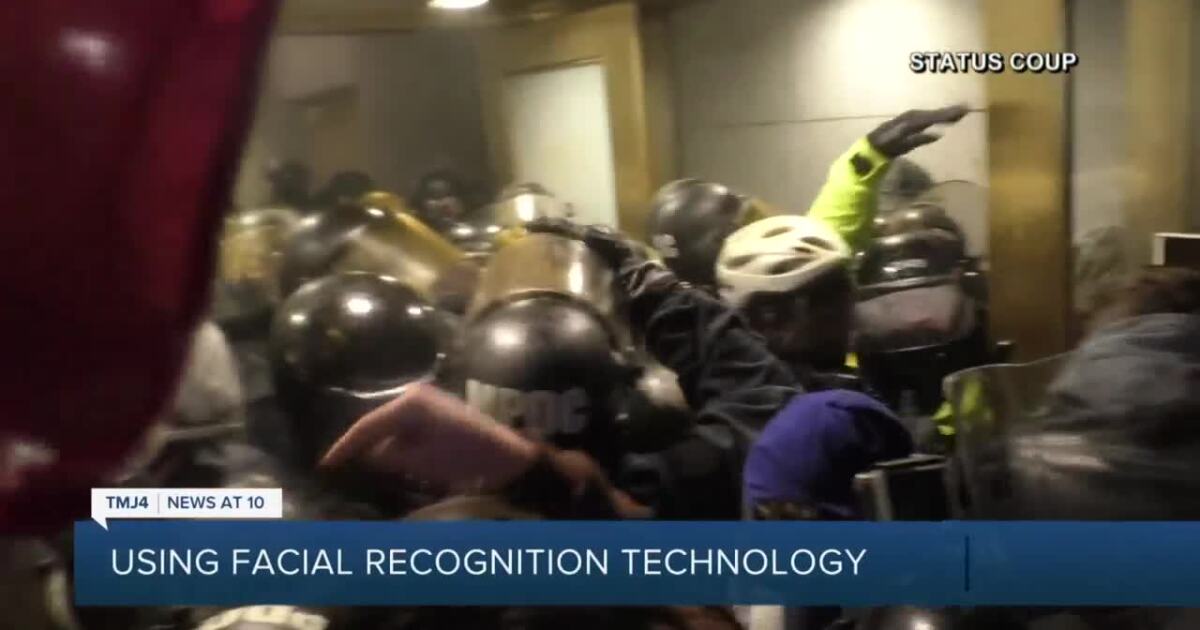
On January 06, America watched with shock as a mob of protesters stormed the gates in Washington, D.C. and invaded the Capitol buildings. For hours, the rioters looted and occupied America’s halls of power and though some were apprehended, many found a way to get out and get back home avoiding arrest. However, media coverage was substantial and some of the protesters were even bold enough to be caught posing for social media. Slowly, authorities are tracking them down, and Dr. Derek Riley, an expert at Milwaukee School of Engineering (MSOE) in the areas of computer science and deep learning, has been explaining how artificial intelligence (AI) technology that’s taught at MSOE is capable of enabling law enforcement's efforts to identify individuals from pictures. "With these AI systems, we’ll show it example photos and we’ll say, 'OK, this is a nose, this is an ear, this is Billy, this is Susie,'" Riley said. "And over lots and lots of examples and a kind of understanding if they guess right or wrong, the algorithm actually tunes itself to get better and better at recognizing certain things." Dr. Riley says this takes huge amounts of data and often needs a supercomputer—like MSOE's "Rosie"— to process it. To get a computer or software to recognize a specific person takes more fine-tuning, Riley says. He says your smartphone may already do this. "If you have a fingerprint scan or facial recognition to open up your phone, that’s exactly what’s happening," Riley said. "So, they’ve already trained a really large model to do all the basic recognition, and then you provide a device with a fingerprint scanning or pictures of your face at the end to be able to fine-tune that model to recognize exactly who you are." Riley says this technology isn't foolproof—he says human intelligence is needed at every step. He added we might be contributing to the data sources some of the technology needs by posting our pictures to social media. "Folks are uploading their own images constantly and that often is the source of the data that is used to train these really, really large systems," Riley said. January 14 – WTMJ, Ch. 4, NBC News The concept of facial recognition and the use of this technology in law enforcement (and several other applications) is an emerging topic – and if you are a reporter looking to cover this topic or speak with an expert, then let us help. Dr. Derek Riley is an expert in big data, artificial intelligence, computer modeling and simulation, and mobile computing/programming. He’s available to speak with media about facial recognition technology and its many uses. Simply click on his icon now to arrange an interview today.



Just how big of a deal is AI? At this year’s Directions 2019, IDC Canada experts will be speaking to a variety of topics that are reshaping the digital visions and tactics modern companies are using to compete. Explore how AI encompasses a huge spectrum of technologies for the enterprise and how at the center of it all is data. On May 02, join Warren Shiau, Research Vice-President with IDC Canada as he presents a highly anticipated talk on AI: Process Animation at 11:20 AM. Warren will look at what’s being adopted by Canadian enterprise under the banner of AI; and why AI can generate significant business value even in the absence of large data science teams and enterprise-wide high-quality data. Deep learning may rule the future but “small AI” targeting things like process automation rules the day. Organizations are rethinking digital transformation – join us May 02 to learn more. Location: St. James Cathedral Centre: Snell Hall, 65 Church Street | Toronto Date: May 2, 2019 Time: 8:00 AM - 8:30 AM - Registration & Networking Breakfast | 8:30 AM - 3:30 PM Conference Program Register Today before it's too late! If you're a member of the media and would like to attend this event, please contact Cristina Santander at csantander@idc.com
