
Experts Matter. Find Yours.
Connect for media, speaking, professional opportunities & more.

The Power of Teacher Noticing: A Key to Understanding Engagement in Secondary Mathematics Lessons
Math can be a tough subject for students in K-12, particularly as the years go by. Educators at University of Delaware are working to see how to both identify this trend and potentially find solutions. Amanda Jansen, professor in the School of Education at UD, recently published a paper detailing teacher noticing –– how teachers observe, recognize, and make sense of what's happening in their classrooms. Jansen and others investigated what high school mathematics teachers and their students noticed about students’ mathematical engagement to develop a framework for teachers’ and students’ noticing of mathematical engagement. "We conjecture that researchers can use this framework as an analytic tool to support the field's understanding of student engagement and teachers’ efforts to engage students," the paper notes. Jansen is available for interviews on this topic. She has been quoted in publications like Education Week and recently celebrated as a 2023 Excellence in Scholarly Community Engagement Award recipient. Click the "View Profile" page to contact her.


Winnipeg, MB, September 5, 2023 – As Manitoba students head back to class this week, parents say speeding and traffic congestion are their biggest worry when it comes to road safety near schools. A recent study by CAA Manitoba, conducted by DIG insights*, shows that 94 per cent of parents have at least one concern about safety in school zones. “We want to remind motorists that they need to be extra vigilant as students return to school this week,” says Ewald Friesen, manager of government and community relations, CAA Manitoba. “Kids will be excited to see their friends and teachers and may fail to check their surroundings before stepping out onto the street.” The top three concerns are drivers speeding (32 per cent), traffic congestion in and around school (30 per cent), and a lack of street/school parking (26 per cent). Other concerns include illegal parking or stopping, jaywalkers, distracted pedestrians and drivers, and drivers not obeying traffic signs. As a result of those concerns, many parents drive their children to school, further exacerbating traffic congestion, Friesen notes. “While there are always parents who must drive their children to school, we do encourage parents and students to try other modes of transportation to get to class,” says Friesen. “Things like walking, biking and skateboarding are great exercise and lots of fun, and fewer cars will help alleviate parents’ concerns.” The study also showed that parents would like to see additional solutions. About 26 per cent of parents want better road infrastructure in school zones and 21 per cent want to see more police enforcement. More crossing guards and road safety education for parents and students was also suggested. “Helping to keep school zones safe for everyone is the primary goal of CAA’s School Safety Patrol program,” says Friesen. “Watch for our trained patrols in bright yellow-lime vests helping people safely cross the street.” According to Stats Canada, there were about 183,000 students enrolled in about 700 K-12 schools across Manitoba in 2022. Back to School Safety Tips for Drivers: Drivers can also use the following CAA Manitoba tips to ensure they are staying safe in school zones. Slow down: Know the speed limit in your neighbourhood’s school zones and respect them. Give yourself plenty of time to drop off your kids at school to avoid rushing. Follow the rules of the road near school buses: Always stop for a stopped school bus with its upper flashing lights and stop arm activated, then wait for children to get safely on or off. Stay alert and watch for children or parents/guardians crossing the road when the bus moves on. Choose a safe spot to drop off and pick up your children from school: Follow your school’s rules and avoid double parking or stopping on crosswalks, dropping off or picking up your kids on the opposite side of the street, and stopping in moving traffic as kids rush out. Instead, use the designated drop off areas or consider a spot a bit farther away from school that is easily accessible and safe. Make eye contact with pedestrians: With the excitement of going back to school, anticipate that children may not easily see or hear your moving vehicle, so be sure to make eye contact with pedestrians crossing the road. Watch for CAA School Safety Patrollers: When travelling to and from school, watch for CAA School Safety Patrollers in their safety vests, as they play an important role in ensuring the roadway is safe before kids cross on their own. Avoid fines: Passing another vehicle in a school zone is not permitted. Passing a bus with its lights flashing and stop sign activated will result in a $673 fine and five demerits. Speeding in school zone is a minimum $200 fine and two demerits. * The study, commissioned by CCG and conducted by Dig Insights in May 2023, surveyed 613 Manitoba parents/guardians between the ages of 18 and 74 with children attending school from kindergarten to grade 8. The margin of error for a sample of this size is plus or minus 4% at the 95% confidence level.



CorpusCast with Dr Robbie Love: Professor Laurence Anthony on AntConc
CorpusCast is the podcast about corpus linguistics and what it can do for society. Join Dr Robbie Love as he speaks with top researchers in the field to find out more about how corpus linguistics – the study of linguistic patterns in large samples of language – is applied to a diverse range of areas including health, social justice and education. To mark the 25th episode and second anniversary in 2024, this episode reflects on the incredible two-year journey, expressing gratitude to exceptional guests and listeners spanning over 30 countries. In this milestone episode, the spotlight is on Professor Lawrence Anthony, the brilliant mind behind AntConc, a widely used and freely available corpus tool. Listeners are invited to join a profound exploration into AntConc's story, development, and its impact on corpus linguistics. Professor Lawrence Anthony, based at Waseda University in Japan, directs the Center for English Language Education in Science and Engineering. With over two decades of expertise in educational technology, natural language processing, and genre analysis, he has been a pioneer in developing educational software for corpus linguistics enthusiasts. Listeners can anticipate a captivating conversation as CorpusCast delves into the world of AntConc, gaining insights into its significance in the field. The third season kicks off with Professor Lawrence Anthony, promising a knowledge-packed episode. A heartfelt thank you goes out to all CorpusCast listeners for their continuous support. Here's to more discoveries, learning, and growth in 2024! Happy New Year, and welcome to another exciting episode of CorpusCast! Dr Robbie Love ? https://bit.ly/3Zcgo36 Professor Laurence Anthony ? https://www.laurenceanthony.net/ Aston Centre for Applied Linguistics ? https://bit.ly/3QKHcSF School of Social Sciences and Humanities ? https://bit.ly/3JCRAd1 Find out more about courses related to this show ? https://bit.ly/3pR705k #corpuslinguistics #BusinessCommunication #AstonUniversity #RobbieLove #MatteoFuoli #SocietalImpact #corpuslinguistics #AntConc #PodcastAnniversary #EducationTechnology


Expert Perspective: Augusta University professor gives annual economic outlook for the region
For the 16th year, Augusta University’s Cree-Walker Chair and Professor of Economics in the Hull College of Business Simon Medcalfe, PhD, has given his analysis of the Augusta area economy. The biggest thing on the minds of many remains the possibility of a recession and the overall inflation nationwide. Medcalfe thinks it probably won’t look a lot different in 2024 as it did in 2023. If anything, there may be less of a chance of a recession. “I think the chances of recession have probably slipped a little. I think there’s less chance of a recession,” said Medcalfe. “Inflation is certainly still a concern. It’s running at 3.2%, which sounds kind of low, but because of the amount of inflation, we’ve had prices about 20% higher than two years ago, and it’s still a concern and still eating into people’s wages.” He indicated, looking at Google Trends and what people are searching, inflation is still a pretty high concern. As for the Augusta region, Medcalfe pointed out that Columbia County continues to see a population increase and will likely have the largest population in the area by the end of the decade on current trends. As you would expect, as the population grows, so too does the number of businesses. Looking at the different sectors of employment in the region, he said things haven’t really changed. The only sectors that have seen more than a 2% change in the share of total employment over the last 20 years are education and health services. Medcalfe also pointed out that the manufacturing industry has seen a sizable increase since 2014. He said it was the same time the Starbucks manufacturing facility arrived in South Augusta but didn’t say that was the exact reason for the increase, just a point of reference for the manufacturing industry increased ever since. “Manufacturing has showed a large increase over the last ten years or so, past post-COVID as well. So now manufacturing employment in the local area is at the highest it’s been since I’ve been here,” Medcafe said. Some research that Hull College is undertaking is the intersection of health care and business. He said it’s important to the economy in our region since Richmond, McDuffie and Burke counties all rank towards the bottom of county health rankings in Georgia. “One of the things we are looking at here in the business school and in the new School of Public Health is what are the factors that influence the population’s health but aren’t clinical? There’s a lot of things that impact people’s health. There’s socio-economic status, there’s the environment they live in, there’s education, there’s health behavior and all this kind of stuff. “About 25% of the research out of Hull College is now looking at health maps because it’s important. Not just the health of the population, but it then impacts the economy because we have a labor shortage and how much of that labor shortage is actually because some people can’t work,” said Medcalfe. Looking to know more? We can help. Simon Medcalfe, PhD, is a highly regarded economics expert in the Hull College of Business at Augusta University. Medcalfe is an expert that can talk on the national economy, as well as Georgia. He is available to speak with media – simply click on his icon now to arrange an interview today.


In a recent survey conducted by CAA South Central Ontario (CAA SCO), alarming trends indicate a significant rise in cannabis-impaired driving, particularly involving edibles. Key findings from the 2023 survey revealed that 38 per cent of cannabis-impaired drivers in Ontario consumed edibles before driving—a 12 per cent increase from the previous year and more than double the rate in 2019. “The data shows us that while drivers primarily engage in cannabis-impaired driving after smoking a joint, the prevalence of driving under the influence of edibles is on the upswing, and that poses a greater risk to road safety,” says Michael Stewart, community relations consultant at CAA SCO. “Edibles are harder to detect and can take up to two hours for the effects to kick in.” According to the survey, 7 per cent (approximately 750,000 Ontario drivers) admit to driving after consuming some form of cannabis in the past three months. The survey also found that almost three-quarters (70 per cent) of the cannabis-impaired drivers admitted to getting behind the wheel within 3 hours of consumption, and nearly half (45 per cent) have felt high while driving. “Despite the misconception that cannabis may not impair driving ability, it affects coordination, reaction time, attention, judgment, and decision-making. We want to emphasize our commitment to public education, urging motorists to stay informed about the risks and penalties of impaired driving,” says Stewart. The consequences of impaired driving are evident, with 6 per cent of Ontario drivers admitting having ever been charged— an increase from the previous year. Collisions caused by impaired driving also rose to 6 per cent in 2023, compared to 4 per cent in the preceding year. During this holiday season, CAA reminds drivers to make alternate arrangements, such as utilizing rideshare services, to ensure a safe journey home. “While edibles may be legal, CAA emphasizes that they are incompatible with responsible driving,” adds Stewart. Dig Insights conducted an online survey on behalf of CAA SCO between June 22 to July 5, 2023, of 1,518 Ontario drivers aged 19-75 who had access to a vehicle. Based on the sample size and the confidence level (95 per cent), the margin of error for this study was +/- 2 per cent.

Georgia Southern University launches ‘Together We Soar’ Campaign
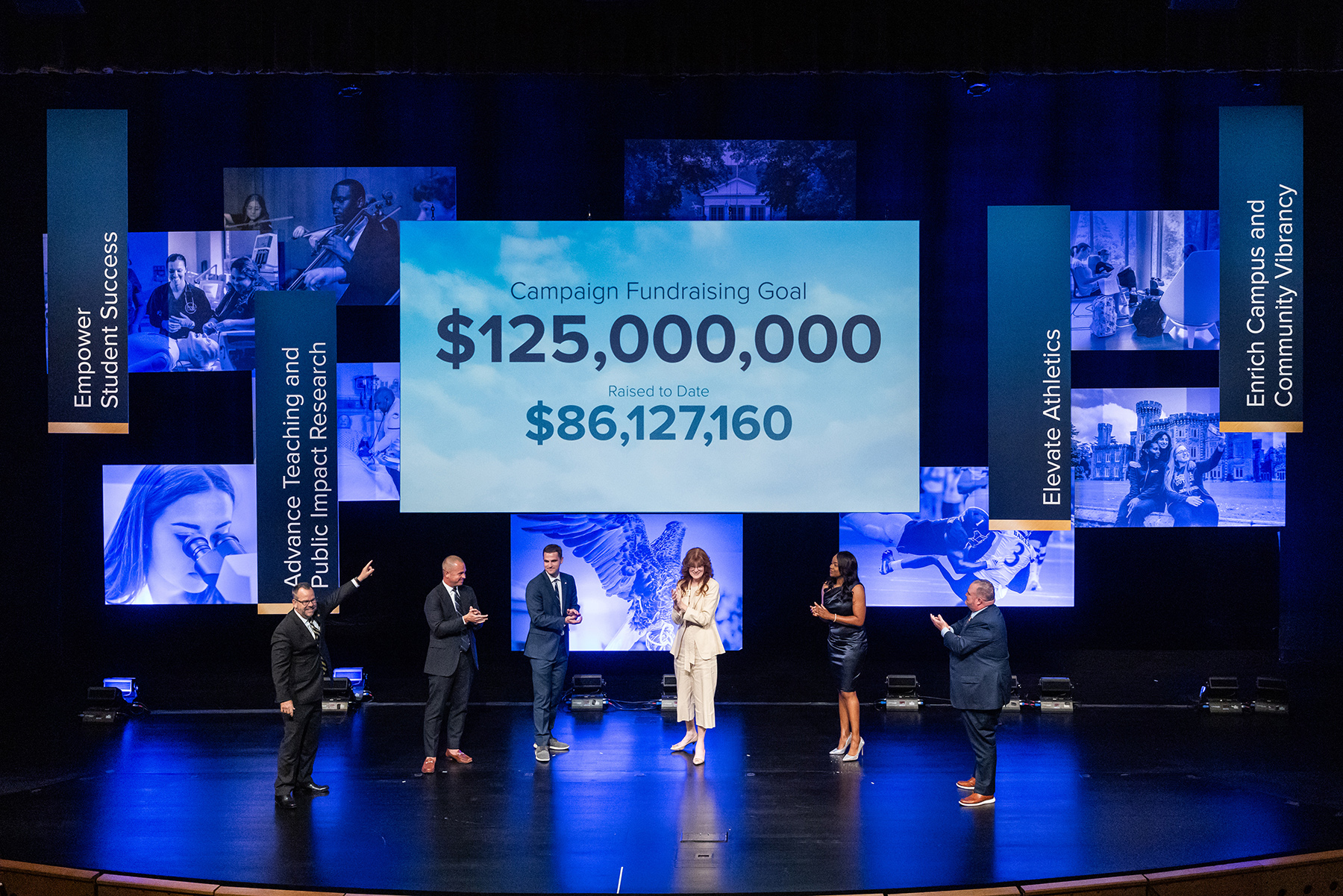
Georgia Southern University proudly announces the launch of its comprehensive campaign, “Together We Soar: The Campaign for Georgia Southern University.” This transformative initiative aims to elevate the University’s impact on students, faculty, research, athletics, and the communities it serves. Georgia Southern, renowned for its majestic campuses adorned with southern live oaks and towering pines, symbolizes not just American freedom but also the promise, achievement and boundless potential of its students. The University’s trajectory is on the rise, reaching for greater heights in education and community impact. Central to this momentum is the unwavering support from alumni, friends and the community. Publicly launched last Friday evening, Together We Soar: The Campaign for Georgia Southern University aims to raise $125 million by 2026. More than $86 million has already been secured. Dr. Kyle Marrero, President of Georgia Southern, expressed his gratitude and vision for the University. “Georgia Southern is on the move, in motion, and soaring to new heights. The ‘Together We Soar’ campaign—fueled by the generous support of our alumni, friends, and partners—will ensure our ability to drive innovation, develop talent, transform lives, and propel the economic development of a growing region.” (L-R) Georgia Southern President Kyle Marrero, Vice President for University Advancement Trip Addison, Deputy Athletics Director of Development Davis Hendrickson, Executive Director of Development Julie Gerbsch, Director of Alumni Relations Ava Edwards, and University Campaign Co-chair Leonard Bevill on stage at the Oct. 20 launch event for Together We Soar: The Campaign for Georgia Southern University. The campaign has identified four primary objectives: Empower Student Success: The campaign aims to stimulate learning by recruiting high-achieving students, increasing student access, and promoting inclusive excellence and career readiness. Advance Teaching and Public Impact Research: The focus is on meeting regional economic needs, increasing faculty expertise, and enhancing research capacity. Elevate Athletics: The campaign seeks to attract and retain elite student-athletes, provide top-notch facilities, and boost the Competitive Excellence Fund. Enrich Campuses and Community Vibrancy: The goal is to improve the communities surrounding the campuses and teach about local wildlife, among other initiatives. Campaign co-chairs Mike Sanders and Leonard Bevill shared their excitement for the campaign and what it will mean for Georgia Southern. “I could not be more excited about Georgia Southern and its possibilities. Opportunities abound for our University and the Together We Soar Campaign is the catalyst. It is time to do ‘more with more.’” - Mike Sanders “‘Together We Soar’ is spot on. From across campus to athletics and throughout our community, we’re perfectly aligned and equipped to launch to historic heights. I’m very blessed and excited to be involved.” Leonard Bevill The campaign also highlights the significant economic impact of Georgia Southern, with a regional economic contribution of $1.1 billion in fiscal year 2022. The University plays a critical role in the economic growth and transformation of Southeast Georgia. Marrero said Georgia Southern invites all its supporters, alumni and the community to join this transformative journey. With collective support, there’s no limit to how high Georgia Southern can soar. For more information or to contribute to the “Together We Soar” campaign, visit GeorgiaSouthern.edu/TogetherWeSoar.


Georgia Southern launches new merchandise line to benefit ‘Freedom’ and the Wildlife Center
“Freedom” merchandise is now available for purchase at Southern Exchange in Statesboro. Items will be available soon at the University Store on the University’s Armstrong and Statesboro campuses and in the gift shop at the Center for Wildlife Education located on the Statesboro Campus. Proceeds will benefit the Wildlife Center and Freedom’s care. Georgia Southern University is launching a new brand and merchandise line that will benefit and honor Freedom, the University’s live bald eagle mascot that flies before each home game in what many call the “most exciting 30 seconds in college football.” Unable to survive on his own because of an injury to his beak as a newborn, Freedom came to Georgia Southern in 2004 and now lives at the University’s Center for Wildlife Education in Statesboro alongside other eagles, raptors, reptiles and waterfowl. He will celebrate his 20th birthday this December. As an ambassador for Georgia Southern and symbol of our nation, Freedom has inspired thousands annually at the Center for Wildlife Education, Georgia Southern football games, the St. Patrick’s Day parade in Savannah, commencements, community events and other appearances, such as at the Charles Swab Classic PGA tour event earlier this year in Texas. To support Freedom and the Wildlife Center, University Communications and Marketing, Georgia Southern’s office of Athlete Brand Management and Licensing, the Wildlife Center and the university’s retail partners are collaborating to launch a new line of merchandise featuring Freedom. One shirt includes “Freedom’s Ride,” and depicts Freedom perched in the back of a 1977 International Scout often seen around town as it’s owned and driven by handler and Wildlife Center Executive Director Steve Hein. “Freedom belongs to Georgia Southern students, faculty, the Statesboro community and all those he encounters” Hein said. “It’s natural to want to express a unique relationship spanning 20 years and what better way to do this than by making his image available for people to wear and promote. I’m excited about this program, honored to be his plus-one, and greatly appreciate everyone’s support for Freedom, his care and his future.” The Freedom merchandise is designed to be both inspirational and stylish. Items are in development, but initial offerings could include: Hats T-Shirts Hoodies Posters Postcards Proceeds will benefit the Wildlife Center and Freedom’s care. Items will be available starting this week at Southern Exchange near the Georgia Southern campus in Statesboro and will be available soon at the University Store on the University’s Armstrong and Statesboro campuses and in the gift shop at the Wildlife Center located on the Statesboro Campus. Interested in learning more or looking to talk with Wildlife Center Executive Director Steve Hein? Simply click on his icon now or Contact Georgia Southern's Director of Communications Jennifer Wise at jwise@georgiasouthern.edu to arrange an interview today.

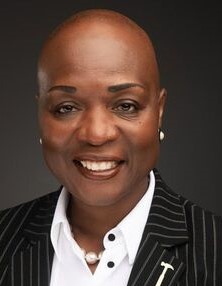
Georgia Southern University has been awarded a $1.6 million grant to help provide childcare subsidies for eligible student-parents over the next four years through the Child Care Access Means Parents In School (CCAMPIS) program. Written on behalf of the Office of Inclusive Excellence by Corine Ackerson-Jones, director of TRIO Student Support Services (SSS) on the Armstrong Campus in Savannah, the CCAMPIS grant will serve no less than 30 student-parents per year on the Armstrong Campus and the Liberty Campus in Hinesville by providing a maximum amount of $150 per week for childcare services to be paid directly to the childcare provider. Corine Ackerson-Jones The grant, a first of its kind at Georgia Southern, is fully funded by the Department of Education and will work with centers licensed and accredited through the Georgia Department of Early Care and Learning. To apply for CCAMPIS assistance student-parents must be PELL eligible. “According to recent data, the annual price of childcare can exceed the annual cost of in-state tuition at a public four-year university,” said Ackerson-Jones. “Without financial assistance, it is next to impossible for economically challenged student-parents to attend school and pay for quality, affordable childcare.” Amanda Brandmire, a student-parent studying natural resource and wildlife conservation on the Armstrong Campus, said balancing her role as a parent and a student can be challenging emotionally and financially, especially when it comes to childcare. “There have been several times where my husband and I had to get very creative with our funds to make it because of our childcare costs,” she said. “My husband and I may skip meals or go a week at a time without food because childcare is a necessity for us to work and go to school. In addition, I have to give up study time or time with my kids to go pickup a shift delivering for DoorDash just to get by. Right now we don’t have an income and we are a week behind on childcare expenses, but thankfully our daycare is working with us.” A subsidy for childcare would change the trajectory of Brandmire’s education. “For me this would be an amazing opportunity,” Brandmire said. “I am so close to finishing my undergraduate degree and plan on applying to grad school in March. Being a first-generation college student, my education is extremely important and this would help me make graduation a reality.” Brandmire feels this resource would appeal greatly to other student-parents in the greater Savannah area. “This is also a huge selling point for potential students and moms like me who want something better but can’t get over the childcare hurdle,” Brandmire said. “I appreciate Georgia Southern for taking the time to reach out and serve their non-traditional students.” Ackerson-Jones has worked on the Armstrong Campus for 17 years and assists low-income, first-generation students, and students with disabilities through the TRIO SSS program which is also funded 100% by the Department of Education. Through her role, she saw a need for student-parents like Brandmire and sought ways to make a difference in their educational journeys. “It has been evidenced in the data that the four-year graduation rate for Armstrong and Liberty campus PELL recipients falls below that of non-PELL recipients,” Ackerson-Jones said. “It has been my experience that a great number of these students are not graduating sooner due to financial hardship. They must work more hours, so oftentimes they cannot maintain a full course load. Taking less classes prolongs graduation. It was my goal to find some financial relief for these students because the threat of unaffordable childcare was a threat to them remaining in school. “There has never been a child care facility on either of these campuses nor has there been any access to financial support for student-parents to help pay for child care,” she continued. “The time seemed right to try to rectify this.” The objective of the program is that student-parents will persist from one academic year to the beginning of the next, or that they will earn a bachelor’s degree from Georgia Southern, Ackerson-Jones added. “I am excited about the addition of the CCAMPIS grant to the array of programs that serve underrepresented students, this one serving Pell-eligible students who are also parents, which complements our work in the Inclusive Excellence cluster,” said Dominique A. Quarles, Ph.D., associate vice president for Inclusive Excellence and chief diversity officer at Georgia Southern. “Mrs. Jones went beyond what’s required of her to respond to a need she saw on campus, which resulted in securing $1.6 million in grant funds to serve students in a way that will have a real and immediate impact on their ability to enroll and complete their degree at Georgia Southern.” The grant will be disbursed at $401,128.00 a year for four years for a total of $1,604,512. More information on student eligibility and the application process will be available soon. To learn more, contact the Office of Inclusive Excellence by emailing oie@georgiasouthern.edu. Interested in learning more or looking to talk with Corine Ackerson-Jones about this program? Contact Georgia Southern's Director of Communications Jennifer Wise at jwise@georgiasouthern.edu to arrange an interview today.
Celebrating 140 years of the Gretsch Company
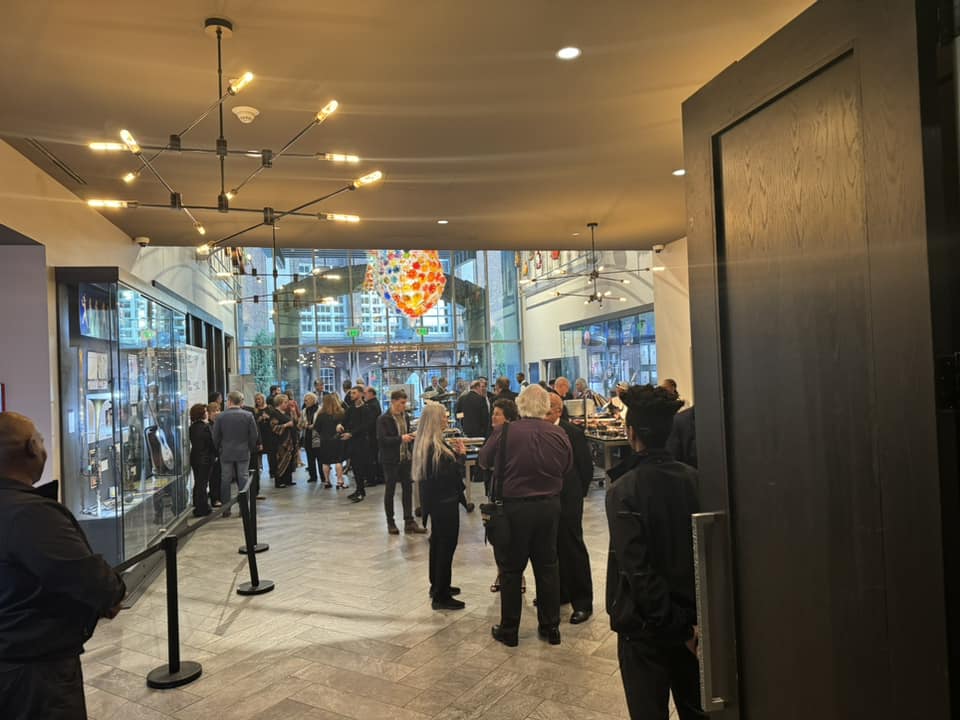
Georgia Southern University helped Fred and Dinah Gretsch – and a roomful of other supporters and musical friends – celebrate 140 years of the Gretsch musical instruments company and “that great Gretsch sound” at a recent anniversary celebration at Savannah’s Plant Riverside district. Benefitting the Georgia Music Foundation, the event was held in a space that is a living testament to the partnership between Georgia Southern and the Gretsches, whose name are on the University’s school of music. “That Great Gretsch Sound!” Museum is a spotlight destination in the heart of downtown Savannah that tells the rich history of the Gretsch family and company. The space celebrates Gretsch’s ever-growing worldwide musical community, honors the Gretsch family commitment to music education, and showcases hundreds of Gretsch’s most storied instruments. In addition to the instruments and artifacts on display in Savannah, Georgia Southern is working to build one of the most comprehensive digital document collections of music industry history, thanks to decades of resources collected by Fred and Dinah and donated to our University Libraries. Together, through innovative pathways, Gretsch and Georgia Southern are creating renewed interest in performance and music education amongst K-12 students throughout our region. And, this fall at Georgia Southern, the Fred and Dinah Gretsch School of Music saw a 25% increase in enrollment – with nearly 20% of the school’s students focused on our Music Industry program. “Fred and Dinah, we thank you for your tireless efforts to make Georgia Southern a more musical place,” Georgia Southern University President Kyle Marrero said. “Your guidance, resources, and imagination have helped us soar to new heights, and we look forward to our future together. “ The evening included performances by Georgia Southern Gretsch School of Music students, and Tony Arata, a member of the Nashville Songwriters Hall of Fame who grew up on Tybee Island and studied at Georgia Southern University. Interested in learning more about the Gretsch's involvement with Georgia Southern or the Gretsch School of Music? Contact Georgia Southern's Director of Communications Jennifer Wise at jwise@georgiasouthern.edu to arrange an interview today.

In a new study funded by the Institute of Education Sciences, University of Delaware Associate Research Professor Leigh McLean and her co-authors found a strong connection between teachers’ math and science anxiety and the respective math and science anxiety of their low socioeconomic status (SES) students. When a teacher was more anxious in these content areas, their low-SES students were also more anxious; and, when teachers were less anxious, so were their low-SES students. Teachers play a significant role in shaping students' experiences and attitudes towards learning. When teachers themselves exhibit anxiety or stress about specific subjects, it can inadvertently send signals to students that these subjects are difficult or intimidating. McLean can speak more broadly about this phenomenon and discuss the interesting pattern of associations that emerged from their analysis. She has been featured in multiple publications including The Associated Press and Education Week. Click the "View Profile" to connect with her.
