
Experts Matter. Find Yours.
Connect for media, speaking, professional opportunities & more.

Beyond the Media Pitch: How to Secure Better Coverage in Today’s Noisy Market
At our webinar earlier this month, we were joined by Wilf Dinnick, a communications and media professional with more than 25 years of global experience as a journalist working in national broadcast, digital and early-stage startups. Wilf has covered major stories for news networks including ABC News, CNN, CBC News and Al Jazeera and is a past winner of the prestigious Edward R. Murrow Award. This vast experience on both sides of the camera has given him a keen understanding of what it takes to secure media coverage in today’s environment. Here are 3 key takeaways you missed: #1 The Odds of your Media Pitch Resulting in Coverage are Disappointingly Low - And the Trend is Not Good Wilf Dinnick discussed the sobering stats from a study of over 400,000 pitches conducted by Propel media that reveal that only ⅓ of emails sent to journalists are opened. But equally disappointing is the fact that only 3% of pitches result in coverage and this trend appears to be continuing. What Dinnick went on to explain is that “journalists see many pitches as an interruption as most fail to clearly demonstrate relevance to the stories they want to publish for their audience. #2 Journalists are Busier than Ever. So You Need to Connect with Them In Places they are Going for Story Ideas and Expert Sources Dinnick also shared some important data that reveals how journalists are spending their time. Where they get their story ideas and how they search for experts. This helps explain the diminishing rate of return on traditional media pitches. For instance, Twitter remains dominant as a platform used by journalists to quickly discover trending stories. So making your story ideas more discoverable with appropriate hashtags on social is an important way to promote your experts in the flow of the conversation as a story is breaking or emerging. Wilf also highlighted the importance of dialling into the daily news cycle by looking in the same areas journalists are going for their ideas. The latest research reveals that journalists find newspapers and magazines most valuable. Why? Sites such as the Washington Post, CNN, BBC, New York Times and Axios are well funded and resourced to develop the longer format, well-researched stories. They often focus on exclusive stories and break important news that is echoed through other outlets. And they set the pace of the news cycle as it echos through regional news outlets where journalists look to localize the story for their audiences. Closely monitoring these sites allows you to be in touch with the key stories and offer clear value to journalists, by offering your experts who can help explain key developments in the context of their research or localize the story for a regional audience. #3 There are Ways to Beat the Odds and Improve your Media Coverage by Following Proven Best Practices When Pitching Despite the poor odds when pitching journalists, there is hope for media relations and PR pros. Dinnick unpacked a number of important best practices that can substantially improve your odds. Drawing on research from a number of media organizations that track journalist engagement, he laid out a number of guidelines that you should be following when putting together your media pitches. Some of these included: Timing Your Pitch Journalists are more receptive to pitches early in the day between the hours of 5am and 11am. This is when the stories are breaking and work is being assigned - and journalists are looking for expert sources. Also, there is evidence that pitching earlier in the week on a Monday or Tuesday yields better results. Keeping it Brief The research Dinnick presented on the profound changes that have been happening in Newsrooms and the overload that journalists are experiencing underscores the importance of being to the point with journalists. That begins with understanding how journalists are spending their day - glued to mobile devices. “This impacts how you need to write subject lines that generate curiosity and fit into mobile devices, given the limited set of characters they can display,” said Dinnick. He also shared stressed research that shows the body copy of a pitch should be under 200 words. Mind the Links Loading a journalist up with lots of links to research, videos, and media coverage in the body copy of your pitch may seem like a good idea to help them evaluative a story idea But this is a no-no. It creates unnecessary clutter and detracts from the key messages you want them to focus on. Instead, journalists report they want as few links as possible. Wilf Dinnick recommends 1-2 links max. It’s important to note that this will present a challenge if you don’t have your content organized into comprehensive expert profiles which include important information that journalists want to see such as past media and speaking appearances, research, publications, education/credentials, affiliations etc. There was a lot to take away from this session which was jam-packed with research and best practices for media relations and PR pros. However, perhaps the most important lesson was how to ”flip” the traditional approach to pitching 180 degrees - starting the pitch process by first developing “owned” content that gets published to your website. As Wilf Dinnick stated, “you have to think like a journalist” as you approach the story ideas you want to pitch. Start with owned content and publish stories that focus on your experts which clearly show them to be relevant and credible while making their work more engaging and human through visual media helps “set the table for the journalist.” If it’s well structured and engaging, it gives journalists the added context they need to immediately understand how your pitch is relatable to their audience. What’s most powerful about this approach is that it helps media relations and PR pros avoid the “earned media trap.” Instead of being overly focused on coverage, we can think more strategically about the value we bring to the organization as storytellers to create quality “owned” content that boosts search engine (SEO) authority and PageRank as well as site engagement with visitors to boost reputation, relationships and revenues. It was clear from the many examples shared by healthcare organizations, universities and associations that this approach is where the real gains can be made. And how media relations and PR pros can show more tangible value to their organizations. Stay tuned for more on this topic of owned content and how it helps improve your media coverage as we explore this in our next post. To see the entire webinar, make sure to sign up for BrightTalk to watch the full webinar here.



Covering SCOTUS? Our experts are ready to help with your stories
It's looking like the next couple weeks could be busy and monumental for any reporter covering the Supreme Court. Important decisions are coming down regarding abortion, environmental protections, gun laws and more. It will be a busy news week; if you are a reporter the time is now to line up your expert sources and key contacts. If you are a journalist covering the Supreme Court and how these decisions are impacting American life and politics, that’s where Augusta University can help. Dr. Martha Ginn, professor of political science at Augusta University, is an expert on the judicial process, constitutional law and the U.S. Supreme Court. Dr. Ginn is available to speak with media about this topic — simply click on her icon to arrange an interview today.

ChristianaCare’s Future of Health Scholarship Program Honors 10 HBCU-Bound Students
Unique opportunity pairs $500,000 in support with paid summer internships To strengthen and diversify the health care workforce for years to come, ChristianaCare has provided $500,000 in scholarships to 10 students in Delaware who plan to pursue degrees in health care. The financial support, through ChristianaCare’s Future of Health scholarship program, provides $12,500 in support annually per student, plus a paid internship each summer, for students to attend historically Black colleges and universities (HBCUs). “Partnering with the HBCU Week Foundation this year was an exciting new adventure for ChristianaCare, and one we knew we needed to be a part of, given our commitment to the community and to building our health care workforce of the future – in and of the community,” said Bettina Tweardy Riveros, J.D., chief health equity officer and senior vice president of Government Affairs and Community Engagement at ChristianaCare. “It is important for us to remove barriers that are impacting Delaware residents from being able to pursue higher education at historically Black colleges and universities. Being able to offer scholarships, internships and support to these students is another way that we know we are opening up the door to diversify the health care profession.” The scholarships represent an ongoing approach by ChristianaCare to improve health equity, community health and inclusivity and diversity. In 2020, ChristianaCare made a public commitment to being an anti-racism organization. For its efforts, ChristianaCare has been ranked one of the Best Employers for Diversity by Forbes magazine, as well as the No. 2 health care employer in the nation for diversity and inclusion and the No. 40 employer nationally overall. “If you want to know more about an organization, see where they invest their dollars,” said Pamela Ridgeway, chief diversity officer for ChristianaCare. “An investment of $500,000 for Delaware residents who choose to go to HBCUs says a lot. The fact that it comes with summer internships for every year and the expectation of employment at the end shows that we are an organization with a commitment.” “The HBCU Week Foundation is proud to partner with ChristianaCare to help support these future health care professionals by giving them the academic and networking experiences needed to excel in their intended career choices,” said Ashley Christopher, Esq., founder and chief executive officer of HBCU Week Foundation, and an alumna of both Howard University and the University of the District of Columbia David A. Clarke School of Law. “The medical field should reflect the communities it serves, and this partnership is one way to help make that happen.” Here are the students who earned scholarships through ChristianaCare’s Future of Health scholarship program, and the HBCUs they elected to attend: Aniyah Barnett, Hampton University. Brooke Brothers, Delaware State University. Solomon Devard, Lincoln University. Mychele Gibson, Howard University. Aa’khai Hollis, Bowie State University. Kianna Kelley, Delaware State University. Delaney Leonard, Howard University. Madison Perry, Jackson State University. Tania Paden, Delaware State University. Cierra Holmes, Delaware State University.



There's some important research taking place by an expert at Georgia Southern University - and the findings could result in serious and positive changes to nutrition for those living in rural, remote and under-served communities in Latina America and around the world. Ana Palacios, Ph.D., assistant professor in the Department of Public Policy and Community Health in the Jiann Ping Hsu College of Public Health, is working on a clinical trial with a community in Honduras to find out whether giving eggs to kids between the age of 6 to 24 months will help them in terms of growth, food security and dietary diversity. Her work was recently featured in Forbes Magazine. "My heart, of course is in Latin American populations, and I have a community-based trial in Honduras that is assessing the effectiveness of an egg intervention," she says, adding that this community-based participatory research project is covering about 600 young children from more than 30 rural under-served communities in the Honduras Highlands. "Some evidence has shown that eggs can improve linear growth in some populations of Latin America," she says, "We are passionate in that this will provide a replicable, inexpensive, scalable and sustainable alternative to improve young children's nutrition, dietary diversity, food insecurity, economic development and overall reduce disparities." Palacios hopes the study will provide a solution that can be used in a wide variety of contexts in under-served rural areas throughout Latin America and the Caribbean, and other regions around the globe. June 16 - Forbes It's a fascinating topic - and research that could truly be impactful on a global scale. The full article about Palacios' work is attached. If you are a journalist looking to know more about this research - then let us help. Palacios' research is focused on addressing disparities in access to nutrition, health, and education in under-served populations. She is available to speak with media - simply reach out to Georgia Southern Director of Communications Jennifer Wise at jwise@georgiasouthern.edu to arrange an interview today.


Looking for a 'real' expert to explain the latest advances in virtual reality? We're here to help!
Virtual reality is quickly becoming an actual necessity in all facets of technology, education, entertainment and the workplace. It's a popular topic, and Augusta University's Lynsey Steinberg sat down to answer a few questions about how far VR has come and where it's going. VR is changing everyday life for many. What are the biggest advances you've seen in VR use? Virtual reality is rapidly evolving and expanding. It wasn’t too long ago we were excited for the idea of a wireless head set. Now there are companies such as Virtuix creating 360-degree treadmills to interact with your experience in VR and Hypnos VR (a product which releases scents in the air based on the experience in VR). There have been advances of adaptive and stress response simulations based on pupillometry measurements or even integration of physiological sensors for behavioral research. The biggest advancements are solutions that have been unimaginable before that are now entirely possible. It seems the medical field has been a big benefactor of VR. Is this giving students a better way to "learn" about anatomy and other aspects of the field? I believe all experience is valuable to learning. VR is unique in allowing an individual to view as if from their own perspective for virtual experiential learning. We often hear the phrase, “If you could imagine walking a mile in someone else’s shoes,” and now we can provide perspective, allowing another person to view the world as someone with a particular disease or simulate training in a low-risk environment. One example, Fire in the OR, is a VR simulation allowing medical professionals to train safely on how to remove fire danger in the operating room. I believe simulations like these are remarkable examples of how valuable VR can be in education, to remove elements of danger in everyday life. Their research showed 250% improvement rate on fire safety in the OR. A huge industry leader in surgical simulations is Osso VR, creating surgical training procedures for surgeons and hiring some of our Augusta University medical illustration graduates. How is this being applied at Augusta University? The Center for Instructional Innovation created modules with the Medical College of Georgia on handwashing hygiene health and end-of-life care scenarios with the College of Nursing. We encourage faculty to develop multiple methods of interactive modules for the benefit of all learning styles. VR certainly provides engaging and enriching materials for a low-risk environment in instruction. The Center for Instructional Innovation is currently working with the Academic Student Success Center to implement Oculus Quest head sets for anatomy and physiology students to benefit from application use in VR. Augusta University student Henry Oh and his 3D printed pottery from VR sculpture. How else has VR and its use changed the way we go about our daily lives? VR head sets are known in robotics, manufacturing, therapeutic modalities, gaming capabilities, technology in research and education. Any scene you can film in 360 degrees you can now watch in a headset and be fully immersed in the scene (ie: a theater production, a museum tour, an art exhibit, a temple historically preserved, etc). We have gone from telling a story to being immersed in a story. We have been able to utilize VR technology integration and innovation on campus to create enriching learning experiences. We collaborated with our Ceramics department (with Brian McGrath and Raoul Pachecho) to support students in virtual clay sculpting with Adobe Medium. Students 3D printed their works of art after exporting the files from the VR simulation. Where do you see the future of VR? The future developments for integrating systems for haptic feedback will be remarkable integrations. The continued development of behavioral research and integration of gamification is an exciting opportunity in VR as well as the continued development for protocols and appropriate safety procedures. The cross-platform and cross-disciplinary possibilities will allow for creativity to blossom in new world solutions. It is clear, the ongoing need for technical workforce required to create and support more VR and other high-impact technology is rapidly growing. VR is a fascinating topic and if you're a journalist looking to know more by speaking with Steinberg, then let us help. Steinberg is one of the 300 board-certified medical illustrators with experience in hands-on surgery in the operating room, utilizing development in virtual reality, 3D printing, animation, gamification and graphic design while working directly with students, faculty and physicians. Steinberg is available to speak with media -- simply click on her icon now to arrange an interview today.

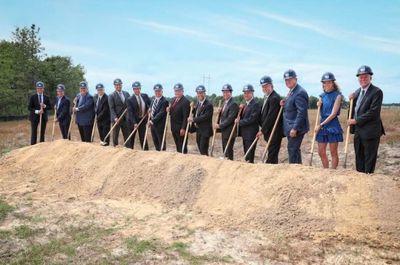
Dignitaries help University officials break ground on Jack and Ruth Ann Hill Convocation Center
State and local dignitaries help break ground on the new Jack and Ruth Ann Hill Convocation Center on Georgia Southern’s south campus in Statesboro. L-R: Georgia Southern Men’s Basketball Coach Brian Burg, Chair of the Georgia Southern Foundation Mike Sanders, University Foundation Board Member Leonard Bevill, University Provost Carl Reiber, Ph.D., Georgia Southern Athletics Director Jared Benko, Regent Everett Kennedy, Majority Leader Jon Burns, USG Chancellor Sonny Purdue, University President Kyle Marrero, Mr. Lance Hill, Congressman Buddy Carter, Chairman Terry England, Congressman Rick Allen, Student athlete Hannah Fuller, Waters College of Health Professions Dean Barry Joyner Ph.D. The opportunity to memorialize the late Sen. Jack Hill and wife Ruth Ann brought an impressive list of state and national leaders to Statesboro on Thursday to help break ground on a new Georgia Southern University Convocation Center that will bear their names. New University System of Georgia (USG) Chancellor Sonny Perdue, state legislators, congressmen and Georgia Southern University President Kyle Marrero – all of whom had worked extensively with Hill over the last several decades – headlined a team of speakers who lauded Hill and his impact on Georgia while helping to kick off a project that will change the face of Statesboro. “I’ve never known a more dedicated public servant than Jack Hill,” said Perdue, who shared an office with Hill and lived with him for a time while they both served in the Georgia Legislature. “It’s an honor to be here today to remember my best political friend in the world.” At 95,000 square feet, the Jack and Ruth Ann Hill Convocation Center will be the largest event venue space between Savannah and Macon and will serve as the signature building on Georgia Southern’s south campus, fronting Veterans Memorial Parkway (US 301 bypass). With an estimated total cost of $64.4 million, the center will be a multi-story complex that provides approximately 7,000 square feet of additional instructional space for the Waters College of Health Professions and provides more than a 50% increase in seating capacity in an arena that will be the new home court for Georgia Southern Eagles NCAA basketball games. The building is named for Jack Hill (‘66), who was the longest-serving Georgia senator when he died in April 2020. He was a senator for 30 years, serving as chairman of several crucial committees, including Appropriations, which has broad jurisdiction over legislation involving budgeting and spending state and federal funds. With Hill’s support, Georgia Southern reached new heights as an institution serving the southeast region and the state of Georgia. Hill was instrumental in helping the University expand its programs and build several new state-of-the-art facilities, including the Engineering and Research Building, which opened for classes in January 2021. His wife of 48 years, Ruth Ann, focused her life on public education and retired as principal of Reidsville Elementary School. She was a triple Eagle, earning degrees from Georgia Southern in 1973, 1990 and 1991. The media release announcing this historic event is attached here: If you're a journalist looking to know ore about this event or Georgia Southern University - simply reach out to Georgia Southern Director of Communications Jennifer Wise at jwise@georgiasouthern.edu to arrange an interview today.

Faculty from Georgia Southern University’s Jiann-Ping Hsu College of Public Health (JPHCOPH) have secured a federal grant totaling more than $1.8 million from the U.S. Department of Health and Human Services to promote inclusive excellence in health informatics and health equity. With the goal of empowering minority students through education, JPHCOPH’s Professor and Department Chair Gulzar Shah, Ph.D., as principal investigator, and Associate Dean for Academic Affairs Nandi Marshall, DrPH, as co-investigator, received the grant as part of the $7.98 million award for the TRIUMPH (Training in Informatics for Underrepresented Minorities in Public Health) consortium, which included three other universities and four public health organizations. “This initiative will help our college foster collaborations and community engagement involving influential public health agencies, academic institutions, community organizations and public health agencies,” stated Shah. “It will assist with paid practical experience for students and the practicum sites, and better prospects of job placements for the graduates. The grant will also involve health informatics capacity-building in the current public health workforce in Georgia.” In addition, the grant will help facilitate a new fully online concentration in public health informatics within the University’s existing Master of Public Health (MPH) program. This concentration will feature new courses focused on health information systems, data analytics and public health data visualization for evidenced-based practice. The courses will also be available as elective options for students in the Doctor of Public Health program. As well, the award also provides several graduate assistant opportunities to support students enrolled in the new MPH concentration. If you're a reporter looking to know more about this important topic - then let us help with your coverage and stories. JPHCOPH’s Professor and Department Chair Gulzar Shah, Ph.D, is available to answer your questions - simply reach out to Georgia Southern Director of Communications Jennifer Wise at jwise@georgiasouthern.edu to arrange an interview today.

Up to four scholarships are being offered to students who have sought refuge in the UK The donor, Matthew Crummack, is CEO of Domestic & General, former CEO of GoCompare and lastminute.com and an alumnus of Aston University The Scholarships are named after the donor’s grandfather, Ernest Edward, who left school at 12 to work in a coal mine. Aston University is launching a new sanctuary scholarship scheme for students who have sought refuge in the UK. Up to four sanctuary scholarships are on offer, due to a generous donation by prominent businessperson Matthew Crummack, currently chief executive of Domestic & General. They will be known as The Ernest Edward Scholarships in memory of the donor’s grandfather, Ernest Edward Crummack, who left school aged 12 to work in a coal mine. Matthew graduated with a BSc in International Business and French at Aston University in 1993. His career to date has taken him into well-known companies such as GoCompare, lastminute.com, Expedia, Nestlé and Procter & Gamble. He was awarded an honorary doctorate by Aston University in 2016, in recognition of his professional achievements and service to the University. Ernest Edward Scholars will receive a full tuition fee waiver and up to £25,000 throughout their course to help with living costs. Language assistance will also be offered if required, as well as support from Aston University Students’ Union and professional mentoring support. To be eligible for an Ernest Edward Scholarship, applicants must be an asylum seeker, the partner or dependant of an asylum seeker or an asylum seeker/refugee/partner/dependant who has been granted Discretionary Leave to Remain (DLR) or some other form of temporary status. Applicants need to apply for an eligible Aston University course - any three-year undergraduate or one-year postgraduate programme - before applying for a scholarship. Applications will close on 12 June for the 2022 round. Speaking about his motivation for funding the scholarships, Matthew said: “My grandfather, whom I sadly never met, had little choice but to leave school at 12 to work in a coal mine. “100 years on, so many young people and especially young refugees, still find themselves challenged to grow and fulfil their potential. I hope that these scholarships will create that opportunity and pave the way for some of tomorrow’s leaders. “I strongly value my Aston University education and believe that business and individuals can take a leadership role in giving back to those facing challenge.” Saskia Loer Hansen, Interim Vice-Chancellor of Aston University, said: “Young people seeking asylum in the UK are likely to have experienced trauma and will have lost much which cannot be replaced. The Ernest Edward Scholarship can contribute to a brighter future, made possible by education. It offers hope and an opportunity for respite. “On behalf of Aston University, I would like to express my deep gratitude to Matthew for his generous and compassionate support in helping to make Aston University a safe haven. It is an act of kindness which will have a profound effect on those young lives.” More information about The Ernest Edward Scholarships is available here.

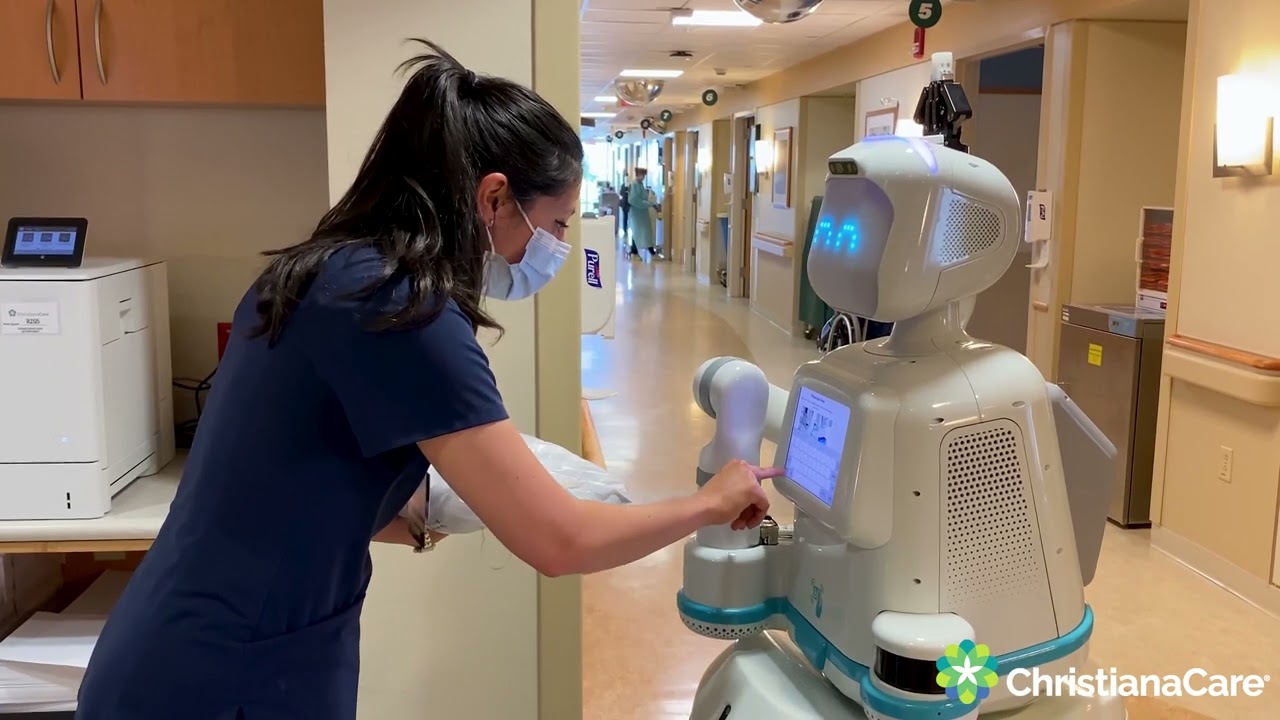
ChristianaCare is the first health system in the Philadelphia region piloting an innovative tool called Moxi, a collaborative robot — or “cobot”— that can assist in the hospital by making deliveries and performing other non-clinical tasks so that nurses and other clinical staff can spend more time focused on what they do best—caring for patients. With a landmark $1.5 million grant from the American Nurses Foundation, ChristianaCare will deploy a total of five Moxi cobots at Christiana Hospital. It is the largest single grant in the history of Nursing at ChristianaCare. Research published in the Journal of Nursing Management shows that nurses spend a significant amount of time — up to 33% of their shifts — on time-consuming but simple tasks such as dropping off lab specimens, collecting supplies or picking up medications from the pharmacy. By taking over these time-consuming but simple tasks, Moxi enables nurses to focus on patient care, where their skills are most needed. “Nurses need the time and space to deliver care and patient education at the top of their license,” said Ric Cuming, Ed.D., MSN, RN, NEA-BC, FAAN, chief nurse executive and president, ChristianaCare HomeHealth. “Moxi will be doing those hunting and gathering tasks such as getting equipment and supplies, which nurses are doing today but don’t need to be doing.” Cobots are designed to share workspace and interact directly with people. In ChristianaCare’s initiative, the Moxi cobots will be integrated with the Cerner Corporation electronic health record (EHR) platform and use artificial intelligence to proactively identify when nurses will need equipment, supplies, medications and lab tests. The Moxi cobots will be deployed to 11 inpatient units, partnering with more than 400 nurses. The American Nurses Foundation grant will enable ChristianaCare to evaluate the impact of cobots on nursing practice with the goal of scaling the technology if successful. “Moxi is not a replacement for a nurse or nursing position — or any position,” Cuming said. “It is an additional resource for nurses and their teams. “With robotic technology, we are using resources wisely and effectively, creating more efficient workflows, reducing repetitive tasks and freeing up nurses’ time for the complex clinical work that they excel at doing.” Reimagining Nursing ChristianaCare is one of 10 grant recipients from the American Nurses Foundation Reimagining Nursing (RN) Initiative. “We are proud that the American Nurses Foundation has the confidence in bold nurse-led ideas that will lead to large-scale, replicable change,” said Katherine Collard, MS, RN-BC, chief nursing informatics officer at ChristianaCare. “This grant will support nurses at ChristianaCare and our nursing colleagues across the nation in realizing their full potential, giving them the tools, resources and power to improve health care now and in the future.” With the American Nurses Foundation grant, ChristianaCare will conduct research on driving nursing outcomes through robotics. “We have a transformative opportunity to generate new knowledge and to move the science forward around robotics in nursing and in health care,” said Susan Birkhoff, Ph.D., RN, nurse scientist at ChristianaCare. “Through research, we will study Moxi’s impact to nursing caregivers that will have broad implications for nursing practice, workforce and education,” she said. ChristianaCare began exploring the potential of robotics to support Nursing with two Moxi cobots acquired in February, funded through the generosity of donors including Good Samaritan, Inc. and E.J. “Woody” Rice. With the grant, said Birkhoff, ChristianaCare will take Moxi to the next “bold frontier,” adding three more cobots with the goal of automating and optimizing nurses’ workflow without interrupting care. With five total cobots, ChristianaCare will be home to the largest number of Moxi robots in health care. The Little Bot That Can Before Moxi can become fully part of the care team, it must learn to navigate the hospital and respond to the nurses’ needs. Using artificial intelligence, Moxi is mapping out Christiana Hospital through sensors and other machine-learning technology so that the cobots can ultimately navigate and work autonomously. “When the Moxi cobots are fully integrated, we anticipate that they will complete up to 200 delivery tasks a day,” Collard said. “By making point-to-point deliveries, Moxi can save nurses hours of time and thousands of steps.” Designed to be compatible with the busy environments of hospitals, Moxi’s features include: Social intelligence: Moxi won’t bump into people or objects in hallways, waves when it sees someone new and happily poses for selfies. Mobile manipulation: Moxi can learn to use its robotic arm to operate existing automatic doors and elevator panels. Human-guided learning: The more Moxi is used, the more Moxi learns and adapts to the environment and specific ways of doing things. Friendly and safe design: With heart-shaped eyes and a friendly appearance, Moxi is designed to navigate safely and get the job done so nurses can focus on patient care. “What Moxi is doing in health systems like ChristianaCare is really transforming the way we think about health care and allowing staff to focus on the people in the hospital as opposed to the tasks,” said Dr. Andrea Thomaz, CEO and co-founder of Diligent Robotics, which created Moxi. “Robots are not something way in the future. Our robots work side-by-side with humans to ease the stress and workload of one of the most demanding jobs in society, nursing. The partnership between Diligent and ChristianaCare shows that the future is now.” Hospital Helper Directly from the Cerner EHR, Moxi will be able to anticipate clinician and patient needs and perform tasks without human involvement. Examples could include: Delivering items to patients based on nurses’ order requests. Making rounds across units to deliver lab samples on collections completed in the electronic health record. Making just-in-time deliveries of pharmaceuticals not stocked on the floor. Prioritizing tasks based on the nursing workload in a unit, so that the busiest nurses will get help first. “Connecting Moxi to the existing technology that clinicians use on a daily basis is key to making it easier to anticipate needs so clinicians can spend more time on patient care,” says Eva Karp, DHA, MBA, RN-BC, senior vice president, chief clinical and patient safety, Cerner. “Moxi could make a real difference in a nurse’s day — alleviating burnout and staffing shortages, which have become especially prevalent since the pandemic.” Incorporating the electronic health record into Moxi is part of the study funded by the American Nurses Foundation. “It’s absolutely in the best interest of our patients that Moxi can work alongside nurses so we can spend more time working directly with our patients to do what we do best,” said Pam Owen, MSN, RN-BC, nurse manager on 7E, one of the pilot units. “And Moxi brings a smile to people’s faces.” Fast Facts About Moxi Works in 22-hour shifts. Needs only two hours of charging time. Weighs about 300 pounds. Can carry a total weight of 70 pounds. Gender-neutral. Pronouns are “it” for a single Moxi cobot and “they” for more than one. Named one of America’s Greatest Disruptors in 2021 by Newsweek and one of the Best Inventions of 2019 by Time Magazine. About ChristianaCare Headquartered in Wilmington, Delaware, ChristianaCare is one of the country’s most dynamic health care organizations, centered on improving health outcomes, making high-quality care more accessible and lowering health care costs. ChristianaCare includes an extensive network of primary care and outpatient services, home health care, urgent care centers, three hospitals (1,299 beds), a freestanding emergency department, a Level I trauma center and a Level III neonatal intensive care unit, a comprehensive stroke center and regional centers of excellence in heart and vascular care, cancer care and women’s health. It also includes the pioneering Gene Editing Institute. ChristianaCare is nationally recognized as a great place to work, rated by Forbes as the 2nd best health system for diversity and inclusion, and the 29th best health system to work for in the United States, and by IDG Computerworld as one of the nation’s Best Places to Work in IT. ChristianaCare is rated by Healthgrades as one of America’s 50 Best Hospitals and continually ranked among the nation’s best by U.S. News & World Report, Newsweek and other national quality ratings. ChristianaCare is a nonprofit teaching health system with more than 260 residents and fellows. With its groundbreaking Center for Virtual Health and a focus on population health and value-based care, ChristianaCare is shaping the future of health care.


Studying glaciers . . . from Florida
By Emma Richards On the surface, the University of Florida seems an unlikely place to find cutting-edge research on ice sheets. But Emma “Mickey” MacKie says this is the perfect place for her work — thanks in large part to HiPerGator, one of the fastest supercomputers in higher education. MacKie, an assistant professor of geological sciences and glaciologist, joined UF in August 2021 and said her decision hinged largely on access to HiPerGator and the university’s focus on machine learning and artificial intelligence technologies. MacKie uses machine learning methods to study subsurface conditions of glaciers in polar regions and access to a powerful supercomputer is crucial given the large data sets her research generates. “I'm very happy to be in a place with lots of people who are working on different types of problems and are interested in developing these different tools,” MacKie said. “There are a number of members of my department in geology who are studying glacial geology through different lenses. And so, there's all of this complementary geological and machine learning knowledge at UF that I'm very excited to bring together.” MacKie has set up the Gator Glaciology Lab, where she and a team of seven undergraduate students from the fields of geology, computer science, physics, math and data science are using AI to analyze what lies beneath glaciers and how they are moving and melting. “Our work is part of a bigger effort in the glaciology community to start working on quantifying our uncertainty in future sea-level rise projections so that we can give policy makers this information.” It’s a very difficult challenge, MacKie said, because of limited access to polar regions and the miles-thick ice covering the ground. Then there is the scale of ice sheets; Antarctica, for example, is the size of U.S. and Mexico combined. Measurements of the topography below such glaciers are gathered using radars mounted on airplanes to “see” through ice. Her team then uses HiPerGator to simulate realistic looking topography in places where there are gaps or blank spots in the measurements. They generate hundreds of maps to represent different possible ice sheet conditions, which could be used to determine numerous possible sea level rise scenarios. “Our work is part of a bigger effort in the glaciology community to start working on quantifying our uncertainty in future sea-level rise projections so that we can give policy makers this information,” she said. Earlier this spring, MacKie swapped out her flip-flops for snow boots to study subsurface glacial conditions in Svalbard, which is next to northeastern Greenland. Visiting Svalbard will help her test and develop data collection and analysis techniques that could be applied to Antarctica or Greenland, which both contain large ice sheets that could have serious environmental impacts if they experience significant melting. In Svalbard, MacKie and Norwegian researchers from the University of Bergen and the University Centre in Svalbard took seismic and radar measurements of glaciers that will be used to make estimates about conditions beneath the ice. Among glaciers of concern is the Thwaites “Doomsday Glacier,” which is losing the most ice of any glacier in Antarctica. There are signs showing Thwaites’ ice shelf could start to break in the next few years. MacKie said it will likely be a few hundred years before the glacier could undergo significant collapse and jeopardize the West Antarctica Ice Sheet, leading to several meters of sea level rise. The effects of Thwaites and other ice sheet melts in Antarctica and Greenland will become apparent in decades to come, with the potential for a meter of sea level rise by the end of the century, which MacKie and other researchers hope to predict more accurately. “The state of Florida has the most to lose when sea level rises,” she said in an episode of the From Florida podcast. “And so, I think we have a lot of skin in the game and it’s really important to be studying this question here in Florida.” To hear more about MacKie’s work, listen to From Florida at this link.

