
Experts Matter. Find Yours.
Connect for media, speaking, professional opportunities & more.

Aston University professor made deputy lieutenant for the West Midlands
Professor Monder Ram has been recognised for his work around ethnic minority entrepreneurship Six individuals have been given the honour for contributing significantly to either national life, to their local communities – or both He will support the Lord-Lieutenant in several ways including attending on Royalty during official visits to the County. The Lord-Lieutenant of the West Midlands, John Crabtree OBE, has announced the appointment of an Aston University professor as a deputy lieutenant for the West Midlands. Six individuals, whose backgrounds range from music to education, entrepreneurship, and tackling homelessness, have been given the honour for contributing significantly to either national life, to their local communities – or both. Professor Monder Ram, director of the Centre for Research in Ethnic Minority Entrepreneurship (CREME) at Aston University, has been recognised for his work around ethnic minority entrepreneurship. The new appointees will support the Lord-Lieutenant, Her Majesty’s personal representative in the West Midlands, in several ways including attending on Royalty during official visits to the County, representation at citizenship ceremonies, supporting the armed forces of the Crown particularly the reserve and cadet forces, encouraging charitable and voluntary work and local initiatives to benefit the community, as well as promoting and encouraging nominations for Honours and Queen’s Awards for the County of the West Midlands. Professor Monder Ram, director of the Centre for Research in Ethnic Minority Entrepreneurship (CREME) at Aston University, said: “I am delighted and honoured to be appointed a Deputy Lieutenant for the West Midlands region. This role will provide an invaluable opportunity for me promote the importance of diversity, inclusion and enterprise, which are central to my work at CREME.” The West Midlands Lieutenancy comprises Birmingham, Coventry, Dudley, Sandwell, Solihull, Walsall and Wolverhampton. It was established in 1974. John Crabtree OBE, the Lord-Lieutenant for the West Midlands and Aston University honorary graduate, said: “The six appointments came at a pivotal time for the West Midlands which this year is on the national and world stage with Coventry as UK City of Culture and the region hosting the Commonwealth Games in July and August - as well as participating fully in the Queen’s Platinum Jubilee. The West Midlands is this year welcoming visitors from throughout the world and the West Midlands Lieutenancy is committed to supporting and representing every community in the County.”



Questions about colon cancer? Our experts are here to help with your coverage
Every year, National Colorectal (colon) Cancer Awareness Month is observed during the month of March in an effort to raise awareness of the importance for colon cancer screenings. The recognition offers health care providers the opportunity to educate the general public about a disease that can be preventable, but can sometimes be seen as difficult for patients to discuss with their doctors. In the spirit of education, one of Augusta University’s experts has provided some insight into the subject of colon cancer. Dr. Asha Nayak-Kapoor is an associate professor of medicine in the Division of Hematology/Oncology in the Department of Medicine at the Medical College of Georgia at Augusta University. Nayak is certified by the American Board of Internal Medicine in Hematology and Oncology Specialties. Q: What are the primary risk factors for colon cancer? “Risk factors for colon cancer include: being overweight or obese, not being physically active, certain types of diets, smoking, alcohol use, being older, a personal history of colorectal polyps or colorectal cancer, a personal history of inflammatory bowel disease, a family history of colorectal cancer or adenomatous polyps, having an inherited syndrome. Common symptoms of colorectal cancer include: bloody stool or rectal bleeding, an ongoing change in bowel habits (diarrhea, constipation, chance in stool consistency), abdominal pain or cramping, gas or persistent abdominal discomfort, you feel like your bowels are not voiding completely, weakness, fatigue, or unexplained weight loss.” Q: How can a person protect themselves from the risks of colon cancer? “Colon cancer is largely preventable if patients undergo screening tests, like a surveillance colonoscopy starting at 45 years or earlier depending on family history. Many lifestyle-related factors have been linked to colorectal cancer. In fact, the links between diet, weight, and exercise and colorectal cancer risk are some of the strongest for any type of cancer. Getting to and staying at a healthy weight may help lower your risk. A diet that's high in red meats (such as beef, pork, lamb, or liver) and processed meats (like hot dogs and some luncheon meats) raises your colorectal cancer risk. Cooking meats at very high temperatures (frying, broiling, or grilling) creates chemicals that might raise your cancer risk. It’s not clear how much this might increase your colorectal cancer risk. Stop smoking. It is best not to drink alcohol. People with a history of colorectal cancer in a first-degree relative (parent, sibling, or child) are at increased risk. The risk is even higher if that relative was diagnosed with cancer when they were younger than 50, or if more than one first-degree relative is affected.” Q: It sometimes seems that colon cancer prevention is aimed more towards men compared to women, but cancer.org lists the risks at 1 in 23 (4.3%) for men and 1 in 25 (4.0%) for women. Is there a reason why perhaps a stigma about colon cancer affecting men more has been created? “According to focus group studies, it can be seen as a taboo topic that is uncomfortable to discuss, and it is not discussed as openly in public as prostate and breast cancer screenings. It can seem embarrassing or humiliating, and can be seen as distasteful dealing with prolonged bowel preparation.” Nayak is a member of several committees, including Onyx and Bayer Speaker Bureau for Nexavar, MCG Cancer Center Molecular Oncology Programme, and MCG Cancer Center Gastrointestinal Tumor Board Committee. If you are a journalist looking to know more about colorectal cancer and would like to speak with an expert for your stories, then let us help. Nayak is available to speak with media about this important subject. Simply click on her icon now to arrange an interview today.


Earlier this month, Georgia Southern University's Regina Rahimi, Ed.D., chatted with a journalist from Insight into Diversity to discuss the importance of trauma-informed education and how it is becoming a popular treatment for those dealing with the stress of COVID 19 and other sources of anxiety. "In recent years, a growing number of schools of education have begun focusing on trauma-informed teaching practices to help educators holistically address negative academic and social outcomes for students. Now, amid the COVID-19 pandemic, widespread racial injustice, and a host of other major stressors for U.S. youth, these concepts have become more popular, and important, than ever. “When the pandemic came, people really became concerned and interested in new traumas that were [affecting] students,” explains Regina Rahimi, Ed.D, a professor of education at Georgia Southern University. “Not only were students isolated, but if they were in an abusive household or they lived in a community where violence was prevalent, these things all became more pervasive in their lives, so that trauma was just further exacerbated.” March 16 - Insight into Diversity The full article is attached below. If you are a journalist looking to know more about trauma-informed education then let us help with your stories. Regina Rahimi is a professor in the Department of Middle Grades and Secondary Education at Georgia Southern University where her research is focused on issues of gender and sexuality in education and middle and high school drop-outs. She is available to speak with media about this important topic - simply click on her icon now to arrange an interview today.


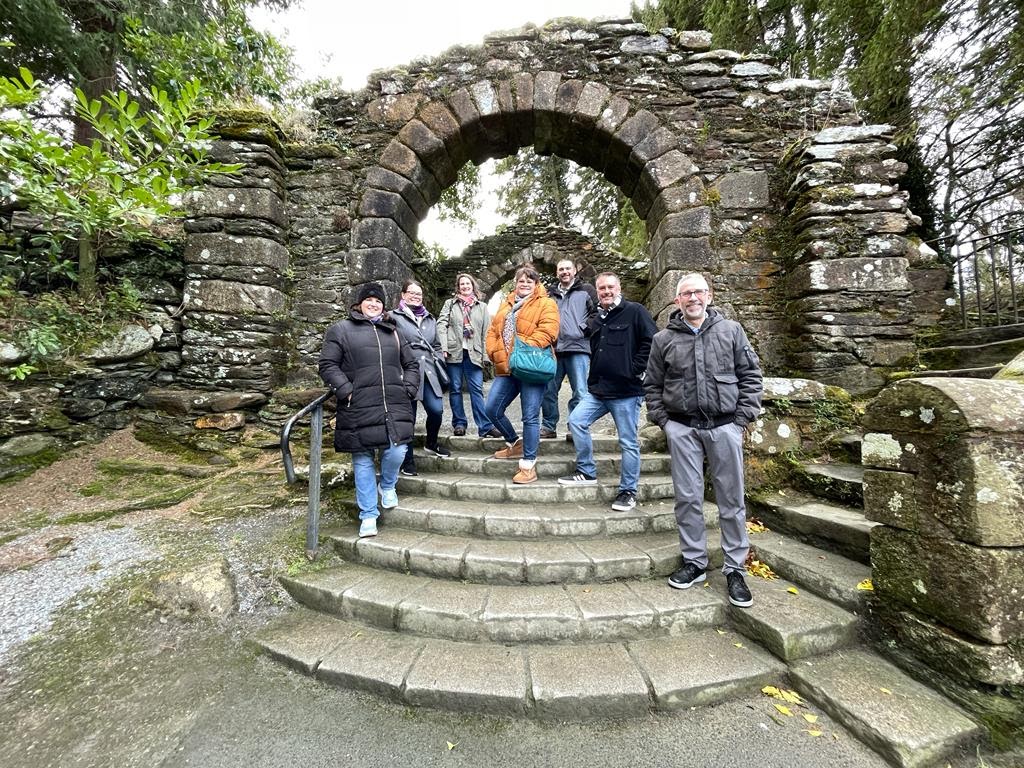
$100K student scholarship pool available for 2022 summer courses in Ireland Six professors from Georgia Southern University’s College of Education (COE) recently broadened their horizons during a trip to Ireland as they learned from and shared insight with instructors and educational leaders in the Wexford County community. Led by Howard Keeley, Ph.D., director of the University’s Center for Irish Research and Teaching, COE faculty traveled to Georgia Southern’s learning center in Wexford, Ireland, to observe Irish educational settings and exchange ideas with local leaders just ahead of a summer study abroad program opportunity for Georgia Southern students in which $100,000 of scholarship funding is available. “The main thing we did was get in front of leaders in the education space in Ireland,” stated Keeley. “We spoke to a number of folks who are either principals or vice principals or, in some way, senior administrators in a variety of schools including all-boys, all-girls, religious, secular and mixed schools.” The group included Catherine Howerter, Ph.D., associate professor of elementary and special education; Kip Sorgen, Ph.D., assistant professor of leadership, technology and human development; Alex Reyes, Ph.D., assistant professor of middle grades and secondary education; Amanda Wall, Ph.D., associate professor of middle grades and secondary education; Betsy Barrow, Ed.D., assistant professor of middle grades and secondary education; and Dan Calhoun, Ph.D., professor of leadership, technology and human development. Reyes, who trains pre-service and in-service teachers to work with culturally and linguistically diverse students, was excited to travel to Wexford after a study abroad program in Czech Republic she spearheaded with Wall was canceled in March 2020 due to the pandemic. Intrigued by Ireland, a plurilingual country, she was curious to see how Wexford’s environment might benefit students culturally. “I thought it was really exciting,” said Reyes. “All of the street signs are in Irish, even though English is the main language spoken. That prioritizing of that cultural heritage is fascinating. It was great to learn that the students in their primary and secondary schools take Irish language and culture as a subject every year.” She was especially motivated by a field trip to an Irish-language school, Meanscoil Gharman, which serves middle and high school students. With the exception of one daily class in English, teachers and students conducted all lessons in Irish. “It was really interesting to see that perspective,” she said. “There has been a revitalization of that culture. I thought that was fascinating to see how that can be handled in school.” In addition, Reyes was duly impressed with the country’s prioritization of social and emotional literacy for children, and the mandated well-being hours that are incorporated into daily school routines as a result of the pandemic. A program that promotes hygiene and an anti-bullying campaign also fit into the wellness curriculum. “It really impressed me that as a nation they prioritize the wellness of students, and how language and cultures can really be supported in a meaningful way,” Reyes said. “It’s affirming to see a proactive approach that has positive outcomes. Now, thinking ahead, we can look at how we can create opportunities for our students to experience this kind of approach.” Sorgen, who teaches in the educational leadership program at Georgia Southern, was interested in Ireland’s professional preparation. “None of them had advanced degrees, like what we offer at Georgia Southern,” noted Sorgen. “Learning about how to be a principal in Ireland is on-the-job training. In Georgia, there are specific educational requirements for our school administrators guided by professional standards. In Ireland, they generally ascend through the ranks, which makes professional mentoring essential to their success. We are exploring ways our educational leadership students could learn from Irish administrators about their experience, specifically with mentoring.” He also foresees the international partnership as a two-way exchange. “Given educational leadership programs are not common in Ireland, our faculty are considering ways in which we could use our expertise to foster leadership development of principals and teachers in Wexford,” said Sorgen. “We would utilize the Georgia Southern Wexford campus to host some of these sessions, furthering Georgia Southern’s relationship within the Wexford community.” Keeley also arranged meetings with education policy makers, including an extended meeting with an Irish congressman who is a representative for the County of Wexford in the Irish national parliament and chairs the joint committee for the Irish equivalent of the House and Senate Committee on education and higher education. “That was a tremendous opportunity for our faculty to talk to somebody at the highest level of government in Ireland, creating Irish state policy on education,” said Keeley. “And I know from the feedback we got from our College of Education colleagues that particularly for those in higher education, that to them was a really useful, next-step experience.” The trip exceeded expectations. “It was a fantastic learning experience for everyone,” said Keeley. “We had lots of high-level and also very practical experiences, and I could see our College of Education team thinking, ‘How can I bring what I’m learning, what I’m experiencing in this moment, into my classroom, into my curriculum, into my prospective study abroad courses in a way to build student success for our Georgia Southern folks.’ I think it was a great visit.” Complementing the faculty’s trip, a COE Irish study abroad program on diverse education in Ireland was recently approved for Summer 2022 and will give education students the opportunity to take one or two courses with the study abroad component. This will be a part of a broader study abroad program in Wexford, presented by the Honors College and the Center for Irish Research and Teaching, with assistance from the Office of the Provost and the Office of Global Engagement. The costs for undergraduate students at Georgia Southern’s Wexford campus will be offset by a $100,000 scholarship fund with awards of $1,000 for each student accepted into the program. “For students traveling to Wexford, Ireland, this summer, we will be able to defray the cost of the program through a generous travel scholarship through the Georgia Southern University Foundation,” said Dustin Anderson, Ph.D., associate provost for Student Success. “The donation makes these the most affordable multi-week programs that we ever have been able to offer.” Keeley is thrilled the gifts from generous donors will enable a number of students to earn valuable global experiences. “For students to have an opportunity to have international lives is powerful, and it’s powerful in ways that sometimes we can’t even predict,” he said. “Just the very fact of being abroad is going to change any of us, right? It can have a really transformative effect to feel a sense that, you know, as a student, ‘I can do this,’ and then a sense after the fact, ‘I did this,’ and just that in itself is educational. Giving students a safe space in Wexford, Ireland, to grow and feel that they are in a sense global citizens and bring the best of America, bring the best of Georgia, bring the best of the states from Savannah to Ireland, and learn to be an ambassador. That’s wonderful.” In addition to the education courses, students will also be able to choose from a Wexford-Savannah honors inquiry and an interdisciplinary program open to all students on human migration with courses in geography, religious studies, public health and a CORE study abroad course. Students interested can learn more about the program by clicking here and can email Kristin Karam in the Office of Global Engagement for more information about the scholarships. Georgia Southern University-Wexford is a global hub for learning housed in a historic building constructed in 1812. The space now features state-of-the-art classrooms and student apartments. Georgia Southern is the first public university in the United States to open an outreach learning facility in Ireland. If you're a reporter looking to know more about this initiative, then let our experts help. Howard Keeley, Ph.D., is the director of the Center for Irish Research and Teaching at Georgia Southern University. He is available - simply click on his icon now to arrange an interview today.


Georgia Southern now one of nation’s Top Ten Military Friendly® Schools
Georgia Southern University has earned a 2022-2023 Top Ten Military Friendly® distinction by Viqtory. Georgia Southern ranked at number nine on the Top Ten list. Being named a Military Friendly School is nothing new for Georgia Southern University, having earned a gold-level distinction for the past 10 years. “We are extremely proud to be recognized as being among the 10 most military friendly universities in the country, especially after learning that more than 1,800 schools participated in the survey,” said Georgia Southern University President Kyle Marrero. “With our connections to Fort Stewart, and the fact that about 10% of our student body is military-connected, we have a responsibility to ensure our people and our processes are attuned to the needs of those who are serving selflessly, who are retired or who are related to a veteran or active-duty service member. My thanks to all our faculty and staff who have worked hard to earn this recognition.” Institutions earning the Military Friendly® School designation were evaluated using both public data sources and responses from a proprietary survey. More than 1,800 schools participated in the 2022-2023 survey with 665 earning special awards for going above the standard. Georgia Southern University has a strong and proud history of supporting veterans, current-serving military personnel and their families, and has accumulated many awards for its dedication to the military community. Information and resources are available on the Military and Veteran Services webpage. “We are honored to receive such a significant recognition as a Top Ten Military Friendly® institution,” said retired Col. George Fredrick, Ed.D., director of Military and Veteran Services. “Georgia Southern University maintains strong ties to the military forces in our region, specifically Fort Stewart, Hunter Army Airfield, the Marines, the Georgia National Guard, the Air Force, and the Coast Guard. We proudly serve our veterans and their families while on their academic journeys. We are indebted to our faculty, staff, students and communities for their continued support of our military-connected student population.” Methodology, criteria and weightings were determined by Viqtory with input from the Military Friendly® Advisory Council of independent leaders in the higher education and military recruitment community. Final ratings were determined by combining the institution’s survey scores with the assessment of the institution’s ability to meet thresholds for student retention, graduation, job placement, loan repayment, persistence (degree advancement or transfer) and loan default rates for all students and, specifically, for student veterans. “Military Friendly® is committed to transparency and providing consistent data-driven standards in the designation process,” said Kayla Lopez, national director of Military Partnerships, Military Friendly®. “Our standards provide a benchmark that promotes positive outcomes and support services that better the educational landscape and provide opportunity for the Military Community. This creates a competitive atmosphere that encourages colleges to evolve and invest in their programs consistently. Schools who achieve awards designation show true commitment in their efforts, going over and above that standard.” The 2022-2023 Military Friendly® Schools list will be published in the May and October issue of G.I. Jobs magazine and can be found at www.militaryfriendly.com. Retired Col. George Fredrick is available to answer your questions - simply reach out to Georgia Southern Director of Communications Jennifer Wise at jwise@georgiasouthern.edu to arrange an interview today.

Podcast: Women in business - why it’s a strength, not a weakness
Self-confidence is the key when it comes to overcoming barriers in the male-dominated boardroom Unlock the value of mentoring and the ‘coaching culture’ to get the best out of yourself and your business Successful female business leader launched company while doing an MBA at Aston University and caring for her baby. Budding female entrepreneurs should ignore the “voice on the shoulder” undermining their confidence and fulfil their dream of starting their own business. That is the advice given by a professor at Aston University and a successful female business leader in a podcast created to mark International Women’s Day on 8 March. Helen Higson, professor of higher education learning and management at Aston Business School, spoke about the challenges facing women in the latest episode of the ‘Aston means business' podcast series, presented by journalist Steve Dyson. Daniella Genas, who launched her consultancy company She’s The Boss International while studying for her MBA at Aston Business School, was also interviewed on the podcast. Professor Higson, who was awarded an OBE in 2011 for services to higher education, said she had three main tips for women seeking to start their own businesses. She said: “Be yourself, be authentic, don’t try to mimic anyone else, and don’t let that voice on the shoulder chipping away at your confidence win out. “Where this lack of confidence comes from, I do not know, but self-doubt can really get in the way, so have a conversation with your lack of self-confidence by saying ‘shut up you, I will show you’.” The second piece of advice was to “challenge yourself kindly, be very kind to yourself, and don’t beat yourself up”, while the third was to grasp the “power of mentoring and coaching”, with Professor Higson herself having trained as an executive coach during lockdown. She added: “Coaching culture is fashionable now but it’s actually only trying to help people to take responsibility for maximising their own performance.” Daniella Genas, who also completed the Goldman Sachs 10,000 Small Businesses programme at Aston Business School, has similar advice for women looking to emulate her success. She explained that the first issue was for women to “see your difference as a strength, not as a weakness”. She said: “If more women embraced their femininity, their knowledge and competence, and stop allowing the fact that they are women to make them second guess themselves, we’d be able to get so much further.” Ms Genas said women entrepreneurs should also focus on key systems when building businesses so they are not heavily reliant on the owner. She said: “If you do need to step away to have a child, you are [then] not put in a position where you have to sell your business”. That is particularly relevant to Ms Genas as she was forced to sell her first business, Aspire For You, which she set up in 2006, after becoming pregnant with her first child. However, that decision led her to study rather than go on maternity leave, starting with the Goldman Sachs 10,000 Small Businesses programme and then the MBA at Aston Business School, while caring for her baby. Goldman Sachs 10,000 Small Businesses programme, she recalled, “really changed my mindset”. She said: “I found there were businesses double, triple, quadruple the size that I had that were facing the exact same challenges and problems.” Daniella, who obtained a distinction with her MBA, said completing the programmes gave her the confidence to say ‘I am as good as anybody else and probably better in many areas’. She added: “The idea that I may be seen as less than because I am a woman kind of left my brain.” Her company, which helps female-run businesses grow but in a sustainable way, recently became She’s The Boss International after taking on clients in the US and St Maarten. It is a far cry, she says, from being told by teachers at her comprehensive school that she should set her sights a bit lower, even asking her ‘have you considered being a cleaner?’. Professor Higson said Daniella’s story demonstrated the value of education and energy. “You shouldn’t see anything as a barrier,” she said. “I am quite small, 5ft 2in, and one woman leader said to me: ‘You’re going to find it very difficult to be a female leader because you are so small.’ I replied ‘I may be small but I make up for it with my energy.’ It’s about your impact rather than what you look like.” Episode 7 in series 4 of ‘Aston Means Business’ podcast can be found HERE.

Aston University appoints new Vice-Chancellor
Aston University is delighted to announce that Professor Aleks Subic has been appointed as its next Vice-Chancellor and Chief Executive. He succeeds Professor Alec Cameron, who stepped down after five years in December 2021. He will take up the post in August 2022, until which time Saskia Loer Hansen will continue in her role as Interim Vice-Chancellor. Dame Yve Buckland, Pro-Chancellor of Aston University, said “I am absolutely delighted at Professor Aleks Subic’s appointment. He joins the University at an exciting time and his wide experience of leadership across both academia and industry makes him a perfect fit for Aston University’s needs and ambitions.” Professor Subic said “I feel privileged at being given the opportunity to lead Aston University at this time. The University is renowned for its commitment to graduate employability, translational research and its engagement with business. “I look forward to continuing the momentum built up by Professor Alec Cameron and Saskia Loer Hansen, and I am ambitious to see Aston University continue to build on its reputation for high quality teaching, research and business engagement locally, nationally and internationally.” Saskia Loer Hansen, Interim Vice-Chancellor of Aston University, said “I should like to congratulate Professor Subic warmly on his appointment. His credentials as a leader, both in industry and in higher education, equip him for guiding Aston University to even greater success. “I am sure he will work rigorously to build on our achievements, promote the University worldwide and further strengthen our reputation as a leading university for business and enterprise.” Professor Subic is currently the Deputy Vice-Chancellor (STEM) and Vice President (Digital Innovation) at RMIT University, where he is responsible for leading the STEM College and Digital Innovation portfolio in Australia and globally. Prior to this appointment he was the Deputy Vice-Chancellor (Research & Enterprise) at Swinburne University of Technology, responsible for research, graduate studies, engagement and partnerships, advancement, innovation, enterprise, and commercialisation, leading the research transformation of the university towards top 2% in the world. Before that, he was the Executive Dean of Engineering at RMIT University, one of the largest engineering faculties in Australia, ranked in top 1% in the world and renowned for industry-partnered education and research. Concurrent with his academic appointments, Professor Subic has held notable appointments on the Australian Prime Minister's Industry 4.0 Taskforce and the Australian Advanced Manufacturing Council Leaders Group (Australian Industry Group). Previously he was the Director and Deputy Chair of the Australian Association of Aviation and Aerospace Industries, Director of Oceania Cybersecurity Centre Governing Board, Director of the Society of Automotive Engineers Australasia Board, Director of National Imaging Facility Governing Board, Director of Australian Housing and Urban Research Institute Governing Board, and Director of the Victorian Centre for New Energy Technologies Governing Board. He has served on a number of national and international research committees and expert panels, including as Chair of the European Research Council Expert Panel for Physical Sciences and Engineering, Technology Group of the Global Federation of Competitiveness Councils, Forbes Technology Council, Defence Materials Technology Centre, Editor and Associate Editor of international scholarly journals.

It’s official — President Biden has selected Ketanji Brown Jackson as his nominee to the Supreme Court. If confirmed, she will the first Black woman to sit on the highest court in the nation. This is a momentous occasion for American history and reporters are clamoring to learn more. Our experts are ready with answers to help with your stories. Dr. Martha Ginn, professor of political science at Augusta University, is an expert on the judicial process, constitutional law and the U.S. Supreme Court. She discussed Jackson's credentials and the significance of her nomination. What is Ketanji Brown Jackson’s background and what credentials would bring to the Supreme Court? Why is she President Biden's top choice? President Biden made a campaign promise to nominate a Black woman to the SCOTUS if he had a vacancy to fill. While he had several strong contenders, Judge Brown Jackson is an obvious choice for many reasons. Like all current Justices, excluding Justice Barrett, Judge Brown Jackson has an Ivy League education. She has also clerked at the Supreme Court for Justice Breyer (whom she would replace). Interestingly, Justice Kavanaugh clerked for the Justice he replaced (Justice Kennedy) as well. Background and experience: Judge Brown Jackson was a federal district court judge for eight years (appointed by President Obama) and was just confirmed to the DC Court of Appeals last summer. The DC circuit court is seen as a training ground of sorts for Supreme Court Justices, as many nominees serve there first. What makes Judge Brown Jackson different is her experience as a public defender and then vice chairman of the sentencing commission. Bringing that experience to the Court will provide a much needed perspective on the rights of the accused. The Court recently heard a case regarding implementing the First Steps Act retroactively and it was apparent in the oral argument that some Justices did not appreciate the realities and complexities of sentencing in our criminal justice system. Judge Brown Jackson’s background will help fill that void. What does her appointment signify, seeing as she would be the first Black woman (but only third Black justice) in the history of the Supreme Court, as well as the first former public defender? Having four women on the Court at the same time will be important. More women than men attend law school now but the higher ranks of the profession are still male dominated, so having near parity in the nation’s highest Court is meaningful. Her race is also significant, since she will be only the third Black member of the Court and this would be the first time we have two Black members serving together. It’s likely she and Justice Thomas will be very different ideologically but regardless, demographic representation matters. More than ever the Supreme Court is deciding very controversial matters that impact everyone. Having a Court that represents all voices is significant in maintaining its legitimacy and making sure opposing viewpoints are considered in decision-making. With everything going on currently the nation and world, when do you project a vote will happen, and do you see it going through? Even with all that is going on in the world right now, this will be a top priority to the Democratic Party, particularly with President Biden’s low polling numbers and the upcoming midterm elections. With the slimmest of voting margins possible, the sooner the vote occurs, the better for the Democrats. The Republicans set the precedent with the Barrett nomination that the process can be done in weeks rather than the months taken in previous nominations. I anticipate the Democrats will follow that expedited model. It will be interesting to see if the three Republican senators who voted for her Court of Appeals appointment less than a year ago will oppose her nomination here. Justice Breyer conditioned his retirement on the successful appointment of his replacement. He intends to retire at the end of this year’s term (likely early July), so I would anticipate her confirmation vote by then at the latest. If you are a journalist covering this story, that’s where our experts on this topic can help. Dr. Martha Ginn, professor of political science at Augusta University, is an expert on the judicial process, constitutional law and the U.S. Supreme Court. Ginn is available to speak with media about this topic — simply click on her icon to arrange an interview today.

5 Ways Expertise Marketing Supports Digital Transformation
Digital transformation is much more than merely redesigning your website or moving your files to the cloud. It’s about harnessing digital technologies to elevate your business. Specifically, digital transformation is strategically adapting your business processes to change company culture, empower your staff and keep up with rising consumer demands. Organizations of all sizes are taking on transformative initiatives to meet today’s expectations in the digital space, but research by IDG has concluded that we still have some growing to do: “IT leaders are making steady and sequential progress to becoming digital-first organizations – though not at the same breakneck speed that the technologies themselves are proliferating. For many organizations, the foundational pieces are in place, and they’re actively working on adopting newer technologies like AI and IoT. But successful digital transformation will also require equal attention to change management and workforce strategy for the entire organization.” Supporting the Bigger Picture It’s easy to get hung up on the technology but successfully transforming your business means thinking about everyone involved – including your experts. Here are five ways expertise marketing supports digital transformation: It aligns people. Most companies aren’t particularly good at telling their people that their expertise is valued and many employees don’t understand the role they play as brand ambassadors. On top of that, outdated biographies on the company website fail to share the work that these experts with the audiences who are looking for it. A well-constructed expertise marketing program helps get experts and executives aligned on how they can help the brand – and it helps marketing teams feed the content beast. It tracks data. Metrics on visitor behaviour are critical to calculating ROI and ensuring your content is working. That said, most organizations don’t have an intuitive way of tracking internal contributions to the corresponding engagement data – making it difficult to determine which people and topics are driving results. Expertise marketing programs are designed to capture essential metrics on employee contributions and ensure that leads are captured and routed to appropriate individuals and departments for prompt follow up and reporting. It enhances search and SEO. Part of digital transformation is creating a sustained online presence. By harnessing your collective expertise, you can quickly publish a large volume of quality, searchable content that boosts your owned content footprint. It also provides a way to capitalize on earned media opportunities related to breaking news and emerging trends. It drives collaboration. Many organizations corporate policies and standards tend to lack guidelines for generating and promoting individual experts. As a result, individual groups within the organization are forced to fill the void and essentially, do their own thing. This leads to a disconnected set of expensive, custom projects. Organizations with structured expertise marketing programs consistently report an increase in collaboration and organizational alignment. It minimizes risk. It’s becoming more and more important to ensure adherence to corporate brand standards and editorial guidelines, as well as regulatory standards such as accessibility compliance. By centralizing your content and utilizing a federated content management structure, you’re not only providing your employees with a common source for branded assets and templates, but you’re empowering them to get things done in the simplest way possible. This approach mitigates risk, speeds time to market and dramatically lowers costs to implement a program. Filling the Gaps with Expertise As mentioned above, digital transformation is a comprehensive business strategy with many moving parts. While expertise marketing is one component of this organizational change, it works in tandem with your other programs and complements any initiative aimed at boosts your digital presence. In fact, it’s proven to support many of the activities that organizations have yet to complete. IDG’s 2018 State of Digital Transformation Expertise marketing is a powerful tool for enabling and elevating digital transformation. By encouraging company-wide participation, it’s shown to increase internal uptake, generate higher-quality content and ultimately, drive better results in terms of ROI. If digital transformation is in your future, then you need to start thinking about your experts today. Download the Complete Guide to Expertise Marketing For a comprehensive look at how expertise marketing benefits the entire organization and drives measurable return on investment, follow the link below to download a copy of ExpertFile’s Complete Guide to Expertise Marketing: The Next Wave in Digital Strategy or download one of our tailored Guides for Corporate & Professional Services, Higher Education Institutions, Healthcare Institutions or Association & Not-for-Profits.




Thought Leadership 2.0: A New Approach
The term “thought leadership” has been exploited by self-proclaimed experts and overuse of the phrase has made the market weary of its practice. But before it was a buzzword, thought leadership was the crown jewel of content marketing. According to the Oxford Dictionary, thought leadership is “intellectual influence and innovative or pioneering thinking.” In practice, thought leaders leverage research and experience-based content to draw in audiences and support their organization’s reputation as an industry authority. This marketing concept has the power to transform product pitches to strategic insights and approaches into best practices, but not everyone found the same success with their programs – and there are a couple of good reasons why. This Is A Classified Project While it’s still true that thought leadership boosts customer engagement, some programs simply lack the depth needed to connect with audiences and see meaningful results. Many organizations are quick to jump on the latest marketing trend, but they don’t always have the vision to turn their expertise into a viable solution for their business. In fact, a leading research and consulting firm, Sirius Decisions, has suggested that “the purpose and process of thought leadership are widely misunderstood and misapplied, causing mixed results.” One of the most significant issues with thought leadership is that the C-Suite and other top-level teams tend to lead programs in a silo from the rest of the organization. It’s not uncommon for executives to outsource their thought leadership activities to special teams and agencies as a series of projects. This approach leads to disconnected outputs that miss the mark when it comes to audience engagement. It not only prevents subject-matter experts from elevating your content, but it also dismisses the wealth of knowledge they have about your audiences. Experts know who is looking for content, where they’ll go to find it and which topics they’ll follow. So when you exclude them from the process, you’re going to miss out on opportunities to drive market visibility, brand reputation and new customer connections. Your Experts Are People Too When you put something on a pedestal, you make it easy for people to see but hard for them to reach – and that’s a problem in the digital world. People want to deal with organizations who provide the information they need on the channels they use, and in a voice they understand. To be successful with thought leadership, it’s vital to understand these needs and take a human approach to your marketing and communications. Unfortunately, many thought leadership programs take a campaign-oriented approach and can mimic the dated marketing practices that centre around products rather than people. They come off as too formal and use “corporate speak” which makes them far less approachable. Worst of all, they often lack the authenticity audiences are looking for – so why not let your people do the talking? Your in-house experts make great brand ambassadors for your organization. By expanding your notions of thought leadership, you open the door for many voices to share your message in a manner that’s inclusive, genuine and accessible. This also makes it easier for you to maintain your online presence and insert diversity into your content marketing. Rather than repeating the same ideas over and over, your broader team of experts will be able to capture varying perspectives and insights – supporting your position as a leader in that domain. Evolving Thought Leadership While the concept of thought leadership still resonates with audiences, it’s time to make a few changes. Here are just a few reasons to transition dated thought leadership projects into profitable expertise marketing programs: Excerpt from the Complete Guide to Expertise Marketing As you can see, expertise marketing takes the best parts of thought leadership and makes it more inclusive, sustainable and agile – and all at a lower cost. On top of this, expertise marketing incorporates human connections as a fundamental component of both the strategy and execution. It surfaces diverse expert perspectives, delivers authenticity and creates two-way conversations between you and your audiences. Most of all, it can easily be adapted as our environments change and new audience needs emerge. If your thought leadership program lacks results, you’ll likely have to broaden your views on expertise and leadership. Take a closer look at all of your people and the value they bring to your business. This inclusive approach to expertise marketing will not only make it easier to manage thought leadership, but it will also deliver the long-term success you want from your marketing. Download The Complete Guide to Expertise Marketing For a comprehensive look at how expertise marketing benefits the entire organization and drives measurable return on investment, follow the link below to download a copy of ExpertFile’s Complete Guide to Expertise Marketing: The Next Wave in Digital Strategy or download one of our tailored Guides for Corporate & Professional Services, Higher Education Institutions, Healthcare Institutions or Association & Not-for-Profits.
