
Experts Matter. Find Yours.
Connect for media, speaking, professional opportunities & more.

Giving with Purpose This Holiday Season
As the season of giving draws near, many people are searching for meaningful ways to support the causes that matter most. From local food banks to global humanitarian organizations, charitable giving offers an opportunity to make a genuine difference – for the organization and for the donor. Two Baylor University experts in consumer behavior and philanthropy – James A. Roberts, Ph.D., The Ben H. Williams Professor of Marketing in the Hankamer School of Business, and Andrew P. Hogue, Ph.D., associate dean in the Office of Engaged Learning and founder of Philanthropy and the Public Good program – share five practical strategies to help donors give with intention and impact. Five ways to give more thoughtfully and effectively 1. Choose a cause that resonates with you Begin by considering the issues that matter most –education, hunger, health care, the environment or another area close to your heart. Once you identify your passion, take time to research organizations working in that space. Look for transparency, measurable results and a strong record of directing funds to mission-focused programs. “A helpful shortcut is to see whether a nonprofit receives repeat grants from charitable foundations,” Hogue said. “Those grants typically follow a rigorous evaluation process.” 2. Decide what you can comfortably give Giving should feel fulfilling, not stressful. Roberts and Hogue recommend reviewing your household budget and determining an amount that fits comfortably. Even small donations can accumulate into meaningful support over time. 3. Consider how often you want to give Think about whether a single contribution or ongoing support works best for you. Regular giving helps nonprofits plan ahead and maintain steady programming. “Consistent donations allow charities to allocate resources more effectively throughout the year,” Hogue said. 4. Automate your contributions Setting up recurring gifts through your bank or directly with a nonprofit keeps your generosity on track with minimal effort. Automatic withdrawals ensure reliability for the organization and ease for the donor. “It’s a simple way to make sure you don’t forget to give,” Roberts said, “and it provides charities with predictable support.” 5. Offer your time and talent if money is tight Financial support is just one form of generosity. Time, skills and personal networks can be equally valuable. “Donating your time and skills can be just as impactful,” Roberts said. “Whether you’re mentoring, sorting donations or helping at events, your presence matters.” Hogue added that giving enriches both the recipient and the giver: “Charitable giving is about making a difference in others’ lives while adding purpose and connection to your own.” His advice: start small, stay consistent and simply take the first step. “Giving is deeply rewarding,” Hogue said. “And as you grow in your generosity, keep a beginner’s mindset – there is always room to improve how we steward the resources entrusted to us.” Looking to know more or arrange an interview? Simply click on the expert's icon below or contact: Shelby Cefaratti-Bertin today.


Self-Guided Hypnosis Significantly Reduces Menopausal Hot Flashes
Can a simple daily audio hypnosis session help women find relief from one of menopause’s most disruptive symptoms – hot flashes – without medication? A new clinical trial led by Baylor University’s Gary R. Elkins, Ph.D., professor of psychology and neuroscience and director of the Mind-Body Medicine Research Laboratory, suggests it can. By decreasing hot flash frequency and intensity by over 50%, self-guided hypnosis offers a nonhormonal option for the millions of women whose hot flashes interfere with sleep, mood and quality of life. Published in the journal JAMA Network Open, the multicenter randomized clinical trial evaluated the effectiveness of a six-week, self-administered hypnosis program compared to a sham control using white noise. The study enrolled 250 postmenopausal women experiencing frequent hot flashes, including nearly 25% with a history of breast cancer – a group often excluded from hormone-based treatments. “It is estimated that over 25 million women in the United States have hot flashes, with up to 80% of women in the general population reporting hot flashes during the menopause transition, and 96% of women with breast cancer report hot flashes soon after beginning anti-cancer therapy,” Elkins said. “While hormone replacement therapy is highly effective in reducing hot flashes, it is not a safe choice for everyone, and therefore, women need additional safe and effective alternatives.” After six weeks of daily self-hypnosis audio recordings, participants reported a 53.4% reduction in both frequency and intensity of hot flashes, and at the 3-month follow-up, hot flashes were reduced by 60.9% compared to a 40.9% reduction for women in the control group. The guided self-hypnosis intervention had an even larger treatment effect on reducing hot flashes in women with a history of breast cancer (64% reduction after six weeks). Self-guided hypnosis: A breakthrough approach The study is the first to compare self-guided hypnosis with an active control condition (i.e. sham white noise control group), allowing researchers to better understand how much of the benefit came from people’s expectations or the placebo effect. “This was a major breakthrough and innovation, as almost all prior studies of mind-body interventions have only used wait-list, psycho-education or simple relaxation to compare the active hypnotherapy intervention,” Elkins said. “Also, all sessions were self-administered hypnosis, which demonstrated that women could learn how to use hypnosis for hot flashes on their own with support and guidance. Elkins emphasized that self-hypnosis provides benefits that are easily learned and practiced using audio recordings or app-delivered hypnotherapy. “It can be practiced at home without needing to travel for doctor visits, and it is relatively inexpensive compared to in-person sessions,” Elkins said. “Once a person learns how to use self-hypnosis to reduce hot flashes and improve sleep, it can be used for other purposes such as managing anxiety, coping with pain and for stress management.” At the 12-week follow-up, participants in the self-guided hypnosis group showed a 60.9% reduction in hot flashes as well as significantly greater improvements in sleep, mood, concentration and overall quality of life. Nearly 90% of participants in the hypnosis group reported feeling better, compared to 64% in the control group. “We are very excited about the findings from this important study,” Elkins said. “Our ongoing research aims to further determine how self-hypnosis can significantly improve sleep for breast cancer survivors and women in the peri- to post-menopause transition.” Through this and other studies, Elkins and his team have been able to determine that hypnotherapy is the only behavioral intervention consistently shown to reduce the frequency and severity of hot flashes to a clinically significant amount among both post-menopausal women and breast cancer survivors.


“See a gap, fill a gap.” That’s how Jeffrey Klibert, Ph.D., associate director of clinical training in Georgia Southern University’s Doctor of Psychology (PsyD), described the inspiration behind a project designed to extend behavioral health services in rural areas. Filling gaps is something Klibert said has always been a challenge in behavioral health care. This challenge became steeper in the aftermath of the COVID-19 pandemic. “When COVID hit, we saw some really alarming rates of people seeking services, and there just weren’t enough providers to meet that need,” Klibert said. “We saw waitlists that were six months, eight months, sometimes a year long.” Waitlists of this length are a common occurrence in Georgia’s rural areas, where resources are scarce and reported health outcomes are among the worst in the state. Klibert, along with colleagues Lindsey Stone, Ph.D., and Thresha Yancey, Ph.D., and students, is working to improve the situation across 14 rural counties in Georgia, thanks to the renewal of a research and training grant from the Health Resources and Services Administration. Stone and Yancey will supervise the trainees, while Klibert will oversee the entire program. The grant enables quantitative and qualitative research to increase access to behavioral health care in rural areas, while also providing Georgia Southern’s fourth-year PsyD students with hands-on training through local care providers. The ultimate goal is to develop more efficient and effective models for interprofessional, team-based care in areas of the state where it is most needed. “Everybody sees the need. We just need the glue to link everybody together,” Klibert said. “That’s what the program is trying to be. It’s trying to build those bridges to create a more comprehensive system of care.” Students will provide a range of services in collaboration with local care providers, including psychological assessments and therapy for individuals and families. Alex Cudd, a fourth-year PsyD student who joined the program in August, calls the experience “invaluable” and hopes to join the 94% of program alumni who currently provide care in rural settings. “In just a few months, I’ve learned so much about providing well-rounded care,” Cudd said. “I know I’ll carry this training into my career.” CarePartners of Georgia (CPGA), a resiliency- and recovery-based behavioral health agency serving Bulloch, Candler and Emanuel counties, is among the local providers partnering with Georgia Southern. “All the interns we’ve had from Georgia Southern understand the concept of recovery, are trauma-informed and very effective at delivering services,” said CPGA CEO David Crooke. “It’s been mutually beneficial. We are helping them further their education, and they quickly become important members of our team due to the breadth and depth of their knowledge.” Klibert notes that the grant’s initial four-year term brought significant improvements in local healthcare networks and enhanced communication between providers, something he sees as an investment in lasting success. “We’re doing some exciting stuff, but at the end of the day, we are very aware of making sure what we’re doing sticks and that we have the resources to continue care after the grant ends,” Klibert said. Looking to know more about Georgia Southern University's Doctor of Psychology Program or arrange an interview with Jeffrey Klibert — simply contact Georgia Southern's Director of Communications Jennifer Wise at jwise@georgiasouthern.edu to arrange an interview today.


A new national Unity Poll from Vanderbilt University shows overwhelming agreement among Americans on one core belief: colleges should teach students how to think, not what to think. At a time when higher education is under intense political and cultural scrutiny, this finding reveals an unexpected area of unity. Amid debates over free speech, curriculum design, and the purpose of a degree, Americans are signaling a shared expectation for colleges to cultivate critical thinking and reasoning — not ideological conformity. For journalists, observers or anyone keeping a close eye on post-secondary education, this is a rare lens into what the public actually wants from higher education, and a timely point of entry into stories about academic freedom, the value of a college degree, political polarization, and workforce readiness. “Many observers think current debates about the nature of higher education are relatively new but they are not,” said John Geer, co-director of the Vanderbilt Unity Poll and professor of political science. “The country, for example, was debating the purpose, value and direction of higher education in the 1940s when the federal government made major investments in research and teaching during and after World War II.” “People want colleges and professors to teach students how to think, not what to think,” added Vanderbilt Poll Co-Director Josh Clinton, who holds the Abby and Jon Winkelried Chair at Vanderbilt and is a professor of political science. “The public most highly values those parts of higher education that help students think critically, process information and contribute meaningfully to society. The closer you get to subjects and content that has associations with contemporary political divisions, the more you see public support fracture.” John Geer and Josh Clinton, Co-Directors of the Vanderbilt Unity Poll and Professors of Political Science, are among the nation’s leading experts on public opinion, political behavior and democratic attitudes. With decades of research experience and multiple national polls under their leadership, Geer and Clinton bring essential context to these findings. Their perspective helps media interpret not only the data itself, but the broader social forces shaping how Americans view higher education, institutional trust and the role of colleges in preparing the next generation. What the Data Reveals: 1. A Return to Fundamentals: The Public Wants Critical Thinking Above All Ninety percent of Americans say “the ability to think more logically” is extremely or very important for their children to gain from college. Factual knowledge matters too, but the public places higher value on reasoning, analysis and cognitive skill-building. Geer can help illuminate why this shift is resonating so strongly now — and what it suggests about the changing expectations placed on colleges and universities. 2. A Rare Point of Consensus in a Polarized Era The emphasis on teaching students how to think cuts across political, geographic and demographic lines. Geer notes that agreement of this magnitude is increasingly uncommon in today’s contentious climate. This story angle gives journalists a data-driven counterpoint to the typical “campus culture wars” narrative — showing where unity still exists and why. 3. Is College Worth It? Depends How You Ask When asked about long-term value, a majority of Americans say a college degree is worth the time because it opens better job prospects. But when the question focuses on financial cost, support drops significantly. Geer and Clinton can walk reporters through why perceptions differ depending on how “value” is framed — and how these attitudes influence choices about pursuing postsecondary education. 4. Americans Oppose Government Control of College Teaching Most respondents say the federal government should not direct how professors teach. This adds nuance to ongoing debates about curriculum oversight, classroom autonomy and political influence in higher education. Geer and Clinton’s expertise help explain how this preference aligns with longstanding public attitudes about institutional independence. 5. Curriculum Flashpoints Reveal Sharp Divides While many Americans agree on the need for core historical and civic content, support fragments around politically charged topics. Issues such as gender identity, sexual orientation, and certain cultural topics show much lower consensus. Read the full article and report here:



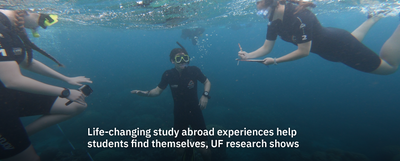
Life-changing study abroad experiences help students find themselves, UF research shows
Studying abroad is about more than just enrichment for college students; it’s often about personal transformation, UF researchers have found. Every year, UF sends nearly 2,600 students overseas to become immersed in diverse cultures, gain international perspectives, and create social bonds with fellow Gators – experiences so profound that UF researchers recently published a study about their long-term impact in Leisure Sciences. And this week, the UF International Center is hosting a Study Abroad Fair from 10 a.m. to 3 p.m. Wednesday, Jan. 29 on the Reitz North Lawn to generate even more interest in these life-changing programs. “You’ve got to look at travel as not a frivolous thing because it’s part of your life story,” said Heather Gibson, Ph.D., a professor in the UF College of Health & Human Performance’s Department of Tourism, Hospitality & Event Management, who co-authored the study. “The impact isn’t just for the semester when they return; it’s now shown to be over 20 years or more. Very few studies focus on this formative phase of adult development, and these emerging adults are very malleable to be shaped. They’re searching for different sources of identity and different directions.” Conducting this research with Gibson was Hongping (HP) Zhang, Ph.D., a UF graduate of 2020 and clinical assistant professor at the University of Tennessee, Knoxville’s Department of Retail, Hospitality, and Tourism Management. Zhang said that, in 2019, tourism literature began focusing on memory theories, but research primarily looked at memorable tourism experiences and how to better attract tourists. Zhang wanted to dive deeper into how travel memories affect a person’s development and identity. This retrospective longitudinal study examined 115 alumni who traveled as part of the College of Health & Human Performance’s South Pacific program, or the Florida Down Under Program, from 2007 to 2019. The program, led by Gibson, brings students to Australia for four weeks, New Zealand for four weeks, and/or Fiji for 10 days to study sustainability, with trips including a snorkeling expedition to the Great Barrier Reef and to Mungalla Station (a land occupied by the Nywaigi Aboriginal Land Corporation). These students’ memories of studying abroad proved to be positive and an “important building block to enhance the existing feeling of self,” Zhang said. For example, one study participant shared that reflecting on her experience in Australia was a conversation starter that sparked an initial social connection with her now husband, who had also traveled to Australia on a separate trip. Other students said the program impacted their travel behaviors such as spending money, as well as their eco-conscious behaviors like using coral-reef-friendly sunscreen. Overall, Gibson believes that experiential learning like studying abroad plays a significant role in helping students find themselves at pivotal times in their lives. In fact, research from the Consortium for Analysis of Student Success through International Education shows that students who participate in study abroad programs may earn higher grades, be more likely to graduate, and be better positioned for the global workforce. “Getting students out of the classroom and pushing them out of their comfort zone is where they learn,” Gibson said. “We need to think about the undergraduate experience as more than earning credits for a degree. Study abroad provides students with friends, experience, and direction, and that’s very crucial, especially at a large university. Study abroad allows students to find their tribe.”


Aston University’s approach to a global challenge Across industries, companies face mounting pressure to cut carbon, improve resource efficiency, and contribute to the UN Sustainable Development Goals (SDGs). Yet many firms still struggle to move from vision statements to measurable action. At Aston Business School, Dr Breno Nunes, reader in sustainable operations management, is developing practical frameworks that help organisations embed sustainability at their core. His concept of 'sustainability fitness' captures how firms can build the capabilities they need to adapt, compete, and thrive in the transition to a net zero economy. “Many organisations want to be sustainable but struggle to operationalise what that means. My work is about bridging that gap — helping businesses translate strategies into practice.” — Dr Breno Nunes The sustainability fitness concept involves both meeting human needs and respecting environmental limits. While it can also be applied at the societal and individual level, Dr Nunes focuses on organisations, where capability building delivers the fastest, measurable change. Corporate sustainability fitness examines how a firm is able to survive and meet its own needs, while aligning itself to wider essential needs of society and operating within limits imposed by its surrounding natural environment. From research to real-world action Dr Nunes’ research examines how organisations design, implement, and monitor sustainability strategies across operations, supply chains, facilities, and product development. He is the main author of the book Sustainable Operations Management: Key practices and cases, which applies the issues of sustainability to all strategic decisions of operations. His work is already making a tangible difference, including international partnerships in Brazil, Canada, and the US, bringing cross-cultural insights into organisational transformation, as well as for various companies and organisations. In an Innovate UK Knowledge Transfer Partnership (KTP) with automotive supplier Metal Assemblies, Dr Nunes and Professor Alexeis Garcia Perez, professor of digital business and society at Aston University, are working to calculate and report the carbon cost of metal components used in car production, tackling one of the industry’s biggest sustainability challenges. The digitalisation of processes will allow Metal Assemblies to meet customers' requirements and position itself as a trusted and transparent supplier of low-carbon components. In another KTP with Brockhouse Group, a forging manufacturer in the West Midlands, Dr Nunes worked with Aston colleague Dr Muhammad Imran, reader in mechanical, biomedical and design engineering. Together they developed a sustainable manufacturing strategy centred on carbon reduction and process improvement. The work involved the development of an energy dashboard, allowing analysis of data on gas and electricity consumption. The project also included analysis of alternatives for energy recovery systems, and development of routines and procedures to improve the manufacturing process. As a result, Brockhouse group is more competitive to supply in non-captive markets. Dr Nunes has also been involved with a collaboration with Birmingham Botanical Gardens to integrate sustainability into policy and practice, expanding the use of business sustainability theories to nonprofit sectors. Sustainability can be embedded across different areas of organisations while seeking financial stability. As an environmental education charity, it is important to for Birmingham Botanical Gardens to 'practise what it preaches'. It was recently awarded almost £20m from various grants (including Heritage Lottery) in a capital project, thanks to having sustainability at the core of renovation plans. These projects highlight Aston University’s role in bridging academia, industry, and policy — ensuring research findings reach the boardroom as well as the factory floor. Key insights from the research Dr Nunes’ studies highlight several critical factors for turning sustainability from intention into measurable results: • Organisational capabilities are central to embedding sustainability. These include empowering sustainability “champions” (institutional entrepreneurs), supportive structures, superior technologies, and the ability to learn and balance economic, environmental, and social performance. • The tensions in implementing sustainability vary not just by function (supply chains, governance, innovation) but also by an organisation’s maturity level. • Start with the low-hanging fruit: tools like self-assessments, capability diagnostics, and learning games allow firms to act at lower cost before committing to full environmental impact assessments or formal reporting. • Collaboration between academia, industry, and policymakers accelerates real-world impact. Why this matters The stakes are high. Businesses worldwide are expected to reduce carbon emissions, demonstrate social responsibility, and remain competitive in a rapidly changing global economy. Aston University’s research shows that strengthening sustainability capabilities not only improves environmental outcomes but also boosts resilience and cost savings. In pilot projects, teams working with Dr Nunes have achieved up to 30% reductions in both cost and carbon emissions — proof that sustainability can drive operational performance as well as compliance. Looking ahead: expanding the Sustainable Growth Hub The next phase of Dr Nunes’ work centres on Aston’s Sustainable Growth Hub, which is being developed as a reference point for SMEs seeking sustainability solutions. In 2025, the Hub will: • Launch its first industry club cohort and expand its team. • Roll out new self-assessment tools to size sustainability needs and decarbonisation goals. • Introduce new learning formats and follow-up courses to Aston’s Green Advantage programme, alongside sessions to play a new corporate sustainability game. • Host events to bring together businesses, policymakers, and the wider sustainability management community. • Attract new research grants and publish results to share knowledge across both academic and practitioner circles. These initiatives aim to equip organisations not only to meet today’s challenges, but to anticipate tomorrow’s. Get involved Follow Dr Nunes via his profile below, and soon through the Sustainability Fitness website. Businesses can also attend Aston Business School events to explore workshops, tools, and courses first-hand. About Dr Breno Nunes Dr Breno Nunes is reader in sustainable operations management at Aston Business School and president of the International Association for Management of Technology (IAMOT). He serves as associate editor of the IEEE Engineering Management Review and has published widely on sustainability strategy execution and innovation. Aston University’s work in sustainable operations — shaped by researchers like Dr Nunes — is helping organisations worldwide move from ambition to action, building the 'sustainability fitness' needed for a net zero future.



Lighting the Fires of Memory: The History, Meaning and Modern Significance of Memorial Observances
In the United States, United Kingdom and Canada, special annual days of remembrance bring into focus a simple yet profound truth: societies mark the sacrifice of those who died in military service so that past and future generations will not forget. These observances are layered with history, symbolism and evolving practice. Origins & Historical Development United States – Memorial Day Memorial Day began in the aftermath of the American Civil War. One of the earliest national observances took place on May 30, 1868, when John A. Logan, Commander-in-Chief of the Grand Army of the Republic, proclaimed “Decoration Day” to honour the Union dead by decorating their graves. The date was chosen because spring flowers would be in bloom across much of the country. Over time, as the United States engaged in further conflicts, Decoration Day evolved into a broader day of honouring all U.S. military personnel who died in service. In 1971, Congress made Memorial Day a federal holiday observed on the last Monday of May. United Kingdom and the Commonwealth – Remembrance Day Remembrance Day, also known as Armistice Day, originated from the end of the First World War and is observed on November 11. It commemorates the armistice signed at the 11th hour of the 11th day of the 11th month in 1918. In Britain and the Commonwealth, the red poppy became the enduring symbol of remembrance, inspired by the poppies of Flanders fields and popularized in the years following the war. Canada – Remembrance Day Canada also observes Remembrance Day on November 11. The observance dates back to post-WWI traditions and was officially adopted by Parliament in 1931. It honours the more than 118,000 Canadians who have made the ultimate sacrifice among the 2.3 million who have served in uniform. Meaning and Symbolism At their core, Memorial Day and Remembrance Day are about memory, sacrifice, duty, and gratitude. They serve as communal rituals: visiting cemeteries and memorials, placing flowers or wreaths, holding moments of silence, and wearing symbols like the poppy. In the United States, the act of decorating graves carried not only personal remembrance but also civic pride—honouring those who laid down their lives for their country. In the United Kingdom and Canada, the poppy remains a powerful visual reminder of both the human cost of war and the enduring hope for peace. Modern Significance These observances offer societies a chance to pause, reflect, and connect past sacrifice with present freedoms and responsibilities. In the United States, Memorial Day has also come to mark the unofficial start of summer. Still, national initiatives such as the National Moment of Remembrance invite Americans to refocus on solemn reflection. In Canada and the United Kingdom, Remembrance Day remains deeply ceremonial, marked by two-minute silences, wreath-layings, and public education about the sacrifices of war. For all three nations, these days foster inter-generational understanding—educating younger people about service, sacrifice, and the peace that followed—while reminding governments and citizens alike of ongoing obligations to veterans. Why It Matters to U.S., British, and Canadian Peoples For Americans, Memorial Day symbolizes how unity, freedom, and democracy have been defended and preserved at great cost. For Britons and Canadians, Remembrance Day binds their shared histories of service in global conflicts, linking national identity with sacrifice and resilience. In Canada especially, the day has evolved into a moment not just of military remembrance, but of reflection on what it means to serve a country and commit to peace. Across all three nations, these observances allow public acknowledgment of loss and courage, while anchoring civic values of duty, freedom, and gratitude. Key Themes and Story Angles Continuity and Change: From Decoration Day to Memorial Day, from Armistice Day to Remembrance Day—how the meaning endures through time. Symbols and Rituals: Poppies, wreaths, silences, and ceremonies as expressions of collective memory. Commercialization vs. Solemnity: Balancing commemoration with modern traditions such as travel and leisure. Generational Awareness: Passing remembrance to younger audiences through schools, media, and veterans’ stories. Veterans and Contemporary Service: Linking remembrance with ongoing commitments to those who serve. Community Connection: How towns and cities mark remembrance through local parades, services, and shared stories. Memorial Day and Remembrance Day are more than calendar observances—they are living rituals of collective gratitude. They invite reflection on what has been given and what must be preserved. For the United States, the United Kingdom, and Canada, these days stand as enduring reminders of courage, unity, and the price of peace. Connect with our experts about the history, meaning and modern significance of memorial observances: Check out our experts here : www.expertfile.com


Motor vehicle crashes remain one of the leading causes of death among teenagers. For the youngest drivers, getting behind the wheel marks freedom but also comes with measurable risk. At the University of California, Irvine, Dr. Federico Vaca, professor and executive vice chair of emergency medicine, is determined to change that trajectory. “Driving licensure among our youngest drivers remains a major life milestone, and it allows for newfound freedom and opportunity for not only youth but their parents as well. At the same time, learning to drive and licensure come at a time when youth are rapidly moving through life with new transitions in school, with friends, and likely exposure to alcohol and drugs,” he says. “Our priority … is to examine the complexities of young driver behavior and to thoroughly understand crash injury risk and crash prevention among this special group of drivers.” Vaca’s work is at the intersection of health, transportation science and policy. A fellow of the Association for the Advancement of Automotive Medicine and a researcher at UC Irvine’s Institute of Transportation Studies, he previously served as a medical fellow at the U.S. Department of Transportation’s National Highway Traffic Safety Administration in Washington, D.C. His long-standing goal is to prevent the injuries he has seen and treated in emergency departments and trauma centers through rigorous research, using the findings to inform and advance evidence-based programs and policies that save lives on the road. Innovating safety science UC Irvine is home to a new hub for understanding and preventing crash injuries among young drivers, the Brain, Body & Behavior Driving Simulation Lab, founded by Vaca and his interdisciplinary team. At the heart of the B3DrivSim Lab is a high-fidelity, half-cab driving simulator capable of replicating real-world conditions with precision. It uses advanced software to design customized driving scenarios – from complex roadway environments to the inclusion of such human elements as distraction and fatigue – all while capturing real-time video and driving behavior as well as vehicle control metrics. This integration of medicine, behavioral science and engineering enables researchers to measure how developmental and socioecological factors shape driver decisions in unique and consequential ways. The B3DrivSim Lab also represents a growing mentorship ecosystem at UC Irvine. In mid-June, the facility welcomed Siwei Hu, a postdoctoral scholar who earned a Ph.D. in civil and environmental engineering, with a focus on transportation studies, at UC Irvine. Hu works closely with Vaca to combine engineering and modeling analytics with behavioral and crash risk insights. The half-cab driving simulator uses advanced software to replicate real-world conditions and design customized driving scenarios – from complex roadway environments to the inclusion of such human elements as distraction and fatigue – all while capturing real-time video and driving behavior as well as vehicle control metrics. Steve Zylius / UC Irvine From the lab to policy Beyond simulation, Vaca’s latest National Institutes of Health-funded study, separate from his lab’s work, takes this philosophy to the national level. His project, “Modeling a National Graduated-BAC Policy for 21- to 24-Year-Old Drivers,” explores whether lowering the legal blood alcohol limit for young adults could reduce alcohol-related crashes and deaths. “When you turn 21, at that very moment, the application of several alcohol-related prevention laws changes in the blink of an eye,” Vaca says. “Before that, the minimum legal drinking age and zero-tolerance laws are in place to protect young drivers from alcohol-impaired driving. Effectively, the second you turn 21, those prevention policies don’t apply, and you’re suddenly allowed to have a much higher blood alcohol concentration in your body that’s intimately tied to serious and fatal crash risk. It’s a very dangerous disconnect.” The study will use national crash data, behavioral surveys and system dynamics modeling to examine how a “graduated BAC policy” might bridge that gap, giving young adult drivers a safer transition into full legal responsibility and saving many more lives. Bridging science, education and prevention Earlier this year, Vaca and his B3DrivSim team joined prevention program educators, policymakers, engineers and law enforcement professionals in Anaheim at a Ford Driving Skills for Life event, part of a Ford Philanthropy-sponsored national effort teaching teens hands-on safe driving techniques – from hazard recognition to impaired-driving awareness. Speaking to more than 130 high school students and their parents from local and distant communities, Vaca emphasized the connection among driving, independence, opportunity and responsibility. That message aligns with his broader initiative, Youth Thriving in Life Transitions with Transportation, which introduces high school students to traffic safety and transportation science and their role in promoting health, education and employment in early adulthood. By linking research and real-world experience, the project empowers youth to see mobility as a foundation for opportunity with safety as its cornerstone. With overall young driver crash fatalities rising 25 percent nationally over the last decade and a 46 percent increase in fatal crashes where a young driver had a BAC of ≥ .01/dL, Vaca’s work represents a crucial step toward reversing that trend. Through a combination of clinical insight and prevention, transportation and data science underscored by community collaboration, he and his team are redefining how researchers and policymakers think about youth driver safety.


From classrooms to communities: Rethinking civic engagement in K–12 education
When national headlines focus on school board battles and political polarization, James Bridgeforth, assistant professor of educational leadership at the University of Delaware, is focused on what’s possible instead: building a more inclusive, participatory model of democracy through public education. His research in UD's College of Education and Human Development explores how community voice, equity and local leadership intersect to shape education policy – and how school boards can serve as vital engines for rebuilding public trust in government. "Despite the often sensationalized stories of chaotic school board meetings and the influence of more national "culture war" issues, I still believe that it's possible for people from different backgrounds, experiences, and points of view to come together to figure out how to best serve the needs of all of our children." – Bridgeforth Bridgeforth’s work centers on education governance, policy and leadership, with particular attention to how racism and anti-Blackness manifest in schools and policymaking spaces. His scholarship highlights the importance of inclusive decision-making, arguing that effective education policy must be representative of the diverse communities it serves. He recently published the report "Navigating Democracy in Divided Times" with co-authors on this topic. As part of his work with the Getting Down to Facts III project at Stanford University, Bridgeforth collaborates with researchers studying how to improve California’s TK–12 system and inform the next governor’s education policy agenda. His work documents the complex realities faced by local school board members – often minimally paid community leaders navigating contentious public discourse, social media pressure and limited resources. He notes that this research can be applied to school boards around the country. The next frontier: Youth civic engagement Over the next several years, Bridgeforth aims to deepen understanding of how schools can nurture young people’s civic skills and leadership capacity through participation in governance. One proposed project – "Strengthening Opportunities for Youth Civic Engagement and Student Voice in Educational Governance" – uses participatory action research to explore how student board member policies and engagement practices foster civic agency and democratic mindsets. This collaborative work brings together youth-led community organizations and education researchers to study how these experiences shape long-term civic behavior – from voting to public service. Why it matters Bridgeforth’s research arrives at a pivotal time for American democracy. As trust in public institutions erodes, local school boards remain one of the spaces where citizens can directly shape policy. His work points to a hopeful truth: democracy’s renewal may begin in classrooms, communities and the local school board meetings shaping them. For journalists covering education, race or civic engagement, Bridgeforth offers data-driven insight, lived experience and policy expertise – helping make sense of one of the most pressing questions of our time: How can we build systems that truly serve all students and communities? This work collectively demonstrates a number of promising opportunities to foster more inclusive, community-connected forms of governance, particularly in a time of eroding trust in government institutions." – Bridgeforth ABOUT JAMES BRIDGEFORTH Assistant Professor, College of Education and Human Development James Bridgeforth is an educator, researcher and policy advocate whose work focuses on community voice in education policy and the politics of educational leadership. His scholarship has appeared in top journals including Journal of School Leadership, Education Policy Analysis Archives, Educational Evaluation and Policy Analysis and Educational Administration Quarterly, and he has contributed to Education Week and The Washington Post. A recipient of the National Academy of Education/Spencer Foundation Dissertation Fellowship, Bridgeforth holds a Ph.D. in Urban Education Policy from the University of Southern California, an M.Ed. in Educational Administration and Policy from the University of Georgia, and a B.A. in Political Science and Sociology from Georgia College & State University. Expert available for: Interviews on K–12 school governance, education policy and democracy Commentary on community voice and equity in education decision-making Analysis of youth civic engagement and participatory leadership To contact Bridgeforth, email mediarelations@udel.edu.


In the news: Chronicle features University of Delaware's Career Center
At the University of Delaware, career-development officials believe in teaching students how networking exists all around them, in both curricular and co-curricular realms, by taking career readiness outside the Career Center and infusing networking principles and practices into academic courses, social activities and alumni events. UD's Career Center was highlighted in a recent Chronicle of Higher Education article for innovative and exemplary networking practices and teachings. “If we get students to not think about networking as this static skill I have to build, and it’s more of a natural part of who I am, and it’s in my toolbox, it becomes less arduous, less scary, and easier to do," Rachel Coppola, UD’s Director of Life Design and Career Integration, said in the featured video. Reporters wishing to speak to career experts can reach out to mediarelations@udel.edu.