
Experts Matter. Find Yours.
Connect for media, speaking, professional opportunities & more.

‘Bottom-line mentality’ can lead to loss of employee respect and loyalty, research shows Supervisors driven by profits could actually be hurting their coveted bottom lines by losing the respect of their employees, who counter by withholding performance, according to a new study led by Baylor University. The study, “The Influence of Supervisor Bottom-Line Mentality and Employee Bottom-Line Mentality on Leader-Member Exchange and Subsequent Employee Performance,” is published in the journal Human Relations. “Supervisors who focus only on profits to the exclusion of caring about other important outcomes, such as employee well-being or environmental or ethical concerns, turn out to be detrimental to employees,” said lead researcher Matthew Quade, Ph.D., assistant professor of management in Baylor University’s Hankamer School of Business. “This results in relationships that are marked by distrust, dissatisfaction and lack of affection for the supervisor. And ultimately, that leads to employees who are less likely to complete tasks at a high level and less likely to go above and beyond the call of duty.” While other studies have examined the impact of bottom-line mentality (BLM) on employee behavior, Quade said this is the first to identify why employees respond with negative behaviors to supervisors they perceive to have BLM. The research team surveyed 866 people. Half of those surveyed were supervisors; the other half were their respective employees. Data was collected from those who work in a range of jobs and industries, including financial services, health care, sales, legal and education. Researchers measured supervisor BLM, employee BLM, task performance and leader-member exchange – the rating employees gave of their relationships with their supervisors. Employees rated their supervisors’ BLM by scoring on a scale statements like: “My supervisor treats the bottom line as more important than anything else” and “My supervisor cares more about profits than his/her employees’ well-being.” They rated leader-member exchange via statements such as “I like my supervisor very much as a person” and “My relationship with my supervisor is composed of comparable exchanges of giving and taking.” Supervisors rated their employees by scoring statements such as: “This employee meets or exceeds his/her productivity requirements,” “This employee searches for ways to be more productive” and “This employee demonstrates commitment to producing quality work.” Based on the responses and the data collected and analyzed, the researchers found: High-BLM supervisors create low-quality relationships with their employees. In turn, employees perceive low-quality leader-member exchange relationships. Thus, employees reciprocate by withholding performance. When supervisor BLM is high and employee BLM is low, the damaging effects are strengthened. When both supervisor and employee BLM are high, the negative performance is still evident. The last finding on that list was particularly significant, Quade said, because it contradicts a common belief that when two parties (in this case, supervisors and employees) think alike and have similar values, there will be a positive outcome. Not so much in the case of BLM, the study shows. “When supervisor and employee BLM is similarly high, our research demonstrates the negative effect on performance is only buffered, not mitigated – indicating no degree of supervisor BLM seems to be particularly beneficial,” the researchers wrote. “It seems even if employees maintain a BLM, they would prefer for their managers to focus on interpersonal aspects of the job that foster healthier social exchange relationships with their employees in addition to the bottom line.” The profit-performance relationship can spark a conundrum for companies, Quade said, because organizations want to be profitable, and performance is an important indicator of an organization’s health and vitality. If leaders believe a negative dynamic regarding BLM exists in their organization, the researchers suggest a few practical steps: Be cautious of a BLM approach or emphasizing bottom-line outcomes that could neglect other organizational concerns, such as employee well-being and ethical standards. Managers should be aware of the message they pass along to employees (and the possible performance repercussions) when they tout bottom-line profits as the most important consideration. Organizations that need to emphasize bottom-line outcomes should consider pairing the BLM management style with other management approaches known to produce positive results, such as practicing ethical leadership. “Supervisors undoubtedly face heavy scrutiny for the performance levels of their employees, and as such they may tend to emphasize the need for employees to pursue bottom-line outcomes at the exclusion of other competing priorities, such as ethical practices, personal development or building social connections in the workplace,” the researchers wrote. “However, in doing so they may have to suffer the consequence of reduced employee respect, loyalty and even liking.” ABOUT THE STUDY “The Influence of Supervisor Bottom-Line Mentality and Employee Bottom-Line Mentality on Leader-Member Exchange and Subsequent Employee Performance” is published in the journal Human Relations. Authors are Matthew Quade, Ph.D., assistant professor of management in Baylor University’s Hankamer School of Business; Benjamin McLarty, Ph.D., assistant professor of management, Mississippi State University; and Julena Bonner, Ph.D., assistant professor, Utah State University. ABOUT BAYLOR UNIVERSITY Baylor University is a private Christian University and a nationally ranked research institution. The University provides a vibrant campus community for more than 17,000 students by blending interdisciplinary research with an international reputation for educational excellence and a faculty commitment to teaching and scholarship. Chartered in 1845 by the Republic of Texas through the efforts of Baptist pioneers, Baylor is the oldest continually operating University in Texas. Located in Waco, Baylor welcomes students from all 50 states and more than 90 countries to study a broad range of degrees among its 12 nationally recognized academic divisions. ABOUT HANKAMER SCHOOL OF BUSINESS AT BAYLOR UNIVERSITY At Baylor University’s Hankamer School of Business, integrity stands shoulder-to-shoulder with analytic and strategic strengths. The School’s top-ranked programs combine rigorous classroom learning, hands on experience in the real world, a solid foundation in Christian values and a global outlook. Making up approximately 25 percent of the University’s total enrollment, undergraduate students choose from 16 major areas of study. Graduate students choose from full-time, executive or online MBA or other specialized master’s programs, and Ph.D. programs in Information Systems, Entrepreneurship or Health Services Research. The Business School also has campuses located in Austin and Dallas, Texas. Visit www.baylor.edu/business and follow on Twitter at twitter.com/Baylor_Business.


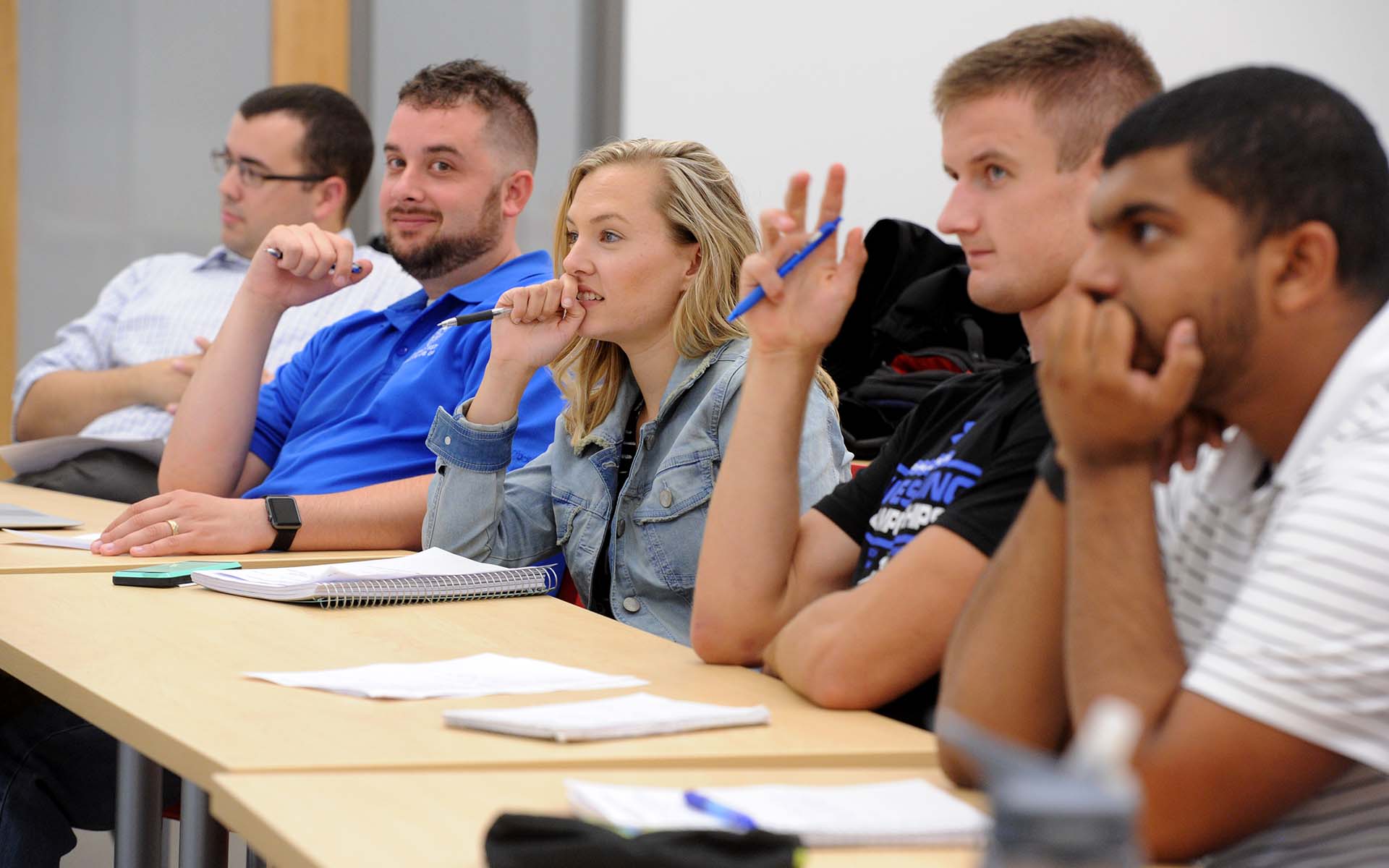
“Design thinking is a human-centered approach to innovation that draws from the designer's toolkit to integrate the needs of people, the possibilities of technology, and the requirements for business success.” - Tim Brown, CEO of IDEO I would add the following to Mr. Brown’s statement. This innovation approach requires more than a designer’s toolkit. It requires multiple departments within an organization to engage in the approach. If I’ve learned one thing in my more than 5 years in higher education it’s that companies continue to push for employees to become better problem solvers, more creative/critical thinkers, and ultimately stronger communicators. Why? Company growth is critical, and the aforementioned skills are how many companies will achieve growth. At Otterbein, we continue to provide education that addresses the development of these skills. We are designing a new focus in the MBA Program; Design Thinking. Otterbein University’s MBA Program is collaborating with the Master of Design (MDes) Program at the Columbus College of Art & Design (CCAD), to integrate a Design Thinking Area of Focus within the MBA program. Design Thinking combines design research, service design, studio & project course for prototyping/impression/artifact work, along with design thinking principles critical in succeeding in business and industry. It is designed for individuals who wish to pursue a career in business design, organizational change, and innovation, among other potential career paths. Are you a reporter covering stories that involve Design Thinking? Are you a student considering pursuing Design Thinking as a postsecondary option? If so, let our experts help with any of your questions. Eric is Director of the MBA Program at Otterbein University and is available to speak to the concepts of Design Thinking. Simply click on his icon to arrange an interview.


The political math behind the numbers - let our experts explain why a census is suddenly a hot topic
Usually, there’s nothing particularly interesting, let alone controversial, about a census. It’s an objective collection of data that allows the government and other organizations to use pure evidence to determine things like population growth and shift, income rates and education participation rates. For those who rely on metrics, it means a lot. For everyone else — it’s a form we fill out once a decade. However, these are not normal times. There's an ongoing debate among politicians and the courts regarding the request to add a question about citizenship to the 2020 census. Here’s the question: So, is it right to inquire about citizenship in a census? What are the benefits? What are the concerns And why is this such a big deal? That’s where our experts can help. Dr. Martha Ginn, professor of political science at Augusta University, is an expert on the judicial process, constitutional law and the U.S. Supreme Court. Dr. William Hatcher, associate professor of political science and director of the Master of Public Administration program at Augusta University, focuses on public administration and social, economic and political institutions in local communities. Both are available to speak with media regarding the census issue. To arrange an interview, click on either expert’s icon.


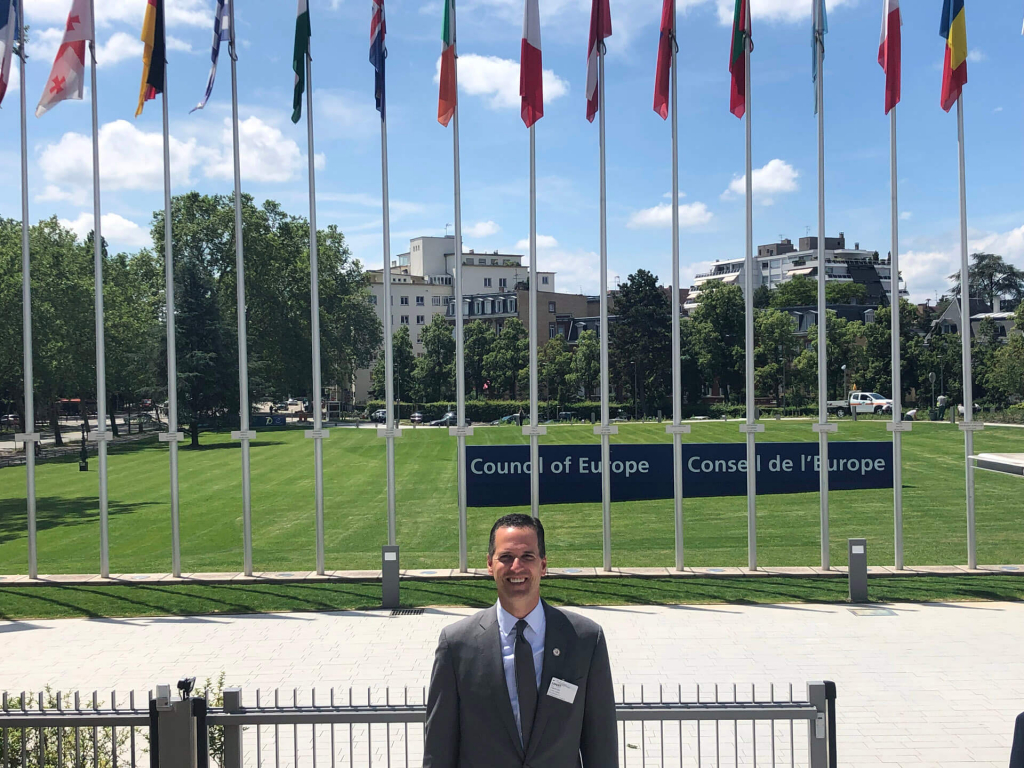
A global commitment to democracy
When I was invited to attend the Global Forum on Academic Freedom, Institutional Autonomy, and the Future of Democracy held this June in Strasbourg, France, I jumped at the chance. I was proud to add Otterbein’s support to a movement of global leaders committing to protecting democracy. I attended the forum along with more than 100 higher education leaders from around the world. Since its founding, Otterbein has stood for the rights of academic freedom and autonomy, as well as the freedom of speech of individuals, and we continue to stand resolute today. Otterbein believes that all voices from different walks of life must be represented, respected and valued, and we are committing to be a national and global leader in preserving democratic societies and values. The Global Forum was co-organized by the Council of Europe; the International Consortium for Higher Education, Civic Responsibility, and Democracy; the Organization of American States; and other partners, notably the International Association of Universities and the Magna Charta Observatory. It gathered higher education leaders and representatives of public authorities and NGOs from Europe and the United States, as well as smaller numbers from Australia, Asia, Africa, the Middle East and Latin America. - John Comerford Are you a journalist covering topics about democracy and how it is being threatened around the world? What role does higher education play in global democracy? And what countries or regions are the most at risk? There are a lot of questions regarding this topic – and that’s where we can help. John Comerford is an expert in higher education, regional and national topics. He is the President of Otterbein University and is available to speak with media regarding this issue and how higher-education needs to be made available to everyone in America regardless of income, family name or background. Simply click on his icon to arrange an interview.

Caring for Patients Who Are Prescribed Medical Marijuana
With more than $10 billion in legal sales of marijuana in the United States in 2018, there’s a need to educate healthcare practitioners about how to safely treat and manage patients who are prescribed medical marijuana. According to the Centers for Disease Control, cannabis-based products such as man-made cannabinoid-based medications may help prevent and ease nausea caused by chemotherapy. And for adults with multiple sclerosis-related muscle spasms, short-term use of some man-made and cannabinoid-based medications may improve their symptoms. "Providing care for patients who use medical marijuana is a responsibility all healthcare providers share, and it is therefore imperative to encourage communication between all providers and the patient," says Evelyn Lengetti, PhD, RN, NPD-BC, Assistant Dean of the Continuing Education Program at Villanova’s M. Louise Fitzpatrick College of Nursing. To the best of her knowledge, Dr. Lengetti was the first in the Philadelphia area to host a day-long conference open to nurses, doctors, nutritionists, social workers, lawyers and pharmacists to educate them so they would have a working knowledge of what to expect when patients in their care started using medical marijuana. "Healthcare providers need to have some knowledge of medical marijuana when treating this population of patients," Dr. Lengetti says. "They need to know that cannabis is not FDA approved for any condition and that it is for investigational use only." Dr. Lengetti notes that it's beneficial for healthcare providers to know the different types of cannabis, possible side effects, nutritional challenges, and legal issues that may arise while providing care to patients who have been certified to use cannabis products.


Otterbein’s engineering program focuses on adding diversity to the profession
In April, Otterbein granted degrees to its first class of engineering graduates. While it’s a historic moment for the school, the class is important for another reason: it exceeds the national graduation rate for women in engineering. Otterbein is working in an intentional way to recruit a diverse class of engineers in a field that is increasingly looking for well-trained professionals who bring diverse opinions and ideas to the table. According to the American Society of Engineering Education, the national average for females earning bachelor’s degrees in engineering is 19.9%. The average for minority students graduating with engineering degrees is just 7%. Amongst the 21 students graduating from Otterbein, 29% are female and 29% are minority students. The inaugural class was also the first class to study in The Point at Otterbein University, an experiential learning facility focused on collaboration with businesses, community makers and academics. At The Point, students have opportunities to pursue industry projects and on-campus internships with resident professionals from some of the country’s largest and most respected businesses, like JPMorgan Chase and Nestle, and locally based companies, like Worthington Industries, Nikola Labs and edgeThingZ. Of the 21 graduating students, several are pursuing graduate studies at The Ohio State University and Santa Clara University, while others have already accepted full-time jobs at companies like Honda and Williams-Sonoma. “The students in this class helped us develop a strong program and accomplished a lot during their four years,” said Mike Hudoba, assistant professor of engineering. “Looking back on what they started with, it’s such a neat legacy they get to leave behind. They’re all hardworking students who entered into this new program with us.” Are you covering or would you like to learn more about Otterbein University and its engineering program? Let our experts help. Michael Hudoba is an assistant professor of engineering at Otterbein University and he is available to speak to media regarding this historic time at the school. Simply click on his icon to arrange an interview. To learn more, click on the link below: https://www.otterbein.edu/news/first-engineering-class-a-highlight-of-otterbein-universitys-commencement-weekend/
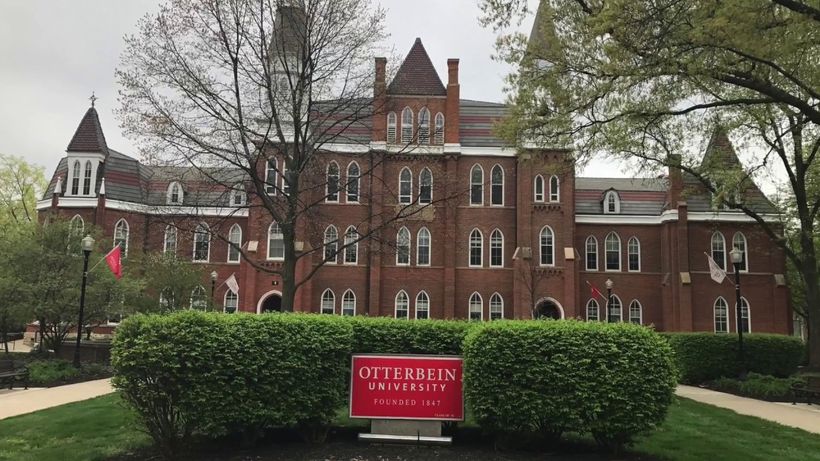
This year, 26 students from Columbus (Ohio) City Schools (CCS) walked across the stage to receive their Otterbein degrees as part of the Class of 2019. It was a result of a partnership between two great educational institutions that is ensuring post-secondary education is accessible to students in central Ohio. “(The event) was a great example of how two educational institutions can come together and make an impact on the lives of young people and the larger community,” said Tanya L. McClanahan, supervisor of higher education partnerships for CCS. For some time now, Otterbein and CCS have been working together to provide several academic options and initiatives to students from Ohio’s largest school district. Since 2014 the Urban Districts Initiative has been working with Columbus City Schools, as well as South-Western City Schools, Westerville City Schools, Whitehall City Schools and Cristo Rey, all districts with more than 35%of students living in poverty. The Initiative is an enhanced need-based aid model that reduces the gap between aid and expected family contribution to the smallest amount possible and has driven significant increases in enrollment of low-income students at Otterbein, as well as sparking a significant increase in student success. The Seniors-to-Sophomores program, where Otterbein offers a summer College Credit Plus course for CCS students that pairs an academic course with a for-credit study skills course. The University also has a STEM skills refresher course for entering students funded through a grant from Nationwide. Otterbein offers Professional Learning Communities (PLCs) for district teachers and Otterbein faculty. In PLCs, teachers and faculty come together to discuss issues related to pedagogy and serving students to enhance the work of both institutions. Recently, Otterbein introduced a scholarship for the dependent children of CCS district (benefits eligible) employees that reduces the cost of an Otterbein education to the average of the state supported universities in Ohio. There are a lot of great things happening in Otterbein’s financial aid and recruitment models that are seeing positive outcomes in the Otterbein and central Ohio communities - and if you need to know more, that’s where our experts can help. Jefferson Blackburn Smith is the Vice President for Enrollment Management and is an expert in financial aid, scholarships, politics, and higher education. He is available to speak to media regarding these topics – simply click on his icon to arrange an interview. To learn more, click the link below: https://www.otterbein.edu/news/cohort-of-columbus-city-schools-alumni-to-graduate-from-otterbein-university-sunday/

Why it just makes ‘cents’ to know your financial ABCs early in life – let our expert explain.
Managing money, understanding interest and how to avoid debt – all these elements make up some of the very basics of financial literacy. However, despite a humming economy and record low unemployment, more and more Americans are falling deeper into debt. Just recently, CBS News reported that roughly 4 in 10 Americans can’t cover an unexpected bill of 400 dollars. Something desperately needs to be done about not just how we are handling our money – but when we are taught the how banking, money and personal finances work. It’s a topic of concern and one that is gaining traction. Showbiz moguls Will Smith and Nas invested in a financial literacy app for teens (see attached article). The issue is finally on the radar of leaders in Washington and throughout the country as well, with 19 states now requiring financial education to graduate, according to the Council for Economic Education, up from 13 in 2011. Can these efforts make a real impact and reverse the tide of financial illiteracy? How did America get to this point? Is this about our spending habits and access to credit or a lack of education? And if we don’t correct the curse – what could it mean for our economy? There are a lot of questions and that’s where our experts can help! Professor Jonathan Clarke is an award-winning teacher and researcher in the fields of investment banking, finance and analysis. Clarke created a personal finance course that is offered to all Georgia Tech students that provides the importance of budgeting, basics of credit, as well as more advanced financial topics such as investing and trading. He’s an expert in the field and is available to speak with media about economics and the importance of financial literacy – simply click on his icon to arrange an interview. He has also developed a one-week summer course for high school students – Wall Street on West Peachtree and annually assists the Boy Scouts with obtaining their finance badge.


College readiness: Why it’s time to turn the page on one-off developmental courses
With summer officially here, millions of recent high school graduates and adult learners alike are preparing for college this fall. Unfortunately, a large percentage of them need developmental courses in order to advance, and many of those students will drop out within their first year—victims of a college preparedness approach that is generally not working. While it is true that education provides one of the surest pathways to a better life, millions of individuals do not have the academic background, confidence, mindset, and study habits to succeed in postsecondary programs and achieve their career dreams. Underprepared students face serious hurdles when attempting to enroll in college, and often struggle with one or more of the following: Poor self-image, lack of confidence (and overconfidence), and undeveloped study skills Weak math skills and math phobia Poor writing/language skills Lack of preparation for rigorous reading of texts, analytical thinking, and problem-solving Despite the poor track record, an estimated $7 billion is spent annually on traditional remedial education by students and institutions. According to research, 68 percent of community college students and 40 percent of public four-year college students take at least one developmental course, and among them less than 10 percent of two-year students graduate within three years, and only 35 percent of four-year students graduate within six years. Solutions exist, according Pat Partridge, president of WGU Academy—an independent nonprofit entity established by Western Governors University (WGU) to help solve the growing college-readiness gap. He suggests that for college readiness to be effective, programs must incorporate noncognitive personal competencies. “The Academy’s approach is based on the premise that to make college-readiness effective we must address the whole person rather than just getting them through one-off math or English courses to satisfy admissions requirements. Our two-pronged approach to preparing students—focused on academic coursework and noncognitive personal skills—is challenging traditional thinking paradigms that are not working well. The program is designed to be transformative for students who need confidence and persistence, social and emotional learning skills, and customized support to position them for long-term academic and career success.” Studies show that students and families pay an extra $3,000 on skills and content they should have learned in high school—a hefty price for courses that typically offer no transferable credits. Partridge suggests that programs like Academy—which uses an online, competency-based learning model similar to WGU’s—can change that by offering a scalable, replicable solution. WGU Academy students pay $150 per month, and most enrollees should finish the program in three to four months, or even less—making it a low-cost, low-risk solution. And the courses are ACE (American Council on Education) recommended, which hundreds of colleges and universities recognize. “The challenge is far larger than WGU alone can tackle, which is why Academy is designed to help serve hundreds of thousands of individuals who are not likely to attend WGU” Partridge noted. “We look forward to working with other entities that share the same mission to help individuals succeed in college and their careers—both recent high school grads and adults—by boosting completion rates.” WGU Academy’s first partnership is with tnAchieves in support of Tennessee’s flagship scholarship program that allows any resident without a postsecondary certification to attend community college tuition-free. WGU Academy, which launched May 1, 2019, already has more than 600 enrolled students. To speak with Partridge, contact WGU Academy’s PR Business Partner, Matt Griffin, at matt.griffin@wgu.edu or (615) 472-6056.


Man up…and get screened for cancer – June is Men’s Health Month.
June is Men’s Health Month and doctors are urging men, especially those over the age of 40, to get screened for cancers such as testicular, prostate and colorectal cancer. “The purpose of Men’s Health Month is to heighten the awareness of preventable health problems and encourage early detection and treatment of disease among men and boys. This month gives health care providers, public policy makers, the media, and individuals an opportunity to encourage men and boys to seek regular medical advice and early treatment for disease and injury. The response has been overwhelming with thousands of awareness activities in the USA and around the globe.” Men’sHealthMonth.org These cancers and other diseases are treatable if detected early; however, a lot of men still seem reluctant to book that visit and get checked. So why are men so slow to get checked? Do people realize early prevention can save lives? Do men know how devastating these diseases, if not caught early, can be on their life, sexuality and well-being? There are a lot of questions and answers that need to be addressed this June during Men’s Health Month and that’s where the experts from Augusta University can help. Dr. Jigarkumar Parikh is co-leader of AU Health’s Genito-Urinary Oncology Program and a medical oncologist specializing in kidney cancer, prostate cancer, bladder cancer and melanoma. Dr. Martha Terris is AU Health’s Witherington Distinguished Chair, Urology, and specializes in urologic cancers, including prostate cancer, bladder cancer and testicular cancer. Both experts are available to speak with media regarding Men’s Health Month – simply click on either profile to arrange an interview.
