Experts Matter. Find Yours.
Connect for media, speaking, professional opportunities & more.

Expert Insight: The Voice of Alexa: How Speech Characteristics Impact Consumer Decisions
In the 2020 film “Superintelligence,” an all-powerful artificial intelligence attempts to take over the world, and it studies an average person, played by Melissa McCarthy, to decide if humanity is worth saving. The AI is voiced by James Corden—a voice it chooses because it knows it’s one McCarthy’s character will engage with. Rajiv Garg, associate professor of Information Systems & Operations Management at Emory’s Goizueta Business School, shows the “Superintelligence” trailer before his research presentations to set the tone. Garg conducts research that explores the impact of artificial intelligence voices on consumer behavior and purchase intent, along with Haris Krijestorac, a professor at HEC Paris, and Vijay Mahajan, a professor from The University of Texas at Austin. Garg’s research began when Amazon launched celebrity voices for its Alexa device in 2019. From Samuel L. Jackson to Shaquille O’Neal, users can now get their news and entertainment, while interacting with their favorite superstars. “I questioned if certain voices could get more engagement or more purchases from consumers,” Garg says. If Alexa starts talking to you in Samuel L. Jackson’s voice, will you continue the conversation? What could Samuel L. Jackson’s voice sell you that you would buy? Garg and his team began their research by collecting more than 300 celebrity voice samples, which they analyzed based on their sound characteristics, such as amplitude, frequency, and entropy. They looked at 20 sound characteristics and identified that all the voices could be segmented into six clusters: ostentatious, colloquial, friendly, authoritative, seductive, and suave. The team then created advertisements for select products using computer generated voices for each of the six clusters, opting for artificial intelligence-created speech instead of celebrity deep fakes due to permission legalities. They chose a shoe and an office chair as their products, and created two different advertisements for each product. One ad was simple, denoting the shoe as comfortable for all-day wear and the office chair as comfortable for sitting in for extended time periods. The other ad was hedonic, denoting the shoe as crafted with Italian leather and the office chair equipped with several massage features. They recorded the four advertisements using both a female and male voice for all six voice clusters. Study participants listened to each of the four advertisements in one of the 12 voices, which was randomly selected. After the advertisement was played, participants were asked if they wanted more information, and later, if they wanted to buy the product (omitting the price as to not add another factor to their decision making). Influencing Consumer Behavior For simple, utilitarian products, they found no significant effect of voice on information seeking behavior. Garg says once participants hear this type of advertisement, they simply decide to purchase or move on. Participants do, however, engage more in information seeking behavior for hedonic products when the voice is ostentatious, seductive, or authoritative. The team also found men were more likely than women to engage with ostentatious or seductive voices, and women were more likely to engage with friendly or colloquial voices. Overall, they found participants did not seek information with male voices. For information seeking, men and women only engage if the voices are female, which is somewhat intuitive. The industry is doing this—Alexa, Google, and Siri all have a female voice. In terms of purchase intention, they found ostentatious voices have higher yields for utilitarian products. Men, especially, were more likely than women to purchase a utilitarian product advertised in an ostentatious voice. Think about advertising a stapler. It’s a stapler—it staples paper—but you advertise it in a French accent to make it sound interesting. Conversely, for hedonic products, an ostentatious voice has a negative effect on purchase intent because Garg says it can make the product sound gimmicky. Their research shows colloquial voices do the best here because people focus more on the advertisement’s content. Across the board, they found seductive voices have a negative effect on purchase intent, but more so on utilitarian products compared to hedonic ones. Men were more likely than women to respond positively to seductive and suave voices. Applying the results Voices are another way smart device companies can personalize their customers’ experiences. Garg says these companies should be aware that there may be a certain voice that will garner the best engagement. Their findings are not isolated to business, but may apply to other industries, such as the media. Garg says, for example, if publications intend to increase reader curiosity and engagement, they should use a female colloquial voice on “click to listen” features. Although not yet tested, Garg says he wouldn’t be surprised if their results extend to real-world settings with real human voices as well. During their research, Garg’s team asked participants if they had heard the advertisement voices before, and about 15 percent of respondents says they had. "These were voices we’d created for the first time,” Garg says. “If they say they’ve heard the voice before, that means they were thinking of them as human voices. Although we didn’t study it that way, I do believe what we’re seeing will be relevant for actual human being’s voices and interactions.” Having researched this for years, Garg says every time he listens to a voice, whether a customer service representative or podcast host, he questions whether or not it is impacting his behavior. A lot of times when I’m making a decision, I know that I’m making that decision passively because of the voice. “I’m acting 50 percent based on the rational information in the voice, but the other 50 percent I just want to listen more. There is an inherent desire for a certain voice.” Garg says his favorite part of the research are those “aha moments,” whether they be the influence of voice in his own life or in the industry—such as large companies using female voices in their products to draw engagement. He says he hopes to continue doing this kind of research to help startups and other companies perform better, as AI-powered voices continue to change the way people interact with technology and consume information. “We’re finding these interesting phenomena that can help create new products that are more effective,” Garg says. “I am trying to increase the economic surplus, in some ways to improve society, and this technology presents numerous opportunities.” Looking to know more? Rajiv Garg from Emory’s Goizueta Business School is available to speak with media – simply click on his icon now to arrange an interview today.



Expertise Marketing and Content Marketing - Is There a Difference?
We often get asked the question about how Content Marketing compares to Expertise Marketing. It’s ironic that still to this day many of our academic clients don’t refer to what they do as “content marketing.” But corporate customers are well acquainted with the importance of developing content to build reputation, relationships and revenue. Adding to the confusion are all the names that are bantered about by marketing departments and agencies - There’s inbound marketing popularized by companies such as Hubspot. And there are more bespoke “Thought Leadership” programs that are often developed by outside agencies such as Weber Shandwick and Edelman. While there are a lot of common elements to these programs there are some important differences that we focus on when developing and launching Expertise Marketing programs with our institutional and corporate clients. Here’s a deeper dive to help you better understand the value of Expertise Marketing. Introducing Expertise Marketing Expertise marketing is the practice of making the knowledge and skills of your human resources more visible to your partners and audiences. It draws attention to the value that your people can bring as brand ambassadors and strategically leverages the work your experts are doing to tell a more personal story. In many cases, expertise marketing can also be used to showcase your strengths in research and innovation. Creating a stronger digital presence, expertise marketing more effectively uses your channels to connect with audiences such as media, customers, partners and donors. It builds a sense of trust with your customers and above all else, it helps establish your reputation as an industry leader. ex•per•tise mar•ket•ing 1. The practice of collectively promoting an organization’s experts as brand ambassadors to demonstrate their skills or knowledge. 2. Best practices to publish and connect The Value of Expertise Marketing Reputation - Positions research, client work, thought leadership perspectives and achievements in the context of relevant topics that are in the news. Market Awareness - Expertise marketing makes it easier for key audiences to find expert content and people in search engines and on the organization’s website. Audience Engagement - Provides more intuitive search features for visible content which can be expanded to include assets such as video, social, and publications to drive richer conversations with audiences. Metrics on performance in areas related to expert development, content contribution and audience engagement page views and inquiries can be tracked. Demand Generation - Increased number of direct leads/ inquiries from audiences such as: Customers/Students Industry Partners Alumni Donors Media New Employee Recruits Conference Organizers Talent - Better engage stakeholders, researchers & subject-matter experts in the development and distribution of content while improving recruitment and retention of talent. Internal Collaboration - Better coordinate the knowledge and resources across internal communications teams and other departments as they engage experts. Provide a faster, more efficient way to generate content for breaking news and events. Content Contribution - Increase the size of the organization’s digital footprint by aggregating more content and distributing it contextually to multiple websites and third-party databases. Efficiency - Help employees get their jobs done faster and more efficiently. Enable them to find information faster, speed up internal processes and foster collaboration among people in multiple locations. Leverage Current and Future Infrastructure - Properly integrated, new technology investments should integrate seamlessly to leverage existing/proposed infrastructure such as content management systems (such as WordPress™) and marketing automation systems (such as Hubspot) How is Expertise Marketing Different from Content Marketing? A More Human Approach: People buy from people. That’s why content that is more personalized and attributed to specific experts who are well-identified as expert sources is far more trusted than most company-sponsored content. A More Collaborative Process that Engages Employees: A more structured “win-win” model empowers experts to contribute their knowledge. Expertise marketing is a proven way to build culture and celebrate diversity which assists with talent retention and recruitment. An Efficient Way to Create More Content to Boost SEO & Website Traffic: Engaging your experts creates a larger hub of “owned” content that is proven to boost PageRank in search engines and site traffic. Expert content is used by organizations to enhance their “About Us” page, staff/faculty/physician directories, newsroom pages, research pages and speakers bureaus. Optimized Content Formats Better Connect with Audiences: A variety of short format, long format and visual content formats (such as expert profiles, blogs, Q&A and videos) are designed to engage specific audiences at various stages of the customer journey. Improved Calls to Action & Analytics Boost Demand Generation & Leads/Inquiries: Experts become more approachable as “lead magnets” that generate measurable inbound opportunities, avoiding common issues of lost customer leads due to poor processes and workflow. You might be surprised at how much value expertise marketing can bring to your organisation. The chances are, that the time you are currently spending on ineffective content marketing strategies will be greatly reduced with a redefined focus on expertise marketing. By putting the focus back on the skills and relevance of your experts, as people, you're not only making them more visible but also establishing your brand reputation which will simultaneously generate more leads and increase efficiency.




Infant seating devices may reduce language exposure
When a parent needs to cook dinner or take a shower, often they will place their baby in a bouncy seat, swing, exersaucer, or similar seating device intended to protect the baby and grant a degree of independence to both the parent and infant. For many parents, these devices represent a helpful extra set of hands; for babies, the freedom to safely explore their immediate surroundings. As useful as these devices are to both parents and infants, they may present trade-offs regarding their effect on infants’ exposure to adult language, which is critical for language development. That’s according to a new study by researchers at the Stress and Early Adversity Lab at Vanderbilt Peabody College of education and human development. Within infants’ natural environments and daily routines, the study explored interactions between their exposure to adult language and their placement in seating devices, which support posture and promote the infant’s ability to play with objects or observe their surroundings without direct support from a caregiver. The researchers found that infants were exposed to fewer words when spending time in seating devices compared to when spending time in other placements. They also found that infants who spent the most time in seating devices heard nearly 40 percent fewer daily words compared to infants who spent the least amount of time in seating devices. Infants with more, compared to less, seating device use also had less consistent exposure to adult language throughout the day. Sixty mothers and their 4- to 6-month-old infants participated in this study. For three days, a Language Environment Analysis audio recording device (i.e. “talk pedometer”) captured language exposure. The mothers inserted the audio recorder into the pocket of a vest their babies wore. Automated software estimated from the recordings the total number of adult words spoken to or near the infant over the course of a day. To record real-time behaviors of infant placement, the mothers responded to 12 brief surveys per day about their infant’s current location and use of seating devices. Caregiver reports of their child’s placement in seating devices accounted for 10 percent of an infant’s daily exposure to adult words, which the researchers say is a striking finding due to the complex nature of language exposure and how many other factors may influence children’s exposure to speech (e.g. caregiver’s talkativeness, presence of other siblings). Kathryn Humphreys, assistant professor of psychology and human development and expert in infant and early childhood mental health, is the senior author of the study. She notes that infant seating devices can provide a convenient way to keep infants safely contained while caregivers attend to other tasks. However, given the potential for frequent and prolonged use of these devices, she says that parents may want to be intentional about interactive opportunities while the infant explores their surroundings as well as consider wearing or otherwise carrying their infant on their body as much as possible to create more opportunities for engagement through speech. “While we need more research to be certain that seating devices reduce the richness of infants’ language environments, these findings are influencing my own decisions about intentional placement with my 6-month-old." - Kathryn Humphreys Kathryn Humphreys She suggests that safe and convenient places are a boon for both infants and their caregivers, but that there is a risk for reduced levels of interactions when infants are stationary and not moving to where their caregivers are active.


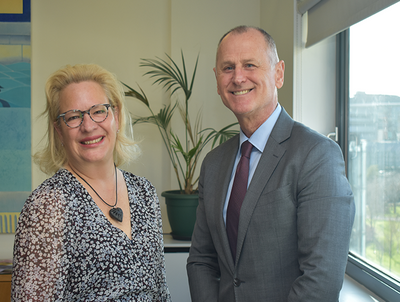
Aston University welcomes Mexican Ambassador to campus during Global Trade Conference
Her Excellency Josefa González-Blanco, Mexican Ambassador to the UK visits West Midlands for the Global Trade Conference The ambassador met with representatives of British industry including University Vice-Chancellor Professor Aleks Subic Josefa González-Blanco was appointed as Mexico's representative in London in 2021. Mexican Ambassador to the UK, Her Excellency Josefa González Blanco Ortiz Mena, has visited Aston University during a high-profile visit to the city to attend the Global Trade Conference and meet with representatives of British industry. The Global Trade Conference (15 February) is an annual event hosted by the Greater Birmingham Chambers of Commerce which offers businesses the opportunity to build relationships and grow their network. During her visit to campus, she met with Vice-Chancellor Professor Aleks Subic, executive director of business engagement Mark Smith, and Lloyd Broad, head of international affairs at Birmingham City Council. Ambassador González Blanco said: “I was thrilled to visit Aston University and to meet the Vice-Chancellor and Chief Executive, Professor Aleks Subic. “We had a chance to review our academic links towards intensifying the research collaboration already in place between Aston Business School, Tecnológico de Monterrey, Conacyt México and Instituto Nacional de Astrofísica.” Professor Aleks Subic said: “It was a pleasure to welcome Her Excellency Josefa González Blanco Ortiz Mena to Aston University. “We are immensely proud of our international collaborations, and meetings such as this one, are crucial in deepening our understanding of areas of common interest and priorities as we work together to advance global partnerships and trade. “I look forward to working further with relevant higher education institutions and industries in Mexico and around the world in line with our 2030 strategy focused on creating a globally relevant university that can make substantial contributions to innovation and trade at international level.”


New data shows real value of on-campus student engagement - Georgia Southern
Students celebrate the first week of classes for the Fall 2022 semester at the Welcome to the Nest Block Party, part of programming for The Eagle Experience. Planning and attending student events on a college campus may sound like it’s all fun and games, but new data from Georgia Southern University shows there are real benefits for the students and for the university when students engage in on-campus activities. A recent analysis by Georgia Southern’s Institutional Research office of first-year students who attended at least one event during the 2021-22 school year showed that students who attended at least one event returned this year at a rate of 79.4%. That figure is more than seven percentage points higher than the University’s overall freshman retention rate of 72%. “National data has consistently shown that the more engaged a student is with the university, the greater their chance of succeeding in college. It’s very satisfying to now have data to show the value of student programming and events at Georgia Southern,” said Shay Little, Ph.D., the University’s vice president for student affairs. Student affairs has been collecting student participation data since the university launched “the Eagle Experience” in fall 2020. The following year, the program, a collaborative cross-university effort to ensure new students’ successful transition to the Georgia Southern college experience, won a 2021-22 National Association of Student Personnel Administrators (NASPA) Excellence Bronze Award. Now, data show that students are re-engaging after two COVID-influenced years that impacted many of Georgia Southern’s operations and activities. Total attendees measured at Georgia Southern events on all three campuses rose from 55,124 in fall of 2021 to 79,408 in fall of 2022. That’s a 44% increase in students who checked in during at least one of more than 1,000 events. Fall 2022, the numbers show: 1,162 total events 79,408 total attendees 370 Armstrong Campus events that attracted 13,116 attendees 662 Statesboro Campus Tagged Events that attracted 62,335 attendees 82 different departments or registered student organizations hosted events “It’s clear that we are reaching our Eagle Experience goals of engaging and retaining our students,” Little said. “We intend to foster a transformative student experience where students have fun, find a place to belong, and have opportunities to learn while enhancing their academic experience. These results are very encouraging.” Looking to know more - then let us help. Shay Little, Ph.D., is available to speak to reporters about the importance and success of student engagement. For more information or to arrange an interview - simply reach out to Georgia Southern Director of Communications Jennifer Wise at jwise@georgiasouthern.edu to arrange an interview today.

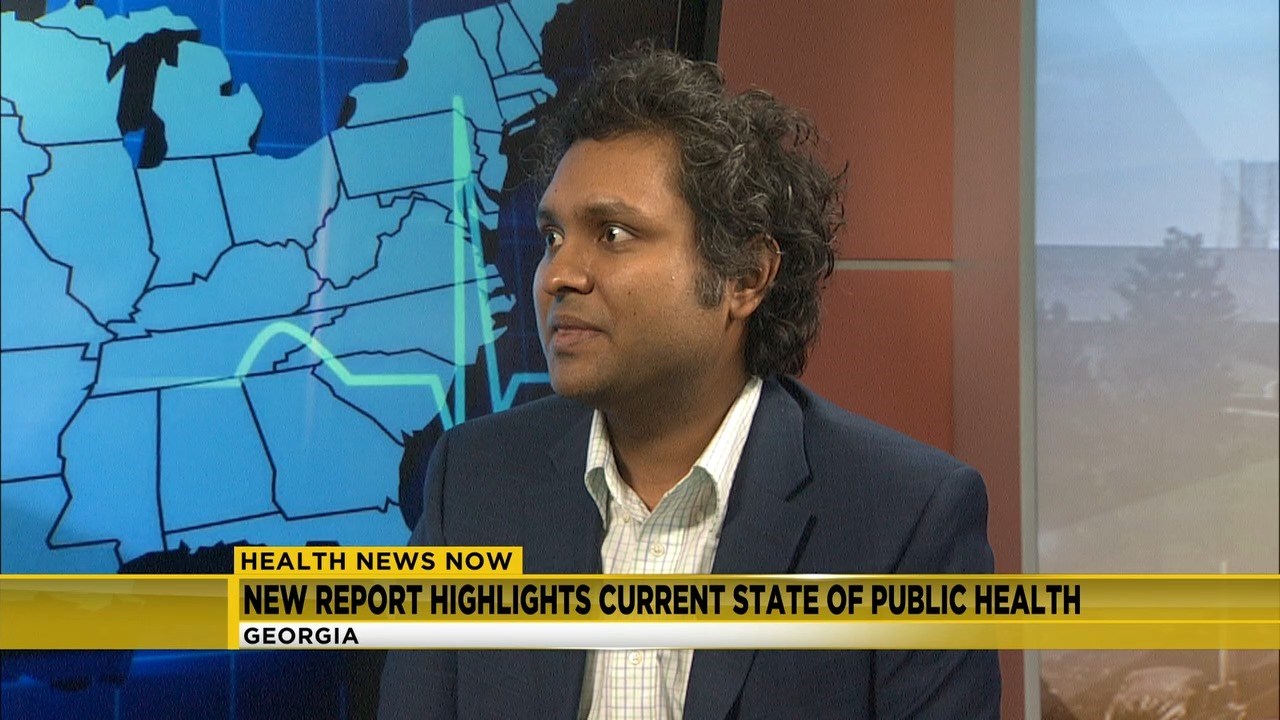
Augusta University’s second annual Healthy Georgia Report has been released, offering a snapshot of health in the Peach State as compared to not only neighboring states, but also the entire country. While Georgia’s population is doing well in some key health factors, researchers also found areas that could benefit from more awareness and public policy action. Biplab Datta, PhD, assistant professor in the Institute of Public and Preventive Health and the Medical College of Georgia’s Department of Population Health Sciences, collaborated with other IPPH faculty and staff to update the report and add new categories this year. The goal of the report is to connect with lawmakers, community leaders and researchers, stimulate conversations about public health needs and promote action, such as greater community engagement, research for informing effective policies and appraisal of required funds. “We need to make lawmakers aware of the public health situation in the state of Georgia,” said Datta. “We hope this report will help identify areas that need policy attention. It can also play an important role in bridging the gap between researchers and policymakers.” Using 2021 data from the Behavioral Risk Factor Surveillance system, the National Survey of Children’s Health, the American Community Survey and the Center for Disease Control and Prevention’s COVID Data Tracker website, the report was compiled on numerous health topics. Some categories studied include high cholesterol, hypertension, obesity, arthritis, asthma, cancer, cardiovascular diseases, alcohol consumption, diabetes and more. It also broke down each category by age, sex, race, income level and other socioeconomic indicators to get a full representation of the data. New to the study this year is an in-depth look at health insurance coverage, COVID-19 vaccinations, breastfeeding, child maltreatment, and unmet healthcare need of children. Georgia ranks 49th in the nation when it comes to health insurance coverage. That was a surprise to Datta. “I didn’t expect the numbers to be that bad, but I think it also indicates the scope of work that we need to undertake to improve insurance coverage in Georgia,” he said. Another surprise was the low rate of flu vaccination in Georgia. “We know there is a difference between whites and Blacks in the U.S. But when we look at and compare Black people in Georgia with Blacks in the rest of the southeastern states, we see the flu vaccination rate was significantly lower among Blacks in Georgia. This is an issue that warrants further research to understand the underlying causes of such disparity,” said Datta. As it was a year ago, hypertension remains a concern. There are several issues involved when talking about hypertension but there are also straightforward ways to improve the condition Datta said. “I think one of the core components of hypertension control is just changing some behavioral stuff. If we just reduced the sodium content in our daily diet, if we do regular physical exercise for a certain amount of time that will significantly improve our hypertension management. Community-level initiatives to make people aware of these things can make a real difference,” said Datta. Residents in Georgia are doing better in several areas such as obesity, cancer rates, asthma prevalence and depressive disorders. Datta said it’s important to recognize these improvements so we can learn from them. “We need to figure out where we are doing well and use that experience in areas where we are not doing so well. It will help us move toward the right direction.” He added it’s important to always be looking for ways to evolve the study, and that includes adding new categories when enough data is available. “We didn’t cover sexually transmitted diseases in this year’s report, which we would like to add when data will become available. We’d also like to add teenage pregnancy, maternal health issues, gun violence and opioid use,” he said. Looking to learn about health in the Peach State? Then let us help. Biplab Datta is available to speak with media regarding this important topic. Simply click on his icon now to arrange an interview today.



Georgia Southern University’s Staff Council Professional Development Committee, in coordination with the Office of Military and Veteran Services, will offer Green Zone Training to faculty and staff on the Statesboro and the Armstrong campuses in February. “This training will highlight our military-connected student population, military culture and experiences, and help participants recognize obstacles these students face in higher education,” said Georgia Southern Director of Military and Veteran Services George Fredrick, Ed.D. “In addition to the Georgia Southern Military Resource Center, Green Zone Training will assist in identifying other campus resources that are available for students, staff and faculty.” Georgia Southern currently has more than 3,500 military-affiliated students across its three campuses in Statesboro, Savannah and Hinesville. Jodi Middleton Kennedy, director of the Office of Leadership and Community Engagement, benefitted from last year’s session. “Green Zone Training is an amazing opportunity for staff to learn not only how we can support military-connected students, but also some of the unique obstacles they face as students navigating their educational journeys,” she stated. “It is clear that George Fredrick and his team in Military and Veteran Services are passionate about their roles, and it was amazing to be able to connect with a panel of students and hear about their personal experiences as Georgia Southern students.” University Academic Success Coach Lydia Hinkle also thought it was advantageous to participate in Green Zone Training for multiple reasons. “It is important to be aware of the different types of students we serve and what their needs are so that we can better assist them as staff members,” said Hinkle. “As staff members, we should want to do these kinds of training opportunities so that we can support these students as best as we can. Not only does it increase your value as an employee to be able to understand your students better, but it increases our appeal as a university if we, as a whole, are known to be extremely knowledgeable and supportive of this student population. “I did learn a lot about what our students from this population need and would like to see happen, and brought some information back to my department on how we can better assist these students.” During the Green Zone Training in Savannah, recipients of three Military Spouse Scholarships totaling $10,000 will also be recognized. Green Zone Training will take place on the Statesboro Campus on Thursday, Feb. 2, in the Williams Center and on the Armstrong Campus in Savannah on Feb. 9 in the Ogeechee Theatre. Both events take place from 9:30 to 11:00 a.m. For more information about Green Zone Training or to arrange an interview with Georgia Southern's Director of Military and Veteran Services George Fredrick - simply reach out to Georgia Southern Director of Communications Jennifer Wise at jwise@georgiasouthern.edu to arrange an interview today.

ChristianaCare Named a Most Wired Health Care Technology Leader for 7th Consecutive Year
For the seventh consecutive year, ChristianaCare has earned the “Most Wired” designation from the College of Healthcare Information Management Executives (CHIME), which assesses how effectively health care organizations apply core and advanced technologies to improve health and care in their communities. Among the more than 38,000 organizations surveyed by CHIME, ChristianaCare ranked above peers in categories such as analytics and data management, population health, infrastructure and patient engagement. The survey assessed the adoption, integration and impact of technologies in health care organizations at all stages of development, from early development to industry leading. “At ChristianaCare we are curious and continuously looking for ways to innovate,” said ChristianaCare President and CEO Janice E. Nevin, M.D., MPH. “Embedding that behavior in our organization has led to brilliant planning and extraordinary execution of new, technology-enabled models of care as our patients demand greater service and convenience, including greater access from home.” ChristianaCare was recognized with a Performance Excellence Award for Most Wired’s acute and ambulatory categories. That level is reserved only for organizations that are considered leaders in health care technology who “actively push the industry forward” and are “realizing meaningful outcomes, including improved quality of care, improved patient experience, reduced costs, and broader patient access to healthcare services.” “We are on the cutting edge of health care innovation, yet we have only scratched the surface of digital care,” said Randy Gaboriault, MS, MBA, chief digital and information officer at ChristianaCare. “We have embarked on building a digital distribution network of health care that strengthens every day. And we are guiding a digital thread that weaves together all the components in and outside the walls of the hospital and provider’s office to improve the health of every person we touch.” The Most Wired recognition highlights ChristianaCare’s success in the launch of the Hospital Care at Home program, which is transforming the very nature of how acute care is delivered, as well as the creation of digital platforms that radically improve the patient experience. Launched in December 2021, ChristianaCare’s Hospital Care at Home program offers the highest level of in-home acute care in Delaware. The program combines virtual and in-person care provided by a team of physicians, nurse practitioners, registered nurses and other providers, and has to date cared for more than 200 patients. These in-person and virtual visits from the health care team mean that a patient doesn’t need to leave home to get better. Virtual technology and home health equipment brought into the patient’s home ensure around-the-clock monitoring and care that mirror a traditional hospital setting. ChristianaCare’s digital patient engagement capabilities have streamlined nearly every aspect of the patient experience. Through these digital tools, the registration, check-in and intake of patients are becoming more streamlined, improving both patient experience and efficiency at ChristianaCare practices. The digital platform also enables patients to self-schedule appointments, easily complete their medical histories and check in to appointments by simply scanning a QR code with their digital device. “These digital offerings have placed our patients in the driver’s seat,” said Lynne McCone, MBA, chief applications officer and vice president of IT at ChristianaCare. “The benefits of a conducive, consistent patient journey and experience in turn improves practice operations and efficiency and dismantles administrative burdens for both patients and caregivers. It’s a huge win for consumers, patients and providers.” The Digital Health Most Wired survey and recognition program serves as a comprehensive “digital health check-up” for health care organizations across the world, according to CHIME. As success in digital health increasingly determines the quality of patient care, the scope of the CHIME Digital Health Most Wired survey reflects the progress of leading health systems, like ChristianaCare, as they reinvent health care for a new century. “We are proud to honor your team’s exceptional dedication to excellence in digital health,” said CHIME President and CEO Russell P. Branzell of ChristianaCare. “Your pioneering performance in the industry inspires other organizations by example. Patients in communities around the world receive better care when you drive change through digital transformation, as you have proven through your success in this rigorous program.”



Social media engagement style may be linked with perceived social connectedness – new research
A novel experimental task measuring behaviour on a social networking site identifies key differences between passive, reactive and interactive usage 526 users were observed on the mock platform to monitor usage according to frequency of likes, shares, and scrolling More interactive users reported greater social connectedness and social capital Researchers at Aston University have developed a new experimental task, involving a mock social networking site, which grouped people into three distinct styles of social media use—passive, reactive and interactive. Led by Dr Daniel Shaw and Dr Charlotte Pennington in the School of Psychology, at Aston University, the new findings also suggest that interactive users reported greater feelings of social connectedness than passive or reactive users. Despite the wealth of research into the psychological impact of social networking site (SNS) usage, inconsistent findings have prevented any firm conclusions from being drawn. While some studies have concluded that social media usage was associated with increased social connectedness and reduced loneliness, others reported detriments to loneliness and wellbeing with greater use of such platforms. In their new work, published in the journal PLOS ONE, the researchers administered the Social Networking SiteBehavior Task (SNSBT) online to 526 individuals, who also completed questionnaires on their levels of loneliness, sense of belonging, social connectedness, online social capital and answered questions about their Facebook usage and friendship network. The SNSBT grouped users into three discrete groups depending on how often they clicked “Next,” “Like,” or “Share” on 90 images presented to them on the mock SNS. On average, passive users, about 39% of those in the study, clicked “Next” most often (on 85% of images). Reactive users, 35.4% of the study, most often clicked either “Next” (59% of the time) or “Like” (36% of the time). Interactive users, 25.7% of participants, mostly clicked “Like” (51% of the time) or “Share” (20% of the time). Analysis of the data revealed that interactive users had, on average, more Facebook friends, spent more time on Facebook, and reported greater feelings of social connectedness and social capital than passive or reactive SNS users. However, this study could not determine if any causal or directional link between these factors exists. The researchers are planning to carry outfurther work in this area. The authors concluded that the simple SNSBT tool they developed, now publicly available, could help researchers quantitatively differentiate between different SNS usage styles and overcome the limitations of self-report data, enhancing future research in the field of cyberpsychology. Dr Daniel Shaw said: “This study introduces a new tool with which researchers can measure different styles of engagement on social networking platforms and indicates that our style of engagement can be more important for our psychological wellbeing than the amount of time we spend on social media.” Dr Charlotte Pennington added: “Individuals displaying more interactive styles of usage on our platform reported stronger feelings of social connectedness and social capital compared with those who showed more reactive or passive behaviour. Our team has developed the first mock social networking site that can be used to measure natural styles of usage, free from the ethical concerns that arise when people log into their own phones.”

Baylor Expert: Finding Work-Life Balance with Remote Work
Before March 2020, the idea of remote work was not a realistic option for many businesses. However, the COVID-19 pandemic changed options drastically for employees almost overnight, and the remote work experiment began. Fast forward to today, and traditional work styles are no longer considered the only option and many employees are looking for the freedom to choose where they work. Remote work is generally viewed positively, but it has its own distinct set of challenges, and businesses that help employees respond to these challenges will benefit with a more productive and healthier workforce, said remote/hybrid work expert Sara J. Perry, Ph.D., The Ben Williams Professor of Management at Baylor University’s Hankamer School of Business. This is especially important as remote work continues to be a popular option. According to a Gallup poll conducted in August 2022, 34% of employees prefer to work exclusively remote, 60% said they would like a hybrid model and only 6% would like to return to a traditional full-time on-site model. Two keys to success for remote work: flexibility and intentionality Perry has researched the issues around changes to the workplace for over a decade. In a recent article, Interruptions in Remote Work: A Resource-based Model of Work and Family Stress, published in the Journal of Business and Psychology, Perry and her research team surveyed 391 couples to understand the difficulties in finding the balance between work and family when at least one of them works from home. The research shows the keys to success for remote work are flexibility and intentionality. “You can't have a one-size-fits-all; it has to be a nuanced approach,” Baylor University's Sara J. Perry said. Perry identified two risks to successful remote working: Increased interruptions from family members Blurring of work life with family life Develop healthy break habits Unexpected work interruptions make it difficult to focus on the work tasks, and the lack of boundaries between work and family can turn job duties into a non-stop endeavor for the remote employee. These interruptions can cause frustration, a lack of focus and difficulties getting back on task that can eventually put stress on family relationships. “The simple act of establishing effective breaks during work hours can help people sustain their well-being and job satisfaction without sacrificing productivity. The negative effects of not establishing healthy break habits include increased stress for the employee and their family,” Perry said. “If you’re using your breaks wisely, the study suggests that those intentional breaks reduce the damage that interruptions.” A good place to start for remote employees is incorporating some non-work goals into breaks throughout the workday, which can be as simple as starting or finishing a household chore. According to Perry, these activities make a difference in overall stress, engagement and productivity. Breaks focused on self care are also important to include throughout the workday. “Meditating or taking a nap makes you feel restored because you are doing things that make you feel accomplished and give your brain a break from your actual work,” Perry said. Employers also have an important role to play in establish a habit of intentional work breaks. “A lot of people say, ‘I never take breaks,’ or ‘I don't take enough breaks,’” Perry said. “By offering staff the autonomy to plan their own workday that includes breaks without guilt, employers also benefit. Reducing the stress of struggling to maintain a work-life balance will also reduce burnout.” Understanding how to overcome these and other remote work challenges requires employers and employees be “intentional about meaningful communications and connections,” Perry said. She added that leaders who recognize the importance of work versus family time can help employees to develop strategies that allow them to grow and learn while maintaining a healthy balance between work and family.