
Experts Matter. Find Yours.
Connect for media, speaking, professional opportunities & more.

ExpertSpotlight: The iPhone turns 17 years old Saturday!
The iPhone revolutionized the tech industry and transformed how we communicate, work, and interact with the digital world. This topic is not only newsworthy due to its technological innovation but also because of its significant impact on global culture, economics, and societal norms. The iPhone’s evolution over the past decade and a half has shaped consumer expectations and driven the development of the mobile and app economy, affecting everything from entertainment to education. The history of the iPhone offers a wealth of story angles that highlight its enduring influence and ongoing evolution, including: Technological Innovation and Evolution: Exploring how the iPhone has advanced in terms of hardware, software, and design, setting new standards in the tech industry. Economic Impact and Market Dynamics: Analyzing the iPhone's role in shaping the global smartphone market, influencing economic trends, and driving Apple's financial success. Cultural and Social Influence: Investigating how the iPhone has changed social behaviors, communication methods, and media consumption patterns worldwide. Privacy and Security Challenges: Assessing the iPhone's impact on privacy concerns and cybersecurity, including Apple's stance on data protection and encryption. App Economy and Ecosystem Development: Understanding how the introduction of the App Store transformed the software development industry and created a new economic ecosystem. Environmental and Ethical Considerations: Examining the environmental footprint of iPhone production, Apple's sustainability initiatives, and ethical issues related to manufacturing and labor practices. The history of the iPhone offers journalists an opportunity to delve into the multifaceted ways this device has shaped and continues to shape technology, economy, and society. Connect with an Expert about the History of the iPhone: Alex Cequea Editor in Chief · iPhone Life magazine Meredith David, Ph.D. Associate Professor, Marketing · Baylor University Mark Jamison Director/Professor · University of Florida Gokila Dorai, PhD Assistant Professor · Augusta University Liran Ma Professor · Texas Christian University To search our full list of experts visit www.expertfile.com Photo credit: Tron Le


It's Pride Month - We have experts who can help with all your coverage.
Pride Month stands as a vital commemoration of the LGBTQ+ community's ongoing fight for equality, acceptance, and visibility. Rooted in the historic Stonewall Riots of 1969, Pride Month not only celebrates the progress made in LGBTQ+ rights but also highlights the persistent struggles faced by the community. This topic is newsworthy due to its significant social, cultural, and political implications, reflecting broader societal issues of human rights, diversity, and inclusion. Furthermore, Pride Month's impact on public discourse, policy changes, and cultural awareness underscores its relevance. Key story angles include: The Evolution of Pride: Tracing the history of Pride Month from the Stonewall Riots to its current global celebrations, and its role in shaping LGBTQ+ rights. Intersectionality in the LGBTQ+ Community: Exploring the experiences and challenges faced by LGBTQ+ individuals who belong to multiple marginalized groups. Policy and Legal Milestones: Reviewing significant legal and policy advancements in LGBTQ+ rights and the ongoing legislative battles. Corporate and Community Engagement: Analyzing how businesses and local communities are participating in Pride Month, including corporate responsibility and support for LGBTQ+ causes. Media Representation: Investigating the portrayal of LGBTQ+ individuals in media and entertainment, and its impact on public perception and acceptance. Mental Health and Well-being: Discussing the mental health challenges within the LGBTQ+ community and the resources available to support them. Connect with an Expert about the History of Pride Month: Margaret Galvan Assistant Professor · University of Florida Genny Beemyn Director of The Stonewall Center · University of Massachusetts Amherst Melanie Wilcox, PhD Assistant Professor and Researcher · Department of Psychological Sciences, the Institute of Public and Preventive Health, and the Department of Psychiatry · Augusta University Emily Fisher Professor · Loyola Marymount University Ryan J. Watson, Ph.D. Ryan J. Watson, Ph.D. Assistant Professor of Human Development and Family Studies · University of Connecticut To search our full list of experts visit www.expertfile.com Photo credit: Sara Rampazzo

Who’s winning the streaming wars?| Media Advisory
Netflix has it's Q1 results out today and all eyes are on the streaming industry. The battle for dominance in the streaming industry continues to intensify, shaping the way audiences consume entertainment and influencing the future of media consumption. As major players vie for subscribers and content rights, the outcome of the streaming wars has significant implications for consumers, content creators, and the broader entertainment landscape. Here are key story angles for journalists to explore: Market analysis of streaming platforms: Examining the strategies and market performance of leading streaming services in terms of subscriber growth, revenue, and content offerings. Impact on traditional media and broadcasting: Investigating how the rise of streaming platforms is reshaping traditional television and movie distribution models, as well as advertising trends. Content wars and original programming: Delving into the competition among streaming services to produce exclusive and original content, including trends in genres, diversity, and production budgets. User experience and interface innovation: Exploring advancements in streaming technology, user interface design, and personalization features aimed at enhancing the viewer experience. Global expansion and regional competition: Analyzing the expansion efforts of streaming giants into international markets and the challenges they face in competing with local and regional players. Regulatory and antitrust implications: Considering the regulatory scrutiny and antitrust concerns surrounding the dominance of certain streaming platforms and their impact on competition and consumer choice. Connect with an Expert about Streaming: For journalists with questions or looking to cover the streaming wars? here is a select list of experts. To search our full list of experts visit www.expertfile.com Rahul Telang Trustees Professor and Program Chair · Carnegie Mellon University Donghee Yvette Wohn Associate Professor · New Jersey Institute of Technology Michael D. Smith Professor · Carnegie Mellon University Karen Shackleford, Ph.D. Doctoral Faculty - Media Psychology · Fielding Graduate University Stephen J. Andriole, PhD Thomas G. Labrecque Professor of Business Technology | Villanova School of Business · Villanova University Photo Credit: Venti Views

It's going to be a busy week in America when it comes to politics. And if you're covering - we have experts who can help with any of your questions or stories. Tom Smith - Professor in the Practice of Finance - Professor Smith is an expert in labor economics, entertainment and healthcare economics, as well as real estate and urban economies. David Schweidel - Professor of Marketing - Professor Schweidel has been closely researching the impact of AI in society, especially elections. He can speak on the impact AI is expected to have in this year’s elections. Professor Schweidel also has extensive work in election marketing. He researched negative campaign advertising and if a negative tone has a positive impact on election results. Ramnath Chellappa - Professor of Information Systems & Operations Management - Professor Chellappa is available to discuss the economics of information security and privacy. He can also discuss the economics and impact of AI. Raymond Hill - Professor Emeritus Hill is available to discuss any issues on the economy related to energy. If you are looking to arrange an interview - simply click any of the listed expert's icons to set up a time today or email Kim Speece for assistance.





Baylor Fashion Forecasting Expert: The Business and Power of Color
2023 Color of the Year Viva Magenta Every December for 20 years, the global color management company Pantone reveals its Color of the Year for the upcoming year. For 2023, Pantone has chosen a color that “vibrates with vim and vigor”: Viva Magenta. More than just a pretty color for fashion, Viva Magenta 18-1750 is the result of years of research into trends in technology, entertainment and fashion. But what does the Color of the Year mean to the average consumer? According to Baylor University fashion forecasting expert Lorynn R. Divita, Ph.D., retailers with this information can offer products that will resonate with their customers. “Color is the most important factor in whether someone is going consider a purchase,” Divita said. However, “Retailers have to get it right.” Pantone collaborated with diverse group of industry leaders such as Motorola, Lenovo, Spoonflower fabrics and Artechouse Studio to ensure they correctly identified emerging consumer tastes by making connections beyond the boundaries of fashion. “Fashion change happens because people demand novelty,” Divita said, “and retailers want to make people happy.” Using color forecasting is a low-risk way for retailers to provide that novelty. Unlike changes in skirt lengths or pant styles, color is a trend available to everyone. “You can choose how you do it. It is through a garment? Is it through an accessory? Color will translate to multiple categories. So, everybody can participate in a way that feels comfortable to them,” Divita said. Color Forecasting is typically a reliable way to predict trends, but it isn’t always sure thing. Consumers won’t purchase something they fundamentally don’t like. To be successful, color forecasters must be mindful of that. Divita points to the words of cultural reporter and author Virginia Postrel on the two criteria needed for a trend to takeoff: “Do I like that?” and “Am I like that?” If the answer to both questions is yes, the trend is more likely take off. If not, retailers will be stuck with warehouses full of unsold merchandise. Pantone began in 1963 as a color matching standard for the printing industry offering uniformity of color throughout the design and manufacturing process. The numbers behind each color are a recipe for creating an exact match. According to the Pantone website, “Pantone’s color language supports all color conscious industries; textiles, apparel, beauty, interiors, architectural and industrial design, encompassing over 10,000 color standards across multiple materials including printing, textiles, plastics, pigments, and coatings.” Using this industry knowledge, the company branched out into color forecasting in 1999 with its first color of the year, Cerulean. Today, the Pantone Color of the Year is an eagerly anticipated announcement for the fashion forward. Only time will tell if Viva Magenta will be embraced or become footnote in pop culture history. Until then, be on the lookout at your favorite stores for the next big thing. If you are looking for the correct Pantone Baylor colors, they are Baylor Green 3435 and University Gold 1235.


It's happening ... and the NFL likely couldn't be happier now that the Kansas City Chiefs are returning to the SuperBowl. Ever since Taylor Swift made her first appearance back in September to cheer on her new beau Travis Kelce, the attention she has brought has had serious returns for the league in the form of new fans, surging ticket prices and record-breaking ratings on TV. In a recent interview with CNBC, Chiefs CEO Clark Hun indicated that 'Our female audience has grown leaps and bounds.' And a recent study from Apex Marketing Group says that Swift has generated brand value of $331.5 million for the Chiefs and the NFL. Goizueta professor of marketing Mike Lewis examined Swift’s fandom to uncover who considers themselves Swifties. He found her fandom is strongest in the younger generations but found 22% of Baby Boomers also claim to be fans. And while her fandom leans female, 29% of male respondents claimed they were fans. And, when he looked at the NFL, Lewis found an interesting link. “There is considerable overlap between football and Taylor Swift fandom. 38% of football fans consider themselves Swift fans compared to only 21% of football apathetics,” says Lewis. Professor Lewis’ full report also looks at the political leanings of Swift fans and their religious affiliations. Mike Lewis is a Professor of Marketing and the Faculty Director at the Emory Marketing Analytics Center. His work focuses on the intersection of sports analytics and sports marketing. He studies issues ranging from player performance analytics to brand equity in sports. This approach makes Professor Lewis a unique expert on fandom as his work addresses the complete process from success on the field to success at the box office. Mike is available to talk about the economic impact Taylor Swift is having on professional football - simply click on his icon now to arrange an interview today.


New Goizueta Research: Fandom and the Republican Party and Why It Matters
When we think about “fans” we typically think about sports or entertainment … but new research from the Goizueta Business School shows that political figures are showing increased levels of fandom. Fans of political figures often support candidates, providing a very knowledgeable base for them. Political fans work to use their knowledge to influence others, raise money, attract volunteers and win elections. Professor Mike Lewis from Emory University’s Marketing Analytics Center looked at political fandom among Republicans and the current slate of presidential candidates. The survey of likely Republican voters found former President Donald Trump has a hold on Republican fandom that actually impacts the other candidates in a surprising way. Candidates who are openly anti-Trump see their fandom negatively impacted. The study found former New Jersey Governor Chris Christie has a 90% rate of anti-fandom followed by South Carolina’s Tim Scott at 56%. Both have had negative opinions of Trump. The survey can be found here: The survey is a must read for anyone interested in politics, it showed: Political Fandom by Generation: Millennial Republican voters had the strongest Trump fandom (63%) followed by Generation X (58%). Ramaswamy had the second highest fandom among Millenials while DeSantis was second among Gen X. Having a Beer with Trump: The survey of almost 1,000 Republican voters was asked which candidate would participants most likely meet to have a coffee or beer. Former President Trump was the overwhelming choice among respondents in all age groups. Vivek Ramaswamy was the second choice among most age groups. Christie was the last choice in most age groups. Voters and President Biden: A final question asked likely Republican voters how they feel about President Biden. The Biden Positive segment was 23.6% of those asked versus 76.4% in the Biden Negative segment. The largest Biden negative group was among Trump fans which because of the number of supporters was also the largest Biden positive group. The smallest Biden negative group was fans of former Governor Chris Christie. Campaigns and elections are won or lost on polling, market research and the data collected by surveys just like this. And if you are interested in knowing more about this survey and how fandom is becoming an essential piece of political campaigning - then let us help. Mike Lewis is an expert in the areas of analytics and marketing. This approach makes Professor Lewis a unique expert on fandom as his work addresses the complete process from success on the field to success at the box office and the campaign trail. Michael is available to speak with media - simply click on his icon now to arrange an interview today.

It's as if it has been the biggest love story since Grace Kelley married Prince Rainer or when Harry met Meghan for that matter. But as much as fans, media and even the play-by-play callers are giving an enormous amount of attention to Taylor Swift every time she shows up and cheers on her new beau Travis Kelce, experts wonder...will it have a lasting impact on attracting new fans to the NFL? Recently, Bloomberg News explored if an entertainment powerhouse like Taylor Swift can move the yard-stick of a generation that is seeing a shrinking fanbase and serious decline in viewership. For expert insight, Bloomberg contacted Goizueta Business School's Mike Lewis to offer his opinion and perspective on the situation. Historically, leagues didn’t worry much about the transmission of passion for a sport and team. Homes typically had one screen — the family television — and if a parent was watching the Chiefs game, so were the kids. Fandom at home drove fandom outside of it. Kids wore NFL merchandise to school and bonded with their classmates. Youth sports participation, partly inspired by what was on TV, amplified the community solidarity and enthusiasm for all levels of a given sport. Those traditional forms of fan development are breaking down. "We've evolved to this situation where kids are getting their content via the smartphone and everyone going off to their corner," explains Michael Lewis, director of the marketing analytics center at Emory University. The consequences are striking. In 2021, Lewis published data on sports fandom among different generations. Millennials overwhelmingly identified themselves as the most avid fans (42%), followed by Gen X and Baby Boomers. Gen Z was a striking outlier. Though 23% identified themselves as passionate spectators, 27% identified themselves as "anti-sports." No other generation came close to that level of sports antipathy. However, Gen Z isn’t uninterested in competition. Rather, its media consumption habits are pushing it to different outlets. Survey data that Lewis published in August reveals that esports (competitive video gaming) is now more popular than traditional sports. Professional sports is a multi-billion dollar business and appealing to multi-generational audiences is no easy task. If you're covering or interested in learning more - we can help. Mike Lewis’s work focuses on the intersection of sports analytics and sports marketing. He studies issues ranging from player performance analytics to brand equity in sports. This approach makes Professor Lewis a unique expert on fandom as his work addresses the complete process from success on the field to success at the box office. Michael is available to speak with media - simply click on his icon now to arrange an interview today.
Expert Insight: The Voice of Alexa: How Speech Characteristics Impact Consumer Decisions
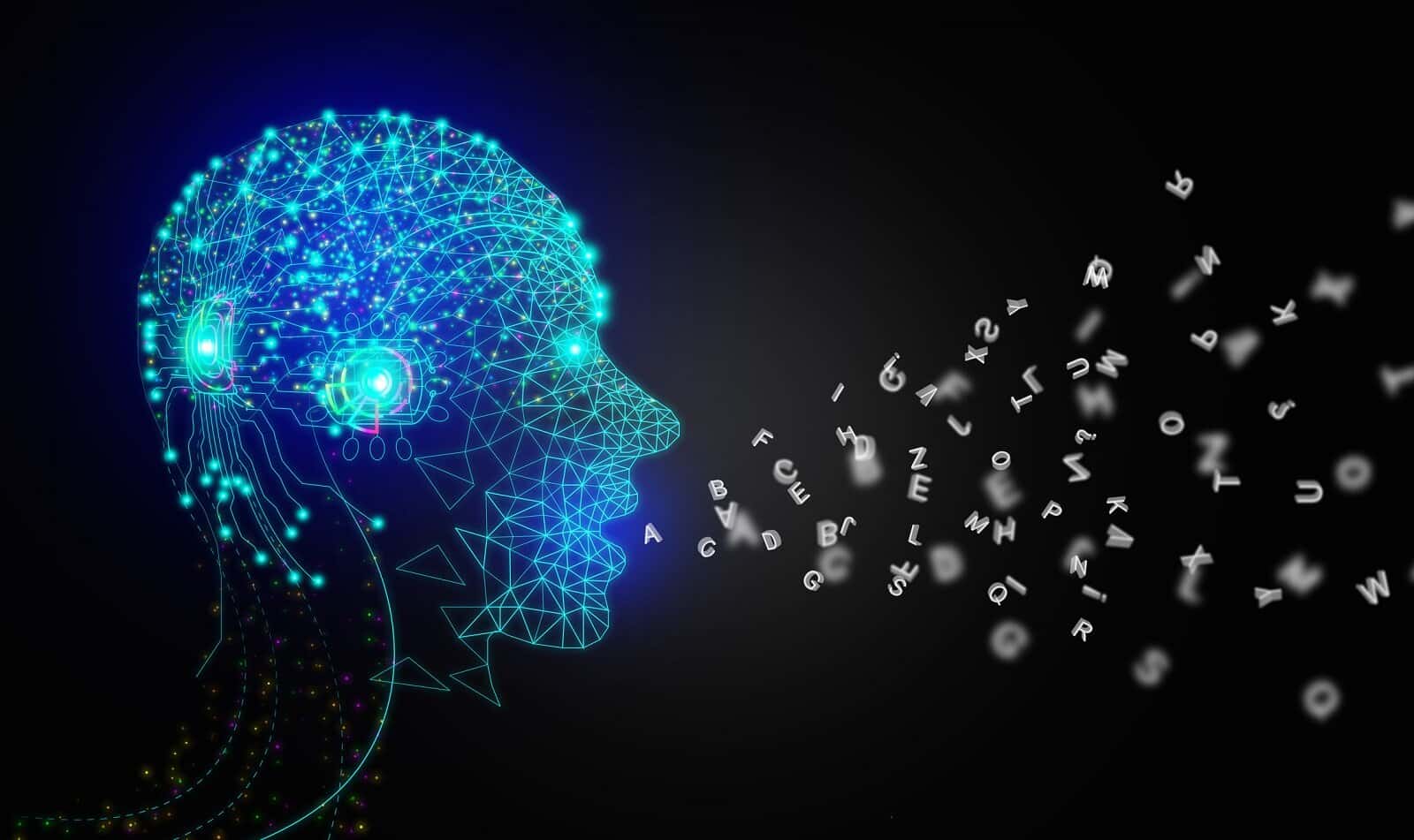
In the 2020 film “Superintelligence,” an all-powerful artificial intelligence attempts to take over the world, and it studies an average person, played by Melissa McCarthy, to decide if humanity is worth saving. The AI is voiced by James Corden—a voice it chooses because it knows it’s one McCarthy’s character will engage with. Rajiv Garg, associate professor of Information Systems & Operations Management at Emory’s Goizueta Business School, shows the “Superintelligence” trailer before his research presentations to set the tone. Garg conducts research that explores the impact of artificial intelligence voices on consumer behavior and purchase intent, along with Haris Krijestorac, a professor at HEC Paris, and Vijay Mahajan, a professor from The University of Texas at Austin. Garg’s research began when Amazon launched celebrity voices for its Alexa device in 2019. From Samuel L. Jackson to Shaquille O’Neal, users can now get their news and entertainment, while interacting with their favorite superstars. “I questioned if certain voices could get more engagement or more purchases from consumers,” Garg says. If Alexa starts talking to you in Samuel L. Jackson’s voice, will you continue the conversation? What could Samuel L. Jackson’s voice sell you that you would buy? Garg and his team began their research by collecting more than 300 celebrity voice samples, which they analyzed based on their sound characteristics, such as amplitude, frequency, and entropy. They looked at 20 sound characteristics and identified that all the voices could be segmented into six clusters: ostentatious, colloquial, friendly, authoritative, seductive, and suave. The team then created advertisements for select products using computer generated voices for each of the six clusters, opting for artificial intelligence-created speech instead of celebrity deep fakes due to permission legalities. They chose a shoe and an office chair as their products, and created two different advertisements for each product. One ad was simple, denoting the shoe as comfortable for all-day wear and the office chair as comfortable for sitting in for extended time periods. The other ad was hedonic, denoting the shoe as crafted with Italian leather and the office chair equipped with several massage features. They recorded the four advertisements using both a female and male voice for all six voice clusters. Study participants listened to each of the four advertisements in one of the 12 voices, which was randomly selected. After the advertisement was played, participants were asked if they wanted more information, and later, if they wanted to buy the product (omitting the price as to not add another factor to their decision making). Influencing Consumer Behavior For simple, utilitarian products, they found no significant effect of voice on information seeking behavior. Garg says once participants hear this type of advertisement, they simply decide to purchase or move on. Participants do, however, engage more in information seeking behavior for hedonic products when the voice is ostentatious, seductive, or authoritative. The team also found men were more likely than women to engage with ostentatious or seductive voices, and women were more likely to engage with friendly or colloquial voices. Overall, they found participants did not seek information with male voices. For information seeking, men and women only engage if the voices are female, which is somewhat intuitive. The industry is doing this—Alexa, Google, and Siri all have a female voice. In terms of purchase intention, they found ostentatious voices have higher yields for utilitarian products. Men, especially, were more likely than women to purchase a utilitarian product advertised in an ostentatious voice. Think about advertising a stapler. It’s a stapler—it staples paper—but you advertise it in a French accent to make it sound interesting. Conversely, for hedonic products, an ostentatious voice has a negative effect on purchase intent because Garg says it can make the product sound gimmicky. Their research shows colloquial voices do the best here because people focus more on the advertisement’s content. Across the board, they found seductive voices have a negative effect on purchase intent, but more so on utilitarian products compared to hedonic ones. Men were more likely than women to respond positively to seductive and suave voices. Applying the results Voices are another way smart device companies can personalize their customers’ experiences. Garg says these companies should be aware that there may be a certain voice that will garner the best engagement. Their findings are not isolated to business, but may apply to other industries, such as the media. Garg says, for example, if publications intend to increase reader curiosity and engagement, they should use a female colloquial voice on “click to listen” features. Although not yet tested, Garg says he wouldn’t be surprised if their results extend to real-world settings with real human voices as well. During their research, Garg’s team asked participants if they had heard the advertisement voices before, and about 15 percent of respondents says they had. "These were voices we’d created for the first time,” Garg says. “If they say they’ve heard the voice before, that means they were thinking of them as human voices. Although we didn’t study it that way, I do believe what we’re seeing will be relevant for actual human being’s voices and interactions.” Having researched this for years, Garg says every time he listens to a voice, whether a customer service representative or podcast host, he questions whether or not it is impacting his behavior. A lot of times when I’m making a decision, I know that I’m making that decision passively because of the voice. “I’m acting 50 percent based on the rational information in the voice, but the other 50 percent I just want to listen more. There is an inherent desire for a certain voice.” Garg says his favorite part of the research are those “aha moments,” whether they be the influence of voice in his own life or in the industry—such as large companies using female voices in their products to draw engagement. He says he hopes to continue doing this kind of research to help startups and other companies perform better, as AI-powered voices continue to change the way people interact with technology and consume information. “We’re finding these interesting phenomena that can help create new products that are more effective,” Garg says. “I am trying to increase the economic surplus, in some ways to improve society, and this technology presents numerous opportunities.” Looking to know more? Rajiv Garg from Emory’s Goizueta Business School is available to speak with media – simply click on his icon now to arrange an interview today.


Psychology students launch creative sessions to support wellbeing through art
The Aston Creative Wellbeing Group is run and facilitated by Aston University psychology students The group brings students together outside of class with an aim of supporting health and wellbeing through art The group will be running another nine sessions in spring 2023 due to its popularity. A student-led creative wellbeing group has been set up by psychology students at Aston University, with the help of their tutor, to connect student participants through art and help enhance their wellbeing. The Aston Creative Wellbeing Group, which showcases its creative work on its Instagram page, was so well attended in the autumn term - with more than 120 participants - it is now planning another nine sessions meeting weekly during the spring term to continue its mission to bring students together and support wellbeing. With some initial funding from the University welfare team to purchase ‘start up’ materials, the group ran a range of sessions including rock painting, making postcards, learning to crochet, painting and drawing and making festive decorations during the autumn 2022 term. Dr Kate Nicholls, senior personal tutor and teaching fellow in psychology at Aston University, explained why she supported the group to set up. Kate said: "I was keen to develop some student-led initiatives to support health and wellbeing in the School of Psychology. I also hoped it would help the students develop their professional skills and the practical application of their psychological knowledge. "It was art making and creative activities that sparked an interest from some final year psychology students and the Aston Creative Wellbeing Group was born. The group wanted to use the arts to enhance wellbeing, using creative activities to explore sense-making, aesthetic appreciation, provide entertainment and friendships.” Karla Hitchins, a final year psychology student who set up the group, said: “Running the group slides in nicely with my interests in art psychotherapy, but I also really enjoy arts and crafts in my own time. It has been great fun to facilitate this group. “The aim of the sessions is for people to have a safe space where they can connect with their creative side, as well as with other students. At the University, there are wellbeing and counselling services, but I don’t think there is anything quite like this. “Having somewhere to express your feelings, or to just have a creative outlet is incredibly important and I hope that eventually there will be more arts-based interventions for mental health and wellbeing at all universities.” Psychology student and group facilitator, Molly-Emma Taylor, said: “I've experienced a few mental health wobbles during this term, so having the wellbeing sessions has helped me a lot. "For example, the painting session was an amazing way to let out some pent-up feelings and it gave me time to connect with friends. I don't think I would have got so much out of it had I simply painted alone. “I think that the theme of everyone banding together every two weeks and making art, in whatever form it may be, is pretty awesome. It's always fun to see what everyone makes. “The social media aspect of the group on Instagram is nice too, because it means even if someone wasn't able to make it to a session they can still feel like a part of group and see what other people created.” Jacqueline Maloney, mental health specialist at Aston University said: "As a mental health specialist at the University, I have been thrilled to help promote and support our psychology Students’ initiative to provide creative wellbeing activities for our students. "I am a big believer in the therapeutic potential of the arts and through participation in these sessions I have witnessed students relaxing, laughing, trying new crafts, and enjoying time in creative endeavours. I am so pleased that this session will be continued into 2023." For more information about studying psychology at Aston University, please visit our website.
