
Experts Matter. Find Yours.
Connect for media, speaking, professional opportunities & more.

University of Delaware researcher one of 500 contributors to Fifth National Climate Assessment
A.R. Siders, core faculty with the University of Delaware's Disaster Research Center, is one of 500-plus experts who developed the Fifth National Climate Assessment (NCA5), the preeminent source of authoritative information on the risks, impacts and responses to climate change in the United States. Leaders and practitioners highlighted the findings and raised awareness of climate impacts and solutions at a release event on Nov. 14. White House and climate leaders from across the country elevated the key themes of NCA5 and further highlight the Biden Administration’s whole-of-government approach to mitigating and adapting to climate change. Siders focuses on managed retreat, which is the purposeful movement of people, buildings and other assets from areas vulnerable to hazards. She also specializes in climate change adaptation decision-making and evaluation in general: how and why communities decide when, where, and how to adapt to the effects of climate change and how these decisions affect risk reduction and equity outcomes. Joining Siders on the NCA5 were Jing Gao, Assistant Professor of Geospatial Data Science, and Kimberly Oremus, assistant professor of marine science and policy. Siders is available for interviews. Click on her profile to connect.


Georgia Southern’s public health center receives $4 million to assist rural hospitals nationwide
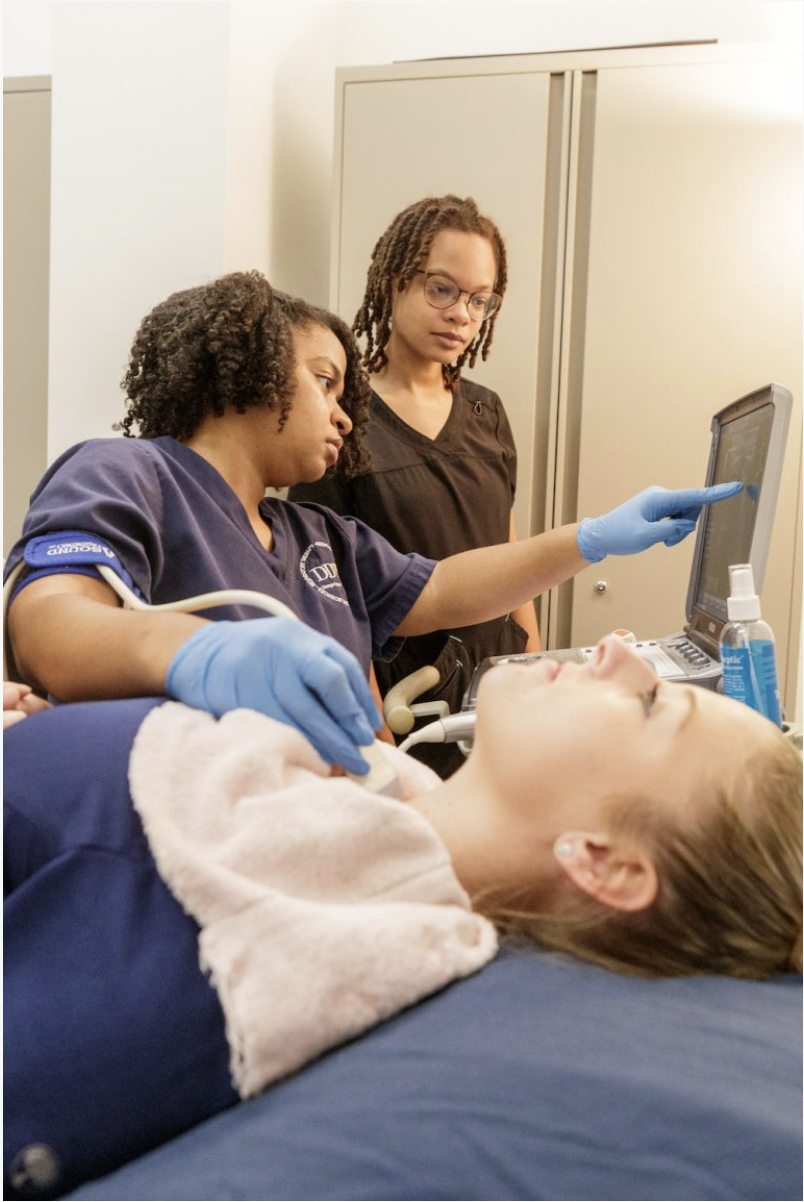
Georgia Southern University’s Center for Public Health Practice and Research at the Jiann-Ping Hsu College of Public Health (JPHCOPH) received a $4 million grant from the Health Resources and Services Administration (HRSA) to provide targeted technical assistance to rural hospitals nationwide. The funding will support the team’s implementation of the Targeted Technical Assistance for Rural Hospitals Program over a five-year period (2023-2028). “Many rural hospitals are struggling financially across the U.S.,” said JPHCOPH Dean Stuart Tedders, Ph.D. “Long-term, the primary program goal of this grant is to ensure that all rural hospitals are financially viable and positioned to serve their communities with the essential health care services that we all need and expect. A viable health care system is essential for assuring that all communities and their residents thrive. I am very proud of the Center for Public Health Practice and Research at the JPHCOPH and the commitment they have made to improving the quality of life of rural and underserved populations across the country.” Bettye Apenteng, Ph.D., and Charles Owens, both professors of health policy and management, serve as the co-principal investigators for the grant. “We are proud to be selected to work cooperatively with rural hospitals across the U.S. to strengthen their viability so they can continue to provide essential health care locally so the residents, the local hospital and the community may thrive,” said Owens. As part of this cooperative agreement, the team will work in partnership with HRSA and rural health stakeholders to provide in-depth and tailored technical assistance to rural hospitals at risk of financial distress nationwide. Technical assistance delivered as part of this program will help rural hospital communities implement a prioritized strategy for maintaining essential services locally through capacity building in evidence-based decision-making, operational and financial improvement, strategic management, community partnership, project implementation and evaluation. “We are excited to extend the work we have done in Georgia with rural hospitals, for close to a decade, to the rest of the nation,” said Apenteng. “We look forward to building strong collaborative relationships with rural hospital communities nationwide.” The grant activities will be executed by a multidisciplinary team that includes additional JPHCOPH faculty Angie Peden; Andrew Hansen, DrPH; Linda Kimsey, Ph.D.; William Mase, DrPH; Tilicia Mayo-Gamble, Ph.D., and Samuel Opoku, Ph.D.; and Parker College of Business’ Kwabena Boakye, Ph.D.; and the College of Arts and Humanities’ Jason Murdock. Interested in learning more or looking to talk with Bettye Apenteng, Ph.D., and Charles Owens about this grant? Simply click on an expert's icon or contact Georgia Southern's Director of Communications Jennifer Wise at jwise@georgiasouthern.edu to arrange an interview today.


An interdisciplinary team from Georgia Southern University was awarded more than $465,000 from the National Academies of Sciences, Engineering, and Medicine to foster the development of scientific and environmental skills that are critical to solving complex issues in the Gulf of Mexico region now and into the future. The award is part of an initiative with the Gulf Research Program (GRP) that awarded $2 million to eight projects that engage children and youth in place-based educational activities. The funded project, “Suwannee Watershed: Assessment and Monitoring of Place to Gain Understanding of Local Flow (SWAMP to GULF),” is led by principal investigator (PI) Lacey Huffling, Ph.D., associate professor of science education, and co-PIs Heather Scott, Ed.D., and Regina McCurdy, Ph.D., both assistant professors of science education. (l-r) College of Education’s Lacey Huffling, Ph.D., Regina McCurdy, Ph.D., and Heather Scott, Ed.D., are part of an interdisciplinary team awarded $465k to train science teachers in the Gulf of Mexico. “I am honored that we were selected to receive funding from the Gulf Research Board,” said Huffling. “Over the past four years, we have developed a strong network of Georgia middle and high school teachers who are dedicated to developing the science and environmental literacy of their students through watershed citizen science, specifically focused on areas of Georgia that flow into the Gulf of Mexico. We are excited to continue to grow this network of teachers in Florida further to foster scientific and environmental literacy of future generations to monitor and advance scientific and community understanding of the Lower Suwannee Watershed.” The group will train and support teachers in Florida to implement place-based learning through citizen science using communities as classrooms to deepen teachers’ and students’ sense of place and connection to local watersheds; research how teachers and students address local issues and solve problems by using and developing their critical environmental agency; and increase participation of rural populations in science, which have historically been underrepresented. This initiative, along with the seven other GRP projects, will help connect young learners across the Gulf of Mexico region with local environmental issues and work toward the betterment of the region at large. “The goal of these grants is to empower young learners through place-based education, an interdisciplinary, student-centered, inquiry-driven teaching and learning practice situated in the local community and environment,” said Karena Mary Mothershed, senior program manager for the GRP’s Board on Gulf Education and Engagement. “These eight projects have a high potential to create long-lasting impacts on underserved students in grades K-8 across the Gulf of Mexico region, enabling them to consider and address environmental challenges impacting their own communities.” Additional SWAMP to GULF project members include Georgia Southern staff and faculty: Mary Thaler, senior administrative assistant for the Center for STEM Education; J. Checo Colón-Gaud, Ph.D., professor of biology and associate dean of the Jack N. Averitt College of Graduate Studies; Shainaz Landge, Ph.D., assistant professor of chemistry, Luke Roberson, coordinator of Community Engagement and Outreach for the Institute of Water and Health; and Asli Aslan, Ph.D., director of the Institute of Water and Health. Interested in learning more? Contact Georgia Southern's Director of Communications Jennifer Wise at jwise@georgiasouthern.edu to arrange an interview today.

Holiday Season is Almost Here and Goizueta Business School has Holiday Experts Ready to Help
The holidays are the difference between operating in the red and operating in the black for many retail businesses. The Goizueta Business School has experts who can provide insight and expertise on a wide range of stories. Economics of the Holiday Season - Economist Tom Smith can discuss seasonal hiring, retail expectations, and the importance of the holiday season to retailers. Black Friday - Doug Bowman can discuss retail expectations and the importance of the holiday season to retailers. He expects this year shoppers will go to fewer stores and not travel long distances, delivery capacity will be an issue, and work from home/school purchases will be hot. AI Changing How We Shop - David Schweidel can discuss how new AI tools are changing how we shop and how brands are using AI to reach prospective customers. Product Reviews See Huge Increases: How Reviews Impact Holiday Shopping - What do reviews mean for the shopping experience and do reviews impact purchase? Reshma Shah can discuss the impact reviews have on the point of purchase. Product Returns - Marat Ibragimov can discuss the retail strategy and impact of holiday gift returns, comparing online returns to brick and mortar. Food and Travel Pricing - Saloni Firasta Vastani can discuss the cost of this year’s holiday dinners. What’s gone up and what’s gone down? She can also discuss the cost of travel this holiday season and what consumers can do to get a better deal. Avoiding Holiday Overspend - Rohan Ganduri can discuss how holiday shopping can expose consumers to credit products like store credit cards that offer various incentives to take up the credit card, often resulting in overspending. Ganduri can discuss his latest research paper on how taking up store credit cards can impact consumers’ future credit outcomes. Social Media & Advertising - David Schweidel can discuss how micro influencers work, how using product placement can cut through the advertising clutter, and the power of product reviews. The Constantly Changing Online Retail Experience - Styling videos, personal shoppers, messaging, and even Augmented Reality (AR) are being used to generate purchases. Doug Bowman can discuss how stores are reimagining the shopping experience to attract customers in person and online. Influencers Influencing Our Purchases - How are creators impacting the economy and are influencers impacting our purchasing decisions? Marina Cooley looks at the creator economy and how TikTok and Instagram are impacting our holiday wish lists and what it takes for a product to go from unknown to trending. She can also discuss how this holiday season will help normalize in-app TikTok shopping (something Instagram has struggled to execute on). How to Attract Customers to the Store this Holiday: Merging Online and In-person Experiences May be the Answer - Shopping looks different and it is up to retailers to stand out not just in the brick and mortar world but also online. The success of a business can balance on the customer experience. Reshma Shah can discuss the policies brick and mortar retailers need to have in place to successfully merge online shopping and the in-person shopping experience. To book your expert interview, call Kim Speece at (404) 849-6579 or email her at kim@leffassociates.com or simply click on the icon available. To find an expert on a specific topic, click the “Search” feature at https://goizueta.emory.edu/faculty/profiles. To check out other recent research, visit https://www.emorybusiness.com/faculty-research/.





Is too much of a good thing actually a bad thing? That’s what researchers in Georgia Southern’s Biodynamics and Human Performance Center aim to find out through a recent study of 75 ultramarathon runners during the 50th anniversary of the Western States 100-mile Endurance Run (WSER) in California. The study focuses on the benefits of physical activity beyond the typical recommended amount by examining the cardiovascular effects of extreme exercise in the WSER, a 100-mile trail race through the Sierra Nevada mountains that climbs more than 18,000 feet and descends nearly 23,000 feet before runners reach the finish. Drs. Grosicki and Babcock (University of Colorado, Anschutz Medical Campus) work through the night to collect cardiovascular measures on race finishers. “We know that exercise is beneficial for health, and national and international public health agencies, such as The American Heart Association, advise that adults get at least 150 minutes of moderate or 75 minutes of vigorous physical activity per week,” said Gregory Grosicki, Ph.D., associate professor in the Waters College of Health Professions Department of Health Sciences and Kinesiology. “Moreover, there is a dose-response relation between exercise and health, whereby an individual can gain even more health benefits by being active for up to 300 minutes per week,” he continued. “However, it is uncertain whether exercising for greater than 300 minutes will confer any additional health benefits, and importantly, excess exercise may actually detract from cardiovascular health.” It is important to note, Grosiciki said, that this apparent “partial loss of health benefits” from excess exercise is theoretical for the time being. “Studies such as ours will help to determine whether this hypothesis is valid, and if so, what can be done about it,” he said. This is the third year Grosicki and colleagues attended WSER to collect data on some of the world’s most extreme athletes. Previous studies focused on changes in gut health during exercise, which, believe it or not, may actually be linked to changes in cardiovascular health. Associate Professor Gregory Grosicki, Ph.D., and research colleagues stand at the start line of the Western States Endurance Run. Grosicki recruited 10 research faculty and students from Auburn University, Florida State University, San Francisco State University and the University of Colorado Anschutz to assist in the data collection. “We measured blood pressure, arterial stiffness, heart size and function and kidney blood flow, and we collected blood and urine from 75 athletes pre-race, 55 of which completed the race and returned for post-race measures,” stated Grosicki. “This is, without question, the largest and most comprehensive dataset ever to be collected at a single event like this.” WSER begins in Olympic Valley, California, and ends in Auburn, California, and is considered one of the oldest and most competitive ultramarathons in the United States. Participation is highly selective, and if chosen, athletes have only 30 hours to cover the distance. The Western States Endurance Run Research Foundation funded this project. This is exciting research and you are a reporter looking to contact Gregory Grosicki, Ph.D. from the Waters College of Health Professions Department of Health Sciences and Kinesiology - then let us help. Simply contact Georgia Southern's Director of Communications Jennifer Wise at jwise@georgiasouthern.edu to arrange an interview today.

Today’s global business environment has led to rising demand for more advanced qualifications. Aston University’s Geoff Parkes explains how a DBA degree can help leaders meet employer demands and identify cutting-edge solutions to business problems. In recent years, the Doctor of Business Administration (DBA) has emerged as a prestigious qualification that equips aspiring business leaders with the skills and knowledge necessary to address complex challenges in the corporate world. Delivered online, Aston University’s Executive DBA programme is designed to accommodate professionals’ busy schedules and exemplifies the flexibility and relevance that DBA degrees offer in today’s dynamic business environment. Turning theory into practice DBA programmes, like their doctoral counterparts, require candidates to delve deeply into advanced business topics and contribute to their chosen field through original research presented in a thesis. What sets DBA graduates apart is their ability to bridge the gap between theory and practice. They are trained to apply their extensive knowledge directly to real-world business problems, making them invaluable assets to their employers. While DBA students are generally not inventing new theories, they are applying existing models in innovative and creative ways that contribute new knowledge both to academia and practice. Universities and business schools that offer DBA programmes will have a cadre of academic supervisors and faculty who can combine scholarly rigour with practical business experience. This is what students look for in their choice of institution. According to the Global DBA Survey from Compass, the typical DBA candidate boasts an impressive 15 years of professional experience on admission to the programme. It’s the norm for DBA students to complete their research while holding middle or senior management positions, showcasing their commitment to career advancement and expertise development. In fact, a DBA candidate’s thesis is usually directly related to a live work issue that requires this level of rigour. Rising educational expectations In the rapidly evolving business landscape of the 21st century, businesses worldwide are seeking leaders who can seamlessly navigate new challenges without extensive training. While a bachelor’s degree coupled with professional experience was once sufficient, the demand for more advanced qualifications has grown substantially. For many, the Master of Business Administration (MBA) has therefore supplanted the Bachelor of Business Administration (BBA) as the requisite ‘entry-level’ degree, with DBA degrees elevating candidates even further. A recent report from EFMD Global found that DBAs are on a growth trajectory, with 86 per cent of institutions offering the qualification expecting an increase in enrolments in the near future. Career advancement and reputation are key growth factors for those seeking to study the qualification. The main driving motivations are the transformation of careers (cited by 81 per cent of respondents), the ambition to achieve the recognition of ‘Doctor’ (cited by 76 per cent) and the need for research with managerial impact (71 per cent). Business as an international language The proliferation of DBA education globally is a relatively recent phenomenon, with many programmes established in the last decade. This trend is not confined to a specific geographic location – the aforementioned Global DBA Survey from Compass indicates that 42 per cent of programmes are based in Europe, 28 per cent in North America and 22 per cent in Asia. DBAs are demonstrating their ability to impart business knowledge that transcends borders. Moreover, the survey highlights an 80 per cent increase in demand for DBA programmes worldwide, with no region experiencing decreased interest and significant growth in the Middle East and Asia. Aston University’s Executive DBA programme, with its flexible distance learning approach, exemplifies this global trend. Taking an academic approach to business Contrary to popular culture perceptions, business leaders rely on a foundation of knowledge acquired through rigorous academic and professional development. A guide in US News & World Report outlines the various stages of a typical DBA online programme, emphasising that candidates undergo multiple phases of research and evaluation to become workplace-ready executives. The journey includes: Research methods: DBA programmes commence with research methods courses that equip students with essential skills for business research. These practical courses introduce students to valuable sources and questions, preparing them for their thesis projects. Thesis and defence: After completing research methods courses, DBA candidates propose their doctoral theses, refining them with faculty supervisors. Supervisors ensure that thesis topics are original and contribute knowledge to the field. Candidates then conduct research and present their findings in a viva, which determines whether they have met the required standard for a doctorate. Benefits of DBA completion DBA graduates stand to enjoy several benefits, including: 1. Increased salary: DBAs command significantly higher salaries compared to other business degrees. PayScale data reveals that while graduates of a bachelor’s degree in business earn an average of GBP£34,000, MBA graduates earn median salaries of £52,000. DBA degree holders stand to earn even more, in executive positions that might include operations director (£87,989), vice-president (£92,800) and finance director (£102,078). 2. Multiple career paths: Unlike PhD programmes that primarily prepare students for academic careers, DBAs offer participants the flexibility to pursue both academic and business careers. Aston University’s Executive DBA programme, in line with global trends, focuses on preparing students for senior management roles. DBA candidates align their research projects with their career paths, showcasing their advanced knowledge and expertise in specific domains. In conclusion, the rise of DBA programmes is driven by the growing demand for advanced business education, the globalisation of business knowledge and the need for leaders who can integrate academic rigour with practical expertise. DBA graduates are well-equipped to meet employer demands and explore innovative solutions to contemporary business challenges, making them invaluable assets in the ever-evolving world of business. Dr Geoff Parkes is DBA programme director and associate professor in marketing and strategy at Aston Business School, Aston University. Following a career in industry, he graduated with a DBA in 2015 Discover Aston University’s online Executive DBA programme Aston University is a public research university situated in Birmingham, England. In 2020, Aston University was named ‘University of the Year’ by the Guardian and ‘Outstanding Entrepreneurial University’ in the Times Higher Education Awards. Aston was also shortlisted for ‘University of the Year’ in the Times Higher Education Awards 2021


One of the most extensive ways humans modify the planet is through agricultural practices. At the University of Delaware, assistant professor Kyle Davis has been conducting research on sustainable agricultural food systems on a global scale for many years, thinking about how these systems, because of their vast impact, can also act as a catalyst for addressing issues related to sustainability. This research, as well as the mentoring of graduate students and the research they are conducting in his lab, earned Davis a 2023 Global Environmental Change Early Career Award from the American Geophysical Union (AGU). Davis, an assistant professor in the Department of Geography and Spatial Sciences and the Department of Plant and Soil Sciences, as well as a resident faculty member with UD’s Data Science Institute, said he was honored and humbled to receive the award and that he feels deeply fortunate to get to do research he loves and to work on new science with students from across the university. “One of the greatest joys of the job is being able to mentor graduate students,” Davis said. “I feel really lucky to get to work with a group of incredibly talented and enthusiastic graduate students who come from all over the world.” Davis said that, in a lot of ways, the research he conducts has grown through working with graduate students, coming up with ideas and exploring those ideas together. “So much of my research is the result of their passion, abilities, drive, and creativity,” Davis said. The Davis Lab conducts research on a global scale and also has a key focus on four main countries: the United States, China, India and Nigeria. The research in those areas takes on different forms and looks at different questions. In the U.S., for instance, the research is primarily focused on addressing questions related to water scarcity and food production in the West. The research in Nigeria concentrates on addressing agricultural data and information needs across the country, while the work in India and China is focused on questions related to crop production, nutrition, farmer livelihoods and water sustainability. “We look at the nutritional supply and climate resilience of different crops and their associated water, energy, fertilizer and pesticide needs and try to find opportunities to improve all of these outcomes simultaneously,” Davis said.


Looking back at challenges pet owners faced after Maui's devastating wildfires
The deadly wildfires that ravaged Maui in August left thousands of people homeless. Many of them had companion animals – in fact, an estimated 3,000 pets were still missing more than a week later. Sarah DeYoung, associate professor of sociology and criminal justice and core faculty with the Disaster Research Center at the University of Delaware, is an expert on evacuation decision-making for people with companion animals and what happens to pets after disasters. DeYoung, who conducted research in Hawaii after the 2018 lava flows on Big Island, can discuss various aspects related to evacuation and care of pets after last month's wildfires. In a piece published by The Conversation last month, she discussed: What happens to pets after a catastrophic fire: Time is always a major factor in an owner's ability to save their pet when disaster strikes. The rush might also cause owners to forget carriers or leashes. Extra challenges with disasters on an island: Islands have limited space for the boarding and care of displaced animals. Nearly all of Hawaii’s animal shelters were already at full capacity due to the state’s pet overpopulation. Long-term problems for animal recovery: People sometimes surrender their pets after disasters because they can’t find temporary housing that allows dogs or cats, or due to breed restrictions. A wave of animal surrenders causes already full shelters to become overcrowded. DeYoung is available for interviews. To contact her, simply click on the contact button on her profile.


Georgia Southern sets fundraising record for third year in a row
Total cash, pledges and in-kind gifts to Georgia Southern University amounted to $23,831,604 during Fiscal Year 2023, which ended on June 30, 2023. That surpasses the total from the previous year, which was also a record at $22.3 million. For the third straight year, Georgia Southern supporters have propelled the University to a record-breaking year of private fundraising. Total cash, pledges and in-kind gifts to Georgia Southern University amounted to $23,831,604 during Fiscal Year 2023, which ended on June 30, 2023. That surpasses the total from the previous year, which was also a record at $22.3 million. The record total was buoyed by another record-breaking fundraising year for the Georgia Southern Athletic Foundation, Inc., which raised a record $11.06 million in new pledges and outright gifts. “As we soar into a very bright future for this University, record-breaking fundraising is a sign that Georgia Southern is not only strong now, but poised for even greater heights,” said Georgia Southern President Kyle Marrero. “We are endlessly thankful for the supporters, friends, alumni and donors who endorse our path forward and are stepping up to ensure our success.” Donors helped with various projects and programs this past year, including: $1 million from Betty Foy Sanders for the Betty Foy Sanders School of Art with scholarships, travel and programmatic needs $750,000 deferred gift for the Department of Biology to be used for student scholarships 23 newly created endowments Anthony P. Tippins Family Training Facility for athletics “Through unwavering dedication and the overwhelming generosity of our community, we have demonstrated the boundless potential of Eagle Nation in support of our students’ dreams and the University’s future,” said Georgia Southern Foundation Chair Mike Sanders. Last year’s Athletic Foundation Chair Leonard Bevill added, “The impact of this achievement will ripple through generations, leaving an indelible mark on the trajectory of higher education and Georgia Southern. I am humbled and inspired by the collective spirit that has made this three-year milestone possible.” The Erk Russell Fund, the Athletic Foundation’s annual fund, continues to grow and saw donations of $3.2 million this fiscal year. Additionally, the Athletic Foundation received 58 major gift commitments this year, which are gift commitments of $25,000 or greater to support Eagle Athletics. Over the past three fiscal years, the Athletic Foundation has raised more than $27 million in support of Georgia Southern Athletics. This total is the largest three-year fundraising window in department history. “It’s clear that Georgia Southern University’s power to transform lives and communities is making a positive impression with our private supporters,” said Trip Addison, Vice President of Advancement, noting that more than 3,600 alumni were among the supporters this past year. “I am grateful for the welcome reception we are receiving when we ask people to join in our effort to help support our students and the work they and our faculty are doing.” Interested in knowing more about fundraising or to speak with Georgia Southern Foundation Chair Mike Sanders? To arrange an interview simply connect with Georgia Southern's Director of Communications Jennifer Wise at jwise@georgiasouthern.edu to arrange an interview today.

Bridget Melton, Ed.D., professor in the Department of Health Sciences and Kinesiology at Georgia Southern University, is part of a team awarded $1.1 million from the Federal Emergency Management Agency (FEMA) to assist with a study aimed to promote wellness in firefighters and first responders. Melton is collaborating with researchers at the University of Kentucky as part of a three-year study that builds on a decade of foundational work by Melton and the Tactical Athlete Initiative team in the Waters College of Health Professions, College of Education and the Jiann-Ping Hsu College of Public Health. The grant will help the researchers assist firefighters with injury mitigation, better work outcomes and reduction in financial burdens. “Our tactical research team has collaborated with our local fire department, Statesboro Fire Department, to create an industry-leading integrated health approach to firefighter wellness,” stated Melton. “In this model, the firefighter’s health and wellness is prioritized in a cost-effective approach.” The integrative approach brings the best human performance practices to first responders, infusing strength and conditioning coaches, athletic trainers, nutrition specialists and mental skill experts. A handful of agencies nationwide are beginning to embrace this integrated approach. Even with the model’s success, there is still limited research on benefits to the firefighter, health care costs and the organization with this new model, Melton noted. “The goal of the FEMA study is to provide agencies and government officials with evidence supporting the model,” she said. “We want to be able to demonstrate to these individuals that their return on investment will be worth it, as firefighters using the model will sustain fewer injuries; therefore, the agency’s financial burden will be reduced.” Looking to know more - we can help. To connect with Bridget Melton from Department of Health Sciences and Kinesiology at Georgia Southern - simply contact Georgia Southern's Director of Communications Jennifer Wise at jwise@georgiasouthern.edu to arrange an interview today.