
Experts Matter. Find Yours.
Connect for media, speaking, professional opportunities & more.

Aston Medical School given full approval by the General Medical Council
Aston Medical School has been given full approval by the General Medical Council (GMC), meaning they can award degrees to graduating students for the first time this year. The Medical School at Aston University completed the GMC’s rigorous quality assurance process, which began in 2016. The decision, ratified by the GMC’s Council, means Aston Medical School can be added to the list of UK bodies able to award a primary medical qualification. The approval means that from this summer, medical graduates from Aston University will be added to the medical register and will be able to join the UK’s healthcare workforce as doctors. Aston Medical School welcomed its first students in 2018 and will be graduating its first cohort of students at its graduation ceremonies taking place in July 2023. The school was built on the ethos of educating medical professionals of the future, those who come from a wide cross section of society, and in particular those from disadvantaged communities where they have traditionally faced more barriers to accessing and completing medical education. Professor Helen Cameron, Dean of Medical Education at Aston Medical School, said: "This is a really exciting moment for Aston Medical School, and we are delighted for our students, especially our pioneer cohort who will graduate in July with an Aston University medical degree and contribute to the UK's healthcare workforce. Our focus on providing excellent education and support to a diverse range of students, including those from disadvantaged communities, has been at the heart of our mission since the school's inception. “We are proud that through commitment, team-work, and partnership with our students, we have met the GMC's rigorous quality assurance standards and we look forward to continuing to educate the healthcare leaders of the future.” Professor Aleks Subic, Vice-Chancellor and Chief Executive of Aston University, said: "Receiving full approval from the General Medical Council is a significant milestone for Aston Medical School and Aston University in general, and a testament to the hard work and dedication of our faculty, staff and students. “This achievement enables us to continue our mission of developing the next generation of medical professionals, with a particular focus on promoting diversity and inclusion in healthcare education and improving healthcare in the community. “We are proud to be adding new exceptional talent to the UK’s healthcare workforce and look forward to the contributions our graduates will make to the field." Professor Colin Melville, the GMC’s Medical Director and Director of Education and Standards, said: “The GMC maintains high standards and has a very rigorous process before a new medical school can award primary medical qualifications to its students. Aston University has worked hard, over a number of years, to meet our quality assurance standards. I’m delighted that, thanks to that hard work, they now have GMC approval to award medical degrees.” The GMC oversees both undergraduate and postgraduate medical education and training in the UK. Any institution looking to establish a new medical school or training programme must demonstrate it meets the GMC’s standards by being subject to an extensive period of quality assurance.


Aston University hosts campus reunion for Malaysian alumni
A group of Malaysian alumni visited Aston University for a special reunion with the University alumni team on 4 May. During the visit, the Malaysian alumni group enjoyed a variety of activities, including meeting with the alumni relations and development team. The group was also taken on a campus tour, which included visits to the library and the Students' Union building which opened in May 2019. Whilst touring the campus the alumni group had the opportunity to meet with faculty members and learn about the latest research being conducted at Aston University. They also had the chance to catch up with old friends, reminisce about their time at the University and share stories about their current work and lives. Professor Aleks Subic, Vice-Chancellor and Chief Executive of Aston University, said: "We were delighted to welcome our Malaysian alumni back to campus and hear about their experiences since graduation. “Our alumni are an important part of our University community, and we are proud of their achievements and contributions to economies and societies worldwide. We are committed to building strong relationships with our alumni networks around the world." The group of Malaysian alumni included graduates of the University who have gone on to hold executive positions in different industries: Tan Sri Al Amin, chairman of SME Corporation Malaysia, a government agency for the development and enhancement of SMEs Datuk Mustaza, a retired former CEO of Senai Desaru Expressway Berhad Datuk Adnan, chairman of the board of directors of RPM Engineers Sdn Bhd Ir Abdul Rashid Haron, technical director of Transafe Consult Sdn Bhd Dr Wan Maimun, president of Wanita Industri Binaan Malaysia, a company that aims to facilitate the participation and success of women in the Malaysian construction industry. Kerrie Holland, executive director of alumni relations and development at Aston University, said: "It was fantastic to see so many alumni returning to campus, catching up with old friends, and sharing their stories. We look forward to seeing them again soon, either on campus or at one of our alumni events."

#Expert Insight: Price Image Formation: When is HILO low?
When consumers choose where to shop, they often consider a store’s price image —does the store have a reputation for having lower or higher prices than its competitors? A store’s reputation for lower prices doesn’t happen by chance. Choosing a pricing strategy is one of the biggest pricing decisions a retailer makes. In “When is HILO Low? Price Image Formation Based on Frequency versus Depth Pricing Strategies,” a recently published paper in the Journal of Consumer Research, co-authors Ryan Hamilton, associate professor of marketing, Ramnath Chellappa, associate dean and Goizueta term professor of information systems and operations management, and Daniel Sheehan, associate professor of marketing and supply chain at the University of Kentucky’s Gatton College of Business and Economics, explore a gap in existing pricing strategy research. “Our research doesn’t threaten the validity of the previous research,” said Hamilton, “but what it does do is point to the limited generalizability of the previous research.” This is because previous pricing strategy research used the same research paradigm: It emphasized consumers’ perspectives as they compared prices simultaneously across multiple stores. Hamilton, Chellappa, and Sheehan wondered what would happen if they studied consumers as they compared prices of products within a store, instead of across stores. When they did so, the authors found that “many of the prominent findings of previous research are reversed,” they wrote. “We propose that when stores’ prices are evaluated one at a time, or in isolation, consumers will rely on the most salient contextual clues available—within-category price information—when forming a price image.” For example, rather than research the price of peanut butter across multiple grocery stores, shoppers often evaluate the price of peanut butter by comparing the prices of the brands on the shelf in front of them. To illustrate their point, the authors explore two basic pricing strategies: a frequency pricing strategy and a depth pricing strategy. Every Day Low Pricing (EDLP) is a frequency strategy where stores offer small price advantages over their competitors on many items. Walmart employs an EDLP strategy. A common depth strategy is a high-low (HILO) pricing strategy. HILO offers infrequent, but deep, price advantages over competitors. Macy’s utilizes this strategy. “The conventional wisdom is that EDLP equals low price,” explained Hamilton. But he and his co-authors argue that in a non-theoretical environment, the effectiveness of EDLP strategies is less clear. The trio hypothesized that the context in which consumers encounter prices has important implications. Specifically, that the frequency advantage of EDLP identified in earlier research was limited to those scenarios where customers were able to simultaneously compare prices across multiple stores. In contrast, they argue that a depth advantage, one resulting from HILO pricing, will be more likely when consumers evaluate store prices separately. “Without simultaneous comparisons across stores, consumers shift from using across-store prices as reference points to using within-category reference prices. As a result of this shift, deep price advantages are easier to evaluate than frequent price advantages and therefore more influential on customers’ formation of price image,” they write. “Because our theoretical account is based on within-category external reference prices, we predict that a depth store is likely to be evaluated as having a lower price image than a frequency store even when consumers are exposed to the prices of just one store,” they write. The authors tested their hypothesis using six separate experiments. All but one of the experiments studied national brands commonly found in grocery stores. (The other experiment used televisions.) In the experiments where participants saw store prices simultaneously, the experiment replicated the frequency advantage noted in previous research. But when participants did not have simultaneous price information across stores, the previous findings didn’t hold “What we found is that if you distance those prices comparisons even a little bit -showing a price on one webpage and then seeing a price on another webpage - that’s enough to completely reverse the findings,” explained Hamilton. In an isolated setting, “a couple of really low prices” will better communicate a store’s low-price image, said Hamilton. “That’s the big story.” While excited about the findings of their research, Hamilton is quick to point out the limits of their hypothesis, such as when pricing information isn’t readily available or when the consumer isn’t familiar with the brands of the product they wish to buy. “People want a simple answer that works everywhere, but it’s more nuanced than that,” said Hamilton. “This [hypothesis] is going to work better under certain set of circumstances than others because people process price information differently.” The insights aren’t only useful for retailers. While using a store’s price image to shop can be efficient from a consumer standpoint, assuming that the prices are low solely because the store has a reputation for low prices isn’t always the case. A retailer’s price image has vulnerabilities. Not everything at Costco is cheaper than it is at Whole Foods. Southwest Airlines may not always be cheaper than Delta Air Lines. “If you’re shopping for things you really care about,” advised Hamilton, “it might be worth doing more across-store price comparisons.” Chellappa is excited about how the paper addresses gaps in traditional economic models of pricing. “While much research in economics and information systems focuses on the availability of information for price comparison, the cognitive aspect of ‘how’ consumers compare and process such information is only explicated by studies such as ours. Looking at pricing through a behavioral lens, capturing consumers’ real shopping behavior reveals great insights that will be useful for firms,” he said. Interested in learning more about consumer behavior and Price Image Formation Based on Frequency versus Depth Pricing Strategies? Then let us help with your coverage and questions. Ryan Hamilton and Ramnath Chellappa are both available to speak regarding this important topic - simply click on either expert's icon now to arrange an interview today.




Goizueta Faculty Member Uncovers Impact of Remote Learning on Educational Inequality
In 2020, the world went into lockdown. Learning in school became learning from the couch. Rather than listening to teachers in-person behind a desk, high school students had to find a computer to stream their lectures and lessons. What happens to educational inequality in a digital-first, remote-learning environment? Whereas students are traditionally bound by their brick-and-mortar schools and the limitations of funding in those areas, what happens when the walls are removed and students have access to the teachers, knowledge, and peers from other areas? Ruomeng Cui and co-researchers, Zhanzhi Zheng from University of North Carolina at Chapel Hill and Shenyang Jiang from Tongji University, decided to find out. In their 2022 paper, currently under review, Cui and her colleagues looked at the performance of high school students in developing and developed regions of China. We thought that remote learning might reduce the inequality gap in education because when students are learning off-line, they’re restricted by their local resources. “It’s quite obvious that developing regions don’t have good resources, experienced teachers, or competitive peers—they often have inferior educational resources in comparison to developed regions,” explains Cui, associate professor of information systems and operations management. “We thought the accessibility of remote learning could help reduce this knowledge gap and help students in developing regions improve their learning outcomes.” Analyzing Education in Developed and Developing Areas The idea for the paper, “Remote Learning and Educational Inequality,” published earlier this year, stemmed from another of Cui’s papers, which looked at the academic productivity of women as a result of the COVID-19 lockdowns. “We wanted to study whether the switch to remote learning impacts educational inequality. Does it make it better or worse?” says Cui. “We are the first ones to offer empirical evidence on such a granular level about a large-scale data set.” The group analyzed the Chinese college entrance exam from 2018 through 2020, which students take during the last few weeks of high school; the test score is a requirement for undergraduate admission in China. It’s common for high schools to announce the number of students who scored 600 or higher (out of 750 total points). Using 1,458 high school exam results from 20 provinces, the group found that in 2020, when remote learning became the norm, “the number of students scoring above 600 points in developing regions increased by 22.22 percent,” in comparison to developed regions. Remote learning significantly improved learning outcomes of students in developing regions. We should think about encouraging the adoption of remote learning in education However, Cui and her co-researchers wanted to go a step further. Because the entrance exams are summaries of student data, they surveyed 1,198 students to drill down and ensure that these results came from remote learning rather than other factors. Respondents were asked to rate aspects of their remote-learning experience, such as access to digital devices, their proficiency in using software, how reliable their internet was, how they interacted with peers and teachers, and their access to online educational resources. The researchers found that students in developing regions were able to better connect with peers and teachers, and the students believed that “their learning efficiency was greater” because of the remote learning. Education inequality is not only a problem in China. It’s everywhere. It’s across the world. Having access to better educational resources online can be applied anywhere. However, the one caveat to their findings: Remote learning is beneficial, but students need devices and the infrastructure to support online learning, which is often lacking in developing regions or underserved areas. “We need to support, build, and develop the digital technology capability that enables the effectiveness of remote learning,” says Cui. Are you a reporter looking to know more about the impact COVID had on education and how inequality plays a role in how we educate students during a pandemic? Then let us help with your coverage and questions. Ruomeng Cui is an Associate Professor of Information Systems & Operations Management at Emory University's Goizueta School of Business. Ruomeng is available to speak with media regarding this topic - simply click on her icon now to arrange an interview today.


Craig M. Harvey, Ph.D., has been selected to serve as the new dean of the Allen E. Paulson College of Engineering and Computing beginning July 1. “I am excited to welcome Dean Craig Harvey to Georgia Southern University as the next generation of leadership for the College of Engineering and Computing,” said Carl L. Reiber, Ph.D., provost and vice president for academic affairs. “Dean Harvey brings with him an understanding of what a vibrant and growing research university will need to move to the next level as our region expands in its engineering and computing needs.” Harvey comes to Georgia Southern University from Louisiana State University, where he serves as the associate dean for academic affairs of the College of Engineering, professor of Industrial Engineering and is the holder of the Donald W. Clayton University Professorship. He brings to Georgia Southern a wealth of knowledge in leadership, student growth and expansion and advanced engineering studies. “It will be a great honor to serve as the next dean of the Allen E. Paulson College of Engineering and Computing, a college that prepares graduates in engineering, construction and computing to be ready to take on the challenges facing Georgia and the country in the 21st century,” Harvey said. “I look forward to working with faculty, staff, students, alumni and industry to position the college to meet the future demands in both education and research in the state where my engineering career began.” His research interests include human computer interaction, usability engineering, human collaboration within complex environments, human factors engineering and safety engineering. Harvey worked full time as a maintenance engineer and captain at Grand Forks Air Base in North Dakota and served in the United States Air Force Reserves while earning a Ph.D. in industrial engineering from Purdue University. He holds a bachelor's in industrial engineering from Georgia Institute of Technology and a master's in industrial engineering degree from Purdue University in West Lafayette, Indiana. For more information — simply reach out to Georgia Southern Director of Communications Jennifer Wise at jwise@georgiasouthern.edu to arrange an interview today.

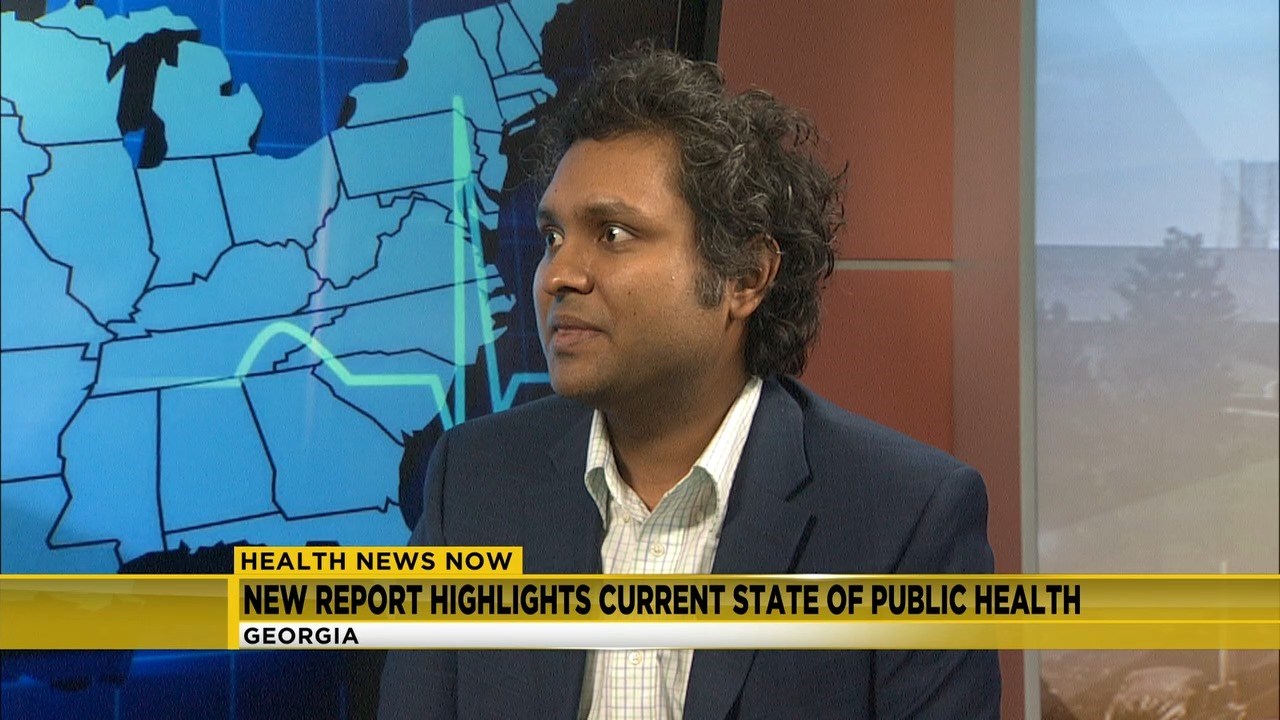
Augusta University’s second annual Healthy Georgia Report has been released, offering a snapshot of health in the Peach State as compared to not only neighboring states, but also the entire country. While Georgia’s population is doing well in some key health factors, researchers also found areas that could benefit from more awareness and public policy action. Biplab Datta, PhD, assistant professor in the Institute of Public and Preventive Health and the Medical College of Georgia’s Department of Population Health Sciences, collaborated with other IPPH faculty and staff to update the report and add new categories this year. The goal of the report is to connect with lawmakers, community leaders and researchers, stimulate conversations about public health needs and promote action, such as greater community engagement, research for informing effective policies and appraisal of required funds. “We need to make lawmakers aware of the public health situation in the state of Georgia,” said Datta. “We hope this report will help identify areas that need policy attention. It can also play an important role in bridging the gap between researchers and policymakers.” Using 2021 data from the Behavioral Risk Factor Surveillance system, the National Survey of Children’s Health, the American Community Survey and the Center for Disease Control and Prevention’s COVID Data Tracker website, the report was compiled on numerous health topics. Some categories studied include high cholesterol, hypertension, obesity, arthritis, asthma, cancer, cardiovascular diseases, alcohol consumption, diabetes and more. It also broke down each category by age, sex, race, income level and other socioeconomic indicators to get a full representation of the data. New to the study this year is an in-depth look at health insurance coverage, COVID-19 vaccinations, breastfeeding, child maltreatment, and unmet healthcare need of children. Georgia ranks 49th in the nation when it comes to health insurance coverage. That was a surprise to Datta. “I didn’t expect the numbers to be that bad, but I think it also indicates the scope of work that we need to undertake to improve insurance coverage in Georgia,” he said. Another surprise was the low rate of flu vaccination in Georgia. “We know there is a difference between whites and Blacks in the U.S. But when we look at and compare Black people in Georgia with Blacks in the rest of the southeastern states, we see the flu vaccination rate was significantly lower among Blacks in Georgia. This is an issue that warrants further research to understand the underlying causes of such disparity,” said Datta. As it was a year ago, hypertension remains a concern. There are several issues involved when talking about hypertension but there are also straightforward ways to improve the condition Datta said. “I think one of the core components of hypertension control is just changing some behavioral stuff. If we just reduced the sodium content in our daily diet, if we do regular physical exercise for a certain amount of time that will significantly improve our hypertension management. Community-level initiatives to make people aware of these things can make a real difference,” said Datta. Residents in Georgia are doing better in several areas such as obesity, cancer rates, asthma prevalence and depressive disorders. Datta said it’s important to recognize these improvements so we can learn from them. “We need to figure out where we are doing well and use that experience in areas where we are not doing so well. It will help us move toward the right direction.” He added it’s important to always be looking for ways to evolve the study, and that includes adding new categories when enough data is available. “We didn’t cover sexually transmitted diseases in this year’s report, which we would like to add when data will become available. We’d also like to add teenage pregnancy, maternal health issues, gun violence and opioid use,” he said. Looking to learn about health in the Peach State? Then let us help. Biplab Datta is available to speak with media regarding this important topic. Simply click on his icon now to arrange an interview today.



Georgia Southern University’s Staff Council Professional Development Committee, in coordination with the Office of Military and Veteran Services, will offer Green Zone Training to faculty and staff on the Statesboro and the Armstrong campuses in February. “This training will highlight our military-connected student population, military culture and experiences, and help participants recognize obstacles these students face in higher education,” said Georgia Southern Director of Military and Veteran Services George Fredrick, Ed.D. “In addition to the Georgia Southern Military Resource Center, Green Zone Training will assist in identifying other campus resources that are available for students, staff and faculty.” Georgia Southern currently has more than 3,500 military-affiliated students across its three campuses in Statesboro, Savannah and Hinesville. Jodi Middleton Kennedy, director of the Office of Leadership and Community Engagement, benefitted from last year’s session. “Green Zone Training is an amazing opportunity for staff to learn not only how we can support military-connected students, but also some of the unique obstacles they face as students navigating their educational journeys,” she stated. “It is clear that George Fredrick and his team in Military and Veteran Services are passionate about their roles, and it was amazing to be able to connect with a panel of students and hear about their personal experiences as Georgia Southern students.” University Academic Success Coach Lydia Hinkle also thought it was advantageous to participate in Green Zone Training for multiple reasons. “It is important to be aware of the different types of students we serve and what their needs are so that we can better assist them as staff members,” said Hinkle. “As staff members, we should want to do these kinds of training opportunities so that we can support these students as best as we can. Not only does it increase your value as an employee to be able to understand your students better, but it increases our appeal as a university if we, as a whole, are known to be extremely knowledgeable and supportive of this student population. “I did learn a lot about what our students from this population need and would like to see happen, and brought some information back to my department on how we can better assist these students.” During the Green Zone Training in Savannah, recipients of three Military Spouse Scholarships totaling $10,000 will also be recognized. Green Zone Training will take place on the Statesboro Campus on Thursday, Feb. 2, in the Williams Center and on the Armstrong Campus in Savannah on Feb. 9 in the Ogeechee Theatre. Both events take place from 9:30 to 11:00 a.m. For more information about Green Zone Training or to arrange an interview with Georgia Southern's Director of Military and Veteran Services George Fredrick - simply reach out to Georgia Southern Director of Communications Jennifer Wise at jwise@georgiasouthern.edu to arrange an interview today.

Georgia Southern University’s College of Science and Mathematics has been awarded a six-year grant of $493,065 from the Howard Hughes Medical Institute (HHMI) Inclusive Excellence 3 (IE3) initiative. Georgia Southern is among a select group of 104 schools that have received an HHMI IE3 grant to support diversity, equity and inclusion. “Science is about building, witnessing and collaborating with each other, which is why Georgia Southern is so proud to receive this grant,” said Georgia Southern Provost and Vice President of Academic Affairs Carl Reiber, Ph.D. “Our inclusive initiatives are breaking down the walls that have separated science from interested students.” The HHMI IE3 initiative challenges U.S. colleges and universities to increase student participation in sciences, focusing especially on populations who have been historically underrepresented in the field. The Georgia Southern IE3 leadership team includes: Karelle Aiken, Ph.D, (program director), Tricia Muldoon Brown, Ph.D., (co-director) Sara Gremillion, Ph.D., (co-director), Checo Colón-Gaud, Ph.D., Issac Taylor and Delana Schartner, Ph.D. “The IE3 initiative is tapping into the transformative power of collaboration; the ability of a critical mass to drive cultural change. As such, an ingenious mandate of this grant is that its 104 institutional awardees work on their goals in teams of Learning Community Clusters (LCC),” said Aiken. Georgia Southern’s IE3 LCC hub, LCC4, includes 13 other institutions from across the U.S., all of whom are seeking to answer a specific challenge: How can an institution evaluate effective inclusive teaching, and then use the evaluation in the rewards system including faculty promotion and tenure? The IE3 initiative has been rolled out in two phases. The most recent award marks the beginning of the second phase and so, the work of the Georgia Southern team and their LCC4 colleagues is ongoing. At Georgia Southern, over the next six years the IE3 initiative will support training for faculty and student-leaders centered on inclusive teaching strategies and the effective evaluation of those strategies; an annual COSM IE3 Spring Speaker Series (established in 2022); the continued development of a new faculty mentorship program piloted in 2022 by Inclusive Excellence Faculty Fellows; student- and faculty-led initiatives geared toward cultivating inclusive learning environments; and more. Looking to know more - then let us help. For more information or to arrange an interview with Carl Reiber or anyone from the Georgia Southern IE3 leadership team - simply reach out to Georgia Southern Director of Communications Jennifer Wise at jwise@georgiasouthern.edu to arrange an interview today.
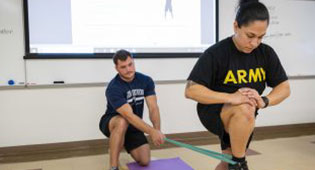
What began in 2016 as a partnership between Georgia Southern University and the Third Infantry Division at Fort Stewart has become a nationally recognized educational and research program with $5.68 million in federal funding to improve soldier health and performance to ensure force readiness. Now called the Soldier Performance and Readiness (SPAR) program, this Georgia Southern project aligns with the U.S. Army’s Holistic Health and Fitness (H2F) initiative and represents a multifaceted partnership with the Army to provide onsite training that decreases musculoskeletal injuries; deliver an online certificate program in tactical fitness for college credit; collaborate with the Army’s Research Institute for Environmental Medicine (USARIEM); and develop programs to enhance and assess cognitive performance in tactical situations. The initial partnership program to prevent musculoskeletal injuries was delivered at first to small cohorts to implement new practices in the physical training of their squads and platoons in a train-the-trainer model. Results were so encouraging, the program expanded at Fort Stewart and to training brigades at Fort Benning last year with the assistance of $1.5 million in Department of Defense funding. Studies show significant preparedness and financial benefits from reducing musculoskeletal injuries to soldiers during drilling and training exercises. In April 2020, officials determined that 58,000 soldiers (the equivalent of 13 Brigade Combat Teams) had injuries that classified them as non-deployable. In 2019, more than half of soldiers experienced a new injury, resulting in 10 million limited-duty days. Musculoskeletal injuries account for nearly 25% of all military injuries and approximately $557 million in acute patient care. Most of these injuries were associated with fitness training-related activities Georgia Southern’s online Tactical Athlete Certificate program was first offered in 2020 and is available exclusively to soldiers on active duty, in the National Guard or reserve. Through a series of three courses, the program teaches foundational exercise and biomechanical concepts, strength and conditioning principles, and rehabilitation. The coursework parallels the Army’s Master Fitness Trainer curriculum, with additional rehabilitation principles, and teaches soldiers how to develop evidence-based and well-rounded physical training programs while minimizing risk of musculoskeletal injury. Certificate completion provides soldiers with nine college credits with Georgia Southern, potential promotion opportunities in the Army, and preparation for the National Strength and Conditioning Association’s TSAC-F exam. “By sharing knowledge, expertise and experience between our faculty and doctoral students with soldiers, drill instructors, and brigade combat fitness teams to create aligned programs that improve tactical performance and force readiness, the SPAR program has become a national model of public-impact research,” said Christopher Curtis, Ph.D., Georgia Southern’s vice provost for research. “We are excited about the future of this partnership. We relish the significant support and encouragement we receive from the Army commands at Fort Stewart, Fort Benning, USARIEM, and the Training and Doctrine command (TRADOC), and we are grateful to Congressman Carter and his fellow members of the Georgia Congressional delegation who have advocated for the value of the partnership on our behalf.” The progress and continued success of this program would not have been possible without several years of support from the Georgia Congressional Delegation and especially the leadership and support of Congressman Buddy Carter, who represents Fort Stewart and the Armstrong Campus of Georgia Southern in Savannah. “Providing for our nation’s defense is the number one responsibility of the federal government. Innovation and research, which is what these dollars will fund at Georgia Southern, will improve working conditions for our brave servicemen and women by providing them with top-of-the-line training and resources,” said Rep. Buddy Carter (R-GA). “I am a proud supporter of Georgia’s military community and am happy that the federal government is investing in these necessary programs.” SPAR programming allocated in the FY23 federal budget will enable Georgia Southern to: Develop protocols and expand delivery of the onsite musculoskeletal injury prevention training and the Tactical Athlete Certificate to commands at Fort Gordon in Augusta and to the Georgia National Guard. Develop and deploy similar online certificate programs for soldiers in Cognitive Performance and Nutrition to further support the Army’s H2F program. Host a national conference on “Charting Future Readiness Needs” in partnership with the U.S. Army Training and Doctrine Command and U.S. Army Forces Command that will bring together other research universities who also work in partnership with the Army. Work with the Army commands to develop specific academic degree programs to meet the specific H2F professional workforce needs at the brigade level. Army officials estimate approximately 3,000 personnel will need graduate degrees or advanced certifications in the next six years. Develop a Tactical Performance Research Lab in Savannah to support the fundamental research and innovation activities of Georgia Southern’s Tactical Performance Group that supports the Army’s H2F program as well as translational research to apply the knowledge and practices broadly to law enforcement and other first responders. Looking to know more - then let us help. Christopher Curtis is available to speak to media - for more information simply click on his icon here or reach out to Georgia Southern Director of Communications Jennifer Wise at jwise@georgiasouthern.edu to arrange an interview today.


Looking to the skies over the next week or so, you may see something you will not see again for 50,000 years. This occasional visitor, C/2022 E3 (ZTF), also known the “green comet,” will make its closest approach to Earth Feb. 2. We asked Csaba Palotai, aerospace, physics and space sciences associate professor, and Amelia Brumfield, graduate research assistant, about the green comet, what we can learn from it, where to look for it and more. Q: Why is this comet green? Palotai: The composition of a particular comet determines what the color is. This one has most likely diatomic carbon in it, and then that carbon comes out and interacts with the sunlight. Certain photochemical processes take place and that gives it the green color. This is not for every comet. Q: Why haven’t we seen this comet in 50,000 years? Brumfield: It has a very eccentric orbit. Our orbit, we go around the sun every year, but this comet, its orbit is on a scale of thousands and thousands of years. There's a chance that no one's ever seen it. Dr. Palotai had mentioned that it might have come by during the ice age. It might not even have passed by Earth (to be visible) at that time, if it did. So, it won't be back and if it does even come back, we're going to be long gone. It's just a cool chance to see something that maybe no one's ever seen before and might never ever get to see again. What can we learn from this comet? Palotai: This comet has an interesting orbit and then people study this orbit after the discovery of the comet. They figure it out that this is coming from a part of the solar system called the Oort Cloud (named for the Dutch astronomer who first described it, Jan Oort). This region of the solar system is not well understood because it is very far from us, so actually we haven't seen any objects in this region. It is thought that there are about, give or take, a trillion icy objects in this region. Some of them are smaller ones, some of them are bigger ones. And the only way we know about these things is that whenever comets like this come from that region. Q: When is a good time to view this comet? Palotai: In the next few days, or maybe in the next couple of weeks or so is the greatest chance to observe it. You need several factors to have a comet to be visible with a naked eye, starting with clear, dark skies. Beyond the naked eye, if you have binoculars or a smaller telescope, you should also be able to see it. Q: Where can you view this comet? Brumfield: You can still see it between the Little Dipper and the Big Dipper, and then around Jan. 30 it should be closer to the North Star, so you can look for it in that area of the sky. And the best time to view it is very late at night, so between midnight and dawn. And then the closest approach is going to be Feb. 2, but that doesn't necessarily mean that's going to be the best time to view it. If you're a reporter covering the green comet, let us help with any of your questions about this rare celestial phenomenon. Csaba Palotai is available to speak with you. Simply click on his icon now to arrange an interview today.

