
Experts Matter. Find Yours.
Connect for media, speaking, professional opportunities & more.

Baylor Expert Shares Four Keys to Leadership from Ulysses S. Grant’s Reflections on Civil War
Near the end of his life, as he battled spiraling health and an empty bank account, former United States President – and iconic Civil War General – Ulysses S. Grant penned his memoirs and gave the world a glimpse into the mind of one of the nation’s most celebrated figures. The book, “Personal Memoirs of U.S. Grant,” was published in 1885 and has been pored over for more than 135 years. Peter Campbell, Ph.D., author, associate professor of political science at Baylor University and a nationally recognized scholar on military strategy and international security, recently wrote an essay about Grant and his memoirs for Classics of Strategy and Diplomacy. He said Grant’s personal reflections provide valuable insights into his view and practice of leadership, specifically as he led Union forces in the Civil War. Below, Campbell offers four keys to leadership that he found in Grant’s writings. 1. Know Yourself. Grant was a careful observer of himself. He was able to reflect on his experience, see where he had made errors and learn from them. In July 1861, moments before what Grant thought would be his first engagement as a commander in the Civil War, he was terrified. His heart was in his throat. When he and his forces crested a rise that they thought would reveal the enemy force, they saw that the enemy had fled. “My heart resumed its place,” Grant wrote. “It occurred to me at once that [the enemy] had been as much afraid of me as I had been of him. This was a view of the question I had never taken before; but it was one I never forgot afterwards.” Grant absorbed this lesson and it transformed him as a leader and planner. 2. Know Your Enemy. The great Chinese strategists counseled that commanders must know their enemies. Grant shows us what this looks like in practice. Rather than dwelling on his fears, those things that his opponent might do that would spell disaster, Grant put himself in the shoes of his adversary and asked himself: What would my gravest fears be, were I in his position? He then designed his plan of campaign to raise the specter of his enemy’s fears, knowing that this would compel the enemy to be blinded by fear and compel them to react. To be fair, this was easier for Grant because in the Civil War he was fighting against fellow graduates of West Point and veterans of the Mexican War, including Robert E. Lee. Grant was not in awe of Lee. “I had known [Lee] personally,” Grant wrote, “and knew that he was mortal; and it was just as well that I felt this.” This does not diminish, but rather reinforces, the importance on studying one’s adversary carefully in any kind of competition. 3. Know Your People. As Grant rose in the ranks of the Union Army, he was pulled away from the sound of the guns and the command of troops in battle. This is true in any organization – the higher one rises the further one gets from the ground truth, whether in an army or a Fortune 500 company. Grant recognized that to influence the battles he could no longer superintend, he had to select the right subordinates for the job and then give them the authority to exercise the initiative in their area of responsibility. This meant that Grant also had to be a careful observer of the strengths and weaknesses of his subordinates. Even a hero of the Battle of Gettysburg like Major General Gouverneur Warren was not spared Grant’s penetrating character assessments. Warren’s weakness, Grant wrote, was that he could not trust his subordinates to carry out his orders, which meant that he could not be give a large command. “[Warren’s] difficulty was constitutional and beyond his control,” Grant wrote. “He was an officer of superior ability, quick perception, and personal courage to accomplish anything that could be done with a small command.” When you know your people, you know where to place them where their strengths will reinforce success and their weaknesses will be least disastrous. 4. Unleash the Power of Humility. The most decisive virtue that Grant practiced was humility. As a leader he did not allow pride in his own designs to blind him to the wisdom of his subordinates. Late in the war, Grant wrote up a campaign plan for attacking the Shenandoah Valley, the key source of supply to the Confederacy. He brought the plan to General Philip Sheridan for execution. However, when he met with Sheridan, the cavalry officer presented Grant with his own plan. Grant wrote that Sheridan “was so clear and so positive in his views and so confident of success, I said nothing about [my campaign plan] and did not take it out of my pocket.” When you lead, don’t let pride get in the way of the best ideas bubbling up from your subordinates. ABOUT PETER CAMPBELL, PH.D. Peter Campbell, Ph.D., is an associate professor of political science in Baylor University’s College of Arts & Sciences. He is the author of two books: “Military Realism: The Logic and Limits of Force and Innovation in the U.S. Army” and “Farewell to the Marshal Statesman: The Decline of Military Experience Among Politicians and its Consequences.” Campbell studies international security, civil-military relations, strategy and national security decision-making, international relations scholarship and policy relevance, insurgency and counterinsurgency, the just war tradition, unconventional warfare and advanced military technology, military culture, and the effects of cyber capabilities on conflict escalation. ABOUT BAYLOR UNIVERSITY Baylor University is a private Christian University and a nationally ranked research institution. The University provides a vibrant campus community for more than 19,000 students by blending interdisciplinary research with an international reputation for educational excellence and a faculty commitment to teaching and scholarship. Chartered in 1845 by the Republic of Texas through the efforts of Baptist pioneers, Baylor is the oldest continually operating University in Texas. Located in Waco, Baylor welcomes students from all 50 states and more than 90 countries to study a broad range of degrees among its 12 nationally recognized academic divisions. ABOUT THE COLLEGE OF ARTS & SCIENCES AT BAYLOR UNIVERSITY The College of Arts & Sciences is Baylor University’s largest academic division, consisting of 25 academic departments and eight academic centers and institutes. The more than 5,000 courses taught in the College span topics from art and theatre to religion, philosophy, sociology and the natural sciences. Faculty conduct research around the world, and research on the undergraduate and graduate level is prevalent throughout all disciplines. Visit baylor.edu/artsandsciences.


Research Reveals Uptick in Hostility toward Black Americans during Tough Economic Times
Goizueta Experts Encourage Business Leaders to Double Down on Diversity, Equity, and Inclusion Efforts. Do recessions stoke racial tension? When there’s an economic downturn, are White Americans more likely to feel distrust or even animosity towards their Black peers? Researchers have long wondered about the broader societal impact of financial recessions, but until recently their effects on race relations have been unclear. In a recent paper, Emily Bianchi, associate professor of organization and management, Erika Hall, assistant professor of organization and management, and Sarah Lee 19PhD, assistant professor of management, Dominican University of California and visiting professor of organizational behavior, Pepperdine University, find that there is indeed a subtle uptick in hostility towards Black Americans during bad economic times. Their paper, Reexamining the Link Between Economic Downturns and Racial Antipathy, examines publicly available data on attitudes, political trends, and behavioral patterns in the U.S. Sarah Lee 19PhD While businesses tend to cut diversity, equity, and inclusion efforts during economic downturns, Bianchi and Hall underscore that these efforts may be even more critical during these times. To study this phenomenon, the researchers analyzed more than 20 years of data from the American National Election Survey (ANES), a biannual survey capturing political affiliations and perceptions of political candidates from 1964 until 2012. They analyzed how White Americans’ attitudes towards Blacks changed depending on the state of the economy and found that in worse economic times, Whites felt more negatively about Blacks. As Bianchi notes: “we were able to analyze the responses of more than 30,000 individuals who identified as White. And we do find that for decades – between the 1960s and the first part of the 21 century – White Americans feel less warmly about Black Americans during times of financial hardship.” Emily Bianchi, associate professor of organization and management In a second study, Bianchi, Hall, and Lee examined data from Project Implicit, a popular website that allows people to test their own implicit bias and also gauges racial attitudes. Again, the authors found that in worse economic times, White Americans held more negative implicit and explicit attitudes about race. In particular, during the Great Recession, they found that White’s attitudes towards Blacks became substantially more negative in states that were hard hit by the economic crisis compared to states in which the economic downturn was less severe. Having established that economic conditions affected fluctuations in attitudes towards race, the authors then examined whether these emotional shifts translated into actual behavioral outcomes. In other words, if Whites felt more negatively towards Blacks during recessions would this mean that Black professionals were less likely to be successful when the economy floundered? They tested this possibility by looking at two domains of public activity: record sales and voting patterns. First, they examined data from the Billboard Top 10 American songs between 1980 and 2014 and recorded the race of each musician who secured a Billboard hit. They found that in bad economic years, Black musicians were 90% less likely to have a top 10 hit, presumably because White consumers (by far the biggest consumer group during this period) were less likely to support them. Next, they examined the results of more than 8000 elections to the U.S. House of Representatives over the same period. They found that in bad economic times, Black politicians were 21% less likely to win elections. Interestingly, the converse also appears to be true. In good times, Black musicians and politicians fared much better in the polls and the charts – pointing to a certain fluidity in attitudes, says Bianchi. “Across these very different domains, studies, and sample sizes, we find the same consistent pattern: when times are tough, White Americans feel more animosity towards Black Americans and are less likely to support Black musicians or politicians. When things pick up, White Americans have more positive attitudes towards Black Americans and are more likely to endorse Black musicians and Black candidates.” The authors attribute these effects to innate human feelings of fear in the face of threat. Economic threats or shocks tend to evoke uncertainty and fear about what is to come. This translates into greater distrust of others, particularly those perceived as different in some way. And it’s an effect, they argue, that should be very much on the radar of businesses and decision-makers. Erika Hall, assistant professor of organization and management The research cites, “Anecdotally, we know that when times are good, organizations will tend to prioritize their efforts in the area of diversity and inclusion. But while this is critically important at all times, our research suggest that these efforts are probably even more important when times are tough.” All of this points to a need to attend to these issues more acutely when there’s a downturn, says Bianchi. And she cautions that this is likely to be counterintuitive to most leaders, who are likely more inclined to sideline diversity efforts when the economy slides. In terms of the current debate around race relations in the US, however, Bianchi stresses that the economic dimension is just one piece of a “very complicated puzzle.” “What we have seen and are seeing in 2020 and 2021 is a confluence of many major factors: a pandemic that has put a lot of people out of work, and that has put everyone on edge, punctuated by some horrific and well documented instances of violence against Black citizens,” Bianchi says. “So many of these things are in the mixing pot, that it’s hard to pinpoint one specific cause behind the current race crisis in the U.S. So many things coming together at once that have put us in this moment.” Only time will tell how this might play out compared to what we saw in the 80s and 90s, which were economic fluctuations rather than a complete drop off a cliff, she says. It will be more difficult to tease apart the effect of the economy versus the effect of the pandemic versus the effect of police violence on America’s race relations – a situation that Bianchi describes as a “cauldron of mess.” That said, she stresses that for business leaders, now is a good time to double down on efforts to drive diversity and inclusion. “I’d suggest leaders be especially mindful that at times of economic stress such as we are currently experiencing, there is a very real danger of heightened racial animosity.” We’ve attached a full article with even more advice and helpful information from our experts – but if you are looking to learn more or cover this topic, we can help. All of our faculty are available to speak with media, simply click on either expert’s icon now – to book an interview today.




How does the job market look for the Class of 2021 ? The answer: much better, says IU expert
As the class of 2021 graduates this weekend to embark on new challenges and careers, Rebecca Cook, executive director of undergraduate career services at the Indiana University Kelley School of Business, reflects on the current job market and offers insights into what summer internships may be like for current students. “The summer of 2020 was a mess for student internships and full-time roles, with pretty much all either going virtual or, in the case of many internships, being cancelled altogether as companies tried to figure out business during the pandemic. Luckily, the job outlook for both full-time roles and internships in May 2021 looks a lot different – and a lot better. “The job market is hopping right now with a significant number of internship and full-time opportunities, as companies open up and business grows. Industries such as professional services, technology, health care, manufacturing and financial services are all seeing significant upticks in job postings. Even companies hard-hit by the pandemic, such as retail and hospitality, are picking up their hiring. “While hiring is back to pre-pandemic levels in many industries, the level of competition for those roles has increased significantly. In a normal year, the majority of job seekers are that year’s graduates. However, this year we have 2021 grads plus some 2020 grads who still are seeking plus those who went to graduate school to put off job hunting during the pandemic and are now graduating. This all leads to a much more competitive job market and one where a student needs to work to stand out from the crowd, particularly through networking and reaching out to potential connections at their companies of interest. “We recommend that students spend a lot more time networking than they may have in the past, creating a focused list of companies they are interested in and then spending the time to connect and speak with employees at those companies. Leverage any ‘warm’ connections possible, such as friends, family members, fellow Kelley alumni, faculty and staff recommendations. “An important point to remember is that roughly 75 percent of jobs are never advertised publicly, so the only way to find out about them is through networking. Many new jobs, as well as internships, may start out virtual “It’s important to note that many roles that students are entering will still be virtual, at least for the time being, as companies are very mixed as to if they are back in the office already, not returning to the office until early fall, or staying remote entirely. Internships in particular are likely going to be virtual, while full-time jobs are looking to be mixed, with many starting out virtual but then likely moving in-person when offices open up. While being virtual once again is probably disappointing, students should remember that they can be just as successful with a virtual full-time role or internship as an in-person one. “The key is staying connected with their supervisor and co-workers on a regular basis. They should also network with as many people in their full-time or internship company as possible, taking the initiative to set up Zoom (or whatever video conferencing tool that the company uses) meetings regularly in order to learn as much about the company and role as possible, as well as to build their network for future opportunities. “Overall, there are a lot of available opportunities out there for students – they just need to put in the time to network and get their name and brand known.” To schedule an interview with Cook, contact George Vlahakis at vlahakis@iu.edu.

Kelley School expert who studies causes and effects of recalls available to discuss Peloton
Peloton Interactive Inc. on May 5 announced that it is recalling its treadmills in a statement from CEO John Foley who also apologized for the company’s initial refusal to comply with federal safety regulators’ prior request for this action. George Ball, assistant professor of operations and decision technologies and Weimer Faculty Fellow at the Indiana University Kelley School of Business, studies the causes and effects of product recalls. Below are comments from Ball. He can be reached at gpball@indiana.edu. “Recall decisions like this are very difficult for managers to make, especially the ones that are high profile and associated with consumer injury. Managers have to balance the firm financial health with consumer safety. Thus, this is a rich area of research. The research that my colleagues and I undertake in this field deal both with the regulator and the firm. My comments will attempt to address both perspectives. “I will start with the regulator. I am currently involved in a research project with two colleagues that is specifically critiquing the Consumer Product Safety Commission for situations very similar to this Peloton recall. There are three main regulators in the US that oversee product quality and in particular recalls: the FDA, NHTSA and the CPSC. “Of those, CPSC is the least proactive and in my view, least successful in properly managing product recalls and their timeliness. This is because there are two main ways in which a firm can push firms to recall; they can force them to, or they can work with the firm management to help encourage them, or nudge them, to recall. The FDA is very good at influencing firms while NHTSA is quite good at mandating recalls. CPSC does neither well. “In particular, the FDA frequently chooses to use their relationships with senior quality executives at firms to nudge them to recall when FDA feels it may be necessary and the firm has not yet acted upon the quality problem. Conversely, NHTSA mandates approximately 20 to 30 percent of auto recalls, such that they choose to force instead of nudge. However, in both cases, while neither industry (medical products and autos) are perfect when it comes to recall timeliness, and both have suffered unfortunate well-known examples of firms dragging their feet in the recall decision, both have a well-developed approach. “CPSC mandates practically no recalls and they do not, from my research, have strong relationships with firm executives that can help them nudge firms to make the quick recall decision. Thus, this Peloton example is one of many in which consumer product firms may take too long to recall. “From the firm perspective. There are several potential red flags that may indicate the firm took too long. The longer a consumer product industry CEO has been in their role, the slower they are to make recall decisions. This is because the longer a CEO is in the role, the less open they are to taking responsibility for such high-profile mistakes. Interestingly, a new CEO, such as one who has been in their role for two to three years, is much more likely to recall a faulty product. “The CEO of Peloton definitely falls into the category of a fairly long-tenured CEO who has his reputation tied closely to the firm’s success. Secondly, the more stock a CEO owns in their firm, the slower they are to make the recall decision, because they are trying to protect their financial welfare. The CEO of Peloton appears to have a significant fortune at stake in Peloton stock, which would be consistent with our research. The more stock a CEO owns, the slower the firm take to recall defective products.”

Expert available to discuss Facebook Oversight Board's decision on Trump's account
Reporters: Girish Mallapragada, a social media marketing expert at the Indiana University Kelley School of Business, is available Wednesday (May 5) to discuss the Facebook Oversight Board's decision to uphold Facebook's ban on former President Donald Trump. In advance of the announcement, Mallapragada, an associate professor of marketing and Weimer Faculty Fellow, said he questioned whether the board’s decision will have much of an impact on Trump’s outreach to his followers. He noted that Trump’s rise in popularity primarly came through his use of another social media platform, Twitter, and not as much through Facebook. “He was more adept at short form communication than long contextual messages. Twitter is ideal for the former, Facebook for the latter,” Mallapragada said. “Twitter is closest online to a live large audience, where he thrives.” “If Facebook allows him to comeback, it might make people unhappy and others happy, but I don’t think it would be impactful to make a big difference.” George Vlahakis, associate director of communications and media relations at Kelley, can help arrange for interviews with Mallapragada, and can be reached at vlahakis@iu.edu.

Social Work is Advancing Addiction Science Research
Tens of thousands of Americans die from drug use and addiction every year, with overdoses killing over 63,000 people in America in 2016, according to the National Institute on Drug Abuse. Add in deaths linked to alcohol overuse and tobacco, and the number climbs above half a million Americans. The collective work of several researchers at the USC Suzanne Dworak-Peck School of Social Work, in collaboration with other USC faculty and outside organizations, is advancing knowledge of substance use disorders. Social work has become a hub where researchers and practitioners drive understanding and improve treatment for this disease that impacts millions of families each year. “Either as a cause or consequence, addiction relates to every problem we deal with in social work,” said John Clapp, professor and associate dean for research and faculty development at the USC Suzanne Dworak-Peck School of Social Work. Addiction’s complexity The social work field is uniquely poised to help effect change because of its holistic approach to individual well-being and the public good. According to Clapp, substance use disorder problems are inherently ecological, impacting and being impacted by individuals, families, peers, neighborhoods, communities and public policy in complex and dynamic ways. Untangling those causes and effects and interdependencies is one part of the solution. The other part is understanding that simple solutions may stay out of reach. “We will not find a one-size-fits-all answer,” said Clapp. Looking at addiction as a genetic, psychological or sociological issue only shows one piece of the overall cause. A comprehensive approach is essential, he said, especially when statistics from the National Institute on Alcohol Abuse and Alcoholism (NIAAA) show alcohol use disorders alone as the third leading cause of preventable death in the world. A hub for addiction science The need for a transdisciplinary response to this worldwide crisis was behind the 2018 creation of the USC Institute on Addiction Science (IAS), a joint venture between social work and the Keck School of Medicine of USC, with membership from 10 different schools, colleges and hospitals. Its vision is to strengthen the discipline of addiction science and improve the lives of those touched by the disease. Clapp is co-director of the institute and one of its founding architects. IAS is quickly becoming the foremost place for a broad effort focused on addiction that brings together researchers from the fields of public health, social work, law, public policy, mathematicians, computer engineers and others in recognition of the promise of new approaches to longstanding problems. The USC Suzanne Dworak-Peck School of Social Work has eight faculty making substantial contributions to the prevention of addiction-related disorders as members of the IAS: Professor Avalardo Valdez, associate professors Julie Cederbaum and Alice Cepeda, and assistant professors Jordan Davis, Shannon Dunn, Jungeun Olivia Lee, Danielle Madden, and Hans Oh. “Social work brings one of the broadest perspectives on the underpinnings and solutions to the addiction crisis,” said Adam Leventhal, director of IAS and professor of preventive medicine and psychology at Keck. “By approaching addiction as a health condition and a social justice issue, social work brings to the table the opportunity for high-impact, multi-modal intervention and social policy approaches, which are needed to address the addiction epidemic.” A holistic approach Social work faculty are raising the bar in addiction science research, developing new and novel approaches to improving outcomes for those affected by addiction. In a study recently published in Addiction, a multidisciplinary team lead by Davis and Clapp found gender differences in the risk factors for relapse following treatment for opioid use disorder. The study was the first in this field to use machine learning techniques to process large data sets and identify risk factors for relapse, said Davis, who also serves as associate director of the USC Center for Artificial Intelligence in Society (CAIS). The findings may result in more personalized treatment for opioid use disorder with lasting results. This dovetails with additional research Davis is conducting with computer science engineers at CAIS to collect and input neighborhood and census data into their models in an effort to better understand how these macro variables affect relapse. “We are finding that data points such as crime statistics, population density and concentrated poverty tend to be some of the most important predictors of relapse, over and above individual-level predictors such as impulsivity, motivation or gender,” Davis said. These findings echo Clapp’s description of addiction as ecological and point to the need for holistic solutions. “These machine learning techniques are helping us gain an apparent picture of what the most important factors are surrounding someone’s recovery,” Davis said. “Environment matters greatly.” Davis is also collaborating closely with Eric Pedersen, associate professor at Keck School of Medicine at USC, on several research efforts examining substance use among veterans. Most recently, they have assembled a survey group of approximately 1,200 veterans whom they survey quarterly about their well-being. A recently conducted survey of the group found that veterans with PTSD prior to the COVID-19 pandemic were now managing their symptoms with more frequent alcohol and cannabis use. Another joint research endeavor between the two is examining the use of mindfulness smart phone apps to help reduce substance use in Operation Enduring Freedom/Operation Iraqi Freedom veterans with PTSD and alcohol use disorder. Where well-being and inequalities intersect Jungeun Olivia Lee also seeks to decode the network of relationships between socioeconomic status, adverse childhood experiences and drug use. Her experience as a social work practitioner working directly with clients drives her motivation to demonstrate to policymakers what she sees as a linkage between unemployment, economic stress and substance use disorders. She is lead author on a paper published in Nicotine & Tobacco Research that found unemployment may advance nicotine addiction among young adults, rather than the idea that nicotine addiction may lead to unemployment. Lee’s research interests lie at the intersection of substance use and co-occurring mental health, social inequalities (such as poverty and low socioeconomic status), and adverse childhood experiences. She is interested in combining these three areas of inquiry to explore their influence on addictive behavior that can persist over generations of at-risk families, such as adolescent mothers and their children. Her memories of working directly with clients struggling with the impact of addiction remain clear in her mind. When Lee hears policymakers and others suggest that individual willpower will solve substance use disorder problems, she has a straightforward response: “People are not born with addiction.” In her view, many factors contribute to the triggered distress, including socioeconomic status and adverse childhood experiences. Lee is exploring an idea with other IAS researchers to investigate the relationship between financial strain and employment uncertainty and addiction. “Individual circumstances, such as losing a job, certainly influence substance use, but policy-level decisions, such as the generosity of unemployment insurance, can mitigate the impact,” she said. Transdisciplinary collaboration with social scientists, psychologists and medical researchers at IAS and across the USC campus enriches and amplifies her work. “We are breaking down discipline-specific silos and bringing new and valuable perspectives to this work,” she said. “The synergy is both useful and inspiring.” Looking ahead Researchers also hope to spark interest in the field among the next generation. A new minor for undergraduate students in addiction science was introduced at USC in Fall 2020. The minor is an interdisciplinary collaboration of the Keck School of Medicine, the USC Suzanne Dworak-Peck School of Social Work, the USC School of Pharmacy and the USC Dornsife College of Letters, Arts, and Sciences. It is designed to provide students with a transdisciplinary approach to understanding and treatment of the broad spectrum of addiction-related problems. The goal of addiction science research and education is to improve the long-term effect of addiction treatment and save lives. As society’s understanding of the cause of addiction grows, researchers like those in the school of social work and the IAS strive to bridge the gap between science, practice and policy to positively impact outcomes for those affected by addiction.

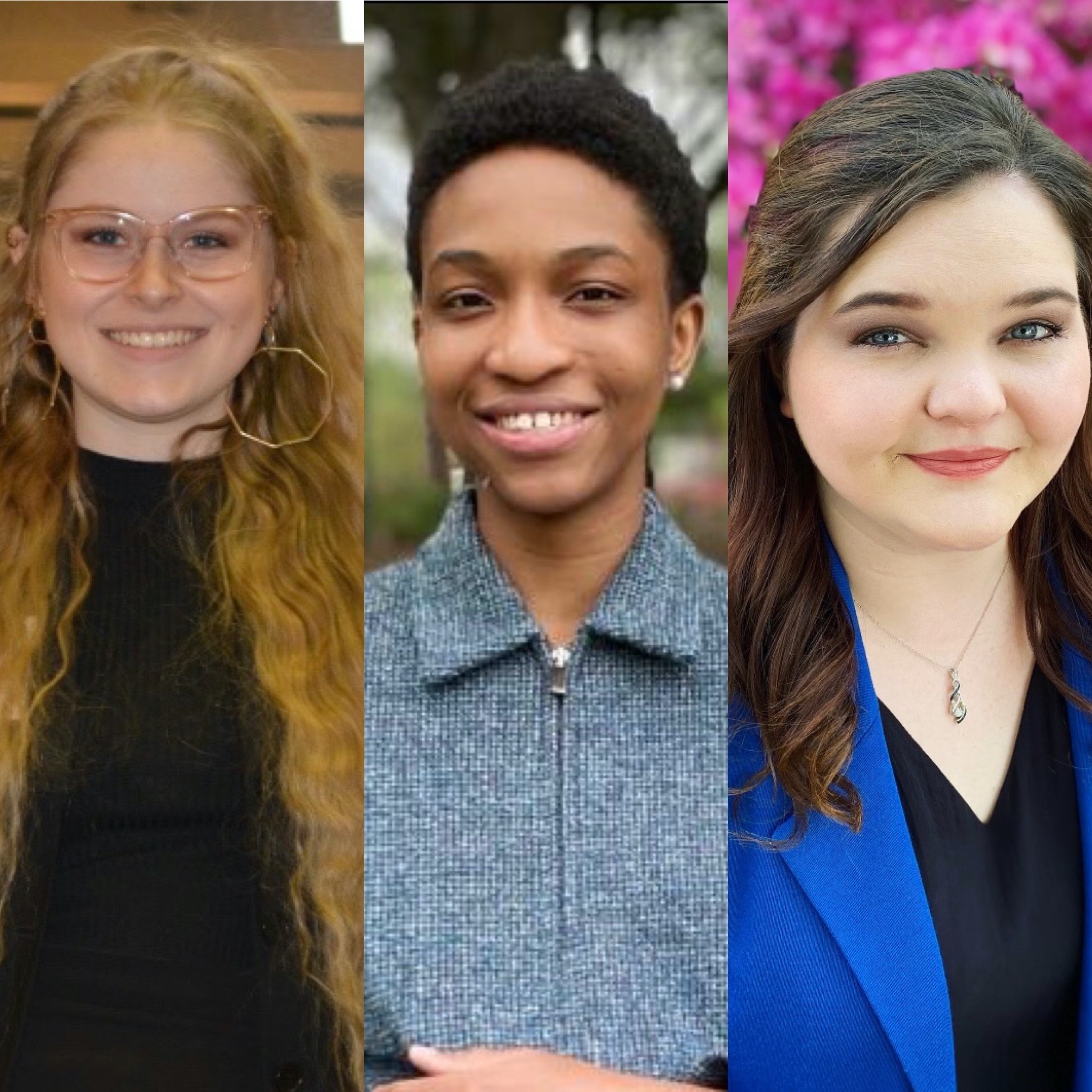
Ambitious student research collaborations with faculty members often lead to much more than good grades. The mentorships encourage professional growth, confidence and creativity, even in the midst of a pandemic. Georgia Southern University’s Spring 2021 Honors Research Symposium, which is being held virtually April 26 through April 30, will showcase faculty-student partnerships through a broad range of scholarly and creative research projects produced by more than 100 honors students across multiple disciplines on the Statesboro and Armstrong campuses. A few of the presenters include: Chelsea Riley, a triple major in international studies, political science and Spanish, worked with political science and international studies professor Srobana Bhattacharya, Ph.D., on her thesis, “The Culture Gap: The Role of Culture in Successful Refugee Settlement.” History and English major Jacey Thomas, mentored by associate professor of history Alan Downs, Ph.D., will present, “Irish Rock Music amid a Time of Troubles: Thin Lizzy and U2 as a Bridge During a Time of Division.” Biology major Susan Ihejirika’s presentation, “A Forward Genetic Screen to Identify Human Genes of Interest and Their Roles in Ovarian Cancer,” was guided by biology assistant professor Dongyu Jia, Ph.D. The Honors College, as the university-wide center for excellence in undergraduate education, plays a crucial role with undergraduate research at Georgia Southern. Since the beginning of the College, students have been required to complete honors theses or capstone projects. The faculty-mentored projects have spanned traditional research models, applied research and creative activities in all academic colleges and majors. “Through faculty-mentored research and scholarly activities, honors students create new knowledge and the Honors Research Symposium is the venue where we share it with the broader scholarly community,” said Honors College Dean Steven Engel, Ph.D. “ I am proud of the fact that they have been able to complete these projects despite the challenges of the past year.” Presentations will be posted on YouTube and the comments section will be open for audience engagement with presenters. If you're a journalist looking to learn more about this year’s Honors Research Symposium — simply reach out to Georgia Southern Director of Communications Jennifer Wise at jwise@georgiasouthern.edu.


Self-Built Protein Coatings Could Improve Biomedical Devices
Fouling is a natural phenomenon that describes the tendency of proteins in water to adhere to nearby surfaces. It’s what causes unwanted deposits of protein to form during some food production or on biomedical implants, causing them to fail. Using her expertise in developing bio-inspired materials for use in human health, R. Helen Zha, an assistant professor of chemical and biological engineering will harness this process found in nature to develop a versatile and accessible approach for modifying solid surfaces. With the support of a more than $592,000 National Science Foundation Faculty Early Career Development (CAREER) grant, Zha will use silk fibroin — a protein that naturally assembles itself — to grow a nanoscale film on the surface of an object. This approach only requires a beaker, water, salt, and the protein, which Zha said makes it biocompatible, safe, ecofriendly, and accessible beyond the walls of a lab. Zha has demonstrated that this approach can work and, in some cases, even increase the therapeutic benefits of an implant. In research published in ACS Biomaterials Science & Engineering, Zha collaborated with Ryan Gilbert, a professor of biomedical engineering at Rensselaer, to modify the surface of a fibrous scaffold that was developed by Gilbert’s lab in order to encourage the growth of neurites at the site of nerve damage. The importance of this research could expand beyond the protein Zha and her lab are working with. This approach, she explained, could be applied to any number of proteins and macromolecules.


Kelley expert available to discuss Bernard Madoff's legacy, long-term effect of his scheme
Bernard “Bernie” Madoff, convicted architect of an infamous and epic securities Ponzi scheme with thousands of investors, died behind bars on April 14 at the age of 82. Noah Stoffman, an associate professor of finance and Weimer Faculty Fellow at the Indiana Kelley School of Business, has researched the effect of such fraud beyond the direct investments that were lost by victims. His 2018 paper, “Trust Busting: The Effect of Fraud on Investor Behavior,” co-authored with professors at Cornell University and the University of Texas-Dallas, showed that the collapse of the Madoff Ponzi scheme had an effect not only on his many direct victims, but also on the general level of trust in financial services. “People who live in the same areas as victims of the fraud withdrew assets from investment advisers and increased their deposits in banks. Financial advisers in these areas were also more likely to close. Our analysis shows that advisers who provided services that can build trust—such as financial planning advice—saw lower levels of withdrawals. Our evidence suggests that this decline in trust shock was transmitted through social networks,” Stoffman said. Stoffman’s research focuses on the investment decisions of professional money managers and individual investors, and on the effect of technological innovation on asset prices. Much of his work highlights the importance of social interaction in the spread of information in financial markets. Stoffman teaches courses on analysis of financial data to undergraduates, MBAs, and doctoral students at the Kelley School. He can be reached at 812-955-1758 (m) or nstoffma@indiana.edu.
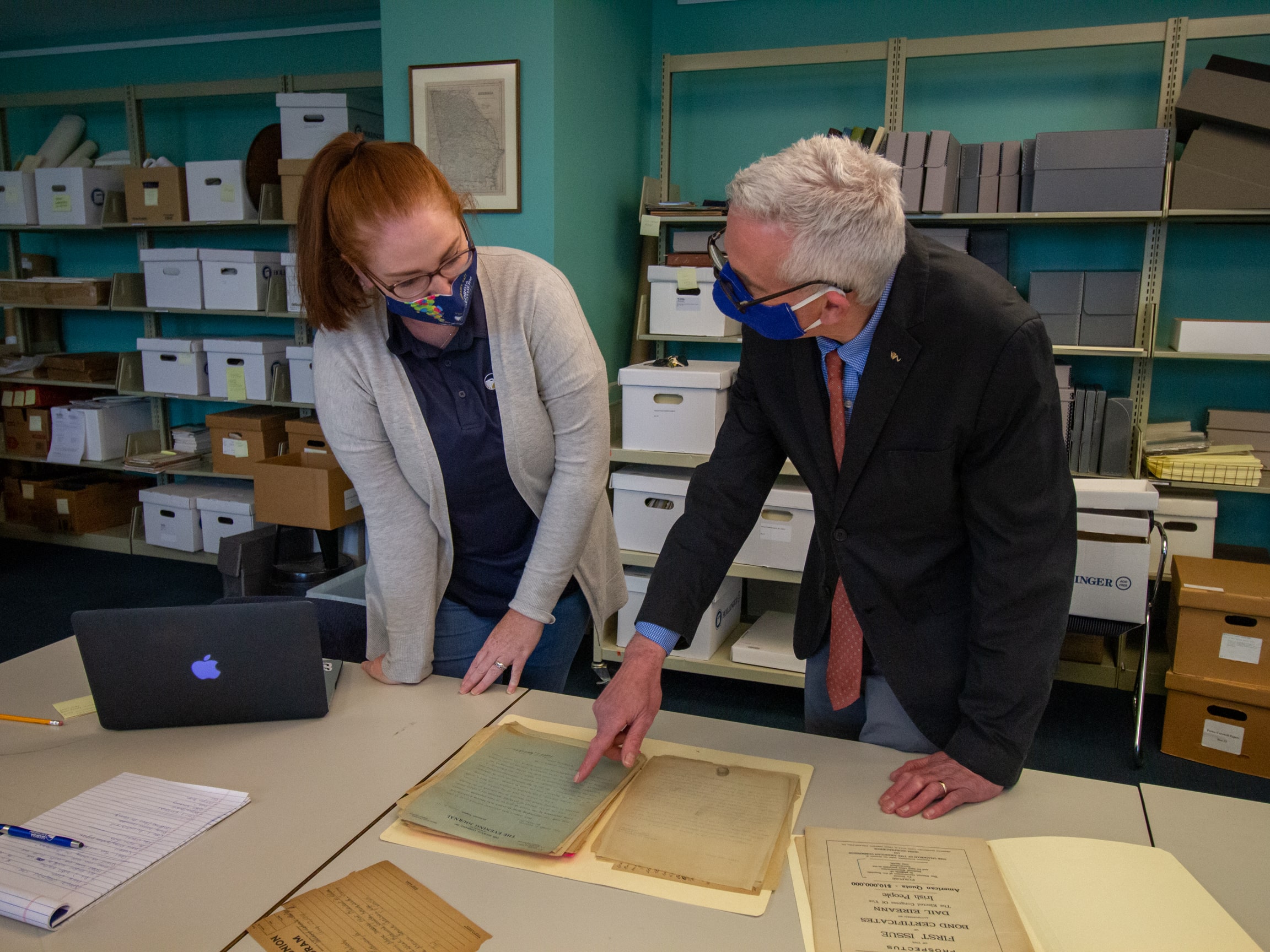
This year marks 100 years since the signing of the Anglo-Irish Treaty, which eventually would establish Ireland as a republic, and Georgia Southern University undergraduate student Caitlyn Hudson is getting a first-hand look at some historical documents that chronicle U.S. efforts to help establish Ireland’s freedom from British rule. Hudson is researching a collection of documents called the Lawless papers, which follow Virginia-native and Irish descendant Joseph Thomas Lawless’ involvement in the southern leg of an extensive U.S. tour by Éamon de Valera, a prominent political leader in Ireland’s history. “My favorite part of working on the project has to be the physical work with the documents,” Hudson said. “It is fascinating to see primary documents in hand rather than online. It provides a unique form of analysis.” The collection, which was gifted in Fall 2020 to the Center for Irish Research and Teaching (CIRT) at Georgia Southern, includes letters, advertisements and more that document an important narrative in modern Irish-American history, according to Howard Keeley, Ph.D., director of CIRT. “These documents shed significant new light on how Ireland perceived Savannah and our region at a critical time in Irish history: that nation’s War of Independence from 1919 to 1921,” Keeley said. “The collection helps us understand the network that Éamonn de Valera and other future leaders of an independent Ireland sought to build in the American South, using as one anchor the sizable and active Irish-American community in Savannah.” All of the Lawless papers were either written or received by Lawless, the son of immigrants from County Galway, Ireland. Lawless was involved in arranging southern stops on de Valera’s tour, which included a stop at the Chatham Artillery Armory in April 1920, in an effort to raise funds for the self-proclaimed Republic of Ireland. Lawless, who would go on to become a lawyer and prominent political figure in Virginia, was also very devoted to Ireland and involved in several prominent Irish-American organizations, including the Friends of Irish Freedom (FOIF), which advocated for political independence for Ireland. “De Valera’s fundraising tour of the U.S. is among the most important episodes in modern Irish-American history,” said Keeley. “The collection sheds significant light on how FOIF used the tour to advance a southern strategy. Clearly, Judge Lawless was key to those efforts.” Keeley also pointed out that in time, de Valera would become prime minister, and then president, of an independent Ireland, dominating the country’s politics for decades. The collection was gifted to CIRT by direct descendants of Lawless and is now housed in the special collections section of the Zach S. Henderson Library. “We are honored to be granted stewardship of these documents,” said Autumn Johnson, special collections librarian at Zach S. Henderson Library. “Having increased opportunities for Georgia Southern students to examine rare, one-of-a-kind collections, such as the Lawless papers, enriches the learning experience, particularly for our undergraduates.” Hudson said her work on the project has allowed her to fully understand the various aspects of potential careers she can pursue, as well as narrow down specific goals for her graduate school journey and beyond. “This type of work is generally done by graduate students, and it is amazing to know that I am able to gain experience in a field while an undergraduate,” said Hudson. “It has allowed me to learn career-relevant material earlier on and in turn has allowed me to better prepare for graduate school and my overall future goals.” Keeley added a collection like the Lawless papers allows students and faculty to conduct research on high-value primary source documents. The collection will also help further CIRT’s ongoing mission to increase research productivity, particularly with respect to the history of the Irish in Savannah and the state of Georgia. “The Irish experience in the south is open to much more study than has thus far been attempted,” Keeley said. “The generous gift of the Lawless papers to the Center for Irish Research and Teaching significantly enhances our drive to conduct meaningful research. For undergraduate students, such as Caitlyn, the opportunity to uncover knowledge by analyzing primary-source documents brings new levels of rigor and satisfaction to the college experience. And for our program, this collaboration with the Special Collections unit of University Libraries is a powerful way to honor our donors’ trust in us and, in addition, celebrate Irish heritage, especially around St. Patrick’s Day.” If you're a journalist looking to learn more about his project of the historical significance the Irish had on Georgia - then let us help. Dr. Howard Keeley is available for interviews — simply reach out to Georgia Southern Director of Communications Jennifer Wise at jwise@georgiasouthern.edu to set and time and date.