
Experts Matter. Find Yours.
Connect for media, speaking, professional opportunities & more.
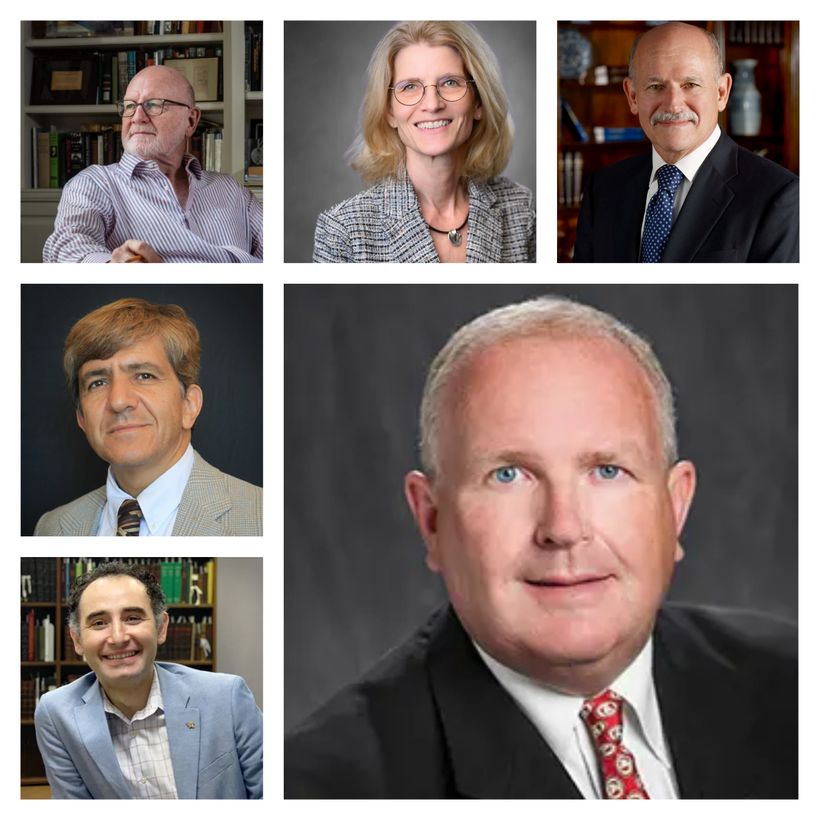
Largest Cohort in LSU History: Six Distinguished Faculty Members Named Boyd Professors
Named in honor of brothers Thomas and David Boyd, early presidents and faculty members of LSU, the Boyd Professorship recognizes faculty who bring honor and prestige to LSU through their national and, as appropriate, international recognition for outstanding achievements. Before today, only 79 faculty members from all of LSU’s campuses have ever achieved this distinguished rank. The newest cohort of Boyd Professors represent a wide variety of disciplines and hail from three of LSU’s eight campuses: LSU A&M, Pennington Biomedical Research Center, and LSU Shreveport. This group includes LSU Shreveport’s first-ever Boyd Professor, a landmark achievement for the campus and a testament to its academic distinction. As the largest group of Boyd Professors ever named at one time, this cohort underscores LSU’s rising reputation for research excellence across all of its campuses. “This is a moment of real pride for LSU. Naming six new Boyd Professors is not only historic in scale, it's a clear reflection of the extraordinary strength and momentum of our academic enterprise,” said Interim LSU President Matt Lee. “These scholars are advancing knowledge in ways that reach far beyond our campuses, and their work is helping to define LSU’s place on the national and global stage. I am especially proud to see LSU Shreveport represented for the first time, a milestone that reflects the growing excellence across our campuses. This achievement is a powerful reminder of our commitment to advancing scholarship and shaping the future through research, education, and service.” The newest Boyd Professors are: Mette Gaarde, Les and Dot Broussard Alumni Professor, Department of Physics and Astronomy, College of Science, LSU A&M John Maxwell Hamilton, Hopkins P. Breazeale LSU Foundation Professor, Manship School of Mass Communication, LSU A&M Steven Heymsfield, Professor of Metabolism and Body Composition, Pennington Biomedical Research Center Michael Khonsari, Dow Chemical Endowed Chair and Professor, Department of Mechanical Engineering, College of Engineering, LSU A&M Alexander Mikaberidze, Professor of History, Ruth Herring Noel Endowed Chair, College of Arts & Sciences, LSU Shreveport R. Kelley Pace, Professor, Department of Finance, E. J. Ourso College of Business, LSU A&M Nominations for the Boyd Professorship are initiated in the college, routed for review and support at the campus level, then considered by the LSU Boyd Professorship Review Committee, which seeks confidential evaluations from dozens of distinguished scholars in the candidate’s field of expertise. Once endorsed by the review committee, the nomination is forwarded to the LSU President and Board of Supervisors for consideration. With this distinction, a Boyd Professor’s compensation is elevated to reflect the stature of LSU’s most distinguished faculty, with a salary set at no less than the 95th percentile of full professors in comparable disciplines at peer public institutions across the southeastern United States. They also receive an annual stipend to further support their research and scholarly pursuits. Please join us in congratulating these faculty on this outstanding accomplishment.
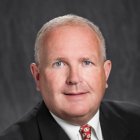


This strategic move aligns with LSU’s Scholarship First Agenda, where energy is one of five core focus areas for research critical to the future of Louisiana and the nation. It also builds on the successes of LSU’s Institute for Energy Innovation, Center for Energy Studies, Louisiana Geological Survey, and the LSU-led FUEL team while assuming a leadership role in how the university engages with its partners—industry, communities, donors, and state and federal agencies—through collaboration and service. “As Louisiana’s flagship research university, LSU is committed to organizing our efforts in ways that maximize impact and reflect institutional priorities,” said Robert Twilley, LSU vice president of research and economic development. “The LSU Energy Institute will provide a platform for faculty across multiple colleges and disciplines to collaborate on solutions to Louisiana’s most pressing energy and environmental challenges.” The LSU Energy Institute will unify and expand several longstanding programs, chiefly the Center for Energy Studies, the Louisiana Geological Survey, and a range of externally funded initiatives, including cutting-edge energy research catalyzed by the LSU Institute for Energy Innovation through a dedicated $25 million investment from Shell. This results-focused realignment reflects a broader effort across LSU to improve coordination between strategic research projects and teams with increased support from research centers, institutes, and core facilities. As LSU’s flagship unit in the energy domain, the Energy Institute will enhance the university’s ability to align interdisciplinary research and policy with Louisiana’s energy economy and environmental stewardship goals. “The reorganization of LSU energy efforts into this institute reflects both a long-standing legacy of service and a renewed vision for the future of energy research in Louisiana. It’s about building on 40 years of trusted work while expanding our capacity to innovate, support decisionmakers, and serve the people of our state, said Greg Upton, interim director of the LSU Energy Institute and executive director of the LSU Center for Energy Studies. The LSU Energy Institute will serve as a central hub for faculty, students, industry, and public agencies working at the intersection of energy technology, resource economics, environmental protection, and policy. The integration of the Louisiana Geological Survey will further reinforce the university’s role in providing critical data and analysis to support state planning and hazard assessment. The institute will also continue to seed competitive, high-quality research focused on energy systems resilience, carbon management, and economic opportunity. These investments reflect LSU’s broader vision to translate research into impact and fuel new jobs and technologies to power Louisiana’s future. Original article posted here.

Delaware INBRE Summer Scholars Complete Biomedical Research Projects at ChristianaCare
Eight undergraduate scholars recently completed a 10-week immersion in biomedical research through the Delaware IDeA Network of Biomedical Research Excellence (INBRE) Summer Scholars Program at ChristianaCare. Their projects, spanning oncology, emergency medicine and community health, culminated in a capstone presentation and celebration on August 13 at Christiana Hospital. This year’s cohort included students from University of Delaware, Delaware State University and Delaware Technical Community College, as well as Delaware residents attending college out of state. Each student was paired with expert mentors from across ChristianaCare, contributing to research designed to improve patient care and outcomes. In addition to their primary projects, the scholars explored ChristianaCare’s advanced facilities such as the Gene Editing Institute Learning Lab, gaining hands-on exposure to cutting-edge methods in biomedical research. “This year’s DE-INBRE program at ChristianaCare was a one-of-a-kind experience,” said Susan Smith, Ph.D., RN, program director of Technology Research & Education at ChristianaCare and the INBRE site principal investigator. “We brought together undergraduates from various academic backgrounds and immersed them in real, hands-on biomedical research with some of our most accomplished investigators. “Watching these students go from a little unsure on day one to confidently presenting their own findings by the end of the summer was inspiring, and proof that programs like this are building the next generation of biomedical researchers in Delaware.” Delaware INBRE is a statewide initiative funded by the National Institutes of Health to strengthen Delaware’s biomedical research infrastructure. It supports undergraduate research training, faculty development and core facility investments across partner institutions. At ChristianaCare, the program offers students immersive, hands-on research experiences guided by seasoned investigators, equipping them with the skills, mentorship and exposure essential for careers in science and medicine. Madeline Rowland, a Delaware resident and rising senior at Williams College in Massachusetts, collaborated with Hank Chen, senior medical physicist at the Helen F. Graham Cancer Center & Research Institute, to evaluate tattoo-free, surface-guided radiation therapy for breast cancer patients. She also worked with leaders of ChristianaCare’s Center for Virtual Health to explore how different patient populations experience virtual primary care. Rowland praised the program for the research skills and knowledge she gained as well as the meaningful relationships she built with mentors, health care professionals and fellow scholars she might not have otherwise met. “Dr. Chen and the whole Radiation team really adopted me into the department,” Rowland said. “From sitting on the CT simulation table in my first week to working on my project, I felt fully welcomed. I’ve learned so much, and the people I’ve met made this summer unforgettable.” Chen was recognized as the program’s inaugural “Mentor of the Summer” for his exceptional dedication and thoughtful approach to teaching. Having now mentored INBRE scholars for three years, Chen has a personal connection to the program. His own daughter participated as an undergraduate and recently began her general surgery residency after graduating from Sidney Kimmel Medical College at Thomas Jefferson University in Philadelphia. For Chen, mentoring represents an investment in health care’s future. “The greatest asset of any institution is its talent,” he explained. “When you welcome students into your environment, you draw good people to your field, and patients ultimately benefit from that.” Naana Twusami, a rising senior at Delaware State University, spent her summer with the Oral & Maxillofacial Surgery and Hospital Dentistry Department. She examined social determinants of health in facial trauma patients, analyzing how factors like income, education, transportation and insurance status influence recovery. “Being here showed me that things like income or transportation can matter just as much as the medical care itself,” she said. “The INBRE Summer Scholars Program gave me a real look at how health care works, and how places like ChristianaCare are helping shape where it’s headed.” Amy Minsker, continuing medical education manager, Academic Affairs, served as manager of the summer scholars program. Read more on news.christianacare.org.


LSU Veterinary Teams Recall Courage, Loss, and Lasting Change from Hurricane Katrina Animal Rescues
From that tragedy came transformative change, with new animal evacuation protocols and policies, including the creation of the federal Pet Evacuation and Transportation Standards (PETS) Act, which requires state and local disaster plans to include provisions for pets and service animals. LSU School of Veterinary Medicine played a pivotal role in this evolution. In the days and months after Katrina, LSU Vet Med faculty, staff, and students worked alongside state officials, military units, and volunteers from across the nation to rescue, treat, and shelter thousands of animals. Two decades later, Katrina’s scars remain, but so does the resilience of the people and animals who lived through it. Their stories serve as a reminder that in even the darkest moments, compassion can spark lasting change. Rescue in a War Zone Dr. Jenny Sones (then veterinary student): I had been working at LSU Vet Med for five years when Katrina hit. LSU Vet Med put out an ‘all hands on deck’ call to employees. All of our hospital wards were turned into an ER. We opened our homes to complete strangers who came to help. It was organized chaos. Many animals came to us looking like corpses with a heartbeat because they’d been in the flood waters so long. I worked all day at LSU Vet Med, where we saw the sickest, most injured patients, and worked at Lamar Dixon evenings and weekends. Twenty years later, the images are so vivid in my mind. I took a horse trailer on a rescue mission into New Orleans with two students and a state veterinarian escort one week after Katrina hit. The scene looked like a war zone, helicopters everywhere, buildings burning, gunshot sounds. Every area we saw was looted. The stench was awful. There were people on the overpasses who had been there for a week. We were there to rescue animals. Military, Louisiana National Guard, and police brought the animals to us where our trailer was parked on an overpass. We picked up a few strays on our way out. The animals we rescued were so scared. Some had been in the flood waters a long time and were soaking wet and foul smelling. Their skin was sloughing off and they were emaciated. Amazingly, none of the dogs, cats, or horses were aggressive—maybe because they were in shock or they were grateful. We treated them all at Lamar Dixon, washed them with Dawn dishwashing soap and applied betadine. Sick ones were transported by trailer to LSU Vet Med. They were very dark times and very good times too. We were able to get the New Orleans French Quarter mules out to Lamar Dixon. Their caretaker crew stayed with them. They hooked up the mules, still in good shape because they weren’t in the flood waters, and they gave workers short rides around the Lamar Dixon grounds. It was such rewarding work. We were exhausted but in the best way. It would have been easy to get caught up in the devastation if we didn’t focus on our purpose to help animals. You can’t fix everything, but you can fix what’s in front of you. If you can survive the devastation of Katrina, you can survive anything. From Classroom to Crisis Dr. Jenny Sones (then veterinary student): In August 2005, I was starting my second year of veterinary school at LSU. I had no idea that life was about to change so drastically. School was cancelled, and electricity was out most places except at the vet school. My colleagues set up temporary housing in our study rooms and other places throughout the vet school. We then began to learn of the effects of Katrina on our veterinary species—dogs, cats, horses, and more. These precious creatures were the reason why we studied, crammed, and signed up to endure the rigors of veterinary school. It was time to close the books and help! Although we were not licensed veterinarians yet, we were keen to provide aid in any way we could. I, along with lots of my classmates, volunteered at Parker Coliseum on the LSU campus, where displaced small animals were seeking refuge, and at Lamar Dixon, which became the shelter for large animals and small animals. We spend many hours doing anything we could, cleaning litter boxes, refilling water bowls, changing bedding, administering medications, and assisting the heroic volunteer veterinarians working tirelessly to treat the injured, sick, and rescued. Lots of important lessons were learned during Katrina. Many animals were not reunited with their owners. That's when I learned the value of microchipping to permanently identify animals, gained an appreciation for animal search and rescue, and the value of quick response. (Sones is now CSU Equine Reproduction Laboratory reproduction specialist.) Mapping Rescues by Hand Ashley Stokes (former faculty member): It was unlike anything I’ve ever experienced. I was researching and teaching at LSU Vet Med in 2005. LSU Vet Med stepped up in so many ways. We started receiving calls from citizens and local authorities at the vet school almost immediately after the storm. They needed help with resources—animal rescue, food, and water. They had to leave New Orleans quickly. I particularly remember a call from someone from south of Belle Chase, La., who had left horses, cattle, and two dogs in the house and needed help. It was surreal to see the devastation, houses floating, there in the Delta. We were making real-time decisions to help their animals. They’d lost so much, and for some, their animals were all they had left. We put a paper map of Louisiana on the wall and put pins in the locations that called for assistance. We covered all of New Orleans and surrounding areas, including the north shore and extending west to Baton Rouge. We took the callers’ information and sent teams of staff, students, and volunteers to different locations with donated trailers, hay, water, and other resources for rescue. We continued rescues for months after the storm. We were there for people for the long haul. The whole experience was transformational in my life. What I learned from Katrina became part of my own career and what I continue to do. There were beautiful moments, especially seeing how resilient and helpful people could be. I saw every day how the community came together and were absolute bright lights. Positive came from tragedy. (Stokes is now dean of UC Davis College of Agricultural & Environmental Sciences.) The Boxer on the Third Floor Dr. Neil Henderson (alumnus): When Katrina hit, the Louisiana Veterinary Medical Association sent out a request for help from veterinarians. I got to the Lamar Dixon Center on Day 5 after Katrina hit. St. Bernard Parish was where I spent most of my time helping. It was literally destroyed. One day, while we were making our rounds, a man came running up to me and said that he just remembered that while the storm was coming through—he was on the third story of a building looking out of the window—he noticed a dog swimming around frantically with nowhere to go. He opened a window for it with the hopes that it would swim inside the building to safety. Seven or eight days later, with the temperature well into the upper 90s, the man came up to me and asked me to go into the building to see if I could find the dog. I did not have much hope but went anyway. There, on the third floor of the building, I found the dog, a boxer, alive. She was in surprisingly good shape. The man was ecstatic to see the dog and could not believe that it made it inside the building to safety. I stayed for five days helping animals, and my late father (Dr. Robert Henderson, class of 1977) came after that for five more days. (Henderson is the owner of the Pine Ridge Veterinary Center in Stonewall, La.) Article originally posted here.

Dr. Sameer Hinduja is one of the world’s foremost experts on cyberbullying, adolescent mental health, and digital safety. A Professor at Florida Atlantic University’s School of Criminology and Criminal Justice and Co-Director of the Cyberbullying Research Center, he has advised the White House, testified before federal agencies, and worked with schools and tech companies worldwide to protect young people online. View Full Profile→ Amid the U.S. youth mental health crisis, his latest peer-reviewed study, published through FAU Newsdesk, reveals that hope not only boosts well-being and academic achievement but also acts as a powerful shield against bullying and cyberbullying in adolescents. Results, published in the journal Frontiers in Sociology, show that students with less hope were 56% more likely to cyberbully others than their peers over their lifetime, and 57% more likely over the last 30 days. Those with more hope were 36% less likely to cyberbully others over their lifetime and over the last 30 days when compared to their peers with lower levels of hope. The key takeaway? Hope matters. It buffers against the urge to aggress against others online and off. “Hope acts as a powerful protective factor against both school bullying and cyberbullying among youth,” said Sameer Hinduja, Ph.D., lead author, a professor in the School of Criminology and Criminal Justice within FAU’s College of Social Work and Criminal Justice, co-director of the Cyberbullying Research Center, and a faculty associate at the Berkman Klein Center at Harvard University. “When young people believe in their ability to set meaningful goals and stay motivated to reach them, they are far less likely to lash out or harm others. Hope gives them a sense of direction – and that can make all the difference.” Hinduja's previous research has been featured in The Washington Post, where he emphasized that cyberbullying is not just emotionally distressing—it can cause trauma responses in teens that mirror clinical Post-Traumatic Stress Disorder. “As our research clearly shows, cyberbullying in any form — whether it’s exclusion from a group chat or direct threats — can lead to significant trauma in youth,” Sameer Hinduja, a professor in Florida Atlantic University’s School of Criminology and Criminal Justice and the paper’s lead author, said in a news release. “We were surprised to find that no single type of cyberbullying caused more harm than others; all carried a similar risk of traumatic outcomes. This means we can’t afford to dismiss or trivialize certain behaviors as ‘less serious’ — being left out or targeted by rumors can be just as detrimental as more overt attacks.” Why This Matters Now As students return to school this fall, Hinduja’s research offers a clear reminder: digital harm is real harm. Emotional safety in online environments deserves the same urgency as physical safety in school buildings. His work calls for: • Preventive education over punitive responses • Trauma-informed approaches in schools • Support systems that validate and protect victims • Tech accountability and policy reform ⸻ Dr. Hinduja is available for media interviews on topics such as: Adolescent Mental Health • Cyberbullying • PTSD • Digital Safety • School Culture Click on the icon below to connect.
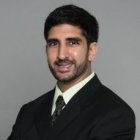


Nibir Dhar, Ph.D., director of the Convergence Lab Initiative and professor in the Department of Electrical and Computer Engineering, was recently appointed to the Virginia Microelectronics Center endowed chair. This position gives Dhar the opportunity to shape future scientists and engineers, as well as pursue breakthrough research at the College of Engineering. “It’s more than an academic role,” said Dhar. “It’s about preparing students for complex problems they’ll solve in industry and defense.” Dhar teaches semiconductor and infrared device courses while researching next-generation materials for real-world applications. He also explores AI’s ability to improve human-machine interactions. With his accomplished background and experience at national defense labs, Dhar bridges classroom theory with practical engineering challenges his students will face in their careers. “It feels incredible to be recognized this way. Virginia Commonwealth University truly values faculty who pour themselves into student success and university growth. What really drives me is knowing I’m helping build the next generation of problem-solvers. That’s where the real satisfaction comes from.” said Dhar. This promotion encourages Dhar to make bigger strides for research development that will transform both teaching methods and how technology advances in military and commercial sectors.


Georgia Southern professor receives national faculty mentor award
The Council on Undergraduate Research (CUR) named Georgia Southern University English Professor Olivia Carr Edenfield, Ph.D., the winner of the 2025 Arts and Humanities Faculty Mentor Award. The award recognizes faculty who go above and beyond to nurture undergraduate research, scholarship and creative work. Edenfield’s record of taking student research to new heights set her apart from a nationwide field of candidates. After joining Eagle Nation as a professor in 1986, Edenfield has helped her students become published researchers and presenters at local and national conferences. She said seeing those hardworking students excel has been her real reward. “Receiving this award is deeply personal,” Edenfield wrote in her CUR nomination statement. “My greatest joy in teaching has come from my students’ successes.” During her time as associate dean for Student Affairs in the former College of Liberal Arts and Social Sciences (CLASS), she launched the college’s undergraduate research symposium, now known as CURIO. She also helped establish a Center for Undergraduate Research for CLASS and set up residential interest groups to encourage students to share their love of different subjects with each other. Edenfield has helped her students achieve access to opportunities on a national level. She has served as director of the American Literature Association (ALA) since 2019, where she started a unique program that places Georgia Southern English majors in high-level administrative roles for ALA conferences. Seven of Edenfield’s students have had their work published in The Richard Macksey Journal at Johns Hopkins University. Many of her students have also presented their research at national and international conferences. Georgia Southern student Maegan Bishop’s presentation at the 2023 American Literature Association Annual Conference, based on research from Edenfield’s undergraduate class, was so impressive that she was invited to present her work at a conference on the short story at the University of Mainz, which covered all of her expenses. “My own experiences with Dr. Edenfield are only a small example of the work she has done to mentor undergraduates at Georgia Southern,” said Bishop. “She is constantly doing everything in her power to assist her students with whatever they need, extending every opportunity to those who express interest in becoming more involved in literary scholarship and campus activities.” David Owen, Ph.D., dean of the College of Arts and Humanities, emphasized how much Edenfield cares for her students, noting that her passion to help them succeed is second to none. “Mentoring is not a side note to Edenfield’s career, it is the throughline,” said Owen. “Her students succeed not just because of her guidance, but because she teaches them how to believe in their own voices.” The Faculty Mentor Award is the latest in a distinguished line of recognition for Edenfield. In 2016, she was named both the CURIO Mentor of the Year and the Wells-Warren Professor of the Year at Georgia Southern. She is a three-time recipient of her college’s Award for Distinction in Teaching, winning in 2016, 2020 and 2024. Edenfield was also a member of the inaugural class of the Governor’s Teaching Fellows program in 1995. ___ If you're interested in learning more about Georgia Southern's College of Arts and Humanities and want to book time to talk or interview, let us help - simply contact Georgia Southern's Director of Communications Jennifer Wise at jwise@georgiasouthern.edu to arrange an interview today.


Pets and the Texas floods: Owners faced difficult decisions and loss during and after disaster
One of the more overlooked aspects of any disaster is the loss of pets. Many of them become separated from their owners, are badly injured or perish as the result of a hurricane, flood, earthquake or other major event. This was the case in the recent flooding of the Guadalupe River in central Texas, said Sarah DeYoung, core faculty with the University of Delaware's Disaster Research Center. DeYoung can talk about the following aspects related to the tragedy: • The decisions that people have to make during evacuation, particularly for those with companion animals. • The amount of horses along the Guadalupe River, which could be found at the camps and recreation areas. • Pets that go missing after a flash flood, and the role that key organizations play in response and tracking and managing logistics. • The psychological impact on people whose pets were injured or died, who are mourning and making memorials. DeYoung can also discuss maternal and child health in crisis and disaster settings with a focus on infant feeding in emergencies. To set up an interview with DeYoung, visit her profile page and click on the contact button; or send an email to MediaRelations@udel.edu.


If the first few frames are any indicator of a blockbuster movie, hold the 2035 Best Picture Oscar for the Vera C. Rubin Observatory and its ambitious new 10-year project. On June 23, 2025, scientists at the state-of-the-art facility in the mountains of north-central Chile gave the public its first glimpses into the capabilities of its 8.4-meter Simonyi Survey Telescope, equipped with the world’s largest digital camera—a 3.2 megapixel, 6,600-pound behemoth that can photograph the whole southern sky every few nights. Its task is a decade-long lapse record-called the Legacy Survey of Space and Time (LSST). The first shots on that journey have left both the general public and astronomical community in awe, revealing in rich detail a mind-boggling number of galaxies, stars, asteroids and other celestial bodies. “The amount of sky it covers, even in just one image, is unprecedented,” said David Chuss, PhD, chair of the Department of Physics, who viewed the first images with colleagues at an organized watch party. “It’s such high-precision, beautiful detail,” added Kelly Hambleton Prša, PhD, associate professor of Astrophysics and Planetary Sciences. “It’s just mind-blowing.” What Makes Rubin and LSST So Unique? Simply, this revolutionary instrument, embarking on an equally revolutionary initiative, will observe half the sky to a greater depth and clarity than any instrument ever has before. Consider this: "The Cosmic Treasure Chest" image released by Rubin contains 1,185 individual exposures, taken over seven nights. Each one of those individual exposures covers 10 square degrees of night sky, which is about the same as looking up at 45 full moons positioned around one another. It may seem like a small size, but click the image yourself, and zoom in and out. The amount of sky captured in that range—enough to show roughly 10 million galaxies—is astounding. Per the Observatory, “it is the only astronomical tool in existence that can assemble an image this wide and deep so quickly.” “At the end of 10 years, Rubin will have observed 20 billion galaxies, and each night in that time frame it will generate 20 terabytes of data,” Dr. Hambleton Prša said. “And, because Rubin has so many different filters, we get to see the same objects in so many different ways.” According to Dr. Hambleton Prša and Dr. Chuss, the power and precision of the Rubin LSST, combined with the shear area of the sky that will be observed, will allow for an incredibly in-depth study of myriad objects, processes and events in ways nobody has ever studied them before. “For example, in our galaxy, we expect to observe only two supernovae per century,” Dr. Hambleton Prša said. “But we're observing 20 billion galaxies. For someone studying this phenomenon, the number of supernovae that they’re going to observe will be off the charts. It is an exquisite survey.” It will also provide insight into the universe’s oldest and most puzzling enigmas. “Rubin is able to look back into our universe at times when it was much smaller during its expansion and really address some of these incredible mysteries out there, like dark energy,” Dr. Chuss said. “We know the universe is expanding and that this expansion is accelerating. Rubin will trace the history of that acceleration and, from that, provide insight into the physics of the mysterious dark energy that appears to be driving it.” To enhance the technological capabilities of its instrument, scientists were invited to contribute towards the selection of the observing strategy of the telescope. The Rubin team took into consideration continual input from the astrophysics community, separated into what they call “science collaborations.” To achieve this, the Rubin team generated proposed simulations for collecting observations, which the science collaborations then assessed for their specific science goals. “The Rubin team then iterated with the science collaborations, taking into account feedback, to ultimately obtain the best strategy for the largest number of science cases,” Dr. Hambleton Prša said. Dr. Hambleton Prša is the primary contact for the Pulsating Star Subgroup, which is part of the Transients and Variable Stars Science Collaboration, the science collaboration that focuses on objects in the sky that change with time. She was the lead author among 70 co-authors on the roadmap for this science collaboration, underscoring the significant scale of community participation for each of these areas. Joined Under One Sky Dr. Hambleton Prša, Dr. Chuss and other members of the Astrophysics and Planetary Sciences Department and Department of Physics at Villanova have a vested interest in Rubin and the LSST project. In April, the two departments joined forces to launch The Villanova One Sky Center for Astrophysics, co-directed by the two faculty members. With goals to elevate the University's longstanding record of research eminence in astronomy and astrophysics and create opportunities for more students to access the disciplines, the Center partnered with the Rubin Observatory to help realize the mission. Both Villanova and Rubin share a similar vision on expanding access to this broad field of study. Fortuitously, the launch of The Villanova One Sky Center coincided with the initial data released from Rubin. What will result, Dr. Chuss says, will be a “truly awesome impact on both our Center and institution.” Dr. Hambleton Prša will advance her own research of pulsating stars, and Andrej Prša, PhD, professor of Astrophysics and Planetary Science and the primary contact for the Binary Star Subgroup, will broaden his study of short-period binary stars. Joey Neilsen, PhD, associate professor of Physics, will expand his research in black hole astrophysics. Becka Phillipson, PhD, an assistant professor of Physics, who recently led a proposal for Villanova to join the Rubin LSST Discovery Alliance, aims to increase the scope of her study of chaotic variability of compact objects. Dr. Chuss, who generally works on infrared and microwave polarimetry, which is “outside the wavelength ranges of Rubin” is interested in its complementarity with other observations, such as those of the cosmic microwave background—the oldest light in the universe—and the evolution of the large-scale structure of the universe. Subjects, he says, which are “exactly in the wheelhouse for Rubin.” Other faculty members are interested in topics such as how Rubin’s observations may change the knowledge of both the history and structure of our solar system and the population of Milky Way satellite galaxies. That is not to mention, Dr. Hambleton Prša points out, the daily 20 terabytes of data that will become available for students and postdoctoral researchers under their tutelage, who will be heavily involved in its analysis for their own projects and ideas. “This partnership is going to greatly increase our opportunities and elevate our profile,” Dr. Chuss said. “It will make our program even more attractive for faculty, postdocs and students to come and to share their knowledge and expertise. “Together, we will all have access to an incredible movie of this epoch of our universe, and the knowledge and surprises that come with it along the way.”



Kyle Davis wins NSF CAREER Award for pioneering research on climate-resilient food systems
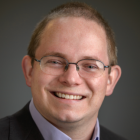
University of Delaware assistant professor Kyle Davis has received a National Science Foundation (NSF) CAREER Award—one of the most competitive and prestigious honors for early-career faculty—for his work advancing the climate resilience of global food systems. Davis, who holds joint appointments in the College of Earth, Ocean and Environment and the College of Agriculture and Natural Resources, leads cutting-edge research at the intersection of agriculture, sustainability and global environmental change. His focus? Making food production more efficient, climate-smart and socially equitable—especially in regions grappling with limited water resources. With a growing global population and increasing pressure on land and water, Davis’s research is helping to answer one of the most critical questions of our time: How can we feed the world without destroying the planet? His lab’s work recently led to the development of MIRCA-OS, a groundbreaking open-source dataset that offers high-resolution global data on irrigated and rain-fed croplands across 23 crop types. The tool, co-created with UD doctoral student Endalkachew Kebede and published in Nature Scientific Data, allows researchers, farmers and policymakers to assess how crop choices, rainfall and irrigation interact with water systems and food security. Some of the thirstiest crops are grown in the most water-stressed areas Davis said. Shifting crop mixes to crops that require less water but still ensure farmer profits is a promising way to reduce the amount of water needed to irrigate crops and to avoid conditions of water scarcity. Davis’s research spans continents, with active projects in the United States, India, China and Nigeria, where his team is exploring solutions to water scarcity, crop nutrition and agricultural sustainability. His work has appeared in Earth.com, Phys.org and major scientific journals. In 2023, he was recognized with the American Geophysical Union’s Global Environmental Change Early Career Award. In addition to research, Davis is a dedicated mentor, guiding graduate students from around the world. “So much of my research is the result of their passion, abilities, drive and creativity,” Davis said. Davis is available for interviews on topics including sustainable agriculture, water use, climate adaptation, food systems and the power of data science in global development. He can be contacted by clicking the "View Profile" button.
