
Experts Matter. Find Yours.
Connect for media, speaking, professional opportunities & more.

On Sunday, October 19, at 9:34 a.m., four masked individuals surged into the Louvre’s Galerie d’Apollon from a severed, second-floor window. Hurriedly, they smashed open two display cases, seized eight pieces of jewelry, then shimmied down a ladder and sped off on motorbikes toward Lyons. In seven minutes’ time, in broad daylight, they absconded with an estimated $102 million in valuables from the world’s most famous museum. This past Saturday, October 25, French authorities announced the first arrests in connection with the daring heist. However, despite the police’s progress, the country continues to litigate the matter—embroiled in discussions of heritage, history and national identity. Recently, Roderick Cooke, PhD, director of French and Francophone Studies at Villanova University, shared his perspective on the situation as well as the artifacts lost. Q: The Louvre heist has been described as “brazen,” “shocking” and a “terrible failure” on security’s part. Is there any sort of precedent for this event in the museum’s history? Dr. Cooke: Nothing on this scale has ever happened to the Louvre since its founding as a museum during the Revolution. The closest equivalent is the 1911 theft of the Mona Lisa by a former employee who claimed it should be returned to Italy. However, that was one painting, the heist was not committed by organized crime, and the Mona Lisa did not have the renown it enjoys today. The impact of the theft was thus lower, although it did cause major outrage and a sweeping law-enforcement response at the time. Ironically, that theft is often credited with making da Vinci’s painting the global icon it continues to be. Q: What has the reaction to this event been among the French people? DC: It’s harder to get a sense of reactions across French society, because so much of the aftermath has focused on the intellectual milieux’s opinions. And in those realms, it has immediately become a political football. Individuals positioning themselves as anti-elite or anti-status quo, such as Jordan Bardella of the National Rally party, have called the theft a “humiliation,” immediately tying it to French national prestige. Former President François Hollande has conversely and vainly called for the event to be de-polemicized, citing national solidarity. This is happening because the Louvre is one of the most visible manifestations of French soft power—the most-visited museum anywhere on Earth. As such, anything attacking its integrity becomes an attack on the nation, and how individual French citizens feel about the theft is closely tied to their broader view of the nation. Q: Several of the items stolen from the Louvre once belonged to Empress Eugénie. Could you share a bit of information on her story? DC: Eugénie de Montijo was a Spanish aristocrat who married the Emperor of the French, who ruled as Napoleon III between 1852 and 1870. It was a time of authoritarian repression and sham democracy—Napoleon III installed the Empire through a coup. Its clearest legacy is that Paris looks the way it does today largely because of the thorough modernizations overseen by Napoleon III’s appointee Baron Haussmann. So, Eugénie and her now-lost jewels represent a complex point in French history, when culture and the economy developed quickly, but did so in a climate of fear for any French person who opposed the regime too loudly (like Victor Hugo, who went into exile on the Channel Islands and wrote poems savaging Napoleon III and his deeds). Some accused the Empress of being responsible for the more hardline and conservative stances taken by her husband’s government. On a different note, she was a diligent patron of the arts and arguably the most significant figure in the contemporary fashion world, famous for setting trends such as the bustle that radiated across Europe. This explains the mix of anger and admiration that followed her depending on the sphere she was operating in. A new English-language biography argues that far from being a traditionalist, she was a pioneering feminist by the standards of the time. It looks like her historical importance will continue to be debated. Q: Interior Minister Laurent Nuñez described the stolen items as “of immeasurable heritage value.” How significant of a cultural loss do you consider this theft? DC: These jewels are referred to in French as “les Joyaux de la Couronne” (the Crown Jewels), but of course that phrase lands very differently in republican France than it does across the water in the United Kingdom. The items actually represent several different dynasties of French rulers, some of whom came to power through direct conflict with others. The now-ransacked display at the Louvre smoothed over these historical divisions, for which many French people died over the centuries. President Macron referred to the stolen items as embodying “our history,” which is emblematic of the French state’s work to create a conceptual present-day unity out of the clashes of the past. At a time when France is arguably more divided than at any point since World War II, any unitary symbol of identity takes on greater significance. Q: Do you have any closing thoughts on the artifacts taken and what they represent? DC: I’d reemphasize the previous point about the smoothing effect of the museum display on the violent history that made it possible. Much of the reporting on the stolen jewels lists off the different queens and empresses who owned them, without giving readers a sense of the complicated succession of regime changes and ideologies that put those women in power in the first place. The relative stability of the last 60-odd years is an anomaly in modern French history. This set of jewels and the names of their original owners may seem far removed from the concerns of an ordinary French citizen today, but just beneath their surface is a legacy of changing governments and tensions between social classes that survives in new forms in 2025.


Inside the Classroom: LSU Psychologist Shares Insight on Student Attention Spans
What large changes have schools seen over the past few years regarding attention spans? "Being distracted by something in nature when trying to do a task may have been the first type of distraction, along with internal distractions, such as thinking about something else when you are trying to complete a task. Thus, distraction is not new. What’s new today is that the types of distractions are more complex and can even be individually tailored to capture someone’s attention, which can lead to more temptations to shift our attention off of one task and over to something else." What are innocuous ways students can harm their attention spans? What effect do phones have on retention ability? "One way I think that students can harm their own task progress is to believe that they can truly multitask or do more than one thing at one time. If you are completing a homework assignment and you are tempted to check your social media feed, you are causing a switch of your attentional focus. It may seem quick and somewhat harmless, but numerous studies have indicated that trying to switch back and forth between two tasks results in more errors and has the overall effect of taking longer to complete the main task. Thus, put simply, do not multitask. Set aside a time limit, say 20 or 30 minutes, to solely focus on one assignment or one study guide. Then take a break." How can a depleted attention span affect general physical and mental health in children? "Mental effort can be as tiring as physical efforts. As a field, we now understand the importance of sleep and overall health for our cognitive systems. To support the efforts of sustained attention, it is important to recognize that learning takes time and it takes energy. In terms of young children, the many processes involved in the development of the body and the mind require more sleep than older children and adults. How may fixing a memory deficit look different in a teen versus a child? "Younger children need more breaks than older children, as well as needing more sleep. However, younger children are able to maintain their focus of attention. They may need more guidance and something we call “scaffolding." This term is used to indicate that the older learners may already have a framework to use to build their knowledge, whereas younger learners are starting from scratch. Providing extra support that is relative to their age and ability helps children to perform at their maximum level." Are schools set up to most efficiently stimulate students' minds? "When I think about the classrooms of early childhood settings, such as pre-K and lower elementary schools, the classrooms are set up to encourage learning. There are brightly colored pictures and words on the walls; there are reading nooks that are comfortable and easy to reach for smaller learners; there are spaces to move the desks around the room to allow for different configurations of the space; and so forth. As children get older, the classroom spaces start to reflect these changes and allow for different interactions between the students and the material. I think about a high school science lab with tables and equipment, as compared to a history classroom with classical book titles and historical figures displayed on the walls. I believe the physical spaces of many classrooms are well-suited to match the skills and capabilities of the children as they grow, because they are designed to meet the children where they are." What tools would you recommend teachers use to help students strengthen their learning skills? "As I mentioned earlier, learning new material takes time and effort. It is important for children and adults to realize this and to allow time and space for learning. Sometimes adults can forget what it was like to learn something new for the first time, because they already have a foundation for their knowledge. Children are acquiring new information, new skills, and making new connections in their neural networks every day. We learn by associating information with things we already know, and also by making new connections. I mean this in a figurative sense, such as thinking about how one vocabulary word may relate to another one, as well as in a literal neural sense. Our brains work by making connections between neurons to create neural networks." Does knowing what kind of learner you are (audio, visual, or descriptive) help you improve your memory? "In terms of learning styles, this has been a pervasive but misleading concept. I believe it has stuck around because it is also intuitive. People have preferences. We know this, and it is very apparent in almost all aspects of life (our fashion, our food choices, etc). However, having a preference is not the same thing as being limited to learning in only one modality. In fact, research has shown that teaching new information in more than one modality is the most effective way." What has been the most surprising result from your research? "Children are incredibly capable of vast amounts of learning. I do not think we give children enough credit for the acquisition of so many skills in a relatively short amount of time. As just one example, if an adult learner has ever tried to become proficient in a second language, they will realize that it is a difficult task. However, young children can pick up a second language in a manner that seems almost effortless. This is just one example of the fantastic capabilities and flexibilities of the young mind."


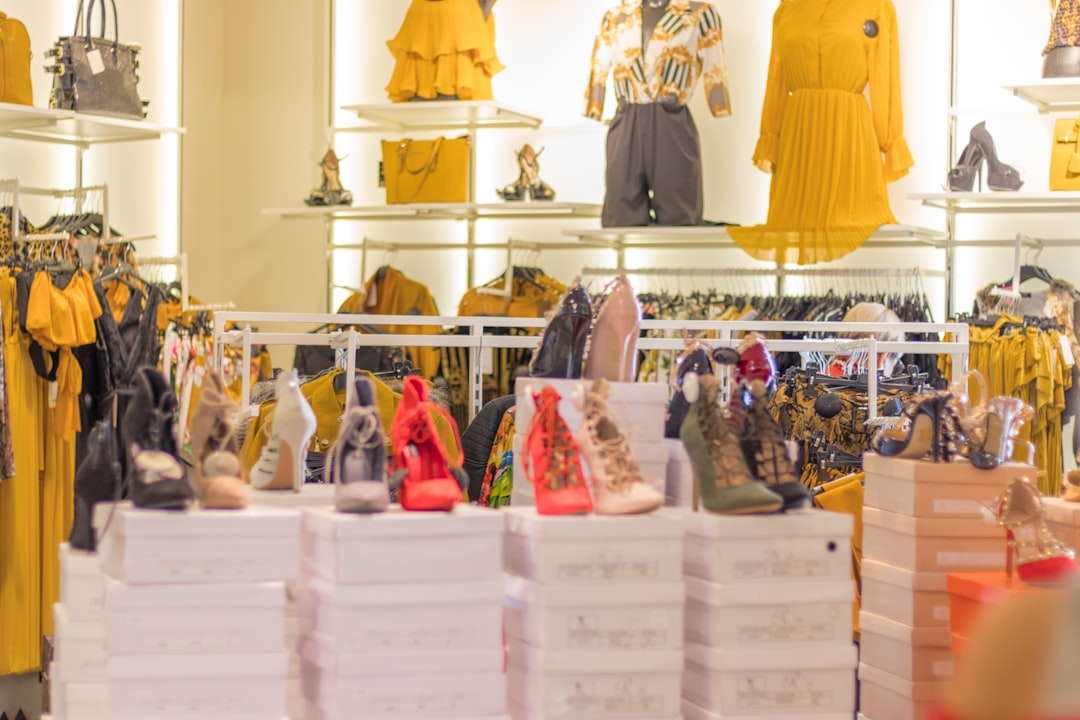
Tariffs fuel global sourcing shakeup for fashion in the U.S.
Be prepared to see more Made in Vietnam or Made in Bangladesh labels on clothing in the coming years. That’s because U.S. fashion companies are rethinking their global sourcing strategies and operations in response to the Trump administration’s trade policies and tariffs, according to new research by the University of Delaware's Sheng Lu. Lu, professor and graduate director in the Department of Fashion and Apparel Studies, partners with the United States Fashion Industry Association (USFIA), on an annual survey of executives at the top 25 U.S. fashion brands, retailers, importers and wholesalers doing business globally. Members include well-known names like Levi’s, Macy’s, Ralph Lauren and Under Armour, among others. The report covers business challenges and outlook, sourcing practices and views on trade policy. “We wear more than just clothes; we wear the global economy, the supply chain and the public policies that jointly make fashion and affordable clothing available to American families,” Lu said. “We want to know where these companies source their products and what factors matter to them the most. It’s a classic question and it evolves each year.” This year’s report, released on July 31, shows tariffs and protectionist policies are the top business challenge for companies, with nearly half reporting declining sales and more than 20% saying they have had to lay off employees. This was followed closely by uncertainty around inflation and the economy, increasing sourcing and production costs, and changes in trade policies from other countries. In response, more than 80% of companies said they will diversify the countries from which they source their products, focusing on vendors in Asian countries such as Vietnam, Bangladesh, Cambodia and Indonesia. Despite the push for “Made in USA” garments, only 17% of respondents plan to increase sourcing from the U.S. Lu shared his findings in the following Q&A: What surprised you about the survey results? Two things surprised me. First, contrary to common perception, the results do not indicate that the tariff policy so far has effectively supported or encouraged more textile and apparel production in the U.S. This actually makes sense. U.S. mills are as uncertain about the tariff rates as our trading partners are. A U.S. company may manufacture the clothes here, but use yarns, fabrics and zippers from other countries. When tariffs drive up the cost of these raw materials, it reduces the price competitiveness of apparel “Made in the USA.” Many domestic factories are in a “wait and see” mode, holding back on making critical investments to expand production due to the lack of a clear policy signal. Second, I was struck by the wide-ranging impact of the tariffs, which has gone far beyond what I originally imagined. Tariffs have not only increased U.S. fashion companies’ sourcing costs but have also affected their product development, shipping and overall supply chain management. Nearly 70% of the survey respondents said they have delayed or canceled some sourcing orders due to tariff hikes. Should consumers be prepared for less variety in clothing or shortages? Later this year, we may see fewer clothing items from our favorite brands on store shelves — especially during the holiday shopping season — and many of those items may come with a higher price tag. That said, fashion companies are doing what they can to avoid passing on tariff costs across the board, as they recognize that consumers are price sensitive. Many surveyed U.S. fashion companies say they intend to strengthen relationships with key vendors as a strategic move, and there is a growing public call for U.S. companies to provide more support and resources to their suppliers in developing countries. Sustainability is a huge issue in the fashion industry, as millions of tons of textiles end up in landfills every year. Companies say they are spending less on sustainability efforts. What would you tell companies about their sustainability efforts? Our survey suggests that sustainability can open up new business opportunities for U.S. fashion companies. Respondents said that when sourcing clothing made from sustainable fibers — like recycled, organic, biodegradable and regenerative materials — they are more likely to rely on a U.S. sourcing base or suppliers in the Western Hemisphere. In other words, even if apparel “Made in the USA” or nearby cannot always compete on price with lower-cost Asian suppliers, there is a better chance to compete on sustainability. Based on what I’ve learned from our Gen Z students — who expect better quality and more sustainable products if they have to pay more, and are critical consumers for many brands and retailers — it is unwise to hold back on investments in sustainability. What do you see as the biggest takeaway from the survey? One key takeaway is that the $4 trillion fashion and apparel business today is truly “made anywhere in the world and sold anywhere in the world.” In such a highly global and interconnected industry, everyone is a stakeholder — meaning there are no real winners in a tariff war. The study is also a powerful reminder that fashion is far more than just creating stylish clothing. Today’s fashion industry is deeply intertwined with sustainability, international relations, trade policy and technology. I hope the findings will be timely, informative and useful to fashion companies, policymakers, suppliers and fellow researchers. I plan to incorporate the insights, as well as the valuable industry connections developed through my long term partnership with USFIA, in my classroom, giving UD students fresh, real-world perspectives on the often “unfashionable” but essential side of the industry. Reporters interested in speaking with Lu can contact him directly by visiting his profile and clicking on the contact button. UD's media relations team can be reached via email.


What Sydney Sweeney’s American Eagle ad reveals about beauty standards and cultural expectations
Sydney Sweeney’s latest American Eagle campaign is doing more than selling denim – it’s stirring up a heated cultural conversation. Jaehee Jung, professor of fashion and apparel studies at the University of Delaware, can discuss the ways in which this reaction says a lot about where we are as a society. A leading expert on fashion, body image and consumer behavior, Jung studies how the fashion industry shapes – and is shaped by – our expectations of beauty, identity and representation. The ad in question features Sweeney in relaxed, casual pieces aligned with American Eagle’s classic aesthetic. But online reaction has been anything but chill. While many fans praised the actress’s style and confidence, others criticized the campaign for promoting unrealistic beauty standards and lacking diverse representation. Some even called it “pro-eugenics” – an extreme accusation that points to just how charged the conversation has become. With a background in both psychological and cultural aspects of fashion, Jung is available to discuss why this campaign struck such a nerve — and what it means for the future of women’s fashion and branding. To speak with Professor Jung, visit her ExpertFile profile or contact mediarelations@udel.edu.


Taming “The Bear”: Villanova Professor Examines Workplace Toxicity in FX’s Acclaimed Series
In the latest season of FX’s award-winning series “The Bear,” lead character and chef Carmen “Carmy” Berzatto finds himself at a crossroads. A culinary genius, Carmy has successfully overseen the reinvention of his family’s Italian beef shop as a high-end restaurant—shepherding a dedicated, if unpolished, crew of sandwich makers into a world of haute cuisine, fine wine and elevated service. However, over the course of this transition, his exacting standards have contributed to a culture of anxiety, dysfunction and resentment in the workplace. Despite staff members’ professional and personal growth, tempers still flare like burners on a range, with Carmy’s obsessive attention to detail and single-minded pursuit of perfection spurring conflict. By season’s end, grappling with the fallout from a mixed review seemingly influenced by the back-of-house “chaos,” the chef is forced to confront a complicated and thorny question: Am I getting in the way of my own restaurant’s success? Carmy’s dilemma, while fictional, reflects the very real challenges many modern businesses face when excellence is prioritized at the expense of psychological safety and workplace harmony. Per Manuela Priesemuth, PhD, who researches toxic work climates, aggression on the job and organizational fairness, the warning signs are all too frequently overlooked in high-pressure environments like restaurants. “Some high-stakes industries have a characteristic of having toxic behavior more accepted,” says Dr. Priesemuth. “When it’s more accepted or normed, it’s a real problem.” As she explains, workers in the food service industry, much like medical professionals in an operating room or military personnel in a combat zone, have a tendency to view measured communication and thoughtful interaction as a luxury or even, in some cases, a hindrance. Essentially, there’s a common misconception that working with an edge—yelling orders, avoiding dialogue and berating “underperformers”—gets the job done. “In all of these high-stakes environments where it’s thought there’s leeway to talk negatively or disparagingly, people are mistaken in the productivity result,” Dr. Priesemuth says. “It actually changes for the better in positive climates, because people who are treated with dignity and respect are better performers than those who are mistreated.” To Dr. Priesemuth’s point, research increasingly shows that workplace culture, not just talent or technical ability, is an essential driver of organizational success. In an environment like Carmy’s kitchen, where pride and passion often give way to personal attacks and shouting matches, the on-the-job dynamic can effectively undermine productivity. What may begin as an intended push for excellence can instead result in burnout, high turnover and weakened trust—outcomes that are especially problematic in collaborative, fast-paced industries like hospitality. “There’s even evidence that abusive behavior in restaurant settings can lead to food loss,” shares Dr. Priesemuth. “So, there is a sort of retaliation from the employees who are going through this experience, whether it’s measured [in profit margins] or impact on the customer.” In order to prevent these less-than-ideal outcomes, businesses should take steps proactively, says Dr. Priesemuth. More specifically, they should clearly articulate their values and expectations, considerately engage with their staff’s opinions and concerns and consistently invest in their employees’ growth and development. In the world of “The Bear,” a few of Carmy’s managerial decisions in the second season could be seen as moves in the right direction. At that juncture, he was leveraging his industry connections to provide his restaurant’s staff with the tools and training necessary to thrive in Chicago’s fine dining scene, building skills, confidence and goodwill. “If you give people voice—such as input on the menu, for example, or more autonomy in completing a certain task—it boosts morale,” says Dr. Priesemuth. “It helps people feel that they have input and that they are valued members of the team; it’s this sort of collaborative, positive relationship that increases commitment and performance.” Establishing this type of work culture, grounded in open communication, mutual respect and a shared sense of mission, takes concerted effort and constant maintenance. In situations in which toxicity has already become an issue, as it has in Carmy’s kitchen, the task becomes decidedly more difficult. Typically, it demands a long-term commitment to organizational change at the business’ highest levels. “Adjusting the tone at the top really matters,” says Dr. Priesemuth. “So, if the owner were to treat their chefs and waiters with the dignity and respect that they deserve as workers, that also trickles down to, for example, the customer.” A leader’s influence on workplace morale, she contends, is nuanced and far-reaching. When those in charge model a lack of empathy or emotional distance, for instance, a sort of toxicity can take root. Likewise, when they repeatedly show anger, animosity or frustration, those same feelings and attitudes can have an ingrained effect—regardless of a staff’s talent or ability. Given the outsized role owners, supervisors and managers play in shaping organizational culture, Dr. Priesemuth further notes, “Leaders must also feel that they’re being supported. You can’t have someone who’s exhausted, works 80 hours a week and has relationship and money issues and expect them to say, ‘What are your problems? What do you need?’” In many ways, her insights speak directly to the struggles Carmy faces and prompts throughout “The Bear’s” run. At every turn, he’s dogged by family and relationship troubles, mounting financial pressures and unresolved trauma from a past role. Ultimately, as would happen in real life, his difficulty in healthily processing and addressing these issues doesn’t just harm him; it affects his staff, manifesting itself as a need for control and a crusade for perfection. “There are spillover effects from your own personal life into your job role. In the management field, that has become increasingly clear,” says Dr. Priesemuth. “Whatever you’re going through, whether it’s from an old job or something personal, it will automatically spill over into your current work life and your interactions. And, vice versa, what’s happening to you at work will [impact you off the clock].” In dramatic fashion, the fourth season of “The Bear” concludes with Carmy acknowledging as much. Determining that there are other aspects of his life desperately in need of attention, he surrenders the reins of his business to chef de cuisine Sydney “Syd” Adamu and maître d’hôtel Richard “Richie” Jerimovich, appointing them part-owners. While the soundness of this decision remains a subject for the show’s next season, Carmy justifies the move with a blunt admission: “It’s the best thing for the restaurant. We have to put the restaurant first… I don’t have anything to pull from.” In the end, in both “The Bear” and management studies, there’s an understanding that building healthy and productive work environments requires active engagement and positive reinforcement on the part of leadership. In a sense, creating a strong work culture is shown to be a lot like preparing a phenomenal meal; it’s a matter of attentiveness, patience and care. Without those ingredients, the result could very well be a recipe for disaster.

The Canadian Housing Market is a Mess
The Social Contract is Broken—And We Forgot to Tell Our Kids There was a time in Canada when the rules seemed straightforward: work hard, stick to the plan, and your kids would have an even better future than you did. That was the unspoken social contract—not legally binding, but deeply believed. A handshake between generations, sealed with maple syrup and mutual optimism. You purchased a modest home, stayed with one employer for 30 years, and retired with a gold watch, a pension, and a house you owned outright. Life wasn’t flashy, but it was fair. And your kids? They would climb even higher. Well… about that! The Housing Market: From Stepping Stone to Stumbling Block Homeownership used to be a rite of passage. Now it feels more like winning The Amazing Race: Toronto Edition. According to Statistics Canada housing data, in 1990, the average Canadian home sold for approximately $215,000. Fast-forward to late 2023–early 2024, and that number has ballooned to around $670,000–$700,000 on average —a more than 200–225% increase in just over three decades. Meanwhile, wages didn’t get the memo. Since 1990, they’ve only doubled. So, while home prices soared, incomes shifted to the kitchen for more instant noodles. It's not just a gap—it’s a canyon. Sure, there was a housing correction in the early ’90s. But if you’re under 40, you’ve never seen a price drop—only stable prices (on a good day). Meanwhile, boomers and older Gen Xers bought homes when down payments didn’t require a GoFundMe page. Boomers Rode the Rocket—Then Pulled Up the Ladder Let’s be honest: we did quite well. If you purchased property in the ’70s, ’80s, or ’90s, you benefited from a wave of equity that transformed retirement into a cruise ship brochure. For many, the house became the largest—and only—source of real wealth. We got used to it. Then we got protective. Then... well, a bit smug. • NIMBYism? Guilty. • Zoning restrictions? Voted yes. • Capital gains reform? Over my arthritic body. • Preferred Pronouns – Me, Myself and I We feared anything that could lower our property values. A 25% correction? Not in my golden years! But that might be what it takes to give our kids a fair shot. We told them to "work hard," then quietly reinforced a game they couldn’t win. We Told Them to Hustle—Then Rigged the Game Today’s young Canadians aren’t lazy; they’re exhausted. They’ve done everything we asked—degrees, careers, even side hustles—and still can’t afford a 500-square-foot shoebox in Toronto without cashing in their RRSPs or moving back into our basements. By the way, they’re doing this—not because they missed us, but because rent is eating up half their paycheque and still asking for dessert. Even worse? Many are looking abroad, not for a gap year, but for an economy in which they can participate—one where they might be able to afford a home and groceries in the same month. If the best and brightest are quietly packing their bags, it’s not wanderlust; it’s a policy failure. There’s now a whole ecosystem catalyzed by everything from consultants to cloud-based software and payment platforms that has aided a global movement of “creative-class” digital nomads. For those who want a more affordable cost of living and have the skills necessary to work remotely, this generation has options to move. In "Intelligent Money," author Chris Skinner envisions a future where AI-powered financial systems won’t just advise against homeownership—they’ll actively discourage it. Why commit to mortgage debt when you can rent flexibly, invest digitally, and maintain liquidity in your life? Not a dream, but a necessity. We told them to pull up their socks. They’re wondering if we sold their shoes. What Happened to Profit Sharing? Remember when companies used to share their success? Microsoft, Google, and yes, still Costco, offered profit-sharing or stock options that turned employees into unexpected millionaires. It wasn’t charity; it was a fair deal. Then gig work emerged, HR departments disappeared, and the only thing we shared was burnout. We need to restore fairness—perhaps even incentivize companies that value loyalty. Renter Equity Accounts: A Radical Concept—Equity You're not building wealth if rent is more than 30% of your income. You’re funding someone else’s retirement. So, here’s a thought: when rent exceeds 30%, why don’t we match the excess—25% to 50%—and deposit it into a locked “Renter Equity Account”? It grows tax-free and can be used for: • A down payment • Retirement savings • Student debt relief • Emergency funds Employers could contribute to REA plans. Governments could provide incentives, and renters could finally receive more than just a rent receipt and a pat on the back. It's Time for Bold, Practical Ideas We can’t rewind to 1990. (Although the fashion world is trying.) But we can fix what’s broken: Let Canadians earn their first $250,000 tax-free, provided it is used for a down payment or to eliminate student loans. That’s helping reduce overall debt. Ensure zoning reform is effective by linking federal infrastructure funding to genuine housing development. Establish public wealth tools - TFSA-style accounts for low-wealth, high-effort Canadians. Forgive student loans for public service, specifically for individuals filling positions such as nurses, teachers, early childhood educators, and tradespeople, with added incentives for those relocating to underserved areas. Invest in them, and they will reinvest in us. What Families Can Do—Right Now No, you can’t rewrite national policy from the kitchen table. (Unless you’re Chrystia Freeland.) But here’s what you can do: Start a down payment fund—consider using a TFSA or an investment account to help your kids build capital. Create an ADU—laneway homes, granny suites, legal basement rentals. Housing and support combined. Access your home equity—HELOCs or reverse mortgages can be lifelines, not luxury options. Create a rent-to-own family plan—turn monthly rent into future equity. Discuss finances—share your successes, warn against mistakes, and share the financial knowledge you’ve gained from hard lessons. An Apology—from the Heart To our kids and to the next generation, we should say we’re sorry. We didn’t plan for this outcome. We assumed the paths we walked would still be open for you, that the same rules would still apply, and that equity would be available to all. We forgot that a contract—even an unspoken one—still needs to be honoured. But it’s not too late. We can speak out. We can share our thoughts. We can change the policies, shift the mindsets, and reopen the doors that have been closed, because the future of this country shouldn’t be something you have to leave to find. Let’s fix this. So, you can stay. And thrive. And lead. Let’s rebuild the contract together. Deal? Don’t Retire … Re-Wire! Sue


Expert Perspective: The Hidden Costs of Cultural Appropriation
In our interconnected world, cultural borrowing is everywhere. But why do some instances earn applause while others provoke outrage? This question is becoming increasingly crucial for business leaders who must carefully navigate cultural boundaries. Take the backlash the Kardashian-Jenner family faced for adopting styles from minority cultures or the controversy over non-Indigenous designers using Native American patterns in fashion. These examples highlight the issue of cultural appropriation, where borrowing elements from another culture without genuine understanding or respect can lead to accusations of exploitation. Abraham Oshotse, an assistant professor of organization and management at Goizueta Business School, along with Assistant Professor of Sociology and Anthropology at Hebrew University Yael Berda and Associate Professor of Organizational Behavior at the Stanford Graduate School of Business Amir Goldberg, explores this in their research on “cultural tariffing.” They shed light on why high-status individuals, such as celebrities or industry leaders, often come under fire when crossing cultural boundaries. The Concept of Cultural Tariffing Oshotse and coauthors define cultural tariffing as “the act of imposing a social cost on cultural boundary crossing. It is levied on high-status actors crossing into low-status culture, in order to mitigate the reproduction of the status inequality.” This notion suggests that the acceptance or rejection of cultural boundary-crossing is influenced by the perceived costs and benefits. Cultural appropriation involves taking elements from a culture that one does not belong to, without permission or authority. For example, when Elvis Presley brought African-American music into the mainstream, it was initially seen as elevating the genre. However, in today’s context, such acts might be criticized as appropriation rather than celebration. This research seeks to analyze people’s modern reactions to different examples of cultural boundary-crossing and which conditions induce cultural tariffing. The Hypotheses The researchers make four hypotheses about participants’ reactions to cultural appropriation: People will disapprove of cultural borrowing if there’s a clear power imbalance, with the borrowing group having more status or privilege than the group they are borrowing from. Cultural borrowing is more likely to be criticized if the person doing it has a higher socioeconomic status within their social group. Cultural borrowing is more likely to be criticized if the person doing it has only a shallow connection to the culture they’re borrowing from. Cultural borrowing is more likely to be criticized if the person doing it benefits more from it than the people from the culture they are borrowing from. Put to the Test Oshotse et al exposed respondents to four scenarios per hypothesis (16 total) with a permissible and a transgressive condition. In the permissible condition, subjects exhibit lower status or socioeconomic standing or a stronger connection to the target culture. Subjects in the transgressive condition exhibit a higher status or socioeconomic standing and less of an authentic connection to the target culture. Insights from the Study Oshotse’s study offers four key insights: Status Matters: Cultural boundary-crossing is more likely to generate disapproval if there’s a clear status difference favoring the adopter. Superficial Connections: The less authentic the adopter’s connection to the target culture, the more likely they are to face backlash. Socioeconomic Influence: Higher socioeconomic status within the adopter’s social group increases the likelihood of disapproval. Value Extraction: The more value the adopter gains relative to the culture they’re borrowing from, the higher the disapproval. These insights are crucial for leaders who want to navigate cultural boundaries successfully, ensuring their actions are seen as respectful and inclusive rather than exploitative. Real-World Implications for Business Leaders Why does this matter for business leaders? Understanding cultural tariffing is crucial when expanding into new markets, launching multicultural campaigns, or even managing diverse teams. The research suggests that crossing cultural boundaries without deep understanding or respect can backfire. That’s especially true when the adopter holds a higher socioeconomic status. Consider the example of a luxury brand adopting traditional African patterns without engaging with the communities behind them. In this case, it risks being seen as exploitative rather than innovative. The consequences aren’t just reputational; they can also impact the brand’s bottom line. This research isn’t just about isolated incidents; it mirrors sweeping societal shifts. Over the past 50 years, Western views have evolved to embrace ethnic diversity and multicultural exchange. But with this newfound appreciation comes a fresh set of challenges. Today’s leaders must navigate cultural interactions with greater care, fully aware of the historical and social contexts that shape perceptions of appropriation. In today’s global and interconnected business landscape, mastering the subtleties of cultural appropriation and tariffing is crucial. Leaders who tread thoughtfully can boost their reputation and success, while those who falter may face serious backlash. By understanding the hidden costs of crossing cultural boundaries, business leaders can cultivate authentic exchanges and steer clear of the pitfalls of appropriation. Abraham Oshotse is an assistant professor of organization & management. He is available speak to media regarding this important topic - simply click on his icon now to arrange an interview today.



From spacesuits to style icons: University of Delaware fashion grads make their mark on the industry
One of the best measures of a college program is where their alums land after graduation and beyond. In addition to the impressive list of soon-to-be degree holders who have already landed excellent jobs, the University of Delaware's fashion and apparel studies program can boast a roster of alums who now have prominent positions with some of the industry's most iconic companies as well as major retailers. Faculty at UD can talk about the materials that make up the proverbial fabric of their hidden gem of a program on the campus in Newark, Delaware. A quick snapshot of what some of the alums are up to: • Two students who have developed materials for space programs, including one who developed spacesuit textiles for future lunar missions. • A fashion merchandising graduate degree holder who now is a point person for sustainability at Tapestry, the home of iconic brands like Coach and Kate Spade. • High ranking executive at Target Brands. • An alum with a resume that includes Ralph Lauren and now Steve Madden. • Textile assistant with The Kasper Group, whose portfolio includes Nine West, Anne Klein, Kasper, Le Suit and Jones New York. Among this year's graduates is a star field hockey player from Argentina who landed a job at fashion retailer Moda Operandi; an award-winning student who will continue her pursuit of "changing the world" and making the fashion industry more sustainable as a graduate student at UD; and an entrepreneurship minor who paired her experience playing volleyball with design research that resulted in more comfortable apparel for athletes. To speak to one of these past or future graduates, contact mediarelations@udel.edu. Faculty from the program are also available for interviews: Huantian Cao, professor and department chair; Sheng Lu, professor and graduate director; and Brenda Shaffer, associate chair and undergraduate director.

Most companies around the world have a leader, whether that title is a President, CEO, or Founder. There’s almost always someone at the very top of a corporate food chain, and from that position down, the company is structured hierarchically, with multiple levels of leadership supervising other employees. It’s a structure with which most people in the working world are familiar, and it dates back as long as one can remember. The word itself—leader—dates back to as far as the 12th Century and is derived from the Old English word “laedere,” or one who leads. But in 2001, a group of software engineers developed the Agile Workflow Methodology, a project development process that puts a priority on egalitarian teamwork and individual independence in searching for solutions. A number of businesses are trying to embrace a flatter internal structure, like the agile workflow. But is it necessarily the best way to develop business processes? That’s the question posed by researchers, including Goizueta Business School’s Özgecan Koçak, associate professor of organization and management, and fellow researchers Daniel A. Levinthal and Phanish Puranam in their recently published paper on organizational hierarchies. “Realistically, we don’t see a lot of non-hierarchical organizations,” says Koçak. “But there is actually a big push to have less hierarchy in organizations.” Part of it is due to the demotivating effects of working in authoritarian workplaces. People don’t necessarily like to have a boss. We place value in being more egalitarian, more participatory. Özgecan Koçak, Associate Professor of Organization & Management “So there is some push to try and design organizations with flatter hierarchies. That is specifically so in the context of knowledge-based work, and especially in the context of discovery and search.” Decoding Organizational Dynamics While the idea of an egalitarian workplace is attractive to many people, Koçak and her colleagues wanted to know if, or when, hierarchies were actually beneficial to the health of organizations. They developed a computational agent-based model, or simulation, to explore the relationships between structures of influence and organizational adaptation. The groups in the simulation mimicked real business team structures and consisted of two types of teams. In the first type, one agent had influence over the beliefs of rest of the team. For the second type, no one individual had any influence over the beliefs of the team. The hierarchical team vs. the flat structured team. “When you do simulations, you want to make sure that your findings are robust to those kinds of things like the scale of the group, or the how fast the agents are learning and so forth,” says Koçak. What’s innovative about this particular simulation is that all the agents are learning from their environment. They are learning through trial and error. They are trying out different alternatives and finding out their value. Özgecan Koçak Koçak is very clear that the hierarchies in the simulation are not exactly like hierarchies in a business organization. Every agent was purposefully made to be the same without any difference in wisdom or knowledge. “It’s really nothing like the kinds of hierarchies you would see in organizations where there is somebody who has a corner office, or somebody who is has a management title, or somebody’s making more than the others. In the simulation, it’s nothing to do with those distributional aspects or control, and nobody has the ability to control what others do in (the simulation). All control comes through influence of beliefs.” Speed vs. Optimal Solutions What they found in the simulation was that while both teams solved the same problems presented to them, they achieved different results at different speeds. We find that hierarchical teams don’t necessarily find the best solution, but they find the good enough solution in the shorter term. So if you are looking at the really long term, crowds do better. The crowds where individuals are all learning separately, they find the best solution in the long run, even though they are not learning from each other. Özgecan Koçak Özgecan Koçak (pronounced as ohz-gay-john ko-chuck) is associate professor of Organization & Management at Emory University’s Goizueta Business School. She holds a Ph.D. in organizational behavior from the Graduate School of Business at Stanford University. For example, teams of scientists looking for cures or innovative treatments for diseases work best with a flat structure. Each individual works on their own timeline, with their own search methodologies. The team only comes together for status updates or to discuss their projects without necessarily getting influence or direction from colleagues. The long-term success of the result is more important in some cases than the speed at which they arrive to their conclusion. That won’t work for an organization that answers to a board of directors or shareholders. Such parties want to see rapid results that will quickly impact the bottom line of the company. This is why the agile methodology is not beneficial to large-scale corporations. Koçak says, “When you try to think about an entire organization, not just teams, it gets more complicated. If you have many people in an organization, you can’t have everybody just be on the same team. And then you have to worry about how to coordinate the efforts of multiple teams. That’s the big question for scaling up agile. We know that the agile methodology works pretty well at the team level. However, when firms try to scale it up applied to the entire organization, then you have more coordination problems. Özgecan Koçak “You need some way to coordinate the efforts with multiple teams.” The Catch: Compensation Makes a Difference The simulation did not take into account one of the biggest parts of a corporate hierarchical structure—incentives and reward. The teams in the simulation received no monetary compensation for their leadership or influence. That is not something that happens in real life. Koçak says, “If you built up an organization with just influence, you just say we’re not going to have any authority, and we’re not going to give anybody the right to control anybody else’s actions. If we’re not going to be rewarding anyone more than the other, there’s not going to be any marks of status, etc. We’re just going to have some people influence others more. I would guess that would automatically lead to a prestige hierarchy right away. The person with more influence, you would start respecting more.” It’s almost like we’re incapable of working in a flat society, because somebody always wants to be or naturally becomes a leader and an influencer whether they planned on it or not. Özgecan Koçak The paper concludes that both methodologies, with either hierarchical and flat organization of teams, reach their goals. They just arrive at different times with different end results. If an organization has the luxury of time and money, a flat, agile methodology organization might be the right structure for that company. However, even agile workflow needs some coordination, according to Koçak. “There are also some search tasks that require coordination. You can’t always be searching on your own independently of others. There are some situations in which search needs to be done in a coordinated fashion by more than one person in teams. That’s because many of the knowledge-based settings where we do discovery require some division of labor, some specialization by expertise.” Communication is Key The key to any successful workflow, whether it be agile or hierarchical, is coordination and communication. Looking back to the example of scientific researchers, Koçak said, “You have scientific teams working independently of one another without a common boss dictating what they do research on or how they do it. Instead, they explore and experiment on their own. They write up their results, share their results, and learn from each other, because they are in the long-term game. The goal is to find the truth, however long it takes. “But when you look closely at a scientific team where everybody’s exploring, there is still some need for coordination. A lot of that happens through communication, and a lot of times projects will have a lead. Not necessarily somebody who knows better than the others, but somebody who’s going to help with coordination.” The leaner, flatter organizational structures in businesses might be gaining popularity. This simulation done by Koçak and colleagues, however, shows that it isn’t a perfect fit for every company, Further, some form of hierarchical workflow is necessary to maintain communication and coordination. Hierarchical structures don’t always find the best solution to a problem, but it’s almost always a good solution in a timelier fashion. Looking to know more? Özgecan Koçak is associate professor of Organization & Management at Emory University’s Goizueta Business School. She is available to speak with media about this topic - simply click on her icon now to arrange an interview today.


Retro Appeal: Research Reveals the Reasons Behind Vintage Shopping in Turbulent Times
Why buy vintage? Reasons abound. It’s kinder to the environment. It’s usually cheaper. It’s back in style. But did you know it may also address a deep-seated psychological need for stability amid upheavals? Vintage consumption—that is, buying previously owned items from an earlier era—acts as a means to connect the past, present, and future. That connection across time can be reassuring, most especially in times of uncertainty. When you really want to buy a leather jacket that’s older than you are, it may be enlightening to consider the circumstances. This vintage insight reveals itself in research by Ryan Hamilton, associate professor of marketing at Goizueta Business School. In an award-winning article titled “Stitching time: Vintage consumption connects the past, present, and future,” Hamilton—along with coauthors Gulen Sarial-Abi, Kathleen Vohs, and Aulona Ulqinaku—uncovered why we may want to turn to something old when we perceive threats to our worldviews. Notably, multiple studies have shown thoughts of death to increase the appeal of items that have already stood the test of time. The Psychological Appeal of Thrifting In psychology, “meaning frameworks” are how we, as human beings, interpret and understand our lives as meaningful and valuable. Threats to our meaning frameworks—i.e., the pillars propping up our worldviews—can include thoughts of death, unsettling economic upheavals, and other existential challenges. In order to explore the effects of meaning threats on our preference for vintage, Hamilton and coauthors designed several studies. Their pilot test measured the physical health of nursing home residents. It then measured their preferences for vintage items, controlling for other variables. The results held up the researchers’ hypothesis: Vintage items—be they books, watches, bicycles, or luggage—were more strongly preferred over their modern versions by elderly participants in poorer health, presumably those most likely to have mortality on their minds. Six subsequent studies used different variables to see if the main hypothesis continued to hold up. It did, while at the same time revealing more information about the mechanisms at work. Ryan Hamilton Associate Professor of Marketing Death or Dental Pain In one study, for example, researchers prompted participants with death reminders. They had to contemplate and write about their own deaths to make sure mortality was top of mind. Researchers prompted a control group with reminders of dental pain. Both groups then answered a 12-question survey about their desire for structure (e.g., set routines and practices) at that particular moment. But there was another element in this study: contemplating wearing a watch from the 1950s. As predicted by the main hypothesis, death cues were associated with participants reporting that they desired more structure. The only exceptions was for those who imagined an old watch ticking on their wrists. Vintage consumption seemed to act as a buffer against unsettling thoughts of death for them. What is going on here? As noted above, the researchers theorize and show that vintage objects tend to connect our thoughts of the past, present, and future. These mental, intertemporal connections tend to be reassuring—“a hidden factor” in our preferences and choices, as Hamilton notes. More than Nostalgia One might think nostalgia—a sentimental longing for the past—could also be at work. Feeling nostalgic for one’s own past and social connections can buffer against meaning threats, as previous research has shown. But this paper was designed to tease out nostalgia. It focused on vintage’s connections across time regardless of one’s personal experiences. “This study allowed us to clearly show that people respond differently to something they believe to be old,” as Hamilton explains. “It’s not just something that has a retro look, which was one of my favorite aspects of this project.” Hamilton and his coauthors achieved this by having participants evaluate identical items thought to be genuinely vintage or replicas. And the results were robust. Retro replicas, which can prompt nostalgia, did not have the same psychological impact as items believed to be genuinely old. For instance, 20-year-olds who find a watch from the 1950s reassuring can’t feel nostalgic about the design personally. They can, however, feel a connection across time—and that came through in the study. Retail Therapy on the Rise? Hamilton’s research here follows his broader interest in consumer psychology, branding, and decision-making. “When we’re buying things, we may think it’s based on strict utility maximization. However, it also might be making us feel better in some way,” says Hamilton. Shopping can serve as an emotional management strategy—for better or for worse. Although it was outside the scope of this particular investigation (and all participants were over age 18), the insights gleaned here may help explain why 21st-century teenagers seem to be particularly avid “thrifters” these days. “I don’t want to overstate our findings. But it’s at least possible that the appeal of vintage for teenagers is boltstered by a sense of permanence and endurance that helps them during times of upheaval,” Hamilton says. It turns out a 30-year-old leather jacket might help its new owner feel better on many levels. So is it any wonder that vintage shopping is surging in uncertain times? Fashion magazines, such as Vogue and GQ, are following the vintage craze closely in 2024. Concern for climate change and the Earth’s finite resources may present two intertwined reasons to buy old things: those two things are environmental and psychological. If tumultuous times continue amid contentious elections, wars, and other threats, it seems safe to bet on vintage. Ryan Hamilton is associate professor of Marketing at Emory University - Goizueta Business School. If you're a journalist looking to know about this topic, simply click on his icon now to arrange an interview today.
