Experts Matter. Find Yours.
Connect for media, speaking, professional opportunities & more.

Expert Insights: Want More Engagement? Eliminate the Barriers.
Anyone born in the 70’s or earlier will probably remember it well. Time was when playing any kind of video game meant physically disporting yourself to the local arcade—a twilight zone of flashing neon, electronic beeps and bops, and the clink of quarters hitting the slot. As technology advanced, the videogame came to you. Home consoles and TV stations rigged with joysticks duly became the mainstay of gaming. The Atari 2600 brought the arcade experience into dens all over the US; Pac-Man, Space Invaders, and Asteroids now at the fingertips of a generation of games who no longer needed to leave home to play. Fast forward to the era of smart phones and hi-tech, and gaming has evolved again. Today, Fortnite, Minecraft, and The Legend of Zelda can accompany you pretty much anywhere—onto a train or a bus, into the canteen at work or school, or under the covers at 2am. In our always-on, on-demand world, video gaming increasingly meets players where they are; a play-anywhere, digital user experience that empowers individuals to engage with their game of choice wherever they are, whenever it suits, and via whatever platform they prefer, desktop or mobile. For users, the benefits seem clear. But what about game producers? As availability expands to new channels and platforms, how does it change user behavior? Does it deepen engagement or does cross-platform continuity simply end up redistributing play—the addition of each new platform shifting players away from, and effectively cannibalizing, existing channels? It’s a conundrum, and not just for video game producers. Retailers, bankers, insurance firms, media, and hospitality providers—anyone with an online-first approach looking to meet their customers wherever they are—should also be cognizant of the potential downsides of channel expansion in the digital space. Weighing in here is research by Professor of Marketing and expert in the intersection of sports and cultural analytics and marketing Michael Lewis. Together with Wooyong Jo of Purdue, Lewis looks at the impact of omni-channel strategy on videogames—a proxy, he says, for other sectors and industries. What they find is critical for marketers and decision-makers in any context or business setting. Increasing the digital touchpoints between your product and customers does impact behavior—but the net results are overwhelmingly positive. Video game players play more, they spend more frequently, and they integrate gameplay more deeply into their everyday lives. In other words, the investment pays off. And the dividends in customer engagement are serious. Switching to the Switch To unpack all of this, Lewis and Jo partnered with a large US video game publisher to analyze player-level behavioral data for one its major titles in the Multiplayer Online Battle Arena, or MOBA genre. Players form teams and compete to destroy opposing team’s bases, selecting a character from a set of 100+ options. Revenue for the publisher comes from a “freemium” business model—users can make voluntary purchases to unlock new characters or buy cosmetic enhancements. These purchases are geared toward enhancing the gaming experience but don’t affect competitive outcomes, making them a critical measure of engagement. In 2019, the game was released for the Nintendo Switch, which can be docked in home consoles but is most commonly used as a mobile, hand-held device. PC players were given the option to download this new version and continue gameplay seamlessly using their existing accounts. Analyzing player behavior before and after the adoption of the new Switch platform, Lewis and Jo were able to zoom in on some critical measures of user engagement including game usage or the total number of matches played, in-game spending—what, when and how much players spent—and player inactivity or churn. “We were able to really get into player behavior over time, and what happens when you introduce the Switch option and remove the constraints of having to play in one place—the home or gaming PC,” says Lewis. “What happens when you make it possible for players to access the game they love while they’re commuting or on their lunchbreak?” Plenty, it turns out. Mobile access: gameplay, spending and churn Crunching the data, Lewis and Jo find that mobile access dramatically increases gameplay. Players who adopted the Switch version played approximately 31% more games than before—a dramatic uptick that underscores how flexibility gains translate into new opportunities to play and engage. And that’s not all. Lewis and Jo also find that gameplay becomes less concentrated within narrow windows—after school or work, say—and is now more spread out across the day, the result of the “ubiquity effect,” says Lewis. “Take away the constraints of having to be in a fixed location and you see players adding additional play sessions. Interestingly though, we don’t find any adverse effect on PC gaming. Players are simply playing more, and playing longer, rather than replacing PC time.” Then there’s in-game purchasing. MOBA-type games typically give players the option to voluntarily buy modifications for characters, known as “skins.” These skins are cosmetic enhancements: new armor, costumes, skill animations or effects. Crucially, these kinds of purchases don’t advance players to new levels of success in the game. Instead, they are used for personalization—to demonstrate status or to celebrate an in-game event. Lewis and Jo find that mobile adopters make more frequent in-game purchases. While the overall total doesn’t increase materially, these players are spending small amounts, more often—almost 7% more frequently than before. This makes intuitive sense, says Lewis. If players are logging in more often, they have more opportunities to feel inspired to want to spend on skins. But there’s another factor that may be at work. “With this kind of in-game purchasing, it’s likely that a lot of it is about credibility. When you buy a skin or a character pack, it’s like you have more aura within the game; you want to signal something to other players and let yourself be known. And this is more than just monetary, it’s about a deeper kind of engagement,” says Lewis. “It’s possible that as mobile access makes the game more of a frequent companion, as the rate of play increases, there’s this effect that players fall deeper into the community—their engagement deepens even more.” Interestingly, the shift to mobile access had the most significant impact precisely on those players whose pre-Switch in-game purchasing was lowest. These users, who were arguably most likely to disengage and drift away from the game, became significantly more active once the hand-held option became available. “If you have players spending less and less inside the game, the intuition is that these are the customers you are most at risk of losing,” says Lewis. “Bringing in the Switch has seen these customers—those more prone to churn—actively reengage with the game, maybe because they have greater propensity for the mobile version.” Either way, this should be a particularly interesting finding for marketers, he adds; retaining existing users is typically cheaper than attracting new ones. “The evidence suggests that mobile access can serve not only as a growth strategy, but also a defensive one if it helps keep marginal users engaged; those who might otherwise have detached from the product altogether.” Help Them Switch So far, so encouraging. There is one potential downside to porting a game or online product to a new channel, however, and that is usability. Lewis and Jo find that players who switched between platforms experience a slight, initial decline in in-game performance—likely because of differences in the control systems between devices. Players who’ve been using keyboard and mouse controls may need time to adapt to hand-held controllers. To mitigate this, he and Jo suggest that producers could offer tutorials or introductory gameplay modes that accelerate the learning curve as users adjust to the new interface. In most cases, usability should be factored in as an additional, hidden cost, when developers and organizations are contemplating investing in more online customer touchpoints. “Expanding your online channels will always have some cost. Taking a game from one platform and porting it to another one isn’t free, so you will want to anticipate the hurdles, even as you weigh up the clear benefits,” says Lewis. “The key is to make sure you protect your users. With things like video games, you want to think about how to guide or upskill your players, maybe have them play bots at first to ramp up their capabilities. Whenever you create a new channel that has a different operating system from the user’s perspective, you’re probably going to want to provide some aid to your fan community.” The benefits of omni-channel access should always be weighted against the costs involved, counsels Lewis. Even so, today’s competitive pressures—the seemingly inexorable march of technological innovation and evolving user expectations—are likely to make platform expansion unavoidable for most online businesses. In the world of video gaming, as major franchises release new products across multiple platforms, and player preferences become more sophisticated, companies may simply have to adopt similar strategies to remain competitive. “As everyone else invests in the same new technologies, you almost have to do the same—just as a matter of doing business,” says Lewis. “If you are launching a video game, you’ve got to compete with whatever Call of Duty or Grand Theft Auto are doing. You can’t just tell your players they can only engage on one platform. The competition is continuously raising the stakes just in terms of the bare minimum.” Building Fandom: the Connective Cultural Tissue More broadly, Lewis and Jo’s findings speak to how human beings form communities of shared passion around business entities and, perhaps more compellingly, around cultural phenomena: video games, for sure, but also sports teams, music, films, comic books, fashion, and more. Understanding the mechanisms that drive and deepen engagement sheds more light on what Lewis calls the “connective cultural tissue of fandom: ”the powerful social bonds, camaraderie, and shared identity that connect people to cultural entities and to each other. Fandom, he argues, is the “key to our world.” Understanding fan behavior is critical to understanding how it is that games, brands, sporting teams, or politics forge communities built on shared passion. “Whatever your organization or business is, you are going to be interested in driving passion. You want people to engage and love what you do. What we’re looking at in this study is a building block towards understanding how cultural entities fit into consumers’ lives, and how eliminating barriers helps to expand communities and drive relationships—extending reach and engagement by weaving cultural experiences more deeply into everyday life.” The real challenge in front of organizations, be they video game producers or online retailers, says Lewis, is to give their product the kind of “cultural meaning” that creates fans—and not just users. “When you think about the behavior of fans, the level of passion and engagement that exists around cultural phenomena—whatever they are from video games to FIFA, the English Football League to the Super Bowl, Taylor Swift to the Republican Party—that’s where you see the passion that really drives the world. And that to me, is critical in understanding how business works, how societies function, and how our world evolves.”


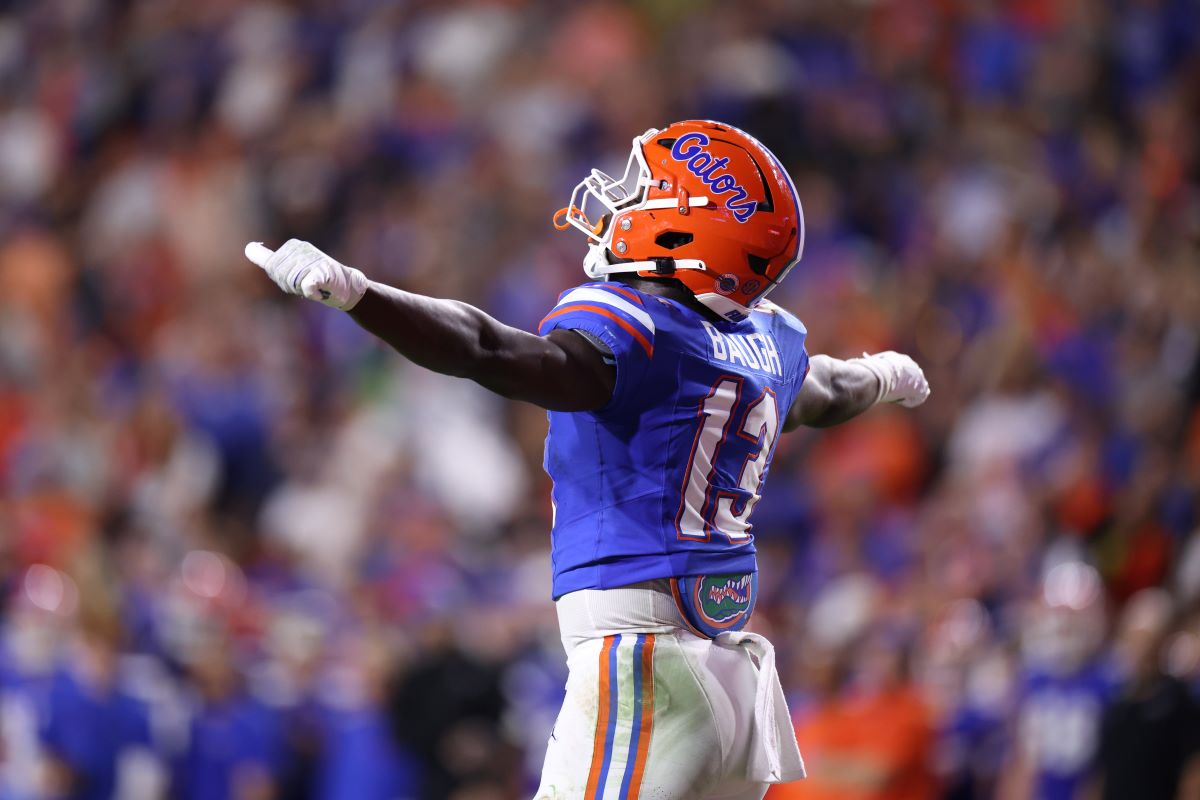
Beyond the field: New research highlights how NIL is reshaping college athlete identity
In an era of name, image and likeness, or NIL, many college athletes are thinking differently about who they are — seeing themselves not just as competitors or students, but also as influencers with distinct voices and causes, according to a new study from the University of Florida. Molly Harry, Ph.D., an assistant professor in the Department of Sport Management at the UF College of Health and Human Performance, surveyed 200 athletes from 21 Power Four universities to better understand how NIL, which refers to the rights of college athletes to earn money through endorsements, sponsorships, social media promotions and other commercial opportunities, has impacted the way athletes perceive their roles and identities. “Historically, we’ve viewed them (college athletes) through the lens of athletics or academics, but they’re daughters, brothers, role models, and increasingly, they’re now cultivating public personas and marketing skills.” —Molly Harry, Ph.D., an assistant professor in the Department of Sport Management The findings, published Friday in the Sociology of Sport Journal, reveal a growing recognition among athletes that they are more than the two-dimensional “student-athlete” model that is traditionally used in research and policy. “With the shift in NIL policies, athletes are starting to develop roles and identities related to that of the influencer,” Harry said. “Historically, we’ve viewed them through the lens of athletics or academics, but they’re daughters, brothers, role models, and increasingly, they’re now cultivating public personas and marketing skills.” Through survey responses across seven major sports — football, baseball, men’s and women’s basketball, gymnastics, volleyball and softball — Harry and UF doctoral student Hannah Kloetzer examined athletes' engagement with NIL opportunities, as well as the personal sacrifices they made to pursue them. They found that many athletes now view NIL as a platform to promote causes they care about, build connections with their communities and explore career pathways after college. One softball player described the value of NIL in a way that highlights the broader impact: “It’s been great to feel seen and have your hard work in a sport help in other parts of life. It’s really nice to use NIL on a resume as marketing experience.” Athletes surveyed said they found deals not just with big-name brands, but more often with local businesses like restaurants, boutiques and community partners. This entrepreneurial approach often required initiative and personal outreach, something many athletes had to learn on their own. “Some athletes told us they felt lost when trying to navigate NIL,” Harry said. “Others shared how they reached out to local businesses or organized their own camps.” One particularly striking finding, Harry said, was that some athletes were making athletic sacrifices — like spending less time training — to pursue NIL work, a shift that underscores the importance of these opportunities. Harry stressed that while no one reported skipping practices, athletes did acknowledge shifting their priorities to make room for NIL-related endeavors. “If you’re willing to give up something in your athletic routine, that speaks volumes about how central NIL — and influencer identities — could become for some athletes,” she said. Another key insight: football players of color from low socioeconomic backgrounds were most likely to self-identify as influencers. This emerging pattern stands in contrast to perceived broader trends in the social media world. “That was one of the most fascinating takeaways,” Harry said. “We have this unique subset of influencers — college football athletes — that are starting to enter this space.” Harry’s research builds on a growing conversation in the academic community about the evolving identity of college athletes. A few conceptual pieces have previously proposed the idea of a “student-athlete-influencer,” but Harry’s team is one of the first to gather empirical data to back it up. This new perspective has broad implications for how universities and organizations like the NCAA support college athletes, both during their playing years and as they prepare for life after sport. “As fans, we often see athletes as commodities on the field,” Harry said. “But they’re humans first, and they’re starting to recognize their own value and tap into their potential beyond the playing field.” In addition to academic and athletic support, Harry believes universities should invest in more targeted resources tailored to influencer pressures, like mentorship opportunities and training that goes beyond basic social media etiquette. “Athletes who take on influencer roles may deal with unique stressors, whether it’s comparing engagement numbers or coping with public scrutiny,” she said. “It would be valuable to provide opportunities where athlete-influencers can support each other, share strategies and protect their mental health.” A football player who participated in the study summed up the broader potential of NIL: “I’m very appreciative of NIL opportunities and the ability to continue to grow my camp and greater brand outside of my football program.” Looking ahead, Harry plans to explore this evolving identity through more qualitative research, with a focus on what it truly means to be an “influencer” in the context of college athletics. “Athletes are more than football players. They are more than swimmers,” she said. “They are people who we walk with on our college campuses, and they are people who bring value to our society in a host of ways.”



Boxing Day Explained: From Acts of Charity to a Global Cultural Tradition
Boxing Day may be best known today for shopping deals, leftover turkey sandwiches, and the collective decision to stay in pyjamas as long as possible. But its origins are far richer — rooted in charity, social responsibility, and long-standing cultural tradition. Observed on December 26, Boxing Day has evolved over centuries from a day of giving into a uniquely modern mix of generosity, sport, family, and commerce. Where Boxing Day Began The origins of Boxing Day trace back to medieval Britain. Traditionally, it was the day when: Churches opened alms boxes to distribute donations to the poor Employers gave servants and tradespeople “Christmas boxes” containing money, food, or gifts Workers who served households on Christmas Day were finally given time off to celebrate with their own families At its core, Boxing Day recognized service, labour, and the idea that generosity should extend beyond Christmas Day itself. A Day for Workers, Not Just Celebrations Historically, Boxing Day acknowledged the contributions of workers — from domestic staff to tradespeople — reinforcing values of gratitude, fairness, and shared prosperity. Long before modern labour standards, it created a structured moment for appreciation and rest. How Boxing Day Is Celebrated Around the World Today While its charitable roots remain, Boxing Day traditions vary by region: United Kingdom A public holiday Known for major football matches, horse racing, and community events A blend of tradition, sport, and post-Christmas relaxation Canada A statutory holiday in several provinces Widely associated with retail sales, winter recreation, and family gatherings Increasingly viewed as a day to unwind, travel, or spend time outdoors Australia & New Zealand Celebrated during summer Defined by outdoor events, including cricket and sailing A festive, recreational extension of Christmas rather than a recovery day United States Not an official holiday, but culturally familiar December 26 is widely marked by after-Christmas sales, professional sports viewing, and end-of-year charitable giving Many American traditions - holiday bonuses, tipping service workers, and year-end donations - closely mirror Boxing Day’s original emphasis on gratitude and generosity Beyond the Commonwealth In several European countries, December 26 is observed as St. Stephen’s Day, carrying its own religious and cultural significance From Charity to Commerce: A Modern Shift Over time, Boxing Day became synonymous with retail — driven by post-holiday inventory cycles and consumer demand. While some argue this shift has overshadowed its charitable origins, others see it as an evolution rather than a replacement. Notably, many volunteer initiatives and charitable campaigns continue to peak on or around December 26, reconnecting the day with its philanthropic foundation. Story Angles for Journalists How Boxing Day evolved differently across cultures Why Boxing Day is a holiday in some countries but not others The economic impact of December 26 retail activity Boxing Day and labour history How sport became a defining Boxing Day tradition Why generosity peaks at year’s end Why Boxing Day Still Matters Boxing Day sits between celebration and renewal — a moment to acknowledge service, extend generosity, and reset before the new year. Its global staying power lies in its adaptability, reflecting the values and rhythms of the societies that observe it Find your expert here: www.expertfile.com


LSU Experts Break Down Artificial Intelligence Boom Behind Holiday Shopping Trends
Consumers are increasingly turning to artificial intelligence tools for holiday shopping—especially Gen Z shoppers, who are using platforms like ChatGPT and social media not only for gift inspiration but also to find the best prices. Andrew Schwarz, professor in the LSU Stephenson Department of Entrepreneurship & Information Systems, and Dan Rice, associate professor and Director of the E. J. Ourso College of Business Behavioral Research Lab, share their insights on this emerging trend. AI is the new front door for search: Schwarz: We’re seeing a fundamental change in how consumers find information. Instead of browsing multiple pages of results, users—especially Gen Z—are skipping to conversational AI for curated answers. That dramatically shortens the shopping journey. For years, companies optimized for SEO to appear on the first page of Google; now they’ll have to think about how their products surface in AI-generated recommendations. This may lead to a new form of “AIO”—AI Information Optimization—where retailers tailor product descriptions, metadata, and partnerships specifically for AI visibility. The companies that adapt early will have a distinct advantage in capturing consumer attention. Rice: This issue of people being satisfied with the AI results (like a summary at the top of the Google results) and then not clicking on any of the paid or organic links leads to a huge increase in what we call “zero click search” (for obvious reasons). For some providers, this is leading to significant drops in web traffic from search results, which can be disconcerting due to the potential loss of leads. However, to Andrew’s point of shortening the journey, it means that the consumers who do come through are much more likely to buy (quickly) because they are “better” leads. This translates to seemingly paradoxical situations for providers: they see drops in click-through rates and visitors/leads, yet revenue increases because the visitors are “better.” There is a rise in personalized shopping journeys: Schwarz: AI essentially acts as a personal shopper—one that can instantly analyze preferences, budget, personality traits, or past behavior to produce tailored gift lists. This shifts power toward “delegated decision-making,” in which consumers allow AI to narrow their choices. Younger consumers are already comfortable outsourcing this cognitive load. However, as ads enter the picture, these personalized journeys could be shaped by incentives that aren’t always transparent. That creates a new responsibility for platforms to disclose when suggestions are sponsored and for users to develop a more critical lens when interacting with AI-driven recommendations. Rice: This is also a great point. The “tools” marketers use to attract customers are constantly evolving, but this seems in many ways to be the next iteration of the Amazon.com suggestions that you find at the bottom of the product page for something you click on when searching Amazon (“buy all x for $” or “consumers also looked at…,” etc.), based on past histories of search and purchase, etc. One of the main differences is that you can now create virtually limitless ways to compare products, making comparisons less taxing (reducing cognitive load and stress), which may, in some cases, increase the likelihood of purchase. These idiosyncratic comparisons and prompts lead to the truly unique journeys Andrew is discussing. You no longer have to be beholden to a retailer-specified price range. You could choose your own, or instead ask an AI to list the products representing the best “value” based on consumer reviews, perhaps by asking to list the top ten products by cost per star rating, etc. Advertising is becoming more subtle and conversational: Schwarz: With ads woven directly into AI responses, the traditional boundary between content and advertising blurs. Instead of banner ads, pop-ups, or clearly labeled sponsored posts, recommendations in a conversational thread may feel more like advice than marketing. This has enormous implications for consumer trust. Retailers will likely see higher engagement through these context-aware ad placements, but regulatory scrutiny may also increase as policymakers evaluate how clearly sponsored content is identified. The risk is that advertising becomes invisible—something both platform designers and regulators will need to monitor carefully. Rice: This is definitely true. I was recently exploring an AI-based tool for choosing downhill skis, but the tool was subtly provided by a single ski brand. I’m not sure the distribution of ski brands covered was truly delivering the “best overall fit” for a potential buyer, rather than the best possible ski in that brand. At least in that case, it was somewhat disclosed. It does, however, become an issue if consumers feel misled, but they’d have to notice it first. Still, the advantages are big for retailers, and the numbers don't lie. According to some preliminary Black Friday data, shoppers using an AI assistant were 60% more likely to make a purchase. Schwarz: This shift is going to reshape multiple layers of the retail ecosystem: Retailers will need to rethink how they show up in AI-driven environments. Traditional SEO, ad bids, and social media strategies won’t be enough. Partnerships with AI platforms may become as important as being carried by major retailers today. Because AI tools can instantly compare prices across dozens of retailers, consumers will become more price-sensitive. Retailers may face increasing pressure to offer competitive pricing or unique value propositions, as AI reduces friction in comparison shopping. Retailers who integrate AI into their own websites—chat-based shopping assistants, personalized gift advisors, automated bundling—will gain an edge. Consumers are increasingly expecting conversational interfaces, and companies that delay will quickly feel outdated. As AI tools influence purchasing decisions, consumers and regulators alike will demand clarity around how recommendations are generated. Retailers will need to navigate this carefully to maintain What I think we are going to see accelerate as we move forward: AI-powered concierge shopping will become mainstream. Within a couple of years, using AI to generate shopping lists, compare prices, and find deals will be as common as using Amazon today. Retailers will create AI-specific marketing strategies. Instead of optimizing for keywords, they’ll optimize for prompts: how consumers might ask for products and how an AI system interprets those requests. More platforms will introduce advertising into AI models. ChatGPT is simply the first mover. Once the revenue potential becomes clear, others will follow with their own ad integrations. Greater scrutiny from policymakers. As conversational advertising grows, transparency rules and labeling requirements will almost certainly. A new era of “conversational commerce.” Buying directly through AI—“ChatGPT, order this for me”—will become increasingly common, merging search, recommendation, and transaction into a single seamless experience. I can speak to this on a personal level. My college-aged son is interested in college football, and I wanted to get him a streaming subscription to watch the games. However, the football landscape is fragmented across multiple, expensive platforms. I asked ChatGPT to generate a series of options. Hulu is $100/month for Live TV, but ChatGPT recommended a combination of ESPN+, Peacock, and Paramount+ for $400/year and identified which conferences would not be covered. What would have taken me hours only took me a few minutes! Rice: On the other hand, AI isn’t infallible, and it can lead to sub-optimal results, hallucinations, and questionable recommendations. From my recent ski shopping experience, I encountered several pitfalls. First, for very specific questions about a specific model, I sometimes received answers for a different ski model in the same brand, or for a different ski altogether, which was not particularly helpful, or specs I knew were just plain wrong. Secondly, regarding Andrew’s point about the conversational tone, I asked questions intended to push the limits of what could be considered reliable. For example, I asked the AI to describe the difference in “feel” of the ski for the skier among several models and brands. While the AI gave very detailed and plausible comparisons that were very much like an in-store discussion with a salesperson or area expert, I’m not sure I fully trust when an AI tells me that you can really feel the power of a ski push you out of a turn, this ski has great edge hold, etc. It sounds great, but where is the AI sourcing this information? I’m not convinced it’s fully accurate. It also seems we’re starting to see Google shift toward a more AI-centric approach (e.g., AI summaries and full AI Mode). At the same time, we’re also starting to see AI migrate closer to Google as people use it for product-related chats, and companies like Amazon and Walmart have developed their own AI that is specifically focused on the consumer experience. I can’t imagine it will be long before companies like OpenAI and their competitors start “selling influence” in AI discussions to monetize the influence their engines will have.




Want a Better Thanksgiving? Start With a Screen Break
For many families, Thanksgiving weekend has quietly become a four-day screen marathon: football, streaming, shopping, scrolling through sales, and group chats buzzing in the background. Personal development coach Mark Diamond has spent decades seeing what happens when people take a different approach. After running a tech-free camp for 25 years, he’s watched kids and adults transform when phones disappear and the outdoors becomes the main event. “You can actually feel nervous systems reset,” he says. “People sleep better, they laugh more, and they have the kinds of conversations that just don’t happen when everyone’s half-present on their devices.” Diamond believes Thanksgiving is one of the easiest times of year to test what he’s learned - without asking anyone to give up the game or the parade. “You don’t have to cancel screens,” he says. “You just have to make sure they’re not the only thing you remember about the weekend.” He suggests families experiment with one simple offline tradition they can repeat every year: Everyone helps with the meal - put on some good music and try to learn to cook! Hear family stories - instead of talking about trending videos, have some questions ready to learn about the lives of relatives you don't see so often. A tech-free walk before or after dinner - leave phones at home or in pockets on airplane mode. An outdoor game (even in colder weather) - touch football, a scavenger hunt for younger kids, or a quick “around the block” relay. A “no scroll, just snap” rule - photos are fine, but posting and scrolling wait until the next day. When people are already together, Diamond notes, it’s actually easier to introduce new traditions. “You can say, ‘This year, let’s try 30 minutes of no screens while we do X.’ It feels like a shared experiment, not a punishment.” The real payoff, he says, isn’t just fewer hours online. It’s the memories and inside jokes that come from doing something real together, not just watching the same screen side by side. “We’re not going to remember every highlight reel or Black Friday deal,” Diamond says. “We remember the time we got caught in the rain on a walk, or when somebody’s throw went wildly off course and everyone burst out laughing.” In his coaching work, Diamond helps people who feel “glued to their phones” design lives where brief, meaningful offline moments are built in — starting with accessible opportunities like holiday weekends. “Thanksgiving is a perfect low-stakes test. If one tiny offline tradition makes the day feel better, that’s powerful feedback. You can carry that forward into December, and into the new year.” About the Expert Mark Diamond is a personal development coach and founder of a long-running tech-free camp. He focuses on outdoor wellness, sustainable behavior change, and helping people reconnect to happiness and real-world experiences in an age of constant screens. Mark is part of the Offline.now expert directory, contributing to the community supporting better parental modelling for device use.



Why College Students Are Storming Fields More Often
In his most recent Forbes article, Dr. Marshall Shepherd takes a scientific look at why college students and fans storm football fields, blending insights from psychology, meteorology, and social dynamics. He explains that field-storming is not simply a burst of emotion—it’s a predictable outcome of collective excitement and shared identity. After an unexpected win or a high-stakes rivalry game, thousands of people simultaneously experience what psychologists call “emotional contagion,” amplifying feelings of unity and celebration. This shared surge, combined with environmental cues like stadium acoustics and crowd density, transforms the act into what Shepherd calls a form of “social weather event.” “Storming the field isn’t chaos—it’s choreography fueled by emotion and crowd physics.” Shepherd also examines the logistical and safety implications. He notes that while universities often celebrate these spontaneous displays of school pride, they carry risks ranging from crowd injuries to property damage. Yet, institutions are reluctant to ban them outright because these moments reinforce fan loyalty and media attention. Shepherd suggests that the solution lies in better understanding crowd behavior: designing stadiums with safe egress routes, training security teams to manage surges, and anticipating emotional tipping points rather than reacting afterward. “Understanding the science behind fan behavior lets us manage energy, not suppress it.” Ultimately, Shepherd’s piece reframes field-storming as a fascinating mix of culture and physics—where joy, identity, and momentum collide. He urges universities to see these moments not as mere rule-breaking but as opportunities to study human behavior in motion, and to design environments that celebrate passion without compromising safety. Dr. J. Marshall Shepherd is a leading international weather-climate expert and is the Georgia Athletic Association Distinguished Professor of Geography and Atmospheric Sciences at the University of Georgia. Dr. Shepherd was the 2013 President of American Meteorological Society (AMS), the nation’s largest and oldest professional/science society in the atmospheric and related sciences. View his profile here Dr. J. Marshall Shepherd is available to speak with the media about this interesting topic - simply click on his icon now to arrange an interview today.


On Sunday, October 19, at 9:34 a.m., four masked individuals surged into the Louvre’s Galerie d’Apollon from a severed, second-floor window. Hurriedly, they smashed open two display cases, seized eight pieces of jewelry, then shimmied down a ladder and sped off on motorbikes toward Lyons. In seven minutes’ time, in broad daylight, they absconded with an estimated $102 million in valuables from the world’s most famous museum. This past Saturday, October 25, French authorities announced the first arrests in connection with the daring heist. However, despite the police’s progress, the country continues to litigate the matter—embroiled in discussions of heritage, history and national identity. Recently, Roderick Cooke, PhD, director of French and Francophone Studies at Villanova University, shared his perspective on the situation as well as the artifacts lost. Q: The Louvre heist has been described as “brazen,” “shocking” and a “terrible failure” on security’s part. Is there any sort of precedent for this event in the museum’s history? Dr. Cooke: Nothing on this scale has ever happened to the Louvre since its founding as a museum during the Revolution. The closest equivalent is the 1911 theft of the Mona Lisa by a former employee who claimed it should be returned to Italy. However, that was one painting, the heist was not committed by organized crime, and the Mona Lisa did not have the renown it enjoys today. The impact of the theft was thus lower, although it did cause major outrage and a sweeping law-enforcement response at the time. Ironically, that theft is often credited with making da Vinci’s painting the global icon it continues to be. Q: What has the reaction to this event been among the French people? DC: It’s harder to get a sense of reactions across French society, because so much of the aftermath has focused on the intellectual milieux’s opinions. And in those realms, it has immediately become a political football. Individuals positioning themselves as anti-elite or anti-status quo, such as Jordan Bardella of the National Rally party, have called the theft a “humiliation,” immediately tying it to French national prestige. Former President François Hollande has conversely and vainly called for the event to be de-polemicized, citing national solidarity. This is happening because the Louvre is one of the most visible manifestations of French soft power—the most-visited museum anywhere on Earth. As such, anything attacking its integrity becomes an attack on the nation, and how individual French citizens feel about the theft is closely tied to their broader view of the nation. Q: Several of the items stolen from the Louvre once belonged to Empress Eugénie. Could you share a bit of information on her story? DC: Eugénie de Montijo was a Spanish aristocrat who married the Emperor of the French, who ruled as Napoleon III between 1852 and 1870. It was a time of authoritarian repression and sham democracy—Napoleon III installed the Empire through a coup. Its clearest legacy is that Paris looks the way it does today largely because of the thorough modernizations overseen by Napoleon III’s appointee Baron Haussmann. So, Eugénie and her now-lost jewels represent a complex point in French history, when culture and the economy developed quickly, but did so in a climate of fear for any French person who opposed the regime too loudly (like Victor Hugo, who went into exile on the Channel Islands and wrote poems savaging Napoleon III and his deeds). Some accused the Empress of being responsible for the more hardline and conservative stances taken by her husband’s government. On a different note, she was a diligent patron of the arts and arguably the most significant figure in the contemporary fashion world, famous for setting trends such as the bustle that radiated across Europe. This explains the mix of anger and admiration that followed her depending on the sphere she was operating in. A new English-language biography argues that far from being a traditionalist, she was a pioneering feminist by the standards of the time. It looks like her historical importance will continue to be debated. Q: Interior Minister Laurent Nuñez described the stolen items as “of immeasurable heritage value.” How significant of a cultural loss do you consider this theft? DC: These jewels are referred to in French as “les Joyaux de la Couronne” (the Crown Jewels), but of course that phrase lands very differently in republican France than it does across the water in the United Kingdom. The items actually represent several different dynasties of French rulers, some of whom came to power through direct conflict with others. The now-ransacked display at the Louvre smoothed over these historical divisions, for which many French people died over the centuries. President Macron referred to the stolen items as embodying “our history,” which is emblematic of the French state’s work to create a conceptual present-day unity out of the clashes of the past. At a time when France is arguably more divided than at any point since World War II, any unitary symbol of identity takes on greater significance. Q: Do you have any closing thoughts on the artifacts taken and what they represent? DC: I’d reemphasize the previous point about the smoothing effect of the museum display on the violent history that made it possible. Much of the reporting on the stolen jewels lists off the different queens and empresses who owned them, without giving readers a sense of the complicated succession of regime changes and ideologies that put those women in power in the first place. The relative stability of the last 60-odd years is an anomaly in modern French history. This set of jewels and the names of their original owners may seem far removed from the concerns of an ordinary French citizen today, but just beneath their surface is a legacy of changing governments and tensions between social classes that survives in new forms in 2025.

Cesar Dominguez, a fourth-year chemistry and physics double major at the University of Florida, may be on track to finding alternatives to plastic that could benefit the planet. His impactful work has helped him earn the title of Michelin Science Scholar, and he is now one of a select group of undergraduates connecting scientific research to real-world challenges at Michelin – a global leader in materials science and sustainability. “There’s always this misconception that academic research is completely separate from industry research,” Dominguez said. “Michelin has shown me it’s all one science. You can push discovery forward in both spaces.” Dominguez embarked this fall on a two-semester program of faculty-mentored research, with a $2,000 student stipend and $500 in support funding for his faculty mentor, UF chemistry professor Austin Evans, Ph.D. The program also invites students to present their findings at a spring symposium and tour a Michelin facility in South Carolina. Austin Evans' research aims to control macromolecular structure at all length scales concurrently and deploy materials in the real world. View his profile here Dominguez is furthering his study of how to process ultra-high molecular weight polymers – materials he compares to the scale of “an entire city” rather than a football stadium, through powerful electric fields. By adjusting electrospinning techniques, Dominguez and his team examine how polymers form fibers with different thermal and mechanical properties. These findings could lead to stronger, more sustainable materials, including alternatives to plastics like the major pollutant polyethylene. “All my life, I’ve been told chemistry and physics are separate fields,” Dominguez said. “But I’ve learned they come together in really elegant ways. Being able to unite concepts from both gives me a deeper understanding of how things work.” Dominguez attributes much of his development as a researcher to his work with Evans, who he describes as incredibly supportive, always accessible, and consistently encouraging him to focus on precision and detail. Dominguez also sees UF’s resources as pivotal to his journey. “I feel like what makes the research I'm doing really exciting is the fact that this can only be done at the University of Florida, because we're working with materials that have been developed by scientists here, using equipment that we're very fortunate to have access to here,” Dominguez said. As he prepares to apply to graduate school in analytical chemistry, Dominguez said the Michelin program has expanded his view of what is possible after his degree. “I used to think research only happened in academia,” he said. “Now I know industry is just as vital. It’s opened my mind to different paths for my future.” For now, he offers one piece of advice to other students considering the program: “Do it for the love of the game. If you put passion into your work, everything else will follow.” For more information on the Michelin Science Scholars Program, click here: To learn more about the research happening at UF and to connect with Austin Evans - simply click his icon now to arrange an interview today.


Are you ready for some football?
From its modest beginnings in the late 19th century to becoming America’s most-watched sport, professional football has not only entertained generations but also transformed communities, economies, and culture. Today, the National Football League (NFL) stands as a global brand, symbolizing both the triumphs and tensions of American life. Early Beginnings Professional football took root in the 1890s, when athletic clubs in Pennsylvania began paying players under the table. In 1920, a group of teams formed the American Professional Football Association, later renamed the NFL in 1922. Early decades were marked by instability, but the league grew steadily, and by the 1950s, with the rise of television, football began capturing national attention. The 1958 NFL Championship Game—dubbed the “Greatest Game Ever Played”—cemented football as America’s sport of the future, setting the stage for the AFL-NFL rivalry of the 1960s and the eventual Super Bowl, first played in 1967. Economic Impact Football is now one of the most powerful economic engines in American sports. The NFL generates more than $18 billion annually, with billions flowing into local economies through stadium construction, tourism, and broadcasting rights. Super Bowl weekend alone can inject hundreds of millions of dollars into host cities. The game has also reshaped industries—from sports broadcasting and advertising to fantasy leagues and legalized sports betting. It drives sponsorships, merchandise sales, and jobs connected to media, hospitality, and infrastructure. Social and Cultural Significance Football’s reach extends beyond the field. It has served as a stage for some of America’s most important social conversations—from racial integration in the 1940s, to gender roles in sports media, to the modern debates over player safety and activism. Figures like Jackie Robinson in baseball broke barriers, but in football, trailblazers such as Kenny Washington (first African American to reintegrate the NFL in 1946) helped reshape opportunity and inclusion. In more recent years, high-profile advocacy by players on issues ranging from racial justice to mental health has placed the sport squarely in the middle of national debates. At the same time, concerns about concussions and long-term health risks have fueled public dialogue on workplace safety and medical ethics, echoing issues seen across many industries. A Lasting Legacy Football is more than a game. It has become a unifying tradition—whether through Friday night lights in small towns, college rivalries that galvanize entire states, or Super Bowl Sunday as an unofficial national holiday. Its economic and cultural significance continues to expand, reflecting both America’s passion for competition and its ongoing social evolution. Connect with our experts about the history and significance of professional football in America: Check out our experts here : www.expertfile.com
Don't let brain bias tank your fantasy football season
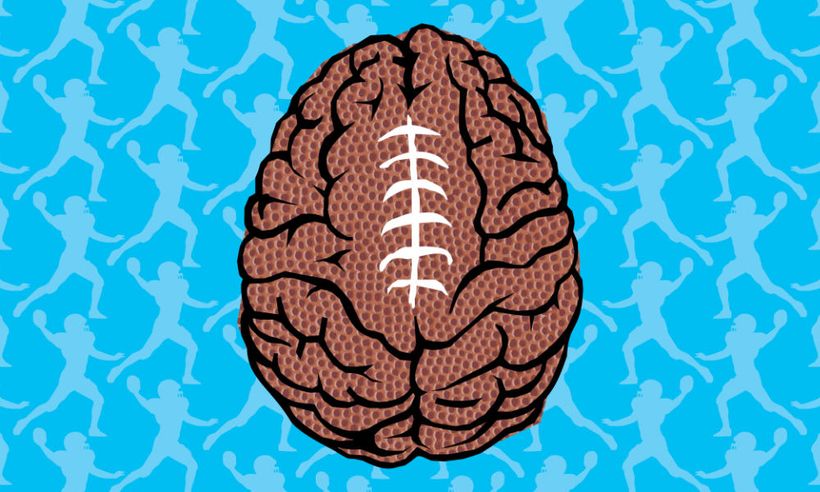
The National Football League season kicks off this week and that means millions of fantasy football coaches are already overthinking their lineups. But before they blame a bad draft slot or a fluke injury for bombing from one week to the next, they might want to look in the mirror and give their head a shake. Renee Miller, a professor of brain and cognitive sciences at the University of Rochester, studies cognitive biases and literally wrote the book on bias in fantasy sports. She plays fantasy football, too. She warns that our brains are wired to interpret fantasy football results in ways that are suboptimal and illogical. “Biased thinking occurs in everyday life and work, and in fantasy sports,” Miller says. “Through the course of a season, you can see a full range of the ways cognitive bias affects a person’s weekly fantasy matchups.” Here’s the good news: Miller says we can untangle those wires if we know what to look for. Among the biggest culprits are what Miller calls “the endowment effect” (overvaluing and clinging to players you drafted high), “recency bias” (falling in love with last week’s star), and “confirmation bias” (cherry-picking stats that support what you already believe). But especially beware of Week One. Thanks to the “primacy effect,” those games early in the season loom larger in memory than later ones. One hot debut or a disappointing flop can warp a coach’s thinking for weeks. The result? Lineups driven more by emotion than logic — and possibly a lot of pick sixes. Biases aren’t all bad, though. Sometimes instincts pay off. First impressions and recent performances sometimes hold fast. But the best fantasy players, Miller says, know when to slow down and think systematically. They stay skeptical, challenge their gut reactions, and accept that they’ll be wrong sometimes. So before you rage-drop that underperforming wide receiver or crown your Week One sleeper a superstar, remember, the smartest move might be to take a look in the mirror and give your head a shake. Miller is available for interviews for journalists covering fantasy sports. Connect with her by clicking on her profile.