
Experts Matter. Find Yours.
Connect for media, speaking, professional opportunities & more.

AI-powered model predicts post-concussion injury risk in college athletes
Athletes who suffer a concussion have a serious risk of reinjury after returning to play, but identifying which athletes are most vulnerable has always been a bit of a mystery, until now. Using artificial intelligence (AI), University of Delaware researchers have developed a novel machine learning model that predicts an athlete’s risk of lower-extremity musculoskeletal (MKS) injury after concussion with 95% accuracy. A recent study published in Sports Medicine details the development of the AI model, which builds on previously published research showing that the risk of post-concussion injury doubles, regardless of the sport. The most common post-concussive injuries include sprains, strains, or even broken bones or torn ACLs. “This is due to brain changes we see post-concussion,” said Thomas Buckley, professor of kinesiology and applied physiology at the College of Health Sciences. These brain changes affect athletes’ balance, cognition, and reaction times and can be difficult to detect in standard clinical testing. “Even a minuscule difference in balance, reaction time, or cognitive processing of what’s happening around you can make the difference between getting hurt and not,” Buckley said. How AI is changing injury risk assessment Recognizing the need for enhanced injury reduction risk tools, Buckley collaborated with colleagues in UD’s College of Engineering, Austin Brockmeier, assistant professor of electrical and computer engineering, and César Claros, a fourth-year doctoral student; Wei Qian, associate professor of statistics in the College of Agriculture and Natural Resources; and former KAAP postdoctoral fellow Melissa Anderson, who’s now an assistant professor at Ohio University. To assess injury risk, Brockmeier and Claros developed a comprehensive AI model that analyzes more than 100 variables, including sports and medical histories, concussion type, and pre- and post-concussion cognitive data. “Every athlete is unique, especially across various sports,” said Brockmeier. “Tracking an athlete’s performance over time, rather than relying on absolute values, helps identify disturbances, deviations, or deficits that, when compared to their baseline, may signal an increased risk of injury.” While some sports, such as football, carry higher injury risk, the model revealed that individual factors are just as important as the sport played. “We tested a version of the model that doesn’t have access to the athlete’s sport, and it still accurately predicted injury risk,” Brockmeier said. “This highlights how unique characteristics—not just the inherent risks of a sport—play a critical role in determining the likelihood of future injury,” said Brockmeier. The research, which tracked athletes over two years, also found that the risk of MSK injury post-concussion extends well into the athlete’s return to play. “Common sense would suggest that injuries would occur early in an athlete’s return to play, but that’s simply not true,” said Buckley. “Our research shows that the risk of future injury increases over time as athletes compensate and adapt to small deficits they may not even be aware of.” The next step for Buckey’s Concussion Research Lab is to further collaborate with UD Athletics’ strength and conditioning staff to design real-time interventions that could reduce injury risk. Beyond sports: AI’s potential in aging research The implications of the UD-developed machine-learning model extend far beyond sports. Brockmeier believes the algorithm could be used to predict fall risk in patients with Parkinson’s disease. Claros is also exploring how the injury risk reduction model can be applied to aging research with the Delaware Center for Cognitive Aging. “We want to use brain measurements to investigate whether baseline lifestyle measurements such as weight, BMI, and smoking history are predictive of future mild cognitive impairment or Alzheimer’s disease,” said Claros. To arrange an interview with Buckley, email UD's media relations team at MediaRelations@udel.edu

Has the SuperBowl Priced Itself out of Fans?
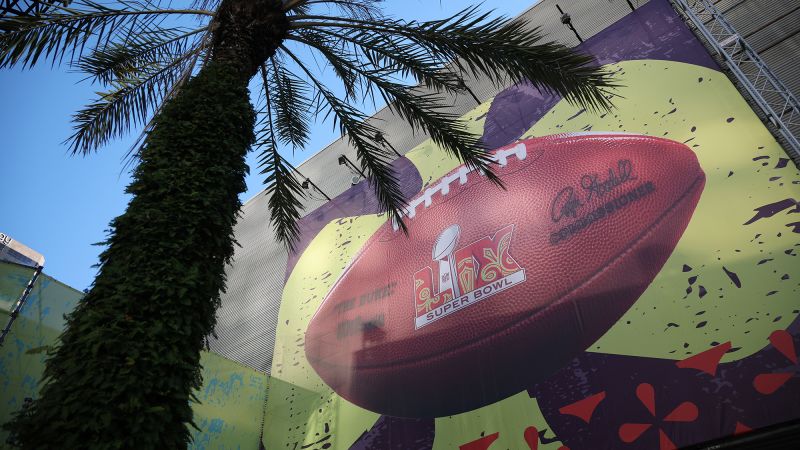
It's arguably one of the 'must-see' sporting events in the world. But this year fans seem to be a little reluctant to spend those hard earned dollars to watch the Kansas City Chiefs attempt a three-peat and a chance at history. It's a topic that's getting a lot of coverage leading up to the big game this Sunday. The Kansas City Chiefs might make history this weekend, but ticket prices aren’t reflecting that. The cheapest ticket for Super Bowl LIX in New Orleans has fallen below $4,000 on the secondary market, according to reseller TickPick, marking a 30% decline over the past week — and more than 50% cheaper compared to last year’s record-breaking Super Bowl. The Chiefs, who face the Philadelphia Eagles on Sunday, are hoping to be the first team to win three successive Super Bowl rings. Despite that historic feat on the line, fans apparently aren’t excited to splash out big bucks. There are a few potential reasons related to this year’s host city — and perhaps a slight dose of Chiefs fatigue. Last year’s matchup between the Chiefs and San Francisco 49ers was the most expensive Super Bowl on record, partly because it took place in the party mecca of Las Vegas for the first time. However, New Orleans “doesn’t have the same appeal” as Las Vegas, TickPick CEO Brett Goldberg said. New Orleans’ larger seating capacity is pushing prices lower as well, Goldberg said. The Caesars Superdome holds about 74,000 seats, whereas the Allegiant Stadium in Las Vegas holds around 65,000 seats. The host city is also still reeling from a terrorist attack last month when a man drove a pickup truck into a crowd and opened fire, killing 14 people and injuring at least 35. Then there’s the matchup itself. Football fans are bored by a third straight Chiefs Super Bowl bid, resulting in TickPick “seeing less interest from fans looking to attend,” Goldberg told CNN. “Had the Detroit Lions, Washington Commanders or Buffalo Bills made it this far, it’d be a much different story as it relates to current prices.” February 03 - CNN It's an interesting topic and there are questions to be asked Does ticket demand and attendance really matter to the NFL and its sponsors? Why is viewership more important than attendance and ticket prices for the Super Bowl? Location, location, location. It’s always the same issue but what’s different this year? The NFL is big business and if you're a journalist covering the Super Bowl this Sunday - then let us help with your stories. Kirk Wakefield, Ph.D., is The Edwin W. Streetman Professor of Retail Marketing at Baylor University, where he is the Executive Director of the Curb Center for Sales Strategy in Sports and Entertainment (S3E) program in the Hankamer School of Business. Kirk is available to speak with media - simply click on his icon ow to arrange an interview today.


How Philadelphia Eagles' head coach achieves Super success with 'Ted Lasso' management style
Not long after Nick Sirianni was hired by the Philadelphia Eagles in 2021, fans started noticing similarities between the head coach and TV’s Ted Lasso. The University of Delaware's Kyle Emich can discuss how Sirianni's team approach compares to the more top-down structure favored by Kansas City Chiefs coach Andy Reid. Like Lasso – a high school football coach on the Apple TV show of the same name who takes over an English soccer club with no prior experience – Sirianni is responsible for the culture, first and foremost. He relies on his coordinators, who call the plays. In essence, he is a more collaborative leader. By contrast, Reid is a top-down coach who currently calls the plays and always has, dating back to his time as coach of the Eagles. Philadelphia fans became more than a little weary of him saying "that's on me" at post-game press conferences following disappointing losses. With back-to-back Super Bowl titles under his belt with the Chiefs, it's difficult to argue with the success of Reid's style now. This could be fodder for sports talk radio, but it's also something Emich, a professor of management, can discuss from an academic perspective. The professor says there's advantages and disadvantages to both: • "The main advantages for the top-down approach are speed of decision-making and extreme novelty (you can do whatever pops into your head). The advantages of the coordinator approach are a larger information base to draw from and specialized knowledge." • "The more team-based approach has a lot of potential, but is difficult to execute well because it requires coordination." Emich, who has discussed management and sports teams several times in the past (including Super Bowl LII, when the Eagles defeated the New England Patriots), is available for interviews.


Head trauma and long-term impacts
Last week, NFL great Brett Favre revealed publicly that he has Parkinson's disease. It was an announcement that has also put the devastating affliction back in the media spotlight, and has experts and the public wondering if there's a link between high-impact sports like football and Parkinson's. It's why researchers like Christopher Watts from TCU are getting contacted by national media looking for answers. Head trauma alone is not the sole risk factor for Parkinson’s. Experts say the disease has also been linked to environmental factors, like exposure to certain pesticides or chemicals, and genetic mutations. “If all the ingredients in the recipe come together, you may develop Parkinson’s disease,” said Christopher Watts, Texas Christian University's Dean of the Harris College of Nursing & Health Sciences, who researches the disease. “The reason why we know is because not every boxer develops Parkinson's disease… it has to be other things that are acting along with that exposure to head trauma.” The median age for a Parkinson’s diagnosis is about 65, Watts said. At 54, Favre is on the younger end of that spectrum. Parkinsonism – an umbrella term for brain conditions that cause slow movement, rigidity and tremors – has been well studied in boxers, Watts said. One of history’s most legendary boxers, Muhammad Ali, was diagnosed with the disease. However, the research among football players isn't as robust. A 2023 study published in JAMA found participants with a history of playing organized football had higher odds of Parkinsonism or Parkinson's disease compared with those involved in other organized sports. But other studies have reported mixed findings, Watts said. He said researchers must determine if there is a link. “Football is such a big part of American society,” he said. “We need to know the answers to this.” September 25 - USA Today With the NFL season in full swing - this will be a subject that will be receiving ongoing coverage throughout the season. And if you're a journalist looking to know - then let us help with your stories, questions and coverage. Chris Watts is the Marilyn & Morgan Davies Dean of Harris College of Nursing & Health Sciences at Texas Christian University and is an expert in the areas of neurological disorders. Chris is available to speak with media about this important topic - simply click on his icon now to arrange an interview today.


ExpertSpotlight: The History of American Football
American football holds a special place in the cultural fabric of the United States, evolving into one of the most popular and celebrated sports in the country. Its history, marked by innovation, athleticism, and deep-rooted rivalries, reflects broader societal changes such as commercialization, media influence, and evolving notions of teamwork and competition. As one of the most-watched sports globally, its impact on American culture, from college football Saturdays to Super Bowl Sundays, goes beyond the field. This story matters because it highlights the connection between sports, community identity, and the evolution of American pastimes. Key story angles of interest include: The origins and early development of American football The impact of college football rivalries on American sports culture The rise of the NFL and its influence on modern sports entertainment The role of football in fostering a sense of community and national identity The effects of media and technology on the commercialization of football Health concerns and how they’ve shaped the future of the sport, particularly in relation to player safety and concussions Connect with an expert about the The History of American Football: To search our full list of experts visit www.expertfile.com


Changes in college football continue to be driven by dollars (and sense?)
The landscape of college sports, and particularly that of college football, has changed significantly in recent years. First, we have seen an almost constant realignment of collegiate athletic conferences, resulting in a few major mega-conferences, such as the SEC and ACC, Big Ten and Big 12, and the disintegration of a former major conference, the Pac 12. Most of the other changes related to the athletes, such as the ease with which student-athletes could transfer from one school to another and the ability for them to be paid for their name, image and likeness. All of these issues were potentially pointing to new business models in college sports, but within the last week, that landscape was shaken even further. Last week, the NCAA and its five major conferences settled multiple lawsuits to pay past and present student-athletes a total of $2.8 billion. The settlement also laid the foundation for the payments of college athletes starting in fall 2025. “The major unresolved questions are who will get paid and how much,” said Rick Franza, PhD, professor in the Hull College of Business at Augusta University. “If we ‘follow the money,’ we see that football and basketball (particularly men’s basketball) generate almost all of the revenues, and most of the revenues comes from major conferences. Therefore, most of the player payments are going to go to football and basketball, and given the size of the relative rosters, football teams will be much more costly.” Franza added that the settlement will further exasperate the revenue and cost differences between major conferences and their smaller conferences as well as between football and the so-called Olympic sports which generate little, if any revenue. It was always clear that from both a revenue and cost perspective, college football is very different from other sports. Revenues are much higher for the major conferences in football, and there is not the same extent of revenue sharing as there is in basketball due to the NCAA Tournament. On the cost side, with the new realignment of the mega conferences and expanded geographic footprints, there is a significant increase in travel costs for the Olympic sports. “While those expanded conferences were mainly driven by football revenues, they are also making all other sports more costly. Therefore, the time has come to separate football from other sports,” said Franza. One solution was first proposed by Chip Kelly, former Oregon and UCLA head football coach and now Ohio State offensive coordinator. He proposed a 64-school football conference in which the members would share all revenues, including television, which would more easily cover the NIL, and player pay costs. In recent months, similar proposals have been made for a college football “Super League,” which would include up to 80 schools. “This makes too much sense not to happen,” Franza said. “It allows the bigger football schools to share the plentiful available revenues while being able to pay the players what they will demand. At the same time, the other college sports would be able to revert to their traditional, geographical conferences and reduce travel costs driven up by the realigned mega- conferences.” He added that two conferences, the SEC and Big Ten, the most successful under the current alignment, could delay the implementation. Franza also predicts that an agreement taking the first steps toward such a structure will be reached sometime in 2024. “While it makes a lot of sense to go in this direction prior to the player settlement, it makes even more dollars and ‘sense’ now given the settlement,” said Franza. “While the SEC and BigTen currently make more money than any other conference, I think they will see the light for what is best for the future of college football.” Covering the business of sports and looking to know more? Then let us help. Richard Franza, PhD, is available to speak with media about trending issues like inflation, small business and the economy – simply click on his icon now to arrange an interview today.



Taylor Swift workshop helps fill a blank space for economics students
The University of Delaware's Kathyrn Bender developed a concept that professors could only conjure in their wildest dreams: A Taylor Swift-themed workshop that helps college students better understand data analytics through the music of the world's biggest pop star. Bender, assistant professor of economics in UD's Lerner College of Business and Economics, came up with the idea while teaching her Introduction to Microeconomics class in early October when the discussion turned to MetLife Stadium, home of the NFL’s New York Giants and Jets. “I noticed in that class there was a lot of excitement, and I had just about everybody’s attention in there, whether they were interested because of football or because of the Taylor Swift aspect. So I thought that was really cool,” Bender said. Using grant money, Bender quickly jumped on the idea and developed a Swift-themed data visualization workshop series entitled “Data Enchanted: Transforming Numbers into Knowledge.” She held three 90-minute workshops during the fall semester, which ran from late October through early December: “Ready for It,” an introduction to Stata; “You Belong with Me,” building and structuring data for analysis; and “I Knew You Were Trouble,” transforming and cleaning data for analysis. The workshops helped UD students learn to utilize Stata, a statistical software package used for data manipulation, visualization and automated reporting. They were an immediate success, as Bender received over 60 applicants, although she was limited to accepting just 32 due to space limitations. Though students don’t earn credit for completing the workshops, just a certificate, Bender said they help fill some gaps that aren’t covered in classes. “I think they’re kind of expected to learn about it, piecing it together from different classes,” Bender said. “This [workshop series] is a way for students to get introduced to thinking about data, how it’s set up, how you can create good visualizations with it … those basics before you get into the analysis.” Making the workshops Swift-themed helped students pick up concepts more easily in a fun environment. Before jumping into data sets, the students make friendship bracelets to the soundtrack of Swift's music. In one session, they pulled Spotify data and statistics to analyze the popularity of Swift’s songs. “We’ve stuck with Taylor Swift songs and albums so far,“ Bender said. “So all the data sets have been very easy for the students to understand as opposed to something that’s not as familiar for them to think about. They know what a song is, they know what the duration of a song is, those things are all very easy to understand. They’re able to practice these new data skills without having to worry about the content as much.” Due to the workshop’s immediate success, Bender is planning on expanding the program during the spring semester. She aims to hold eight workshops, the initial three and then five more, and hopes to make them available for all UD students (they were available only as an undergraduate program in the fall). Reporters who would like to write about the workshop and interview Bender can contact her directly by simply the contact button on her profile. Or, send an email to UD's media relations team.


Countdown To the Big Game: Dr. Tyrha’s Top Five Super Bowl Commercials for the Past Five Years
Advertising executive and multicultural media expert Tyrha M. Lindsey-Warren, Ph.D., clinical assistant professor of marketing at Baylor University's Hankamer School of Business, , is a sought-after media commentator on the brands who win big during the game's commercial breaks. Commercials always are the most anticipated and talked-about aspect of the Super Bowl, but the expanding digital landscape requires advertisers to use more authentic and nuanced strategies to reach consumers. Advertising executive and multicultural media expert Tyrha M. Lindsey-Warren, Ph.D., clinical assistant professor of marketing at Baylor University’s Hankamer School of Business, is a sought-after media commentator on the brands who win big during the game’s commercial breaks. How do companies break through the noise and make a lasting impression on viewers? Lindsey-Warren – or Dr. Tyrha, as she is known – says the key is empowered storytelling. As a consumer behavior scholar, Dr. Lindsey-Warren’s research is rooted in narrative transportation theory – in other words, storytelling – that exudes the emotion of empowerment and its impact on consumer attitudes, behaviors, purchase intention and message recall. “There is a growing space for cleverly crafted and positive storytelling that can break through the clutter and competition and get the attention of Millennials, Gen Z and Alpha generations in an authentic and meaningful manner,” Lindsey-Warren said. At the top of every year, Dr. Tyrha always enjoys exposing the juniors and seniors in her advertising class to the joys of storytelling in advertising by way of the Super Bowl commercials. By leveraging the Super Bowl as an “edutaining” entry point for student learning, Dr. Lindsey-Warren finds it to be a fun and wonderful way to bring many advertising lessons to life for her students, including branding, consumer targeting and segmentation, social media campaign analysis, and more. To that end, here are Dr. Tyrha Lindsey-Warren’s top picks for the best Super Bowl commercials over the past five years. COUNTDOWN TO THE SUPER BOWL: DR. TYRHA’S TOP 5 SUPER BOWL COMMERCIALS FOR THE PAST 5 YEARS #5: Company/Brand: AMAZON Title of the commercial: “#BeforeAlexa” (With Ellen Degeneres and Portia de Rossi) Year it ran in the Super Bowl: 2020 Link to the commercial: https://www.youtube.com/watch?v=PLUwmnPJIGk Ad Agency that produced the commercial: Droga5 Dr. Tyrha’s rationale as to why this ad is so good: In my opinion, this was a wonderfully creative and clever introduction of the Alexa product by Amazon. The nostalgic storytelling in the spot humorously does make you wonder and realize how “did” we all live “before Alexa?” The commercial is multigenerational, incorporates women extremely well, and is so funny! #4. Company/Brand: NFL Title of the commercial: “Bring Down the House!” Year it ran in the Super Bowl: 2022 Link to the commercial: https://www.youtube.com/watch?v=8PhfMtZce1k Ad Agency that produced the commercial: Co-directed by Peter Berg of Film 47 and Arthur Mintz of Swaybox Studios Dr. Tyrha’s rationale as to why this ad is so good: In 2022, the NFL creatively leveraged the power of animation to get our attention with this wonderfully told story with children as the lead Talent and set in a situation that all families can relate to! The spot is so much fun and keeps you guessing as well as laughing with Grandma saving the day in the end. The commercial is multigenerational, multicultural, and incorporates women and girls extremely well. #3. Company/Brand: MOUNTAIN DEW & DORITOS (OWNED BY PEPSICO) Title of the commercial: “Doritos Blaze vs. Mountain Dew Ice” (with Morgan Freeman and Peter Dinklage) Year it ran in the Super Bowl: 2018 Link to the commercial: https://www.youtube.com/watch?v=C2tyVjEuqcY Ad Agency that produced the commercial: Goodby, Silverstein & Partners Dr. Tyrha’s rationale as to why this ad is so good: The “in your face” storytelling of this commercial – performed exquisitely by acclaimed actors, Peter Dinklage and Morgan Freeman, and accompanied by the perfect voiceover narrators in Rappers Missy Elliot and Busta Rhymes – is so much fun and truly unforgettable! The commercial also cleverly makes you pay attention to the presentation of the products being promoted as well as compels you to wonder as to “when did you last have a Mountain Dew and some Doritos?” This commercial is multicultural, multigenerational, multibodied, and incorporates women well and UBER memorable! #2. Company/Brand: NFL Title of the commercial: “The 100-Year Game” Year it ran in the Super Bowl: 2020 Link to the commercial: https://www.youtube.com/watch?v=tJjiIuH1VnY Ad Agency that produced the commercial: 72 and Sunny Dr. Tyrha’s rationale as to why this ad is so good: If you love the game of football, you have to love this ad that celebrates the fun and contagious spirit of the game. Truly, this commercial has something for everyone who loves the game of football! The unassuming opening of the ad’s storytelling set at an awards banquet and led by NFL Commissioner Roger Goodell quickly evolves into a fun and rambunctious game of football with NFL players of all ages in their tuxedos destroying the ballroom with their play. The musical hip-hop soundtrack alone for the spot is amazing, current, and supports the action of the storytelling extremely well. This spot is multigenerational, incredibly diverse in age ethnicity and more, as well as weaves women and girls into the spot ever so cleverly. A truly memorable ad and so much fun! #1. Company/Brand: Mr. Clean (OWNED BY P&G) Title of the commercial: “Cleaner Of Your Dreams” Year it ran in the Super Bowl: 2018 Link to the commercial: https://www.youtube.com/watch?v=ozuWoZITX3Y Ad Agency that produced the commercial: Leo Burnett Dr. Tyrha’s rationale as to why this ad is so good: Every year I show this commercial to my Advertising students at Baylor University and they absolutely LOVE this ad! The storytelling of this commercial leverages the animated Mr. Clean in such a clever manner, while showing the product benefits at the same time, and not being “in your face” with the product’s selling proposition. The music and the dancing accompaniment to the storytelling all help to bring an emotional connection to the viewer, especially the female audience. Plus, the spot is just super funny and so much fun! Every time I see this ad, I want to run and buy Mr. Clean. And, I tell my female students every year that when they get older, they are going to LOVE a man who can clean a house!!!! Additionally, this was an incredibly smart move by P&G to put this ad in the Super Bowl. This is due to the fact that the “current and future market power of women – as a whole and by segments – is undeniable and truly cannot be ignored by marketers, especially the NFL.” Today, women influence more than 80% of all consumer spending; 89% of the financial decisions are made by women; and globally, women control more than $20 trillion in worldwide spending. In addition, nearly 24.3 million African American women are brand loyalists and cultural trendsetters who have influence over the $1.2 trillion in Black spending power. And, Forbes reported in 2018 that “women constituted about 49 % of the 108 million-plus people who watched” that year’s Super Bowl – and they paid closer attention to the ads!


It's happening ... and the NFL likely couldn't be happier now that the Kansas City Chiefs are returning to the SuperBowl. Ever since Taylor Swift made her first appearance back in September to cheer on her new beau Travis Kelce, the attention she has brought has had serious returns for the league in the form of new fans, surging ticket prices and record-breaking ratings on TV. In a recent interview with CNBC, Chiefs CEO Clark Hun indicated that 'Our female audience has grown leaps and bounds.' And a recent study from Apex Marketing Group says that Swift has generated brand value of $331.5 million for the Chiefs and the NFL. Goizueta professor of marketing Mike Lewis examined Swift’s fandom to uncover who considers themselves Swifties. He found her fandom is strongest in the younger generations but found 22% of Baby Boomers also claim to be fans. And while her fandom leans female, 29% of male respondents claimed they were fans. And, when he looked at the NFL, Lewis found an interesting link. “There is considerable overlap between football and Taylor Swift fandom. 38% of football fans consider themselves Swift fans compared to only 21% of football apathetics,” says Lewis. Professor Lewis’ full report also looks at the political leanings of Swift fans and their religious affiliations. Mike Lewis is a Professor of Marketing and the Faculty Director at the Emory Marketing Analytics Center. His work focuses on the intersection of sports analytics and sports marketing. He studies issues ranging from player performance analytics to brand equity in sports. This approach makes Professor Lewis a unique expert on fandom as his work addresses the complete process from success on the field to success at the box office. Mike is available to talk about the economic impact Taylor Swift is having on professional football - simply click on his icon now to arrange an interview today.



Georgia Southern launches new merchandise line to benefit ‘Freedom’ and the Wildlife Center
“Freedom” merchandise is now available for purchase at Southern Exchange in Statesboro. Items will be available soon at the University Store on the University’s Armstrong and Statesboro campuses and in the gift shop at the Center for Wildlife Education located on the Statesboro Campus. Proceeds will benefit the Wildlife Center and Freedom’s care. Georgia Southern University is launching a new brand and merchandise line that will benefit and honor Freedom, the University’s live bald eagle mascot that flies before each home game in what many call the “most exciting 30 seconds in college football.” Unable to survive on his own because of an injury to his beak as a newborn, Freedom came to Georgia Southern in 2004 and now lives at the University’s Center for Wildlife Education in Statesboro alongside other eagles, raptors, reptiles and waterfowl. He will celebrate his 20th birthday this December. As an ambassador for Georgia Southern and symbol of our nation, Freedom has inspired thousands annually at the Center for Wildlife Education, Georgia Southern football games, the St. Patrick’s Day parade in Savannah, commencements, community events and other appearances, such as at the Charles Swab Classic PGA tour event earlier this year in Texas. To support Freedom and the Wildlife Center, University Communications and Marketing, Georgia Southern’s office of Athlete Brand Management and Licensing, the Wildlife Center and the university’s retail partners are collaborating to launch a new line of merchandise featuring Freedom. One shirt includes “Freedom’s Ride,” and depicts Freedom perched in the back of a 1977 International Scout often seen around town as it’s owned and driven by handler and Wildlife Center Executive Director Steve Hein. “Freedom belongs to Georgia Southern students, faculty, the Statesboro community and all those he encounters” Hein said. “It’s natural to want to express a unique relationship spanning 20 years and what better way to do this than by making his image available for people to wear and promote. I’m excited about this program, honored to be his plus-one, and greatly appreciate everyone’s support for Freedom, his care and his future.” The Freedom merchandise is designed to be both inspirational and stylish. Items are in development, but initial offerings could include: Hats T-Shirts Hoodies Posters Postcards Proceeds will benefit the Wildlife Center and Freedom’s care. Items will be available starting this week at Southern Exchange near the Georgia Southern campus in Statesboro and will be available soon at the University Store on the University’s Armstrong and Statesboro campuses and in the gift shop at the Wildlife Center located on the Statesboro Campus. Interested in learning more or looking to talk with Wildlife Center Executive Director Steve Hein? Simply click on his icon now or Contact Georgia Southern's Director of Communications Jennifer Wise at jwise@georgiasouthern.edu to arrange an interview today.

