
Experts Matter. Find Yours.
Connect for media, speaking, professional opportunities & more.

Trailblazing treatment by ChristianaCare physical therapists catches attention of NFL
ChristianaCare physical therapists have developed a trailblazing treatment to prevent muscle strains that has caught the attention of numerous sports teams, including the Los Angeles Rams and Baltimore Ravens. The treatment involves using a screening tool called the “core sling screen” to test the strength of trunk muscles, also known as core muscles, and is combined with a specialized exercise program to strengthen those muscles. Weakness in those muscles can lead to common athletic injuries such as strains in the abdomen, groin, quadriceps and lower back. A study on the treatment’s success was published this spring in the Journal of Sport Rehabilitation. Following that, ChristianaCare physical therapists, Brian Catania, MPT, SCS, ATC, and Travis Ross, PT, DPT, who co-authored the study and spearheaded the treatment, presented it to the NFL’s Professional Football Athletic Trainer Symposium. Athletic trainers with the Los Angeles Rams and the Baltimore Ravens met directly with Catania and Ross to learn how to use it to prevent their players from sustaining muscle injuries. “The research by ChristianaCare Rehabilitation Services regarding core slings is an extremely effective approach that is based off of sound reasoning and practical application,” said Jon Hernandez, PT, DPT, SCS, ATC, CSCS, physical therapist and assistant athletic trainer for the Rams. “The principles of the sling activation series are incorporated into our daily, clinical practice. Whether it be our injury prevention programs, corrective exercises, or rehabilitation practices, the sling activation series is applicable to a myriad of conditions we see in an NFL athletic training room.” Catania and Ross care for patients at ChristianaCare Rehabilitation Services at Glasgow, in Newark, Del. They began working on ways to increase resilience in core muscles nearly nine years ago. Through their research, they developed a screening tool, that they call the “core sling screen,” which detects weakness in those muscles. Strains are among the most common sports injuries, according to the U.S. National Institute of Arthritis and Musculoskeletal and Skin Diseases. “We reasoned that if we could identify ways to improve the strength of the core muscles, common lower extremity injuries would be less likely to occur,” said Catania, who also is the program manager at ChristianaCare’s Rehabilitation Services location in Glasgow. “But it had to be a two-part approach. We needed to develop a reliable screening tool to examine the core muscles and then also come up with a targeted exercise program to strengthen those muscles.” The study was conducted by ChristianaCare’s departments of Rehabilitation Services and Sports Medicine. “At ChristianaCare, we are relentlessly curious and we continuously look for ways to innovate,” said Bradley Sandella, D.O., director of Sports Medicine at ChristianaCare, who also co-authored the study. “We don’t want to just treat injuries – we want to prevent them from ever occurring, even if it means that we have to come up with novel and progressive approaches.” A randomized-control study was performed to test out traditional exercises and compare them to a newly developed exercise program that involved rotational movements of the torso, known as rotary-based exercises. The study found that the rotary-based exercises increased the activation of targeted abdominal muscles and could make adjacent areas of the body, such as the groin, less injury-prone. The study included 31 female and male students from the University of Delaware. Catania and Ross have provided further instruction to both the Rams and Ravens. In May, they visited the Ravens’ facility in Owings Mills, Md., to personally instruct Ravens athletic trainers and physical therapists on how to perform the treatment. The treatment also has been presented at the National Athletic Trainers’ Association and the Eastern Athletic Trainers Association. “It has been meaningful through this research to contribute to the ongoing evolution in the field of physical therapy and sports medicine,” Ross said. “We are always looking for ways to protect our patients, many of whom are athletes, from injury. It makes physical therapy better, it makes patients better, and it makes players better.” To learn more about this treatment and the expertise ChristianaCare is bringing to organizations like the NFL - contact Bradley Sandella, D.O., director of Sports Medicine at ChristianaCare. He's available to speak with media, simply click on his icon now to arrange an interview today.



Economic benefits of hosting a sporting mega event are overestimated, new research finds
Experts from Aston University and New York University (NYU) studied how industrial firms in Beijing fared in the run-up to the 2008 Olympics Dr Johan Rewilak and Ted Hayduk (NYU) looked at whether industrial firms in Beijing disproportionately increased their investment ahead of the Games compared to similar Chinese firms The results are interesting for academics, policy makers, businesses and entrepreneurs. Economic experts from Aston University and New York University (NYU) have found that host cities do not receive any disproportionate economic benefits from hosting a sporting mega event. Dr Johan Rewilak from Aston Business School and Ted Hayduk (NYU) studied how industrial firms in Beijing fared in the run-up to the 2008 Summer Olympics. Most studies of this kind focus on the service sector, but this is one of the first examining industrial firms. They looked at whether industrial firms in Beijing disproportionately increased their investment ahead of the Games compared to similar Chinese firms, and explored how those firms compared when it came to profitability. The study found that hosting the 2008 Olympic Games did not provide disproportionate benefits in terms of capital investment or earnings relative to other comparable cities in China. Dr Johan Rewilak, lecturer in economics at Aston Business School, said: “One criticism of having cities host the Olympics is that it funnels public funds into a specific region or area of a country. However, our findings do not support that hypothesis. “Specifically, manufacturing firms in the host city did not receive greater economic benefits compared with firms in similar cities across China, and we found evidence that complements previous arguments that SMEs typically have limited to no disproportional positive impact on the local economy. Ted Hayduk, clinical assistant professor at New York University, said: “In terms of capital investment, we found that the host region had no differential effect for both the Summer and the Winter Games. Given that we found no significant result in 2008, it is somewhat unsurprising to find an insignificant result for the 2022 Winter Games. “This is because the budget for Beijing 2022 is only 10% of what was spent in 2008, and/or alternatively, as the necessary infrastructure has already been built, it has yet to depreciate sufficiently to warrant investment in its replacement.” You can find out more about the study HERE. You can also listen to Dr Rewilak on Aston University’s podcast series, EURO 2020: The Business and Science of Football. He joined journalist Steve Dyson, Dr Danny Fitzpatrick and Dr Robert Thomas to discuss the benefits of holding EURO 2020 across the continent, and whether it was likely to bring an economic spike in a world still living through Coronavirus.


England’s identity: fans sing football’s coming home, but what is home?
Sport matters to national identity. The pageantry of flags, emblems and anthems (both official and unofficial) load sport with symbolism and imagery of the nation. One of the key reasons governments spend billions of dollars to host sporting mega events is to build or reinforce a sense of national identity. However, national identity is fluid, not fixed. Sport offers an arena in which national identity can adapt and change. In England, where many civic institutions represent Britain as a whole, the men’s national football team is particularly important to English identity. In 1996, the country hosted the European Championships tournament. This coincided with the so-called awakening of English national identity, symbolised by the supplanting of the union flag with the waving of the Saint George’s cross at Wembley football stadium and the singing of a new fans’ anthem, Three Lions (Football’s Coming Home). In recent years, celebrating Englishness has often been linked to a narrow and exclusive imagery, which is said to marginalise ethnic minorities and those with a more socially liberal perspective, and has been tied to a football culture often associated with hooliganism. Yet now, as England have reached the finals of the Euros for the first time, the team and its manager, Gareth Southgate, have put football at the centre of a debate about English identity for the opposite reason. Is a more proud, inclusive version of Englishness emerging? Multicultural teams in a globalised world A recent graphic promoted by the UK’s Museum of Migration shows a stark picture of what England’s starting 11 would look like without immigration over the past two generations. With only three players without a parent or grandparent born overseas, the national team is held up as a microcosm of a diverse, multicultural population (although the absence of England’s significant Asian communities is glaring). To paraphrase historian Eric Hobsbawm, the imagined community of multicultural England seems more real as a team of eleven named people. As Southgate said before the 2018 World Cup: “In England we have spent a bit of time being a bit lost as to what our modern identity is. I think as a team we represent that modern identity and hopefully people can connect with us.” In many ways, this is old news. Sport in England and the UK (akin to national identity) has always been a multinational affair, owing to its colonial ties with the countries of the former British Empire. Whether it was Jamaican-born John Barnes scoring against Brazil in 1984, Kevin Pietersen (South African born) winning the Ashes in 2005, or Greg Rusedski (Canadian born), Johanna Konta (Australian born) or, more recently, Emma Raducanu (Canadian born) performing at Wimbledon, British sport has long reflected its colonial history and the tensions and contingencies that brings. Nor is this issue unique to England or the UK. In 1998, the French World Cup-winning team was both celebrated and attacked by pro- and anti-migrant voices for the multiracial makeup of their “rainbow team”, as a large proportion of its players – including its star Zinedine Zidane – had ethnic backgrounds in former French colonies in Africa and the Caribbean. The imperial legacies of Belgium, Netherlands and Portugal are also evident in the diversity of their respective squads. Beyond former colonial powers, most national teams are now more ethnically diverse than they were 30 years ago, due to globalisation and the naturalisation of foreign athletes. England’s quarter-final opponents Ukraine have fielded Brazilian born players Júnior Moraes and Marlos this year, and their captain Andriy Yarmolenko was born in Russia. In addition to historical, cultural and linguistic connections, there is a clear performance imperative: teams that embrace ethnic diversity often outperform teams that don’t. ‘Englishness’ and immigration What is significant about this moment is the wider political context in the UK – particularly the uncertainty over what is “English” national identity and, critically, what should it be. All this comes amid the fray of polarised debate over the issues of immigration and race in England, and the UK more generally. The prospect of a tighter, points-based system of immigration, which has now been introduced, was one of the key themes of the Leave campaign in the 2016 EU referendum. Had such a system been installed several decades ago, the graphic about the English team’s immigration history may well have been approaching reality. And without the talents of Raheem Sterling, Kalvin Phillips, Kieran Trippier and others, England fans may well have been lamenting another disappointing tournament campaign. Amid the euphoria of reaching a final, there remains much soul-searching, as well as division, among the English on the key questions of “who are we” and “what exactly do we want to celebrate”? Fans, quite rightly, are celebrating the achievements of the whole English team, as well as the activism of individual heroes like Sterling and Marcus Rashford. Yet while many fans embrace the diversity of the team, the booing of their own players taking the knee against racism – a gesture that originated in the US – shows that identity politics can still divide, on and off the pitch. In spite of the positive image of diverse modern England projected by this group of players and manager, it is unrealistic to expect football to navigate the current “culture war” and be able to consolidate a more progressive, inclusive vision of Englishness – at least on its own. Other civic, and possibly political, institutions are needed if England is going to mean more than “the 11 men in white shirts at Wembley”. Notwithstanding how people identify themselves in terms of their nationality, research shows that both hosting a football tournament and making successful progression through it can have a positive impact on national feelings of happiness and well-being. If England beat Italy at Wembley on Sunday and win Euro 2020, a feel-good factor will inevitably abound, which may be a springboard to unite a country that is still deeply divided.


Aston University experts look at how cash and social media are part of 'coping with success'
"It's the whole 'money doesn't make you happy' adage... two fifths of football players are bankrupt within 5 years of retirement, while a third divorce in the same period" Professor Andy Lymer, Aston University In this episode, Steve chats to Dr Tahmineh Tayebi and Professor Andy Lymer and the social media abuse and financial responsibility that comes with being a top footballer and athlete. Dr Tahmineh Tayebi looks at the linguistics of social media abuse. She starts by understanding the fans' perspective. They've invested time, money and trust in clubs/players and feel entitled to opinions/criticism - but the issue is the language used. Explicit and hateful language - often racist and/or violent - is the easiest to cope with, as it can be banned. But there's lots of "clever" offensive language which breaks no laws and is difficult to spot but still hurtful. Tahmineh discusses loose boundaries between freedom of expression and bullying. She also points to the recent social media boycott and the BT Hope United project. Professor Andy Lymer looks at the issues faced by wealthy players. He cited interesting research showing 2/5 of football players are bankrupt within 5 years of retirement, while 1/3 divorce in the same period. Players have short careers and either need to earn enough to last them with good advice or need to do something else after playing. However, Professor Lymer says many still quickly burn through their fortunes. He notes Britain is bad at educating people in dealing with money, especially in 'decumulation' - e.g. making it last, planning savings for pensions and downsizing. He points to various government-backed schemes/helplines which can help anyone. The big issue is top footballers attracting long queues of people wanting to advise their slice. Getting the right, trustworthy advice is the problem. In football itself, big clubs are guiding young, vulnerable players as part of their development, and various players' organisations also help, such as a 24-hour helpline. But the stats show us it's not enough, and Andy calls for the sector to do more in education.


Is Herschel Walker game-ready for the gridiron of Georgia politics?
He once dominated the NFL and is still considered the greatest college running back of all time. But Herschel Walker is now suiting up for a different game and as the original GOAT gets ready to enter the political arena, Joshua Kennedy, Ph.D., an associate professor of political science at Georgia Southern University, is being contacted by media for what he thinks the former superstar needs to do to get across the electoral goal line. In a recent interview with WJCL, Kennedy said, "When it comes to a potential candidate like Herschel Walker who has the celebrity factor in the state of Georgia, who helped bring UGA their national title in 1980, who won the Heisman trophy, is still very well-beloved by the people of Georgia, it could make for an interesting race." At this point, Kennedy believes Warnock would be more likely to win the race. "I think Sen. Warnock has an engaged base and if I were prognosticating at this point, I would say he is a little likelier than not to win," he said. However, Kennedy believes the former president's endorsement of Walker would help the Georgia Bulldog secure a significant number of votes. "The fact that he has the endorsement and support of the former president would carry a lot of weight with Republican voters in the state," he said. In order for someone like Walker to win, Kennedy said he would have to appeal to both the Republican base and independents. "I think that Walker needs to energize the base first and foremost, then focus on finding particular issues that speak to the concerns of Georgians including those non-affiliated voters who could be gettable for a Republican," Kennedy said. He would also need to instill a sense of reliance and competence in Georgians. "Voters want politicians who are oriented towards solving problems," Kennedy said. "He’s going to have demonstrate that he is able to do that, that he has that level of competence, which will be difficult considering he has not been in political office before. That will give Raphael Warnock a bit of that incumbent advantage by virtue of being in office, he can point to things he's worked on that Herschel Walker can’t." Kennedy said if Walker were to win, it would make it difficult for Democrats to maintain control of the senate. June 30 – ABC News If you are a reporter looking to cover this subject – then let our experts help. Contact Georgia Southern Director of Communications Jennifer Wise at jwise@georgiasouthern.edu for an interview with Joshua Kennedy.


EURO 2020: The Business and Science of Football will see academics from across the University’s three colleges speaking on a variety of topics, including economic recoveries, the sustainability of huge sporting events and the psychology of penalties. It is great to use my research experience to provide a different perspective to a general audience with a project like this. Sporting mega events like Euro 2020 are always topical and it's been really interesting to discover the impact they have on the economy
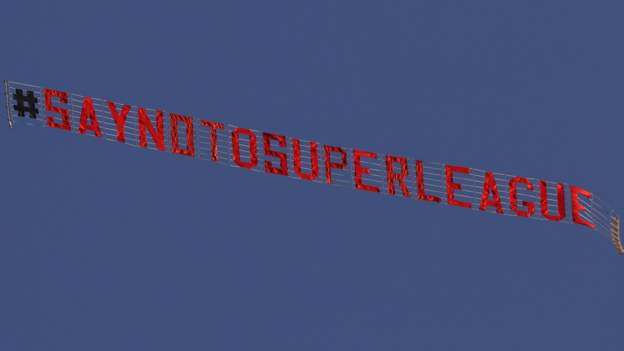
News of the newly proposed European Super League has left a storm of concern, criticism, threats and even political intervention in its wake. The announcement of a mid-week league consisting of a dozen of the top-tiered clubs from across Britain and Europe would rival the popular UEFA Champions League. No doubt, more football to watch is good for fans, and for club owners – but the backlash has been harsh from other stakeholders and teams left on the sidelines. The media coverage has been intense. Meanwhile, UK Prime Minister Boris Johnson met with the Football Association, Premier League officials and fans' representatives on Tuesday, after which the government said it will take "whatever action necessary", including legislative options, to ensure the proposals were stopped. Downing Street added: "No action is off the table." In other developments: Uefa president Aleksander Ceferin called on the English clubs to "come to your senses" Everton criticised the "preposterous arrogance" of the clubs involved Real Madrid president Florentino Perez said that the new league was needed to "save football" The proposed tournament would see teams play one another in midweek games in an attempt to have more matches between the big-name clubs. The other clubs involved are AC Milan, Atletico Madrid, Barcelona, Inter Milan, Juventus and Real Madrid. The plans have been heavily criticised by fans, pundits, football's governing bodies and members of the UK government. "It is our task to protect the European sport model. If some elect to go their own way, they must live with the consequences of their choices," said Infantino, the president of world football's governing body. "They are responsible for their choice completely. This means you are either in or you are out. You cannot be half in and half out." April 20 – BBC If you are a journalist covering this emerging story – then let us help with your questions by providing expert opinion, perspective, and analysis. Peter Dawson from the University of East Anglia is a Professor of Economics and an expert in sports economics. Peter is available to speak with media about this topic – simply click on his icon now to arrange an interview today.


Is This Bitcoin's Time to Shine?
Bitcoin was invented in 2008 and launched in 2009, but after years of skepticism, it's finally becoming a part of mainstream conversation. The cryptocurrency's value has continued to rise since 2017, but with the start of 2021, its price has surged and many more companies are looking for ways to get involved. Tesla and Square have invested. (You can even buy a Tesla with bitcoins.) Goldman Sachs and JPMorgan are exploring ways to meet customer demand for cryptocurrency investment. A National Football League player converted half of his salary into bitcoins. And Major League Baseball's Oakland Athletics are offering a suite for the 2021 season at the price of one bitcoin. So, if it's been around for so long, why are we only seeing this mainstream push now? "I think the Bitcoin ecosystem is developing to the point where people can start to think about using it as a currency," said John Sedunov, PhD, an associate professor of finance who studies Bitcoin. "However, the price still remains volatile, and it isn't clear that the currency can maintain its current $50,00-to-60,000 value." While there are companies adopting and investing now, this will still be a gradual process, Dr. Sedunov says. "As businesses become better able to accept the currency, and perhaps more importantly better able to withstand and manage the volatility of Bitcoin, then the currency will become more widespread in its use. The process would be expedited if the entire supply chain accepted Bitcoin, rather than just the retailer and the end of the chain. This would smooth the process and allow people to utilize the currency without as much concern for converting it." Additionally, Dr. Sedunov notes that there needs to be a continued evolution of the ability of firms to accept and manage the currency, in addition to a reduction in the volatility of the currency. Smaller businesses may be at much more of a risk than large corporations and banks if there is price instability. But the value of Bitcoin won't be this high forever. As the country and economy continue to deal with the impact of the pandemic, there are growing concerns that inflation could be next, pushing consumers to other options, like cryptocurrency. "When the pandemic ends and there is, perhaps, more economic stability, Bitcoin's value will wane a bit, but I don't think it will fade to nothing," Sedunov notes. "The big question mark, to me, is the U.S. Dollar and inflation. Inflation expectations are rising, and this only pushes people more toward alternatives. If this trend continues, then perhaps economic stability will be a bit lower, and more people will flock toward Bitcoin."


Cancellation of non-conference college football games may lead to a new battle in the courtroom
The Big Ten Conference's decision to cancel all non-conference football games for the upcoming season -- and the possibility that schools in other major conferences may soon follow -- raises a number of potential legal issues, says Nathaniel Grow, associate professor of business law and ethics at the Indiana University Kelley School of Business. “Depending on the terms of the schools' college football scheduling agreement, the university cancelling the game may still owe the other school some level of compensation for breaking the agreement,” Grow said. “If the cancelling university refuses to pay, then it would not be surprising if the other school would elect to file a lawsuit.” A nationally recognized expert in the field of sports law, Grow studied has studied this issue, the subject of a 2010 article in the Journal of College and University Law. "The ultimate outcome of such a lawsuit would hinge largely on the specific terms of two affected schools' contract. In general, though, two provisions of the contract would likely prove to be the most important. First, most scheduling agreements will include some sort of liquidated damages provision, a clause that specifies that one side of the agreement must pay the other party a certain amount of money should the contract be broken. Often times, these contracts will provide that the breaching party must only pay the other school in the event that the opponent is unable to replace the cancelled game on its schedule with one against a sufficiently suitable alternative opponent. "The other relevant clause in these scheduling agreements is likely to be the force majeure provision, sometimes referred to as an ‘Act of God’ clause. Under these provisions, schools may be excused from cancelling a game without penalty if circumstances arise that make playing the game unduly difficult or impossible (for instance, a hurricane or other major weather event). The applicability of such a provision will also vary depending on the specific wording employed in the contract, and whether the clause permits a team to cancel a game on the basis of either a pandemic or a change in conference policy regarding the playing of non-conference games." Grow can be reached at 812-855-8191 or grown@iu.edu.


And the award goes to … Georgia Southern University receives two Emmy nominations
The National Academy of Television Arts and Sciences Southeast Chapter has recognized Georgia Southern University’s Multimedia Development Center (MDC) with two professional Emmy award nominations. Nominated for the Emmy awards were Art Berger, Best Technical Director for Georgia Southern football, baseball and basketball, and Ben Powell, Best Technical Director for Georgia Southern basketball. Berger, director of the MDC, said the nominations are a result of a collaborative effort among the student and staff team. The MDC’s mission is to provide students with professional opportunities and deliver excellence in media programming. Students working at the MDC receive hands-on experience delivering more than 150 live streaming events a year including commencement and Georgia Southern football. “We are very proud of our collaboration with Georgia Southern Athletics and our two Technical Director 2019-2020 Emmy award nominations,” said Berger. “These awards reflect the quality and the outstanding dedication of our students and our staff in delivering high-quality ESPN programming. We are extremely proud of our continued excellence in bringing Emmy level ESPN programming to Georgia Southern University.” The MDC has previously received eighteen Emmy nominations as well as five professional wins including best director, best sports director, and best technical director, and two Emmy awards for best audio with the Georgia Southern Symphony. The National Academy of Television Arts and Sciences is a professional organization for individuals in the television and broadcasting industry. If you are journalist and would like to know more about this story - simply reach out to Georgia Southern Director of Communications Jennifer Wise at jwise@georgiasouthern.edu to arrange an interview.