
Experts Matter. Find Yours.
Connect for media, speaking, professional opportunities & more.

The Increasing Tension Between the U.S. and Iran
Two oil tankers were attacked in the Gulf of Oman and an unmanned drone was shot down in the last two weeks, escalating tensions between the United States and Iran. After a last-minute bailout of a retaliatory airstrike, President Donald Trump announced additional sanctions against Iran on June 24. Lowell Gustafson, PhD, a political science professor, taught American foreign policy and a course titled "Theories of War and Peace" for several years. He says, with the talk of airstrikes and President Trump claiming there will be "obliteration like you've never seen before," Congress needs to step in. "Congress should immediately hold hearings and vote on exactly what conditions would need to be met before such an order was given. Before Congress makes an initial authorization to use force against Iran, the military should not follow any order to do so by the President. Our founders gave Congress the power to declare war since a single executive, whether monarch or president, should not have the authority to make such a weighty decision unilaterally." Dr. Gustafson noted that so far, sanctions have proven counterproductive and a "unilateral presidential decision to use force undermines American constitutional democracy." He said the president's failure to think systematically about this issue leaves us moving from tactic to tactic.


Ivanka to the United Nations? Ask our experts if it is possible!
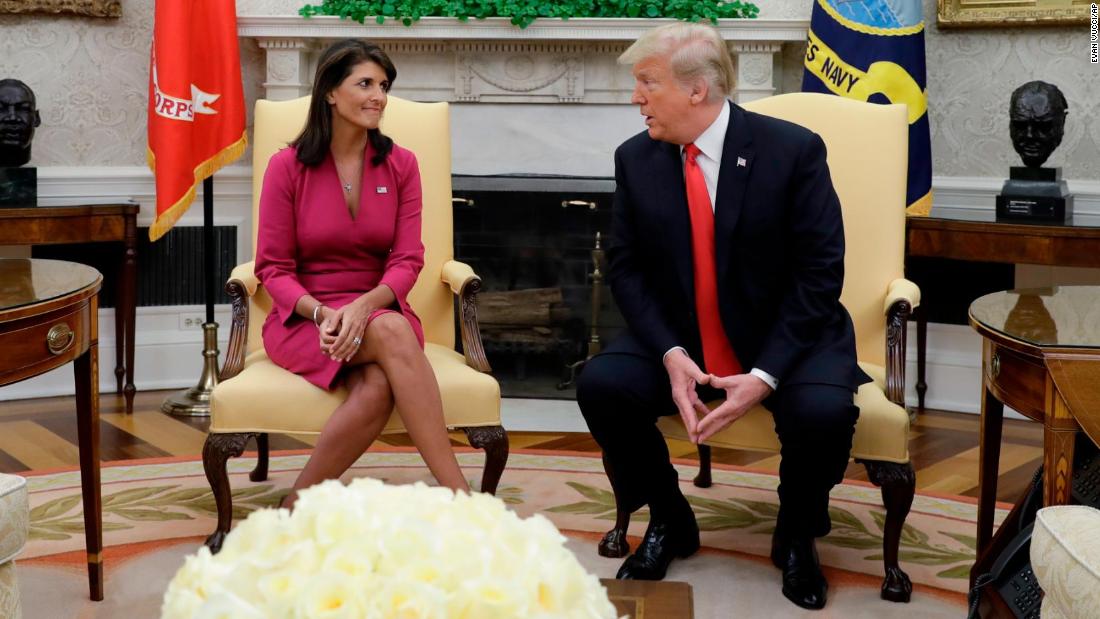
One of the few shining stars is fading from the Washington skyline – and Nikki Haley’s departure as America’s Ambassador to the United Nations has the beltway speculating on her replacement. President Trump had eyebrows raised and tongues wagging when he trial-ballooned his daughter Ivanka as a suitable replacement. There’s also talk of Dina Powell, the well respected former Deputy National Security Advisor for Strategy to President Donald Trump. But who else is on the list and how key of a role is this as America reshapes its foreign policy. There are a lot of questions and a lot of educated guessing going on right now and that’s where the experts from Cedarville University can help. Dr. Glen Duerr’s expertise and research interests include nationalism and secession, comparative politics and international relations theory. Dr. Duerr is available to speak to media regarding this topic – simply click on his icon to arrange an interview.


Real solutions to the world’s refugee crisis
Just last week, the United States announced its lowest refugee cap in history. Meanwhile, for the fifth year in a row, globally, we have reached a record number of displaced people around the world whose displacement will likely last decades. Refugees are increasingly living outside of camps in middle to low-income countries where they struggle to get their footing. At the same time, the communities that host them are burdened by the influx of a needy population and the tension that can arise when aid bypasses local organizations. Recently, a panel hosted by Catholic Relief Services invited key industry leaders to discuss these challenges and how responding agencies, governments and donors can better support the local communities in ways that promote safety, dignity, and lasting solutions. Bill O'Keefe is the Vice President for Government Relations and Advocacy with Catholic Relief Services and oversees the efforts to impact U.S. foreign policy in ways that reduce poverty overseas. Bill is available to speak to media regarding refugees and how those lasting solutions can be found. Simply click on his icon to arrange an interview. Source:

How serious is the sabre-rattling over Syria?
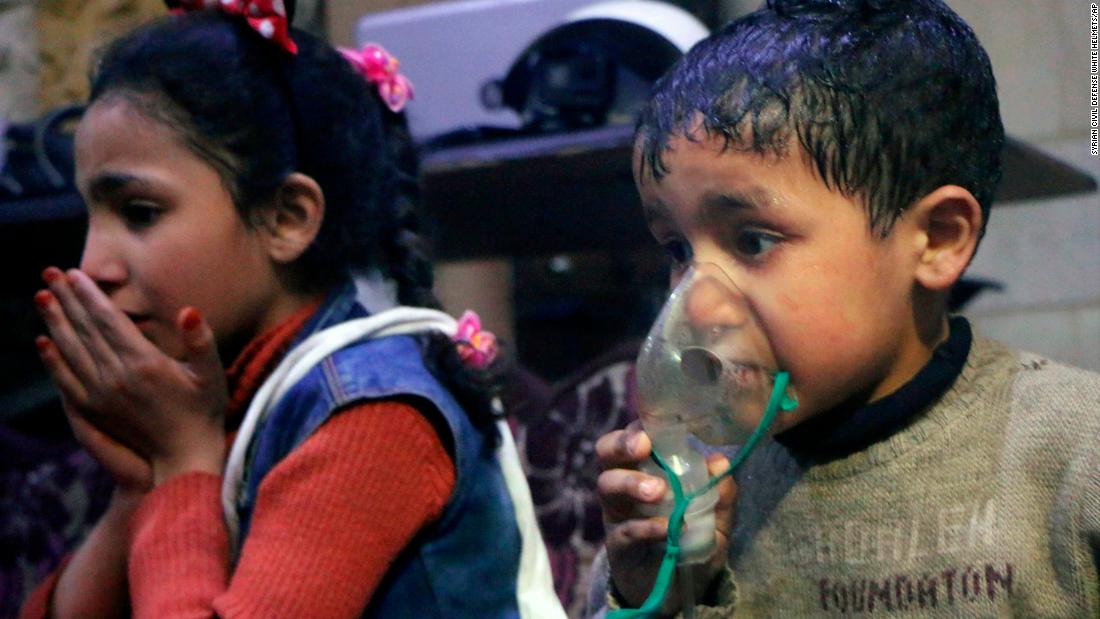
Last Saturday, though not ‘officially confirmed,’ a poisonous gas attack happened in the besieged Syrian town of Douma. The World Health Organization has confirmed that 500 people showed symptoms of being exposed to "toxic chemicals". This act of aggression supposedly by the Assad government has opened a Pandora’s Box. President Donald Trump is threatening missile strikes. Russian officials are threatening retaliation for any American aggression. Many world leaders are on edge and watching closely – Syria has become a powder keg and what happens next could have global implications. What are President Trump’s options? What could happen if the Russians counter? Is there a diplomatic option? There is an enormous amount at stake and a lot of scenarios to consider. That’s where experts from Missouri State University can help. Dr. David Romano, political science professor at Missouri State University, researches Middle Eastern politics and government. He's an expert in theories of peace and conflict, and foreign policy. He's available to speak about the escalating tensions, potential outcomes and consequences regarding any action in Syria. Click on his icon to arrange an interview. Source:

Presidential Rhetoric Expert Shares Thoughts on Bush's Speech
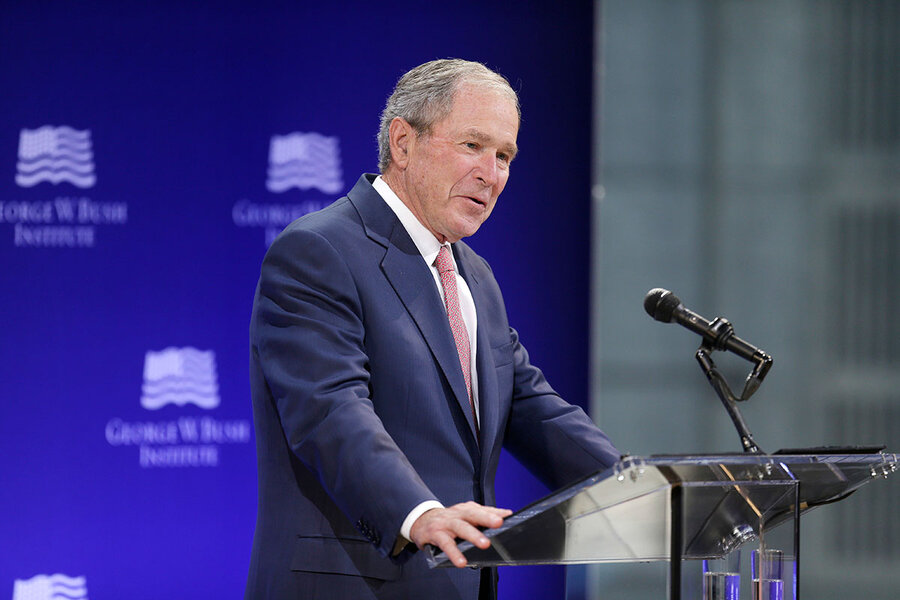
Presidential rhetoric expert Martin J. Medhurst, Ph.D., Distinguished Professor of Rhetoric and Communication and professor of political science in Baylor’s College of Arts & Sciences, is quoted in this article about speeches given last week by two former U.S. presidents and a former presidential candidate that warned of the dangers to the nation and the world if divisive politics continues to cleave the American electorate into thoughtlessly hostile warring camps. “They ... talk about American ideals, they ... talk about the story of America, the American creed and the need to reinvigorate democracy and continue to be the exemplar to the world of democratic values,” Medhurst said. Source:


North Korea Rejects South Korea's Call For Talks: How High Will Tensions Escalate?
North Korea has been in the news a lot lately. Saber rattling, political posturing and missile testing by the hermit state have led to escalating tensions between the United States, South Korea and even neighbouring China. Earlier this month, Pyongyang claimed it successfully tested an ICBM, for the first time, of the type that experts believe could reach Alaska. But as the situation looked to boil over, tensions may have had a chance at simmering. Tongilgak - a North Korean building in the Panmunjom compound in the demilitarized zone between the two countries, which has been used for previous negotiations, was suggested by the South Koreans as a destination for talks between North and South Korea aiming to stop 'all hostile activities that raise military tension.' By early Friday morning, all intelligence indicated – that offer was rejected. The two countries that have been bitter enemies since 1950 remain opposed and unwilling to compromise. There’s a lot at stake – safety, the threat of global war and between the two countries, some families are still divided and incapable of meeting after more than half a century. So, is there a chance the two sides can find a diplomatic solution? Is this rejection just another tactic by North Korean leader Kim Jong Un to leverage more from the west in order to speak? Does North Korea have the ability to launch a missile that may reach American soil? There’s a lot more to this new alignment than a simple agreement and that’s where Missouri State University experts can help. Dr. Dennis Hickey is a global studies expert specializing in Asian politics and American foreign policy. He is a go-to source when media agencies require clear perspective and answers regarding this complex situation and region. Dr. Hickey is available for interviews. Click on his icon to contact him. Source:

As tension mounts between North Korea and America, it seems like China has become an unlikely ally of U.S. President Donald Trump. On Wednesday, President Trump spoke with Chinese President Xi Jinping about the issue. President Xi said China is willing to help the U.S. end North Korea’s nuke program. Trump has referenced the trade advantages China holds over North Korea and how working together, they may be able to rein in the rogue nation and its leader, President Kim Jong Un, who has threatened to use the country’s nuclear arsenal against any American advances. But is this new friendship or even partnership a reality? What will it mean in the long and short term? Will there be political and economic costs or even benefits with better U.S.-China relations? Or will America have to give something to get something? There’s a lot more to this new alignment than a simple agreement and that’s where Missouri State University experts can help. Dr. Dennis Hickey is a global studies expert specializing in Asian politics and American foreign policy. He is a go-to source when media agencies require clear perspective and answers regarding the complexity of Chinese politics and government. Dr. Hickey is available to speak regarding this increasingly escalating and important international issue. Click on his icon to arrange an interview. Source:

Since Jan. 20, 2017, America has seen a new style of leadership and authority under President Donald Trump. Trade agreements that were already in place are now under renegotiation, and even agreements like the Trans Pacific Partnership that were expected to be scrutinized by Congress have all but been abandoned. On the international stage, even long held reservations and hesitations to comment on sensitive topics like Taiwan and the ‘One China’ policy seem to be off the table when brought up in public conversation. So, what will this mean for the short- and long- term relationships between the world’s two most powerful countries? Can we expect conflict, military posturing, trade wars and currency battles? Or will the two sides have to simply ‘re-learn’ how to negotiate and cooperate in the new Trump era? But a new person in charge isn’t just an American issue. China too may see a change in leadership at its highest levels this fall. That is a factor that has many watching and wondering about that country’s future direction. For America’s economy, and the global economy – there is much at stake and many world leaders are watching. A recent discussion at the Brookings Institution explored the expectations for China’s leadership change and the prospects for U.S.-China relations in the interim. Dr. Dennis Hickey is a global studies expert specializing in Asian politics and American foreign policy at Missouri State University. His extensive experience and perspective have made him one of the leading opinions on this topic. Simply click of Dr. Hickey’s icon to arrange an interview. Source: