
Experts Matter. Find Yours.
Connect for media, speaking, professional opportunities & more.

• Professor Patricia Thornley has led a Department for Transport advisory paper • Advises decarbonisation will need low-carbon fuels alongside electrification • Calls for continued investment in this area. A leading energy expert at Aston University has advised government to invest in low carbon fuels - as well as electric - if it wants to reach its 2050 net zero ambition. Professor Patricia Thornley has led a Department for Transport (DfT) advisory paper on low carbon transport fuels. The paper advises that decarbonisation of the UK’s transport systems will need the government to support the use of low-carbon fuels alongside widespread battery electrification where possible. Professor Thornley and the other members who sat on the Scientific Advisory Council examined the challenges and opportunities of developing and using different fuels and their potential impact on the wider energy system. The authors highlight that low carbon fuels such as those made from agricultural waste can deliver reductions in carbon emissions, helping to meet the government’s 2050 net zero ambition. As a result, they state that continued investment in this area is crucial. The paper also states that at this point it’s not yet clear if low carbon fuels will support just the transition to full electrification of the UK’s transport systems or will be a long-term solution. Professor Thornley who is director of Aston University’s Energy and Bioproducts Research Institute (EBRI) and the Supergen Bioenergy Hub said: “Successful decarbonisation of transport systems in the UK will require flexible and adaptive government strategies that support the use of low-carbon fuels alongside widespread battery electrification, where that is possible. “The optimal mix of low carbon fuels vs battery electrification in transport will depend on many different factors, some technological, some supply related, and others linked to the capacity of the UK to generate low carbon electricity. “We urgently need to better understand and manage the airborne emissions that can still be present with low carbon fuels (including hydrogen). That might result in us prioritising different fuels or propulsion systems in different applications or even different parts of the UK. “Agreeing that prioritisation would allow us to prioritise appropriate next generation of infrastructure to support the UK’s net zero ambitions.” Back in March 2022 the Council was asked to provide guidance to the DfT which is currently developing a low carbon fuels strategy. The report, Low carbon transport fuels: DfT Science Advisory Council position paper was published on 5 June and provides an independent advice on the role of low carbon fuels in reducing transport systems’ greenhouse gas emissions.



Aston University biofuel experts advise on how Ukraine can build back greener
• Aston University biofuel experts provide advice on Ukraine’s recovery • Professor Patricia Thornley and Dr Vesna Najdanovic were invited to Royal Society conference • Outcomes will be presented to policymakers at Ukraine Recovery Conference in June. Two Aston University scientists have provided expert advice on how the UK’s wealth of research can support Ukraine’s reconstruction. A two-day conference was organised by the Royal Society and its outcomes will be presented to policymakers ahead of the UK government-hosted Ukraine Recovery Conference in June. As Ukraine is one of the largest agricultural producers and exporters it also generates large amounts of agricultural waste which could be used to produce biofuels and valuable chemicals. This could decrease the country’s fuel import dependency and increase the revenues for the sector. Researchers at the conference explored how to tackle some of the many challenges facing Ukraine, from rebuilding its economy, health and wellbeing, regional security and planning for a green recovery. Professor Patricia Thornley who is director of Aston University’s Energy and Bioproducts Research Institute (EBRI), was one of the just three academics invited to contribute to an infrastructure roundtable session. Professor Thornley said: “I was honoured to be asked to attend the infrastructure roundtable and share my expertise on renewable energy and sustainable products. “Ukraine has significant sustainable agricultural and forestry residues, which can be valuable to plug potential gaps in oil and gas supply for heating in the short term. But in the long term these can provide opportunities to produce sustainable bio chemicals and materials which could provide a basis to grow green chemical, material and construction industries. “UK researchers, such as those at EBRI at Aston University and the Supergen Bioenergy Hub, have the experience needed to work on developing these solutions to build back greener. Research evidence and expertise have a vital role to play in supporting policy makers to tackle the complex and urgent challenges related to the reconstruction and recovery of a resilient, sustainable Ukraine.” Meanwhile, Dr Vesna Najdanovic presented opportunities to develop bioenergy and bioproducts in Ukraine at the event and participated as a panel member. Ukraine’s recovery: rebuilding with research, which brought together Ukrainian and UK researchers and policy makers, was held on 15 and 16 May in London. It was funded by Universities UK International, Research England and the British Council and supported by the Academy of Medical Sciences, British Academy and the Royal Academy of Engineering.

Researchers fight cybercrime with new digital forensic tools and techniques
Irfan Ahmed, Ph.D., associate professor of computer science, provides digital forensic tools — and the knowledge to use them — to the good guys fighting the never-ending cyber-security war. Ahmed is director of the Security and Forensics Engineering (SAFE) Lab within the Department of Computer Science and VCU Engineering. He leads a pair of interrelated projects funded by the U.S. Department of Homeland Security (DHS) aimed at keeping important industrial systems safe from the bad guys — and shows the same tools crafted for investigating cyber attacks can be used to probe other crimes. The goal of cyber attacks on physical infrastructure may be to cause chaos by disrupting systems and/or to hold systems for ransom. The SAFE lab focuses on protecting industrial control systems used in the operation of nuclear plants, dams, electricity delivery systems and a wide range of other elements of critical infrastructure in the U.S. The problem isn’t new: In 2010, the Stuxnet computer worm targeted centrifuges at Iranian nuclear facilities before getting loose and infecting “innocent” computers around the world. Cyber attacks often target a portion of the software architecture known as the control logic. Control logic is vulnerable in that one of its functions is to receive instructions from the user and hand them off to be executed by a programmable logic controller. For instance, the control logic monitoring a natural gas pipeline might be programmed to open a valve if the system detects pressure getting too high. Programmers can modify the control logic — but so can attackers. One of Ahmed’s DHS-supported projects, called “Digital Forensic Tools and Techniques for Investigating Control Logic Attacks in Industrial Control Systems,” allows him to craft devices and techniques that cyber detectives can use in their investigations of attacks on sensitive critical infrastructure. Their investigation capabilities, he explains, is an under-researched area, as most of the emphasis to date has been on the prevention and detection of their cyber attacks. “The best scenario is to prevent the attacks on industrial systems,” Ahmed said. “But if an attack does happen, then what? This is where we try to fill the gap at VCU. And the knowledge that we gain in a cyber attack investigation can further help us to detect or even prevent similar attacks.” In the cat-and-mouse world of cyber security, the way cybercriminals work is in constant evolution, and Ahmed’s SAFE lab pays close attention to the latest developments by malefactors. For instance, an attacker may go for a more subtle approach than modifying the original control logic. An attack method called return-oriented programming sees the malefactor using the existing control logic code, but artfully switching the execution sequence of the code. Other attackers might insert their malware into another area of the controller, programmed to run undetected until it can replace the function of the original control logic. Attackers are always coming up with new methods, but each attack leaves evidence behind. The SAFE lab examines possible attack scenarios through simulations. Scale models of physical systems, including an elevator and a belt conveyor system, are housed at the SAFE lab to help facilitate this. The elevator is a four-floor model with inside and outside buttons feeding into a programmable logic controller. The conveyor belt is more advanced, equipped with inductive, capacitive and photoelectric sensors and able to sort objects. The tools and methods applied in cybercrime can be useful in tracking down other malefactors. That’s where Ahmed’s second DHS-funded project comes in. It’s called “Data Science-integrated Experiential Digital Forensics Training based-on Real-world Case Studies of Cybercrime Artifacts.” Ahmed is the principal investigator, working with co-PI Kostadin Damevski, Ph.D., associate professor of computer science. The goal is to keep law enforcement personnel abreast of the latest trends in the field of cybercrime investigation and to equip them with the latest tools and techniques, including those developed in the SAFE lab. “For example, investigators often have to go through thousands of images, or emails or chats, looking for something very specific,” Ahmed said. “We believe the right data science tools can help them to narrow down that search.” The FBI and other law enforcement agencies already have dedicated cybersleuthing units; the Virginia State Police have a computer evidence recovery section in Richmond. Ahmed and Damevski are arranging sessions showing investigators how techniques from data science and machine learning can make investigations more efficient by sorting through the mounds of digital evidence that increasingly is a feature of modern crime.


Society matters LIVE: Lab made meat on the menu?
• Research at Aston University focuses on both creating lab-based meat and its psychological acceptance • Dr Eirini Theodosiou and Dr Jason Thomas will be speaking at April’s Society matters LIVE event • Lab made meat on the menu? will take place at Cafe Artum in Hockley Social Club on Thursday 27 April. Lab made meat will be the topic of the latest Society matters LIVE event from Aston University at Café Artum at Birmingham’s Hockley Social Club on Thursday 27 April. Dr Eirini Theodosiou and Dr Jason Thomas at Aston University are conducting research into lab-made or cultivated meat, both exploring the creation of the meat and the psychological impact of the product. Dr Eirini Theodosiou, senior lecturer in the School of lnfrastructure and Sustainable Engineering, focuses on ways to produce enough cell mass to create the meat. Meanwhile Dr Jason Thomas’ work explores the psychology behind supporting people to accept lab-made food. The research comes as current trends indicate that demand for animal-based foods will increase by 70% in 2050 to feed the predicted 9.8 billion people. Dr Theodosiou said: “Cultivated or lab grown meat offers a safer, more sustainable and animal cruelty-free alternative for consumers. It is a very young industry trying to replace traditional meat production methods however, with 800 million people worldwide suffering from hunger and malnutrition, it is a viable option.” “In addition, the livestock industry is responsible for 12-18% of the total greenhouse gas emissions and is a cause of deforestation. Increased meat production and factory farming are the topmost likely causes of the next pandemic due to the extensive use of antibiotics and increasing emergence of zoonotic diseases.” Dr Thomas said: “It is a relatively new food technology, and much work still needs to be done to make it affordable and on a massive scale. We are interested in finding out what factors can influence consumer purchase of and consumption of lab-made meat.” The event is organised by Aston University and Café Artum at Hockley Social Club as part of the Society matters LIVE series. Free tickets are available at https://www.eventbrite.co.uk/e/lab-made-meat-on-the-menu-tickets-464161147487?aff=ebdsoporgprofile


Aston University and asbestos consultancy to use AI to improve social housing maintenance
• Aston University and Thames Laboratories enter 30-month Knowledge Transfer Partnership • Will use machine-learning and AI to create a maintenance prioritisation system • Collaboration will reduce costs, emissions, enhance productivity and improve residents' satisfaction. Aston University is teaming up with asbestos consultancy, Thames Laboratories (TL) to improve efficiency of social housing repairs. There are over 1,600 registered social housing providers in England, managing in excess of 4.4 million homes. Each of these properties requires statutory inspections to check gas, asbestos and water hygiene, in addition to general upkeep. However, there is not currently a scheduling system available that offers integration between key maintenance and safety contractors, resulting in additional site visits and increased travel costs and re-work. Aston University computer scientists will use machine-learning and AI to create a maintenance prioritisation system that will centralise job requests and automatically allocate them to the relevant contractors. The collaboration is through a Knowledge Transfer Partnership (KTP) - a collaboration between a business, an academic partner and a highly-qualified researcher, known as a KTP associate. This partnership builds on the outcomes of TL’s first collaboration with Aston University, by expanding the system developed for the company’s in-house use - which directs its field staff to jobs. The project team will improve the system developed during the current KTP to enable it to interact with client and contractor systems, by combining an input data processing unit, enhanced optimisation algorithms, customer enhancements and third-party add-ons into a single dynamic system. The Aston University team will be led by Aniko Ekart, professor of artificial intelligence. She said: “It is a privilege to be involved in the creation of this system, which will select the best contractor for each job based on their skill set, availability and location and be reactive to changing priorities of jobs." TL, based in Fenstanton, just outside Cambridge, provides asbestos consultancy, project management and training to businesses, local authorities, social housing and education facilities, using a fleet of mobile engineers across the UK. John Richards, managing director at Thames Laboratories, said: “This partnership will allow us to adopt the latest research and expertise from a world-leading academic institute to develop an original solution to improving the efficiency of social housing repairs, maintenance and improvements to better meet the needs of social housing residents.” Professor Ekart will be joined by Dr Alina Patelli as academic supervisor. Dr Patelli brings experience of software development in the commercial sector as well as expertise in applying optimisation techniques with focus on urban systems. She said: “This is a great opportunity to enhance state-of-the-art optimisation and machine learning in order to fit the needs of the commercial sector and deliver meaningful impact to Thames Laboratories.”

Expert Q&A: The Summer of Sargassum?
A 5,000-mile-wide mass of sargassum seaweed is drifting toward Florida's beaches. It could arrive, with its brown, slick leaves and rotten eggs smell, around July as the state's Atlantic beaches are filled with locals and tourists. Florida Tech oceanographer Kevin Johnson offered his insights into this looming arrival. Is it dangerous? Will it spoil the beaches? Here are his answers to some key questions. QUESTION: Is this situation really a big deal? Kevin Johnson: I wouldn’t say it is being overhyped, but it is yet to be determined whether this year will have greater amounts of sargassum in the Atlantic offshore, (visible by satellite) or coming ashore and covering the beaches, a connected but separate phenomenon requiring the cooperation of onshore winds. 2018 was a record-setting year, and this year could exceed what was seen in both locations in 2018. If the winds contribute strongly to sargassum coming ashore, it could make it smelly and hard to find an area of clean sand to set up on the beaches. QUESTION: Is there a health risk if we head to a beach where sargassum is present? Kevin Johnson: Sargassum doesn’t produce aerosolized organic toxins, but as it rots on the beach, it will smell and give off hydrogen sulfide gas, or H2S. That's the stuff that smells like rotten eggs. When concentrated in enclosed areas, this gas is toxic and can be harmful. However, in the open air, diluted on an exposed beach, it is more of a smelly nuisance than a genuine health hazard for most people. But there could be a minor irritation, like itching, after coming into contact with sargassum. There are symbiotic species living in and amongst this seaweed when it is healthy and floating at sea. (These intricate relationships are part of what makes sargassum ecologically significant as a food source, nursery and habitat for many populations.) One of the symbionts is a tiny branching colonial hydroid, related to corals. it grows on sargassum fronds. Hydroid colonies have a sting like corals and jellyfish, but it is generally not severe. Some people may experience itching around their feet or ankles (or any body part that contacts the sargassum hydroids) if they brush up against sargassum in waves or swash, or step on freshly deposited sargassum on the sand. Many people will not be bothered or only mildly troubled by this, but some people may be more sensitive to the hydroids. QUESTION: I was planning to visit the beach. Should I reconsider now? Kevin Johnson: If the winds collude with the large bloom already underway to deliver huge mats to the beach, it could be hard for beachgoers to find a place to sit on the sand, and the smells could make the beach untenable. I emphasize “could” with the hydrogen sulfide smell because it depends on how the sargassum is deposited and how wet it is as it breaks down. In some cases, beached Sargassum can be very dry and in such cases it may not smell too bad. People who are more sensitive to the hydrogen sulfide or to the hydroids on the fresh sargassum may find the experience even more unpleasant. Westerly winds would be helpful from the perspective of keeping sargassum away from beaches, but unfortunately easterlies are pretty common this time of year. If you're a reporter looking to know more about this topic, let us help with your coverage. Dr. Johnson can be available for phone, Zoom or, depending on scheduling, in-person interviews.


Aston University to help power Indonesia with affordable energy made from rice straw
Project to convert unwanted rice straw into cheap energy on a commercial scale Most rice straw in Indonesia is burned causing pollution and health problems Project will almost double affordable energy captured from waste. Scientists at the Energy and Bioproducts Institute at Aston University are to start a project to convert Indonesia’s unwanted rice straw into low-cost energy on a commercial scale. Each year the country produces 100 million tonnes of the rice waste, of which 60% is burned in open fields, causing air pollution and has even been linked to lung cancer. The amount burned is equivalent to approximately 85 Terawatts of electricity, which is enough to power Indonesia’s households 10 times over. A consortium which includes Aston University aims to develop processes to capture more affordable energy from rice straw than ever before - and demonstrate that it can be done on a commercial scale. Part of the process involves a biomass conversion technology called pyrolysis. This involves heating organic waste materials to high temperatures of around 500 °C to break them down, producing vapour and solid products. Some of the vapour may be condensed into a liquid product called pyrolysis oil or pyrolysis bio-oil. Both the pyrolysis vapour and liquid bio-oil can be converted to electricity. Current methods convert just 35% of the thermal energy of rice straw to affordable electricity. However, a newly patented combustion engine designed by consortium member, UK-based Carnot Limited, could see that doubled to 70%. Energy extracted this way could help low and middle-income countries create their own locally generated energy, contribute to net zero by 2050, create new jobs and improve the health of locals. The project will help develop a business model which could support companies and local authorities to produce local, cheap energy in Indonesia, and other countries with biomass capacity. Three academic experts from different disciplines at Aston University are involved in this initial project, which focuses on Indonesia’s Lombok Island. Dr Jude Onwudili, Dr Muhammad Imran and Dr Mirjam Roeder are based at Aston University’s Energy and Bioproducts Research Institute (EBRI). Dr Jude Onwudili who is leading the team said: “This project has huge potential - commercialisation of this combined technology will have significant economic benefits for the people of Indonesia through direct and indirect job creation, including the feedstock supply chain and electricity distribution and sales. “About one million Indonesian homes lack access to energy and Indonesia's 6,000 inhabited islands make sustainable infrastructure development challenging in areas such as Lombok Island. “The new techniques being explored could reduce environmental pollution, contribute to net zero and most importantly, provide access to affordable energy from sustainable local agricultural waste. “Aston University is a global leader in bioenergy and energy systems, and I am delighted we received funding to explore this area.” Over a power plant’s life, the project team have calculated that biomass produces cheaper electricity (approx. $4.3$/kWh) compared to solar (approx. $6.6/kWh), geothermal (approx. $6.9/kWh), coal (approx.$7.1/kWh), wind (approx. $8/kWh) and subsidised gas (approx.$8.4ckWh). The project will start in April 2023 with a total of £1.5 million funding for the four partners from Innovate UK. Alongside Carnot Limited, the Aston University scientists will be working with two other UK-based businesses to deliver the project, PyroGenesys and Straw Innovations. PyroGenesys specialises in PyroChemy technology which will convert 70% of the rice straw into vapour or bio-oil for electricity production, with the remainder converted into nutrient-rich biochar, which can be sold back for use as fertiliser on the rice farms. Straw Innovations will contribute their rice straw harvesting and collection expertise, with their many years of similar operations in Asia.


Aston University bioenergy researchers to improve measurement of industrial carbon dioxide
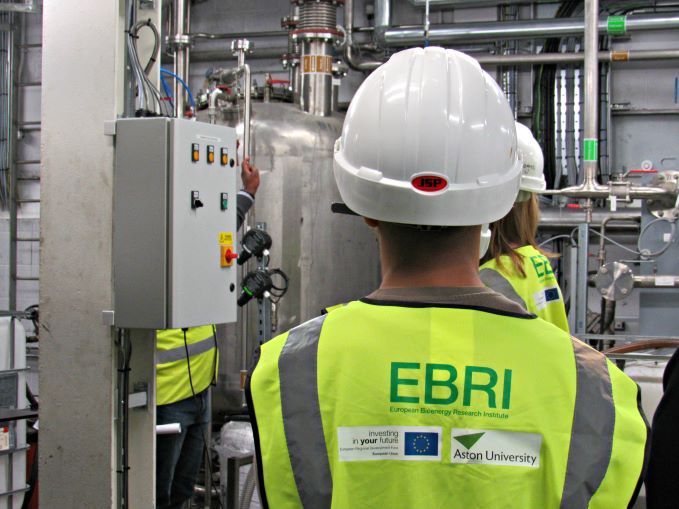
Researchers at Aston University are to take the UK a step nearer to net zero emissions by developing a better system of measuring industrial carbon dioxide. The government is giving the University £100,000 to improve measurement of CO2 streams from sites such as at power plants and factories. The Energy and Bioproducts Research Institute (EBRI) at Aston University is to develop a comprehensive guide based on industry and academic expertise. Industrial decarbonisation will play a major role in achieving the UK’s 2050 ambitious net zero emissions target, however current measurement guidelines need to be improved. The six-month project will be a collaboration between EBRI researchers and the company Progressive Energy and the Energy Institute. Progressive Energy will work alongside potential end-users and the Energy Institute will help to ensure the final guidelines are clear. The work is being led by Dr Paula Blanco Sanchez, who has more than 15 years of experience in bioenergy. She said: “This funding will help Aston University to address a major gap in the decarbonisation pathway. It will contribute to the UK’s net zero target and is another example of how the University is using its expertise to tackle real world problems. “Our experts in EBRI will provide research, industrial experience and knowledge in areas such as gas measurement, metric and analytics, life cycle and techno-economic assessments, and thermal conversion processes.” The funding has been awarded by the Industrial Decarbonisation Research and Innovation Centre (IDRIC) to achieve the net zero ambition set out in the UK Industrial Decarbonisation Strategy (2021). Bryony Livesey, challenge director, Industrial Decarbonisation Challenge, UKRI, said: “The announcement of this funding continues to build upon IDRIC’s whole system approach to decarbonising industry, enabling the UK to remain at the forefront of a global low-carbon future. These successful Wave 2 projects will build evidence on a range of areas from economics and emissions to skilled jobs and wider net zero policy, supporting UK’s green growth and net zero ambitions.” It’s hoped the Aston University project will lead to future collaborations and funding to support UK industry to decarbonise their businesses. In May, June and September the EBRI plant will be opening its doors to professionals who want to enhance their careers with a short hands-on course in Practical Process Engineering. For more information visit https://www.aston.ac.uk/study/courses/practical-process-engineering

Researcher to build fuel database to improve nuclear reactor sustainability
Braden Goddard, Ph.D., assistant professor in the Department of Mechanical and Nuclear Engineering, has received a grant from the U.S. Department of Energy’s Nuclear Energy University Program (NEUP) to create a database for use in nuclear material control of pebble bed reactors (PBR). Advances in material science and technology have revitalized the nuclear energy industry, allowing for the design and construction of advanced nuclear reactors. New high-temperature materials developed by researchers allow ideas from as early as 1970, like pebble bed reactors, to be re-explored and make nuclear power more efficient and sustainable. Pebble bed reactors are one of many ideas from as early as 1970 that researchers are once again exploring to make nuclear power more efficient and sustainable now that science has developed new high-temperature materials. “Imagine a gumball machine,” said Goddard, “A pebble bed reactor functions similarly. The pebbles are the gumballs, which are fed into a reservoir. As they make their way through the reactor, heat generated from the radiation is removed by a gas which then spins an electrical turbine to generate electricity. The pebbles then exit from the bottom of the reservoir and those that can be reused are returned to the top of the reservoir.” Each pebble contains thousands of microscopic uranium particles encased in silicon-carbide cladding. As the pebble passes through the PBR, the path it follows affects how much fissioning occurs within the uranium. This means pebbles deplete at different rates based on how they travel through the reactor. Goddard’s database seeks to characterize the state of a pebble after it leaves the PBR by determining precisely how much plutonium and uranium remains in the pebble. This informs PBR operators if the pebble can be reused or if it needs to be sent off as waste. Better characterizing these pebbles improves the sustainability and security of PBRs while reducing the amount of waste generated. Measuring gamma radiation from the radioactive isotope cesium-137 created from the fission of uranium is the traditional method of determining how much nuclear fuel is still viable. However, this system does not work for PBRs because the correlation between the uranium fuel and the gamma radiation it emits is not consistent between pebbles. To remedy this, Goddard will measure both gamma and neutron radiation emitted by all radioactive isotopes in the pebble, which varies depending on the route the pebble takes through the reactor. Partners like Brookhaven National Laboratory and similar institutions within the United States will assist in the research by applying machine learning techniques to the gamma and neutron radiation signature. “Nuclear reactor operators have instruments that tell them what’s going on inside the reactor, but it’s not the same as knowing how much uranium mass you have in fuel going into or coming out of the reactor,” said Goddard. Goddard and his colleague, Zeyun Wu, Ph.D., will use computer modeling to run countless simulations and map every possible course a pebble can take through a PBR. The resulting catalog of data will allow PBR operators to characterize the state of any pebble leaving the PBR and assess if it can be reused or if it is ready to be stored at a nuclear waste facility. The catalog also serves as a material inventory, allowing nuclear facilities to better track waste material.


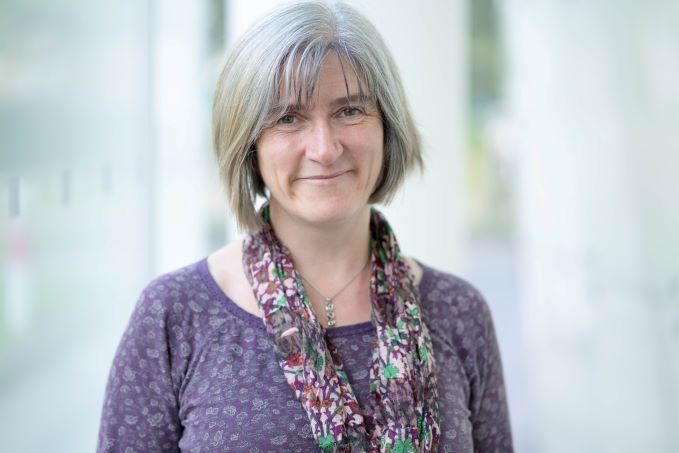
COP27 should be turning point to switch from heating homes with fossil fuels Professor Patricia Thornley, was a presenter at COP26 in Glasgow She believes one year on there’s not enough progress to cut emissions from homes. One of the UK’s leading bioenergy experts has said COP27 should be a turning point to help UK consumers switch from heating their homes with fossil fuels. Professor Patricia Thornley, director of Aston University’s Energy and Bioproducts Institute (EBRI), was a presenter at COP26 in Glasgow last year. She leads the UK’s national bioenergy research programme, SUPERGEN Bioenergy hub. Her research focuses on assessing the sustainability of bioenergy and low carbon fuels. Professor Thornley believes that one year on, not enough has been done to encourage the public to cut down on the emissions their homes produce. The UK has the oldest housing stock among developed countries, with 8.5 million homes being at least 60 years old. That is despite COP26’s reaffirmation of the Paris Agreement goal of moving away from fossil fuels, and the call for stronger national action plans to reduce carbon dioxide emissions. She has welcomed initiatives to help some UK industries move towards net zero, but believes householders are not getting the same support, for example with help to insulate their homes more effectively. She said: “Responses to the energy crisis in which we find ourselves have been mixed. “Government initiatives such as funding feasibility studies for hydrogen from bioenergy (turning biomass into hydrogen whilst separating and capturing the carbon portion of the biomass) and other technologies are promising.” Professor Thornley adds: “The recent price hikes in petrol and natural gas highlight the extent to which the UK relies on fossil fuels. “Unlike some areas of industry, domestic consumers have been treated differently, and recent help with energy costs is arguably subsidising us to keep emitting carbon dioxide. “A more forward-thinking approach would have been to invest in tackling the root cause of the problem by addressing home insulation.” Professor Thornley is a fellow of the Royal Academy of Engineering, and recently gave evidence to the Environmental Audit Committee about the use of sustainable timber in the UK as an alternative fossil fuel.